235 résultats
19695ca. 1920-1931 Kyushu Japan. Very good . Oblong 4to. String-tied commecial album; black boards. Contains 57 gelatin-silver prints of various sizes including 8" by 10" 7.5" by 5" and smaller most of which are adhesive-mounted with several loose plus 11 postcards depicting Kyushu Lutheran churches and one bookmark. One photograph apparently perished; several others loosening from pages. Else apparently complete.Album edges moderately worn; one photo missing a chunk at edge. Most are lightly toned but overall clean. Very good or better. <br/><br/>Well-assembled photo album compiled by an American Lutheran missionary to Japan whose face appears consistently in the majority of the photographs. The island of Kyushu is home to several Lutheran schools and churches including the Kyushu Gakuin Kyushu Lutheran College and the Janice James School both of which are pictured here having recently been built in the early 1900's. The Kyushu Lutheran mission was founded in 1893 by American missionaries; within several years they began building churches under the supervision of one Charles Lafayette Brown 1874-1921 and presumably the subjects pictured here with members of that particualr mission. The album features posed group photographs of large congregations — as large as roughly 150 — captioned with date and location in cities including Kurume Kamamoto and Saga; additionally included are many images of church services in progress plus several family portraits of church members. While Christianity began to spread when Japan phased out its isolationist policies in the 1850s Protestant evangilization in particular slowed under the military government of the Showa period the early years of which are covered by this album.These anti-Western trends were closely tied to the patriotic fervor that culminated in WWII. An absorbing visual archive of a prospering Protestant community and of American missionary activity in Imperial Japan. hardcover books
1985M12135Tokyo:: Journal of the Japan-Netherlands Institute 1985. 1985. 8vo. 161 pp. 4 figs. bibliog. Printed wrappers. Fine. Includes: W. J. Mulder Surgical and Obstetrical Instruments in the Netherlands 1750-1870. Journal of the Japan-Netherlands Institute, 1985. unknown books
13932Original 19th Century Hand colored photograph of the Festival of Lanterns at Yokohama Japan. The photograph measures 8"x10" and is matted to 10-1/2"x13". Lower right hand corner label reads "A 264 Festival Lanterns at Bentendori Yokohama." Festival lanterns cheer up the business district of Bentendori 2-chome and 3-chome in Yokohama. During the Meiji Period this was Yokohama's premier shopping street. Foreign visitors came here to buy porcelain curios ivory silk and photographs. The photographer of this very image Kimbei Kusakabe actually had a studio on this street between 1881 and 1889. Unfortunately the exotic amalgamation of Japan and the Western world that existed on Bentendori was forever destroyed by the Great Kanto Earthquake of 1923. Photographs such as this are all that is left of a bygone era. In very good condition. unknown books
44211<p>Japan and Western Medicine. Oranda jin Geka ryoji no zu Dutch Surgery in Nagasaki. Original pen ink and watercolor drawing on light brown-toned silk with 4 vertical lines of Japanese characters in the upper left corner. Japan: late 18th or early 19th century. 483 x 363 mm. mounted as a scroll at a modern date on light grey silk backed with paper with a half-round hanging rail with braided ribbon attached at the top and a suspension bar at the foot measuring 914 x 443 mm. overall; preserved in a custom-made wooden box. A few tiny pinholes in upper corners of image but fine with the coloring fresh and bright.</p> <p> This striking image showing an amputation carried out by a Dutch surgeon in Japan was most likely painted in the late eighteenth or early nineteenth century during Japan's self-imposed period of national isolation. The hand-painted image is related but by no means identical to a Nagasaki woodblock print titled "Surgery by a Dutch Physician" one of many popular souvenir prints depicting scenes unique to Nagasaki which at the time was the sole point of contact between Japan and the outside world. See our reproduction of the print. It may be that our scroll is the original of the image; however it is also possible that both hand-painted and woodcut versions of the image were produced simultaneously.</p> <p> Western surgery came to Japan in the sixteenth and seventeenth centuries via the Portuguese who in 1543 became the first Europeans to make direct contact with Japan and the Dutch who became the only European nation allowed to trade with Japan after Japan's expulsion of the Portuguese in 1639. Surgeons attached to the Dutch East India Company established practices at the island of Dejima in Nagasaki Bay which led to the formation of several Japanese schools of surgery based on European methods. "This aspect of Western medicine known as K m -ry geka or ‘Surgery of the Red-Haired' has had a profound effect on the development of surgical practice in Japan" Van Gulik p. 37. Van Gulik "Dutch surgery in Japan" in Red-Hair Medicine: Dutch-Japanese Medical Relations ed. Beukers et al. pp. 37-50. </p> <p>. unknown books
15852438<p>Venice: Appreso I Gioliti 1585. </p><p>Price: $8500.00 </p><p>Octavo: 16 x 10.5 cm. 188 11 pp. Collation: A-M8 N4</p><p>One of several 1585 editions first ed. 1584</p><p>Bound in modern cartoncino. A very good copy with some minor repairs lightly washed. With a fine woodcut headpiece and Jesuit emblem on the title page and numerous decorative head- and tailpieces and initials including one of a dragon throughout.</p><p>This collection contains the following letters from the Jesuit missions in Japan and Goa: Francesco Carreón writing from Kuchinotsu 1 Dec. 1579; Gregorio de Céspedes 1579; Lorenço Mexia at Bungo 20 Oct. 1580; three letters by LuÃs Fróis Miyako 14 April 1581; 19 May 1581; and 29 May 1581; Francesco Cabral 15 Sept. 1581; and Alessandro Valignano Goa 28 Dec. 1583.<br /><br />The Salsette Martyrs:<br /><br />This collection concludes with Valignano's important letter from Goa –one of only five Jesuit letters from India published between 1570 and 1585- detailing the deaths of the Jesuit Martyrs of Cuncolim who were killed on Monday 25 July 1583 in the village of Cuncolim in the district of Salsette territory of Goa India. The "martyrs" were the Italian Rudolph Acquaviva the Spaniard Alphonso Pacheco the Swiss Peter Berno the Portuguese Anthony Francis and Brother Francis Aranha also a Portuguese. In addition the Portuguese layman Gonçalo Rodrigues and some Indian youths Dominic Alphonso Francis Rodrigues Paul da Costa and ten others were also killed.<br /><br />While prosecuting their mission of Conversion in Cuncolim the Jesuits and their companions desecrated a Hindu temple by urinating in it a relatively mild if repugnant form of desecration; on an earlier excursion Father Berno had set fire to another temple and destroyed a sacred anthill. In addition they killed a cow that was also an object of worship and hurled its entrails into a sacred well thereby defiling it. The understandably outraged citizenry set upon the Jesuits and their companions killing them with scimitars lances and arrows. They then threw their bodies into a well. The five Jesuits quickly achieved great fame as martyrs and at last in the 19th century were elevated to sainthood while the lay Indians who were slaughtered with them were ignored. <br /><br />It should be remembered that three of the five Jesuit martyrs were in Cuncolim as chaplains to a force of Portuguese soldiers sent to exact harsh reprisals for indigenous resistance to Portuguese rule and the Jesuit campaign of forced conversion. In this context the killing of the Jesuits is remembered by the people of modern day Cuncolim as one of the first acts of revolutionary resistance to European rule in India.<br /><br />Of course the letter written in December of 1583 by the Jesuit Provincial of India Alessandro Valignano glorifies the "martyrs" and in true martyrological style vividly describes the deaths of Acquaviva and his companions.<br /><br />"The Pagans then fell upon them; Father Rudolph received five cuts from a scimitar and a spear and died praying God to forgive them and pronouncing the Holy Name. Father Berno was next horribly mutilated and Father Pacheco wounded with a spear fell on his knees extending his<br />arms in the form of a cross and praying God to forgive his murderers and send other missionaries to them.</p><p>Streit Bibliotheca Missionum IV. 1639; Sommervogel II col 492; Cordier Sinica 75; Laures 170</p> Appreso I Gioliti, books
1978109351978. Softcover. VG- some mild wear along spine. White wraps. 31 pp. 26 bw plates. Written dually in Japanese and English this volume contains an introduction by Kakuzo Tatehata a listing of 12 works a personal history/exhibition listing and an original poster promoting advertising the exhibition. unknown books
2014215377San Francisco: Japanese Cultural and Community Center of Northern California 2014. 127p. very good softcover 8.5x11 inches. Color photographs. Report on aid by the San Francisco-based organization with help from community groups and institutions such as the Giants baseball team. Japanese Cultural and Community Center of Northern California unknown books
197034021Tokyo: The Japan Times. Fine in Fine dust jacket. 1970. Hardcover. Color and black and white photographs throughout. First edition. Fine in a fine dust jacket. . The Japan Times hardcover books
1858WRCAM52130AJapan 1858. Five volumes. 58; 58; 54; 58; 58pp. Original stiff textured tan wrappers stitched as issued each with printed paper title label. Some minor shelf wear and dust soiling. Very good. An attractive set of the "Ansei Five-Power Treaties" the formal diplomatic engagements between Japan and the United States United Kingdom France Russia and the Netherlands ending Japan's 250 years of seclusion and opening its ports to worldwide commercial trade so named for their signing in the fifth year of the Ansei era. The first treaty also known as the Harris Treaty was signed by the U.S. on the deck of the USS "Powhatan" in Edo now Tokyo Bay on July 29 1858. It opened the ports of of Shimoda Hakodate Kanagawa and Nagasaki to foreign trade effective July 4 1859 and then Niigata and Hyogo on January 1 1860 and January 1 1863 respectively. In addition to extensive trade and consular provisions the treaty also established the rights of U.S. citizens to reside permanently lease property purchase real estate and construct residences and warehouses; established a system of extraterritoriality whereby U.S. residents were subject only to the laws of their own consular courts and not the Japanese legal system; and established freedom of religious expression and the right to construct churches to serve the needs of U.S. residents within the confines of designated foreign settlements. The treaty followed the Convention of Kanagawa signed under threat of force in 1854 after Commodore Matthew Perry's aggressive visits to the Shogunate in 1853 and 1854. The Convention had granted coaling rights for U.S. ships and allowed for an American consul in Shimoda but Perry left the more important trading negotiations to Townsend Harris New York businessman and eventually the first U.S. Consul General to Japan. <br> <br> Each of the five volumes details the negotiations between Japan and a specific foreign power. These other accords are similar and duly inspired by the U.S. treaty; each nation forced Japan to grant the same "favored nation" provisions they had granted to the U.S. The Dutch already had several treaties with Japan; they were the only Western power to retain trade relations with Japan after the final expulsion of Europeans in 1638 and had been advising and supplying the Japanese navy since 1853. However once the U.S. had sealed its "Treaty of Amity" the Dutch quickly revised theirs to match on August 18 1858; Russia followed on August 19; Lord Elgin signed for Britain on August 26; and Jean-Baptiste Louis Gros commander of the French expedition in China signed for France on October 9 1858. Subsequent Japanese and Chinese scholars refer to these treaties and subsequent agreements as the "unequal treaties" as none of the provisions were ever reciprocated. <br> <br> This set is uncommon. We found only one record for another incomplete set at auction. This is the first time we have handled this title. unknown books
1950016276Japan: Japan 1950. Book. Very good condition. Hardcover. First Edition. 12mo - over 6¾" - 7¾" tall. 484 pages of text. Flexible hardcover binding with minor creasing and shelfwear. Protected in the original printed cardboard slipcase which is heavily worn and splitting at two seams. The text is clean and unmarked. All publishing details including the edition are in Japanese; date assumed to be circa 1950. Japan Hardcover books
1856WRCAM55468N.p. but probably Tokyo 1856. Ink and watercolor on twenty-five linen- mounted rice paper panels joined into a scroll measuring approximately 10 1/2 inches x 29 1/2 feet. Mounted on a wooden roller with silk tie housed in a custom balsa wood box. Intermittent creasing fairly regular small chips to bottom edge sometimes costing a bit of the image area. Very good. An incredible informative and beautifully rendered "Black Ship Scroll" giving a thirty- foot long visual account of the visit of Commodore Perry's U.S. naval squadron to Shimoda in the wake of the signing of the Treaty of Kanagawa. It is an awe-inspiring artifact of a momentous event in American and Japanese history and a brilliant work of art. <br> <br> Perry's 1854 arrival in the remote port of Shimoda aroused great curiosity and was recorded both by anonymous artisans as well as real artists the latter being the case for the present scroll. One of Perry's interpreters S. Wells Williams reported seeing similar scrolls depicting the naval visit just a few weeks after they anchored. He wrote in his account of the visit: "A pictorial representation of our squadron and description annexed and an account of the war between England and China were seen today by officers." Williams goes on the remark that it was forbidden to sell these scrolls to Americans and in fact being a non- trading closed society Japanese officials discouraged personal purchases of any kind by U.S. personnel. <br> <br> Evident in the present scroll is the Japanese fascination with American military technology. Perry's official account made note of the Japanese being insatiably inquisitive when invited on board: "When visiting the ship the mandarins and their attendants were never at rest: but went about peering into every nook and corner peeping into the muzzles of the guns.They were not contented to merely observing with their eyes but were constantly taking out their writing materials their mulberry bark paper." <br> <br> The present scroll depicts the deck and equipment details of one of Perry's frigate steamers as well as handsome harbor scenes of the numerous ships at anchor including a moonlight view brilliantly-colored American flags flying from the masts of the ships undulating coastlines maps of the locations of Perry's ships the narrative of their travel from Edo Bay a portrait of Commodore Perry and two of his interpreters and an account of naval gun salutes and the burial of a sailor with a rendering of his tombstone. Also shown is a small American military band large portraits of several of Perry's ships a detail of an American landing party departing one of the imposing Black Ships and much more. On the whole the expert illustrations give not only the details of Perry his men ships and their armaments but a sense of the level to which the American squadron impressed the Japanese. Accomplished by an artist that would almost certainly have had firsthand knowledge of the visit of the American squadron it is a far more artistically-polished memorial of Perry's extraordinary visit than many of the more folk-art type scrolls that make up the majority of surviving examples. <br> <br> Perry's sudden arrival near the entrance to Tokyo Bay at Uraga on July 8 1853 with two sloops and two paddle-steamer battleships carrying letters and gifts to deliver to the Emperor threw the Japanese authorities into a tailspin. The reports went back to the Emperor who immediately took ill presumably fearing an invasion. For several days there was a stand-off the smaller Japanese vessels amassing around the American vessels one of which had ninety-two cannons. Local warlord families took up arms all around the Bay and made promises of men for the defense of Edo. For five days the stand-off continued and Perry stayed in his cabin and let it be known he had a letter from President Fillmore to deliver to the Emperor and only the Emperor or his emissary could receive it. The Japanese first threatened him then tried to bribe him to leave and go to Nagasaki to complete his mission. Perry stood firm and ignored the Japanese demands. <br> <br> Perry sent out smaller boats to start surveying the area and the Japanese stood aside wondering if the cannon would strike them. On July 14 a hastily erected tent was put up on the shore of the bay and two sons of the Emperor Princes Ido and Toda came down by Imperial barge from Edo and sat in the tent to receive the letters. Perry arrived with his troops his marching band playing flags flying. He formally delivered the letters and said he would be back in a year for an answer to the President's call for a trade treaty with Japan protection for shipwrecked sailors and the establishment of refueling stations for American ships in the Western Pacific. The Japanese asked Perry to leave quickly but he stayed anchored for a further three days then spent some time doing surveys of other parts of Edo Bay returning via Okinawa to winter at the American station in Hong Kong. <br> <br> Perry returned the following February with a larger flotilla strengthened by newly- completed battleship steamers sent out from the United States. The second meeting took place at Yokohama from February to June 1854 where Perry insisted that negotiations begin and at that time there was an exchange of diplomatic gifts. A provisional treaty was signed in 1854 but the full trading treaty was not completed until 1858 after Townsend Harris came to Japan as U.S. Consul and set about finalizing the negotiations. <br> <br> Perry's return in 1854 with a much more substantial force provoked the same curiosity and trepidation among the Japanese populace as his first visit if not more so and it is this second visit that is captured in the present scroll. The Americans arrived by steam frigates the "black ships of evil men" as well as under sail with their canons and howitzers conspicuous. This second visit to Edo Bay was a purposeful display of the United States' superior military force to impress an essentially feudal society - all the better for Perry to encourage the signing of a treaty allowing American whalers to use the islands as a resupply outpost of America's burgeoning economic empire and Pacific expansion. <br> <br> Following the signing of the Treaty of Kanagawa on March 31 1854 Perry visited the two ports named as open to American ships Shimoda and Hakodate. Americans were also allowed to travel inland from these ports to a proscribed distance of seven ri approximately seventeen miles. Officers were allowed onshore and the manners appearance and customs of the Americans were of nearly insatiable interest to the inhabitants of these remote fishing villages. This was the first interaction common Japanese citizens had with Westerners. <br> <br> The present scroll descends from the Perry family specifically Calbraith Perry Rodgers famed aviator and Commodore Matthew Calbraith Perry's great-grandnephew. The scroll is accompanied by a later typed transcription of an 1858 account of Commodore Perry's life by R.S. Rodgers. <br> <br> One of the more impressive examples of a Black Ship Scroll documenting Perry's second interaction with the Japanese rulers and people executed by an accomplished Japanese artist and descended through the Perry family. unknown books
29359Softcover. VG minor wear to cover edges. Pictorial wraps. 237 pp. 365 bw and color plates. Text in Japanese. paperback books
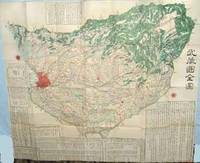
1856826971856. MAP - JAPAN Gyokuransai SADAHIDE & Kikuchi Shûzo. MUSASHI NO KUNI ZENZU. Edo Kikuya Kosaburo & 12 others. Ansei 3 1856 112 X 127 cm. An interesting colored woodcut map of the Musashi plain. Folds into its original titled covers 28 x 18.6 cm. Nice colors impression and colors. Sadahide was not only a talented printmaker but was also responsible for several important maps of the time. Beans 1856.13 in Supplement B page 41. See the UBC website at http://angel.library.ubc.ca/cdm4/item_viewer.phpCISOROOT=/t okugawa&CISOPTR=312&REC=3 for more info on this map. From The Keyes collection. unknown books
18802560561880. Albumen print mounted and captioned beneath image "Fusiyama highest mt. in Japan 14500 feet high-90 miles from Yokohama.". 1 vols. 8-3/4 x 11-3/4 inches Image. Foxing waterstain on mount extending into top of image. Albumen print mounted and captioned beneath image "Fusiyama highest mt. in Japan 14500 feet high-90 miles from Yokohama.". 1 vols. 8-3/4 x 11-3/4 inches Image. WH/9/Box D unknown books
1979043396Tokyo Etc.: Kodansha International 1979. 1st Edition. 311p. dj. Kodansha International unknown books
197940698NY & San Francisco: Kodansha International 1979. First US edition. 311 pp w/index. Fine in fine dust jacket. NY & San Francisco: Kodansha International unknown books
195034251Kohata Japan: Hanano - Shiro - Sha 1950. Oblong folio. 10 1/8 x 14 1/4 inches. Printed tissue covers over vivid paintings. Foreword 12 pages of text and 24 full page plates each with discussion and instruction on the arrangements. Publisher's silk paper label on upper cover.<br/> <br/>The illustrations are after paintings by Etsujin Kawahara; text by Seika Nishizaka; printed by Seizaburo Nishikawa. Hanano - Shiro - Sha unknown books
1985128261985. Softcover. VG- exlib small stamp. Color wraps. 147 pp. 29 color numerous bw plates. Six-page introduction by Gabriel P. Weisberg biographical passages on Millet Courbet and Corot many rich plates. paperback books
196040126Tokyo: Meiji jing shamusho 1960. Linen with gilt titles. Light foxing along fore edge and blank else a very good bright copy in a very good cardboard slipcase torn along the fold. Unpaged. 170 pp. Illus. with 80 color plates and 4 b/w photos. Folio. Osanaga Kanroji preface. Captions and text in English and Japanese. Reproduces the pictures that are painted by famous artists which depict the lives of the Emperor and Empress Meiji.The gallery is located in the center of Meiji Park in Tokyo. [Meiji jing shamusho] unknown books
195332361Tokyo: Nihon Kotsu Kosha 1953. Cloth. A good copy discoloration to spine and front board a bit shaken. Unpaged. Illus. with approximately 400 b/w photos and 50 small maps. "Pictures of Japanese Hot Spring Spas." Covers approximately 70 spas most in two page spreads. Four pages of text eight pages of lists and twenty pages of advertisements. Nihon Kotsu Kosha hardcover books
189827983London: Edward Stanford 1898. Colored map. 1 vols. 22 x 26 1/2 inches. Bound in green cloth paper label folding paper over linen backing. Fine. Colored map. 1 vols. 22 x 26 1/2 inches. Edward Stanford unknown books
738736 folding leaves of which four are blank. 8vo 240 x 170 mm. orig. blue semi-stiff wrappers wrappers somewhat worn orig. label heightened in gold with manuscript title new stitching. Japan: n.d.<br /> During the Edo period there were 12 Korean delegations to Japan whose purposes were mostly to congratulate a new Tokugawa shogun. The missions which normally included 300-500 Koreans accompanied by roughly 1500 Japanese escorts symbolized the amicable relationship between the two nations and in the early years served to legitimize the Tokugawa shogunate.<br /> These delegations which usually took nine or ten months round-trip were enormously expensive undertakings for both countries. The Koreans brought many luxurious presents both public and private gifts and the Japanese in turn furnished equally lavish gifts including large quantities of silver. Also the receiving Japanese were obligated to fund a number of elaborate and costly banquets during the delegation's travels on the mainland and in the capital city as well as provide accommodations throughout.<br /> Our manuscript is concerned with one of the three final missions which took place in 1748 1764 and 1811 this last mission was held on the island of Tsushima located roughly halfway between Kyushu and the Korean mainland. All three of these missions experienced considerable cost-cutting. We suspect our manuscript is a record of the banquets for the final 1811 mission as there is a reference to a Russian translator at this time there was considerable tension between Japan and Russia because of the Russian desire to open trade with the island nation.<br /> Our manuscript describes a series of banquets served during one of these three final missions. In spite of the newly instituted austerity it is clear that the participants ate very well. For each of the 13 banquets we are given the number of guests and their official positions the number of dishes per tray what foods were served etc. Some of the banquets were limited to just a dozen or so guests and others included more than 300 people. <br /> The cuisine is very much in the tradition of the ritualistic preparation and serving of the food on a series of trays known as honzen ryori "main tray cuisine" which was the dominant banqueting style for the elite from the Muromachi period through the Edo period. Various seafoods including luxury items like lobster smoked fish roe octopus and preserved fish are listed along with preparations of chickens eggs many kinds of vegetables burdock daikon radish ginger eggplant wild wasabi and many vegetables that are today quite obscure cooked in various ways pickles mushrooms fruits persimmons pears yuzu nuts rice and other grains and elaborate confections including sweets of Portuguese origin like pound cake or kasutera.<br /> Fine copy preserved in a chitsu. unknown books
1854WRCAM52135Yokohama 1854. 1p. Oblong folio sheet previously folded. A couple minor creases with very light dampstaining at foot of sheet. Very good. An impressive survival from Commodore Perry's expedition a decorative manuscript menu from the banquet that celebrated the agreement of the Treaty of Kanagawa between the United States and Japan in 1854. Although an official and extensive trade agreement between the two countries was not reached until 1858 the Treaty of Kanagawa achieved Perry and the United States government's primary goal of opening Japan to U.S. trade by allowing the use of two ports at Shimoda and Hakodate by American ships granting a degree of freedom of movement to American sailors while in port and establishing diplomatic relations via the appointment of an American consul. <br> <br> The banquet was held in the Treaty House at Yokohama which had been purpose-built for negotiating the agreement between the two countries. It was a return engagement following a first event hosted by the Americans on board Perry's flagship the U.S.S. Powhatan at which copious amounts of lamb beef and whiskey were reportedly served. The menu for the Japanese meal reflected the country's altogether different culinary tastes offering a long series of soup and seafood courses including sea bream and a number of other fish. It is unclear which side found the other's food more distasteful but Perry remarked that the Japanese offerings "Seemed particularly meager in comparison with American fare and soup however desirable in its proper place was found to be but a poor substitute for a round of beef or a haunch of mutton." For their part the Japanese were unimpressed by the Americans' loud and uncouth behavior at the event and were amused by their inability to use chopsticks. <br> <br> Despite the reservations of each side the banquet served as a capstone to one of the most critical moments in the development of Japanese-American relations. This possibly unique piece of ephemera is a wonderful document of that entertaining cross-cultural episode and the culmination of the Perry expedition. unknown books
200327263NY: Gotham Books 2003. 1st edition. Hardback. Dust jacket. F/F. xi 3 321 pp. 8vo. <br/><br/> Gotham Books hardcover books
199528668Honolulu: University of Hawaii Press. Near Fine in Fine dust jacket. 1995. Hardcover. 082481665X . First printing. Remainder dot on spine else fine in a fine dust jacket. . University of Hawaii Press hardcover books