[UNIVERSITY LIFE IN TAISHO JAPAN].Biblio.com
11 476 résultats
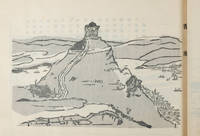
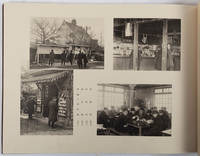
1419215666東京. Tokyo.: 槙写真館. Maki Shashinkan. Taisho 14 1925. Black and white photographic illustrations bird's-eye view map 37pp of photographic plates with tissue guards some captioned 4 pages list the names of graduates 26.5 x 37.5cm. All edges gilt cloth covered boards trifle marked tassel ties. First tissue guard a little creased others very lightly foxed in places a very good copy. This photographic album published in 1925 commemorates the graduating students of Tokyo University of Business the forerunner of today's Hitotsubashi University. Founded in 1874 the school became a university in 1920 making these students part of the very first graduating class. The university was famous particularly for training many of Japan's leading economists and business people. <br> <br>The album opens with a photograph of the main gate and a bird's-eye view map of the campus. The university's campus in central Tokyo was largely destroyed during the Great Kanto Earthquake of 1923. A stark reminder of the university's resilience is a photograph depicting a damaged university hall its roof missing following the earthquake. This album was produced just before the university moved to its new campus in the recently created "garden city" of Kunitachi on the outskirts of Tokyo. <br> <br>Beyond these historical glimpses the album offers a fascinating look into various aspects of student life during this period. Photographs showcase faculty members including the notable Minobe Tatsukichi a constitutional law professor whose theory of the Emperor as an organ in the government 天皇機関説 Tenno kikansetsu became a focus of political controversy in the late 1930s. Students are depicted in different groups including seminar groups with their supervisors and sporting clubs. As well as more formal photos of class groups there are also shots of students relaxing in the cafeteria studying notices on the university noticeboard where examonation results were also posted taking part in a skiing excursion and participating in other sports including kendo rowing and horse-riding. One page features the covers of magazines published by the universityThe university song complete with its musical score is also included. <br> <br>The final four pages of the album list the graduates' names and addresses serving as a lasting record of this significant moment in their academic journey. The album provides a vivid and valuable depiction of Japanese university life in the mid-1920s. . 槙写真館. [Maki Shashinkan]. hardcover
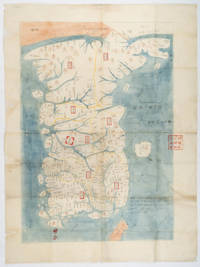
218441Tokyo. No date. Late Edo. Folding manuscript map ink and watercolour 82 x 61 cm red chop at one edge. Evidence of worming mainly affecting the edges and central fold professionally strengthened with archival washi tide-mark to the verso of the map and the wrappers but an appealing example of this delicately executed and sought-after map of the Korean peninsula. A late Edo period hand-painted colour copy of one five maps produced by Japanese scholar Hayashi Shihei to accompany his famous 1785 banned work "Sangoku Tsuran Zusetsu" "An Illustrated Description of the Three Countries" - the three countries in question being Japan's neighbours Korea the Ryukyu Kingdom now Okinawa Prefecture and Ezo now Hokkaido Sakhalin and the Kuril Islands. <br> <br>This detailed map of "The Eight Provinces of Korea" was probably based on Korean maps but Hayashi added details including the existence of the residence in Busan maintained by envoys from the Japanese Domain of Tsushima which had a relationship with Korea throughout most of the Edo period. He also adds text showing the distance between this residence and the Korean capital in both Japanese and Korean measurements and includes latitude lines though these are somewhat inaccurate - placing the 38th parallel south of the Korean capital. His map interestingly gives the Korean words for the four cardinal directions written in Korean script. Unlike Hayashi's "Illustrated Description of the Three Countries" this map does not show the contentious Takeshima/Dokdo/Liancourt Rocks which are too far out from the coast to fall within the frame of the map although it does include the island of Ulleungdo closer to the east coast of Korea. <br> <br>This copy is undated but inscribed with the words "Map by Hayashi Shihei of Sendai". A red chop in the lower middle shows that the map was owned by the Iijima Family in Matsushiro Domain Nagano Prefecture. The family were known as historians of the domain. . unknown
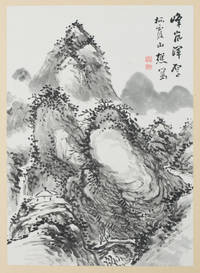
1930159304Shōwa 5. 1930. Ten ink paintings presented in a cloth covered Japanese accordion style album. Upper and lower edges lightly insect damaged insect damage in three small places within the album itself not affecting the paintings title label a little nibbled but nevertheless a very pleasing album blue cloth case somewhat worn and faded with toggles. 24.5 x 18cm. The ten paintings in this album depict a variety of subjects. They are the works of a skillful group of likely amateur ink painters organised by Seika Sanshō 栖霞山樵 and also include his own works. The ink paintings in this album are: <br> <br>1 Landscape by Koshū 菰舟; 2 Orchid by Kikusui 菊水; 3 Landscape by Seika Sanshō; 4 Peaches by Koshū; 5 Landscape by Kikusui 菊水; 6 Crabs by Koken 菰軒; 7 Landscape by Rokumei 鹿鳴; 8 Narcissus by Seika Sanshō; 9 Landscape by Rokumei; 10 Otafuku Homely Woman Mask by Seika Sanshō. <br> <br>A double page explanation in calligraphy by Seika Sanshō dated 1930 tells us that this album contains works produced at the second Seika-kai gathering by Seika's group and that he requested Yamada Kokō 山田古香 to contribute the title calligraphy. Kokō's calligraphy "Sei yō shu 静有趣” means "Tranquillity has elegance". Yamada Kokō 1852-1935 orginally from Sanuki Province present Kagawa Prefecture was a professional calligrapher based in Kyoto. . hardcover
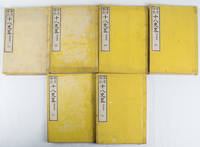
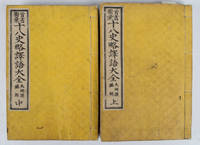
1818165209京都.Kyoto.: 五車楼.Gosharō. 明治18 1885. 6 volumes of 7 volume-set missing volume one bound in Japanese 5 hole stab binding woodblock printed on double leaves oriental style. Paper title labels laid down on yellow embossed upper covers some rubbing and light soiling in good condition. Text in Chinese with Japanese reading marks. 26 x 18.5cm. A Japanese Meiji edition of Jūhasshiryaku 十八史略 Shibashilue in pinyin with extra notes added by a Kyoto resident 奧野精一 Okuno Seiichi. The Summary of the Eighteen Histories is an introductory Chinese history for children compiled by Zeng Xianzhi 曾先之 in the Yuan period. Complete in 7 volumes. . 五車楼.[Gosharō]. unknown
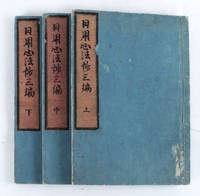
1840159300Edo.: 須原屋茂兵衛 Suharaya Mohei. Tenpō 11 1840. 3 volumes being the complete Part III of 日用心法鈔三編 Ethical Teachings for Everyday Life. Paper covered card covers paper labels upper covers four hole stab binding string split on last volume but the binding is still sound. Covers a little marked and abraded in places but the binding is sound and generally clean. Occasional light soiling contents but the contents are otherwise very good indeed. This work provided practical ethics for the commoners. It seems that the author Jufukuken Shinkyō 壽福軒眞鏡 was a retired merchant in Edo but other details of his life are not known. This work <br>Nichiyō shinpō-shō Part One to Part Five was published in the period between 1838 to 1855. <br> <br>Practical ethics was widely accepted by the commoners after Japanese philosopher Ishida Baigan 石田梅岩 1685-1744 promoted the Shingaku Mind Learning 心学 movement. In the first passage of the preface Shinkyō writes: "Observing people in this society although many like drinking parties merrymaking seeing theatrical plays and watching Sumo wrestling a very few like to work for their family business. Also although there are some who eat a lot of food a very few eat food while saving a lot of rice grains. Most people eat without preserving food for the future". The book is a collection of ethical advice lessons and moral stories. Shinkyō argues that one should work hard for one's family business be frugal and save money and rice which is the foundation for peace and security of the nation. The book is illustrated by ukiyo-e artist Yanagawa Shigenobu 柳川重信 1787-1833 who was a disciple of Hokusai. Although the name of the publisher does not appear in this book but consultation with other volumes in this series of Nichiyō shinpō-shō it is apparent that Suharaya Mohei 須原屋茂兵衛 was the publisher. . 須原屋茂兵衛 [Suharaya Mohei]? unknown
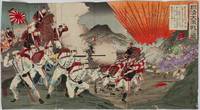
1894218366Yokoyama.: Ryōhachi . 1894. Conjoined triptych of ink and watercolour woodblock prints trimmed to the margins together 35 x 63.3 cms backed onto Japanese scrap paper with some writing title and descriptive cartouches top right red censor's stamp lower left and artist's signature lower right some paper abrasions wear at the joins slight bleeding of ink and offsetting on the verso but overall in good condition. Vivid depiction of the Battle of Seonghwan also known as the battle of Asan in Korea July 29 1894 the first major land battle on of the Sino-Japanese War 1894-1895. Chinese troops are seen fleeing the charging Japanese marines and the silhouettes of airborn casualties are depicted in the bright orange explosion. <br> <br>Yōsai Nobukazu 1872-1944 was active towards the very end of the ukiyo-e period when the popular days of this style were over. Printmakers like Yōsai struggled and he survived as an artist by depicting the Sino-Japanese and Russo-Japanese wars. Yōshū Chikanobu was his teacher active 1838-1912 and Yōsai Nobukazu was considered his best student. The majority of his prints were triptychs of battles of the Sino-Japanese war. See a digitisation of this woodblock from the Lavenberg Collection of Japanese prints online at the University of Oregon The caption on top right praises the Japanese troops' bravery against 500 strong Chinese troops. <br> <br>From the collection of the late John Caiger lecturer in Asian studies ANU. . Ryōhachi (?) unknown
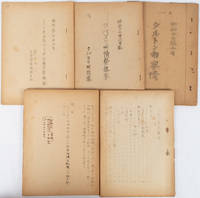
1942175230No details of publisher. Circa1942. Five mimeographed stapled booklets 26 x 18 cm 26 8 50 16 24 pp including wrappers on folded sheets 3 folding charts text diagrams and tables paper browning some soiling and discolouration and occasional ink marking in the text lower wrapper one booklet detached but in still in sound condition. A set of unpublished mimeographed Japanese military documents containing detailed information about various parts of the Tapanuli Regency of Sumatra under Japanese occupation. The four separate volumes cover Tapanuli Regency in general the town of Tarutun Fort de Kock Bukittingi and the wider central west coast region of Sumatra. The volume on Tapanuli is dated August 1942 and the volume of Tarutun October 1942 suggesting that these were compiled a few months after the Japanese invasion of Sumatra. They contain basic information on climate population history customs transport and education. The volume on Tarutun includes a detailed fold-out map of the town and there are also detailed statistical tables on climate agriculture education etc. A rare and important source for researching the wartime history of Indonesia. . No details of publisher. unknown
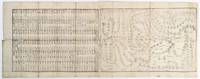
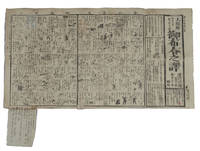
1850177390Late Edo circa1850. Black and white woodblock print map measuring 31 x 80.5cm. Map folds into original yellow paper-covered card cover 16 x 8.5cm with paper title label. This copy lacks the lower cover and the back exposed panel is lightly worn and soiled neat washi tissue repairs along fold some light dampstains and soiling to map although most are scarcely noticeable upper 2.5cm of cover title label is missing. Although showing signs of use this map is still quite charming. This fascinating map of travelling routes in Edo period Japan brings out a totally different perspective on land topography and distance. The map covers the mainland Japan from the Tohoku region to Wakayama including Edo Kyoto and Osaka. The travelling routes such as Tokaido and Nakasendo are also marked. The map does not show north-south and east-west. It shows how the roads are connected and the distances between towns and villages. The map was probably used for pilgrimages to famous temples and shrines such as Zenko-ji and Ise Shrine as they are clearly marked. It also covers the main travelling routes between Edo and Kyoto with the distances and travelling fares including tips. <br> <br>The top end of title label is partially missing and the correct map title and its compiler are not known to us. . unknown
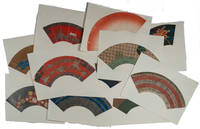
1900164294No date. circa1900. 11 original hand painted fan designs approximately 40 x 15cm laid down on archival sheets 51 x 38cm. Each design is unique some are brightly coloured whilst others are more sombre and some have a lacquer or metallic overprinting and silver flecking. Each of the designs has been backed with Japanese paper. Undated and in very good condition apart from some very minor spotting to the backing sheets not affecting the image they appear to be early 1900s. The collection is housed in a custom-made clamshell case. The earliest recorded sighting of the Japanese fan was in the 6th century CE where burial tombs were adorned with pictures of fans. Drawing on the fan began around the Heian period 794-4485 and became such a hit that laws were created to restrict their use to particular social classes. Historically Japanese hand fans were tools of aristocrats and the samurai class. They were a way to signify social standing and even communicate messages. Japanese fan designs enchanted westerners when they first became exposed to them. Those influenced include the Australian artist Charles Conder who in the 1890s inspired by Japanese fan designs made a speciality of painting them on silk. <br> <br>Various images painted on these fans have symbolic or seasonal meanings. One shows an array of golden origami cranes on a red background symbolizing long life. Another is decorated with peonies symbols of fertility and nobility whose flowering marks the end of spring and beginning of summer. A third is decorated with images of pine bamboo and plum blossom - a combination representing health and longevity because all three plants can withstand cold weather. Others have more abstract images based on the flow of rivers the sheen of silk and other themes. . unknown
160728京都.Kyoto.: 有文舘.Yūbunkan. 明治四十五 1912. 16 two-tone black and grey woodblock prints with accompanying Japanese text on opposite leaf 31pp unpaginated four stab hole string binding paper title label laid down upper cover. Covers worn and stained extremities worn with loss. Some hold barely affecting the text one leaf and loss of paper upper corner lower paste down. Generally good. 16.6 x 23.9cm. Yamauchi Gusen1866-1927 was a staff illustrator at Osaka Asahi Newspaper. He studied under Takahashi Yuichi and Goseda Horyu. These illustrations originally drawn on Yamauchi Gusn's trip from Shanghai to Europe were first published in the Osaka Asahi Shimbun and where they proved to be very popular. Nihonjinmei daijiten. Japanese name dictionary. <br> <br>The plates in this volume show five images of Shanghai one image of Hong Kong one image of the southern end of the Malay Peninsula four images of Sri Lanka's Port of Colombo Port and four images of the Suez canal. Scarce. . 有文舘.[Yūbunkan]. unknown
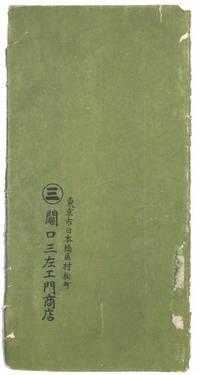
163409關口三左エ門商店. No date of publication. circa1930. Sixteen beautiful coloured designs for furosiki with accompanying pages showing eight different font styles. 25.8 cm x 13 cm. Original green card boards worn with a little loss and creasing one illustration torn with a little loss light vertical crease but overall very good. The furoshiki or wrapping cloths listed in this delightful catalogue contain the names of restaurants kimono stores banks and a rice shop. It appears likely this was a sales catalogue for a company which specialised in making furoshiki for businesses to use for advertising. <br> <br>Over the years furoshiki turned into paper and plastic bags but recently they have been attracting attention again due to environmental concerns. They offer the great advantage of a size that can be readily changed and are very portable. . 關口三左エ門商店 hardcover
1876164297Osaka.: Manabe Busuke. 真部武助. Meiji 9 1876. Black and white woodblock print on Japanese washi paper 4 small text sheets pasted on two panels and lower margin for revisions and addendum 38 x 68cm This interesting kawaraban which was published in Osaka in 1876 details over 70 types of small crimes with charming little black and white illustrations. It was published in order to explain the newly introduced civil law at the beginning of Meiji period to the Japanese public. <br> <br>The crimes are generally called "Ishiki Kaii Zaimoku" Different Style Crimes. A number of the crimes depicted in the notice concern the relationships with foreigners such as sharing accommodation with offering lodging to foreigners without permission or boarding a foreign boat without a boarding certificate. <br> <br>Some regulations are also focused on stamping out forms of behaviour which were likely to be regarded as shocking or uncivilized by foreigners - including prohibitions on running public baths with mixed bathing punishments for the sales of erotic prints shunga and a prohibion probably unenforceable on urinating in the street. <br> <br>Other types of crimes relate to public safety and disturbance such as shooting arrows on the street or playing music instruments after midnight selling blowfish fugu - prohibited because of the risk of poisoning and keeping pigs in your house in built-up areas. The life of urban areas in the 1870s is captured in regulations that prohibit behaviour such as extinguishing street lights or carrying uncovered buckets of human waste outside the prescribed hours. <br> <br>The four articles which specify the punishments for those crimes are also noted and they include incarceration or a penalty as well as reporting that there is some possibility of exemption under mitigating circumstances. Five small tipped in sheets provide information about additional regulations promulgated after the original sheet was published. <br> <br>As Japan became a modern nation and introduced a new legal system the public needed to learn the content as well as their context of small crimes and their punishments. This illustrated notice explains in detail what not to do in a newly modernised society and the consequences in case of a breach of the rules. . [Manabe Busuke]. 真部武助 unknown
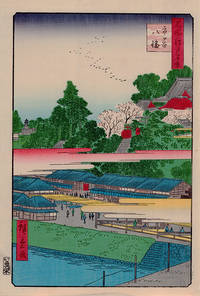
1858218370Tokyo.: 魚屋栄吉. Uoya Eikichi. Post-1858. Colour woodblock print 38 x 26 cms title cartouches publisher's stamp and artist's signature but without the censor's date stamp sheet a little toned old paper repair at the lower margin not affecting the image but in very good bright condition. Number 41 from the series "One hundred famous views of Edo" Meishō Edo Hyakkei which Hiroshige worked on between 1856 and 1858. This print of Hachiman Shrine in Ichigaya was published a month after his death in 1858 and it was most likely that Hiroshige II contributed to this work. Hachiman Shrine in Ichigaya was founded in the15th century and during the Edo period it attracted many visitors. It still stands on the original site. <br> <br>From the collection of the late John Caiger lecturer in Asian studies ANU. . 魚屋栄吉. [Uoya Eikichi]. unknown
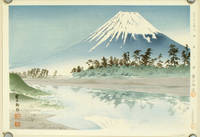
1940204862Kyoto.: 内田美術書. Uchida Bijutsusho. circa1940s. Colour woodblock print 26.3 x 38 cms; 28.5 x 41 cms sheet tipped in at upper edge to the original window paper mount a little edge wear and age toned the image in very good bright condition. Appealing woodblock print by 徳力富吉郎 Tokuriki Tomikichiro 1902-1999 one of Japan's leading printmakers from the series Thirty-Six Views of Mount Fuji. This series was inspired by Katsushika Hokusai's Thirty-Six Views of Mount Fuji and Utagawa Hiroshige's works while being depicted with a modern sensibility. Mt. Fuji is depicted with the forest at its foot and the mountain's reflection delicately executed in the surrounding water. . 内田美術書. [Uchida Bijutsusho]. unknown
1893163107No place of publication.: 天眞堂. Tenshindō. Meiji 26 1893. A beautifully illustrated colour manuscript Meiji period "house geomancy" 家相 plan folded scale 1:50. On heavy good quality Japanese paper. Pop-up walls gate and some buildings turnable geomantic compass. Some creasing light soiling or browning but generally very good. 179 x 95cm. House divination originated in ancient China and became popular in Japan from the 19th century on. The idea of the house divination remains popular in Japan to this day. <br> <br>This beautiful sheet gives a detailed floor plan of a traditional Japanese house designed for a person of high status. This house was possibly on the grounds of Tenshindō in Yamanashi near Tokyoas Tenshindō is mentioned in the text. The 24 red lines which represent 24 hexagrams diverge from the central movable paper geomantic compass indicating 24 directions. The geomantic compass its range taking in the entire plan enables the planner to be certain that rooms and objects will be placed in such a way as to benefit the residents. By the same token the compass serves to make sure that planning does not work to the detriment of the residents. . [天眞堂]. [Tenshindō] unknown
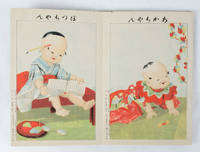
1898160723Tokyo. Meiji 31-32 1898-1899. 18 colour lithographs in Japanese accordion album patterned cloth covered boards. Folded leaves opening in a few places lightly creased at the lower lower of two pages. 21.5 x 14.5cm. This item is an album containing 18 lithograph hand-coloured prints each of which depicts a small child at play. The artist who was also the publisher of this album was Kumazawa Kitarō 熊澤喜太郎 who was a lithographer and publisher. Kumazawa Kitarō specialised in depicting beautiful ladies and small children. We have been able to find work by Kumazawa from Meiji 21 1888 and his work appears to have been popular however we have not been able to find details about his life or when he died. <br> <br>At this time during the Meiji Era 1887-97 lithographs were very popular in Japan due it seems to the more realistic representations used. In fact their popularity was such that they took quite a share of the woodblock print market at the time. Playful children such as those in this album were a particularly popular topic for these lithographs. The children depicted here are engaged in various activities. Titles of the plates are: Oman-chan おまんちゃん Little Oman girl's name; Okagura おかぐら Festival Dancing; Mizu-asobi 水遊 Playing with Water; Tonosama とのさま Feudal lord; Okeiku おけいく Practice; Fūsen ふうせん Balloon; Jitenshiya じてんしや Bicycle; Teasobi-du てあそびづ ; Akachiyan あかちやん Baby; Botsuchiyan ぼつちやん Boy; Otenarai おてならい Learning Writing; Matan’ya またんや ; Neko-asobi ねこあそび Playing with a Cat; Kingau きんがう Goldfish; Gohan 御はん Meal; Okeikou おけいこう Playing Music; Yuki-asobi 雪あそび Playing with Snow; and Hi-no-yōjin 火の用心 Be Careful about Fire . hardcover
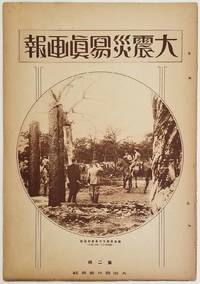
1923211461大阪. Osaka.: 大阪朝日新聞社. Osaka Asahi Shinbunsha. Taisho 12 1923. Japanese magazine special edition devoted to the Kanto earthquake sepia-print photographs and illustrations throughout 31 numbered pages 38 x 26.5cm covers loosening 4 punched holes to the inner margin presumably from being bound washi repairs to spine paper age-toned with occasional foxing and chipping. Depicts scenes of destruction and renewal rescue and recovery efforts with commentary in Japanese. An uncommon and wide-ranging contemporary visual coverage including an areal photo of the devasting effects of the earthquake. The front cover features a scene the Crown Prince inspects the devastation Some historical illustrations of large scale earthquake during Edo period are included. The last two pages features full-page advertisements for insurance companies. <br> <br>The event known in Japanese as 関東大震災 Kantō Daishinsai occurred on the September 1st 1923. The damage caused by the magnitude 8 earthquake killed in total over 100000 people and sparked a tsunami and fire tornados. In Tokyo alone the devastation was such that it took two full days to extinguish the blaze that devastated the city. The total repair cost is estimated in today's terms to have conservatively cost in excess of AUD$14 billion. . 大阪朝日新聞社. [Osaka Asahi Shinbunsha]. unknown
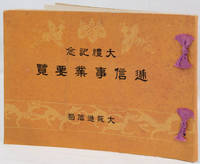
1928221053大阪. Osaka.: 大阪逓信局. Osaka Teishinkyoku. Showa 3 1928. Colour maps black and white photographic illustrations gently stylish colour charts 18.5 x 26cm. 6 86 2pp ribbon ties attractive stiff card covers. This handbook on Japanese postal and communication services was published in 1928 by the Osaka Post and Communication Bureau to mark the enthronement of Emperor Hirohito the beginning of the Shōwa era. Numerous ceremonies were held in Kyoto in November 1928 to celebrate the occasion. <br> <br>Attractively illustrated in colour and drawing on Japanese graphic motifs the book describes in detail the structure and operation of postal and communication services as well as the postal savings bank including their scale range and charges. It also covers electricity generation and use shipping and aircraft services. The figures and statistics are presented throughout with stylish colour graphics combining clarity with visual appeal. <br> <br>The volume offers valuable source material for researchers interested in Japan’s communication systems in the late 1920s. Postal and communication services were among the most advanced sectors of early twentieth-century society and this publication clearly reflects institutional pride and confidence as Japan entered the new Shōwa era. . 大阪逓信局. [Osaka Teishinkyoku]. unknown
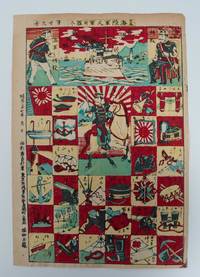
1904164282Meiji 37 1904. Colour woodblock showing 30 examples of military service equipment 24.3 cm x 35 cm Woodblock print showing the equipment used by the Japanese army and navy. Floats are called Ukifukuro and you can see the difference from the present day. It is an interesting example of both a ”zukushi-e" or series picture and a Omocha-e a toy picture which were enjoyed by both children and adults. . unknown
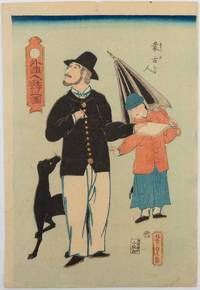
1862220053Japan.: 山田屋庄次郎. Yamada Shōjirō. Bunkyu 1 1862. Colour woodblock print 37.2 x 25.3 cms the sheet a little age-toned a spot of browning at the foot and a pinhole in the upper margin but the image unaffected very good condition. This colour woodblock print by Utagawa Yoshitora is an excellent example of Yokohama-e Yokohama Prints which were very popular in Japan after the country was opened in the mid-19th century. Yokohama was one of the trading ports with the outside world and many foreigners were residing in the area. The Yokohama-e was very similar to the Nagasaki-e Nagasaki Prints and depicted people and cultures which were foreign to the Japanese. Utagawa Yoshitora was active between the end of Edo Period to the mid-Meiji Period and produced numerous Nishiki-e prints including Yokohama-e in his career. He was regarded as one of the top Nishiki-e artists around that time. <br> <br>In this print a Western man is strolling outside with his dog and a Mongolian boy who carries an umbrella for him. The man is observing something in the distance and about to jot down something in his notebook with a pen which he holds in his right hand. Behind him his young attendant plays with the dog unobserved by his pre-occupied master. . 山田屋庄次郎. [Yamada Shōjirō]. unknown
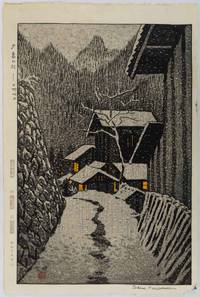
1958218327京都. Kyoto.: 芸艸堂. Unsodo. Showa 33 1958. Colour woodblock print 40.8 x 27 cms including margins published by Unsodo in 1958 the title Unsodo publisher's seal printer's seal carver's seal left margin Unsodo 'Gei' watermark Kasamatsu's signature and red seal lower left and signed in alphabet lower right kento cut due to the printing process lower right sheet a little dusty and creased but the image in very good condition. Kasamatsu Shiro 1898 – 1991 was an active member of the Shin-hanga New Wood Block movement and had a very long and successful career. After the Pacific War his style evolved embracing western techniques and this 1958 print showcases his later work. Minakami in Gunma Prefecture is located in the mountainous area north of Tokyo and is known for its hot springs. The print depicts a wintery dusk scene in the village with falling snow against the glow of house lights. <br> <br>From the collection of the late John Caiger 1930-2022 lecturer in Asian studies ANU. . 芸艸堂. [Unsodo]. unknown
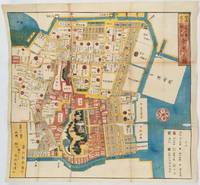
1857193964Tokyo.: Owariya Seishichi . Ansei 4:1857. Folding colour woodblock print map 45.7 x 50cm; 50 x 52cm sheet the legend shows: crest = feudal lord's main residence; black square = retired lord's residence; black dot= lord's warehouse blue = rivers; yellow = roads and bridges; green = forested areas; grey = homes of townspeople extensive worming with some minor loss to the map principally at the folds backed on the verso with archival washi. Although damaged nevertheless a scarce map with good colour and clarity. The publisher Owariya produced 31 folded maps of districts in Edo between 1850-65 called Owariya ban kiri-e zu. This is the area of and around the very important Zojoji Temple the main temple of the Pure Land sect of Buddhism. The map covers the central Tokyo area where residences of major daimyos were located as they are marked with their family crests and names. Presently Tokyo Tower and many embassies are located in the area. . Owariya Seishichi (?) unknown
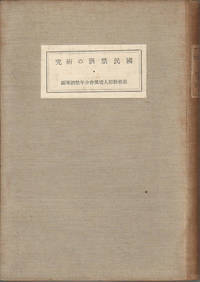
1924164278Fujin Shinpōsha. 婦人新報社. Taisho 13 1924. 440pp browned throughout with a little staining at foot of some pages some pencilling lower board stained cloth spine browned. 10.7 cm x 19 cm This book was based on a series of lectures held in commemoration of the enforcement of the Underage Drinking Prohibition. The contents include "Prohibition of Alcohol" "Liquor and Crime" "Culture and Prohibition" "Prohibition as Humanitarian" "Reason for Submission of Underage Prohibition" "Prohibition Movement in Japan" "Progress of Civilization and Prohibition Law" "Workers and Liquor" "Buddhism and Liquor" “Prohibition from a Medical View Point” “Efficiency and Sake” and “Prohibition from a Legal Stand Point”. . Fujin Shinpōsha].* 婦人新報社 hardcover
1518165201大阪.Osaka.: 明善堂. Meizendō. 明治15 1882. Volumes 1 and 2 only lacks volume 3. Map in text showing Chinese ancient battlefield of Fei River in 383 A.D. black and white illustrations original yellow embossed card covers four hole Japanese stab binding double leaves in oriental style paper title labels laid down upper covers. Covers a little marked and lightly worn at edges otherwise very good. Vol 1: 75 leaves; Vol 2: 76 leaves. Text in Chinese with Japanese translation. 17.8 x 12.1cm. Accompanying the Chinese text these volumes provide Japanese translations and some illustrations for words and terms which appeared in the 18 histories. . 明善堂. [Meizendō]. unknown
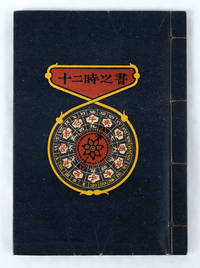
1719160736Tokyo.: 私刊豆本. Limited edition of 300 signed copies. Showa 17 1942. 15 folded leaves delightfully illustrated with colour lithographs showing Japanese clocks and other time pieces by well-known artist and author Takeo Takei. Japanese four hole stab string binding pictorial covers. A little very light wear. Very good. Influential Japanese artist Takeo Takei 1894 -1983 is probably best known for his children's book illustrations but his work was far from limited to this genre. His work is regarded as having three distinct areas: Douga or illustrations for children Hanga or woodblock prints and Kanpon books of various materials. This stunning petite book was his eighth book. . 私刊豆本. unknown