[VIETNAM] MORRIS, Mark (artist)Biblio.com
330 résultats
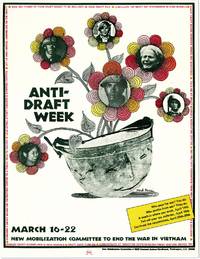
197082861Washington DC: New Mobilization Committee 1970. First Edition. Original illustrated poster offset printed in colors on white stock measuring 39cm x 50.5cm 15.25" x 20". Subtle toning along lower edge some trivial wear to extremities; unbacked very Near Fine. Striking anti-draft poster designed by Mark Morris featuring a combat helmet-turned-flower pot with the center of each flower containing the faces of men women children and soldiers. The border of the poster details specific actions civilians could take to resist the draft: bar military recruiters from high school and college campuses draft card turn-ins demanding draft counselors in high schools picketing the homes and businesses of draft board members and talk-ins et al. Not found in OCLC though we note examples held at OMCA CSPG and Minneapolis Institute of Art. 82861. New Mobilization Committee unknown
197146090Washington D.C.: Peoples Coalition for Peace & Justice 1971. Original lithographed poster 22" x 17' ca 56cm x 43cm. Printed in three colors on white paperstock. A few stains on verso bleeding faintly through on lighter portions of image else a bright Very Good copy minimally worn -- Very Good / B. <br /> <br /> Poster promoting the 1971 "Mule Train To Wall Street" an event intended to coincide with the great Mayday Tribe march on Washington described by some observers as the most poorly planned direct action of the Vietnam era. The action ended with the arrest of some 7000 marchers before the event even got underway. The central graphic is of a leering death's-head with inset images of Black and Asian adults and children in distress with title above "Death Has Many Faces We Demand Life!" Artist not identified but a compelling and uncommon poster. Peoples Coalition for Peace & Justice unknown
37042601Saigon ca. 1950-60's. Group of 22 hand-made papers hand hand-printed in Cholon various colors gold & silver foils various kinds & sizes all in excellent condition fine Joss examples of "after life" offerings by surviving relatives. . . . A COLLECTION OF 22 AUTHENTIC CHINESE-VIETNAMESE . . . JOSS PAPERS INCLUDING GOLD BARS COINS & CLOTHING . . . WITH HUNDREDS OF SHEETS OF PAPER EXAMPLES . WHAT IS JOSS: Venerating the ancestors is based on the belief that the spirits of the dead continue to dwell in the natural world and have the power to influence the fortune and fate of the living. The goal of ancestor worship is to ensure the ancestor's continued well-being and positive disposition towards the living and sometimes to ask for special favors or assistance. . Rituals of ancestor worship most commonly consist of offerings to the deceased to provide for their welfare in the afterlife which is envisioned to be similar to the earthly life. The burning of spirit money enables the ancestor to purchase luxuries and necessities needed for a comfortable afterlife. . WHAT IS JOSS PAPER: Jin Zhi or Xiang Zhi is Pinyin for Chinese Joss Paper meaning "Gold Paper" or "Fragrant Paper." They have also been called "Yinsizhi" Netherworld paper "Zhiqian" paper money "Ming bi" "Shade/Dark money" and several other similar names has been used over the centuries. . These papers have been burnt as offerings common in Chinese ancestral worship to venerate deceased family members and relatives on holidays and special occasions. They were also used as offerings in the worship of gods using similar Joss papers. . These papers were in two categories: 1. Paper representations of Chinese coins or currency some called: "Hell Notes" being large tied stacks of money. . b. Three-dimensional paper-crafts & papier-mâché made into items of daily use sent to the deceased ancestors or Gods for use in the "after life." These objects were made into objects of daily use such as food clothing daily use objects burned "to ensure that the spirit of the deceased has lots of good things in the afterlife." These are often called "Jingyi" "threads and clothes" which is a type of Joss paper with printed images of items needed by the dead in "daily life" such as clothes shoes cups and scissors &c. . THREE TYPES OF SPIRIT MONEY: Different types of spirit money are given to distinct categories of spirits. The three main types of spirit money are copper cash silver and gold. Cash monies are given to newly deceased spirits and spirits of the unknown. . Gold Jin spirit money is given to both the deceased and higher gods such as the Jade Emperor. . Silver spirit money Yin is given exclusively to ancestral spirits as well as spirits of local deities. These distinctions between the three categories of spirit money must be followed precisely to avoid confusing or insulting the spirits. . HAND-MADE PAPERS: Joss paper is traditionally made from coarse bamboo-fiber paper which has a handmade quality in variable coarseness with many natural imperfections. It is often mistakenly called "rice paper." . Traditional joss is cut into individual squares or rectangles. Depending on the region Joss paper may be decorated with seals stamps pieces of contrasting paper engraved designs or other motifs including gold & silver colors representation gold & silver. Red stamped decorations are also used red being festive or color of good luck and fortune. . The above liberally extricated from the Wikipedia article. . THE COLLECTION: The collection consists of the following examples the count of each individual packet is an approximate count. The lucky colors in Chinese culture are red and yellow gold. . Photographs of each item is posted to our website. . Each example is made of rough Chinese hand-made paper smooth on the verso rough on the recto. All examples are in excellent unused condition. . There are rare some examples of tin foil papers appearing either 'silver' or 'gold' in color. These are some of the most expensive obscure and important offerings. . a. "SHOU" or the Chinese Hanzi character for "Live a Long Life." Red printed over buff paper with a central square of silver tinfoil paper over which is yellow lacquered to make it appear as gold over printed by a red ink "SHOU." The size is 13 x 13 cm. about 100 sheet packet. With good luck texts. See images posted to our website: spine.jpg & illus04.jpg lower half left side. . b. A large yellow sheet gently two-folded not sharp folds 31 x 24.3 cm. showing 4 columns of Chinese 'cash' bronze or copper coins with central text. There are about 75 sheets see our illus01.jpg. . c. Yellow printed with red text and illustrations over buff paper. Contains 7 packs tied with a yellow paper plus 3 packs tied with a pink paper. Shows lucky days with two donkey carts. About 7-8 sheets per pack 10 packs in all. Size is 9.5 x 12.9 cm. See illus02.jpg. . d. Yellow printed with red Chinese cash coins printed over buff paper. It illustrates 9 lines of 7 coins for a total of 63 coins per sheet. There are 10 packets in all 3 in pink wrapper 7 in yellow wrapper about 8 sheets per pack. Size is 9.5 x 13.1 cm. See illus03.jpg . e. Yellow printed with red over printed text and illustrations. With 10 packets 7 in yellow wrapper 3 in pink wrapper. Auspicious text with illustrated circular chart of lucky symbols Size is 9.7 x 13 cm. about 8 pages per pack. See illus04.jpg upper half. . f. Black printed Chinese cash coins over white paper. 9 x 7 columns of coins = 63 in all. With 10 packets of about 10 sheets per packet yellow wrapper. Size is12 x 12.8 cm. see illus04.jpg lower right. . g. Two packs of Vietnamese Dong paper currency 50000 Dong gray printed on buff paper showing a Chinese Emperor: "Tien Dia Phu" "Heavenly Bank" about 50 sheets. With red printed currency: 5000 Dong "Dia Phu" "Heavenly Bank" with Chinese emperor illustration signed by Yin Low about 100 sheets in plain paper wrapper. Size is about 14.4 x 6.5 cm. See illus05.jpg left size. . h. A pair of red printed paper with black images over buff paper. Each is an image of a man & a woman with Hanzi Nu woman & Nan man. Inside each is a second sheet of the same image printed on white paper with black ink. Inside of each again is darker buff sheet with black printed illustrations of a tiger and several images of men and women a house and various household domesticated animals: chicken goat dog water buffalo pig cat donkey along with a dragon flat hammock junk ship vessel scissors combs tea sets medicine bottle fan pen & related household items. Essentially a list of commonly used and needed items to be sent to the ancestors for use in the 'after life.' With 11 woman & 9 men packets. Size is opens to 9 x 19 cm the outer cover & first identical page is a bit smaller with the 3rd sheet being 15 x 16 cm. folded. See illus05.jpg top right & just below that for page 3. Also illus08.jpg. . i. Two Kinds of Gold Bars: 1. KIM-THANH SAIGON HONG KONG HANOI PHOM PENN OR PUR with translation into Hanzi of the above. Orange gold tinfoil bar 4.1 x 9 cm. Ten each 9 in plastic protector stapled. . 2. KIM-THANH SAIGON HONG KONG HANOI PHOM PENN OR PUR with translation into Hanzi of the above. Gold yellow color tinfoil bar 3.2 x 8.3 cm. Seventeen 16 in plastic protector stapled. Please see bottom of illus05.jpg for 2 images. . j. Four Kinds of Gold & Silver Foil Papers: 1. Silver foil paper overlaid on buff paper 9.8 x 11.3 cm. about 50 sheets. . 2. Gold foil paper. Please see illus05.jpg . k. Red ink over buff/green rough paper clothing for adults the larger and children/women the smaller. Each contains 10 packets of about 10 sheets three dimensional cut out head and sides of clothing 'v' cutouts. See illus07.jpg . l. Red tissue paper good luck & long life charm three dimensional with cut outs 21 x 25.5 cm. each sheet illustrates 100 identical images 10 columns across by 10 vertical. center folded opens to be double the image posted illus08.jpg. . m. Two paper fans over babmoo: . 1. This is a lovely fan with colored decorations the dragon at left phoenix at right with the Chinese Hanzi character "FU" meaning good fortune. Opens to about 40.5 closes to 24.5 cm. long. . . 2. The same kind of fan pure white the color of mourning a death. Opens to about 44.5 closes to 25 cm. long. . Both are nicely hand-made using hand-made Vietnamese papers with a metal fastner at the heel. See illus09.jpg & illus10.jpg posted to our website. . Please visit our webiste we may have copies of the below references. . REFERENCE: . GOODRICH Anne S.: PEKING PAPER GODS: A Look at Home Worship. Nettetal 1991 Steyler Verlag. WANG Shucun.: PAPER JOSS: Deity Worship Through Folk Prints. ALEXEIEV Basil M.: THE CHINESE GODS OF WEALTH. DAY Clarence B.: CHINESE PEASANT CULTS: Being A Study of Chinese Paper Gods. Shanghai 194019691975. He gives a particularly good list of various gods by Chinese romanized name and function organized by subjects. RUDOVA Maria.: CHINESE POPULAR PRINTS see p.2 #2 Zao Wang our #1; pp.3-47-9 figures 3-610-16 et al. for identical or similar examples. DORE Henry.: RESEARCHES INTO CHINESE SUPERSTITIONS. DU BOSE Hampden C.: THE DRAGON IMAGE AND DEMON OR THE THREE RELIGIONS OF CHINA: Confucianism Buddhism and Taoism. Giving an Account Of the Mythology Idolatry And Demonolatry of the Chinese. HUNTER Dard.: PAPERMAKING IN INDO-CHINA. VALE J.: CHINESE SUPERSTITIONS. WERNER E.T.C.: DICTIONARY OF CHINESE MYTHOLOGY. HEJZLAR Josef.: EARLY CHINESE GRAPHICS. pedia-org/wiki/Joss_Chinese_Statue . . unknown
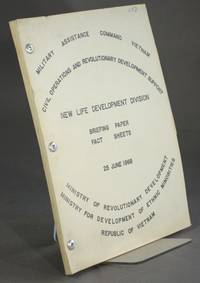
196841373Saigon: Military Assistance Command 25 June 1968. 4to 55 leaves in all printed on rectos only from typescript; tables and graphs throughout; post-bound in original printed wrappers; "LVD" in manuscript at top right-hand corner of upper cover; very good. The purpose here was to identify and define the various provincial programs sponsored in Vietnam and summarize their status to date and to function as a coordinator between USAID and field personnel. Not found in OCLC. Military Assistance Command, 25 June unknown
197341784N.p.: Vietnam Veterans Against the War 1973. First Edition. Original offset lithographed poster in colors 56cm x 43cm 22" x 17". Fine fresh apparently unused example. Poster sold as a fundraiser for the defense of the Gainesville Eight a group of Florida Vietnam veterans who were accused on dubious evidence of conspiracy to disrupt the 1972 Republican National Convention in Miami Beach. All eight defendants including the reputed ringleader Scott Camil were eventually acquitted. A rare poster and this is a lovely fresh example. Not catalogued in OCLC; we note only one institutionally-held copy Library of Congress. Vietnam Veterans Against the War unknown
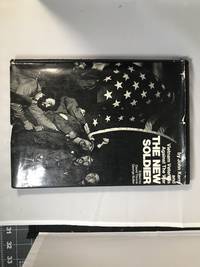
197108-29-2022-10This hardcover has black boards with a fine detailed silver gilt image with the US flag and Vietnam Veterans from a photo by George Butler. All lettering and image in silver is in fine condition. All pages and the numerous photos are clean and unmarked.<br />INSCRIBED on the title page as seen in photo. <br />we believe that the David Putnam to whom the inscription is dedicated is or was a Massachusetts friend of Mr. Kerry but we are unable to verify this.<br /> DJ condition is Good-. Chipping along top and bottom margins Two tiny closed tears repaired with tape several others untaped. She creases in DJ flaps. Not price clipped.<br /> This work is a photographic essay of the Anti-War movement and the Vietnam Veterans that culminated in a march of the Capital Building in 1971. An important text for anyone interested in American History and the climate of the Country during the Vietnam War. The Macmillan Company hardcover
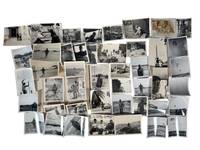
1965212871965. Archive of original photographs documenting African American soldiers serving in the Vietnam War during the early phase of large-scale United States military escalation in Southeast Asia. The material captures the daily experiences military operations and interpersonal relationships of Black servicemen stationed at Bien Hoa Air Base circa 1965 including members of the 173rd Airborne Brigade Combat Team. The photographs provide primary-source visual evidence of integrated military life during a period when African American troops served disproportionately in frontline combat roles while racial inequality and civil rights struggles intensified in the United States. Particularly significant is the candid nature of the images which were apparently taken by an African American serviceman identified by the surname Thomas offering an unusually personal perspective on Black military experience during the Vietnam conflict.<br /> Collection consists of 56 original black-and-white silver gelatin photographs measuring approximately 3.5 x 3.5 to 3.5 x 5.5 inches primarily loose with two mounted to an album page. The photographs depict African American soldiers at Bien Hoa Air Base near Saigon identifiable through a photographed base sign and visible 173rd Airborne Brigade insignia on soldiers' uniforms. Numerous images portray Black servicemen posing casually outside tents reading letters socializing in small groups smoking resting and interacting with fellow soldiers emphasizing camaraderie and the routines of military life between operations. Several photographs document airborne training exercises with parachutists descending beneath open canopies over the surrounding landscape. Other images depict military infrastructure and equipment including jeeps sandbag fortifications stacked munitions barracks areas and transport zones associated with the logistical operations of the base. The archive also includes photographs taken during off-duty excursions into Vietnamese civilian areas including a riverside marketplace crowded with vendors boats and local residents. Additional images show soldiers posed before local monuments and religious sites including one photograph of Thomas with a white serviceman in front of a Buddhist temple and another featuring a tall obelisk monument surrounded by military statuary.<br /> The archive documents the lived experience of African American servicemen within integrated combat units during one of the most consequential military conflicts of the twentieth century. Bien Hoa Air Base served as a major operational center for airborne and aerial missions during the early years of sustained U.S. intervention and the presence of Black paratroopers within these photographs provides important visual evidence of African American military participation during the Civil Rights era. Unlike official military photography the informal and personal nature of the images preserves moments of friendship boredom training and interaction with Vietnamese civilians that are often absent from institutional wartime records. Minor edge wear and light handling wear throughout; photographs remain sharp and well-preserved overall in very good condition. A substantial and historically valuable photographic record of African American military life in Vietnam during the mid-1960s. unknown
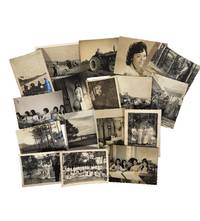
1960210781960. Vietnam War Photography Personal photograph album containing 17 silver gelatin photographs documenting civilian life education family and military service in South Vietnam during the 1960s. Original brown vinyl album measuring approximately 3.5" x 4.5"; photographs approximately 2.5" x 3.25".<br /> <br /> The album offers an intimate glimpse into the everyday experiences of South Vietnamese men and women during a period more often documented through the lens of war. Rather than combat scenes the photographs focus primarily on family friendship education courtship and community life creating a personal record of a society navigating rapid social change amid the conflict. Several photographs depict young Vietnamese women wearing traditional áo dài dresses both in formal portraits and informal outdoor settings. One particularly attractive image shows three smiling women walking along a path in patterned áo dài framed by a mixture of traditional and modern architecture. Another studio portrait captures a young woman posed alone and smiling toward the camera suggesting a family member friend or perhaps the album owner's sweetheart.<br /> <br /> Education and youth culture are prominently represented. Multiple photographs show school-aged girls gathered in classrooms and assembled outdoors in large group portraits. The students wear white áo dài and traditional conical hats illustrating the continued importance of educational institutions and cultural traditions during the war years. Several candid classroom scenes preserve moments of ordinary student life rarely encountered in wartime photographic archives. The album also documents changing fashions and modernization in South Vietnam. Young men and women appear in contemporary 1960s clothing posing in parks forests and rural landscapes. One photograph shows a young Vietnamese man seated proudly atop a large tractor reflecting the agricultural modernization efforts underway throughout much of South Vietnam during the period.<br /> <br /> Military service appears in several images. One photograph depicts a South Vietnamese serviceman standing beside an automobile with military vehicles visible in the background suggesting that the album may have belonged to a soldier or military family. Unlike official military photographs however the image emphasizes personal identity rather than military operations reinforcing the album's character as a private keepsake rather than a wartime record. Additional photographs show fishing boats riverside scenes rural landscapes and groups of family members and friends creating a portrait of everyday life that existed alongside the broader conflict. Together the photographs reveal the coexistence of tradition and modernity documenting a generation of South Vietnamese men and women whose lives were shaped by both enduring cultural customs and the upheavals of the Vietnam War era. Photographs appear to have been removed from a larger album at some point with remnants of mounting paper and adhesive visible on versos. Minor wear and handling marks; overall very good condition. A compelling personal archive documenting civilian life education culture and military service in South Vietnam during the 1960s. unknown
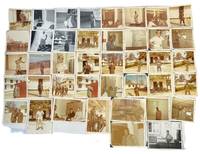
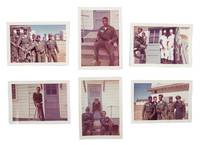
1968197531968. Photographic archive 1968-1969 documenting African American enlisted personnel in the United States Army Transportation Corps during the Vietnam War era with emphasis on training environments unit structure and daily life on base prior to overseas deployment. The material captures soldiers in both formal and informal settings providing visual evidence of military preparation racial composition within units and interpersonal dynamics among predominantly Black troops during a period of significant racial tension within the U.S. armed forces. The archive supports research into African American military service segregation and integration practices and the lived experience of soldiers during the late 1960s.<br /> <br /> Archive of 41 original vintage photographs primarily color with several black-and-white images ranging in size from approximately 3.5 x 3.5 inches to 3.5 x 5 inches. The photographs depict soldiers in a range of uniform styles including standard fatigues seasonal dress variations and Transportation Corps-specific elements such as white belts shoulder cords red scarves and helmets with distinctive markings. Several images show troops in formation with rifles raised while others capture training environments featuring sandbag trenches artillery placements and fortified structures resembling pillboxes. Interior scenes document barracks life including soldiers playing cards maintaining uniforms and interacting in relaxed settings. A black-and-white image shows an African American soldier posed near signage for a "Leadership School and Honor Guard" at a U.S. Transportation Center while another identifies a seated "battery clerk" labeled informally as "Johnny my Running Mate." Additional photographs include racially integrated groupings with Black and white soldiers appearing together in casual and structured contexts.<br /> <br /> Produced during the height of the Vietnam War this archive provides insight into the transitional phase between training and deployment emphasizing both institutional structure and personal experience within military life. The presence of both formal drills and informal social scenes allows for examination of hierarchy camaraderie and daily routine among enlisted men. Light handling wear and minor surface marks; overall very good condition. A substantial visual record of African American military experience within the U.S. Army during a pivotal period of twentieth-century conflict. unknown
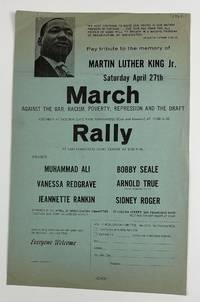
19683397San Francisco 1968. Very good. Broadsheet on blue paper 13.5 x 8.5 inches. Slight discoloration along top and bottom edges minor edge wear a few soft creases old horizontal folds. An exceedingly rare broadsheet advertising a multi-faceted public march and rally against the Vietnam War and "racism poverty and repression" which took place in San Francisco California about three weeks after the assassination of Martin Luther King Jr. The organizers of the event the April 27 Mobilization Committee framed the day's activities around Dr. King's opposition to the Vietnam War; the broadside calls for the protesters to "pay tribute to the memory" of Dr. King his portrait is printed at the top of the front side of the broadsheet and the entirety of the verso prints excerpts of an April 4 1967 speech by Dr. King railing against the Vietnam War. Particularly interesting is the eclectic list of speakers who participated in the day's events on April 27 1968 which included Muhammad Ali Vanessa Redgrave Jeanette Rankin Bobby Seale Arnold True and Sidney Roger. Ali was in the midst of his appeal after his conviction for draft evasion the previous year and was a natural candidate to speak against the injustices of the Vietnam War. Bobby Seale co-founder of the Black Panthers was four months away from participating in protests at the 1968 Chicago Democratic Convention after which he was arrested and tried as part of the sham Chicago Eight fiasco.<br /> <br /> The diversity of the speakers echoes the quantity of different issues represented by the current broadsheet: Civil Rights the Vietnam War the recent assassination of Dr. King Muhammad Ali's legal fight against the war Bobby Seale's controversial role with the Bay Area Black Panthers women's rights and the role of the American military. We could locate no other copies of this broadsheet in auction history or OCLC. unknown
1970190661970. U.S. Army Engineer Company photo album early 1970s documents logistical operations base life and personnel composition at Oakland Army Base during the Vietnam War providing visual evidence of military transportation infrastructure and the integration of a diverse workforce within a key Pacific transit hub. The material records the functioning of an engineer unit responsible for vehicle maintenance cargo handling and operational readiness while also capturing the presence of African American servicemen and female personnel within the same working and ceremonial environments. It supports research into military logistics on the U.S. home front race and gender integration in the armed forces and the institutional processes that sustained overseas deployment during the Vietnam War.<br /> <br /> Album containing 369 photographs including 353 color and 16 black and white images most measuring approximately 5 x 3.5 inches compiled at Oakland Army Base and the adjacent Port of Oakland. The contents document heavy machinery and vehicle maintenance including bulldozers cranes transport trucks and military jeeps with numerous images showing mechanics engaged in repair work. Additional photographs depict combat training exercises including rifle instruction with M16 firearms alongside formal ceremonies in which soldiers of varied racial backgrounds and both genders receive promotions commendations and instruction from commanding officers. Several images show administrative office environments providing insight into the clerical and organizational functions supporting base operations. Group scenes include family-oriented gatherings and meals indicating the social dimension of service life within the base setting. Produced at a time when Oakland Army Base operated as a principal embarkation and return point for U.S. forces traveling to and from Vietnam and other locations in East Asia the album documents the domestic infrastructure underpinning overseas military engagement. The emphasis on machinery cargo movement and personnel readiness reflects the scale and complexity of logistical coordination required during the conflict. The visible diversity within the unit corresponds with broader transformations in the U.S. military following desegregation and evolving roles for women making the album relevant to studies of institutional change during the late stages of the Vietnam War. Light wear to album edges and corners photographs well-preserved with minor handling marks; overall very good. A substantial visual record of engineer operations and base life at a critical West Coast military installation during wartime. unknown
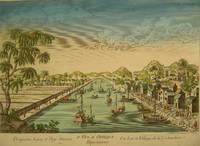
#[34149]Paris Daumont ca.1760. Contemporary handcoloured perspective view vue d'optique or Guckkastenbild depicting a view of the village of Yang-ka in Cochin with legend in Latin and French. Ca.285 x 39 cm. Handsome optical harbour view of a village with figures and canal with sailing-ships in Vietnam. unknown
1960Cat357Japan Taiwan Korea and the US 1960. 15 ¼ x 11 inch album with attractive painted cover containing approximately 235 photos mainly 3 ½ x 5 inches and smaller. Contents generally in excellent condition. Excellent. A photo album by an unknown US Marine containing photos from his time in Okinawa Taiwan and Korea in the 1950s and 1960s. At the time—the earliest dated photo in the album is from April 1956—the Vietnam War was in its early days with Eisenhower deploying MAAG to train the ARVN in late 1955. It is not clear what unit the photographer was with as only his training platoon 46 of the Second Recruit Battalion on Parris Island is identified; however this photo’s caption includes “Photo by MAAGâ€.<br /> <br /> The album appears to be divided between the three locations each of which was strategic in the Cold War broadly and for American efforts in Vietnam in particular. It is highlighted by a series of photographs apparently from Taiwan showing agricultural workers planting and posing with their crops and children. In the 1950s under the China Aid Act the Sino-American Joint Commission on Rural Reconstruction JCRR had launched a land reform financed by American aid and staffed by ROC scientists. In the 1960s this program expanded to crop diversification and the creation of the Asian Vegetable Research and Development Center. These efforts towards agricultural development in Taiwan were like other US efforts in the region intended to contain the spread of Communism.1<br /> <br /> Other photos from Taiwan include shots of the ships; men outside their tents vehicles and straw huts smoking and playing cards; some are city streets but most are of the countryside. Several notable photos show the Marines playing at being POWs: in one a man poses with his hands on his head next to a sign reading “POW AND CAPTURED / EQUIPMENT COMPOUND†and in another one soldier pretends to march his fellow at gunpoint.<br /> <br /> Photos from Okinawa show military vehicles city streets and American and Japanese men—many Okinawans were employed by the US military during its occupation. Many scenes appear to show construction efforts with USMC-marked bulldozers and tractors driving around fields of dirt and rock in the countryside with a few of these showing Okinawa residents as well.<br /> <br /> South Korea also played an active role in the Vietnam War. Photos from Korea show tanks and other vehicles along the coast and being loaded into ships American soldiers driving and posing in the countryside and several of village streets and residents.<br /> <br /> Other subjects include target shooting transit on a ship captioned “WESTWARD HO / FAR EAST BOUND†and some that appear to be family and scenery shots in the US dated April 1961.<br /> <br /> Overall the album provides a look not just at the activities of the Marine Corps in the early US advisory era of the Vietnam War but also the people and places of the US’s strategic activities in East Asia. Of interest to historians of the Vietnam War Cold War and US empire.<br /> <br /> 1 Leo Chu “‘A bloodless social revolution’: Land reform and multiple cropping in Cold War Taiwan 1950–1979†The history of crop science and the future of food 6 no. 5 September 2024 1104–1110. unknown
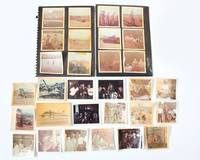
197018470N.p. N.p. c. 1970. Prints in uniformly near fine to very good condition with some curling to the edges. Collection of twenty-five 3 3/8 X 4 1/4 inch Polaroid snapshots mostly in color taken during an American soldier's deployment in An Khê Vietnam. Features images of soldiers grilling drinking and sitting in their bunkers with a few double exposures and a couple of photographs of female civilians. Prints have been adhered to cards with in several instances notes penned on the versos. Fascinating vernacular document of soldier life in one of the most strategically significant military zones of the Vietnam conflict. N.p. N.p. unknown
19742111902158501299Kawade Shobo Shinsha 1974. Soft Cover. Fine. Number of pages: 3 books Size: 21 cm Number of books: 3 books Kawade Shobo Shinsha paperback
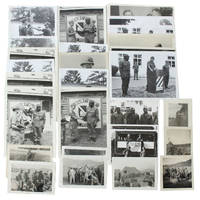
1950186871950. Barber Command Sergeant Major. U.S. Army 17th Field Artillery Battalion photographs circa 1960s to 1970s document integrated military training and the advancement of an African American senior noncommissioned officer within the post-desegregation Army. The images center on activities at a Noncommissioned Officer Academy and within field environments placing the archive within the period following the formal integration of the U.S. military and during the era of the Vietnam War. The repeated presence of Barber in both instructional and ceremonial contexts situates him within the upper ranks of enlisted leadership documenting the visibility and authority of Black noncommissioned officers at a time when opportunities for advancement had only recently expanded following mid-twentieth-century reforms.<br /> <br /> Archive of 30 black and white silver gelatin photographs. United States circa 1960s to 1970s. Photographs range in size from approximately 7 x 5 inches to 4 x 3 inches. Images depict integrated groups of soldiers within the 17th Field Artillery Battalion known as "The Persuaders" engaged in training and daily activities. Scenes include artillery instruction trench digging weapons handling camp life chapel gatherings and a graduation ceremony in which soldiers take an oath and pass a unit flag. Several photographs show Barber prominently including moments that appear to document formal oath-taking or advancement within the noncommissioned officer structure. The photographs appear to have been taken across multiple locations including a more rugged field setting and a separate academy environment.<br /> <br /> Following the desegregation of the U.S. armed forces in 1948 African American soldiers increasingly assumed leadership roles within enlisted ranks particularly during the Cold War and Vietnam War periods. The position of Command Sergeant Major represents one of the highest enlisted leadership roles in the Army responsible for discipline training and the welfare of soldiers. This archive provides visual evidence of integrated unit cohesion professional training systems and the presence of Black leadership within those structures. The combination of field exercises and formal ceremonies offers material for examining race hierarchy and institutional culture within the modern U.S. Army. Light wear consistent with handling; overall very good condition. unknown
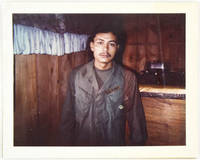
1973185751973. Cooper Howard L. Vietnam War photographs and promotion letter circa 1970s document African American noncommissioned officer service within an integrated U.S. Army and the formal evaluation structures governing advancement during and immediately after the conflict. The material centers on Sergeant Cooper's presence within a deployed unit in Vietnam alongside fellow soldiers and local civilians and extends into the postwar administrative process through a typed recommendation for promotion dated 1973. Together the photographs and letter situate the archive within the broader context of African American military participation during a period marked by both expanded combat roles and documented racial disparities in discipline assignment and promotion within the armed forces.<br /> <br /> Archive of 20 vernacular photographs and one typed letter. Vietnam and United States circa 1970s. Photographs include 15 color Kodak snapshots measuring approximately 5 x 3.5 inches or smaller depicting Sergeant Cooper and fellow soldiers primarily in uniform in Vietnam. Four black and white Agfa snapshots measuring approximately 5.5 x 3.5 inches show Cooper other servicemen and Vietnamese children. One Polaroid photograph includes two African American men standing beside Cooper with handwritten captions. Additional images depict base life and group interactions within the unit. Accompanying the photographs is a typed letter recommending Sergeant Howard L. Cooper for promotion signed by Transportation Supervisor Alice J. Griffin Fort Ord California dated 14 November 1973 one page measuring approximately 8 x 10 3/8 inches.<br /> <br /> African American soldiers served in large numbers during the Vietnam War with many attaining noncommissioned officer roles that required both leadership within units and navigation of institutional structures that did not always provide equitable advancement. The inclusion of a formal recommendation letter alongside the photographs connects personal service to bureaucratic recognition documenting how military authority evaluated performance in the postwar period. The combined visual and documentary record offers material for examining race leadership and military administration in the Vietnam era. Photographs show light wear; letter with pinholes discoloration and minor ink smear at upper edge; overall very good condition. unknown
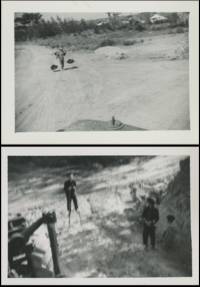
1970185581970. Vandergriff Sergeant. Vietnam War photographs 1970 to 1971 document integrated U.S. Army service during a period when African American troops were serving in substantial numbers in combat units and negotiating both military duty and racial dynamics within the ranks. The images record a tour of duty from basic training through the final days before return home placing the archive within the later phase of the Vietnam War when troop morale racial tension and antiwar sentiment were all intensifying within the U.S. military. The presence of a visibly multiracial unit with many African American soldiers situates the photographs within the post-desegregation military structure established after World War II offering direct visual evidence of daily life interpersonal relationships and combat readiness in an officially integrated force.<br /> <br /> Archive of 68 color Polaroid photographs. Vietnam 1970 to 1971. Images measure approximately 3.5 x 3.5 inches to 3.5 x 4.5 inches with approximately one quarter mounted to black board and the remainder loose. Several loose photographs include handwritten captions and soldiers' names on verso. The sequence follows Sergeant Vandergriff's service from training through deployment with scenes including soldiers smoking drinking and posing with standard-issue M16 rifles and M1911 sidearms. Additional images show helicopter interiors and aerial views a destroyed grounded helicopter tanks aircraft drill formations and encampments. Photographs also depict Vietnamese villages and local civilians including two children bathing in a river. Unit identification is not explicitly stated in the archive. Other photos depict aircraft drill marches tanks weaponry villages and locals including two Vietnamese children bathing in a river. It is not clear which unit these troops belong to. It is possible they are in the 101st Airborne which was prominent at both Birmingham and Evans.<br /> <br /> During the Vietnam War African American soldiers served in disproportionately high numbers in combat roles particularly in airborne and front-line units at a time when the U.S. military was confronting internal racial conflict alongside external war. This archive documents the lived experience of a multiracial unit operating within that structure showing informal social interaction alongside military activity and equipment. The combination of candid personal imagery and operational context provides material for examining race military culture and everyday life in a late-stage U.S. combat theater. Some photographs show minor staining and image degradation; overall very good condition. unknown
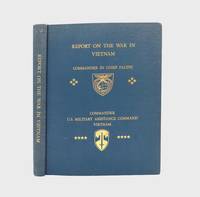
196820360Washington: Government Printing Office 1968. First edition. Maps some folding charts and diagrams photographs Index laid in at the back. 1 vols. 4to. Original blue cloth gilt. Some light soiling of cloth warping of volume and light marginal browning of text else a very good copy of this work. First edition. Maps some folding charts and diagrams photographs Index laid in at the back. 1 vols. 4to. INSCRIBED BY WILLIAM WESTMORELAND TO HEDLEY DONOVAN former editor-in-chief of Time Inc. "To Hedley Donovan-With reminiscence of our pleasant association. W. C. Westmoreland. March 1969." In his position as Editor in Chief of Time Inc. Donovan had made four trips to Vietnam to see firsthand the people and places being covered by his correspondents and to get a feel for the situation. He met with Westmoreland in Vietnam in late 1965-early 1966 and probably on his subsequent trips.<br /> <br /> Westmoreland was the Time Magazine Man of the Year for 1965. Partly reading "As commander of all U.S. forces in South Viet Nam General William Childs Westmoreland 51 directed the historic buildup drew up the battle plans and infused the 190000 men under him with his own idealistic view of U.S. aims and responsibilities. He was the sinewy personification of the American fighting man in 1965 who through the monsoon mud of nameless hamlets amidst the swirling sand of seagirt enclaves atop the jungled mountains of the Annamese Cordillera served as the instrument of U.S. policy quietly enduring the terror and discomfort of a conflict that was not yet a war on a battlefield that was all no man's land. Government Printing Office unknown
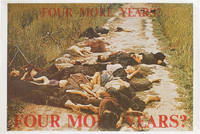
197247693N.p.: Artists' and Writers' Protest / Colorcraft Inc 1972. First Edition. Original photographic poster offset printed in colors on white stock measuring 96.5cm x 63.5cm ca.38" x 25". Some minor handling trivial wear to extremities else very Near Fine / A unbacked. One of the most gruesome and effective pieces of propaganda to emerge during the Vietnam War reproducing a photograph taken during the My Lai Massacre by U.S. Army photographer Sgt. Ronald L. Haeberle. This and other iconic photos were taken by Haeberle on March 16 1968 using his personal camera while assigned to follow Charlie Company into My Lai. Unlike the monochrome images which he returned to the Army shot with a standard-issue Army camera the color images he shot with his personal camera were brought back to the States and sold to Life magazine after Haeberle was honorably discharged. The photos were printed in the December 5 1969 issue of Life offering Americans a harrowing glimpse into some of the attrocities being committed overseas; his caption beneath this image read: "Most were women and babies. It looked as if they tried to get away." The poster was designed by members of the Art Workers Coalition and initially released in 1969 using the identical image with the overlaid text reading: "Q: And babies A: And babies." This version published four years later intentionally subverts Richard Nixon's campaign slogan "Four More Years" forcing Americans to ask whether or not they wanted Nixon for another term and by extention another four years embroiled in foreign conflict. OCLC notes a single holding MoMA. Artists' and Writers' Protest / Colorcraft, Inc unknown
1960232781960. Black U.S. Army soldier's photo album documenting home and military life between Virginia and Vietnam in the late 1960s and early 1970s. Black servicemen moved through the formally desegregated Army during the first major U.S. war fought after official military integration. Centered a young black enlisted man the album tracks the life of service through photos at camp soldiers in formation military equipment helicopters and with portraits alongside other soldiers. Though the Korean War was the first U.S. war that was formally desegregated the units still saw unequal integration and opportunity while the Vietnam War marks an era in which a desegregated military was already well established. <br /> <br /> Photo archive of 92 color and black and white photographs ranging from 3.5" x 3.5" to 3.5" x 5" Virginia and Vietnam late 1960s to early 1970s. Mounted in a 10" x 14" spiral bound album. Many images show the compiler in uniform and civilian dress some of the earlier home scenes have handwritten inscriptions en verso. Other images show helicopter scenes in flight and at camp; tent lines wooden barracks; soldiers standing in formation gathering in small groups and posing beside military vehicles and equipment. A Virginia license plate anchors the soldier's home state and the use of quippy captions gives this soldier a voice identifying some individuals by their first name and one particular youthful photo of himself captioned "Dunn will be leaving on January the 1st army But you know he is trying to get out of it said he was going to school. Ha! Ha! Uncle Sam's school" giving a glimpse into the prior aspirations of young Black man right before being drafted.<br /> <br /> Black soldiers entered the Vietnam era military in large numbers at the same time that civil rights struggles Black Power politics and mounting criticism of the war reshaped the meaning of service for African American men. This album gives weight to that history with repeated presence of black men within camps and comradeship with white soldiers. Adhesive residue to corners and backs of some images edgewear to album and leaves and expected handling wear; photographs generally clear and legible. Overall very good condition. This album shows the ground level of Black military experience in the early post segregation Army. unknown
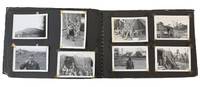
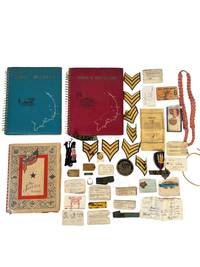
1942193041942. Coon Clarence; Coon Michael. Coons family Air Force service archive 1942-1944 and 1968-1969 documents two generations of American military experience across World War II and the Vietnam War offering direct evidence of shifting military culture wartime attitudes and generational identity within a single family. Clarence Coon's New York World War II service as an engineer gunner in the Fifteenth Air Force in Italy situates the archive within the Allied air campaign over Europe while his son Michael Coon's deployment to South Vietnam places the later material within the context of a deeply contested and culturally transformative conflict. Clarence's letters and scrapbook entries foreground a disciplined and duty-oriented perspective shaped by mid-century wartime expectations while Michael's photographic record presents a markedly different tone capturing leisure irreverence and camaraderie among soldiers during the Vietnam era. The archive preserves Clarence's written voice including lines such as "Another card to let you know that I don't do all my writing to women" and his commentary on the 1942 New York gubernatorial election "The radio just announced Bennet's Defeat. To bad. Well we will see what Dewey can do. I wish him luck" as well as his observations during stateside training "Well as far as I'm concerned they can give Tenn. back to the Indians. We are walking around in a sea of mud. Its all day rains every 5 min. I wouldn't live in the South for anything." Together these materials establish a continuous family narrative linking wartime service political awareness and personal expression across two major twentieth-century conflicts.<br /> <br /> Coons family Air Force archive. United States and Vietnam 1942-1944 and 1968-1969. Group consists of two photograph albums from Vietnam War service and one World War II scrapbook accompanied by a quantity of associated ephemera including patches medals registration cards business cards a ring and a dog tag. Archive contains approximately 123 photographs across the albums and scrapbook along with numerous postcards including 26 with manuscript correspondence on the verso and three pages of a letter incorporated into the scrapbook. Scrapbook also includes newspaper clippings documenting Clarence Coon's training and service progression including flight training in Westover Massachusetts; Nashville and Smyrna Tennessee; technical training in Gulfport Mississippi; and gunnery and pistol range distinction at Tyndall Field Florida. Vietnam-era albums depict Michael Coon and fellow servicemen in informal and candid settings including scenes of drinking recreational outings helicopter transport weapons handling and interactions with entertainment venues.<br /> <br /> The juxtaposition of World War II and Vietnam War materials within this archive provides a concentrated record of evolving American military life particularly the transition from the structured collective ethos associated with the Second World War to the more individualized and culturally expressive environment of Vietnam-era service. Clarence Coon's combat role aboard B-24 Liberator bombers during missions over Italy aligns the archive with the strategic bombing campaigns of the European theater while his writings document both military routine and domestic political awareness. In contrast Michael Coon's photographs capture the lived experience of American soldiers in Vietnam beyond formal operations including leisure dissenting humor and the visual language of 1960s youth culture within the military. Light wear from handling throughout with typical album and scrapbook aging and ephemera showing minor creasing; overall very good condition. unknown
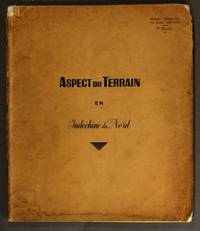
195435722Saigon: Édition du Service cartographique des F.T.E.O. 1954. First edition large square 4to pp. 117; photographic illustrations throughout; some wear a few short splits in the wrapper extremities else very good in original brown wrappers printed in black on the upper cover. At head of title: Forces terrestres du Nord Vietnam. 2. Bureau. Issued during the final battle for France in Vietnam at Dien Bien Phu. Cornell and Arizona only in OCLC. Édition du Service cartographique des F.T.E.O. unknown
197174766Tarrytown NY: N.p. 1971. This calligraphic and decorated scroll measures 19 x 124 inches and is composed of five sheets of laid paper attached. Calligraphic text with decoration on the margins. A very powerful yet attractive document.Written much in the style of the Declaration of Independence this scroll written by a known author and illustrated by an renown artist move in an entirely different direction all the while upholding the principles of the US primary document. The time was 1971 and the anger at American involvement in the war in Vietnam was reaching a fever pitch. Marches and demonstrations not a few of which I was dragged to as a youth were happening across the country violence was done to university students. and thousands of deaths were reported weekly on television. It was a great time of togetherness and everyone pitched in. The makers;Robert Andrew Parker; Robert Andrew Parker graduated from the Art Institute of Chicago in 1952 after serving in the Army in the 1940s. He moved to New York after he spent a summer at the Skowhegan School of Painting and Sculpture studying under Jack Levine. Parker continued to develop his printmaking skills at Atelier 17 an historically important printmaking studio founded by the renowned English painter and printmaker Stanley William Hayter. Robert Andrew Parker was also chosen in 1952 as the youngest artist to show at the Metropolitan Museum of Art in the — Exhibition of American Watercolors Drawings and Prints — the exhibition featured Stuart Davis John Marin Robert Andrew Parker and Jackson Pollock. John F. Mahoney seems have slipped the bonds of history but he had a excellent writing style. A source document. N.p. unknown
191246593Hanoi-Haiphong Vietnam: Imprimerie d’Extreme-Orient 1912. Four vols. Folio. xiii 1 370 pp. 20 plates some maps photos each with facing explanatory leaf numerous tables several large folding; Atlas unpaginated w/ 178 diagrams maps geological sections relief maps 2 very large folding colour maps some geological formation plates in colour; 4 146 2 pp. plus 25 plates each with facing explanatory leaf numerous text illustrations diagrams; 8 76 4 pp. plus 9 plates each with facing explanatory leaf numerous text illustrations diagrams. Uniformly bound in original printed wrappers some scuffing soiling edgewear occasional light foxing still a VG- uncut & unopened presentation set inscribed and presented by Honore Lantenois & Henri Mansuy to Prof. Marcellin Boule 1861-1942 French geologist palaeontologist and physical anthropologist who reconstructed the first complete Neanderthal skeleton in France. First edition presentation set of this massive first installment in the Geological Survey of Southeast Asia begun in 1908 documenting the biostratigraphy of the Yunnan Region which was awarded the Tchihatchef Prize of the French Academy of Sciences. Much of this survey work was done during the building of the Hanoi to Yunnan-fou Kunming railroad which was built by the French to exploit the tremendous mineral wealth of Yunnan. The Director of the Department of Natural Resources for France in Vietnam was Honore Lantenois 1863-1940 who worked for years with Henri Mansuy 1857-1937 and sent him back to France several times to study palaeontology at the School of Natural Resources Ecole des Mines. Lantenois recruited Jacques Deprat 1880-1935 in 1908 -- at the time a brilliant palaeontologist -- to conduct an ambitious program mapping the geology of Indochina and neighboring areas. All three men became involved in the notorious Deprat Affair which resulted in Mansuy accusing Deprat to Lantenois in 1917 that Deprat had used a few European-sources trilobites among his fossil specimens from Indochina and Yunnan. This accusation rested on the distinction that the suspect trilobites were not just similar in nature to others found in Europe but the matrix they were embedded may have originated from Europe. Although nearly 90 years later it would be determined that the trilobite fauna discovered by Deprat indicated that the Yunnan had occupied a location adjacent to Bohemia originally in the early Palaeozoic period; the French scientific community condemned Deprat at the time stripped him of his degrees and posts and forced him to leave the field. A complete set including the Atlas is quite scarce. See: Genovese Madeleine Colani and the Deprat Scandal at the Geological Survey of Indochina Journal of the Siam Society Vol. 99 pp. 269-290 2011; Osborne The Deprat Affair: Ambition revenge and deceit in French Indo-China 1999; Stokes Deprat’s trilobites and the position of the Indochina Terrane in the Early Palaeozoic Proceedings of the International Symposia on Geoscience Resources and Environments of Asian Terranes 2008 pp. 201-207. Imprimerie d’Extreme-Orient, unknown