2 905 résultats
68 pages. Features: Use Your Rifle - For Strength - 12 exercises using your rifle; Hughes gun ordnance 2-page ad; Small Unit Operations - Counterguerrilla War - Part 7 of 7; Illustrated ad for the new 'winged' LVHX2 LCA by FMC; KKo - Indonesia's Marines; Guerrilla War Factors and Reflections - Its Theory and Practice from Clausewitz to Castro; Syllabus Training for the Infantry Battalion; Hit or Miss - putting on a green suit does not make Marines into expert marksmen; The Life of LtGen Lewis B. (Chesty) Puller, USMC (Ret.) (part 2 of 2); CHICOM - small arms and tactics - photo-illustrated article; The Evolution of Firearms; Photos of helicopter activity in Vietnam; Transfers and Promotions; and more. Average wear. Unmarked. A sound vintage copy. Magazine
Features: NA-73X - first of a famous breed; RAF's Mustang 1; A-36 - Dive-Bombing Mustang; P-51 & P-51A - Early Development; P-51B & P-51C - The Razorbacks; ACQR Mustang Color Portfolio; P-51D - a sword in the heart of Germany; TP-51D - Mustang built for two; P-51H - last of the Mustangs; XP-51F/G/J - the Lightweights; Mustangs for the Air National Guard; Mustang People; The Early Days - developments that led to the birth of the mightiest sea-going weapon; The first carrier - the USS Langley; The New Breed - the Lexington and Saratoga and aircraft like the F4B and Helldiver controlled the seas in the 1930s; Carriers in Combat; The Post-War Carriers - they were kept busy with Korea, Vietnam and more; New Wings for the Fleet - upgrading carriers and their planes toward the year 2000; Listing of USN Carriers - a complete list of all USN carriers; The Stirrings of War; WWII - the Island War against the Japanese; ACQR Color Portfolio - 16 color pages; Leathernecks over Korea - MSMC vets meet again over Korea; Into the Jet Age - the Marines equip with jet aircraft; Master of Vertical Envelopment - USMC refines the methods of helicopter warfare; USMC in the 1970s - new aircraft boost its strength. Special issue devoted to the US Air Force Museum features articles on: how it was moved from Patterson Field to Wright Field; Color Portfolios; How the USAF made a Sopwith Camel; Saga of 33-324, a rare Douglas biplane; Restoring the last B-10; The last P-35; WWII; Royal Frey remembers; Shoo-Shoo Baby - the history of a B-17; Aircraft of the jet age; inventory listing; and more. Moderate wear. Binding sound. A quality copy. Book
Features: Vietnam - the American Agony; One Woman's War - Beryl Fox of CBC-TV directs filming in Vietnam of a widely acclaimed documentary on jungle fighting; Herbert Irvine - Benevolent despot of decor - with many colour photos; Warrendale Treatment Centre near Toronto treats children from troubled prisons of fear and loneliness; Journey to the last frontier, by Stephen Jones Gamester; Ken Johnstone describes how he transformed a little orchard into a booming pocket of poverty; Gerald Stevens on Canadiana; and more. Average wear. A sound copy. Book
62 pages. Features: Classroom Surveillance by Kodak (12 years ahead of 1984); The Rolling Stones - Goodbye to All That (even though they are still "Rolling" over 40 years later!);Nixon's Vietnam Strategy; The Prospects of the Vietnam Offensive; Lasers into Pruning Hooks; The Rising Cry for Justice; U.S. Electronic Espionage - A Memoir - *major* article providing rare early public information about the NSA, including discussion of Israel preparing nuclear weapons at Dimona - under cover of a textile plant; What's Left of the Black Left (part 2); Records - Chuck Berry; Fantastic back cover ad for "Carlos Santana and Buddy Miles! Live" on back cover. Bits of peeling from front cover. Average wear. Unmarked. A worthy vintage copy. Magazine
20 pages. Features: Diefenbaker's Final Fray; Erna Paris describes her juror service during a rape trial; Fantastic colour photo for GM featuring John Brooks and his red Firebird; Calgary Stampeder receiver Terry Evanshen thinks himself to touchdowns; Salad recipes; Doug Wright's Family; The St. Boniface hawks - two of the Lowthian brothers have fought in Vietnam in U.S. units. Average wear. Unmarked. A sound vintage copy. Magazine
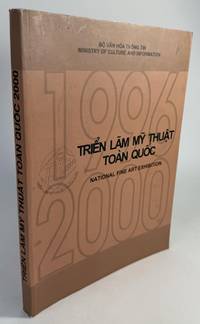
20012124Hanoi Vietnam: Bộ Văn Hóa Và Thông 2001. 8.5" x 11.5" pp. 186 ; illustrations throughout chiefly color. Paperback bound in brown paper wrappings; minor scuffing at top and bottom edges of spine. Very light soiling to wrappers. Minor water staining on bottom edge of last ~40 pages. All else very good and sound. Bộ Văn Hóa Và Thông unknown
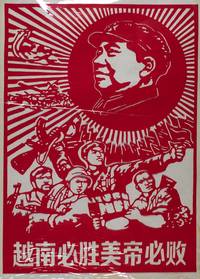
160398No publication details. No date. Late 20th Century. Large Chinese Vietnam War papercut on red paper with paper backing. Lower section features four soldiers in uniform looking fiercely towards the enemy while carrying weapons like machine guns and grenades. Upper right section Mao's head and collar portrait the sun with its bold rays extending behind him red flags flying underneath the beaming sun military aircrafts and a tank also featured next to Mao's portrait. Very good. Text in Chinese reads "Vietnam Must Win and US Imperialism Must be Defeated" sheet measures 70 x 50.3cm. . No publication details. unknown
227759London: Her Majesty's Stationery Office. Hardcover. Good. Twelve reports bound together in a single volume listed below. Pages have some pen markings and underlining throughout. Some foldout tables in one report. One of the foldout tables is detached from the binding. Some of the pages are lightly stained or rusted where a paperclip used to be. Pages have punch-holes at the head and tail near the binding from a previous binding technique. Red marbled endpapers. Page edges are darkened. One page page 30 of the final report is detached from the binding. Bound in red leather with gilt titles. Boards are scuffed and worn. Bumped and worn around the edges with a tear at the head of the upper hinge. SCARCE. G Includes: First and Second Interim Reports of the International Commission for Supervision and Control in Vietnam 1955 55 pages. Third Interim Report of the International Commission for Supervision and Control in Vietnam 1955 11 pages. Fourth Interim Report of the International Commission for Supervision and Control in Vietnam 1955 41 pages. Fifth Interim Report of the International Commission for Supervision and Control in Vietnam 1956 16 pages. Sixth Interim Report of the International Commission for Supervision and Control in Vietnam 1956 31 pages. Seventh Interim Report of the International Commission for Supervision and Control in Vietnam 1957 37 pages. Eighth Interim Report of the International Commission for Supervision and Control in Vietnam 1958 17 pages. Ninth Interim Report of the International Commission for Supervision and Control in Vietnam 1959 17 pages. Tenth Interim Report of the International Commission for Supervision and Control in Vietnam 1960 27 pages. Eleventh Interim Report of the International Commission for Supervision and Control in Vietnam 1961 27 pages. Special Report to the Co-Charimen of the Geneva Conference on Indo-China 1962 23 pages. <br/> <br/> Her Majesty's Stationery Office hardcover
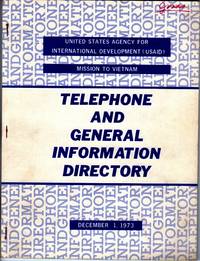
197341369n.p.: United States Agency for International Development 1973. 4to pp. 63; printed from typescript; original white staplebound wrappers printed in blue Jones's signature in red ink at top right-hand corner of upper cover light shelf wear else very good. A directory of officials and organizations in Saigon which also includes frequently called numbers and emergency numbers. <br/><br/> United States Agency for International Development unknown books
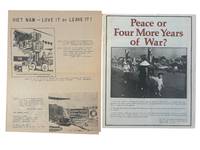
1969222221969. Archive of Two Anti-Vietnam War Pamphlets Critiquing Nixon-Era Policy 1969-1972. Birmingham AL and Cambridge MA / Los Angeles CA: Birmingham Moratorium Committee and Indochina Peace Campaign. Two pamphlets totaling 8 pages. A stark and emotionally charged pair of pamphlets confronting the human and economic cost of the Vietnam War particularly under the administration of Richard Nixon and his South Vietnamese ally Nguyễn Văn Thiệu. Both documents highlight the structural violence wrought by U.S. imperialism through quotes infographics and personal testimonies. One pamphlet issued by the Birmingham Moratorium Committee presents a Marxist-inflected indictment of American capitalism's complicity in the war; the other by the Indochina Peace Campaign anchors its critique in the grief of a widow counterposing Nixon's broken promises with devastating images of Vietnamese civilians and political prisoners.<br /> <br /> 1 Birmingham Moratorium Committee. "Viet Nam - LOVE IT or LEAVE IT!" Birmingham AL: 1969. A four-page pamphlet structured around working-class economic critique. On the front page black-and-white line art depicts a U.S. military cargo loader moving a casket-shaped crate labeled with stars beneath the caption "U.S. troops continue to be withdrawn from South Vietnam." It features a collage juxtaposing the Chase Manhattan logo with the silhouette of a prone soldier in Saigon. Alongside damning pull quotes from McNamara Gen. Harkins and Nixon ".this may have been one of America's finest hours." it lists the GI toll from 1961 to 1966: "killed: 38969; wounded & maimed: 254947." The interior spread lays out the economic beneficiaries of the war-"Who Profits"-stating "only big business. corporate profits after taxes rose 91%." One cartoon labeled "The Free Enterprise System" depicts a caricatured Nixon shaking down an American taxpayer for the wealth-hoarding "Corporations and Upper Income Earners". The final page calls for a debate and mass rally on November 13-14 involving Alabama's senators and representatives and denounces the war as a tool to "pay Vietnamese women 31¢ a day to make transistors as they do now in South Korea." The overall tone centers class exploitation with a particularly Southern regional organizing base.<br /> <br /> 2 Indochina Peace Campaign. "Peace or Four More Years of War" Cambridge MA / Los Angeles CA: 1972. Four-page pamphlet likely distributed in the lead-up to the 1972 election. The cover image-captioned "NBC-TV Dec. 12 1972"-depicts a Vietnamese woman and barefoot child walking past a bombed-out village. Beneath it is a widow's testimony: "If they had gone ahead and signed the treaty as promised my husband would be alive today with me and my children." The interior is a detailed exposé of the Nixon administration's duplicity in peace negotiations asserting that "After two years of negotiations all that remained was to settle one percent of a peace settlement." The Indochina Peace Campaign asserts that the U.S. deliberately sabotaged the Nine-Point Agreement by refusing to recognize the Provisional Revolutionary Government PRG despite "warnings by Congressmen and Senators" and international outrage over the Christmas bombings. The pamphlet cites major media: "The U.S. supported regime in Saigon have ruled by suppressing all their opposition" Pentagon Papers Gravel Edition Vol. 1 p. 256 and includes documentation of 40994 political assassinations under the Phoenix Program. A chilling image of children behind bars in Chanh Hung Prison accompanies these facts. The final call to action reads: "We have this choice: either we allow our government to prolong the rule of General Thieu or we pressure it to sign the Agreement."<br /> <br /> An ideologically diverse but thematically united pair of anti-war publications: one focused on working-class Southern economic outrage the other on moral urgency and state-sponsored atrocity. Together they demonstrate the breadth of opposition to the Vietnam War and the emotional political and class-based appeals that animated grassroots resistance across the U.S. Overall very good condition. unknown
1964222171964. Counterculture Vietnam War This pair of mimeographed documents issued in 1964 and 1969 respectively capture the shifting rhetorical and political frameworks of U.S. justification and policy aims in Vietnam offering rare comparative insight into both the Lyndon B. Johnson and Richard Nixon administrations' public positions. 1 Some Questions on Vietnam. Washington: Friends Committee on National Legislation June 3 1964. 2 Mr. Nixon's Points. N.p October 14 1969. Two double-sided mimeographed typescripts measuring 8.5" x 11" each. Together they trace the continuity and contradictions in American official thinking from the earliest stages of direct military intervention to the early attempts at managed withdrawal. The 1969 document is particularly notable for its side-by-side presentation of Nixon's proposed peace terms with those of the National Liberation Front NLF the political wing of the Viet Cong.<br /> 1 The first document dated June 3 1964 and issued by the Friends Committee on National Legislation in Washington D.C. is titled Some Questions on Vietnam. Framed as a briefing tool for concerned citizens it outlines the U.S. position in the early escalation phase of the war and provides extensive excerpts from contemporary sources including President Johnson's June 2 press conference and articles from The Washington Post and New York Times. Johnson is quoted stating that the U.S. is "bound by solemn commitments to help defend this area against Communist encroachment" reaffirming the domino theory logic underpinning American involvement. <br /> <br /> The handout catalogs U.S. military strategies then being deployed including the "Strategic Hamlet Program" in which "thousands of peasants were uprooted at gunpoint and moved into defensive village-clusters far removed from ancestral lands." Other methods included the use of lie detectors on suspected Viet Cong and defoliation tactics that the Washington Post acknowledged raised "questions of the wisdom of using such agents at all in this kind of war. where the consequences are visited upon a civilian population we are trying to defend." The leaflet also raises doubt about South Vietnamese support for the war: "the Saigon government has the allegiance of probably no more than 30 per cent of the people." Statistics from the Pentagon note that by May 25 1964 1130 American servicemen had been killed wounded or listed as missing since 1961. Senator Wayne Morse is quoted: "We have already poured into that sink-hole over $5½ billion." The final sections argue that economic aid cannot be separated from military goals and propose alternatives such as United Nations mediation. Notably the sheet warns that mail to the White House on Vietnam had been averaging fewer than 150 letters per week urging citizens to "make their views known to the President and your Congressmen."<br /> <br /> 2 The second document dated October 14 1969 presents President Nixon's public negotiating stance during the early phase of his "Vietnamization" strategy. Titled Mr. Nixon's 8 Points the yellow sheet begins with a justification of U.S. sacrifices: "The United States has suffered over a million casualties in four wars in this century. We are proud of this record and we bring the same attitude in our search for a settlement in Vietnam." Nixon outlines eight specific principles most notably: "We seek no bases in Vietnam. We insist on no military ties. We are willing to agree to neutrality for South Vietnam if that is what the South Vietnamese people freely choose." He continues "We have no intention of imposing any form of government upon the people of South Vietnam nor will we be a party to such coercion." The points include phased withdrawal over twelve months the establishment of an international supervisory body elections under international supervision release of prisoners of war and mutual agreement to observe the 1954 Geneva Accords. Nixon concludes with a reaffirmation that U.S. presence would end entirely once these measures were fulfilled.<br /> <br /> The reverse of the Nixon flyer contains The NLF's 10 Points the Viet Cong's counter-position which sharply contradicts Nixon's framing. Point 2 is categorical: "The U.S. Government must withdraw from South Vietnam all U.S. troops military personnel arms and war materiel. and liquidate all U.S. military bases in South Vietnam." Point 4 emphasizes sovereignty: "The people of South Vietnam shall settle themselves their own affairs without foreign interference." Throughout the NLF stresses full political participation neutral diplomatic relations and reunification of Vietnam as "a peaceful process. without foreign interference." Notably Point 9 demands that the U.S. government "must bear full responsibility for the losses and devastations it has caused to the Vietnamese people in both zones."<br /> <br /> Juxtaposing these two documents reveals a significant divergence between U.S. public rhetoric and Vietnamese revolutionary demands. While Nixon framed U.S. intentions as altruistic and limited the NLF viewed the war as colonial in nature and demanded unconditional withdrawal. This side-by-side format would have been a powerful tool for peace activists and educators in 1969 especially as public trust in government narratives about Vietnam eroded in the wake of the Tet Offensive and ongoing domestic protest. Very good condition overall. unknown
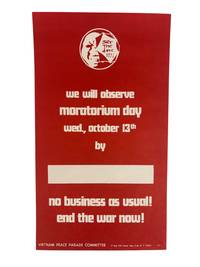
1971222041971. Counterculture Social Activism This striking 1971 protest poster was issued by the Vietnam Peace Parade Committee to promote national participation in Vietnam Moratorium Day observed on Wednesday October 13th 1971. Designed in bold agitprop style the poster combines militant typography with an urgent visual motif that reflects the escalating tone of the antiwar movement in the early 1970s. New York: Vietnam Peace Parade Committee 1971. Bold white typography with circular graphic emblem at top. <br /> <br /> Below the emblem centered white text declares: "we will observe / moratorium day / wed. october 13ᵗʰ / by" followed by a large white blank space left intentionally empty for local groups or individuals to fill in their planned action or statement of protest. The poster concludes with a defiant and unequivocal call: "no business as usual! / end the war now!" At the bottom the issuing organization is credited: Vietnam Peace Parade Committee 17 East 17th Street New York N.Y. 10003.<br /> <br /> The poster is a vivid artifact of the Vietnam Moratorium movement which began in October 1969 as a coordinated nationwide effort to halt everyday activities in protest of the war. Unlike previous marches and rallies Moratorium Day called for civic refusal and general strikes encouraging walkouts from schools workplaces and public institutions. By 1971 in the wake of the Cambodian incursion and the publication of the Pentagon Papers the antiwar movement had taken on a more urgent and radical tone. This poster's slogan-"no business as usual!"-reflects that shift asserting that complicity in everyday life was untenable while the U.S. continued to bomb and occupy Southeast Asia. As a piece of protest ephemera the poster is emblematic of the era's graphic culture of resistance: minimalist yet commanding visually direct yet ideologically expansive. Light handling wear otherwise very good. unknown
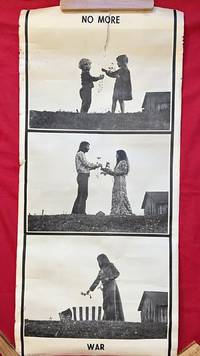
1970190631970. Anti-WarVietnam War "NO MORE WAR". Designed and photographed by Terry and Dennis Newell 1970. Measures 35" × 16" on offset tan lithographic paper. This monochromatic anti-war poster illustrates three scenes of a man and woman in three stages of their lives. In the first photo a young girl innocently gifts a young boy flowers on a grassy field. The following image conveys the young girl and boy in their adulthood---dressed in typical 1970's attire---as the woman hands flowers to the man in great despair. As her partner leaves to fight in the war she is left on the field longing for his return. Yet in the last image she is left lying flowers atop his coffin wrapped in the American flag. The Vietnam anti-war movement from 1960-1970 was one of the most pervasive displays of opposition to the government policy in modern times as protests raged all over the country. As a result posters like these were just one of the mediums used to highlight anti-war narratives. Five inch tear on the top margin minorly affecting the title text. Signs of foxing and discoloration to due to age otherwise in very good condition. unknown
188789487Paris, Garnier Frères, Libraires-éditeurs, impr. Chaix 1887 3 volumes en 1. In-12. Reliure demi-chagrin havane, dos à faux-nerfs encadrés de fers dorés, 153-162-VIII-163 pp., 48-48-40 dessins de l’auteur. Plats défraîchis, gouttière irrégulière, intérieur assez frais. En l’état.
1995BN151406München : Hirmer 1995. 1995. Hue : die Kaiserstadt von Vietnam. Ann Helen Unger ; Walter Unger <br/><br/>Hue : die Kaiserstadt von Vietnam. Ann Helen Unger ; Walter Unger Vietnam - Hue - Unger Ann Helen und Walter Unger München : Hirmer unknown
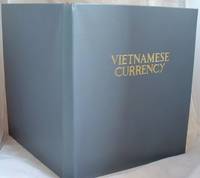
1991007364Vietnam: State Bank of Vietnam 1991. Very informative book on the history of Vietnamese currency coins tokens and paper money limited edition of 3000 copies. 67 pages in overall bright clean condition just some light browning to first and last couple of pages. Many colour photographs and illustrations all present plus very informative text NO dustwrapper outer boards are clean. HEAVY BOOK 1.4Kg with secure packing EXTRA POSTAGE REQUIRED FOR OVERSEAS. A nice example of this book SEE IMAGES. DETAILED IMAGES AVAILABLE ON REQUEST. First Edition First Printing. Boards. Good Plus/No Jacket. 11 ¾ x 10 Inches. Hardcover. State Bank of Vietnam Hardcover
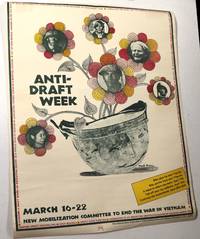
1970000015255Washington D.C.: New Mobilization Committee to End the War in Vietnam / The Philadelphia Resistance Press 1970. Poster. Very Good. 19.75" x 15.5". Poster. Color lithograph. Army green font and a multi-colored illustration with a caption spanning the poster's border. The illustration done by Mark Morris: a bouquet of wildflowers sprouting from an overturned soldier's helmet each flower's center with an image of an expressive person's face a grandmother a child three soldiers and a Vietnamese woman included in these images. The flowers petals printed in pink red and yellow. The border caption printed in red. It reads: Condemn a draft board or recruiting center as a public health hazard leafleting - street corners & shopping centers set up high school assemblies on the draft mail big things to your draft board to be included in your draft file circulate "we won't go" statements in high schools picket draft board members' homes and businesses talk-ins at draft boards & recruiting centers bar military recruiters from high schools & colleges demand draft counselors in high schools draft card turn-ins demonstrate at induction centers/recruitment centers - March 19th. With a black caption blocked in yellow: Who pays for war You do. / Who profits from war They do. / A teach-in where you work April 14th / Tell off your tax collector April 15th / Confront the corporations April 20th-30th. An address for the New Mobilization Committee is printed under the red border: 1029 Vermont Avenue Northeast Washington D.C. 20005. A truly striking image from the anti-war protest movement the people's countenances springing from a soldier's helmet perfectly demonstrates the human cost of war. North Carolina State University "New Mobilization Committee to End the War in Vietnam New Mobe March on Washington Map". The committee that commissioned this poster's printing was known colloquially as the New Mobe founded in 1969. The New Mobe was one of many student groups that advocated for resisting the draft during the Vietnam War. Groups like the New Mobe shed light on the often-predatory practices of the draft and on the damage the war inflicted on American and on Vietnamese lives. This poster provides a wealth of information on the kinds of actions the New Mobe and other groups performed in order to voice their opposition to the draft and to the war. Light wear to the poster's surface four pieces of masking tape on the poster's verso these were likely applied to the verso shortly after the poster was printed. New Mobilization Committee to End the War in Vietnam / The Philadelphia Resistance Press unknown
19772111902154901573Sports committee presenting a photobook to Vietnam 1977. Soft Cover. Fine. The book is in fine condition. Sports committee presenting a photobook to Vietnam paperback
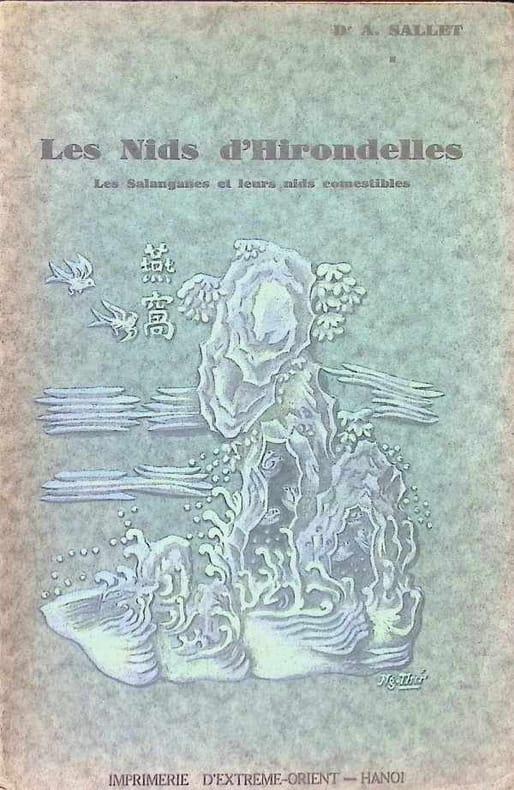
1929029964Hanoi 1929 Imprimerie d'Extreme-Orient Soft cover 1st Edition Signed by Author
M12036P, Vincent , 1774 , in12 1/2 veau , dos lisse orné, pièce de titre rouge , 422 -234 -52 - 32 pp . Reliure légèrement frottée. Langue: Français
1898300345ABLondon, Methuen, 1898. 4to. XII, 467pp. With frontispiece, title-vignette, numerous illustrations (some full-page) and 1 fold. map. Orig. red cloth, gilt stamped library crest on front cover.
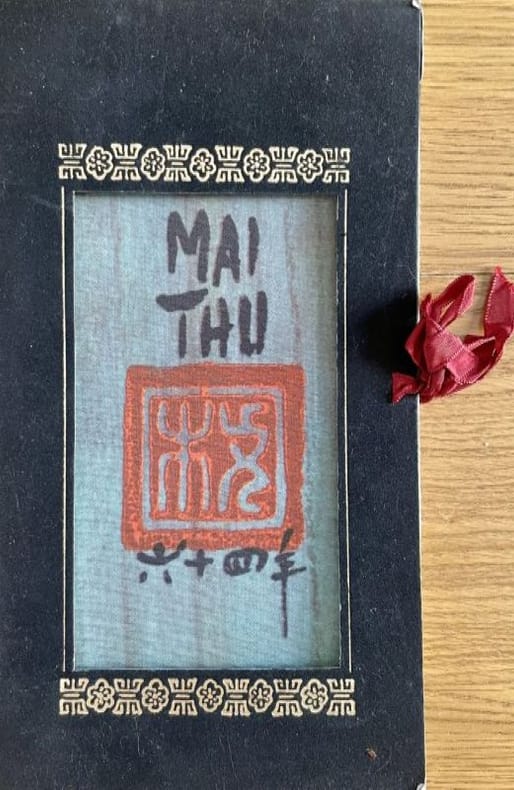
19671058581967 Paris, Presse de la Société Française de Régies, 1967, 265x145mm, 9ff., en feuilles sous portefeuille recouvert de velours noir fermé d'un ruban de soie.
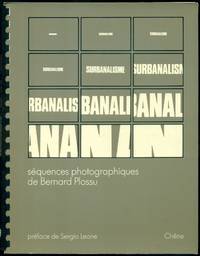
1972120137Paris: Editions du Chene 1972. Rilegato ad anelli ring-bound wrappers. Molto buono Very Good. Introduzione di Sergio Leone. 90 fotografie in bianco e nero organizzate in 22 sequenze in tavole ripiegate. Cm 26x205. pp. 126. Molto buono Very Good. Prima edizione First edition. <em>Negli anni Settanta la casa editrice francese É";ditions du Chêne pubblicò" molti libri che presentavano il lavoro di fotografi che sarebbero poi diventati famosi. La copertina utilizza la tipografia per imitare una delle sequenze fotografiche interne del volume - "how do you do" - in cui il soggetto si avvicina all'obiettivo e viene tagliato fuori dall'inquadratura.</em> <em>"Nelle fotografie di Plossu i dettagli sono minuziosi apparentemente &ldquo";troppo”: è la realtà quotidiana che tutti noi riconosciamo ma tutte queste particolarità" danno corpo alla storia: prima ci fanno ridere o sorridere poi a poco a poco una vaga angoscia si deposita su di noi" dal testo di Leone.</em> Editions du Chene, unknown
7400Gap, Imprimerie Vollaire & Cie, sans date (1953), publié à compte d'auteur, tirage limité, première édition. 1 volume in-4, broché, couverture cartonnée souple illustrée, papier présentant quelques rousseurs ou jaunissures marginales, dos avec quelques déchirures, bon état général. L'ouvrage est abondamment illustré des dessins et caricatures de l'auteur.
303434Freizeit-Bibliothek. Originalkunstlederbände. 22cm