4 751 résultats
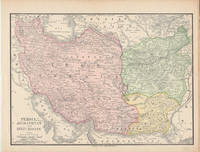
1890174941Chicago.: Rand McNally & Co. 1890. Map with original colour 18.6 x 25.9 cm central fold inner margin darkened and outer margin a bit worn but in very good condition. An appealing map showing Iran/Persia Afghanistan and Beluchistan finely shaded and the borders with Turkey India Turkestan and the Russian Empire. Also noting that "Names referring to Ancient Geography are in Light Characters" and recording submarine telegraph cables. . Rand McNally & Co. unknown
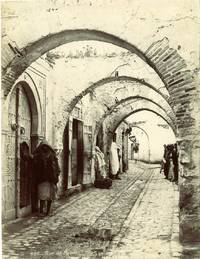
64259c.1880. . Albumen print. Good tonal range and in good condition pasted on original mount photographers title and number in negative. Dimensions: 260 x 200mm. 10.25 x 8 inches.<br /> <br /> [c.1880]. unknown
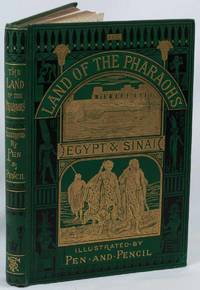
1875223701London.: The Religious Tract Society. 1875. First edition. 32 full page illustrations one double-page including frontispiece map and numerous text illustrations 224pp 8pp "Illustrated Books of Travel" publisher's advertisement original green pictorial cloth elaborately embossed in gilt black and blind spine gilt lettered 28 x 19.5 cms binding bright and unmarked small bump to the lower corner affecting the inner leaves discolouration to the verso of the frontispiece early owner's inked signature a most attractive copy in very good condition. Richly illustrated in a fine pictorial binding from the "Pen & Pencil" series of travel books by the editor of the Religious Tract Society Rev. Samuel Manning 1821–1881. . The Religious Tract Society. hardcover
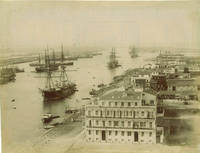
60273c.1890s. . Albumen print 21 x 27 cm; fair tonal range. <br /> <br /> [c.1890s]. unknown
121 x 92 cm. Colour-printed map (folded). Scale 1:20,000,000. A large wall map of the Middle East shortly before the Yom Kippur War, showing the Arabian Peninsula, north-eastern Africa with Libya, Egypt and Sudan as well as Turkey and Iraq pictured in their entirety. A separate inset shows Israel, others show statistics such as population and trade, oil production, etc. - A few large tears to folds, some adhesive tape reinforcements to reverse, but well preserved.
18 instalments, plus 1 duplicate. 8vo. Original wrappers. A selection of instalments of the magazine: New Outlook, an Tel Aviv-based monthly devoted to Israeli and Middle Eastern affairs and the promotion of Israeli-Palestinian dialogue and peace. It includes articles on politics, poetry, agriculture, meteorology, the Cold War, education, music, education, economy, etc. covering all countries in the Middle East and from both Jewish and Arab perspectives. - A very good set. - The collection includes the followings numbers: Volume I. No. 2. August 1957. Volume I. No. 3. September 1957. Volume I. No. 4. October 1957. Volume I. No. 5. November/December 1957. Volume I. No. 7. February 1958. Volume I. No. 8. March 1958. Volume I. No. 9. April 1958. Volume II. No. 2. October 1958. Volume II. No. 3/4. November 1958. Volume II. No. 5. January 1959. Volume II. No. 6. February 1959. Volume III. No. 9. September 1960 (2 copies). Volume IV. No. 1. October 1960. Volume IV. No. 3. January 1961. Volume IV. No. 4. February 1961. Volume XI. No. 8. October 1968. Volume XII. No. 1. January 1969. Volume XVIII. No. 3. March/April 1975.
560 x 827 mm. Chromolithographic map of the Arabian Peninsula, from Turkey in the north to the Indian Ocean in the south, and covering Saudi Arabia, Egypt, Israel, Palestine, Jordan, Syria, Lebanon, Iraq, Iran, Kuwait, Bahrain, Qatar, United Arab Emirates, Oman, North and South Yemen. Scale 1:5,000,000. Folded. Extremely rare Israeli strategic map of the Arabian Peninsula showing oilfields and associated infrastructure. Printed in black, red and blue, the map demarks the political boundaries of the time along with the areas covered by oil companies' concessions. Pipelines form a web across the northern part of the Arabian Peninsula (shown in uncommon vertical orientation), while oilfields and refineries, large and small, are also marked. The map was most probably created by the IDF in reaction to the Suez Crisis and its associated geopolitical shifts. With the Egyptians operating the Suez Canal, and Britain and France being forced by the USA to abandon their post-imperial plans, Israel now counted in both U.S. and Soviet plans for their control of Middle Eastern politics. Britain was forced to anchor its Middle Eastern influence in Cyprus, Aden and Iraq, while the increased American influence can be seen in the huge swathe of territory assigned to Aramco. We have only been able to trace a single institutional copy of this map in the National library of Israel. - Scale and key in Hebrew inset to top-right, inset explanatory panels in Hebrew and English, compass rose in Saudi Arabia. A couple of small light stains, some uneven creasing and edge tears along creasefolds with a couple of tiny holes at fold joins. Traces of pins from former wall mounting.
4to. 8 pp. With woodcut title vignette and armorial headpiece. Wrapperless pamphlet. Very rare report about one of several unsuccessful attempts by Muslim forces to recapture Oran, causing the loss of five Algerian and two Ottoman battle ships. Published anonymously by José Freire de Monterroyo Mascarenhas (1670-1760), the polyglot editor of numerous travel accounts and topical pamphlets. - In Spanish hands since 1509, Oran had been captured by the Turks in 1708 while Spain was preoccupied with the War of the Spanish Succession. Spanish rule was re-established in Oran in July 1732, after which the fleet and the soldiers sent by Philip V returned to Spain, leaving a garrison of six thousand men in the city. In August of the same year, Hassan Bey intended to retake Oran, having asked for help from the Bey of Algiers. Hassan Bey repeatedly attacked the city for several months, allying himself with the Turks and the Algerians, but the city would remain under Spanish rule until 1792, when it suffered a massively destructive earthquake and King Charles IV handed the city back to the Ottoman Empire. - Rare; only 5 copies traceable in libraries worldwide. Barbosa Machado II, 856. Inocêncio V, 348. BGUC Misc., 81. Fonseca, Pseudonymos, 236. OCLC 27862273.
4to. 8 pp. Marbled boards. Account of a pilgrimage to Mecca ordered by the Ottoman court to invoke divine assistance against the Christian forces in the Austro-Turkish War of 1716-18. In fact, the practical value of this pilgrimage turned out to be limited: in August that same year, Prince Eugene of Savoy defeated the Turks at Petrovaradin; in 1717 he recaptured Belgrade, defeating the Turkish forces with an overwhelmingly outnumbered army; in 1718 the Treaty of Passarowitz was signed, in which the Ottomans had to surrender large areas to Habsburg Empire, which now reached its greatest territorial expanse in history. - Translated into Portuguese and published by José Freire de Monterroyo Mascarenhas (1670-1760), the polyglot editor of numerous travel accounts and topical pamphlets. Rare; OCLC lists only two copies in America (Yale, Toronto). OCLC 222370772. Cf. Apponyi 2402, 2405.
Engraving with caption in German and Arabic. 39:45 cm. The Moroccan envoy Mohammed Ben Abdul visited Vienna in 1783 to seal a friendship treaty and trade agreement. He was welcomed at the Hofburg by Emperor Joseph II on February 28. The engraving depicts the reception, with the High Chamberlain Prince Orsini-Rosenberg leading the envoy (holding a writ in his hand) and his companions before the Emperor, who receives them standing. Next to the Emperor are the interpreter von Bihn, the Vice-Chancellor Graf Cobenzl, and another high state official. The publication of this engraving was announced in the "Wiener Zeitung" on 26 April 1783. - Very rare. Catalogue "Hieronymus Löschenkohl", Historisches Museum der Stadt Wien, 1959, no. 46a.
4to. Title and 24 pp., all inset into folio leaves. Marbled spine. Rare contemporary manuscript copy of the peace treaty, in 22 articles, concluded between King José I of Portugal and the Sultanate of Morocco. After the Reconquista, Portugal had expanded into Africa, starting with the territory of Morocco, by occupying cities and establishing fortified outposts along the Atlantic coast. The Portuguese seized numerous Moroccan cities and built coastal fortresses there, but most of these had to be abadoned soon. When Tangier was ceded to England in 1661 and Ceuta finally handed over to Spain in 1668, Portugal's direct involvement in Morocco had essentially come to a close, and when King Juan I abandoned Mazagan under the pressure of Mohamed ben Abdallah in 1769, Moroccan reconquest was complete. Five years later, in 1774, the Governments of Morocco and Portugal concluded a Peace and Friendship Agreement, one of the oldest bilateral agreements of both nations. Ever since his accession in 1757, Sultan Mohamed had sought to adopt the European trading system, while simultaneously safeguarding the spirit of Islam amongst his peoples. To this end, he ratified earlier peace treaties with Great Britain and with the Netherlands, then went on to sign several more, beginning with Denmark, Sweden and Venice; similar treaties were closed with France and Spain (both 1767) and Tuscany (1782). A fundamental principle that was enshrined in all of them was rooted in the annual payment of a fee in cash or in kind. - Slight browning to inset leaves. Apparently removed from a 19th-century document collection, with the original leaves remargined to folio size. A principal document of Luso-Moroccan relations.
4to (175 x 235 mm). (8), 38 pp., final blank leaf. Title-page printed in red and black with engraved vignette. Contemporary Italian full auburn calf, spine gilt, both covers ruled and gilt with the arms of the Prince of Morocco. Marbled pastedowns. All edges gilt. Rare single edition of this compilation of documents relating to the conversion of the Muslim Prince Muley Ahmed, who took the Christian name Lorenzo Bartolomeo Luigi Troiano; printed for Pope Clement XII. Prince Muley Ahmed was a member of the Alaouite dynasty, the ruling house of Morocco - a major propaganda coup for the Christian cause at a time when Morocco variously clashed with the French, Spanish, and Venetian merchant navies. This is the Prince's personal copy, bearing on both covers the Moroccan lion's crest with a sceptre and crown. - Light brownstaining throughout. The pretty armorial binding is very slightly rubbed, but altogether attractively preserved. Extremely rare; only five copies known worldwide, all in Italy; none recorded in OCLC. ICCU UBOE\006375.
Chromo-lithographed map, c. 60 x 48 cm, folded in original printed wrapper (with portrait of Sultan Abdulaziz). With text and 9 engr. illustrations printed on the reverse. Louis Vivien de Saint-Martin's map of Morocco, drawn by Chesneau and Weinreb. With topographical notes by Franz Schrader. - Edges slightly frayed; some tears to folds; wrapper dusty and waterstained. OCLC 163347954.
Folio (286 x 390 mm). Colour lithogr. title, 303 [i.e., 305], (1) p. With 7 leaves of plates, illustrated throughout (some in colour). Colour advertisement bound after p. 70. Modern red cloth with giltstamped spine title and original giltstamped cover title inset on upper board. Original edition of the Moseman Brothers' sumptuously produced sales catalogue of luxury horse tack and equipment. Dated from a printed letter (March 6, 1893), appearing on p. 67. Contains more than 1000 detailed illustrations of all items relating to the horse including halters, muzzles, halter ties, hitching weights, oils, dressings, stallion shields, boots, toe weights, bitting harness, hopples, spreaders, cart saddles, collars, riding & driving bits, whip sockets, whips, hunting crops, ornaments, chains, snaps, clothing, saddles, veterinary preparations, stable requisites such as brushes, curry cards, brooms, forks, and much more. One of the finest equestrian trade catalogues of the 19th century produced by a leading New York City concern, C. M. Moseman and Brother, offering a vast range of high-quality equestrian goods. Rare, most libraries hold copies of the late 20th century reprints only. OCLC 24193302.
Large folio (620 x 508 mm). A total of 31 albumen prints (of an average size of 390 x 280 mm), individually mounted on card. Contemporary red half morocco and pebbled red cloth, titled in gilt on spine. A fine album of large-format photographs mainly of Egypt and Palestine, including numerous fine and early views of mosques, all by the most famous 19th century photographer of the Arab world, Félix Bonfils (1831-85). Among the famous locations captured in his high-quality albumen prints are the Mosque of Sultan Hassan, the newly-built Great Mosque of Muhammad Ali (one image showing the fountain of ablution), the Sultan Qaytbay Mosque and funerary complex, as well as the Tombs of the Caliphs, the Fountain of the Valide Sultan, and the so-called Chair of Omar (Membar) in the Temple Square. Ancient Egypt is well represented, as well. In Jerusalem, the collection includes views of the Mosque of Omar (that is the Dome of the Rock, or Qubbat al-Sakhrah), the Church of Saint Anne with the Dome of the Rock, as well as Zion Gate and several street scenes in the older districts of the city, but also the Church of the Holy Sepulchre (Kanisatu al-Qiyamah), with Christian priests posing on a balcony, some standing on a ladder which is famously permanent - by rumour due to the Status Quo agreement between the numerous Christian sects which use the church. In Istanbul (Constantinople), the Hagia Sophia Grand Mosque is pictured. A few additional images show the tidewater at Jaffa and two sites in Athens. All photographs are signed and titled in plate by Bonfils. - Some exterior wear; the large-sized photographs are well preserved.
201107910Paris, Amiot Dumont - l'avenir en marche, 1955 ; in-8, 232 pp., broché, couverture illustr. Bon état.
536825Le Caire, IFAO, 1912. In-folio br., II-194 pp.
8vo. 46 pp., final blank leaf. Illustrated throughout with numerous black and white illustrations in the text. Original wrappers printed in green and red. A charming Egyptian primer which includes the Arabic alphabet (accompanied by black and white illustrations, mostly of animals), the basics of calligraphy, and shorter texts. This pamphlet was printed for the education of children in Egypt around 1925, shorty after the country's independence in 1922. Each margin is decorated with ancient Egyptian symbols and a portrait of Fuad I of Egypt (1868-1936), who was the King of Egypt between 1922 and 1936. - A few small stains, minor wear to corners. Inscribed in Croatian from René Balley to Donio Tala, dated 1926, on the inside of the front cover. A very good copy of a rare and innately fragile item; no institutional examples could be traced.
4to. (6), 119, (1) pp. With separate engraved title and 9 engravings in the text. - (Bound with) II: Prophetien, of voorseggingen der beyde Keyseren Severi en Leonis, die beyde in Orienten geregeert hebben. Ibid., 1640. (4), 41, (3) pp. 19th century vellum with calligraphed title to spine; covers ruled in red. Marbled endpapers. All edges gilt. Very rare, prettily illustrated biography of the Prophet Muhammad. Second edition, previously published in 1627 and based on de Bry's "Acta Mehmeti" from 1597. The engraved title page shows ten different scenes which enframe the worlds of the title. Nine of these are taken directly from de Bry and are repeated throughout the book, enlarged and with much greater detail; only the Ottoman army train at the top is likely based on a different source. The book also comprises the divinations of the Byzantine Emperors Leo and Severus about the fall of Constantinople. - An appealing and well-preserved copy from the library of the adventurer, linguist, diplomat, and collector Charles Schefer (1820-98) with his bookplate on the front pastedown. Schefer, who held a chair at the Ecole des Langues Orientales, was perhaps best known in his day as the most prominent Orientalist of his generation. I: Chauvin XI, 572. Theunissen, p. 39f. OCLC 65527830. II: Knuttel 3725. Waller 1389. OCLC 914266113.
Folio (288 x 351 mm). 192 pp., profusely illustrated throughout, with 48 full-page Woodburytype plates mounted within printed borders on sturdy cardboard, 24 mounted Woodburytype plates in the text, and 2 plates printed in red. Bound in sumptuous red morocco for Ismail Pasha, Khedive of Egypt, elaborately giltstamped on spine and both covers. Leading edges gilt, inner dentelle gilt, marbled endpapers. All edges gilt. A striking collection of 72 woodburytype portraits of great artists and reproductions of their art, with accompanying biographical sketches, issued in undated instalments, then bound for and dedicated to Ismail Pasha, Khedive of Egypt and Sudan from 1863 to 1879. The portraits include famous authors and officers such as Victor Hugo, Thiers, Georges Sand, Sarah Bernhardt, Alexander Dumas fils, Gounod, Daudet, Erckmann-Chatrian, Mac-Mahon, Coppée, Jules Janin, Velpeau etc. - but also Ferdinand de Lesseps, the French engineer whose Suez Canal was constructed and opened under Ismail's khedivate. The photographs are by Mulnier, Nadar, Carjat, Petit, and others, and printed by Goupil. The woodburytype is a photomechanical process capable of reproducing the continuous tones of photography with pigmented gelatin molded to a varying thickness. The speed and economy of woodburytypes, as well as their permanence (unlike traditional photographic processes that were subject to fading), made them a highly practical substitute for albumen silver prints in book publication or other situations where mass production was desirable. - Occasional slight foxing, but very well preserved altogether. The upper cover of the luxuriant red morocco binding bears the dedication: "A Son Altesse Ismaïl Pacha Khédive d'Égypte". Sharing the ambitious outlook of his grandfather, Muhammad Ali Pasha, Ismail greatly modernized Egypt and Sudan during his reign, investing heavily in industrial and economic development, urbanisation, and the expansion of the country's boundaries in Africa. OCLC 17984963. Cf. Lucien Goldschmidt and Weston J. Naef, The Truthful Lens (1980).
8vo. 8 pp. With woodcut title vignette. Wrappers. First (and only?) printing of the letter by the Capuchin friar Pacifico Scaliger, leader of his order's mission to Persia and Armenia, written to the Capuchin Guardian of Leghorn (dated 21 May 1627), with the two mandates received from Sultan Murad IV: the first a permit to found a hospital at Aleppo, Syria (12 April 1627); the other granting the Capuchins free passage and permission to reside and teach throughout the Ottoman Empire, wherever there are Christians (26 April 1627). - Some brownstaining; old pagination in manuscript and stamped (apparently removed from an old collection). Of special interest is the title woodcut, showing a round moon within the oriental crescent. The round moon bears a crudely drawn face, incorporating the western notion of a "man in the moon", but the heavily structured lunar surface also provides a curious counterpiece to the famous woodcuts which had appeared in Galileo's groundbreaking "Sidereus Nuncius" but eighteen years previously. - Excessively rare: a single copy in library catalogues (HAB Wolfenbüttel); no records via WorldCat or in Italian libraries via SBN. OCLC 258074666 (no holding records). HAB Wolfenbüttel shelfmark M:Gv Kapsel 7 (46).
8vo. (10), 70, (6), (43 plates), (2), 106, (1) pp. With folding map frontispiece. Red leather-backed blue cloth. A guide to the treasury of Qur'ans in the Museum of Ancient Iran in Tehran, printed in Persian and illustrated with over forty black and white plates from photographs. The plates illustrate the range of time periods, decoration practices, and calligraphic styles represented in the museum's mid-century Qur'an collection. A folding map frontispiece shows a floor plan of the relevant gallery, with arrows helpfully indicating to an interested visitor which way to best take in the exhibits. - The Iran Bastan Museum, also called the Museum of Ancient Iran, falls under the umbrella of the Iran National Museum. However, it is housed in its own specially designed building in Tehran, and was in fact the first structure in Iran purpose-built to act as a museum: its large arched entryway and brickwork are representative of the famous arch of Taq-e Kasra of Ctesiphon and the ancient traditions of Persian brick construction. Today, the Iran Bastan Museum largely houses much earlier relics of Iran's past, such as Neolithic spear points and Sassanian artifacts, with other sites of the Iran National Museum taking up the focus on Muslim-era manuscripts. A scarce piece of literature on Qur'ans in 1940s Iranian museum collections. - Exterior lightly worn, but in good condition. Uncommon. OCLC 61120487.
Oblong folio. (15) ff. With 5 ink wash drawings, 4 pencil drawings, 4 coloured pencil drawings, 1 pen drawing painted with watercolours, 1 pen drawing, 1 coloured lithograph and 1 photograph, all in various formats, on (12) pp. Contemporary green morocco binding, cover giltstamped with crowned monogram "PA". All edges gilt. Includes a loose pencil portrait of a young lady (192 x 262 mm) and a photograph of a castle pasted on the free endpaper. Charming collection of sketches and watercolours, including a pen-drawn genre piece with soldiers (ca. 222 x 174 mm) by the French painter André Dutertre, member of the Institut d'Égypte, and the portrait of a soldier in pencil (ca. 138 x 194 mm) by Claude Vaulot (1818-42), both signed. Dutertre is best known for his portraits of military men, especially in connection with Napoleon's campaign in Egypt, in which he participated. Of particular interest are four orientalist landscape drawings and four character studies of portraits from Kabylia (Algeria). These unsigned pieces are probably connected with the 1830 "Éxpédition de Médéa", part of the French conquest of Algeria. They include a pencil drawing of a road near Medea, a pencil drawing of a source near Mouzaïa, where a battle took place on 21 November 1830, an ink wash drawing of a military encampment in Kabylia, and the portrait of a Kabylian marabout, or holy man. This small portrait is arranged on one page with the other three portraits, two Kabyle women and one man, and a well-executed ink wash drawing of a landscape in Kabylia with the tombs of two marabouts. The collection is completed by a charming lithographed invitation to a puppet play "Theatre de Polichinelle", signed "Nouvian", a photo collage of political caricatures with a written legend, an ink wash of a peasant woman, signed "J. Chastenet", and a watercolour of a group of soldiers marching to war, their wives wringing their hands. - The photo collage is strongly faded, some pages with minor tears and foxing but all drawings and the lithograph well preserved. Spine and edges of binding scuffed.
8vo. XLIV, 224 pp, 2 blank leaves. Modern half calf with giltstamped red spine label. First translation (by Károly Comte de Reviczky) of Müteferrika's discussion of the reform of the Ottoman military, which the author himself had published at his own press in 1732. This is the second issue, without the Arabic words "Usul al-hikam fi nizam al-umam" or the word "la" on the title-page and a new page-count (agreeing with the copy in the BSB). - Ownership and bookplate of an Italian collector Antuzzi on flyleaf. Untrimmed; a good copy. Rare, no copy can be traced in auction or trade records. Seemann (Trattner) 1958. Giese 1005. Petrik II, 200. Kriegsarchiv-Bibliothek Dg. 13. Oravetz, 119. Oravetz S., 25.
8vo. Pt. 1 (of 2) only. XXIV, 170 pp. With folding engraved map. Contemporary blue wrappers. Probably a pirated version of the first German edition (Hamburg, Villaume); translated from the English "Copies of original letters from the Army of General Bonaparte in Egypt". Also published in French ("Correspondence interceptée de Bonaparte et de son armée en Egypte"). The map shows the Nile delta from Giza to the Mediterranean estuary. - Untrimmed copy; some defects to spine. Ibrahim-Hilmy 245. Cf. Gay 1990. Not in Kainbacher.