4 751 résultats
Oblong 8vo (190 x 130 mm) 57 albumen prints (mostly 90 x 65 mm) mounted on 15 black sheets, 9 more loosely inserted. Wooden boards with a coloured view of Rachel's tomb, captioned in Hebrew and English. Charming souvenir album, privately assembled by a British soldier and captioned by him throughout with his ownership entry "Jerusalem. E. Stacey. 9.9.46" to inner front board and a photo ("Boys of the Shack 147") showing him among his comrades in front of their baracks. The majority of the photos bear the ink stamp of the Matson Photo Service on the reverse. The Matsons were handed the management of the American Colony photo service in 1934. The American Colony was a utopian Christian sect formed by religious pilgrims who emigrated to Jerusalem from the United States and Sweden.
Oblong folio. (15) ff. With 5 ink wash drawings, 4 pencil drawings, 4 coloured pencil drawings, 1 pen drawing painted with watercolours, 1 pen drawing, 1 coloured lithograph and 1 photograph, all in various formats, on (12) pp. Contemporary green morocco binding, cover giltstamped with crowned monogram "PA". All edges gilt. Includes a loose pencil portrait of a young lady (192 x 262 mm) and a photograph of a castle pasted on the free endpaper. Charming collection of sketches and watercolours, including a pen-drawn genre piece with soldiers (ca. 222 x 174 mm) by the French painter André Dutertre, member of the Institut d'Égypte, and the portrait of a soldier in pencil (ca. 138 x 194 mm) by Claude Vaulot (1818-42), both signed. Dutertre is best known for his portraits of military men, especially in connection with Napoleon's campaign in Egypt, in which he participated. Of particular interest are four orientalist landscape drawings and four character studies of portraits from Kabylia (Algeria). These unsigned pieces are probably connected with the 1830 "Éxpédition de Médéa", part of the French conquest of Algeria. They include a pencil drawing of a road near Medea, a pencil drawing of a source near Mouzaïa, where a battle took place on 21 November 1830, an ink wash drawing of a military encampment in Kabylia, and the portrait of a Kabylian marabout, or holy man. This small portrait is arranged on one page with the other three portraits, two Kabyle women and one man, and a well-executed ink wash drawing of a landscape in Kabylia with the tombs of two marabouts. The collection is completed by a charming lithographed invitation to a puppet play "Theatre de Polichinelle", signed "Nouvian", a photo collage of political caricatures with a written legend, an ink wash of a peasant woman, signed "J. Chastenet", and a watercolour of a group of soldiers marching to war, their wives wringing their hands. - The photo collage is strongly faded, some pages with minor tears and foxing but all drawings and the lithograph well preserved. Spine and edges of binding scuffed.
Oblong album (ca. 260 x 200 mm). 44 silver gelatin photographs (including 3 loose) in slightly varying sizes (ca. 18.5 x 24 cm). Grey faux-leather photo album consisting of 30 clear plastic inserts with a small white label on the front board: "42 x Israël 1967 23-24-25 Juli". A rare collection of fascinating original photographs capturing the first Western tourists in Israel and Israeli captured territories approximately a month after the Six-Day War in 1967 by Dutch journalist and photographer Bianca Maria Dony. The 44 photos in the album show the passenger ship SS Pegasus, soldiers, local people in the streets of Jerusalem and other cities, an early war monument, checkpoints, destroyed military vehicles and other remnants of the war. The album is from the archive of the photographer; some of these photographs were sold to and published in national (Dutch) and international newspapers and magazines, while others remained unpublished. - Bianca Dony was part of a group of 150 Christian tourists from various European countries, who were now - after the Israeli capture of these areas - able to visit the holy places in the old city of Jerusalem, Bethlehem and other places that had previously been inaccessible. "It is perhaps self-evident to suggest that military conquest shares something with tourism because both involve encounters with "strange" landscapes and people. [...] The gradual dissolution of borders between Israel and its newly occupied territories in war's aftermath generated numerous new possibilities for Israeli travel to places that had been inaccessible since 1948. What resulted was a tourist event of massive proportions, passionately documented by the Israeli popular media of the period" (Stein, p. 647). The tourists in the present photographs were the first of many and Dony took this opportunity to not only document the trip itself but also the general aftermath of the war. - The Six-Day War is also known as the June War, the Third Arab-Israeli War, or Naksah, and it was a brief war that took place from June 5 to June 10 1967. It was a conflict between Israel and a coalition of Arab states, including Syria, Egypt, Jordan, and Iraq, over Israel's supposed plan to invade parts of Syria and other neighbouring countries. The war ended in a decisive Israeli victory, which included the capture of the Sinai Peninsula, the Gaza Strip, the West Bank, the old city of Jerusalem, and Golan Heights by Israel. The status of these territories has since then remained a major point of contention in the general Arab-Israeli conflict. - With an additional leaf in the inside front pocket of the album containing notes of how many photographs were sold to different newspapers and magazines (including 10 to the "Haagsche Courant"), written in blue and red ink and in pencil. Added to the first photograph in the album is a newspaper clipping from the "Jerusalem Post" with the headline "Haifa direct to old city for first time" about the first tourists visiting Israel after the Six-Day War. Some of the clear plastic inserts have small round white stickers on them with different abbreviations, connecting the photographs to the newspapers and magazines that (possibly) printed them (for example "HC" for Haagsche Courant etc.). 3 photographs are loosely inserted into the album and 2 of these are duplicates of other photo's in the album, the 2 duplicates contain a blue stamp "foto bianca dony 147 Malakkastraat Den Haag - Tel. 5582540 Giro 303814" and a manuscript caption in red ink on the back. Most other photographs are simply numbered in pencil on the back. This rare collection of 44 historically significant photographs is in very good condition. Cf. Rebecca L. Stein, "Souvenirs of conquest: Israeli occupations as tourist events", International Journal of Middle East Studies, vol. 40, no. 4 (2008) pp. 647-669.
4to. (8), 371, (11) pp. Near-contemporary half leather with giltstamped spine. Scarce second edition of this critical discussion of the Qur'an, a treatise by the the Dominican theologian Pientini (d. 1589) directed against Islam and the Prophet. - Slight edge defects and worming to first leaves; some browning and waterstaining, otherwise a good copy. Much rarer than the 1588 original edition (with identical collation), published by Marescotti under the title "Delle demostrationi degli errori setta Macomettana libri quinque". ICCU BVEE\046275. Cf. Edit 16, CNCE 29089 ("Delle demostrationi degli errori della setta macomettana libri cinque", 1588).
1376995Paris: Jean Picollec, 1999 in-8, 366 pages, cartes, illustrations. Broché, bon état.
19611206091961 Editions Les Sept couleurs - 1961 - In-8, broché - 266 pages - Ouvrage partiellement coupé (fin d'ouvrage jamais lu)
1065 x 578 mm. Cloth-backed engraved view on 2 sheets joined, letterpress text pasted below (4 columns in Italian: "Descrizione della Città di Alessandria d'Egitto") with publisher's imprint. Matted. Unrecorded in the standard bibliographies and without counterpart in western libraries: a unique, large-scale view of Alexandria as seen from the north. Formerly the most powerful city of the ancient world after Rome, Alexandria came under Ottoman rule in 1517 and subsequently lost much of its importance to the new port of Rashid (Rosette), 40 miles east, though it would regain some of its former prominence with the construction of the Mahmoudiyah Canal in 1807. In Longhi's engraving, the Ottoman influence may be discerned in the people's clothing as well as in the city's architecture. Within the city are several mosques; the ancient obelisks are shown crowned with crescents. On the river Nile, which flows through the city and underneath the walls, the view depicts numerous trade boats and sailors. Outside the walls lies Pompey's Pillar. The Italian letterpress text pasted under the engraving provides mostly historical and geographical information. - Longhi's panorama seems to draw various aspects from previous works to create its own original representation of the Egyptian city. The perspective is similar to that used in Pierre Belon's 1553 "Observations" and in Braun and Hogenberg's 1575 "Alexandria, Vetustissimum Aegypti Emporium, Amplissima Civitas", published in their famous "Civitates orbis terrarum", but also to that in Mallet's smaller, almost certainly later (1683) view of Alexandria. Apart from the Braun/Hogenberg map, however, the principal model for Longhi's view was likely his own view of "Gran Cairo", apparently published simultaneously: the bird's-eye view and general composition correspond to this similarly rare engraving, which was probably based on a 1549 woodcut panorama created by Matteo Pagano in Venice. - According to scholars, Gioseffo (Giuseppe) Longhi (1620-91) issued a series of views of Italian and foreign cities between 1654 and 1674. A publisher, bookseller and archiepiscopal printer, he was active in Bologna from 1650 to the time of his death. Not only did he publish maps, but he was also a prolific literary editor, notably publishing all the dramatic works of the Italian playwright Giacinto Cicognini. - An excellent specimen. Cf. Tooley, Mapmakers III, 150 (for Giuseppe Longhi).
200935397BBRegensburg, Schnell + Steiner, 2009. 1. Aufl. 31 cm. 447 S. zahlr. Ill. OPbd. Nur gering berieben und bestoßen, schön erhalten. Publikationen der Reiss-Engelhorn-Museen, Bd. 36. 1
8vo., First Edition, with title in green and black, title-vignette by Reynolds Stone, numerous photographs and illustrations by the author, and large folding map (coloured in outline) at end; turquoise tweed cloth, upper and backstrip lettered in gilt, green top, a very good, bright copy in price-clipped dustwrapper, the latter frayed and creased at edges.
8vo. 2 parts (instead of 4) in one volume. 320 pp.; 320 pp. Illustrated throughout. Early 20th century grey half calf with giltstamped spine. Mid-20th century Egyptian edition of the "Thousand and One Nights" ("with their strange incidents and singing stories, their nights and details of love, infatuation, tales, humorous and literary anecdotes, with amazing, wonderful pictures of the most creative and miraculous scenes of the wonders of time", as the subtitle claims), published by Muhammad Ali Sabih & Sons for Al-Azhar University. This edition follows that published in Bulaq in 1863 by the Sa'idiyya Press, down to the interestingly naive line-cut illustrations. - Only the first two jilds (parts) of four published. Binding a little rubbed, interior browned as common, but very well preserved. Cf. Chauvin IV, p. 18, no. 20L.
186249593Michel Lévy frères | Paris 1862 | 11 x 18.50 cm | relié
188734461Hachette & Cie | Paris 1887 | 11.50 x 18.50 cm | relié
Album of 18 well-preserved algal specimens carefully mounted on individual sheets of white wove paper, each approximately 330 x 155 mm. Loosely laid in to folding portfolio, housed in a marble clamshell box. A rare and early ensemble of algae specimens collected from the Red Sea, from different areas between Suez and Yemen, including one specimen from Alexandria. All items identified with the Latin name and details of the location around the Red Sea and date of collection written in French on the mounts, e.g., "Caulerpa prolifera: très commune dans toute la mèr rouge á la prodondeur de 1½ mètre à 2 [...] Avril 1844", or "Mer rouge dans le Golfe de l'Acaba, Juillet 1844". - The French botanist A. H. Husson, a native of Nancy, was also a pioneer of early photography. He lived in Egypt, where he worked as the director of the botanical garden and conservator for the Museum of Natural History for the Qasr Al-Ainy, the Cairo University's Faculty of Medicine. - "The Red sea has been a region of natural history exploration by European scientists from about 240 years. The first record of marine algae in the Red Sea was by Strand (a pupil of Linnaeus's), who in his thesis on the flora of Palestine listed three species. The first person to collect marine algae from the Saudi Arabian Red Sea Coast was the Danish botanist and explorer Forsskal in the 18th century who, in the month of November 1762, made a collection of seaweeds from the Sea of Jeddah [...] In the early years of the 19th century a British admiral Viscount Valentia made collections of algae from the Red Sea [...] Several other workers, including medical doctors and amateurs, collected marine algae from the Red Sea during the rest of the 19th century" (Beni-Suef Univ. Journal of Basic and Applied Sciences, Vol. 3/4 [Dec. 2014], pp. 278-285). - Includes the offprint of a short biography of Husson: Christian Debize, "L'album photographique d'Anne-Henry Husson. Regards d'un colon nancéien dur l'Egypte moderne", Annales de l'Est (1985), no. 4, pp. 261-299. Stab-sewn in wrappers. - A most exceptional and scarce collection of preserved algal specimens from the Red Sea. Provenance: from the property of the botanist Dr. Eugene L. Vigil (b. 1941), of Lynden, Washington, USA.
Oblong album (320 x 410 mm). Album with 50 photographic prints of various sizes (135 x 95 to 290 x 215 mm), each pasted on thick paperboard. Half black leather with title in gold lettering on front board. Album with 50 albumen prints of scenes in Algeria and Tunisia, made by an unknown photographer. Most of the photographs have a caption naming the place photographed, but only 5 indicate place of production or publication of the photos. These were all produced in Tunis, at least some by the French photographer J. Garrigues, printed and published at his studio. Notable photographs in this album are the first, showing a veiled woman, a barber at work in the streets, riders on their horses, camels with riders and luggage, the Notre Dame d’Afrique in Algiers. Other subjects include city views, (fairly) candid photos of people in the streets, landscapes and the exterior and interior of a mosque. - The most remarkable print in this album actually does not fit in with the other images of places in North Africa. It is a photograph of pilgrims before the Great Mosque and Kaaba in Mecca, modern day Saudi Arabia with a caption in Arabic. This photograph was taken by the first Arab photographer Al-Sayyid ‘Abd al-Gaffar ca. 1887, making it one of the first photographs of Mecca. The present album contains this picture in its original form, including the Arabic caption. An edited version of the photograph (in which remnants of the Arabic caption are visible) can be found in Hurgronje’s "Bilder aus Mekka". - With a small Antwerp bookseller’s ticket on the front paste-down. The binding shows some signs of wear, slight foxing/browning of the outer edges of the paper boards (not affecting the photographic prints), some prints have slightly faded edges, which does not interfere with the actual image. Overall in good condition.
8vo. 4 parts in one volume. (4), 32, 347, (1), 128, 228, II, (2) pp. With 2 (instead of 1!) folding engraved maps and 16 (instead of 20) engraved plates; several wood-engravings in the text. Contemporary green half calf with giltstamped spine. Marbled endpapers. Published as vol. 58 of the series "L'univers". Discusses Algiers (by Rozet), Algeria (by Carette), Libya (by Hoefer), and Tunisia (by Frank). - Some foxing. With a folding map of Algeria not listed in the table of plates, but does not contain four plates on Tunisia there listed. The fine engravings show costumes, views (Constantine, Algiers, Belida, Oran), etc. OCLC 6985583.
4604in 12 pleine toile rouge,armes de la ville de Paris sur le premier plat.Faux-titre,titre,247 pages,illustrations hors-texte, dans le texte,bandeaux,de RUTY,style Art Nouveau. Armand Colin 1926,très bon état
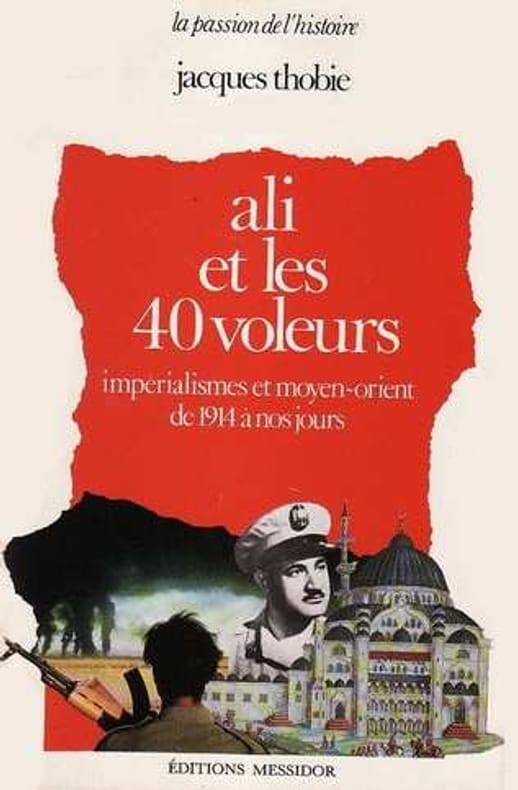
198593417Messidor, 1985 in-8°, 371 pp, 13 cartes, biblio, broché, couv. illustrée à rabats, qqs surlignures, bon état
558061P., Payot, 1937. In-8, demi-basane bordeaux à coins, dos à nerfs titré, chiffre doré en queue, couv. sup. conservée, 355 pp., 3 cartes in-t. (Bibliothèque historique).
1374406Paris: Ernest Leroux, 1876 in-8, (8)-640 pages. Reliure moderne basane verte, très bon état.
Copper engraving with full original colour, in 3 unjoined sheets. Each sheet 47 × 71 cm. Very good condition, lovely original colour, mild toning, small nicks in blank margins and light stains in lower area. A very rare edition of Strass's large and resplendently coloured time chart depicting the inter-connecting streams of the histories of different World civilizations and nations from 3984 BC up to 1830. This large and colourful time chart employs ingenious visual methods to graphically illustrate historical events. The history of the world is presented as interwoven streams featuring the stories of its great civilizations/nations weave their way down the time chart like the paths of streams. History is shown to commence with Genesis, which is shown here to have occurred in 3984 BC, a date close to that asserted by the Ussher Chronology. This theory as to the timing of Genesis (which was said to have occurred in 4004 BC) was devised by James Ussher (1581-1656), the Archbishop of Armagh and the Primate of All Ireland (in office 1625-56), and is based on his "literal reading" of the Bible. The Ussher Chronology gained widespread popularity in certain Protestant circles during the 19th century. The time line starts at the top of the composition with the great ancient civilizations, namely, the Italians; Greeks; Asia Minor; Assyrians; Syrians; Phoenicians; Jews; Egyptians and the Chinese. Down the various streams are plotted the names and dates of different eras and rulers. The stream on the furthest right details major world events. Part way down, the civilizations in the Western and Mediterranean world converge into the 'Roman Empire' before splintering again into various new entities. The streams then continue to weave, combine and separate, mitigated by the interconnecting streams of major events and characters, towards the bottom of the time line, where the individual streams are represented by the nations and regions of Denmark; Sweden; Russia; the German States; Austria; Holland; Switzerland; France; the Italian States; States of the Church (Papal States); Spain; Great Britain; Greece; Persia; and China. William Bell, who issued his own version of the time chart in London in 1849, described the merits of Strass's conception to the study of history: "However natural it may be to assist the perspective faculty, in its assumption of abstract time, by the idea of a line [...] it is astonishing that [...] the image of a Stream should not have presented itself to any one [...] The expressions of gliding, and rolling on; or of a rapid current, applied to time, are equally familiar to us with those of long and short. Neither does it require any great discernment to trace [...] in the rise and fall of empire, an allusion to the source of a river, and to the increasing rapidity of a current, in proportion with the declivity of their channels towards the engulfing ocean. Nay, the metaphor [...] gives greater liveliness to the ideas, and impresses events more forcibly upon the mind, than the stiff regularity of the straight line. Its diversified power likewise of separating the various currents into subordinate branches, or of uniting them into one vast ocean of power [...] tends to render the idea by its beauty more attractive, by its simplicity more perspicuous, and by its resemblance more consistent" (Rosenberg & Grafton, pp.143 & 147). The present time chart is derived from Strass's exceedingly rare "Strom der Zeiten" ("Stream of Time", 1804). Strass's work proved to be highly influential and was widely copied in both Europe and America, and translated into several languages, including Russian. All of the large German editions are very rare, and the present example, in unjoined sheets with resplendent original colour, is an especially fine example. Cf. OCLC (Re: 1818 Zanna ed.) 165398011. (derivative 1849 London ed.). Daniel Rosenberg & Anthony Grafton, Cartographies of Time, pp. 143f. & 147, fig. 4:45.
8vo. XXXIX, (1), 303, (1) pp. Contemporary full cloth with gilt title to spine and equestrian decoration on upper cover. The second volume of this highly scarce first German general stud-book, listing all thoroughbreds, with their lineage, owned in Germany, Denmark, Hungary, Transylvania, and Galicia. The first volume had appeared in 1847; by 1861 the series would comprise six stud-books. - Old ownership in blue pencil to flyleaf; well preserved. Extremely rare.
4to (170 x 232 mm). 64 pp. With woodcut device on title-page. - (Bound with) II: [I'tiqad alamarah ...]. Brevis orthodoxae fidei professio, quae ex praescripto Sanctae Sedis Apostolicae ab Orientalibus ad Sacrosanctae Romanae Ecclesiae unitatem venientibus facienda proponitur. Ibid., 1595. (28) pp., 2 bl. ff. With 2 half-page woodcuts and woodcut device at the end. - (Bound with) III: Ibn Ajurrum, Muhammad ibn Muhammad al Sinhaji. [Kitab al-Ajurrumiyyah]. [Ibid., 1592]. (24) pp. Arabic text throughout, printed in red and black. - (Bound with) IV: Ibn al-Hajib, 'Uthman ibn-'Umar. [Kafiya li-Ibn al-Hajib]. [Ibid., 1592]. (96) pp. Arabic text throughout, printed in red and black. Contemporary full vellum with traces of a handwritten spine title. A fine sammelband containing no fewer than four extremely rare publications from the Medicea Oriental Press, the first printing press in Europe dedicated to printing Arabic typeface. It was founded in Rome in 1584 under the direction of Giabattista Raimondi (1536-1614) and the patronage of Pope Gregory XIII. For the Arabic types, Raimondi commissioned the famous typefounder Robert Granjon. Cutting the Arabic typefaces took a long time, and the first book to bear its imprint did not appear until 1591. Until 1610 Raimondi printed only eight works with Granjon's types. - Contains individually: - I. Alphabetum Arabicum (1592). A prospectus of the Medicea's Arabic typefaces - "a masterpiece of design which not only displays Granjon's beautiful types, but contains a careful Latin Essay on the Arabic writing system" (Lunde, Arabic and the art of printing, in "Aramco World" 1981). - II. Brevis orthodoxae fidei professio (1595). Maronite confession of faith, intended for Eastern Christians who claimed to be united with the Catholic Church. Arabic and Latin parallel text on opposite pages. The woodcuts in the text are after Antonio Tempesta (1555-1630). - III. Kitab al-Ajurrumiyyah (1592). Editio princeps of a short Arabic grammar by the 14th c. scholar Muhammad al-Sanhaji from Fez (Morocco). There are also copies with a Latin title and imprint, "Grammatica Arabica in compendium redacta, quae vocatur Giarrumia". - IV. Kafiya (1592). "Editio princeps of this popular short syntax of the Arabic language, written in the 13th century by the Arabian grammarian Uthman Ibn Umar, known as Ibn al-Hajib (1175-1249). Two centuries later an Oriental printed edition was published in Istanbul (1786), but in the meantime this edition, printed in Arabic (30 point) throughout, could well have passed for a manuscript" (Smitskamp). There are also copies with a Latin title and imprint, "Grammatica arabica dicta Caphiah, auctore filio Alhagiabi". - Binding a little stained; wants ties. Later pastedowns. Occasional slight toning and some minor marginal soiling. "Kafiya" shows some dampstaining to upper edge of a1 and a4, with light offsetting of red Arabic print in the lower margin of d1v. In general, excellent, wide-margined copies throughout. Provenance: Christiaan Druve (d. 1616), abbot of the Sint-Niklaas Abbey in Veurne, with his contemporary ownership entry "Christianus Druvaeus Abb. S. Nicol. Fur. Recogita" on the title-page of the Alphabetum. I. Edit 16, CNCE 1227. Schnurrer 41. Adams A 780. BM-STC Italian 36. OCLC 47816774. Lunde, Paul, "Arabic and the Art of Printing", in: Aramco World 32/2 (1981) (mit Abb.). J. Balagna, L'imprimerie arabe en occident (Paris 1984), p. 135. Cat. Le Livre et le Liban (mentioned p. 190; no copy in the catalogue). Not in Smitskamp (PO) or Fück. - II. Edit 16, CNCE 7571. Zenker 1571. Not in Adams. - III. Edit 16, CNCE 65819. Schnurrer 43. Adams M 1891. GAL S II, p. 332. - IV. Edit 16, CNCE 44392. Schnurrer 42 Adams U 102. GAL I, p. 303. Smitskamp (PO) 30.
8vo. 15, (1) pp. With printer's device to title page. Modern half calf. Brief introduction to the Arabic language for Catholic missionaries, "an exact reproduction of the 1715 edition" (Smitskamp). Includes a table of the alphabet and the Lord's Prayer and Ave Maria in Arabic. "The best known products of the Propaganda Press, apart from its missals, grammars, and dictionaries, are the Alphabeta" (Smitskamp 193). This is, perhaps, little surprise, for the missionaries sent forth to all parts of the globe by the Roman see through the Sacra Congregatio de Propaganda Fide, founded by Pope Gregory XV in 1622 for the purpose of spreading the Catholic interpretation of the Gospel, depended on language study textbooks such as these. The production of such alphabets was taken up as early as 1630 and was not discontinued until the early years of the 19th century; in 1812 the Congregation's in-house printing office was dissolved. - A good copy with deckle edges intact. Smitskamp 216. Cf. Streit XVII, p. 351, no. 6551.
Small 4to (146 x 206 mm). 64 pp. With printer's woodcut device on title-page. 19th century red boards. Only edition of this early milestone of Arabic typography from the Roman Medici Press, including a Latin treatise on Arabic script. The Medici Oriental Press, the first printing press in Europe dedicated to printing books in an Arabic typeface, was founded in Rome under the direction of Giovanni Battista Raimondi and the patronage of Pope Gregory XIII. For the Arabic types, Raimondi commissioned the famous typefounder Robert Granjon: "In a few years Granjon had cut a large number of oriental characters, following superb calligraphic designs provided by Raimondi. On September 6, 1586, he completed the small Arabic typeface [...] Because cutting the Arabic typefaces took such a long time, establishment of the Medici Press went slowly. Though the contracts formally setting up the press were signed on March 6, 1584, the first book to bear its imprint did not appear until 1591. Legible and much more 'oriental' in feel than those of de Gregorii, Postel or Spey, this face was not improved upon until the time of Ibrahim Müteferrika in the early 18th century [...] Once underway, however, the Medici Press was very productive. In 1592 it issued a prospectus of its Arabic type faces under the title 'Alphabetum arabicum' - a 64-page masterpiece of design which not only displays Granjon's beautiful types, but contains a careful Latin Essay on the Arabic writing system" (Lunde). Until 1610 Raimondi printed a mere eight works with Granjon's types, "all equally rare" (Smitskamp 29b), before a long hiatus ensued - probably due to the sluggish distribution of the works in the Orient, where everything produced in the West, and especially any printed specimen of Arabic script, was received with the utmost caution (cf. Fück 55). Even Smitskamp cites only four other productions of the Medici Press, but not this exceptionally rare one. One of the only three other copies known to have appeared in the trade was even thought to be incomplete by Sotheby's, since Adams's collation - based on the Trinity College copy - cites a 24-page appendix that is, in fact, an independent Medici Press grammar bound with the Trinity 'Alphabetum'. - Binding worn and rubbed; spine rebacked. Interior somewhat dust-soiled throughout with occasional light dampstaining; a few marginal annotations on the verso of the title cropped by binder. Title-page with minute wormhole affecting one word on verso; a small hole to the last leaf with loss of a few letters; stamp of a monk to margin of final page. Front pastedown has 1880s bookseller ticket by G. A. Young & Co. of Edinburgh pasted in. An entirely complete copy of an important and excessively rare publication. Adams A 780. BM-STC Italian 36. Schnurrer 41. Edit 16, CNCE 1227. OCLC 47816774. Lunde, Paul, "Arabic and the Art of Printing", in: Aramco World 32/2 (1981) (with illustration). J. Balagna, L'imprimerie arabe en occident (Paris 1984), p. 135. Le Livre et le Liban (mentioned on p. 190; no copy in the catalogue). Not in Smitskamp or Fück.
8vo. 8 ff. With woodcut printer's device to title page. Modern boards. Brief introduction to the Armenian language for Catholic missionaries. "The types are those cut by Grandjon in 1579, and this is therefore a late specimen of that fount" (Smitskamp). Includes a table of the alphabet and the Lord's Prayer and Ave Maria in Armenian. "The best known products of the Propaganda Press, apart from its missals, grammars, and dictionaries, are the Alphabeta" (Smitskamp 193). This is, perhaps, litte surprise, for the missionaries sent forth to all parts of the globe by the Roman see through the Sacra Congregatio de Propaganda Fide, founded by Pope Gregory XV in 1622 for the purpose of spreading the Catholic interpretation of the Gospel, depended on language study textbooks such as these. The production of such alphabets was taken up as early as 1630 and was not discontinued until the early years of the 18th century; in 1812 the Congregation's in-house printing office was dissolved. - Slightly browned throughout. Smitskamp 200. Graesse I, 85.