4 751 résultats
190919628John Murray 1909. 8vo. First Edition with frontispiece original tissue guard present 34 plates on 27 full-page map full-page diagram full-page map in the text and large folding map; handsomely bound in full dark blue crushed morocco back with raised bands gilt top uncut gilt from original board and backstrip preserved and mounted on new and separate leaves at front a most attractive copy ideal as a gift or for presentation. Sold from an institution with its small neat blind stamp on title. The author served with the Geological Survey of Egypt. EXTREMELY SCARCE. John Murray, hardcover
1739174921London.: The Gentleman's Magazine. circa1739. Engraved map 22.2 x 31.4 31.1 x 33 cm sheet size elaborate explanatory key in three columns at the foot original folds sealed 2 cm tear to the lower part of the inner margin one other small fold tear no loss inner margin of the key trimmed with some loss an original fault paper browned and spotted on the verso but an historic map in good condition. . [The Gentleman's Magazine]. unknown
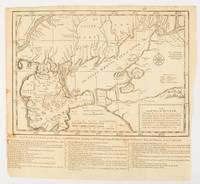
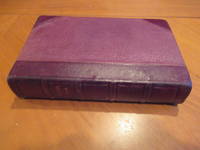
1834023418Edinburgh: Oliver & Boyd 1834. Second Edition . Quarter Morocco. Fine. 6 5/8" Tall. 472 Pp. Quarter Morocco. Asecond Edition. A Fine Copy Spine Gilt Very Strong Original Purple Morocco Spine And Tips Original Purple Cloth Original Watered Endpapers And Watered Edges Of Page Block Contents Fine Leather Just Recently Professionally Refreshed. Contents Immaculate Pages Crisp Map Undamaged No Foxing. Heraldic Bookplate "Sperate Et Vivitefortes" Of The Welsh Cavalry Senior Cavalry Of The British Army On Front Pastedown Ownership Signature "John Clements Queen's Dragoon Guards" On Verso Of First Front Endpaper. <br/> <br/> Oliver & Boyd unknown
8vo (200 x 288 mm). Arabic manuscript on paper. 50 ff. Script in bold black sini, 5 lines within red double rules, punctuation in red, gold rosette verse markers outlined in black, surah headers in gold, gold and polychrome marginal decoration, opening bifolium with red, blue and black and gold illuminated panels around three lines of text. Restored 18th century red leather with fore-edge flap, elaborately ruled and stamped in blind. Beautifully illuminated Qur'an Juz' (one of thirty parts of varying lengths into which the Qur'an is divided) written in 18th century China. Arab presence in China dates back as far as the first Caliphate: the Prophet's companion Sa'd ibn Abi Waqqas is traditionally credited with introducing Islam to China as ambassador in 650. Indeed, many major cities in China, such as Xi'an (or Chang'an, as it was known during the height of the Silk Road) and Beijing boast a long and rich Muslim history. Qur'an sections written by Chinese Muslims show Chinese influence clearly in both the decoration and the script, which is derived from naskh. The section of the Qu'ran copied here is the tenth Juz', which comprises surah 8, al-Anfal ("The Spoils") and surah 9, al-Tawbah ("The Repentance"). These two surahs form a set, and are best read as a pair. Both give an account of battles: al-Anfal describes the Battle of Badr, while al-Tawbah describes the Battle of Tabuk. - Covers fully rebacked, with some mild warping; some paper repair and reinforcement. Altogether a fine example of the Chinese Muslim manuscript tradition. Provenance: Private UK collection formed in the 1960s and 1970s.
Small folio (230 x 295 mm). Arabic manuscript on cream-coloured paper. 58 ff. (plus 2 flyleaves), 5 lines per extensum, written in crisp Sini script in black ink. Text within red double rules, verses separated by gilt roundels, surah heading in gold outlined in red. Opening bifolio with brightly coloured and gilt quasi-geometric illumination, final bifolio with gold and polychrome Central Asian floral and tendril motifs in the borders. Contemporary blind-tooled brown leather binding with fore-edge flap. Indigo blue cotton endpapers. Prettily illuminated Qur'an Juz' (one of thirty parts of varying lengths into which the Qur'an is divided) written in late 18th or early 19th century China. Arab presence in China dates back as far as the first Caliphate: the Prophet's companion Sa'd ibn Abi Waqqas is traditionally credited with introducing Islam to China as ambassador in 650. Indeed, many major cities in China, such as Xi'an (or Chang'an, as it was known during the height of the Silk Road) and Beijing boast a long and rich Muslim history. Qur'an sections written by Chinese Muslims show Chinese influence clearly in both the decoration and the script, which is derived from naskh. The section of the Qu'ran copied here is the twelfth Juz', which comprises surah 11 (Hud), aya 6, to surah 12 (Yusuf), aya 52, named after the prophets Hud and Joseph. - Fingerstaining to lower corner and margin; a few leaves loose. An attractively illuminated example of the Chinese Muslim manuscript tradition.
4to (188 x 254 mm). Arabic manuscript on paper. 51 ff. Script in bold black sini, 5 lines within red rules, vowel markers in black and corrections in red, surah headers in red, illuminated double-page frontispiece 'Unwan decorated with geometrical and floral designs in gold and colours in a typical Yunnan style of mainly gold on a red ground highlighted with green and blue. 16th century full brown leather with fore-edge flap, prettily ruled and stamped in blind with Islamic and Chinese-influenced designs. Very early Qur'an Juz (one of thirty parts of varying lengths into which the Qur'an is divided) written in 16th century China. - Arab presence in China dates back as far as the first Caliphate: the Prophet's companion Sa'd ibn Abi Waqqas is traditionally credited with introducing Islam to China as ambassador in 650. Indeed, many major cities in China, such as Xi'an (or Chang'an, as it was known during the height of the Silk Road) and Beijing, boast a long and rich Muslim history. Qur'an sections written by Chinese Muslims show Chinese influence clearly in both the decoration and the script, which is derived from naskh. Juz' 19 begins with surah 25, al-Furqan (The Criterion), contains in full surah 26, ash-Shu'ara (The Poets), and closes with the beginning of surah 27, an-Naml (The Ant). - The colophon in red script on the recto of the last leaf states that the manuscript was "copied by Shams al-Din ibn Musa al-Sini in the month of Safar of the year 953 AH in the city of Yunnan, one of the Chinese cities which has been honoured and blessed by Islam". - Binding rebacked and spine and endpapers professionally replaced; subtle paper repairs. An excellent example of the Islamic Chinese style of Qur'anic calligraphy and illumination. Provenance: Private UK collection formed in the 1960s and 1970s.
8vo (180 x 252 mm). Arabic manuscript on paper. 58 ff. Script in bold black sini, 5 lines within double red rules, punctuation in red, black outlined gold rosettes between verses, headers in gold text on red ground, opening bifolium with red, blue and black and gold illuminated panels around three lines of text. 18th century full red leather with fore-edge flap, elaborately ruled and stamped in blind. Handsomely illuminated Qur'an Juz (one of thirty parts of varying lengths into which the Qur'an is divided) written in 18th century China. - Arab presence in China dates back as far as the first Caliphate: the Prophet's companion Sa'd ibn Abi Waqqas is traditionally credited with introducing Islam to China as ambassador in 650. Indeed, many major cities in China, such as Xi'an (or Chang'an, as it was known during the height of the Silk Road) and Beijing, boast a long and rich Muslim history. Qur'an sections written by Chinese Muslims show Chinese influence clearly in both the decoration and the script, which is derived from naskh. Juz' 29, the penultimate Juz' of the Qu'ran shown here, begins with surah 67, al-Mulk (The Sovereignty), and closes with the fifty lines of surah 77, al-Mursalat (The Emissaries). - Binding rebacked and spine and endpapers professionally replaced; subtle paper repairs; some later pagination marks. Altogether a beautiful example of the Chinese Muslim manuscript tradition. Provenance: Private UK collection formed in the 1960s and 1970s.
4to (163 x 220 mm). Arabic manuscript on paper. 56 ff. Script in bold black sini, 5 lines within double red rules, punctuation in red, surah heading in red, opening and closing bifolio with red, blue and black and gold illuminated panels around three lines of text. Early full calf with fore-edge flap, elaborately ruled and stamped in gilt. A finely illuminated Qur'an Juz', written in China in the 16th century by Abd Allah bin Yunus al-Sini, in the city of Xi'an. - Xi'an has a long history of Muslim culture, stretching back to the Tang dynasty. Indeed, Arab presence in China dates back as far as the first Caliphate: the Prophet's companion Sa'd ibn Abi Waqqas is traditionally credited with introducing Islam to China as ambassador in 650. Xi'an itself boasts a well-known Muslim quarter; by the time this Juz' was written in the Ming Dynasty, Da Xuexi Street and the Huajue Great Mosque were well-established parts of the thriving Muslim district. Qur'an sections written by Chinese Muslims show the Chinese influence clearly in both the decoration and the script, which is derived from naskh. - This thirtieth and final Juz' is also the most commonly memorized. It begins with surah 78, al-Naba’ (The Tidings), and concludes with the 114th and final surah of the Qu'ran, al-Nas (Mankind). The themes are generally apocalyptic, contrasting the moment of judgment with the beauty of Allah's creation. The Surah al-Nas, a brief six lines, is one of the most famous and best beloved. - Binding professionally rebacked, some subtle paper repairs; altogether a striking manuscript. Provenance: Private UK collection formed in the 1960s and 1970s.
19582636z1958. Hardcover. Good. Hardcover/pub. 1958/Gd. condition/201 pages - The grammatical structure of the modern Arabic literary language L12636z hardcover
1991284871991. Hardcover. Good. Hardcover/pub.1991/Gd. condition/476 pages - A textbook and reader on an introduction to Judaism. AR628487 hardcover
pp. xii, 298. Sm. 4to. Original full green cloth binding. Original dust jacket. Hardbound. First Edition. Very good copy. "A compact, one-volume manual for learning modern literary Arabic." ISLAM BOX 1
Large 4to. (4), III, (3), 29, (1) pp; (2), 32, 42, 6 pp. Modern wrappers. Rare edition of the seventh chapter of the "Anvari Suhaili", a Persian fable, in Farsi, English and Arabic, with Arabic tables, analysis of the Arabic words, and the "Kalila Dumna", the Arabic version of the same chapter by 'Abd Allah ibn al-Mukaffa. Designed by Charles Stewart (1764-1837), professor of oriental languages at the East India College at Hailey, Hertfordshire, to help civil servants and military men in the service of the East India Company learn Persian. - A few page corners creased, occasional light soiling. With extensive pencil annotations from contemporary use; contemporary ink ownership of H. L. Dick to the title-page. As vol. 7 of Alexander's East India Magazine and Colonial and Commercial Journal reports under the Company's civil appointments, in January 1834 "Mr. H. L. Dick, writer [= administrator], has exceeded the period allowed for the Study of the Native Languages, and has been directed to return to England" (p. 103). Chauvin II, p. 27, no. 47. OCLC 891514783.
8vo (105 x 149 mm). Arabic manuscript on polished paper. 306 ff., 2 flyleaves, 15 lines to the page. Written in fine Naskh script in black ink, verses separated by small gold roundels pointed in red, illuminated floral marginal devices throughout surah headings written in white thuluth script within gold-ground floral panels. Double-page illuminated 'unwan frontispiece elaborately decorated with interlacing polychrome flowers against a punched gold ground. Contemporary full gilt leather with fore-edge flap and gilt floral designs to covers. Endpapers covered with cornflower-blue, relief-stamped floral paper. Edges mottled in red. Stored in matching leather slipcase with flap and bellows-style cloth sides. A beautiful Qur'an manuscript from the early years of the era of Sultan Mahmud II, written in modern-day Turkey by Omar Al-Shawqi, student of Ismael Shawqi. - A small hole in the text of the second leaf, sewing a little loosened in places, otherwise a very attractively preserved example of a pocket-sized Qur'an.
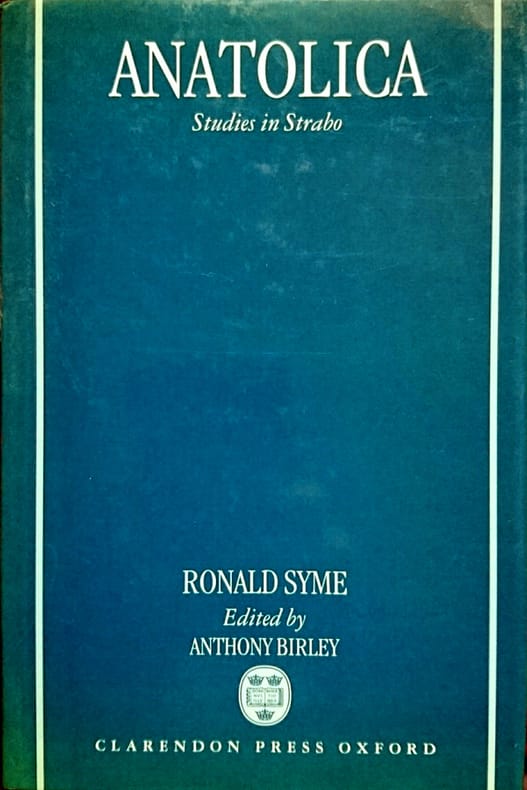
555428Oxford, Clarendon Press, 1995. In-8, rel. d’éditeur toile noire sous jaquette titrée, XII-396 pp., texte en anglais. Index.
556365Roma, Soc. Geogr. Italiana, 1911. Grand in-8 reliure époque demi-toile noire à la Bradel, auteur et titre dorés au dos, VI-423 pp., 2 cartes dépliantes hors-texte, tableaux et 124 illustr. en noir dans le texte d'après des photographies, index.
New English Paperback. Pbo. Demy 8vo. (21 x 15 cm). In Turkish. 302 p. Anadolu'da Abbâsî - Bizans mücadelesi, (132-193 / 750-809). Abbasid - Byzantine wars in Anatolia, 750-809.
Fine English Paperback. Pbo. Demy 8vo. (21 x 15 cm). In Turkish. 302 p. Anadolu'da Islâm - Bizans mücadelesi. Islam - Byzantine fights in Anatolia.
New New English Original bdg. Dust wrapper. 4to. (32 x 27 cm). In Turkish. 428 p., color and b/w ills. Islamic culture and civilization in Anatolia. Anadolu'da Islâm kültür ve medeniyeti.
New English Paperback. Pbo. Cr. 8vo. (20 x 14 cm). In Turkish. 144 p., b/w ills. Anadolu'da paganizm. Antik dönemde Harran ve Urfa. Paganism in Anatolia. Urfa and Harran in the Ancient Period.
Large 4to. (4), 175, (1) pp. With a folding engraved plate. Contemporary half calf with giltstamped spine title over red marbled boards. First edition of one of the earliest studies of the Rosetta Stone, published some 18 years before Champollion deciphered the text. N. G. Palin (1765-1842) was a leading Swedish diplomat whose postings included Madrid, Vienna, Dresden, and Constantinople. He made several journeys to Asia Minor, Greece, and Egypt, twice reaching the Cataracts of the Nile. On leave from 1824, he devoted all his time to his Egyptological studies. - Binding only very slightly rubbed; spine professionally rebacked preserving gilt title label and old library label. Paper a little browned; bookplate of the Portuguese historian Francisco Soares de Lacerda Machado (1870-1955) to flyleaf. Rare. Gay 1792. Ibrahim-Hilmy II, 194. Brunet VI, 29107. Kayser I, 57. OCLC 40974048.
Anati Emmanuel Anati Emmanuel. L'arte rupestre del Negev e del Sinai. Jaca Book. 1979 - I. Milano, Jaca Book 1979 - I italiano, in ottavo pp.78 + schede 20425 Anati Emmanuel. L'arte rupestre del Negev e del Sinai. Jaca Book. 1979 - I ed. in 8. Cartonato. pp. 78 + schede. Ill. in b.n. e a coll. n.t. e f.t. Molto buono.
1998524434British Institute of Archaeology at Ankara 1998 378 pages 16 6x3 4x24 2cm. 1998. Relié. 378 pages.
19853805Leiden Köln Brill 1985. 1st Edition . Hardcover. . ~ ~ NOTE: THE PRICE OF THIS BOOK IS CURRENTLY REDUCED! ~ ~ . Two volumes. Crown quarto. Pp. xxiii 539; xv and 367 illustrations accompanied by explanatory text unpaginated. Includes the Errata slip for both volumes. HARDCOVER uniformly bound in the original publisher's lime-green cloth gilt covers and spines. In mint condition. ~ FIRST EDITION. Handbuch der Orientalistik. Siebente Abteilung: Kunst und Archäologie. Erster Band. Der Alte Vordere Orient. Zweiter Abschnitt: Die Denkmäler. B - Vorderasien. Lieferung 3 I-II. Edited by J. E. van Lohuizen-de Leeuw. ISBN 9004070915 9004071709. G-4 IN <br/> <br/> Leiden, Köln, Brill hardcover
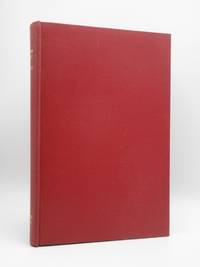
19271139E032London: British School of Archaeology in Egypt / Macmillan and Co. 1927-1928. 1st Edition . Hardback. Printed pages: 136; 32. Very Good Minus. 7.25 x 10.75 inches 18.5 x 27.5 cm. Ex library in a good quality library binding. Five issues retaining the original front covers for 1927 Part 1 & 1928 Part 1 only. Red buckram with gilt title to spine. Red speckled page edges. Barcode to front endpaper pocket and label to rear endpaper occasional stamps to margins. Clean text throughout. Includes an index for all issues 1924-1927. Overall condition is Very Good Minus. Please Note: This is a heavy item and international postage will be more than the standard rate for non-European destinations. Actual Royal Mail postage costs are: USA £21.00; Oceania £26.00; Rest of World £26.00. A postage supplement will be requested after the order has been placed. Size: 7.25 x 10.75 inches 18.5 x 27.5 cm. British School of Archaeology in Egypt / Macmillan and Co. hardcover
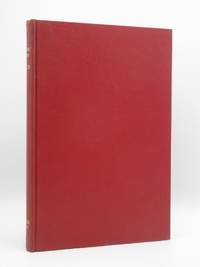
19221139E027London: British School of Archaeology in Egypt / Macmillan and Co. 1922. 1st Edition . Hardback. Printed pages: 128. Very Good Minus. 7.25 x 10.75 inches 18.5 x 27.5 cm. Ex library in a good quality library binding. Four issues retaining the original front cover for Part 1 only. Red buckram with gilt title to spine. Red speckled page edges. Barcode to front endpaper pocket and label to rear endpaper occasional stamps to margins. Clean text throughout. Overall condition is Very Good Minus. Please Note: This is a heavy item and international postage will be more than the standard rate for non-European destinations. Actual Royal Mail postage costs are: USA £21.00; Oceania £26.00; Rest of World £26.00. A postage supplement will be requested after the order has been placed. Size: 7.25 x 10.75 inches 18.5 x 27.5 cm. British School of Archaeology in Egypt / Macmillan and Co. hardcover