1 364 résultats
26 pages. Plus black and white photographic plates and large fold-out color map, measuring approximately 15 x 15 inches (38 x 38cm). Original condition with blue wrappers, titles to front, and containing all the ads. This is a complete issue, seldom found in such good and original condition. Accompanied by a spectacular descriptive colour map, this is Philby's first-hand expedition report on early explorations into unknown regions of Arabia, under the auspices and patronage of His Majesty `Abdul `Aziz ibn Sa`ud, King of the Hejaz and Nejd and its Dependencies. Philby continues where Bertram Thomas left off - "ninety days of wanderings across Arabia by way of the Rub'al Khali" in this riveting narrative. Key to Philby's compelling story telling is his attention to detail: we learn of the breed of camels employed for the gruelling expedition - Umaniya - best of all strains; of the characters of the eighteen strong party - their fear and reluctance to navigate the Empty Quarter and the presence of evil omen; descriptions of adherence to the fast of Ramadhan, condemning the party to thirty hungry days with nothing to eat or drink between daybreak and sunset. Philby's central objective lay in as complete an observation as possible of the Jafura desert, an extensive northward continuation of the sands of the Great South Desert reaching from the line Jaub-Jabrin to within a few miles of the Hasa oasis and skirted on the east by the esturay-like depressions known as Jiban. Features Anbak, settlement of antiquity and small oasis; Qasr ibn Dahbash, Jabrin District; Dharbun ridge; arrival at Wabar; the sand slopes of Naifa; Hadhat al Hawaya and many more locations. Includes fascinating discussion of the Murra tribes people; the search for Maqainama or Magan; the wells of Bir Fadhil; the discovery of an unexpected volcano and craters at Wabar, mythical site of an ancient civilization and much more.
Notes & Condition: Philby, a famed Arabian explorer and father of master spy Kim Philby, renounced British policy, became a Moslem, and joined the Wahabis. This expedition report Predates Philby's Book, entitled, Sheba's Daughters, Being a Record of Travel in Southern Arabia, With an Appendix on the Rock Inscriptions by A.F.L.Beeston, First Published in 1939. The account of a journey made by the author, Ibn Saud’s official adviser, from the King’s camp on the Mecca to Riyadh road to the Indian Ocean. Philby was the first European to enter Abha, the capital of Najran, the frontier district between the Wahhabis and the Yemenites, and the second to visit Shabwa, although he was the first to explore the ruins where he discovered the great temple of Astarte. An excellent account of Philby's travels in southern Arabia, particularly the Hadhramaut in 1936. The longest of Philby's journeys, ostensibly to map the new frontier with Yemen. Until the 1930's the highlands of south-west corner of Arabia were among the world's few remaining lands not fully explored or charted. Into that region Philby, author and explorer, made two journeys, the first in 1932, and the second in 1936 and 1937. This important Arabian Expedition is an account of exploration, containing valuable material on the Yemeni-Saudi borders, and excellent quality photographs taken for the first time in that area by a European. This narrative was published within two complete monthly issues, July and August, of the Geographical Journal.This is August issue only, 26 pages, plus black and white photographic plates and a large fold-out colour map measuring approximately 14 x 24 inches (35 x 61cm). This issue is in original condition with blue wrappers, titles to front, and containing all the ad, seldom found in such good and original condition.
23 pages. Plus many photographic illustrations and a large fold-out color map, measuring approximately 8x 19.25 inches (20 x 49cm). Original condition with blue wrappers, titles to front, and containing all the ads. This is a complete issue, seldom found in such good and original condition. This is an exceptional report Arabia expedition report which includes a fold out colour map and a profusion of plates illustrating the author's journey from the Persian Gulf to the red Sea. Philby was a British explorer, official and author, joined the British Foreign Service in 1917 and was the first European to visit the southern desert of Arabia. Philby was the first European to enter Abha, the capital of Najran, the frontier district between the Wahhabis and the Yemenites, and the second to visit Shabwa, although he was the first to explore the ruins where he discovered the great temple of Astarte. During Philby's explorations of Arabia, he came into contact with Ibn Saud, and was greatly influenced by the Wahabi ideology and culture, converting to Islam and renouncing his faith in Christianity.
Title: Jauf and the North Arabian Desert. Author: H. St. J. B. Philby Publisher: London: Edward Stanford, Royal Geographical Society, 1923. Item is in Original Condition, with Blue Wrappers - As Issued, Complete with All the Ads! Notes & Condition: Philby recounts a journey made in 1922 together with railway engineer Major Holt, through Jordan to Jauf [Al Jawf Region, Al-Jouf] and into Iraq as far as Karbala, for the purpose of investigating the area's unstable political situation, and to examine possibilities of building a railway in the Wadi Sirhan valley. Beginning with a fascinating summary of a most unstable government indeed, Philby describes an ongoing power struggle between two dynasties, inter-tribal raids, a slave governor being murdered, betrayals and quarrels over land, so forth. The pair travelled to Medina, to the volcanic lava field of Harrat al-Shamah where they found some Safaitic inscriptions on stone, then to Sakaka where they stayed for nine days, and eventually arriving at the Al-Ukhaidir Fortress and the city of Karbala [Iraq], to be hosted by the Arab governor. Choosing a safe route was imperative as rebel holdings were prolific, particularly in the Al-Jawf Region. Once their mission was accomplished they made their way north for Ramadi, from where a flight would take them back to Amman. Interesting accounts describe inhospitable places and encounters, most notably the house of Sha'lan whose members were able to impede the expedition for some time. Philby's observations further include the important village of Kaf and its citizens, the Quraiyat salt -pans which are worked by the Badawin [Bedouins]; the plain of Ithra and its settlement of the black tents of the Ruwalla; the vast, dazzling, white salt marsh of Nuqrat al Hadhaudha, the prominent landmark of Kharana; Shaib Shanmari and in Jauf itself, the great medieval Arab fortress of Qasr Marid, the ruins of the hamlets of Suq and Suq al Hattab, the Safaitic inscriptions at Harrat; at the Sultan's invitation, a visit to Sakaka; the oasis of Qara; Suluba; the wells of Abal Dufuf; the magnificent ruins of Ukhaidir; Abu Dibis and Amadi. Photographic plates provide excellent visuals from the journey. Philby's account is accompanied by a large highly detailed fold-out colour map and a report by Major A. L. Holt titled, "The Future of the North Arabian Desert," which outlines his work in terms of developing communications through the desert, and a compelling argument promoting the desert as an important trade route. Holt accompanied Philby on his extraordinary Arabian adventure. At the time of this expedition, Philby was chief head of the Secret Service in Mandatory Palestine (since November 1921), working with T. E. Lawrence and meeting his American counterpart, Allen Dulles. 8vo. Two reports, 39 pages combined, plus a large fold-out colour map measuring approximately 59 x 34 cm, and photographic plates for illustration. Original condition with blue wrappers, titles to front, and containing all the ads. This is a complete issue, seldom found in such good and original condition. Excerpt from the text: "We left Amman on 10 March 1922... my personal preference... camels over mechanical transport in the real desert... in country where no organized route exists" "... The introduction of modern firearms has been a curse and veritable scourge to Arabia and its independent, individualistic denizens... the Arab social code of raid and rapine has not shown any signs as of yet of adjusting itself..." "... the northern desert of Arabia is at the present moment unsafe in the widest sense of the term - unsafe for the innocent traveller, the merchant, and the shepherd - there are already signs of a welcome change in the south, where Ibn Sa'ud has created a well-knit polity on a religious basis and has found himself strong enough to prohibit tribal raiding within his borders." "Our reception by the authorities of Kaf was cordial enough though guarded.... We were not allowed to visit the natural fortress ... called Qasr Sa'idi... a small guard of some twenty-five men with machine guns... Kaf is commanded by this eminence..." "... within a month of our sojourn at Jauf, we heard of the downfall of the house of Sha'lan at the hands of Ibn Sa'ud. As rulers they were detested by their own people, whom they treated with insolent harshness..." "Every human seen in the desert is an enemy, and the weaker party must make its best speed away if it would escape death." End Excerpt. Harry St John Bridger Philby, Order of the Indian Empire (CIE) (1885-1960), also known as Jack Philby or Sheikh Abdullah, was a British Arabist, explorer, writer, colonial office intelligence officer, and adviser to the first monarch of Saudi Arabia. Philby joined the British Foreign Service in 1917 and was the first European to visit the southern desert of Arabia. He was the first European to enter Abha, the capital of Najran, the frontier district between the Wahhabis and the Yemenites, and the second to visit Shabwa, although he was the first to explore the ruins where he discovered the great temple of Astarte. During Philby's explorations of Arabia, he came into contact with Ibn Saud, and was greatly influenced by the Wahabi ideology and culture, converting to Islam and renouncing his faith in Christianity.
8vo., First Edition, on laid paper, with large folding map on japon, half-title and title very lightly spotted, lower corner of half-title and several following leaves lightly creased; handsomely bound in full dark red crushed morocco, sides with gilt frame border, back with raised bands, second and fourth compartments lettered and ruled in gilt, all other compartments tooled and ruled in gilt, gilt top, hand-made endpapers, ribbon marker, fore-edge faintly spotted else an attractive copy ideal as a gift or for presentation. With a double-page genealogy of the House of Sa'ud. Published in Benn's series 'The Modern World'. Bright copy of a key work by the great Arabist.
1928PHO-1377London, Constable & Co ltd ,1928 , 8°, xiv-422pp. , original editor cover , one folding map and several illustrations .
1962X92329Louvain, Publications Universitaires/ Institut Orientaliste s.d. [1962] 261 loose plates in publisher's protective case in half cloth (as published), 27cm., in the series "Bibliothèque du Muséon" volume 50, the 261 plates depict thousands of inscriptions in bl/w copied during the expedition in Arabia led by Philby Ryckmans and Lippens in 1951-1952, Not listed in OCLC, very rare, fine condition, weight is over 2kg. (extra shipping charges might apply), X92329
26208P., Julliard (Collection "La Croix du Sud"), 1956, in 8° broché, 382pp. ; qq. rousseurs ; couverture illustrée.
Paris, Delagrave, 1971, 28 x 22'5 cm., tela original con sobrecubiertas, dibujos a toda página, algunas plegadas, 157 págs. - 1 h.
brossura Una comune inesattezza vuole che, con i termini arabo e turco, si intenda la stessa popolazione, le stesse tradizioni, la stessa lingua, lo stesso credo. In realtà, come l'autore de "I Turcarabi" sottolinea fortemente, è ingiusto catalogare sotto la stessa etichetta due popoli che, in comune, hanno perlopiù un ideale, quello della religione musulmana, ma che, per la loro storia e il loro carattere, risultano assolutamente differenti.
L'opera è un'aspra polemica tra Vincenzo Petra ed Enrico Pessina, sostenitore quest'ultimo di Arabia Tommaso, al quale venne censurato un suo lavoro, Saffo, messo in scena dalla compagnia diretta da Adamo Alberti. Il successo fu enorme, specie per il fatto che Saffo veniva presentata come incitatrice di virtù civili e patriottiche, ma la censura interruppe le rappresentazioni dopo la dodicesima serata. Parte della critica, soprattutto quella accademica, lo attaccò violentemente e, pur riconoscendone il valore poetico, non rilevò in lui alcuna validità come tragediografo. Dall'Indice: Avvertenza. Sul Saffo di T. Arabia. Intorno alla tragedia. Critica di critica. Polemica. Note alla polemica. Critica di critica. Esemplare perfetto. Brossura cartacea coeva, pp. 43, in 8°
1890LBW-8645Paris, [1890]. 230 x 157 mm.
196748612ABZürich und Stuttgart, Artemis Verlag 1967. 477, (1) S., 1 Bl. Original-Leinwand mit Rückenschild. (=Die Bibliothek des Morgenlandes).
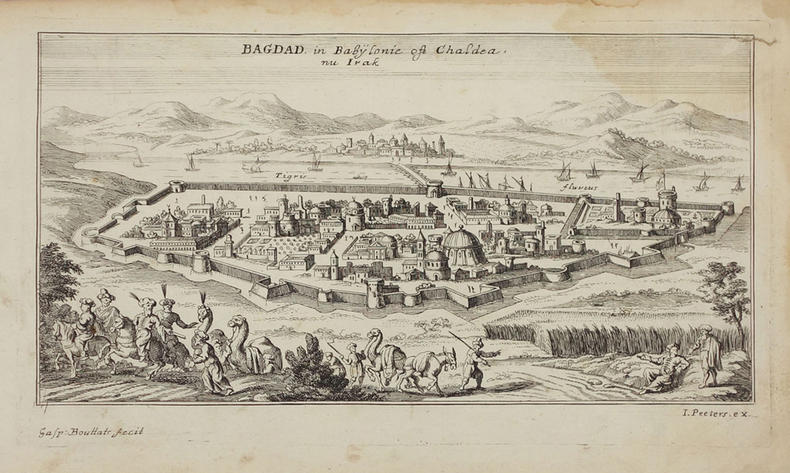
LBW02507[circa 1690]. 121 x 231 mm.
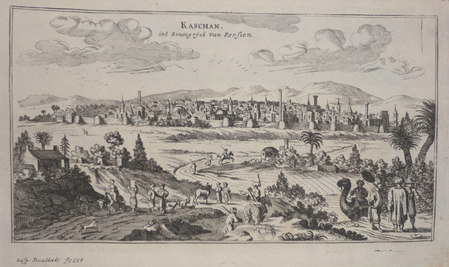
LBW02508circa 1690 127 x 236 mm.
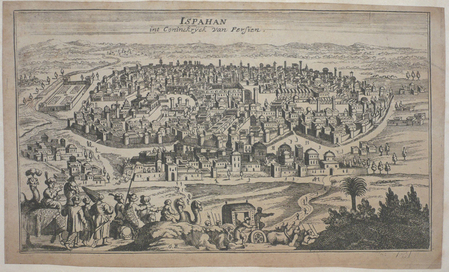
LBW045edcirca 1690 139 x 234 mm.
41p. Disbound Good condition Advocating Arabic self-rule without European influence.
2 voll. 8°, pp.X-283 (5); 231, br.ed., dorsi rinf. In barbe. Queste Lettere, che videro la luce anonime nel 1802 e col falso luogo di stampa di Filadelfia (Melzi II 121 e Parenti, Diz.dei luoghi di stampa falsi, p.84, Olschki 14342), è dedicata dall'editore Giuseppe Giusti a Domenico Navasques, segretario del duca di Lucca. Brunet VI 28121 cita la 2°ediz. con data Lucca, 1819, forse errata, perchè la nostra dovrebbe essere la 2°ediz., in quanto nella dedica al Navasques, datata 31 ago.1829, Giuseppe Giusti parla di quest' "opera che ora con aggiunte e correzioni favoritemi dalla gentilezza dell'Autore, per mia cura rivede la luce..". Si tratta di 27 lettere (+ la lettera del Lucchesini) di cui 22 sull'India: caste, libri sacri (veda), luoghi di venerazione, culto di animali e alberi sacri, bramini, metempsicosi, culto di Linga o phallo e feste, costumi e teologia della costa del Malabar, Baniani e loro costumi, spedale per animali infermi a Suratte, astrologia giudiziaria, costumi indiani (matrimonio, poligamia,"abbruciarsi delle vedove", ballerine..), astronomia, arti, medicina, architettura e scultura, Parsi o Guebri, musulmani, Compagnia inglese. Le ultime 5 lettere sono dedicate al viaggio in Arabia, Mar Rosso, Giza, Egitto, isola di Stanchio etc.
in-8°, 274 pages, broche, couverture illustree plast. Bel exemplaire. [MI-29] En se faisant passer pour un médecin syrien, William Gifford Palgrave devient de fait, dès 1862, le premier Européen à parcourir la péninsule arabique...
340pp + 12 plates + folded map VG/none contemporary binding half cloth, slightly worn but gilt lettering on spine still visible, small owner inscription on sub title page, moderate foxing throughout, mainly on margins, otherwise a very good copy. Abridged edition (J. Belin-De Launay) of the classic work in the Travels to Arabia literature, translated from the English edition in French by E. Jonveaux. With 12 nice woodcut illustrations and a folding map (24cm x 18cm, irrelevant small tear on lower margin, slightly yellowed) of the Arabian Peninsula included. rilegatura coeva in mezza tela leggermente consunta, scritte dorate al dorso chiaramente leggibili, piccola firma proprietario al preliminare, fioriture all'interno, principalmente ai margini, nel complesso un buon esemplare. Edizione ridotta (J. Belin-De Launay) di questa classica opera su viaggi in Arabia, tradotta in francese da E. Jonveaux. Include 12 belle incisioni fuori testo e mappa dell'Arabia (24cm x 18cm, strappetto ininfluente sul margine inferiore, leggermente ingiallita).
London and Cambridge, MacMillan and Co., 1866, volumi 2, in-8, legatura editoriale in piena tela verde con figura di beduino che conduce un cammello impressa in oro al centro dei piatti anteriori, titolo e numero di volumi in oro ai dorsi, pp. XII, [2], 466, [2] - [8], 398, [2]. Con ritratto dell'autore in antiporta al primo volume, una grande carta geografica dell'Arabia più volte ripiegata e 4 piante ripiegate f.t. Esemplare più che buono: solo la cerniera del piatto anteriore del primo volume è usurata all'interno, nel punto di contatto fra la controguardia anteriore e la prima carta di guardia.
In-8 p. (mm. 239x148), 2 volumi, mz. pelle coeva, dorso a cordoni con tit. oro, pp. (6),XVI,346,(2); (4),429,(3); con un ritratto dell’A. e 5 tavole f.t. Prima edizione francese. Esempl. con qualche fioritura, altrimenti ben conservato.
1373234London: Macmillan, 1868 in-8, viii-421 pages, portrait et 4 cartes se dépliant. Reliure percaline d'éd. plat décoré (étiquette bound by Burn & Co), rares rousseurs, bel exemplaire. Ex libris Henry B. Marshall.
5148traduction d’Emile JONVEAUX,abrégé par J Belin-de-Launay. In 12 broché,faux-titre,titre,XX,335 pages,Une carte dépliante en fin de volume, gravures sur bois hors-texte. hachette & Cie 1876.dos renforcé avec de petits manques, sans gravité.Partie supérieure de la marge extérieure du premier plat légèrement décolorée,pâle mouillure partie supérieure de la marge extérieure à quelques pages en début de volume.