The Saudi Arabia Ministry of CultureBiblio.com
1 365 résultats
45805682-nnew. unknown
Fine English Paperback. Pbo. Roy. 8vo. (24 x 17 cm). In English. 78 p. The place of terrorism in Iran's foreign policy. (Eurasia file).
30 pages, including 4 sketch maps. Plus photographic plates. Original condition with blue wrappers, titles to front, and containing all the ads. This is a complete issue, seldom found in such good and original condition. This is a very detailed extensive report on the physical geography and geological tectonics of South-Eastern Arabia - Oman - with some interesting notes dealing with water supply of Bahrain, Qatar Peninsula, discovery of flint implements, and collection of birds. The author was an assistant geologist for Anglo-Persian Oil Company, who traveled widely to Persia, Oman, Bahrain and Qatar. Mr. Lee traversed considerable extent of then unexplored regions of Oman, and here he provides an informative account of his geographical surveys, as well as, some interesting remarks on the Mahri and the Gara nomad tribes.
DJ price clipped; In 2002 Author Pollack wrote a book which argued for an immediate invasion and occupation of Iraq. After public opinion had safely turned against that disaster, he renounced his previous support and resolved to be more cautious about the next war--he argues against invading and occupying Iran. ; '; 8vo; 539 pages
Author: Sir Rupert Hay Publisher: London: Edward Stanford, Royal Geographical Society, 1954. Item is in Original Condition, with Blue Wrappers - As Issued, Complete with All the Ads! Notes & Condition: As former Political Resident in the Persian Gulf until 1953, Hay's purpose with this report was "to give a brief geographical description of the ten Shaikdoms and Muscat, bringing to light "the problems to which their boundaries give rise." Having had worked numerous years as a British political officer charged with establishing and maintaining British rule, Hay was very knowledgeable of the region and inhabitants, as well as its political history, especially in relation to Great Britain. He begins by describing Kuwait, "before the advent of oil... existing on pearling, fishing, shipbuilding...but now one of the richest..." A thorough description of Kuwait concludes with remarks of the section disputed by leaders of Qatar, Saudi Arabia and the Trucial Coast Shaikdom of Abu Dhabi. Trucial Oman and its "extraordinarily complicated borders" is the next subject of Hay's attention, Abu Dhabi being "the most westerly and by far the largest of the Shaikhdoms." He provides fascinating visual imagery of this region, "... Dibai...flourishes on its entrepôt trade and its suqs or markets on either side of its broad creek are the most picturesque... in the Middle East... takes one back to the time of the Arabian Nights... narrow lanes roofed with matting... Arabs, Persians and Baluchis display their multi-coloured wares. Wild-eyed tribesmen with their camel-canes and daggers haggle with the shopkeepers... wealthier Persian merchants with their long flowing robes and gold-brocaded headdresses pass to and fro... Graceful dhows glide into the creek... ...there is an air of bustle and prosperity... a peculiar charm." Boundaries, territorial disputes, claims of the Sultan of Muscat and Oman, the positive and problematic impact of the proliferate oil companies, are all examined before reiterating, in conclusion, the imperative need for clear delineation of boundaries in the highly coveted oil-rich Persian Gulf. 8vo. 13 pages including a full page sketch map. Original condition with blue wrappers, titles to front, and containing all the ads. This is a complete issue, seldom found in such good and original condition. [From 1763 until 1971, the British Empire maintained varying degrees of political control over some of the Persian Gulf states, including the United Arab Emirates (originally called the Trucial States) and at various times Bahrain, Kuwait, Oman, and Qatar through the British Residency of the Persian Gulf.] Sir William Rupert Hay KCMG KCIE CSI (1893-1962) was a British Indian Army officer and administrator in British India. He served as Chief Commissioner of Balochistan during the colonial era. During World War I he was in Mesopotamia with the Dorsetshire Regiment, transferring to the Indian Army, attached to the 24th Punjabis, being appointed Quarter-Master 30th October 1916, and promoted to Lieutenant in 1918. Hay was seconded to the Foreign and Political Department in May 1920 and was confirmed in his appointment in May 1924. He was Political Agent in South Waziristan from 1924 to 1928, Assistant Commissioner in Mardan 1928 to 1931, and Political Agent in Malakand 1931 to 1933. He was Resident in Waziristan 1940 to 1941, Resident in the Persian Gulf 1941 to 1942, Revenue and Judicial Commissioner in Balochistan 1942 to 1943, and Agent to the Governor-General, Resident and Chief Commissioner in Balochistan 1943 to 1946. He was again Political Resident in the Persian Gulf from 1946 to 1953, then retiring from the service and returning to England. [St. Anthony's College, Oxford holds a collection of Hay's papers and diaries.] The Trucial States of the Coast of Oman, also known as Trucial Oman and Trucial Sheikhdoms, were a group of sheikhdoms in the south-eastern Persian Gulf, previously known to the British as the 'Pirate Coast', which were signatories to treaties (hence 'trucial') with the British government. These treaties established an informal protectorate by Great Britain, and the sheikhdoms, or emirates, were a British protectorate from 1820 until 2 December 1971, when the seven principal trucial sheikhdoms became independent. Six (Dubai, Abu Dhabi, Sharjah, Ajman, Umm Al Qawain and Fujairah) were to form the United Arab Emirates on that day; the seventh "Ras Al Khaimah" joined the Federation on 10 February 1972. The last sheikhdom to be granted recognition was that of Fujairah, which became a trucial state in 1952 after the British government came under pressure from PCL (Petroleum Concessions Limited) to grant status in order that the company could have a free hand to explore for oil along the whole east coast. Also in 1952, the Trucial States Council was established to encourage co-operation between the seven Rulers.
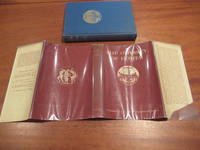
1935059996London: Oxford University Press / Humphrey Milford 1935. First British Edition 1st Printing. Hardcover. Fine/Near Fine. Vii 327 Pp. Blue Cloth Gilt Top Edge Gilt Foredge Deckled. The 28Th English Rendering Of The Odyssey First Published In A Limited Edition In Great Britain By Emery Walker And In A Limited Edition In The Us Both In 1932 This Is The First Uk Trade Edition 1935 Stated Lacking The Map Endpapers And Introduction By Findlay Present In The American Issue. Book Is Fine Bright Clean No Wear Or Marks. Dj Is Bright Clean Very Slight Spine Fading And Browning Shallow Chipping Across Top Of Spine 1/2" X 3/16" Triangular Chip At Center Of Bottom Edge Of Rear Panel 3/4" To 2' Closed Tears At Corners Of Front Panel Each With Internal Clear Tape Repairs. <br/> <br/> Oxford University Press / Humphrey Milford hardcover
1940063025New York: Oxford University Press 1940. Book. Very Good. Hardcover. First Thus. 8vo - over 7¾ - 9¾" tall. Avery good copy of this title with similarly very good d/w that has a small tearto top corner. This edition designed by the great American typographer Bruce Rogers for the Hesperides series in an edition limited to 2500 copies. This edition uses the roundel chapter headings from the magnificent 1932 Bruce Rogers/Emery Walker edition but here they are in black and white. A handsome little volume in the Lawrence canon. teg. 442pp. Oxford University Press Hardcover
18 pages. Plus photographic plates. Original condition with blue wrappers, titles to front, and containing all the ads. This is a complete issue, seldom found in such good and original condition. Eight years had elapsed since the previous Mount Everest Expedition and a new generation of climbers, under the leadership of Hugh Ruttledge and including Frank Smythe, Eric Shipton, Jack Longland, Eugene Birnie, Percy Wyn-Harris, Edward Shebbeare, Lawrence Wager, George Wood-Johnson, Hugh Boustead, Colin Crawford, Tom Brocklebank, E. Thompson and William Maclean, with Raymond Greene as senior doctor and William 'Smidge' Smyth-Windham as chief radio operator, together with a powerful and spirited team of Sherpa "Tigers" - constituted the Fourth British Everest Expedition attempt. The personnel for this attempt, which used the then-standard route of choice of the British via the North Col, was made up of a combination of military types and Oxbridge graduates, and included none of those who had been on the 1924 attempt. The highest point attained was 8,570 m, but the route was found to be extremely difficult and the vital camp V that should have been reached on a rare day with fair weather - 20 May - was, as a result of disagreements between team members, never established. It was also during this expedition that Wyn-Harris found the ice axe which belonged to Andrew Irvine, who had disappeared on the peak on the 1924 British expedition with George Mallory. Although not a success in terms of all objectives met, the expedition did mark the first oxygenless summit attempt by Wyn Harris and Wager who planned to reconnoiter Mallory's ridge route. The pair did traverse into and across the Great Couloir, and managed to reach Norton's high point before admitting defeat. On June 1st, Shipton and Smythe attempted another oxygenless ascent, following the same ascending line taken by Wyn Harris and Wager to the base of the First Step and thence along Norton's Great Couloir route. Shipton was forced to give up a little past the First Step, and Smythe continued alone, crossing the Great Couloir somewhat lower down than his predecessors where the ledges were more favorable, ultimately giving up at Norton's high point. Ruttledge's account of events includes details of preparation for the journey, diet, weather and Harris and Wager's summit assault, together with a summary of knowledge gleaned from the expedition. Photographs and a lively discussion between RGS members complete a well rounded and exciting paper.
deciphered and translated into the Hebrew and English Languages. 2 photographic plates, 4 large folding lithographed plates, viii, 44 pages, Octavo, frontis of Captain Renczynski, bound in red cloth with gilt lettering on spine, some sunning to boards and spine, otherwise a nice and tight copy of this rare book.The Moabite Stone is a dark-colored, basalt monument about four feet high by two feet wide, dating to the reign of King Mesha in about 850 B.C. This artifact is another important source that corroborates the biblical account of the early Israelites. It currently resides in the Louvre Museum, Paris. A very interesting piece of Judaica and an item of Archeological interest. Extremely Scarce.
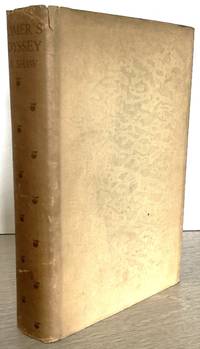
4to., First Edition, with title in red and black; handsomely bound in burgundy full morocco, sides with gilt frame border, back gilt with five raised bands, second and fourth compartments lettered and ruled in gilt, all other compartments tooled and ruled in gilt, gilt top, hand-made endpapers, uncut, a most attractive copy ideal as a gift or for presentation. A lovely copy. O'Brien A173
4to., First Edition, with title in red and black, contemporary signature on front free endpaper; blue cloth, upper board blocked in blind, gilt back, blue top, a bright, clean copy in mildly age-soiled dustwrapper. O'Brien A173.
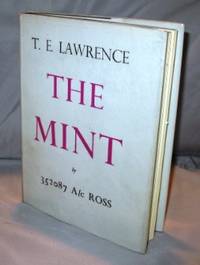
195522793<p>London:: Jonathan Cape 1955. First Printing of the First UK Edition. A Fine tight copy in a Near Fine dust jacket with the price inked out on the front flap though still present on the rear flap. In 1924 Lawrence enlisted in the British Royal Air Force after previously being rejected for enlistment due to his fragile physical and mental condition following his experiences in the First World War. "The Mint" consists of his organized and repeatedly rewritten notes of his time in the R.A. F.--a daily diary of the shattered life a famous and often ostracized enlistee.</p> Jonathan Cape, hardcover
Foxing to textblock. Former owner's name stamped to inner cover (H. Schipper). Foxing to DJ. DJ spine sunned. Chipping and tears to DJ. ; Republished by Readers Union Group of book Clubs. ; 248 pages
10 pages, including in-text sketch map. Plus photographic plates. Original condition with blue wrappers, titles to front, and containing all the ads. This is a complete issue, seldom found in such good and original condition. Travelling with his medicine boxes and his teams of canoemen around the junction between the Tigris and the Euphrates, Thesiger visited nearly every village in the Central Marshes and came to know intimately the people who inhabit this landscape of islands, lakes and waterways, living with them in their reed houses and sharing their unique way of life. He beautifully evokes the landscape and its teeming wildlife and vividly brings to life the many friends he made among the Marsh Arabs. His extraordinary photographs provide a stunning record of the last remnants of a people and their culture. Pre-dates his book, 'The Marsh Arabs', first published in 1964.
8vo., with frontispiece, plates and maps; black cloth, gilt back, a fine copy in unclipped dustwrapper. Near fine copy of an elegant reissue of the author's second book (first published in 1964). The Marsh Arabs occupy the region around the junction of the Tigris and Euphrates in southern Iraq. This classic account, recording eight years spent living among them, is a worthy sequel to his masterpiece 'Arabian Sands'. THIS REISSUE IS NOW SCARCE IN ITS OWN RIGHT.
8vo., First Edition, with frontispiece, 103 plates on 60 and 3 maps (one double-page) in the text, top very lightly spotted; green cloth, gilt back, a near fine copy in price-clipped dustwrapper. Thesiger's second book. The Marsh Arabs occupy the region around the junction of the Tigris and Euphrates in southern Iraq. This classic account, recording eight years spent living among them, is a worthy sequel to his masterpiece 'Arabian Sands'.
8vo., First Edition, with frontispiece, 103 plates on 60 and 3 maps (one double-page) in the text; handsomely bound in dark red full morocco, sides with gilt frame border, back with raised bands, second and fourth compartments ruled and lettered in gilt, all other compartments tooled in gilt, gilt top, a most attractive copy ideal as a gift or for presentation. The Marsh Arabs occupy the region around the junction of the Tigris and Euphrates in southern Iraq. This classic account, recording eight years spent living among them, is a worthy sequel to his masterpiece 'Arabian Sands'.
8vo., First Edition, with frontispiece, 103 plates on 60 and 3 maps (one double-page) in the text, top lightly dust-soiled, free endpapers mildly browned; green cloth, gilt back, boards lightly faded else a good, clean copy in unclipped dustwrapper browned at fold-ins. Bright working copy of the author's second book. The Marsh Arabs occupy the region around the junction of the Tigris and Euphrates in southern Iraq. This classic account, recording eight years spent living among them, is a worthy sequel to his masterpiece 'Arabian Sands'.
8vo., First Edition, with frontispiece, 103 plates on 60 and 3 maps (one double-page) in the text; green cloth, gilt back, backstrip lightly age-soiled else a very good, bright, clean copy. Thesiger's second book. The Marsh Arabs occupy the region around the junction of the Tigris and Euphrates in southern Iraq. This classic account, recording eight years spent living among them, is a worthy sequel to his masterpiece 'Arabian Sands'.
In-8 p., tela edit., titolo impresso in argento al dorso, pp. XVI,211. Sati’ al-Husri (1880-1968) è stato un politico e scrittore siriano di formazione ottomana, influente nazionalista e pedagogo. “The ‘Making of an Arab nationalist’ - al-Husri’s conversion from Ottomanism to Arabism - is the theme of Cleveland’s study. As such, it provides a key to the complex origins and development of Arab nationalism in the XX century”. Esemplare ben conservato.
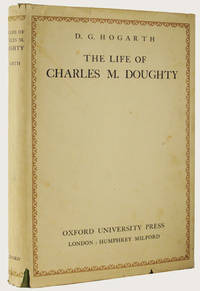
192833452Oxford: Oxford University Press. London: Humphrey Milford 1928. First edition. With a frontispiece portrait from the Simson bronze medallion nine plates of portraits sketches letters etc. and a fold-out map. 4to in the publisher's original green cloth lettered in gilt on the spine in the rare printed dustjacket. viii 4 216 pp. A very pleasing copy of this elusive work the text quite fine the cloth also in excellent condition with virtually none of the usual fading the rare dustjacket complete and with only minor rubbing to the extremities. An unusually fine survival. A SCARCE WORK OF INTEREST TO BOTH DOUGHTY AND T. E. LAWRENCE COLLECTORS. The author David G. Hogarth who died before the book came to publication was the noted archaeologist and scholar associated with both Lawrence and Doughty. He led the Carchemish archeological work in Syria where he employed Lawrence and was also professionally associated with Sir Mark Sykes. Professor Hogarth was appointed the acting director of the Arab Bureau for a time during 1916 when Sir Sykes went back to London. Close with T. E. Lawrence he worked with Lawrence to plan the great Arab Revolt against the Ottoman Turks and Germans. Hogarth introduced Lawrence to Doughty and Lawrence wrote the famous introduction to the 1921 edition of Doughty's TRAVELS IN ARABIA DESERTA.<br> T.E. Lawrence in his introduction to the 1921 edition describes this 'not like other books.a bible of its kind'. In referring to Doughty's own impressions of his effort Lawrence states: 'He calls his book the seeing of a hungry man the telling of a most weary man."<br> ARABIA DESERTA is one of the best-known classics of exploration and travel. Few writers of any genre have worked such magic or mischief on the English language as Doughty. He disapproved of Victorian prose style and mingled his own with Chaucerian and Elizabethan English and Arabic.<br> But whatever the style the result is perhaps the finest book on Arabia ever written. Another Arabist T.E. Lawrence speaks on Doughty: "I have talked the book over with many travellers and we are agreed that here you have all the desert its hills and plains the lava fields the villages the tents the men and animals. They are told of the life with words and phrases fitted to them so perfectly that one cannot dissociate them in memory. It is the true Arabia the land with its smells and dirt as well as its nobility and freedom. There is no sentiment nothing merely picturesque that most common failing of oriental travel-books. Doughty's completeness is devastating. There is nothing we would take away little we could add. He took all Arabia for his province and has left to his successors only the poor part of specialists. We may write books on parts of the desert or some of the history of it; but there can never be another picture of the whole in our time because here it is all said." - from the Introduction.<br> Hogarth's son William made the final revisions needed to his father's long-compiled manuscripts after the elder Hogarth passed in 1927. With the help of Mrs. Doughty Edward Garnett and Sydney Cockerell he was finally able to finish his father's labor of love and bring the work to publication. Oxford University Press. London: Humphrey Milford hardcover
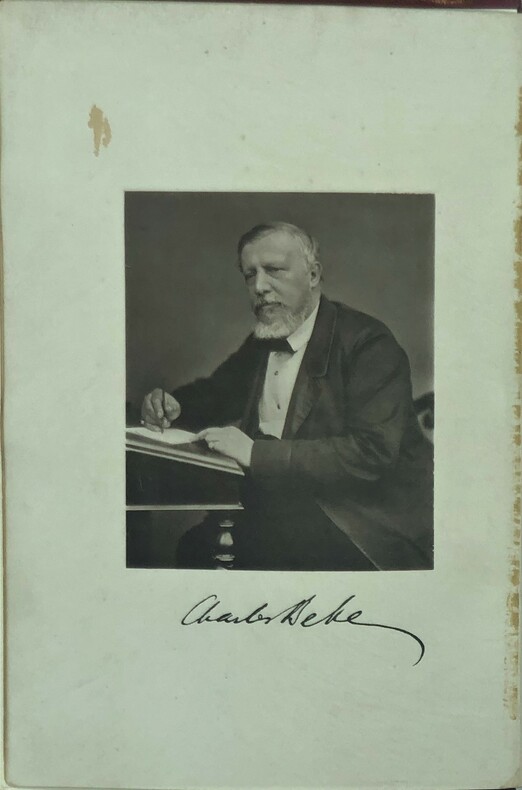
1878PHO-622Londres (Trubner),éditées par sa veuve, 1878,fort in-8(240x180) reliure percaline éditeur . faux-titre, portrait frontispice,XVIII , 606p ,autographe fac simile,carte dépliante à la fin,13 gravures et 2 tableaux, feuillet d'errata présent.
Slight wear to price clipped DJ. Slight browning to endpapers; Originally published in 1961 and revised twice to reflect changes in Iranian society; 8vo; 332 pages
Notes & Condition: Philby, a famed Arabian explorer and father of master spy Kim Philby, renounced British policy, became a Moslem, and joined the Wahabis. This expedition report Predates Philby's Book, entitled, Sheba's Daughters, Being a Record of Travel in Southern Arabia, With an Appendix on the Rock Inscriptions by A.F.L.Beeston, First Published in 1939. The account of a journey made by the author, Ibn Saud’s official adviser, from the King’s camp on the Mecca to Riyadh road to the Indian Ocean. Philby was the first European to enter Abha, the capital of Najran, the frontier district between the Wahhabis and the Yemenites, and the second to visit Shabwa, although he was the first to explore the ruins where he discovered the great temple of Astarte. An excellent account of Philby's travels in southern Arabia, particularly the Hadhramaut in 1936. The longest of Philby's journeys, ostensibly to map the new frontier with Yemen. Until the 1930's the highlands of south-west corner of Arabia were among the world's few remaining lands not fully explored or charted. Into that region Philby, author and explorer, made two journeys, the first in 1932, and the second in 1936 and 1937. This important Arabian Expedition is an account of exploration, containing valuable material on the Yemeni-Saudi borders, and excellent quality photographs taken for the first time in that area by a European. This narrative was published within two complete monthly issues, July and August, of the Geographical Journal.This is August issue only, 26 pages, plus black and white photographic plates and a large fold-out colour map measuring approximately 14 x 24 inches (35 x 61cm). This issue is in original condition with blue wrappers, titles to front, and containing all the ad, seldom found in such good and original condition.
1927X112254Lund, Haran Ohlsson 1927 119pp., 25cm., text in English, Doctoral Dissertation (University of Lund), original softcover (with trace of a small label), pages still uncut, stamp at verso of title page, text is clean and bright, X112254