Jordan, RobertBiblio.com

16 988 résultats
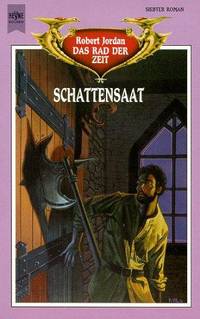
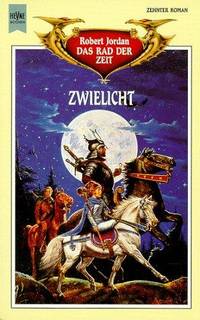
199644542HEYNE WILHELM 1996-98. 1. softcover. Rad der Zeit Das Deutsche Erstausgabe! HEYNE, WILHELM paperback
198542441HEYNE WILHELM 1985. 1. softcover. Conan HEYNE, WILHELM paperback
198742704HEYNE WILHELM 1987. 1. softcover. Conan Ungekürzte illustrierte und mit Karten versehene deutsche Erstveröffentlichung! HEYNE, WILHELM paperback
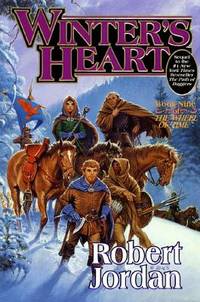
200054651TOR BOOKS 11/2000. 1. hardcover. Wheel of Time Sirmkovrilo! Sequel to the #1 New York Times Bestseller The Path of Daggers! TOR BOOKS hardcover
200147407HEYNE WILHELM 04-07/2001. 1. softcover. Rad der Zeit Das Deutsche Erstausgabe! HEYNE, WILHELM paperback
17683London: Orbit 1990-2013. First editions first printings. Published by Orbit in London 1990-2013. This is a very near fine set with the earlier volumes peerless and scarce in their own right. The dust wrappers are in the style of various illustrators and highly presentable with few volumes carrying slight shelf wear and bumping at the spine tips. Each title is handsomely bound in the original publisher's cloth in a wide variety of colours none of which carry notable chips and marks. The text blocks in each volume are free from foxing and toning. The author's facsimile signature is flat signed to the full title pages of 'The Gathering Storm' 'Towers of Midnight' and 'The Memory of Light' in black. This is a truly incomparable set. The Wheel of Time is notable for its length detailed imaginary world and magic system and its large cast of characters. The eighth through fourteenth books each reached number one on the New York Times Best Seller list. After its completion the series was nominated for a Hugo Award. As of 2021 the series has sold over 90 million copies worldwide making it one of the best-selling epic fantasy series since The Lord of the Rings. Its popularity has spawned a collectible card game a video game a roleplaying game and a soundtrack album. A TV series adaptation produced by Sony Pictures and Amazon Studios premiered in 2021. Orbit hardcover
199143438HEYNE WILHELM 1991. 1. softcover. Shadowrun Deutsche Erstausgabe! HEYNE, WILHELM paperback
199443824HEYNE WILHELM 1994-95. 1. softcover. Rad der Zeit Das HEYNE, WILHELM paperback
10850London: Orbit. London Orbit 1990-2013. First Edition. First Impression. Hardback. A very good set complete with the additional volume. Jordan's Wheel of Time series is a monumental epic fantasy saga with the final three volumes being completed by Jordan's death by Sanderson based on Jordan's notes though Jordan expected it to be one volume. The series weaves a rich tapestry of intricate world-building complex characters and a gripping battle between good and evil - as expected. With its deep exploration of themes like destiny power and the cyclical nature of time this series stands as a timeless masterpiece that continues to captivate readers and influence the fantasy genre. Some tanning to the page blocks on some volumes some gentle edge wear and rolling to some bumping to some spine tips. Some boards have a little handling wear and there is the odd spot here and there. A nice set overall 10850 Hyraxia Books. 1990-2013 . Very Good. Hardback. 1st Edition. 1990. Orbit hardcover
0078-18Prag u. a. 1834/1835. Manuskript. Deutsche Handschrift auf Papier mit Passagen in italienischer und lateinischer Sprache. 4°. 25 5 x 20 cm. 197 Bll. 8 w. Bll. PBd. d. Zt. Unveröffentlichtes Monument der sorbischen Sprache: 'Lebensbeschreibung 1818 als ich das erstemal das Tageslicht erblickte.' So eröffnet der 15 jährige die über 380 dicht beschriebenen Seiten im Dezember 1834. Es folgen zahlreiche Texte in deutscher italienischer und lateinischer Sprache. - Johann Peter Jordan 1818-1891 geboren in der sorbischen Ortschaft Zischkowitz besuchte seit seinem 13 Lebensjahr das Wendische Seminar in Prag. Hier begann er das Studium der Theologie wandte sich aber sehr bald der Journalistik und Slawistik zu. 1837 veröffentlichte er in der Prager Zeitschrift 'Ost und West' einen Aufsatz über die Sorben. In diesen Jahren sammelte er sorbische Volkslieder und bemühte sich um die Vereinheitlichung der sorbischen Orthographie. Weiters verfasste er eine Grammatik der wendisch-sorbischen Sprache in der Oberlausitz. Mit dieser Schrift wurde er 1843 in Leipzig promoviert. Auf Grund seiner Teilnahme am nationalpolitischen Leben in Prag musste er auf Druck der österreichischen Polizei die Stadt verlassen. Er bekam ein Lektorat für slawische Sprachen an der Universität Leipzig. Von 1842 bis in die späten 1860er Jahre gab er gemeinsam mit Arnost Smoler die 'Jahrbücher für slawische Literatur Kunst und Wissenschaft' heraus. Angesichts der nationalpolitischen Entwicklungen in Böhmen und Mähren verließ Jordan Leipzig in Richtung Prag wo er sich aktiv an der tschechischen Nationalbewegung beteiligte und 1848 den Slawenkongress mitorganisierte. 1848/49 wirkte er in Prag als der Herausgeber der 'Slavischen Centralblätter'. Seine dortige prorevolvolutionäre Tätigkeit kostete ihn jedoch sein Lektorat in Leipzig. Jordan wird heute gemeinsam mit Smoler als geistiger Wegbereiter der sorbischen nationalen Wiedergeburt angesehen. Aufgrund seiner publizistischen und politisch-kulturelllen Misserfolge in der Lausitz wandte er sich dem Wirtschaftsleben zu. 1859 war er Präsident der Prager Industrie- und Handelskammer und arbeitet auch mit dem Bankhaus Fugger zusammen. 1861 übersiedelte er nach Wien wo er in konservativ alttschechischen Kreisen verkehrte. - - In die Biographie eingeschaltet sind zahlreiche literarische Versuche Jordans darunter etwa auch Gedichte und Balladen in sorbischer "Ton ton te Dzeczo" in deutscher lateinischer und italinischer Sprache "Das Christgeschenk" "Elephante in India" "Turris Straßburgensis" folgt wiederum ein sorbisches Gedicht mit mehreren Hunderten von Verszeilen ferner "La Continuazione dell'Apparenza ingannar communicata.". Es folgen Notizen zum Opernlibretti "Nel 'Ratto d'Europa' di Sig.e Metastasio Venere dice a Europa:." dann wieder extrem lange Passagen in sorbischer Sprache teils nach Monaten geteilt etwa mit Titelei in roter Tinte wie "Maerz Marzio Mars Martius" Wohlerhalten kaum fleckig kaum Gebrauchsspuren meist sehr gut lesbar - geschrieben in einer sehr kleinen feinen altdeutschen Kurrentschrift mit Feder in Sepia-Schwarz. Beiliegt ein kleines Manuskript mit literarischen Versuchen: "Das Wirtshaus im Walde. Historische Erzählung" 28 S. auf 7 gefalteten Blättern beidseitig beschrieben sowie eine Liste der Libri lecti Jordans: "Folgende Bücher habe ich gelesen" 4 S. auf gefaltetem Doppelblatt. Prag u. a. 1834/1835. unknown
1935596460No place: The Author 1935. Softcover. Near Fine. First edition. Introduction by Adam Clayton Powell Sr. pastor of the Abyssinian Baptist Church. Octavo. 80pp. map of Africa plates and illustrations. Yellow printed wrappers. Contemporary name on front wrap wrappers with light foxing and soiling very good or better. The scarce autobiography of Lewis Garnett Jordan 1853–1939 who describes his life o f enslavement before the Civil War and just after. Born in Lauderdale County Mississippi Jordan’s childhood was traumatizing. His father a Spaniard who passed for a White man was absent. His mother like Jordan was enslaved. As a boy unnamed and known only as “Nig†he was struck by the plantation owner’s wife for committing a small infraction:<br /> <br /> “Mother like an enraged lioness collared her mistress and nearly choked her to death. Of course she was severely flogged by the master for it but it took nearly the remaining afternoon to do so. From that time until freedom came the master never attempted to whip her without a gun near at hand and being sure that she was well tied. The sight of her bleeding back and her mournful cries for mercy and pity as the blows from a cowhide rained on her bare back will always remain in my memory.†<br /> <br /> During the Civil War Jordan worked in a Confederate camp with his enslaver who had been compelled to enlist. When victorious Union soldiers came to the plantation the enslaved men and women were “hidden so as not to fall into the hands of the Yankees who were pictured to us as dreadful ogres to be shunned at all hazards… .†When the soldiers came again Jordan hid in fear. His mother was dismayed. She had been prepared to escape with her son who she could not find and she knew that the soldiers could have taken them to freedom.<br /> <br /> “Most of the Union soldiers had been mustered out of service†when a second opportunity arose for the Jordans to escape enslavement. It was learned that some Union troops were still encamped in Meridian Mississippi. Jordan writes that his mother had never taken recompense for her years as a slave but on the night of their escape Jordan was instructed to steal a pair of shoes for her “to wear to freedom.†In the pouring rain wading in creeks and lagoons and evading bloodhounds the duo finally achieved their liberty. It was in this Union “contraband camp†where Jordan was finally able to leave slavery behind.<br /> <br /> Jordan was still without a name when a camp school teacher asked him for his. Unwilling to be identified as “Nig†Jordan spontaneously gave the first names of two soldiers “Lewis†and “Jordan†who had been kind to him thus giving himself a name and having a name for the first time in his life. Later in life Jordan added “Garnett†as his middle name after reading an account of the life of the Rev. Henry Highland Garnett in The Rising Sun by William Wells Brown.<br /> <br /> A year after the war’s end in 1866 Jordan’s aunt was kidnapped by a former slaveowner and never seen again. His sister was kidnapped and his mother was forcefully carried off to be a wet nurse by a White United States Colored Troops officer. Jordan was sent to live with another officer from the 52nd Colored Regiment. This man treated him cruelly and Jordan ran away.<br /> <br /> Jordan’s narrative continues apace. Eventually he was baptized on a plantation once owned by Jefferson Davis and reunited with his mother. Jordan was licensed to preach in 1873 and ordained in 1874. His first ministry was located in Yazoo City Mississippi. Subsequently he pastored churches in Texas and finally at Philadelphia’s Union Baptist Church.<br /> <br /> Other portions of Jordan’s text concern his missionary endeavors in Africa brief biographical sketches of important Baptists his education his religious beliefs and various other events and experiences. The book’s interesting Introduction was written by Adam Clayton Powell Sr. pastor of the Abyssinian Baptist Church New York’s oldest Black church.<br /> <br /> Not in Work. Not in Catalogue of the Blockson Collection. Brignano: “A Baptist minister and missionary Jordan describes his slave life in Mississippi and his religious work in Mississippi Louisiana Texas Philadelphia Africa and Europe.â€. The Author unknown
2024CBS-9781804064627Ed Tech Press 2024. New. Ed Tech Press unknown
2024CBS-9781804064627Ed Tech Press 2024. New. Ed Tech Press unknown
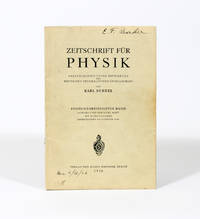
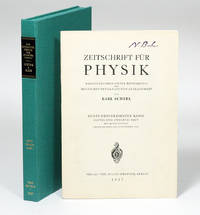
19261276Berlin: Julius Springer 1926. 1st Edition. Soft cover. Very Good. FIRST EDITION IN ORIGINAL WRAPPERS of the famous "three-man paper" the first complete self-consistent description of quantum mechanics. "In 1925 after an extended visit to Bohr's Institute of Theoretical Physics at the University of Copenhagen Heisenberg tackled the problem of spectrum intensities of the electron taken as an anharmonic oscillator a one-dimensional vibrating system. His position that the theory should be based only on observable quantities was central to his paper of July 1925 "Über quantentheoretische Umdeutung kinematischer und mechanischer Beziehungen" "Quantum-Theoretical Reinterpretation of Kinematic and Mechanical Relations". Heisenberg's formalism rested upon noncommutative multiplication; Born together with his new assistant Pascual Jordan realized that this could be expressed using matrix algebra which they used in a paper submitted for publication in September as "Zur Quantenmechanik" "On Quantum Mechanics". By November Born Heisenberg and Jordan had completed "Zur Quantenmechanik II" "On Quantum Mechanics II" colloquially known as the "three-man paper" which is regarded as the foundational document of a new quantum mechanics" Britannica's Guide to the Nobel Prizes. Particle Physics: One Hundred Years of Discoveries: "Development of matrix formalism for the Heisenberg quantum mechanics. Systems with arbitrary many degrees of freedom." Provenance: With ownership signature on front wrapper of E.F. Barker noted American physicist who worked primarily at the University of Michigan. IN: Zeitschrift für Physik Band 35 February 1926 pp. 557-615. Berlin: Julius Springer 1926. Octavo original wrappers; custom box. A few creases to wrappers chips to spine. RARE in original wrappers. Julius Springer paperback books
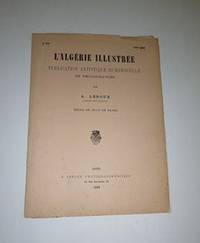
51-5751Alger: A. Leroux Peintre-Editeur 1889-1892. Original wraps. 32 x 43cm. 30 issues with wraps and some pages without wraps. 1 to 5 gravures per issue. Each fascicule is hand numbered at the right top of the cover. The work documents the people customs principal cities architecture Roman and Islamic monuments and antique sites of Algeria in a variety of city and desert scenes.OCLC Number :166522040: complete set with 158 plates at the Getty.OCLC Number 1389134605 is 3rd year only at the Bibliothèque Nationale de France.Very rare. Only recorded sale is Christie's London 27 Sept. 2006: The Algiers-based photographer published his work monthly in parts over the course of 5 years documenting the country's life and customs professions and types its principal cities markets and architecture in a variety of city and desert scenes. Alexandre Leroux opened his studio at Algiers in 1876 and produced numerous photographs of Algeria until his death 1912 when his sons continued selling his prints using his stamp. Alger: A. Leroux, Peintre-Editeur, 1889-1892 paperback
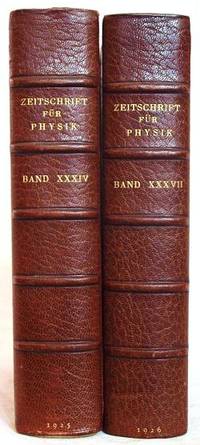
19251507150012Berlin : J. Springer 1/1/1925. Hardcover. Very Good. 2 Volumes. Band 34 and 37. Bound in modern 3/4 crushed red Moroccan leather. Red cloth boards. TEG. Gilt spine. 5 raised bands. Fine binding and cover. Clean unmarked pages. Ships daily. Band 34 contains "Uber die physikalischen Konsequenzen der relativistischen Axiomatik" p. 32-48 by Hans Reichenbach and "Zur Quantenmechanik" p. 858-888 by Max Born and Pasqual Jordan. <br> Band 37 contains the first Russian paper on matrix mechanics "Zur Quantenmechanik des rotators" 685-688 by Igor Tamm Anwendung der Quantenmechanik auf das Problem der anomalen Zeemaneffekte by Pasqual Jordan; Werner Heisenberg 263-277 and Zur Quantenmechanik der Stossvorgange by Max Born 863-867. Max Born's paper would he first to clearly enunciate the probabilistic interpretation of the quantum wavefunction which had been introduced by Erwin Schrodinger. It would be criticize by Schrodinger but lead to Einstein's quote in a letter "He God does not play dice Berlin : J. Springer hardcover
199443823HEYNE WILHELM 1994-2000. softcover. Rad der Zeit Das HEYNE, WILHELM paperback
18458San Francisco: Collins Publishers San Francisco 1993. Signed Limited Edition. Cloth. Fine. The signed limited edition of Rare Air: Michael on Michael the illustrated autobiography of Michael Jordan. Square folio 111pp 1. Black cloth title stamped in silver color photograph mounted on front cover. Red endpapers. Publisher's matching black cloth slipcase. Includes the "Upper Deck Authenticated" cardboard shipping case lined with green tissue wraps. Hologram from "Upper Deck Authenticated" on the limitation page with matching paperwork and hologram on the shipping box. This autobiography was limited to 2500 copies signed by Michael Jordan this being number 126. A fine example. This photo-autobiography was completed shortly before Michael Jordan's first retirement in 1993 leaving the NBA to play Minor League Baseball. Photography by sports photographer Walter Iooss Jr. The text was edited by Mark Vancil. Collins Publishers San Francisco unknown
1921140947955Providence RI: United Amateur Press Assocation 1921. First Edition. Near Fine. Volume 1 Numbers 1-3; December 1918 June 1919 and April 1921. Three issues all published. Bound in publisher's side-stapled self wraps. Mailing folds to numbers 1 and 2 light toning otherwise Fine. <p>The amateur press journal was founded by H. P. Lovecraft W. Paul Cook Winifred Virginia Jackson and two more under the auspices of the United Amateur Press Association whose president Lovecraft had been in 1917. "Another idea Lovecraft put forward to encourage amateur activity was the issuing of cooperative papers--papers in which a number of individuals would pool their resources both financial and literary. He attempted to teach by example by participating in such a journal The United Co-operative" Joshi H. P. Lovecraft: A Life<p>A total of three issues were published all containing contributions from Lovecraft: 'The Simple Spelling Mania' and the poem 'Ambition' published under his pseudonym "Ward Phillips" in December 1918; 'The Case for Classicism' the poem 'John Oldham: A Defence' and the prose-poem 'Memory' published under his pen name "Lewis Theobald Jun." in June 1919; the collaborative story 'The Crawling Chaos' with Winifred Virginia Jackson as by "Elizabeth Berkeley and Lewis Theobald Jun." and 'Lucubrations Lovecraftian' in April 1921. United Amateur Press Assocation unknown
199543835HEYNE WILHELM 1995-96. 1. softcover. Rad der Zeit Das HEYNE, WILHELM paperback
192042964Redhill: H. M. Stationery Office 1920. <p>Patent for the Flip-Flop Circuit the Basis for Electronic Memory </p> <p>Eccles William Henry 1875-1966 and Frank Wilfred Jordan 1882- . Patent specification 148582 . . . improvements in ionic relays. Redhill: Printed for His Majesty's Stationery Office by Love & Malcomson Ltd. 1920. 5pp. Folding plate. Errata slip tipped to first leaf. 267 x 195 mm. Unbound. Light wear along gutter margin and fore-edge but very good. Stamps of the Belgian Bureau voor den Industrieelen Eigendom Bibliotheek. </p> <p>First Edition. On June 21 1918 British physicists William Henry Eccles and Frank Wilfred Jordan professors of engineering at London's City and Guilds Technical College filed a patent for "Improvements in Ionic Relays"—the first flip-flop circuit. The device originally called the Eccles-Jordan trigger circuit consisted of two active elements vacuum tubes. The schematic drawing illustrating Eccles and Jordan's patent shows two flip-flops "one drawn as a cascade of amplifiers with a positive feedback path and the other as a symmetric cross-coupled pair" Wikipedia. The patent specification no. 148582 was first published in 1920. </p> <p>Early flip-flops were known variously as trigger circuits or multivibrators. A flip-flop circuit has two stable states and as Claude Shannon pointed out in his Mathematical Theory of Communication 1948 can be used to store one bit of information. Flip-flop circuits operate using Boolean algebra AND OR NOT. Prior to the invention of electronic computing Eccles and Jordan viewed their invention as a "method of relaying or magnifying in electrical circuits for use in telegraphy and telephony." However with the invention of electronic computing that used vacuum tubes as switches flip-flops became the basic storage element in sequential logic used in digital circuitry and the basis for electronic memory. In September 1919 Eccles and Jordan described the flip-flop in a brief one-page paper "A trigger relay utilizing three-electrode thermionic vacuum tubes" The Electrician 83 September 19 1919 p. 298. However the patent filed the previous year and consisting of 5 pages plus illustration remains the first description of this invention. Very rare. </p> . H. M. Stationery Office unknown books
192042964Redhill: H. M. Stationery Office 1920. <p>Patent for the Flip-Flop Circuit the Basis for Electronic Memory </p> <p>Eccles William Henry 1875-1966 and Frank Wilfred Jordan 1882- . Patent specification 148582 . . . improvements in ionic relays. Redhill: Printed for His Majesty's Stationery Office by Love & Malcomson Ltd. 1920. 5pp. Folding plate. Errata slip tipped to first leaf. 267 x 195 mm. Unbound. Light wear along gutter margin and fore-edge but very good. Stamps of the Belgian Bureau voor den Industrieelen Eigendom Bibliotheek. </p> <p>First Edition. On June 21 1918 British physicists William Henry Eccles and Frank Wilfred Jordan professors of engineering at London's City and Guilds Technical College filed a patent for "Improvements in Ionic Relays"-the first flip-flop circuit. The device originally called the Eccles-Jordan trigger circuit consisted of two active elements vacuum tubes. The schematic drawing illustrating Eccles and Jordan's patent shows two flip-flops "one drawn as a cascade of amplifiers with a positive feedback path and the other as a symmetric cross-coupled pair" Wikipedia. The patent specification no. 148582 was first published in 1920. </p> <p>Early flip-flops were known variously as trigger circuits or multivibrators. A flip-flop circuit has two stable states and as Claude Shannon pointed out in his Mathematical Theory of Communication 1948 can be used to store one bit of information. Flip-flop circuits operate using Boolean algebra AND OR NOT. Prior to the invention of electronic computing Eccles and Jordan viewed their invention as a "method of relaying or magnifying in electrical circuits for use in telegraphy and telephony." However with the invention of electronic computing that used vacuum tubes as switches flip-flops became the basic storage element in sequential logic used in digital circuitry and the basis for electronic memory. In September 1919 Eccles and Jordan described the flip-flop in a brief one-page paper "A trigger relay utilizing three-electrode thermionic vacuum tubes" The Electrician 83 September 19 1919 p. 298. However the patent filed the previous year and consisting of 5 pages plus illustration remains the first description of this invention. Very rare. </p> . H. M. Stationery Office unknown
19272348Berlin: Julius Springer 1927. First edition. Original wrappers. Fine. FIRST EDITION IN ORIGINAL WRAPPERS of Jordan and Klein's introduction of the "second quantization"; one of the founding papers of quantum field theory. FROM THE LIBRARY OF NIELS BOHR with his stamp on the front wrapper. In Jordan's "paper with Klein written while the two of them were in Copenhagen in the spring of 1927 a generalization of Dirac's treatment of bosons was given to allow for the interaction of the bosons with one another. Their point of departure was a Schrödinger equation for the field operator containing a nonlinear term to account for the interaction of the field itself. "The equivalence of this description with that using symmetric wave functions in configuration space was established. The 'particles' that emerged from the imposition of the quantum condition commutation rules on the field variables thus obeyed Bose statistics. Heisenberg found the results of Jordan and Klein very attractive. In his interview with Kuhn and Heilbron in 1963 he recalled: 'I liked it very much because now I could see "All right. There is an entirely different picture to start with the wave picture and if I quantize that picture--that is if I make this picture open to the same restriction as the particle picture--then the two pictures become equivalent." That is exactly what I wanted' Heisenberg 1963 session 8 p. 21. "Bohr at the Solvay meeting of 1927 saw Jordan and Klein's work as supporting his views of complementarity. Pauli at that same congress welcomed the formulation since it allowed to formulate the quantum theoretic description of an assembly of bosons entirely in 3-dimensional space. "In a letter to Kronig in November 1927 Pauli described the work of Jordan and Klein as 'wirklich schön' really beautiful. In fact the Jordan and Klein paper converted Pauli to the Jordan viewpoint about the quantization of matter fields. The article by Jordan and Klein made clear to both Heisenberg and Pauli who were then collaborating on a general theory of relativistic quantized fields how to proceed in describing the interaction between the electromagnetic field and charges. Pauli who up to that time had been reluctant to accept Jordan's views on quantization of matter fields embraced Jordan's viewpoint. After the publication of the Jordan-Klein article Pauli and Heisenberg agreed that the quantization of matter fields was the correct approach. In December 1927 Heisenberg could write Bohr that the important work of Jordan and Klein had been the stimulus of his thinking long and hard on the formulation of relativistic quantum mechanics and that he and Pauli were making good progress" Schweber QED and the Men Who Made It: Dyson Feynman Schwinger and Tomonaga pp.35-37. Also included is Jordan's paper: Über Wellen und Korpuskeln in der Quanenmechanik pp. 766-775. Provenance: From the library of Niels Bohr with his stamp on the front wrapper. IN: Zeitschrift Für Physik Band 45 18 November 1927 pp. 751-765. Berlin: Julius Springer 1927. Octavo original wrappers; custom box. A touch of edgewear. A FINE COPY rare in original wrappers. Julius Springer unknown books
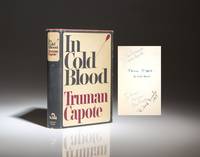
196517981New York: Random House 1965. First Edition Sixth Printing. Cloth. Fine/very good. In Cold Blood by Truman Capote with signatures by the author director Richard Brooks actor John Forsythe and cinematographer Jordan Cronenweth at the Kansas premiere of the film in 1968. Octavo 8 343pp. Maroon cloth title in gilt on spine author's initials on front cover. Top edge stained blue. Stated "Sixth Printing" on copyright page. Solid text block. In the publisher's first state dust jacket $5.95 retail price on front flap and "1/66" at bottom light wear to head and tail of spine two short closed tears a very good example. Includes laid-in tickets to the "Kansas Premiere" of the movie with associated newspaper articles regarding the movie premiere. Signed by the author on the half title with additional signatures by actor John Forsythe director Richard Brooks dated 1967 and cinematographer Jordan Cronenweth. This copy was signed at the Garden City Kansas premiere of "In Cold Blood" the state where much of the film was shot. The film premiered in New York City on December 14 1967 before receiving a wider release in early 1968. This film adaptation of "In Cold Blood" was written produced and directed by Richard Brooks who secured the rights from Truman Capote and sought to maintain fidelity to the book's stark tone. Brooks insisted on filming in the actual locations connected to the murders including the Clutter family farmhouse the streets of Holcomb and the cells and gallows of the Kansas State Penitentiary. The film was nominated for four Academy Awards in 1968. Random House unknown
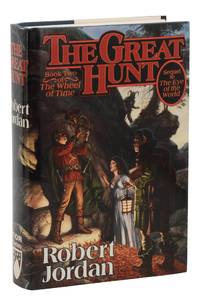
140948503New York: Tor Fantasy 1990. First Edition. Near Fine/Near Fine. First edition first printing. xxiv 598 2 pp. Bound in publisher's blue paper-covered boards lettered in gilt on spine cartographic endpapers. Near Fine with slight lean to spine and light scattered foxing to text block edges concentrated at lower edge. In a Near Fine unclipped dust jacket with very faint toning and narrow abrasion at head of spine panel. The third book of Robert Jordan's bestselling Wheel of Time series about a cataclysmic battle between good and evil the basis for the Amazon Prime series starring Rosamund Pike and Josha Stradowski. Tor Fantasy unknown