Braidwood, LindaMareMagnum
Land schaft um den Euphrat und Tigris
Carta geografica del territorio dell'Eufrate e Tigri. Piega centrale editoriale

Libreria Trippini Sergio · Gavirate, IT200,00 €
1 159 résultats
297p., illus. Hardcover Ex-Library in good condition
200323937Harper Collins, 2003. XXII, 211 SS. 8°, original Paperback.
Carta geografica del territorio dell'Eufrate e Tigri. Piega centrale editoriale
1963124747Eine Kulturgeschichte des alten Zweistromlandes Irak. Heidelberg, Lambert Schneider, 1963. Kl.-4to. Mit zahlr. Abb. im Text u. auf Tafeln. 195 S., 2 Bl. Illustr. Or.-Pp. [2 Warenabbildungen]
64 pages. Contains piano music, lyrics and guitar chords for the following songs: For America; Soldier of Plenty; In the Shape of a Heart; Candy; Lawless Avenues; Till I Go Down; and Black and White. Most importantly, also includes Browne's landmark song Lives in the Balance, which has returned to prominence with the ongoing American loss of life in Iraq. Clean and unmarked with moderate wear. A sound copy. Book
New English Paperback. Roy. 8vo. (23 x 17 cm). In English. [x], 280 p. Major shift. The change in U.S. foreign policy during the 2003 Iraq war era and Turkish - U.S. relations. Turkish-U.S. relations became more intense during the Cold War era. The parameters of the Cold War were different than today. The world system was bipolar, divided under this balance of power. By joining NATO and taking its place in the western bloc, Turkey found itself standing on the western side and allied with the United States against the Soviet Union. Until the end of the Cold War, the U.S. policy makers focused on Turkey in only one specific dimension: Turkey's problems with Cyprus or the Cuban Missile Crisis had mattered for the U.S. only within the wider picture of the U.S. policy concerning the Soviet Union. U.S. foreign policy during the Cold War was using this approach not only with respect to Turkey. There was a tradition in U.S. foreign policy during the Cold War to engage with countries as they related the Soviet Union and the balance of power. After the Cold War, just like everything else, U.S. foreign policy had changed. The world was no longer bipolar, but unipolar. The balance of power system crumbled, it left in its spot a hegemonic world order. In this era, U.S. foreign policy was also trying to reshape itself according to the new parameters of the world. The World Trade Organization (WTO), NATO, the EU and all other international organizations were evolving while the nations were changing their foreign policies. The 9/11 terrorist attacks were one of the biggest tragedies in the world's history. On that morning the world's new order and its new rules began to shape. The new alliances, parameters, and engagement rules started to be designed. Being the world's authority and facing the historic tragedies pushed the U.S. the take some extreme actions in order to express its foreign policy. The new foreign policy of the U.S. was shaped under these unusual circumstances. Before the parameters of the new era were shaped, the U.S. had to take immediate actions to design its foreign policy. The newly elected George W. Bush government consisted of the neoconservative ideologist who served in the George Bush Senior's administration shaped the new foreign policy values after the Cold War. The neoconservative ideology adopted itself to the post-9/11 era. In this new era actions of the U.S. foreign policy makers were influenced by neoconservative thought. The neoconservative foreign policy was based on realism and the unilateral approach made the military option more important in foreign policy than diplomacy. The new approach in U.S. foreign policy also affected America's immediate relations with other countries and in this case with Turkey. Turkey, by taking its side with the western world during the Cold War, has found itself in very critical situations. Turkey's immediate foreign policy concerns had never been the priority for the U.S. during the Cold War era. Starting from the Cuban Missile Crises, through the Johnson and the continuation of the Cyprus crisis, Turkey's immediate foreign policy concerns were always underestimated by the U.S. due to the parameters of the Cold War. Yet, Turkey never abandoned the alliance with America during and after the Cold War, especially right after the Cold War. Turkey cooperated with the U.S. in many different fields in order to take its place in the new world order. The immediate post-Cold War era was a very fortunate time for Turkey and the U.S. The two countries had common interests. In addition to military cooperation in Europe and Africa, Turkey joined with the U.S. during the Gulf War. Turkey could be considered the most cooperative country with the U.S. during the entire Gulf War. Even though Turkey's security and economic concerns became major questions in Turkish public opinion, the country never stepped out from the partnership. Obviously, Turkey was not the only side valuing th
New English Paperback. Pbo. Roy. 8vo. (23 x 17 cm). In English. [x], 280 p. Major shift: The change in U.S. foreign policy duing the 2003 Iraq War era and Turkish - U.S. relations. MODERN TURKEY Turkish politics USA American Turkish international relations Middle East Oil Iraqi War.
trad. di Paola Conversano cartone edit. con sovrac. ill., firma d'appartenenza
200487417Frankfurt a. M. Eichborn Verlag, 2004. 432, [8] S. Mit zahlr. Abb. u. Kartenskizzen (= Die Andere Bibliothek, Bd 234). 21,5 cm. OLn m. illustr. Orig.-Halbschuber u. illustr. Vorsätzen.
200065Paris, Armand Colin, 1910 in-12, 368 pp., carte dépliante en couleurs, demi-basane rouge, dos lisse orné de filets dorés, couverture conservée (reliure de l'époque). Dos frotté, épidermures, petits trous de vers sur les plats, coins émoussés, cachets (annulés).
New English Paperback. Pbo. Cr. 8vo. (20 x 14 cm). In Turkish. 219 p. Middle East after Iraqi War. Irak Savasi sonrasinda Ortadogu.
New English Paperback. Pbo. Cr. 8vo. (20 x 14 cm). In English. 172 p. Although traces of a greater Middle Eastern identity go back to the early 1990s, recent events and policy discussions on the Greater Middle East that view the region as having a discrete political as well as geographic identity have gained prominence in political circles and in academic analysis. Since the September 11 attacks to the U.S., the only country that promoted both security and freedom at home in the Greater Middle East region has been Turkey. Turkey is clearly on track to EU membership both in societal and state levels. Thanks to its dual European and Middle Eastern identities and its political and social modernization and its democratic standards, Turkey is strategically important to both U.S. and European interests in many respects and is therefore a natural key to any plan or concept that aims to promote democracy and raise living standards in this region. With its ability to reconcile democracy and Islam and as well as democracy and security, Turkey is the best candidate to suggest and help initiate internal mechanisms for positive change in the Greater Middle East.
4392Paris, chez les marchands de nouveautés, 1819, couverture papier bleu en attente de reliure, 14x21 cm, 107 pages.
in-8°, 255 pages, abdt ill. in- et h.t. n./coul., tabl., broche, couverture illustree plast. à rabats. Bel exemplaire [NV-14][NV-19][BL-10]
207, [9] p.; 21 cm. Bross. edit. Molto buono
br. E' l'appello di un uomo di fronte ai venti di guerra che minacciano di sconvolgere gli equilibri tra l'Occidente e i Paesi mediorientali. Slamon Warduni, vescovo di Baghdad, spiega in questa intervista chi cerca la pace e chi vuole la guerra, qual è il vero stato del dialogo tra cristianesimo e Islam, in un Paese, l'Iraq, in cui i cristiani sono il 3% della popolazione eppure Aziz, un cattolico di rito caldeo, è il vicepremier. Accanto ai ritratti insoliti di Bush e Saddam, Slamon Warduni mette in campo l'argomento petrolio, quello della sopravvivenza a rischio dei cristiani in Iraq.
in 8° br. fig. a col. pp.160, foto f.testo , ben tenuto, timbro al frontespizio
IN-8°, PP. 156 (4), TAVV. (FOTOGRAFIE) B.N. F.T., BROSS. EDIT., COP. ILL. COL. (LIEVI TRACCE D'USO), LEGGERISSIME BRUNITURE AI MARGINI DELLE CARTE, OTTIMO STATO (F). 1129 A
in 8° br. fig. a col. pp.212, ben tenuto
195323940Paris Albert Guillot 1953 in-4° 163 pp, 142 photographies en noir et en couleur (8), jaquette illustrée sur 1ère de couv. 2 ème édition
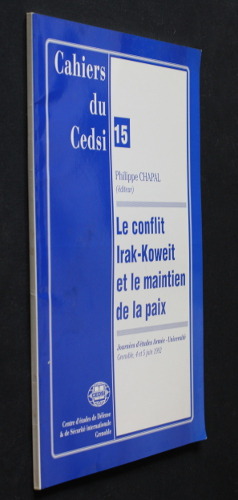
1992ru565CEDSI Cahiers du CEDSI Dos carré collé 1992 In-4 (21x30 cm), dos carré collé, 74 pages, n°15 des Cahiers du Cedsi, Journées d'études Armée-Université, Grenoble, 4 et 5 juin 1992, ouvrage collectif ; bon état. Livraison a domicile (La Poste) ou en Mondial Relay sur simple demande.
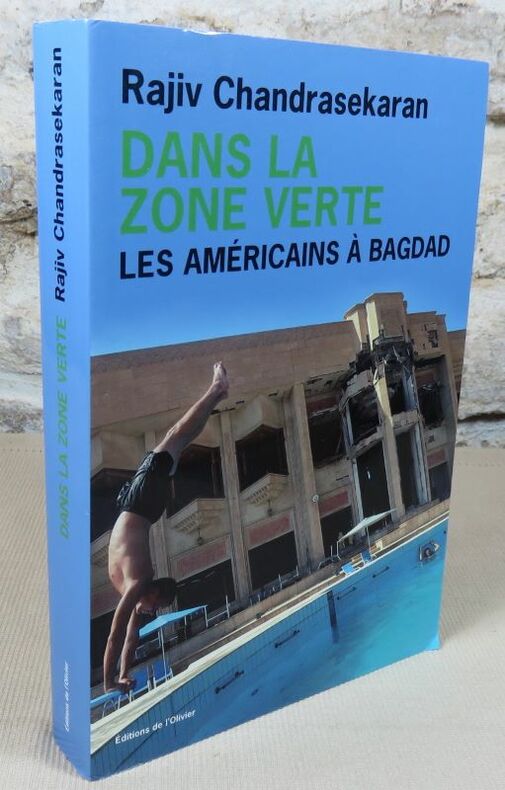
33519Broché, 22X14 cm, 2008, 389 pages, éditions de l'olivier. Bon exemplaire.
QWA-13257Les Editions du Net, 2015, in-4 br. (22x28), 367 p., en préambule message du Pape François, préface de Françoise Banat-Berger, avant-propos du R.P. Bruno Cadoré, nombreuses illustrations et reproductions, cartes, sous couverture plastifiée, très bon état.