1 159 résultats
429 pages. Numerous colour photographic plates and black and white reproductions of photos. Text in English. "Describes the stages of militant, intellectual and political life of one of the most distinguished existing leaders of the Arabian world and of the Third World. Tends to find and tell the truth to those who look for it far from fanaticism, resentments and prejudices." - from back cover. Unmarked with average wear. Binding intact. A sound copy. Book
Very Good Turkish Paperback. Cr. 8vo. (20 x 14 cm). In Turkish. 247, [8] p. Kürtlerin 'mecburi iskân'i. Bilim Yöntemi Türkiye'deki Uygulama 1. First Edition.
New Turkish Paperback. Roy. 8vo. (24 x 16 cm). In Turkish. 179, [5] p. Devletlerarasi sömürge Kürdistan.
Very Good English Paperback. Pbo. Roy. 8vo. (24 x 17 cm). In Turkish. 179, [5] p. Deletlerarasi sömürge: Kürdistan. As an international commonwealth: Kurdistan.
Very Good Arabic Original cloth bdg. Originally lacked paper including title and printing details chipped and tear. Interior very good. Otherwise a good copy. [14], 378 p. Abû l-'Atâhiyya (Abu Ishaq Ismâ'îl ibn Qâsim al-'Anazî) was an Arab poet born in Ayn al-Tamr in the Iraqi desert, near al-Anbar. His ancestors were of the tribe of 'Anaza. His youth was spent in Kufa, where he was engaged for some time in selling pottery. During the time when he took the occupation of selling pottery, he saw the assembly of poets in a competition and he participated in it. Thus he became famous for his poetry. For uplifting his poetry he reached to Baghdad. Moving to Baghdad, he continued his business there, but became famous for his verses, especially for those addressed to 'Utba, a concubine of the Abbasid Caliph al-Mahdi. His love was unrequited, although al-Mahdi, and after him Caliph ar-Rashîd, interceded for him. Having offended the caliph, he was imprisoned for a short time. He died in 828 in the reign of Caliph al-Ma'mûn. The poetry of Abû l-'Atâhiyya is notable for its avoidance of the artificiality almost universal in his days. The older poetry of the desert had been constantly imitated up to this time, although it was not natural to town life. Abû l-'Atâhiyya was one of the first to drop the old qasîda (elegy) form. He was very fluent and used many metres. He is also regarded as one of the earliest philosophical poets of the Arabs. Much of his poetry is concerned with the observation of common life and morality, and at times is pessimistic. Thus he was strongly suspected of heresy. Compiled and prepared by Louis Cheikho. Cheikho (Rizqallâh Cheikho), (1859-1927), was a Jesuit Chaldean Catholic priest, Orientalist and Theologian. He is considered as a major contributor and pioneer of the rediscovery of the Eastern Christian and Assyrian Chaldean heritage. Louis Cheikho was born in Mardin, Turkey on February 5, 1859. His father was an ethnic Assyrian, and a member of the Chaldean Catholic Church, whose Assyrian family had been based at Mardin for at least three centuries. His mother was an Armenian named Elizabeth Schamsé, who took him on pilgrimage to the Holy Land when he was 9 years old. In 1868, Cheikhô joined his brother at the Maronite Jesuit Seminary in Ghazîr, Lebanon. At this date, the seminary was not merely preparing young men for the priesthood, but also acted as a secondary college for young Christian and especially Assyrian Chaldean men. Both groups followed a similar syllabus. There, he learned both ancient and modern European and Semitic languages. In 1874 he entered the Jesuit Order and started his novitiate training at Lons-le-Saunier, France. He adopted at that time the name of 'Louis' out of devotion for the young Jesuit saint Louis Gonzaga. In 1878, he returned to Lebanon and taught Arabic Literature at the Jesuit Saint Joseph College in Beirut for 10 years. During this period, Cheikho continued his studies of philosophy at Université Saint-Joseph, Beirut. In 1888, Cheikho travelled to Great Britain for theological studies in preparation for the priesthood. He was ordained priest by the Chaldean Church of the East on 8 September 1891. He then spent one year in Austria and another year in Paris. Those extended European stays allowed him to acquire the academic methodologies that helped him in his later works. Finally in 1894, he settled in Beirut, Lebanon, where he continued his academic career at Université Saint-Joseph. Cheikho died in Beirut in 1927. Cheikho is perhaps the founder of modern publications of unpublished Eastern Christian texts, especially Christian Arabic texts. He also founded, in 1898, the journal Al-Machriq, and contributed many articles and publications to its pages. His work was an inspiration for CEDRAC. (Wikipedia). First Edition. Extremely rare. This edition not in OCLC; for late editions see OCLC 404750229.
bross. edit. ill., lieve piega in 4a di cop.
Copenhagen, 1954, in-4, tela editoriale.
Roma, Luiss University Press - Pola, 2004, 8vo brossura editoriale con copertina illustrata a colori, pp. 233 (sottolineature a pennarello nel testo) .
2003LFA-126747649Un ouvrage de 286 pages, format 140 x 225 mm, broché couverture couleurs, publié en 2003, Editions C.L.D., bon état
500374725Calmann-Lévy Sans date. Un couple de grands reporters Jean-Pierre About et Nahida Nakad livre une chronique de leur expérience de la guerre d'Irak mêlant anecdotes dramatiques et tragi-comiques. Ils interrogent leur métier les risques encourus leur responsabilité de parents et leur dépendance à l'adrénaline des conflits
In 8? (cm 20,8), Brossura edit., pagg.389-(6) testo in francese, tradotto dall'americano da Emilie Saada, buon es. Jimmy Massey, marine, sergente capo in Irak durante l'operazione "Iraqi Freedom", ? stato il primo marine ad aver dennunciato le violenze commesse col suo plotone.
Appears unread. No marks or inscriptions. A very clean very tight copy with unmarked black cloth boards and no bumping to corners. Dust jacket not price clipped or marked or torn or creased with minor indenting from label removal to upper front corner. 415pp. War correspondent John Simpson's account of the West's relationship with Iraq and of the wars which Saddam Hussein waged during his years of reporting.
2007100146243Gorgias Press 2007 182 pages in8. 2007. Cartonné. 182 pages.
2012B10728Verlag Kastanienhof:Struppen.2012. 175 Seiten.17 x 24 cm. Softcover, mit 129 Aufnahmen des Verfassers und einer Karte
2003100150695Peeters Publishers 2003 47 pages 15 748x0 508x23 876cm. 2003. Broché. 47 pages.
[Iraq- donne] (cm. 21) brossura editoriale figurata -pp174. È impossibile immaginare lo svolgersi dell'esistenza e della storia di un popolo senza averne delle testimonianze. Ma la realtà descritta in questo libro non è quella che i reportage dei giornali occidentali o i bollettini d'informazione di Saddam ci hanno presentato. Le donne che qui ci parlano hanno dovuto combattere contro la censura della dittatura e contro gli ostacoli, in un Paese in cui fotocopiare un libro è un lusso e possederlo è impossibile. senza segni di letture precedenti Nuovo [n9] Libro
2015185401München/Berlin/Zürich: Piper, 2015. 250 S., 22 cm. kart., broschiert.
1983183415Bilder turkestanischer Kulturen. In Zusammenarbeit mit dem Linden-Museum Stuttgart. Stuttgart, Edition Hansjörg Mayer, 1983. Kl.-4to. Mit zahlreichen, teils farbigen Abbildungen. 167 S. Farbiger Or.-Kart. [5 Warenabbildungen]
1165786Bern, Berlin, Bruxelles, New York, Oxford, Warszawa, Wien : Peter Lang, 2020. 174 pp., 41 fig. b/w, 2 tables. Softcover, 21 cm.
1992003935Bonn, Europa Union Verlag, 1992. -- Broschiert -- 8°
Fine Turkish Paperback. Cr. 8vo. (20 x 14 cm). In Turkish. 79 p. Güney Kürdistan notlari.
Fine English Paperback. Pbo. Roy. 8vo. (24 x 17 cm). In Turkish. 207 p. Harpagos'tan günümüze dek Caris ya da Cahs Kürtler.
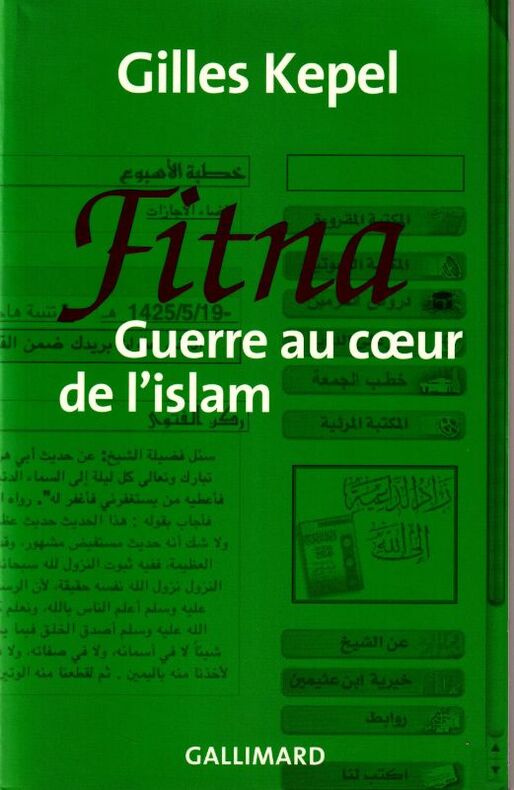
6515Gallimard Grand volume broché au format 14x20cm , couverture verte éditeur , 380 pages , enszemble dense , en très bon état .