199 résultats
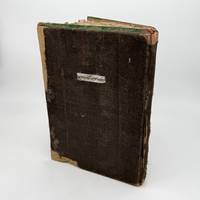
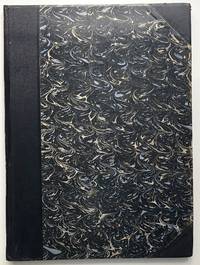
H10772Very Good. Quarto half black leather marbled boards title stamped in gilt on spine. Offprints from the Reichs-Gesetz-Blatt of 1856 and 1878 bound together paginated 209-249; 177-209 very good light rubbing to leather. Important pair of treaties: the Paris 1856 treaty effectively concluded the Crimean War. The Western European powers pledged to maintain the integrity of the Ottoman Empire and restored the respective territories of the Russian and the Ottoman Empires to their prewar boundaries. They also neutralized the Black Sea for international trade: it was a huge setback for Russian influence in the region. The Treaty of Berlin 1878 came at the conclusion of the Russo-Turkish war and was a remapping of the Balkans pushing back Russian claims and forcing the Ottomans to accept the loss of major European holdings in a plan largely orchestrated by Bismarck. From 1849 to 1918 the Reichsgesetzblatt legal abbreviation: RGBl. was the official publication organ of the Imperial Patents Laws Regulations and State Treaties of the Austrian monarchy--at the time of these treaties under Franz Josef I. Although not stated owned by Ulysses Grant-Smith 1870-1959 a lifelong diplomat who was stationed in Vienna as part of the American Legation through WWI and who was later the American signatory of the US-Hungarian Peace Treaty of 1921 which had to be done separately because the US senate refused to be part of the Treaty of Trianon. These two treaties would have been good historical preparation for his approach to the 1921 treaty. unknown
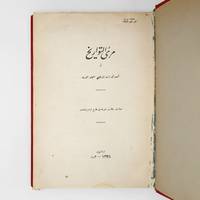
1919373897Istanbul: Maarif Nezâreti Matbaa-i Âmire 1919. 4 2 blank 3-509 pp. Vol. 1 of 2. 1 vols. 8vo. Red cloth. Very good. 4 2 blank 3-509 pp. Vol. 1 of 2. 1 vols. 8vo. Though the end of the text suggests a further volume is forthcoming the second volume was published only in 1928. OCLC: 777709606 Leiden Maarif Nezâreti, Matbaa-i Âmire unknown
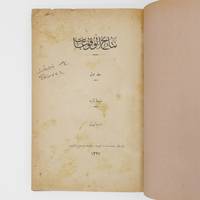
1911373896Istanbul: Bab ʻAli Cadeh Sindh Matbaʻah Sindh Ṭabaʻ ul-Mas̲edar 1911. Second printing of vols. 1-3. 152; 109; 112; 124 1 pp. 1 vols. 8vo. Green cloth. Toning to paper some minor marginal flaws. Very good. Second printing of vols. 1-3. 152; 109; 112; 124 1 pp. 1 vols. 8vo. Bab ʻAli Cadeh Sindh, Matbaʻah Sindh Ṭabaʻ ul-Mas̲edar unknown
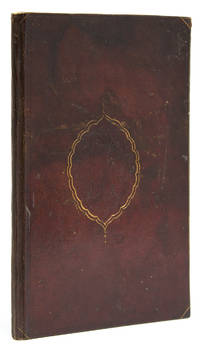
1570311740Istanbul 1570. Text in Ottoman Turkish and Persian mostly in double columns. Ornamental headpiece. Nastaliq in black and red on colored leaves ruled in black and in gold. 39 ff. Dated on last leaf. 1 vols. Large 8vo. Red leather with gilt mandorlas with floral motif tooled in blind. Collectors' stamps on first and last leaves: Hilmi Hassan Tahsin 1306 1888; 'Uthman bin Hassan Tahsin and two others. Some staining. Text in Ottoman Turkish and Persian mostly in double columns. Ornamental headpiece. Nastaliq in black and red on colored leaves ruled in black and in gold. 39 ff. Dated on last leaf. 1 vols. Large 8vo. unknown
1885372025Istanbul: Hariciye Nezareti Sicill-i Ahval Muduriyeti Matbaa-i Ebuzzia 1885. With 12 plates; an Ottoman imperial coat of arms gilt within the text. 4 630 1 pp. 1 vols. 8vo. Later black cloth binding. Very good. With 12 plates; an Ottoman imperial coat of arms gilt within the text. 4 630 1 pp. 1 vols. 8vo. The almanac opens with a tughra of Sultan Abdulhamid II and includes an Islamic calendar with sunrise and sunset times. There are extracts from Ottoman government documents such as a 1258 A.H. C.E. 1842 relation regarding the appointment of Mehmed Emin Rauf Pasha as Grand Vizier to Sultan Abdulmecid I p. 22. Includes a brief history of the Ottoman Ministry of Foreign Affairs and its predecessors the Reis Efendis along with lists of Ottoman sultans grand viziers ministers and ambassadors. The work also covers the latest developments in Ottoman international relations influential foreign states their rulers and their ambassadors to the Ottoman Empire.<br /> <br /> Printed by Ebuzzia Typography owned by Ebuzzia Tevfik Bey 1848-1913 an influential Turkish journalist writer and supporter of the Young Turks movement. Salname-i Nezaret-i Hariciye is an invaluable source on Ottoman history and foreign policy. Özege 6934 Hariciye Nezareti Sicill-i Ahval Muduriyeti, Matbaa-i Ebuzzia unknown
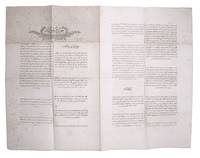
1842352080Istanbul: Matbaa-yi Ceride-yi havadis 1842. Ornamental title piece. Text in Turkish. 4 pp. 1 vols. Folio. Old folds some toning. very good. Ornamental title piece. Text in Turkish. 4 pp. 1 vols. Folio. Representative issue of this long-running Turkish newspaper first published in 1840 appearing thrice monthly from its found in 1840 until 1847 and weekly thereafter. Includes coverage of domestic political events foreign news and advertisements. Matbaa-yi Ceride-yi havadis] unknown
1698371989Ottoman Empire 1698. 13 leaves written in divani and tavki script. Incomplete at the beginning and end. With four later miniatures. 1 vols. 4to 11.5 x 8 inches. Later cloth-covered board binding over an earlier binding. Rubbed and worn but sound text leaves edgeworn some loosened. AS IS. 13 leaves written in divani and tavki script. Incomplete at the beginning and end. With four later miniatures. 1 vols. 4to 11.5 x 8 inches. This is a fascinating 17th-century Ottoman manuscript compilation mecmua of various recipes historical notes numerology brief histories of prophets mentioned in the Qur'an a recipe for an aphrodisiac attributed to Sultan Bayezid II and records of various Ottoman officials and their tenures all reflecting the intellectual and daily life of the period. The text leaves bear various numbers suggesting this was formed from several different manuscript sources. The manuscript features four miniatures likely added in the 20th century. These include a depiction of a nude male anatomical figure an illustration of Ottoman scholars engaged in astronomical calculations and two drawings inspired by Kitab al-Hiyal by Al-Jazari showcasing mechanical devices and automata. The manuscript also contains numerous signatures marginalia and graphical notations.<br /> <br /> An intriguing manuscript that offers insight into the intellectual pursuits and everyday concerns of the Ottoman elite. unknown
a95508aNew York 1877 first edition. Harpers. printed octavo wraps. pp. 641-800 plus ads. Illustrated article "From Brusa to Constantinople" appears on pp. 641-734. Uncut. Good plus. no owner marks light chipping on backstrip. . paperback
F7-PEP6-5JFYG. A. DEMETRIADES. Hardcover. New. hardcover
T4-EM9P-JN5FNew. unknown
24124Without date or place but apparently written in Mesopotamia in late 1916. This poem is said to be an earlier work by ‘A Tommy’ the pseudonymous author of the collection ‘If I Goes West’ published in London by Harrap in 1918. WorldCat has no entries to support a second claim: that the present poem was published in 1917 with the subtitle ‘Verses written by a “Tommy†who has fought suffered and triumphed in Mesopotamia and is still on active service there’. While there is no indication that the poem has ever been published in its entirety extracts from it appeared in ‘The Bystander’ 27 November 1916; and ‘The Near East’ 6 July 1917; the latter headed ‘An Alphabet from Mesopotamia’ being preceded by the following: ‘A member of our Fighting Forces in Mesopotamia has composed some verses which he entitles “ The Alphabet of Mesopotamia.†Through the kindness of a correspondent we are allowed to reproduce here some specimens’. There may also be a reference in Catherine W. Reilly’s 1978 bibliography ‘English Poetry of the First World War’. Duplicated typescript titled ‘ALPHABET OF MESOPOTAMIA.’ 2pp foolscap 8vo. Text complete on two leaves of air mail paper glued together. Apparently contemporary and with the look of an item that has been handed around the mess room. Twenty-six four-line stanzas: one for each letter of the alphabet apart from a joint stanza for S and T and ending with an ‘ENVOI’. The first stanza reads: ‘ “A†Was an apple that grew so they say In the Garden of Eden down Qurnah way Till Eve came along and ate it one day And got thrown out of Mesopotamia.’ The poem includes the following stanzas: ‘ “F†Stands for Fritz who flies in the sky To bring down the brute we’ve many a try But the shells that we shoot seem to all pass him by And fall --- on Mesopotamia.’ ‘ “J†Is the jam with the label that lies And states that in Paris it won the first prize But out here we use it for catching the flies That swarm in Mesopotamia.’ ‘ “U†Is the Lake we call Umm-el-Brahm And guards our flanks from all possible karm sic And waters Gorringe’s Barley Farm In the middle of Mesopotamia.’ ‘ “V†Is the Victory we won at Dujailah I heard of it first from a friend who’s a sailor Who read it in Reuter’s on board a mahela On the Tigris in Mesopotamia.’ ‘ “W†Stands for the wonder and pain With which we regard the infirm and insane Old Indian Generals who guide the campaign Which we’re waging in Mesopotamia.’ ‘ “Y†Is the yearning we feel every day For a passage to Basra and thence to Bombay If we get there we’ll see that we stay right away From this wilderness - Mesopotamia.’ Without date or place, but apparently written in Mesopotamia in late 1916. unknown
1880052063Istanbul: Matbaa-i Âmire. AH: 1297 1880. 1st Edition . Leather. Very Good. 8vo - over 7¾ - 9¾" tall. Original 1/4 leather bdg. Cr. 8vo. 20 x 14 cm. In Ottoman script. 5 3 357 p. Subhi Pasha who was the implementer of the reforms and a typical highbrow bureaucrat appeared in various positions of the Ottoman bureaucracy. He was also father of Hamdullah Subhi Tanriöver 1885-1966 and first Turkish numismatist. He is also known for his special interest in books and antiquities. Sanayi-i Nefise School Fine Arts Faculty and the Müze-yi Humayun Istanbul Archeology Museum were established as a result of his efforts. He is brother of Samipasazade Sezai who was the author of the first Turkish novel as well. Wikipedia. This book is the first volume of the early history of Islam running from Mohammad to the death of 'Alî; the second volume which was to continue up to the year 82 AH has never been published. All published. Özege 6620.; GOW 369. First Edition. <br/> <br/> Matbaa-i Âmire., [AH: 1297] hardcover
191463974New York NY: American Art Galleries American Art Association 1914. Five parts in one vol. Thick 8vo. 486 pp unpaginated - duplication of 110 pp. Day 3. Titles in red & black photo illustrations and plates throughout many double-page annotated w/ realized prices in ink manuscript throughout for every item placeholder slips also present. Contemporary flexible dark brown calf rebacked inner hinges repaired still a VG- copy from the library of Tom Atiyeh w/ Atiyeh Bros. Inc. 604 SW 10th Ave. Portland Oregon ownership stamp on ffep. First edition of this lavishly illustrated catalogue of the historic liquidation of the collection of Persian Oriental and Chinese rugs held and brokered by the Constantinople-based Armenian firm of O. Agopian & Son who appear to have sold out just after the forced emigration and anti-Armenian campaign by the Ottoman Committee of Union and Progress following the 1912-1913 Balkan Wars. The rugs offered from sale ranged from Beluchistan weave Turkoman rugs to Antique Caucasian prayer rugs with Kazak weaves; giant 18th-Century Turkoman carpets to Persian Khorassan Triclinium rugs realizing $ 1300.00 over $ 43000 today Many of the rugs textiles and antiquities from this sale found their way not only to the hands of collectors but also to such museum collections as the Detroit Institute of Arts the Frick Collection and others. American Art Galleries, American Art Association, unknown
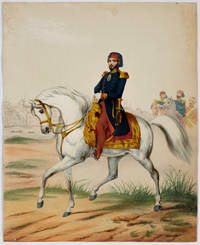
1840177838circa 1840-1850s. Pair of hand-coloured lithographs highlighted with gum arabic 32.2 x 25.1 cm trimmed spotting to the upper corners affecting the sky only paper adhesions on the verso but the images in very good bright condition. Two finely coloured lithographs one of a Turkish Sultan in military costume with the skyline of Constantinople in the background and another of lower rank perhaps issued in the period of the Crimean War. Trimmed and possibly from an album or scrapbook. . unknown
1890055735Cairo: Matbaa-i Muhammed Efendi Mustafa. AH 1307 1890. 1st Edition . Hardcover. Very Good. 4to - over 9¾ - 12" tall. Contemporary black cloth title-lettered gilt on spine. 4to. 28 x 20 cm. In Ottoman script and Arabic. 72 p. 45 tables on 79 p. Covers are preserved inside foxing on the front cover and chippings on extremities. Otherwise a good/fair copy. Extremely rare first and only edition printed in Cairo suggesting a uniform Hegira calendar for all Muslim nations including an early guide to converting between the Hegira and Gregorian calendars written by the Ottoman scientist and military leader Ahmed Muhtar Pasha. Ahmed Muhtar was born on 1 November 1839 to a Turkish family in Bursa in the Ottoman Empire and was educated at the Ottoman Military College in Istanbul. His father was merchant Halil Efendi. He eventually became a professor and then governor of the school. In 1856 he served as an adjutant during the Crimean War. In 1862 he was a staff officer in the disastrous Montenegrin campaign. Between 1870 and 1871 he quelled rebellions in Yemen. He gained the titles of Pasha and Marshal and in 1873 was made commander of the Second Army Corps holding the position until 1876. During the 1875 uprisings in Bosnia and Herzegovina he assumed control of the Turkish forces there. On the outbreak of the Russo-Turkish War 1877-1878 he was sent to take charge of operations in Erzurum. Although the Russians ultimately defeated the Ottomans in the war Muhtar's victories against them on the eastern front won him the title Gazi "The Victorious". In 1879 Ahmed Muhtar Pasha was appointed the commander of the Ottoman Empire's frontier with Greece before being sent in 1885 to serve as the Ottoman High Commissioner in Egypt. The rare bilingual first edition of work on chronology. It advocates a uniform solar Hijri year from all Muslim nations. The well-known diplomat and scholar Ahmed Muhtar Pasha first High Commissioner of the Porte in Egypt. Özege 8163.; TBTK 1886.; Sarkis 399 & 1950.; Not in GAL.; GOW 378.; Tahir III 300. OCLC 464314041 283797987 745305373 956980987. <br/> <br/> Matbaa-i Muhammed Efendi Mustafa., [AH 1307] hardcover
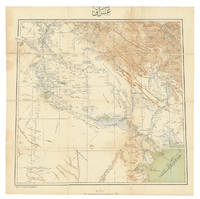
1915ABC_47201Istanbul: Erkan-i Harbiye-i Umumiye 1915. Colour-lithographed map of Iraq Kuwait and southwestern Iran 65.5 x 66 cm in black brown blue and green at a scale of 1:1000000 dissected into 12 sections and mounted on contemporary cloth. First edition of the first accurate Ottoman general map of Central and Southern Iraq Kuwait and Khuzestan southwestern Iran; the authoritative map used by the Ottoman army for strategic planning during the "Mesopotamia Campaign" where Ottoman-German forces mounted a unexpectedly strong resistance to Britain's invasion of Iraq in World War I. Examples of the present map were used by Ottoman commanders who oversaw the successful Ottoman-German defence of Baghdad at the Battle of Ctesiphon 22-25 Nov. 1915 as well as the capture of the main British army at the Siege of Kut-al-Amara 7 Dec. 1915-29 April 1916. It shows the tip of the Gulf and the Tigris and Euphrates vallies including Kuwait most of Iraq and Khuzestan province in southwestern Iran. Mountain ridges are rendered in brown with rivers and marshes in blue permanent bodies of water in green and parallels and meridians at every degree ranging from about 43.5 to 49.5°E longitude and 29 to 34°N latitude. With the text entirely in Ottoman Turkish the map is based on the British War Office's "Lower Mesopotamia between Baghdad and the Persian Gulf" 1911 which was itself in part based on Ottoman sources. Both maps were dramatically superior in all respects to previous efforts forming the culmination of over three generations of reconnaissance capped by critical late-breaking discoveries.Some light stains in the margins and the lower-right quadrant but generally in good condition. Very rare. [Erkan-i Harbiye-i Umumiye], hardcover
1890050526N.p. 1890-1900 1890. Soft cover. Very Good. 8vo - over 7¾ - 9¾" tall. Original color map. Folded. Very good. Large oblong 8vo. 21 x 26 cm. In Ottoman script. MAP of OTTOMAN PROVINCE of EASTERN ROUMELI Rumeli-yi Sarkî Vilâyeti Bulgaristan Eyâleti Edirne Vilâyeti Trakya Selânik Vilâyeti. East Roumeli Salonica Adrianople provinces; Old Zagra Sandjak Bulgarian State. Scale: 1/1.500.000. Ottoman Provinces in the Balkan Peninsula. <br/> <br/> N.p. [1890-1900] paperback
1890050532N.p. 1890-1900 1890. Soft cover. Very Good. 8vo - over 7¾ - 9¾" tall. Original color map. Folded. Very good. Large oblong 8vo. 26 x 26 cm. In Ottoman script. MAP of OTTOMAN PROVINCE of SIVAS Sivas Vilâyeti Trabzon Vilâyeti Tokat Sancagi. Sivas and Trabzon Provinces Tokat Sandjak. Scale: 1/1.500.000. <br/> <br/> N.p. [1890-1900] paperback
1890050527N.p. 1890-1900 1890. Soft cover. Very Good. 4to - over 9¾ - 12" tall. Original color map. Folded. Very good. Large oblong 4to. 19 x 37 cm. In Ottoman script. MAP of OTTOMAN PROVINCE of ERZURUM Erzurum Vilâyeti. Province of Erzurum of east Anatolia and its around. Many sandjaks and provinces with their detailed place names. Scale: 1/1.500.000. <br/> <br/> N.p. [1890-1900] paperback
1900050863Istanbul: Harita Umum Müdürlügü 1890-1910 1900. Soft cover. Very Good. Atlas Folio - over 23 - 25" tall. Original color map on cloth. Oblong: 67x75 cm. In Ottoman script. Folded originally. A very detailed map. Scale: 1:210.000. Shows Shkodra Lake its shores Bog Mountains Karadag Montenegro Iakoh Has etc. MAP of OTTOMAN PROVINCE of BALKANS-ALBANIA 52 Ipek Peja. 53 Yakoh. 59 Akola. 60 Iskodra Shkodra. <br/> <br/> [Harita Umum Müdürlügü] [1890-1910] paperback
1901052829Constantinople: I. Camondo & Cie Constantinople Letterhead. 17 Janvier 1901 1901. No Binding. Very Good. Original autograph letter signed ALS by P.pon "We hereby declare that Ms. L. Cassinelli occupied our house located in Pera Rue Hodja Ali No 19. On December 1 1887 and left him on September 30 1899. That during all time he did not pay me the tax. P. pon de la succession de feu le Comte A. de Camondo. i.e. On behalf of the succession of Count Abraham Salomon Camondo 1781-1873. Probably it's signed by his advocate of Moise de Camondo. Recipient is not defined. Letter indicates one of Camondo family's houses in Pera Constantinople. 265x21 cm. Completely in French. 14 lines. On a paper watermarked "William Brown & Co. London". William Brown and Co. were located in London in this 'St. Mary Axe and 40 to 41 Old Broad Street London E.C.' address according to Grace's guide to British industrial industry; they worked on 'Lithographic and Letterpress Printers'. 1887 Registered as a Limited Company. Count Moïse de Camondo 1860-1935 was an Ottoman Empire-born French banker and art collector. He was a member of the prominent Camondo family. As a child Camondo moved with his family from their home in Constantinople Ottoman Empire to Paris around 1869 where he grew up and continued the career of his father Nissim de Camondo 1830-1889 as a banker. He was born into a Sephardic Jewish family that owned one of the largest banks in the Ottoman Empire established in France since 1869. Starting in 1911 he completely rebuilt the family's Parisian mansion on the Parc Monceau in order to house his collection of 18th-century French furniture and artwork. Working closely with the architect René Sergent he created a palatial home conforming to certain 18th-century traditions even planning the room dimensions to match exactly the objects in his collection. The entryway is inspired by the Petit Trianon of Versailles. The home includes a kosher kitchen with separate sections for meat and dairy. The dining room includes a beautifully-carved green marble fountain in the shape of a shell with a dolphin spigot for the ritual washing of hands before eating a meal. Some highlights of his collection include a French silver service that had been ordered by Russian Empress Catherine the Great a set of Buffon porcelain with exact reproductions of ornithological drawings from the Sèvres manufacturer and perhaps the only existing complete set of Gobelin royal tapestry sketches. He married Irène Cahen d'Anvers daughter of Louis Cahen d'Anvers in 1891. They separated in August 1897 after her affair with de Camondo's stable master Count Charles Sampieri whom she would later marry and divorce. The children Nissim and Beatrice remained with de Camondo. The mansion was completed in 1914 but his son did not reside there very long as he rejoined the French Army to fight in The Great War. It had been de Camondo's great hope that his son whom he adored would take over the family empire. Following Nissim's death in 1917 de Camondo closed all banking activities. He largely withdrew from society and devoted himself primarily to his collection and to hosting dinners for a club of gourmets at regular intervals. Camondo died in 1935 and the museum opened the following year. He donated the home to Paris's Decorative Arts society as a museum Musée Nissim de Camondo in honor of the loss of his son Nissim in World War I. In addition to the collection the meticulously-restored service areas elevator and woodwork of the mansion are noteworthy. During the German occupation of France during World War II his daughter Béatrice his son-of-law Léon Reinach and their children Fanny and Bertrand were deported from France and died in the Auschwitz concentration camp. As a result the de Camondo family died out. <br/> <br/> I. Camondo & Cie, Constantinople Letterhead., 17 Janvier 1901 unknown
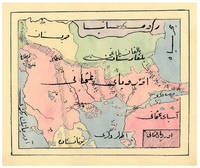
1910ABC_47241Ottoman Empire 1910. Gold-stamped cloth with the tughra of Mehmed V ruled 1908-18 on the front board when reading right to left and "Album" on the back board the front when reading left to right with an inscription below the tughra and the European numerals 16 and 2 flanking an ornament below the inscription the whole framed by 4 large floral cornerpieces. Oblong 4to 26.5 x 19.5 cm. 14 leaves with 10 pen-and-ink maps hand coloured with watercolours. Tissue guards. An album of hand-drawn maps forming an atlas of the western mostly European parts of the Ottoman Empire with legends in Ottoman Turkish written in the Arabic script. The overview map shows Albania Kosovo Macedonia and the Ottoman controlled northern parts of Greece coloured together with Thrace and the northwest parts of Anatolia shown treating them as a single unit while Serbia and Bulgaria like the small parts of territories outside Ottoman control are coloured separately. Most of the other maps give more detailed views of some of these regions including the Bosporus the Dardanelles Halkidiki Chalcidice Albania etc. but there is also a map of Crete not in the overview map.In fine condition. hardcover
1882053643Ottoman Manuscript Document. 1298 AH 1882. No Binding. Very Good. Original Ottoman birth certificate. 31x18 cm. In Ottoman script. 2 p. Faded on paper. A good paper. On verso some handwritten annotations in Ottoman Turkish and Greek. GREEK MINORITY "Devlet-i Aliyye Nüfus Tezkîresi" Early Ottoman birth certificate of Kostaniniyye'li Yorgi Papa oglu Hedezgâr Mihail stamped by Sehremâneti in 1298 AH 1882 AD with the tughra of Sultan Abdülhamid II. <br/> <br/> Ottoman Manuscript Document., [1298 AH] unknown
1895053644Ottoman Manuscript Document. 1311 AH 1895. No Binding. Very Good. Original Ottoman birth certificate. 31x18 cm. In Ottoman script. 2 p. Faded on paper. A good paper. On verso some handwritten annotations in Ottoman Turkish and Greek. With a printed stamp of "Dahiliye Nezâret-i Umûmiyyesi". GREEK MINORITY "Devlet-i Aliyye Nüfus Tezkîresi" Early Ottoman birth certificate of Kostaniniyye'li Mihail oglu Areti stamped 'Adana' in 1311 AH 1895 AD with the tughra of Sultan Abdülhamid II. <br/> <br/> Ottoman Manuscript Document., [1311 AH] unknown
1894053645Ottoman Manuscript Document. 1310 AH 1894. No Binding. Very Good. Original Ottoman birth certificate. 31x18 cm. In Ottoman script. 2 p. Faded on paper. Otherwise a good paper. On verso added a Greek translation of script plate beside the Ottoman Turkish. GREEK MINORITY "Devlet-i Aliyye Nüfus Tezkîresi" Early Ottoman birth certificate of Ayasuluglu Papa Istefani in 1310 AH 1894 AD; with the tughra of Sltan Abdülhamid II. <br/> <br/> Ottoman Manuscript Document., [1310 AH] unknown