199 résultats
1921050839Istanbul: Harbiye Nezâreti Ministry of War. H.: 1337 1921. No Binding. Very Good. Original manuscript autograph letter signed 'Ziya Kutnak' sent to Mustafa Hilmi Pasha. 27x17 cm. In Ottoman script. 1 p. It mentions 'Divân-i Harb azaligina tayîn'. i.e. Assignment to the Divan-i Harb membership. Divân-i Hârb was an assembly where high-ranking soldiers meet for work on war issues or war criminals. Çürüksulu Ziya Pasha or Ziya Kutnak is the last Minister of War in the Ottoman Empire. His father was Çürüksulu Osman Nuri Pasha who was Hedjaz Hijaz Governor. In 1908 he participated in military exercises in Russia. In 1911 he visited Rumelia with Sultan Mehmed Resad during Sultan's famous voyages to Rumelia. He was sent as a representative to the King of England ceremonies. He assisted the Turkish War of Independence during his war ministry. Mustafa Hilmi Pasha 1840-1922 was a general of the Ottoman Army. He was the son of Ibrahim Pasha Sarim. In the early 20th century he participated in the modernisation and unification of the Ottoman Army. In World War I he commanded the VI. Army Corps which was sent to participate in the campaign against Romania during the period October 1916 - February 1918. In the Turkish War of Independence he fought against French forces around Aleppo. He died in 1922 in Istanbul. Original text: "Erkân-i Divân-i Harbiye Meclisi olan tayinleri hususuna bi'ilânindan fî sene 7 Eylül 1337 tarihinde irâde-i seniyye-i cenâb-i pâdisâhî seref-müteallik buyurulmus olmakla hemen vazife-i cedidelerine mübâseret buyurmalari mütemennâdir efendim. Fî sene 14 Eylül 1337. Harbiye Nâziri Signature". <br/> <br/> Harbiye Nezâreti [Ministry of War]., [H.: [1]337] unknown
2019050657Istanbul: Türkiye Jokey Kulübü Turkey Jockey Club 2019. Limited Edition . Dust jacket. New/New. 8vo - over 7¾ - 9¾" tall. Original bdg. Dust wrapper. Cr. 8vo. 20 x 14 cm. Transcription in Turkish and reprint in Ottoman script parallel text of original edition printed in 1898. 6 29217 p. Osmanli'da at bakimi ve binicilik. Translated and prepared by Yasar Ünlü. First Edition in Roumi 1316 = Gregorian 1898. Horse care and riding in the Ottoman Empire. 1000 copies were printed. <br/> <br/> Türkiye Jokey Kulübü (Turkey Jockey Club) unknown
1891053328Istanbul: Artin Asaduryan Sirket-i Mürettibiye Matbaasi. AH 1308 1891. 1st Edition . Soft cover. Very Good. 8vo - over 7¾ - 9¾" tall. Paperback. Foolscap 8vo. 18 x 125 cm. In Ottoman script. 1 b/w Selim's portrait engraving 67 p. Selim I nicknamed Yavuz "the Stern" or "the Steadfast" but often rendered in English as "the Grim" October 10 1465/1466/1470 - September 22 1520 was the Sultan of the Ottoman Empire from 1512 to 1520. His reign is notable for the enormous expansion of the Empire particularly his conquest between 1516-1517 of the entire Mamluk Sultanate of Egypt which included all of Sham Hejaz Tihamah and Egypt itself. With the heart of the Arab World now under their control the Ottomans became the dominant power in the region and in the Islamic world. Upon conquering Egypt Selim took the title of Caliph of Islam being the first Ottoman sultan to do so. He was also granted the title of "Khâdim ül Haramain ish Sharifain" Servant of the Holy Cities of Mecca and Medina by the Sharif of Mecca in 1517. Selim was also a distinguished poet who wrote both Turkish and Persian verse under the pseudonym =mahlas Selimi; collections of his Persian poetry are extant today. In one of his poems he wrote as 'A carpet is large enough to accommodate two Sufis but the world is not large enough for two kings'. Sultan Selim who spoke Arabic and Persian very fluently wrote Persian poems cursively under the nickname Selimî. Those poems are extant today at the Imperial Archives at The Topkapi Palace Museum. He had Turkish poems as well and his Persian Divân T.N. poetry book was printed in 1306 in Istanbul and was published in 1904 by Paul Horn in Berlin by the order of Wilhelm II the German Emperor. During his eight years of ruling he didn't have any time to rest he slept four hours a day and spent the rest of the day writing and reading. Sultan Selim has many powerful poems with deep meaning and artistic style. Translation from Persian by Seyh Vasfi. Mikaeloglu Antranik Efendi 1850- was a Turco-Armenian painter who worked for the Ottoman court notably regarded for his sultan portraits during the reigns of Sultan Abdülhamid II 1876-1909 Sultan Mehmed Resad 1908-1918 and Sultan Vahdeddin 1918-1922. During the administration of the last two sultans in particular he received a number of orders from the palace and while Abdülhamid II was on the throne in the 1890s he sketched gravures for Servet-i Fûnun Wealth of Sciences journal. A vast body of these gravures depicts leading names of the age -Egypt's Khedive Tevfik Pasha Abbas Pasha Sultan Abdülaziz etc. and portraits illustrating the photographs of preceding sultans as well as architectural drawings such as Süleymaniye Mosque and Ayasofya-Santa Sophia. Another record testifying to the fact that Antranik Efendi received commissions during the reign of Sultan Mehmed Resad and worked for the royal family is a 1916-dated document in Dolmabahçe Palace Museum Archive. Hegira: 1308 = Gregorian: 1891. Özege 1679. First and only edition. Extremely rare. <br/> <br/> A[rtin] Asaduryan Sirket-i Mürettibiye Matbaasi., [AH 1308] paperback
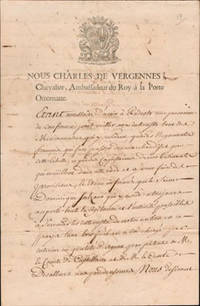
16-4815Constantinople: 13 Janvier 1758. Folio. 4 pp. 37 x 24 cm. Als with letterhead and wax seal. Sa défense réussie des intérêts français à la cour de Trèves et Hanovre entre 1751 et 1754 l'amène à être envoyé à Constantinople en 1755 d'abord en tant que ministre plénipotentiaire puis en tant qu'ambassadeur. Il y reste 14 ans et se convainc de l'impérieuse nécessité du maintien de l'empire ottoman pour la défense des intérêts français.Provenance:Maurice Léon SALZANI. Born 9 September 1896 - Bournabat Bornova İzmir TURQUIE; Deceased 13 January 1971 - Crosville-la-Vieille 27110 Eure Haute-Normandie FRANCE aged 74 years old. Residence in the 1960s; Grosville-la-Vieille Le Neubourg Eure. .Agent Général de laCompagnie des Messageries Martimes 72-75 Fenchurch St. London EC3; Président. Comité de la Croix-Rouge Française de Ceylan; Agent Consulare de France à Madras. Constantinople: 13 Janvier 1758 unknown
1934053697Ankara: Letterhead 'TC Dahiliye Vekâleti Matbuat Umum Müdürlügü' i.e. Turkish Ministry of Internal Affairs Directorate of the Press 1934. No Binding. Very Good. Original typescript letter in French signed 'Dr. Vedat Nedim' mentioned to Monsieur Nasit Hakki Ulug 1902-1977's voyage to Hungary who was depute of Kütahya and redactor of Hakimiyet-i Milliye journal. Dated 9 Juillet 1934. 275x18 cm. In Turkish. 1 p. 'TC Hükümeti' watermarked paper. Text: "Excellence Monsieur Nasit Hakki depute de Kütahya et redacteur du Journal officiel Hakimiyeti Milliye entre-prendra prochainement un voyage d'etude en Europe Centrale Il visitera egalement Voltre beau pays. Serait-il possible de lui accorder l'assistance bienveillante de Voss autorites gouvernementales lors de son sejour en Hongrie Nous apprecierons beaucoup si Vous voulez bien intervenir favorablement aupres de Voss bureaux competents pour lui obtenir le permis de Vos chemins de fer comme nous le faisons a l'egard de Vos Journalistes qui visitent la Turquie. Veuillez agreer Excellence l'assurance de ma tres haute consideration. Le Directeur Generale de le Presse.". Vedat Nedim Tör was born in the city of Istanbul in 1897. He was the son of Ahmet Nedim Servet Tör. He attended Galatasaray High School and completed his higher education at the University of Berlin. Having taken his Ph.D. in economics he returned to Turkey. He served as the director at the Ankara State Radio and Directorate General of Press and Information. His writings were published in the newspapers Cumhuriyet and Vatan. Vedat Nedim among the founders of Istanbul and Ankara State Radios also served as a culture and art consultant for Yapii Kredi Bank and Akbank. Among the stage plays he scripted were Issizler 1924 Kör 1935 Degisen Adam 1941 Hep ve Hiç 1951 and Halici Kiz 1975. Many of his theatre scripts were staged by several theater companies. Further his play Halici Kiz was adapted to the silver screen by Muhsin Ertugrul in 1953. Vedat Nedim Tör passed away on April 8 1985 in Istanbul. <br/> <br/> Letterhead 'TC Dahiliye Vekâleti Matbuat Umum Müdürlügü' [i.e. Turkish Ministry of Internal Affairs Directorate of the Pres unknown
1954052810Istanbul: Resimli Hayat Aylik Dergi Letterhead 1954. No Binding. Very Good. Original typescript letter signed by Vedat Nedim Tör to an unnamed recipient including an invitation that the new place of the new publishing house of Hayat Dogan Kardes Printing House located in Municipality Klodfarer Street and a meeting on Turkish theater on March 11 1954. Dated I.III.1954. 21x17 cm. In Turkish. 1 p. "Hayat" i.e. Life magazine letterhead. Vedat Nedim Tör was born in the city of Istanbul in 1897. He was the son of Ahmet Nedim Servet Tör. He attended Galatasaray High School and completed his higher education at the University of Berlin. Having taken his Ph.D. in economics he returned to Turkey. He served as the director at the Ankara State Radio and Directorate General of Press and Information. His writings were published in the newspapers Cumhuriyet and Vatan. Vedat Nedim among the founders of Istanbul and Ankara State Radios also served as a culture and art consultant for Yapii Kredi Bank and Akbank. Among the stage plays he scripted were Issizler 1924 Kör 1935 Degisen Adam 1941 Hep ve Hiç 1951 and Halici Kiz 1975. Many of his theatre scripts were staged by several theater companies. Further his play Halici Kiz was adapted to the silver screen by Muhsin Ertugrul in 1953. Vedat Nedim Tör passed away on April 8 1985 in Istanbul. <br/> <br/> Resimli Hayat Aylik Dergi Letterhead unknown
1885051539Istanbul: Bâb-i Fetva Daire-i Seyhülislâm. H.: 1301 1885. No Binding. Very Good. 8vo - over 7¾ - 9¾" tall. Original manuscript handwritten letter ALS signed 'Ahmed Es'ad'. Oblong: 19x24 cm. In Ottoman script. Letterhead of 'Bâb-i Fetva Daire-i Seyhülislâm'. AH: 1301 = AD: 1885. With elqab includes three lines. Written on salary increase of 'Imam-i Sânî Rasid Efendi hazretleri'. Folded. In elqab it starts with 'Faziletlü efendim hazretleri' after 'Hüve'. Uryânîzâde Ahmed Esad Efendi was 117th sheikh al-islam of the Ottoman Empire in the period of Sultan Abdulhamid 2. He was son of Mehmed Said who was one of qadis judge of Sultan Mahmud II. He was descend from Osman el-Uryânî who was a Kilis city-born. <br/> <br/> Bâb-i Fetva Daire-i Seyhülislâm., [H.: 1301] unknown
0483240710.Ghardcover. Good. Access codes and supplements are not guaranteed with used items. May be an ex-library book. hardcover
0483209155.Gpaperback. Good. Access codes and supplements are not guaranteed with used items. May be an ex-library book. paperback
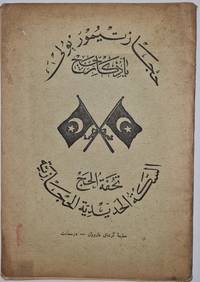
1913000166Very rare brochure printed in Armenian house in İstanbul 1913. In English Ottoman Turkish Arabic Russian and Urdu. 10 p. Text with 11 plates. In the printer wrappers. Archak Garoyan paperback
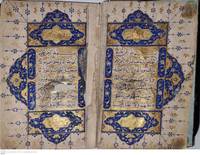
000195<p>16x11 cm. Contemporary Ottoman binding tooled in gold with Shamsa on each board and flap. Surah headings in gold and colors golden durations between verses and all pages out-ruled in gold. 16th c. Signed Hamdullah el Amasi. The signature due to the Era of the calligrapher and the writing character is same of the calligrapher's. Sheikh Hamdullah was born in Amasya a north-central town in Anatolia. His father Mustafa Dede was a Sheik of the Suhrawardi order and had migrated from Bukhara in present-day Uzbekistan to Anatolia. In Amasya he studied the six scripts under the tutelage of Hayreddin Mar'asi. He learned the traditional method of the old masters but struggled to reproduce it. While studying he met Bâyezïd the son of Sultan Mehmed the Conqueror who was a fellow student and the pair became friends. When Bâyezïd assumed the throne in 1481 following his father's death he invited his friend Sheikh Hamdullah to the capital Istanbul. Hamdullah went on to become a master calligrapher at the Imperial Palace. In 1485 Bâyezïd II acquired seven works by the great calligrapher Yaqut al-Musta'simi. Bâyezïd then encouraged his court calligrapher Hamdullah to devise a new script inspired by the acquisition. Hamdullah regarded al-Musta'simi's work as unsurpassable but at Bâyezïd's insistence Hamdullah reluctantly agreed. Scholars have suggested that Bâyezïd's enthusiasm for a new script was symbolic of his desire to establish a new empire and a new dynasty. Hamdullah underwent a period of reclusion during which time he claimed that a prophet taught him the new scripts in a vision. He ultimately recodified and refined the nashk style of calligraphy originally developed by Yaqut al-Musta'simi. Hamdullah's scripts were more elegant balanced and legible. From 1500 the majority of Q'rans adopted Hamdallah's new style which became known as the Ottoman style or "Seyh's manner'. For this he is often considered to be the "father of Ottoman calligraphy". His many students spread his style throughout the Ottoman Empire. His style endured for 150 years making him one of the greatest Ottoman calligraphers of all time. As much as two centuries later students of calligraphy such as Hâfiz Osman continued to copy his works assiduously as part of their training. He devoted his whole life to the art of calligraphy continuing to produce works well into his 80s. He produced 47 Mus'hafs book of Quran and innumerable En'ams Evrads and Juz' a number of which are held in the collection of the Topkapi Palace.12 His inscriptions also decorate the Bâyezïd Firuzaga and Davud Mosques in Istanbul and the Bâyezïd Mosque in Erdine. His son Mawlana Dede Chalabi became a calligrapher after studying with Hamdallah his father and Hamdallah's daughter whose name is unknown married a calligrapher by the name of Shukrullah Halife of Amasya who had also been one of her father's pupils. Hamdullah's grandsons also became calligraphers; Pir Muhammad Dede d. 986/1580 son of Hamdallah's daughter and Dervish Muhammad d. 888/1483 son of Mawlana Dede. As his reputation grew many myths to his abilities outside calligraphy sprang up. It was said that he was a great archer falconer swimmer and even an extraordinary tailor. He died in Istanbul in 1520 and was buried at Karacaahmet Cemetery in the district of Üsküdar at Istanbul. Surviving examples of his works are held in the Topkapi Collection.</p> hardcover
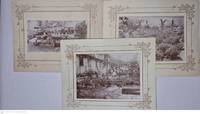
1910000180Each 16.5 x 14 11 x 8 cm. Contains 2 of which published in the book listed in our inventory; health reform and organizations in Hejaz during the Hajj season 1330 AH. By Dr. Kasim Izzeddin. The other 3 photos are not published in this book.
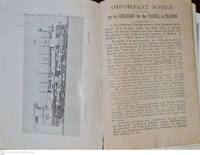
1900000209<p>10 p. Of text in English Ottoman Turkish Arabic Urdu and Russian with 9 full page plates. A hajj travel brochure printed in İstanbul supposed to be by an Armenian press in c. 1900. Rare</p> An Armenian press paperback
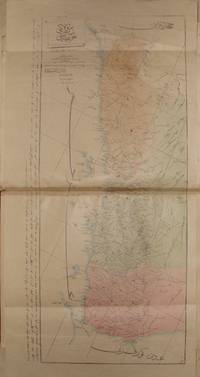
1909000140<p><strong>80 × 75 cm. Produced by KolaÄŸası Osman Nuri secretary of the Military School of Geography in 1323 AH 1907 AD.</strong></p><p>The map rarely includes a small inset map of the city of DirÊ¿iyyah in the Najd region together with additional inset maps of Medina ṬÄʾif Mecca and the harbor of Jeddah.</p> The Ottoman geographical military school, war press
1900000208<p>19 p. Ottoman Turkish text. Official report of the hajj and health quarantine law in 1889-1900. Consists of 20 articles. The Anglo-ottoman Hajj policy conflict. Rare.</p> Osmaniye press paperback
1902000110<p><strong>29 × 20 cm. Comprising 158 text plates including 95 photographs produced by the committee of which 42 photographs appear on separate plates measuring approximately 23 × 15 cm.</strong></p><p>The work documents the Photography Committee's journey from Istanbul to MaÊ¿Än in Transjordan. The accompanying text was compiled from articles originally published without illustrations in various issues of the newspaper <em>Vakit</em> "Time" in 1902.</p><p>This is a unique work prepared for publication with photographs taken by a private committee that included prominent figures such as the German general Karl Auler Pasha who served as an adviser on Hejaz affairs until the fall of Medina in 1918.</p> hardcover
000444<p>Üsküdar: Mühendishane-i Berr-i Hümâyun<br />Imperial / Royal School of Military Engineering<br />c. 1840s</p><p>Rare Ottoman administrative atlas produced at the Mühendishane-i Berr-i Hümâyun in Üsküdar the principal Ottoman military and cartographic institution of the 19th century.</p><p>Folio 40 × 28 cm later hard cover binding.<br />Illustrated by Yümnî with thirty-nine 39 hand-colored double-page maps most signed in the stone by Yümnî. The maps are titled dated and carry printing details with the majority accompanied by Ottoman Turkish descriptive text.<br />Printed in the 1840s shortly after the establishment of the Ottoman telegraph network this atlas is possibly the earliest comprehensive administrative atlas printed in Üsküdar reflecting the modern vilayet system of the Tanzimat era.<br />Condition: Very good. All maps complete and well preserved. Scarce.</p><p>List of Maps 39</p><p>Arabistan Arabian Peninsula – 56 × 47 cm<br />Trablusgarb ve Tunus Libya and Tunisia – 56 × 39 cm<br />Trablusgarb Libya – 56 × 40 cm<br />Mısır Eyalet-i Mumtazası Territory of Egypt – 56 × 46 cm<br />Yemen – 69 × 33 cm<br />Hicaz Hejaz – 56 × 39 cm<br />Ankara<br />Sivas<br />Ma'mûretülaziz<br />Diyarbakır<br />Bitlis<br />Erzurum<br />Van<br />Musul Mosul – 56 × 39 cm<br />Bağdad Baghdad – 56 × 39 cm<br />Basra – 55 × 39 cm<br />Zor Mutasarrıflığı part of Mesopotamia<br />Halep Aleppo<br />Adana<br />Konya<br />Kıbrıs Cyprus<br />Cezâ'ir-i Bahr-i Sefîd Aegean Islands Vilayet<br />Aydın<br />Biga Mutasarrıflığı<br />İzmit Mutasarrıflığı ve Hüdavendigâr Vilayeti<br />Trabzon<br />Kastamonu<br />Bulgaristan Eyalet-i Mumtazası Territory of Bulgaria<br />Rumeli-i Şarkî Eastern Rumelia – 56 × 39 cm<br />Bosna Bosnia<br />Kosova Kosovo<br />Manastır Monastir / Bitola<br />İşkodra Vilayet of Shkodër<br />Yanya Janina / Ioannina<br />Selanik Thessaloniki<br />Edirne<br />İstanbul<br />Bahr-i Siyâh Boğazı Black Sea Strait<br />Kal'a-i Sultâniyye Boğazı Dardanelles</p><p>Significance<br />A highly important and scarce example of Ottoman state-sponsored military and administrative cartography documenting the Empire's territorial organization across Anatolia the Arab provinces North Africa the Balkans and the Straits during a key phase of modernization and infrastructural reform.<br />This atlas stands alongside the earliest telegraph-era Ottoman mapping projects and represents the mature output of the Mühendishane cartographic tradition.</p> MuhendisHane-i Berr-i Humatun (The Royal school of military engneering) hardcover
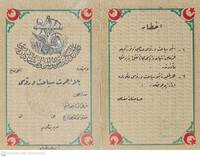
000177<p>Ottoman Turkish script with crescent figures and map on the back of the Ottoman Railway. A free boarding pass should be declared on demand. Holder can carry up to 30 kg . 14.5 x 11 cm.</p> Seruchin (?) An Armenian press
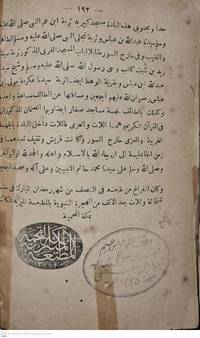
1885000205192 p. Arabic text a rare print. Stamp of the general Ibrahim Rif'at Pasha in 1335 an endorsement copy. With several notes during the copy. Modern binding. Hejaz printing house hardcover
1891000206310 p. Ottoman Turkish text. Ownership by Mesud Qasim zaynal Ali Riza in jeddah the son of the Ottoman delegate of Jeddah. Hejaz printing house hardcover
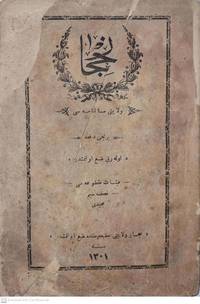
1885000210<p>182 pages. Ottoman Turkish text. The first official yearbook printed by a lithographic press in Mecca. An early work printed in the Hejaz. Rare.</p> Lithograph press hardcover
1917000214<p><strong>We believe this to be the first complete collection of its kind</strong> including several items that we have not encountered in public libraries or archival sources. In any case it represents the most comprehensive collection of issues that we have traced over a period of twenty-five years of Ottoman state publications many of which are difficult to assemble. The collection essentially consists of official reports most of which were prepared by the two ambassadors <strong>Fakhr al-Din Rûm Bey Oğlu</strong> and <strong>Muhammad Nâbi</strong>. These reports are highly restricted official documents.</p>Description of the Collection<p>The reports were prepared in <strong>Ottoman Turkish</strong> except for four items written in modern Turkish after the alphabet reform; these were prepared by <strong>İsmail Hakkı Tevfik</strong> and <strong>Abdulgani Seni Bey</strong>.</p>1. <em>Najd Issue</em> Najd Question<p>Ottoman Turkish report published by the Ministry of Foreign Affairs Istanbul 1918. 15 pages octavo.<br />Prepared by Ambassador Fakhr al-Din Rûm Bey Oğlu and the Ottoman Ambassador in Rome Muhammad Nâbi dated 11 March 1917.</p><p>The report discusses the political borders of Ottoman Najd; the treaty signed between Süleyman Şefik Pasha and Abdulaziz ibn Saud; the Ottoman–British treaty concerning Najd including Qatar; and the Ottoman treaty with Ibn Saud converting Najd from a <em>mutasarrifate</em> into a province <em>vilayet</em> appointing Ibn Saud as governor and commander-in-chief including military organization.</p><p>Topics include:<br />Midhat Pasha's report; Wahhabis; the conflict between Saud and Abdullah ibn Faisal; the sheikhs of Muscat Mukalla Oman Hadhramaut and Bahrain and their relations with Britain; Saudi movements along eastern Najd; Ottoman naval response under Midhat Pasha; the administrative difficulty of Najd; support of Mubarak al-Sabah for the Ottomans; coercion of Abdullah al-Faisal to sign the al-Ahsa treaty; Ibn Rashid's advances; tribal dynamics; British support of Al-Sabah; British protection; Ibn Saud and the Muntafiq sheikh; Ottoman–Wahhabi agreements 10 April 1905; British protests regarding Ibn Saud's border violations and interference in Qatar and Oman; the 12-article Ottoman–Ibn Saud treaty of 12 July 1913 including the separation of Qatar from Najd; maritime boundaries; recognition of Jasim Al Thani; compensation to the Sheikh of Bahrain.</p>2. <em>Muscat Issue</em><p>Ottoman Turkish report Ministry of Foreign Affairs Istanbul 1918. 6 pages.<br />Prepared by Fakhr al-Din Rûm Bey Oğlu and Muhammad Nâbi dated 27 November 1916.</p><p>Covers Muscat modern Oman the Imamate foreign involvement Ottoman views rejecting Muscat's independence from the Arabian Peninsula; relations between Najd Muscat and British India; strategic location; occupation history; Al-Sa'id relations with Wahhabis; British and French recognition of Omani independence in 1862; Ottoman perspective on Oman's connection to Arabia.</p>3. <em>Qatar Coasts Issue</em><p>Prepared 8 January 1917. Printed at the Imperial Press. 7 pages plus 9 pages of French appendices.</p><p>Topics include British expansion from Bahrain to Qatar; Ottoman claims; British intervention since 1891; correspondence with the Ottoman state; Bahrain–Qatar disputes over Zubarah and al-'Udayd; appointment of Abd al-Rahman Al Thani; British encroachments; Qatar within the Kuwait treaty framework; confirmation of Jassim Al Thani's authority in 1913.</p>4. <em>Kuwait Issue</em><p>Fakhr al-Din Rûm Bey Oğlu & Muhammad Nâbi. Imperial Press Istanbul 1334 AH. 34 pages.</p><p>Geography population sect history of Al-Sabah; Ottoman administration of Baghdad and Basra; British policy; secret treaties 1899–1904; borders; railways; maritime flags; taxation refusal; British attempts to place Kuwait under protection; Ottoman responses; oil islands Bubiyan Khor Abdullah; Sheikh's declaration of being an officer in the British army. Dated 31 August 1918.</p>5. <em>Basra Gulf Issue</em> Bahrain Qatar Pirate Coast/Emirates<p>İsmail Hakkı Tevfik. Ankara 1931. 32 pages.<br />Political tribal and documentary history in Turkish English and French.</p>6. <em>Irrigation in Arabia</em><p>Fakhr al-Din Rûm Bey Oğlu & Muhammad Nâbi. 14 pages.<br />Ottoman irrigation projects; British interference since 1910; German involvement.</p>7. <em>Asir Revolt of 1911</em><p>Report by Consul General İsmail Hakkı. 31 pages.<br />Ottoman military actions; Idrisi revolt; tribal loyalties; Wahhabi involvement; detailed military maps.</p>8. <em>Aqaba Issue</em><p>By Rashdi Infantry Brigade Commander. Istanbul 1326 AH. 154 pages.<br />Ottoman–British relations; Egypt's role; Hijaz railway; Aqaba dispute.</p>9. <em>War in Arabia between Ibn Saud and the Imam of Yemen</em><p>By Abdülgani Sünni Bey. Ankara 1934. 20 pages.<br />Unique copy. Covers causes tribal alignments Asir Aden Najran foreign involvement.</p>10. <em>Guide to the Gulf of Aden</em><p>Ottoman Turkish. Istanbul 1310 AH. 276 pages.<br />Includes maps; authored by naval officer Süleyman Nutqi.</p>11. <em>Tripoli Benghazi and the Twelve Islands Issue</em><p>Report dated 27 November 1916. 24 pages French treaty texts.<br />Ottoman North Africa American conflicts Italian ambitions Lausanne Treaty.</p>12. <em>Sheikh Sa'id Island Issue</em><p>Istanbul 1916. 4 pages.<br />Strategic Bab al-Mandab island dispute with France.</p>13. <em>Palestine Issue – Zionist Claims</em><p>Istanbul 3 March 1918. 43 pages.<br />Origins of Zionism; European diplomacy; Jerusalem administration.</p>14. <em>Notes on the Iraq War</em><p>Military Press 1333 AH. 88 pages.<br />Translated from English for official use only. Rare.</p>15. <em>Bahrain Issue</em><p>Report dated 8 January 1917. 12 pages French texts.<br />History British protection treaties 1820–1898 inclusion in 1913 Gulf treaty.</p>16. <em>Muhammarah Issue</em><p>Report dated 1 March 1917. 8 pages.<br />Borders oil Sheikh Khaz'al Anglo-Iranian-Ottoman relations.</p>17. <em>Oil Concessions in Arabia</em><p>Report dated 26 March 1917. 9 pages English treaty.<br />Mosul Baghdad Basra Shell Najd Kuwait.</p>18. <em>Baghdad Issue</em><p>Report dated 31 August 1917. 53 pages French texts.<br />Baghdad Railway; British–Ottoman rivalry; Gulf politics.</p>19. <em>Farasan Islands Issue</em><p>Report dated 28 November 1916. 8 pages.<br />German coal depot request; British occupation; oil and gas.</p>20. <em>Hadhramaut Issue</em><p>Report dated 11 March 1917. 6 pages.<br />Tribal governance; British relations via Aden.</p>21. <em>Aden and the Nine Districts</em><p>Report dated 27 November 1916. 39 pages French annexes.<br />Portuguese Ottoman British rule; Yemen administration; sovereignty claims.</p>22. <em>Memorandum on British Claims Regarding the Baghdad Line and Basra Gulf</em><p>Istanbul 21 January 1911. 35 pages appendices.<br />Detailed diplomatic negotiations since 1903.</p>23. <em>Guide to the Red Sea</em><p>Istanbul 1307 AH. 459 pages.<br />Comprehensive nautical and railway guide with ports and routes.</p>24. <em>South Arabia Issue</em> Hadhramaut Socotra etc.<p>İsmail Hakkı Tevfik. Bulgaria 1935. 132 pages with photographs and maps.</p>25. <em>The Egyptian Issue</em><p>Prepared March 1918. 186 pages.<br />Ottoman legal and political analysis of Egypt from Muhammad Ali to British occupation.</p>26. <em>Shatt al-Arab Issue</em><p>Istanbul 1917. 30 pages.<br />1913 treaty with Britain; navigation borders Iran Muhammarah.</p><p><strong>Note</strong><br />İsmail Hakkı Tevfik was a senior Ottoman and Republican diplomat and son-in-law of Sultan Mehmed VI. Fakhr al-Din Rûm Bey Oğlu and Muhammad Nâbi were leading Ottoman statesmen. Other contributors include Süleyman Nutqi naval officer and Abdulgani Seni Bey later a key Republican thinker.</p><ul><li><strong> 26 items</strong></li></ul> Ottoman Ministry of Foreign Affairs paperback
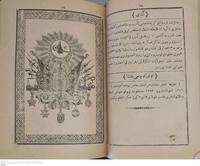
1899000432<p>Basra – Ottoman Imperial Authority<br />Basra Vilayet Department 1317 AH / 1899 AD</p><p>First edition of the third official provincial report salname / administrative report issued by the Vilayet of Basra during a critical period of political and strategic tension in southern Iraq and the Arabian Gulf under the reign of Sultan Abdülhamid II.<br />Printed in Basra this volume represents one of the earliest locally produced Ottoman governmental publications from the province. The work consists of 172 pages of Ottoman Turkish text and was issued in original printer's wrappers bearing the Ottoman coat of arms and the tughra of Sultan Abdülhamid II on the cover.</p><p>The report provides a comprehensive and official survey of administrative military and political conditions throughout the vilayet and its dependent sanjaks and kazas including:</p><p><br />Basra<br />Amara<br />Muntafiq Nasiriyya<br />Zubayr<br />Ahsa al-AḥsÄʾ<br />Najd<br />Kuwait<br />Qatar</p><p>Of particular historical importance are the named references to key regional political figures including Shaykh MubÄrak al-á¹¢abÄḥ Kaymakam of Kuwait and members of the Ä€l ThÄnÄ« family of Qatar providing valuable contemporary documentation of Ottoman administrative recognition and authority in the Gulf.</p><p><br />Format: 8vo 7¾–9¾ in.<br />Pagination: 172 pp.<br />Language: Ottoman Turkish<br />Edition: First edition<br />Condition: As new. Original wrappers very lightly stained; three small neat wormholes. Otherwise as issued and in excellent condition.</p><p><br />A rare and highly significant primary source for late Ottoman governance in Basra and the Arabian Gulf documenting imperial authority regional administration and local power structures on the eve of the twentieth century.</p> The Ottoman authority, Basra dept.
1916000483<p>Istanbul: TanÄ«n 1916.<br />Book. As new. Hardcover. 8vo over 7¾–9¾ in.<br />An official report issued by the Ottoman Fourth Army under Jamal Pasha concerning the proceedings of the Supreme Court Martial Tribunal convened at ʿĀliyah Aley Lebanon established to prosecute alleged Arab separatists and Pan-Arabist movements in Syria and Egypt during the First World War.<br />The report claims that the names of prominent Arab nationalists were discovered by the Ottoman authorities among documents seized from the French Embassy in Beirut reportedly placed under the safekeeping of the American Embassy following the outbreak of war. These documents formed the evidentiary basis for the tribunal's investigations.<br />125 pages of Arabic text accompanied by over 50 facsimile plates issued as a supplement reproducing original documents and correspondence between the accused Arab nationalists and other related parties examined by the tribunal.<br />Preserved in a modern hardcover binding.<br />A significant and controversial contemporary Ottoman publication providing rare primary documentation on wartime military justice Arab nationalist movements and Ottoman intelligence practices during the final years of the empire.</p><p>An important Arabic political and legal work presenting the Arabic version of La Vérité sur la Question Syrienne addressing the investigations and proceedings of the Ottoman Martial Law Tribunal DÄ«wÄn al-Ḥarb al-Ê¿UrfÄ« convened in ʿĀliyah Aley during the First World War.<br />The work constitutes a contemporary defense and documentary clarification of political accusations brought against Syrian and Lebanese figures shedding light on:<br />Ottoman wartime judicial procedures<br />political repression and accusations of separatism<br />and the broader Syrian Question in the late Ottoman period.<br />As the original Arabic edition this publication is a key primary source for the study of Ottoman military justice Arab political movements and Syro-Lebanese intellectual history during the final years of Ottoman rule.<br />A scarce and historically significant work particularly sought after in collections relating to the Arab provinces of the Ottoman Empire World War I Middle Eastern politics and constitutional and legal history.</p> Tanine hardcover
1910052639Istanbul: TBMM: Türkiye Büyük Millet Meclisi i.e. The Ottoman Grand National Assembly. AH 1326 1910. Soft cover. Very Good. Folio - over 12 - 15" tall. Paperback. Wrapper is repaired. Tape on spine. Chipped on last page. Other wise a good copy. Folio. 40 x 28 cm. In Ottoman script. 72 p. 14 cedvels schemes and 14 p. color statistics. Meclis-i Mebûsân Birinci devre 1325-1326 içtimai. 326 senesi muâzene-i umûmîsi hakkinda . kaleme alinan esbâb-i mûcibe mazbata-yi umûmîsi. Meclis-i Mebûsân The Chamber of Deputies of the Ottoman Empire was the lower house of the General Assembly the Ottoman Parliament. Unlike to the upper house the Senate the members of the Chamber of Deputies were elected by the general Ottoman populace although suffrage was limited to males of a certain financial standing among other restrictions that varied over the Chamber's lifetime. The Second Constitutional Era of the Ottoman Empire began shortly after Abdul Hamid II was forced to restore the constitutional monarchy after the 1908 Young Turk Revolution. The period established many political groups and parties. Ahmet Riza became the first President of the Chamber in 1908. An amendment in 1909 to the original 1876 constitution resulted in the Chamber gaining more true political power at the expense of the non-democratically elected Senate and the Sultan. A series of elections during this period resulted in the gradual ascendance of the Committee of Union and Progress's CUP domination in politics. The second largest party Liberal Unionist Party LU Turkish: Hürriyet ve Itilâf was in fact a coalition of parties led by Prince Sabahaddin. This is a rare protocol register book of Meclis-i Mebûsân. First and Only Edition. Not in Özege.; Not in OCLC. <br/> <br/> TBMM: Türkiye Büyük Millet Meclisi [i.e. The Ottoman Grand National Assembly]., [AH 1326] paperback