11 637 résultats
New Turkish Original bdg. HC. 4to. (32 x 25 cm). In Turkish. 254 p., ills. 100. ölüm yildönümünde üstad-i cihan Tanburi Cemil Bey'e armagan.
New English Paperback. Pbo. Oblong 4to. (27 x 28 cm). In English and Turkish. 219 p., ills. The Ottoman Empire, which, for centuries, had successfully ruled nations and communities of diverse ethnic origins and religious denominations under the same administrative system, was entering an irrevocable process of disintegration at the turn of the 20th century. Struggling to take precautionary steps against the pressures of the "New Nation States" that originated from the Balkans, which were openly supported by Russia, England, Austria and Greece, Sultan Abdulhamid II announced -out of despair and the fait accomplihe faced- the proclamation of the Second Constitution on 24 July 1908 to protect his throne, for he justifiably believed this to be the only solution to prevent, or at least delay the complete disintegration of the Empire. Sultan Abdulhamid II, who by then was nearing the 32nd year of his reign, was convinced that this was the sole measure to be taken to keep under control the power "Young Turk" movement, which increasingly evolved into a stronger force under the auspices of the "Committee of Union and Progress", had over the large masses. It was, on the other hand, impossible for the restoration of the 1876 Constitution and the implementation of a Constitutional regime based on a newly established parliament by way of elections, to provide viable solutions to the grander problems of the Empire. The upheaval instigated by the Islamic faction waging war against the Committee of Union and Progress and the counter- revolution attempt, which has come to be known as the "31 March Incident", ended when the Third Army stationed in Salonica arrived in Istanbul and seized control of the govemment. The deposition of Sultan Abdulhamid II on 27 April 1909 and the subsequent enthronement of the 65-year-old Sultan Mehmed Resad V meant, evidently, that the government of the Empire was now in the hands of the leaders of the Committee of Union and Progress. In the ensuing years, the rigours of the Balkan War and World War I compelled the Committee members, who adopted "Liberty - Justice - Fraternity and Equality" ideals as their slogan, to relinquish their pluralistic and democratic stance and pursue a nationalistic discourse, which, in turn, accelerated the run towards the inevitable end. The purpose of the catalogue and the exhibition we designed in commemoration of "The 400th Anniversary of the Restoration ofthe Constitution" is to draw attention to a tumultuous period that had significant repercussions on the Republic years. It is rather intriguing how, from books and posters to memorabilia, and even quotidian objects, masses of diverse religions and races expressed their yearning for and expectations from a more democratic regime. I would like to extend my sincere thanks to Sinan Kuneralp, Prof. Edhem Eldem, Dr. Sacit Kutlu, David Barchard, Paul Bessemer and Sukru Ilicak, who all contributed to the exhibition catalogue with their valuable articles; to Mehmet Akgul, Atom Damali, Oktar Kubat, Ugur Yegin, Ugur Goktasli, Orlando Kalumeno, Roni Margulies and Ekrem Gocay, who made it possible for the works in their private archives and collections to be published in the catalogue and displayed in the exhibition; to Sadberk Hamin Museum Director Hulya Bilgi and her team; and to project coordinator Bahattin Oztuncay, with whom we collaborated on the selection of items included in the exhibition and the catalogue.
New English Original bdg. HC. 4to. (34 x 25 cm). In English and Turkish. 381 p. 101 letters to the sultan. Letter to the Ottomans.= Sultana 101 mektup. Osmanli'ya mektuplar. Letters, as a means of correspondence by the hands of political leaders, undoubtedly provide us with substantial information about the status of the state in the political arena, the foreign affairs the politicians run and about the significance that the state has in the eyes of the others. And the 101 letters covered in this work are shedding a bit of light upon the political tradition of the Ottomans, and the mutual relations they had with their counter part sete. We chose to give the summaries of the letters in two languages (Turkish-English) so that the range of benefit would be wider.
New New English Original bdg. Dust wrapper. 4to. (29 x 23 cm). In Turkish. 502, [2] p., color and b/w ills. 101 yapi ve yer, Türkiye. This treatise on the built environment and consequentially man-made structures in Anatolia starts from Prehistory and focuses on the dimensions of space and time in particular. Contemporary approaches to cultural historiography not only aim to highlight the continuity of the dimensions of Space and Time but also to effectively examine and explain the pursuit of the 'environmental-formal-institutional-semiotic and evolutionary.'. This comparative study covers historic periods and epochs in Anatolia, the major determinant space, whose history is now proven by archaeological findings to start around 500,000 BC. The built environment in Anatolia has a history of nearly twelve thousand years; the contextual consistency methodology followed here exerts buildings to examine the continuous stages of this cultural history in detail. Limiting the extent to 101 buildings has facilitated focusing on the comparison of their functional and formal features in a historical context; these landmarks only become iconic and gain meaning in a mutual relationship with their immediate environment. This book is a compulsive experimental attempt in contemporary cultural historiography with the classifications and chronological order that have enabled the comparisonof functional and stylistic evolution. ARCHITECTURE TUrkish architectural art History of arts Seljuks Turkish and Islamic art Ottoman culture Anatolian Emirates Archeology Anatolian civilizations.
New English Paperback. Pbo. 4to. (32 x 23 cm). Many color and b/w ills. 300 p. In Turkish. Historical traces in archive of Ottoman Bank. 135 yillik bir hazine. Osmanli Bankasi arsivinde tarihten izler. Edited by Serhan Ada.
Fine English Paperback. Pbo. 4to. (32 x 23 cm). Many color and b/w ills. 300 p. In Turkish. Historical traces in archive of Ottoman Bank. 135 yillik bir hazine. Osmanli Bankasi arsivinde tarihten izler. Edited by Serhan Ada.
New English Paperback. 4to. (26 x 20 cm). In English and Turkish. 127 p., color ills. 13th International Traditional Meeting of Artists.= 13. Uluslararasi Geleneksel Sanatçilar Bulusmasi. [Exhibition catalogue]. May 24, June 04, 2017.
Fine English Paperback. Pbo. Roy. 8vo. (24 x 17 cm). In Turkish. [xx], [3], 271, [12] p., facsimile in Ottoman Turkish. 14. yüzyila ait bir Kisas-i enbiya nushasi üzerinde sentaks incelemesi. A syntax critic on a "Kisas-i Enbiya" manuscript written in 14th century.
New English Original bdg. HC. Large 8vo. (24 x 24 cm). In Turkish. 2 volumes set (748 p.; 736 p.), b/w ills. 14. yüzyildan Cumhuriyet Dönemi'ne kadar yabanci seyyahlarin gözünden Bursa ilindeki mimari eserler. 2 volumes set. Architectural works in Bursa through the eyes of western travelers from 14th century to the Republican Turkey. Very heavy set.
New English Paperback. Pbo. Demy 8vo. (22 x 15 cm). In Turkish. 472 p., b/w and color ills. Illnesses, hospitals and health care providers from 14th century (Ottoman times) to Republican period of Turkey. 14. yüzyildan Cumhuriyet'e hastaliklar, hastaneler, kurumlar.
Fine English Paperback. Pbo. In Turkish. Cr. 8vo. (20 x 14 cm). 704 p. 14. yüzyildan günümüze Çorumlu sairler.
New New Turkish Original bdg. Dust wrapper. Folio. (34 x 23 cm). In Turkish. 464 p., color ills. All edges gilt. 1400. yilinda Kur'an-i Kerim. Türk ve Islam Eserleri Müzesi Kur'an-i Kerim Koleksiyonu. Collection of qurans in the Museum of the Turkish and Islamic Arts.
New English Paperback. Pbo. 4to. (33 x 24 cm). 431 p. In Turkish. Fully color ills. [=Tombstones of Turkish mariners who were buried from 1453 to 1928.]. 1453'ten 1928'e kadar Istanbul'da gömülmüs Türk denizcilerinin mezar taslari.
New English Original bdg. HC. Roy. 8vo. (24 x 17 cm). In Turkish and English abstract. [xvi], 456 p., ills. 1466 tarihli Aksehir mufassal defteri. (Metin ve inceleme). OTTOMANIA Local history Aksehir City Urban history Ottoman tax and state system.
New English Paperback. Pbo. 4to. (28 x 20 cm). In Turkish. [6], 123, [4] p., b/w ills., Ottoman archival documents. 1481 tarihli Tire, Birgi, Ayasulug ve Alasehir timar defteri. (Metin ve inceleme). 1492 tarihli Biga, Tarhala ve Bergama piyade yoklama defteri parçasi ile birlikte.
New English Paperback. Roy. 8vo. (24 x 17 cm). In Turkish. 244, [62] p., color and b/w plts. 1492'den günümüze Edirne Yahudi Cemaati. Jews of Edirne (Adrianople) from 1462 (first migration to Ottoman Empire) up-to-date.
Fine English Original bdg. HC. 4to. (30 x 22 cm). Proceedings in English and Turkish. 920 p., color and b/w ills. 14th International Congress of Turkish Art. Proceedings. Paris, College de France. Edited by Frederic Hitzel. TABLE OF CONTENTS Foreword (Minister of Culture and Tourism, Republic of Turkey) Introduction (Prof. Dr. Fr. François Déroche) Foreword (Prof. Dr. Zeren Tanini) ICTA Committees YENISEHIRLIOGLU Filiz (Ankara) A digital Database for Tiles at the Topkapi Palace Museum storage rooms. ADIGÜZEL, Hatice (Istanbul), A Local Interpretation of Westernization in Ottoman Architectural Ornamentation: Said Afandi Al-Quwatli House in Damascus . AGIR, Aygül (Istanbul), Osmanli Imparatorlugu ve Italyan Devletleri Arasinda Mimari Malzeme Degisimi (16. ve 17.Yüzyil) AKAR, Tuba (Mersin), Architecture in the Paintings of Turkish Bazaar Painters AKKAYA, Arzu (Istanbul), The Reflection of 19th and 20th Centuries Art Styles on Ottoman Art Journals ALPAGUT, Leyla (Gölköy/Bolu), History, Culture, Art and Architecture for Arif Hikmet Koyunoglu ALPASLAN ARÇA, Sibel (Istanbul), Ayasofya Müzesi, Sehzadeler Türbesi'nde Tespiti Yapilan Tekstil Buluntulari ÁLVAREZ DOPICO, Clara Ilham (Valencia), Les carreaux de céramique des ateliers tunisois: la formation d'un art turquisant en opposition aux influences européennes AOKI GIRARDELLI, Miyuki (Istanbul), Léon Parvillée's early years in Istanbul: Cezayirlioglu Mansion and the Church of Surp Krikor Lusavoriç in Kuzguncuk APOSTOLOU, Irini (Athens), La présence de l'Empire ottoman dans le fonds photographique de la Société de Géographie de Paris ARTAN,Tülay (Istanbul), Two Artists, One Vantage Point Pera/Istanbul in the 1740s. ATBAS, Zeynep (Istanbul), Osmanli Aydini Mehmed Emin Efendi ve Murakkalari. ATLIHAN, Serife (Istanbul), 19. Yüzyilda Megri (Fethiye) Halilarinda Bitkisel Motifler . BABAOGLU-BALKIS, Lale (Istanbul), Traugott Fuchs: A romantic in the Orient. Istanbul as portrayed through the eyes of a German émigré scholar. BATUR, Afife (Istanbul), A British architect in Istanbul: William J. Smith and the Taskislla Imperial Barracks of Mecidiye...
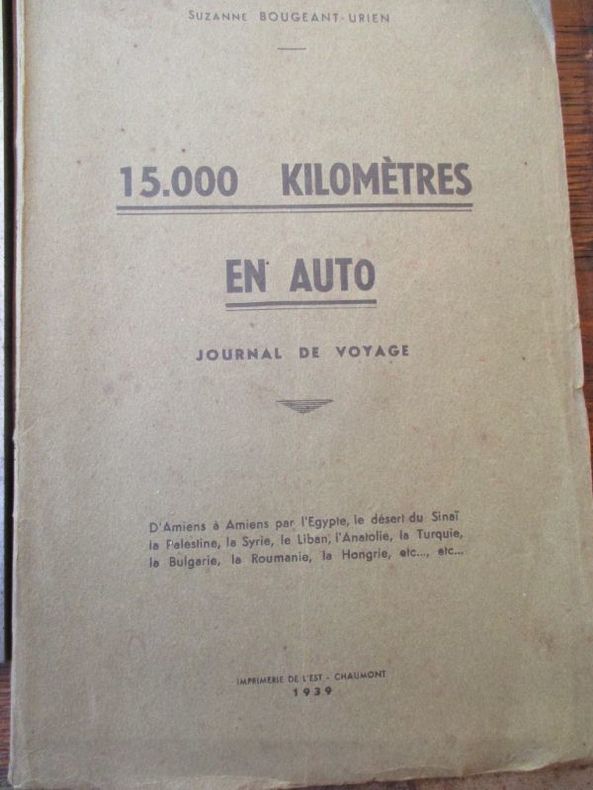
193954541939 Imprimerie de l'Est Chaumont 1939 In8 broché 128 pages
New English Paperback. Pbo. Large 8vo. (20 x 20 cm). In Turkish. [6], iv, 422 p., b/w ills., 10 folding maps. A general view of Islamic coins: 150 States 1500 Sultans. 150 devlet 1500 sultan. Islam sikkeleri.
Very Good English Paperback. Roy. 8vo. (24 x 17 cm). In Turkish. 8, 439 p. 150 soruda Kibris sorunu. Cyprioy question in 150 questions.
New Turkish Paperback. Pbo. 4to. (29 x 23 cm). In Turkish. 243 p., color ills. 150 yilin sessiz taniklari: Sandiklarda sakli saray yasami. [Exhibition catalogue]. Dolmabahçe Sanat Galerisi, 31 Ekim - 15 Aralik, 2007. Edited by Ayça Ozer Demirli. Social life with artistic objects and pieces in the Ottoman Empire. An exhibition cataloge.
New Turkish Paperback. Cr. 8vo. (20 x 14 cm). In Turkish. 179 p. 150. yiliinda Das Kapital: Osmanli'dan günümüze Türkiye'deki serencami.
New English Paperback. Pbo. Roy. 8vo. (24 x 17 cm). In Turkish. 304 p., color ills. and Ottoman archival documents. 1501'de Hamid Sancagi vakiflari. (MAD 3331 numarali vakif defterinin transkripsiyonu ve degerlendirilmesi).1250 copies were printed.
New New Turkish Original bdg. Dust wrapper. Folio. (33 x 24 cm). In Turkish with Ottoman documents. [vi], 944 p., ills. 1579 tarihli Çankiri mufassal tahrir defteri. Ottoman 'Tahrir' registers of Çankiri city dated 1579.