Caton, Steven C.MareMagnum

358 résultats
A clean, unmarked book with a tight binding. Full dark blue cloth boards. Previous owner's name has been whited out on front endpaper. Edge wear to dust jacket. 350 pages.
New Turkish Original aesthetics full leather bdg. in traditional Ottoman style. With flap (miklep). In publisher's special luxury box. Large 4to. (30 x 25 cm). In Arabic. All edges gilt. Fully illuminated as traditional: Serlevha, hecde hizb, cüz roses, zahriye semses, müsenna besmele, with 'tevafuk' and color secavends, and med-kasirs. 605, 11, [4] p. The glorious Quran. Kur'an-i Kerim. was an Islamic calligrapher born during Ottoman times. His real name is Sheikh Musa Azmi, which is why his works may be found to be signed as Azmi. He is known by the pseudonym Hamid. He is also known as Hamid Al Amidi in international circles. Hamid learned the jali-thuluth (Turkish: celi-sülüs) style from Mehmed Nazif (1846-1913), the naskh and thuluth styles from Kamil Akdiç (1862-1941) and the ta'liq style from Mehmed Hulusi (1869-1940). His works are on display in many countries including Egypt and Iraq. His works are also on display in many newly built mosques of Istanbul. Some of his popular students include Hasan Çelebi and Fuat Basar. He was buried in the Karacaahmet Cemetery of Üsküdar district, Istanbul.
New Turkish Original aesthetics full leather bdg. in traditional Ottoman style. In publisher's special box. 4to. (30 x 20 cm). In Arabic. All edges gilt. Fully illuminated as traditional: Serlevha, hecde hizb, cüz roses, zahriye semses, müsenna besmele, with 'tevafuk' and color secavends, and med-kasirs. 605, 11, [4] p. The glorious Quran. Kur'an-i Kerim. was an Islamic calligrapher born during Ottoman times. His real name is Sheikh Musa Azmi, which is why his works may be found to be signed as Azmi. He is known by the pseudonym Hamid. He is also known as Hamid Al Amidi in international circles. Hamid learned the jali-thuluth (Turkish: celi-sülüs) style from Mehmed Nazif (1846-1913), the naskh and thuluth styles from Kamil Akdiç (1862-1941) and the ta'liq style from Mehmed Hulusi (1869-1940). His works are on display in many countries including Egypt and Iraq. His works are also on display in many newly built mosques of Istanbul. Some of his popular students include Hasan Çelebi and Fuat Basar. He was buried in the Karacaahmet Cemetery of Üsküdar district, Istanbul.
New Arabic Original cloth bdg. 592 p. In Arabic. Elephant folio. (49 x 35 cm). First Edition. Illuminated. Reprinted from the original manuscript of Topkapi Palace Museum dated 1584-87. The Koran known as Ahmed Karahisarî's Mushaf-i Serif is leading among the most important works created by artists, who are experts of letters of the Ottoman Palace dealing with the art of books. The work is registered at number 5 among the Hirka-i Saadet books of the Library of Topkapi Palace Museum. Its binding with golden gilded ornament, angle and border has miklep and is made of black leather and was repaired in time. Being the Koran with the largest size written in the Ottoman world, is sized 61.5x42.5 cm and consists of 300 sheets. The place of the work where the name of the calligrapher and the date of transcription would have been written, i.e. the colophon is left empty. The reason for attributing it to Ahmed Karahisarî, the famous calligrapher of the period of Kanunî Sultan Suleyman, is based on a foundation record at its beginning: in this foundation record on page 1b, it is briefly stated that the work is the Mushaf-i Serîf of Karahisarî, was kept in the sultan's treasure until then and was devoted to the Hirka-i Serîf Chamber (Private Chamber) for being recited in 1107 (1696) by Sultan Mustafa II. The beginnings of Fâtiha and Bakara chapters of the Koran, every page of which is gilded carefully, are written with celî muhakkak (large cursive style) and reyhanî calligraphy. Two opposed pages following the epigraph demonstrate a different arrangement. Here, one line each of celî calligraphy at the bottom and top and reyhanî calligraphy in a round medallion at the middle are used. In the opposed pages following this, the same arrangement is used without the medallion. Following this diversity at the beginning, the Koran is written according to a classical arrangement known as Yakut style, consisting of one line of celi muhakkak, five lines of nesih (roundish writing), one line of celî sulus (large style), again five lines of nesih and celî muhakkak calligraphy at the bottom. Ahmed Karahisarî is the most famous artist writing in this style among 16th century Ottoman calligraphers. However, it is quite surprising that the signature of Ahmed Karahisarî, who had great reputation in his time, is not seen at the end of the work. This can be explained by the failure to complete the Koran of the artist due to his death or his old age. It is possible to determine the period in which the work, accepted to be written by Ahmed Karahisarî, famous calligrapher of the time of Kanunî Sultan Suleyman, and incorporating the richest examples of Ottoman palace gilding art was completed with its main lines in the light of some documents.It is understood that 220 pages of the Koran known as Ahmed Karahisarî Mushaf-i Serif and which is one of the most valuable works of Topkapi Palace Museum were written by Karahisarî at the time of Kanunî Sultan Suleyman between 1545-55 and was left unfinished upon the death of the artist. It is also understood that the remaining 80 pages completing the Koran were possibly written by Hasan Celebi, his adoptive son, under the patronage of Sultan Murad III between 1584-87. Conjunction, drawing of rulers, gilding of every page and binding and final completion of the work was performed between 1584-1596. Murad III, who died in 1595, could not see the result of this study that he assumed the patronage of for long years.
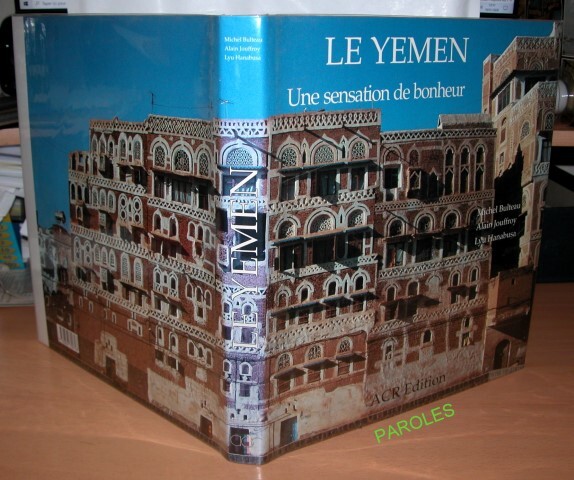
Présentation du Yémen en 2 parties: "Ouverture au Yémen" par l'écrivain et cinéaste Michel BULTEAU (utilisant également le pseudonyme Baron Bulto) et "Partir au Yémen" par l'écrivain Alain JOUFFROY (1928-2015); carte et nombreuses photos couleurs de Lyu (Ryu) HANABUSA; Exemplaire bien complet de ses jaquette et étui. Français
19070Courbevoie, ACR Edition, 1995 1 volume 25 x 27,5cm Cartonnage éditeur sous jaquette illustrée couleurs, en étui carton muet. 238p., 1feuillet; carte et très nombreuses illustrations couleurs, vignettes, pleines et doubles pages. Volume et jaquette en très bon état; petits défauts à l'étui.
199585794ACR 1995 Photographies de Lyu HANABUSA
1983G56439Mainz am Rhein, Philipp von Zabern 1983 xviii + 134pp.with 33 figures in-text + 19 plates out-of-text, cloth, 31cm., VG
xviii + 134pp.with 33 figures in-text + 19 plates out-of-text, cloth, 31cm., VG
Milano, 1959, stralcio con copertina posticcia muta, pp. 257/270 con numerose fotografie ed una cartina. - !! ATTENZIONE !!: Con il termine estratto (o stralcio) intendiamo riferirci ad un fascicolo contenente un articolo di rivista, sia che esso sia stato stampato a parte utilizzando la stessa composizione sia che provenga direttamente da una rivista. Le pagine sono indicate come "da/a", ad esempio: 229/231 significa che il testo è composto da tre pagine. Quando la rivista di provenienza non viene indicata é perchè ci è sconosciuta. - !! ATTENTION !!: : NOT A BOOK : “estratto” or “stralcio” means simply a few pages, original nonetheless, printed in a magazine. Pages are indicated as in "from” “to", for example: 229/231 means the text comprises three pages (229, 230 and 231). If the magazine that contained the pages is not mentioned, it is because it is unknown to us.
200822623Maisonneuve & Larose 2008 In-4 broché, 350 pp;
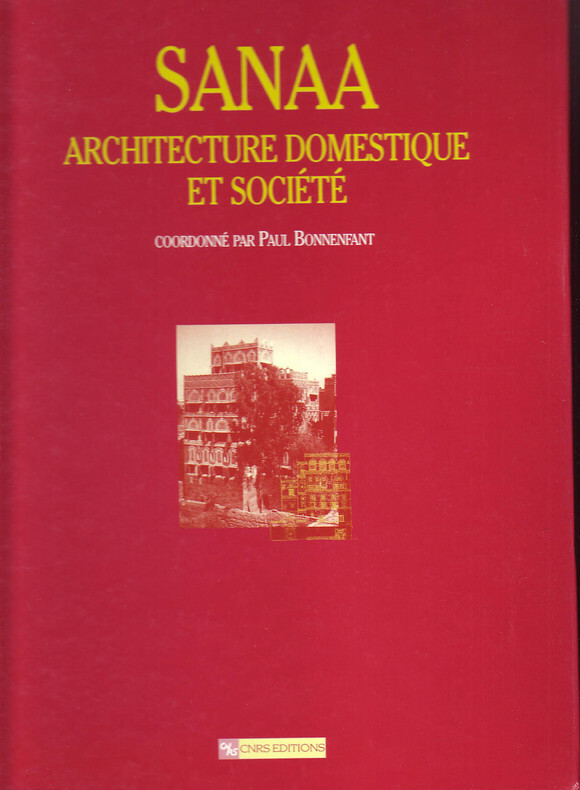
2002YEMENNN659550910723Paris, CNRS Editions, 2002, 23,5 x 32, 644 pages sous cartonnage éditeur illustré. Traduit de l'italien par Jérôme Nicolas. Relevés architecturaux, dessins au trait et photographies noir et blanc (et couleurs).
Firenze, 1940, stralcio con copertina posticcia muta, pp. 411/416 - !! ATTENZIONE !!: Con il termine estratto (o stralcio) intendiamo riferirci ad un fascicolo contenente un articolo di rivista, sia che esso sia stato stampato a parte utilizzando la stessa composizione sia che provenga direttamente da una rivista. Le pagine sono indicate come "da/a", ad esempio: 229/231 significa che il testo è composto da tre pagine. Quando la rivista di provenienza non viene indicata é perchè ci è sconosciuta. - !! ATTENTION !!: : NOT A BOOK : “estratto” or “stralcio” means simply a few pages, original nonetheless, printed in a magazine. Pages are indicated as in "from” “to", for example: 229/231 means the text comprises three pages (229, 230 and 231). If the magazine that contained the pages is not mentioned, it is because it is unknown to us.
Stampa antica ed originale con testo al retro
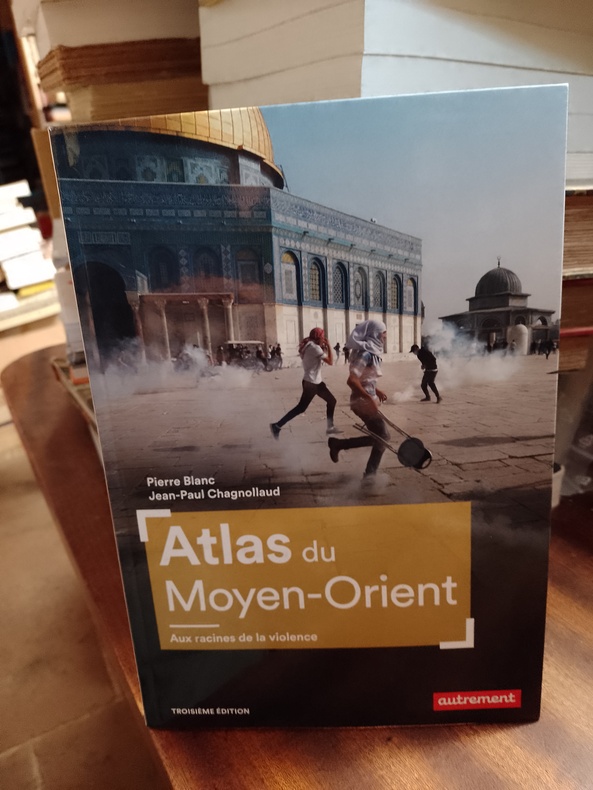
2023MOYORIENT55550623Paris, Autrement, "Atlas/Monde", juin 2023, 17,5 x 25, 95 pages cousues sous couverture illustrée. Iconographie couleurs, - cartographie : Claire Levasseur. Troisième édition.
2006100146509Harrassowitz Verlag 2006 238 pages 17x2 2x24 4cm. 2006. Cartonné. 238 pages.
198339151ABHarlow, Longman / Boulder, Westview Press, 1983. 8° (22x14), xvii, 350 p., 2 maps, publisher's hardbound with photo jacket, sl rubbed, tight and clean, well cared,
1992LFA-126717841Un ouvrage de 309 pages, format 155 x 235 mm, illustré, broché couverture couleurs, publié en 1992, Editions Fixot, bon état
1993LFA-126728970Un ouvrage de 275 pages, format 145 x 230 mm, illustré, relié cartonnage sous jaquette couleurs, publié en 1993, Editions Fixot, bon état
199811316Maisonneuve et Larose 1998 In-4, 127pp
in-8, 223 pages, illustrations couleurs et n/b, broche, couv. ill. Tres bel exemplaire, tres frais. [LA-2]
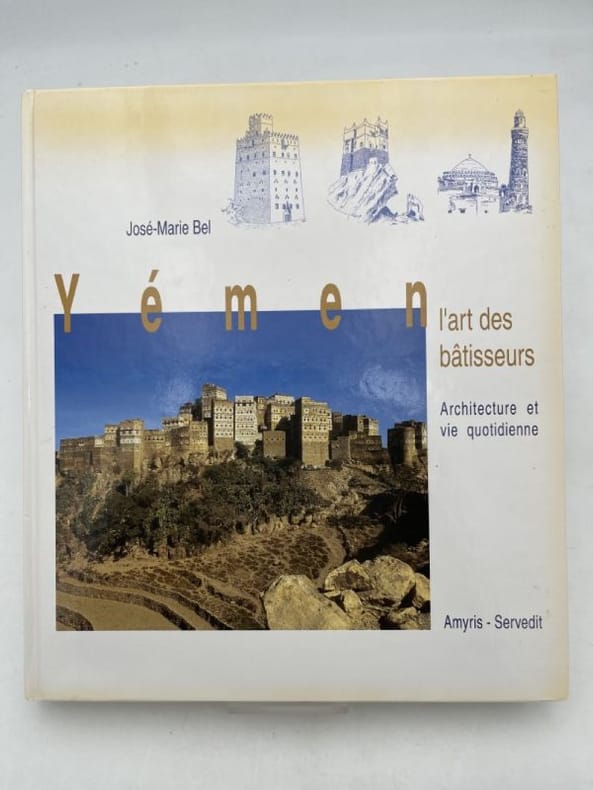
1997187685Amyris Amyris, 1997. Grand In-8 carré relié plien cartonnage éditeur illustré de 272 pages illustrées de photos couleurs hors-texte et de nombreuses figures. Très bon état
1998104233Amyris-Servedit, 1998, pt in-4° carré, 272 pp, nombreuses figures et photos en noir et en couleurs, carte, biblio, broché, bon état
19973152Amyris-Servedit 1997 In-4. Très bon état d’occasion. Poids sans emballage : 1020 grammes.
1992T56277Wiesbaden, Ludwig Reichert 1992 xxii + 400pp., in the series "Jemen-Studies" Band 3, 28cm., softcover, VG