3 525 résultats
New English Original bdg. HC. 4to. (30 x 21 cm). In English, Turkish, and Arabic. 267 p., Ottoman documents. Al Quds in muhimme registers, (1750-1778). Cilt 5.= Mühimme defterlerinde Kudüs, (1750-1778). Vol. 5.= Al-Quds al-Sharif fi dafatir al-muhimmah, (1750-1778). Vol. 5. IRCICA has long been aware of the importance of selecting, analyzing and publishing historical documents on Al Quds in order to overcome the major language barrier for Muslim and international researchers and facilitate efforts concerning the history and civilizational heritage of Al Quds. Therefore, IRCICA has started a long term project for the publication of documents in the Prime Ministry Ottoman Archives of the Turkish Republic concerning the history of Al Quds, and this book is the first outcome of the project. IRCICA has published the records on Al Quds in the Mühimme Registers which include the most important Ottoman documents containing Divan Al Humayun decisions as the first step of the project to publish documents in the archive concerning Al Quds. These documents which contain the decisions of the Council of Ministers at the time include the highest level decisions taken on the city by the Ottoman State. The First Volume of the Mühimme Registers include important information concerning the social, economic, cultural and architectural heritage of Al Quds in the 16th century. IRCICA aims to highlight the history of Al Quds under Ottoman administration by presenting these documents to the attention of scholars and researchers in their originals, transcriptions, and English, Arabic and Turkish summaries. This book contains the documents in the Mühimme Registers concerning Al Quds in the 16th century. IRCICA aims to publish historical registers concerning the history of Al Quds under Ottoman rule from different centuries as soon as possible.
New English Original bdg. HC. 4to. (30 x 21 cm). In English, Turkish, and Arabic. 281 p., Ottoman documents. Al Quds in muhimme registers, (1780-1799). Vol. 6.= Mühimme defterlerinde Kudüs, (1780-1799). Cilt 6.= Al-Quds al-Sharif fi dafatir al-muhimmah, (1780-1799). Vol. 6. IRCICA has long been aware of the importance of selecting, analyzing and publishing historical documents on Al Quds in order to overcome the major language barrier for Muslim and international researchers and facilitate efforts concerning the history and civilizational heritage of Al Quds. Therefore, IRCICA has started a long term project for the publication of documents in the Prime Ministry Ottoman Archives of the Turkish Republic concerning the history of Al Quds, and this book is the first outcome of the project. IRCICA has published the records on Al Quds in the Mühimme Registers which include the most important Ottoman documents containing Divan Al Humayun decisions as the first step of the project to publish documents in the archive concerning Al Quds. These documents which contain the decisions of the Council of Ministers at the time include the highest level decisions taken on the city by the Ottoman State. The First Volume of the Mühimme Registers include important information concerning the social, economic, cultural and architectural heritage of Al Quds in the 16th century. IRCICA aims to highlight the history of Al Quds under Ottoman administration by presenting these documents to the attention of scholars and researchers in their originals, transcriptions, and English, Arabic and Turkish summaries. This book contains the documents in the Mühimme Registers concerning Al Quds in the 16th century. IRCICA aims to publish historical registers concerning the history of Al Quds under Ottoman rule from different centuries as soon as possible.
New English Original bdg. HC. 4to. (30 x 21 cm). In English, Turkish, and Arabic. 308 p., Ottoman documents. Al Quds in muhimme registers, (1800-1809). Vol. 7.= Mühimme defterlerinde Kudüs, (1800-1809). Cilt 7.= Al-Quds al-Sharif fi dafatir al-muhimmah, (1800-1809). Vol. 7. IRCICA has long been aware of the importance of selecting, analyzing and publishing historical documents on Al Quds in order to overcome the major language barrier for Muslim and international researchers and facilitate efforts concerning the history and civilizational heritage of Al Quds. Therefore, IRCICA has started a long term project for the publication of documents in the Prime Ministry Ottoman Archives of the Turkish Republic concerning the history of Al Quds, and this book is the first outcome of the project. IRCICA has published the records on Al Quds in the Mühimme Registers which include the most important Ottoman documents containing Divan Al Humayun decisions as the first step of the project to publish documents in the archive concerning Al Quds. These documents which contain the decisions of the Council of Ministers at the time include the highest level decisions taken on the city by the Ottoman State. The First Volume of the Mühimme Registers include important information concerning the social, economic, cultural and architectural heritage of Al Quds in the 16th century. IRCICA aims to highlight the history of Al Quds under Ottoman administration by presenting these documents to the attention of scholars and researchers in their originals, transcriptions, and English, Arabic and Turkish summaries. This book contains the documents in the Mühimme Registers concerning Al Quds in the 16th century. IRCICA aims to publish historical registers concerning the history of Al Quds under Ottoman rule from different centuries as soon as possible.
New English Original bdg. HC. 4to. (30 x 21 cm). In English, Turkish, and Arabic. 237 p., Ottoman documents. Al Quds in muhimme registers, (1810-1829). Vol. 8.= Mühimme defterlerinde Kudüs, (1810-1829). Cilt 8.= Al-Quds al-Sharif fi dafatir al-muhimmah, (1810-1829). Vol. 8. IRCICA has long been aware of the importance of selecting, analyzing and publishing historical documents on Al Quds in order to overcome the major language barrier for Muslim and international researchers and facilitate efforts concerning the history and civilizational heritage of Al Quds. Therefore, IRCICA has started a long term project for the publication of documents in the Prime Ministry Ottoman Archives of the Turkish Republic concerning the history of Al Quds, and this book is the first outcome of the project. IRCICA has published the records on Al Quds in the Mühimme Registers which include the most important Ottoman documents containing Divan Al Humayun decisions as the first step of the project to publish documents in the archive concerning Al Quds. These documents which contain the decisions of the Council of Ministers at the time include the highest level decisions taken on the city by the Ottoman State. The First Volume of the Mühimme Registers include important information concerning the social, economic, cultural and architectural heritage of Al Quds in the 16th century. IRCICA aims to highlight the history of Al Quds under Ottoman administration by presenting these documents to the attention of scholars and researchers in their originals, transcriptions, and English, Arabic and Turkish summaries. This book contains the documents in the Mühimme Registers concerning Al Quds in the 16th century. IRCICA aims to publish historical registers concerning the history of Al Quds under Ottoman rule from different centuries as soon as possible.
New English Original bdg. HC. 4to. (30 x 21 cm). In English, Turkish, and Arabic. 303 p., Ottoman documents. Al Quds in muhimme registers, (1830-1905). Vol. 9.= Mühimme defterlerinde Kudüs, (1830-1905). Cilt. 9.= Al-Quds al-Sharif fi dafatir al-muhimmah, (1830-1905). Vol. 9. IRCICA has long been aware of the importance of selecting, analyzing and publishing historical documents on Al Quds in order to overcome the major language barrier for Muslim and international researchers and facilitate efforts concerning the history and civilizational heritage of Al Quds. Therefore, IRCICA has started a long term project for the publication of documents in the Prime Ministry Ottoman Archives of the Turkish Republic concerning the history of Al Quds, and this book is the first outcome of the project. IRCICA has published the records on Al Quds in the Mühimme Registers which include the most important Ottoman documents containing Divan Al Humayun decisions as the first step of the project to publish documents in the archive concerning Al Quds. These documents which contain the decisions of the Council of Ministers at the time include the highest level decisions taken on the city by the Ottoman State. The First Volume of the Mühimme Registers include important information concerning the social, economic, cultural and architectural heritage of Al Quds in the 16th century. IRCICA aims to highlight the history of Al Quds under Ottoman administration by presenting these documents to the attention of scholars and researchers in their originals, transcriptions, and English, Arabic and Turkish summaries. This book contains the documents in the Mühimme Registers concerning Al Quds in the 16th century. IRCICA aims to publish historical registers concerning the history of Al Quds under Ottoman rule from different centuries as soon as possible.
3 volumi (536 pagine compless.), con moltissime illustrazioni a colori; 30,5 cm. Cartonato editoriale con sovracoperta e cofanetto. Qualche sporadico punto di vecchio incollaggio, quasi invisibile e che non tocca testo e immagini. Molto buono
19696475[Le Caire, 6 août 1969]. 1969 1 vol in-plano ( 595 x 425 mm) de: 5 ff imprimés en rouge et noir. (déchirure sans manque de quelques cm sur les deux dernières feuilles, oxydation du papier). Demi-maroquin vert de lépoque, titre et date frappés à l'or en arabe au plat supérieur.
1965934Industrial Islamic Orphanage Printing Press, Al-Khalil (Hebron) 1965. 22 S. mit mehreren Abbildungen. Brosch. Geringe Gebrsp. Gebräunt.
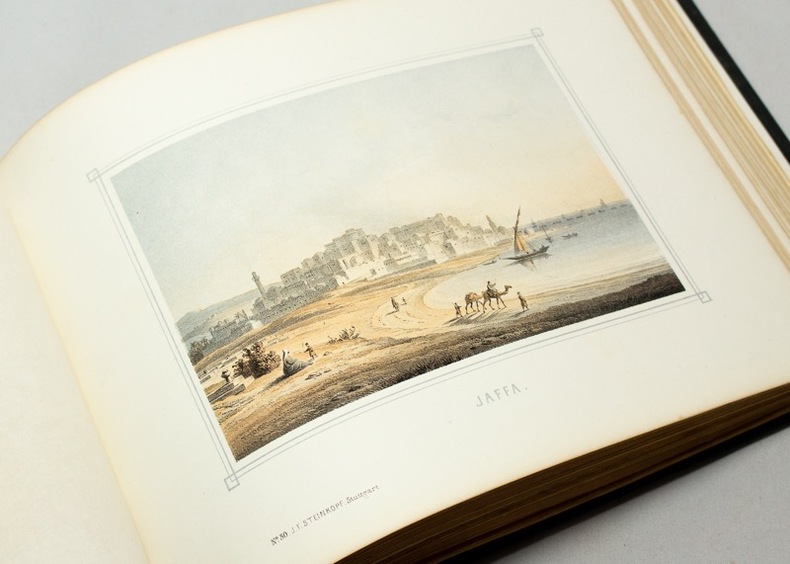
185818513London. Stuttgart & Leipzig, Paris, Williams & Norgate, J.F. Steinkopf, Fr. Kliksieck, [1858]. In-8 oblong de [116] pages, pleine percaline verte empire, dos lisse, quadruple encadrement des plats estampé à froid, décors de scènes de nativité au plat supérieur dans un encadrement végétal aux symboles bibliques le tout doré, tranches dorées.
1900792401900 Paris, Maison de la Bonne Presse, sans date (vers 1900), in 4° oblong, relié demi-percaline rouge à coins de l'éditeur, 498 pages.
Mm 225x290 Volume in copertina rigida, sovraccoperta figurata, 175 pagine, illustrazioni in nero. Testo in italiano ed inglese - english/italia texts. Nuovo - brand new. Spedizione entro 24 ore dalla conferma dell'ordine.
117052Album N° 3 - Collection "La Vie et la Joie au Catéchisme" - 1936 - J. de Gigord, Editeur, Paris - Imprimerie auxiliaire. 79, rue Daguerre, Paris - Grand in-8 à l'italienne - couverture illustrée - Nombreuses illustrations dans l'ouvrage - 24 pages (non paginé)
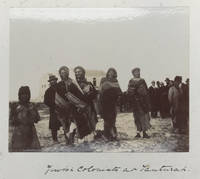
189257643<p>PHOTOGRAPHS 1890s INCLUDING SOME OF JEWISH COLONISTS</p><p>oblong folio album 28 x 27.5 cms. 22 thick card leaves on guards on the card sides are mounted 170 original sepia tinted photographs 9.5 x 12 cms. 4 photographs per 'page' except two 'pages' at the end with 3 photographs and the last 'page' blank all photographs neatly captioned in pen bound in contemporary half black morocco spine with gilt decorated raised bands black cloth on sides front cover boldly lettered at centre 'Palestine' and at foot "M. & A. W." and 1892 or 3 final numeral defaced cloth on fore edges of both boards damp stained with loss of the final numeral of the date see below front endpapers likewise damp stained at fore edges contents otherwise very good.</p><p>The damp damage to the fore-edge of the cloth has caused the loss of the gilt on the last numeral of the date but a trace remains of the top part of the impressed numeral and from that shape it must be either a 2 or a 3.<br />This album records a visit and tour through Palestine by two English speaking persons "M & A. W" that we have not been able to identify. The photographs obviously taken by one of the party record their progress guides local people villages bedouin encampments encountered buildings horses etc. One photograph on the first page clearly shows a member of the travelling party a fairly elderly woman about to travel on a mule-borne palanguin. Another of the party in a boat about to cross the Sea of Galilee appears to show two women. Places depicted include Sebastiych in Samaria Shumem modern Sulan of which there are many views Bethel Mount Tabor region Sea of Gallilee and the River Jordan Atlit Castle Tanturah modern Tantura Calvary Mar Saba monastery views along the road to Hebron and of the Russian hospice there etc. Very many of photographs show local people encountered along the way and three photographs at Tanturah show "Jewish colonists" there. Baron Rothschild owned land there and had in 1884 a Russian Jewish farmer establish a farm there and "In 1891 Baron Rothschild financed the development of a bottle factory in Tantura as he planned to use the fine sand on the shore to manufacture glass bottles for the fledgling wine industry . A building was constructed . dozens of workers were hired and three ships were purchased to transport raw material and bottles. But he abandoned the factory in 1895 after a string of failures" wikipedia. Presumably these colonists were attached to that enterprise. A number of photographs include Abraham Lyons their dragoman translator and guide the only person actually here identified by name. Lyons is recorded as a Jerusalem based dragoman in Baedeker's <em>Palestine and Syria Handbook for Travellers</em> 1867 and in "Letter from Jerusalem" in <em>The Rockland Co Journal</em> vol.xxxiii May 1883 "dragoman Lyons" is described as a "Christian Israelite".<br />The photographs are in good condition with only a few faded.</p> hardcover
190046404085Jérusalem, De Simini, (vers 1900) ; in-12 oblong, demi-toile rouge, plats en bois d’olivier, avec un décor gravé sur le premier plat. (Reliure de l’éditeur) 12 vues photogrphiques en couleurs de divers sites de Jerusalem avec les légendes en français, anglais, allemand, italien, arabe, russe et grec, tirées sur carton fort.Les pages de droite forment un très joli herbier de fleurs sechées de la Terre Sainte : 11 planches sur lesquelles les fleurs sont présentées sous formes de bouquets.Curiosité touristique vendue aux pélerins du début du siècles dernier.
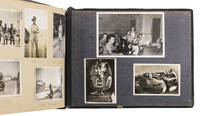
1940ABC_484251940. Contemporary embossed brown calf with flowers on the front and back board and an aluminium view of David's Tower and Jerusalem's old city wall embedded in the front board. Oblong album 30 x 20 cm. With 128 gelatin silver prints most ca. 6.5 x 9.5 cm. Beautiful album with 128 photographs of Egypt and Palestine present day Israel and the West Bank during the British Mandate. It was likely compiled by a British soldier who was stationed in the Middle East during the 1940s. Some of the photographs are numbered in the negative and may have been made by important photographers active in the area at the time like G. Eric Matson and his wife Edith the founders of the Matson Photo Service. The images show Cairo and various locations in Palestine including Jerusalem Bethlehem Nazareth Tiberias Sea of Galilee Nathanya Tel Aviv the Jordan river Haifa Beirut and the Dead Sea. Other than important locations like churches and gates the photographs also show many locals including for example street barbers in Cairo shepherds and farmers in Palestine and beautifully dressed women in Haifa. In the back of the work a few dried leaves from local plants have been mounted namely orange lemon fig eucalyptus grapevine and mulberry. The eucalyptus leaf still retains some of its scent.The edges and vorners of the boards are somewhat scuffed with some loss of material at the head and foot of the spine and around the edges of the embedded aluminium plate. The photographs mounted on the inside of the front board are slightly stained the fig leaf mounted on one of the final pages is damaged and the cyprus leaf is missing. Otherwise in good condition. unknown
Madrid, Instituto Miguel de Cervantes, 1951 [Biblioteca de Antiguos Libros Hispánicos]. 4to.menor; 156 pp. Ejemplar con envío autógrafo de García Abrines. Cubiertas originales.
IN HEBREW. THIS VOLUME ONLY. 24x17.5cm. VIII+359 pages. Softcover. In as new condition.
Single page printed letter. 28 cm. In English and Yiddish. A letter to members of the Zionist Organization declaring that February 1921 will be a year of restructuring and building up of the organization to handle growing responsibilities in Palestine. The Zionist Organization, founded in 1897, was the first official Zionist organization in the United States, and, especially early in the 20th century, the primary representative of American Jews to the World Zionist Organization, espousing primarily Political Zionism (Wikipedia) . Very good condition with faint crease through center where the letter was folded. (ZION2-2-29)
2 volumes In-8, 495-480p. Tome 1: 94 gravures hors texte+1 carte. Tome 2: 90 gravures hors texte+1 carte. Texte sur 2 colonnes. Avec une table alphabétique des matières en fin de volume. Rousseurs éparses, sinon en très bon état.
8vo., First Edition, with a portrait toned in sepia (original tissue guard present) and a large folding coloured map on japon, title very lightly spotted; handsomely bound in burgundy full morocco, back gilt with five raised bands, second and fourth compartments lettered and ruled in gilt, all other compartments tooled and ruled in gilt, uncut, a most attractive copy ideal as a gift or for presentation. Good accounts of Allenby's service in the Boer War, and in France and Palestine during WWI. Enser, p.20.
74 pages. Features: Parallel and Linked Genocides - Iraq and Palestine; The Nazification of Israel; The Growing Clamor for Ethnic Cleansing; Anti-Semitism and the Beirut Pogrom; George Bush and the American Empire; Ground Zero - Hiroshima haunts 9/11; and much more. Average wear. Unmarked. A sound copy. Book
Scholar's name to ffep (Christian Habicht) ; corners a bit bumped. ; Sonderdruck aus Jahrbuch für Numismatik unf Geldgeschichte, herausgegeben von der Bayerischen Numismatischen Gesellshaft 17. Jahrgang 1967 pp 157-298. ; 141 pages
Later boards protecting original paper wrappers, which are present. 8vo, 74 pages, 18 cm. In Hebrew. Title translates to Pure Sayings - Two Developed Books: Book 1. On the Sin of Disagreement and its Restrictions. Book 2. Minchat Shmuel. Rav Michal Hirsch (1840-1906) was one of the most well respected rebbes (Admorim) of the Old Yishuv period. His followers, notably Yaakov Moshe Charlap, published many of his writings. (Wiki, 2016) This publication deals primarily with the topic of disputes and moral speech, as outlined in Pirkei Avot. SUBJECT(S) : Jewish ethics. OCLC lists 14 copies worldwide. Previous owners stamp on foreword. Very Good Condition (HEB-48-23)
195125321<p><b>AMERCAN CHRISTIAN PALESTINE COMMITEE.</b>Scrapbook compiled by Harrison Fry Religion Editor of the Philadelphia <i>Evening Bulletin</i> one of the twenty-two tour participants. April 1951. Items glued or stapled to several pages with additional papers laid in. In green leatherette boards rules and decorations in yellow. 120 pp. 9½ x 11¾ x 1 in. </p><br /><p>The <b>American Christian Palestine Committee</b> ACPC was created in 1946 by merger of the American Palestine Committee 1931-1946 and the Christian Council on Palestine 1942-1946. Its purpose was to educate American Christian leaders about the post-Holocaust need for a Jewish state to publicize the new states' accomplishments to fight anti-Semitism and to support the country's existence. Over 20000 Christian leaders mostly Protestants were members. The ACPC sponsored seminars published educational materials created a speaker's bureau and conducted study tours taking religious leaders and journalists to Israel and adjoining Arab lands.</p><p>This scrapbook documents a trip from March 31 - April 28 1951. Its goals include making a "comprehensive study of Arab-Israel problems" including finding "suggested solutions for the resettlement of these tragic victims of the Arab-Israel War of 1948." The tour visited Israel Jordan and Lebanon and was the first ACPC group to visit to Palestinian refugee camps.</p><p>The group met Israeli Prime Minister David Ben-Gurion; Hashemite Kingdom of Jordan Foreign Minister Achmed Tooqan; Rabbi Jaacov Herzog son of the Chief Rabbi of Jerusalem; and American Ambassador to Israel Monnet Davis as well as other government and university officials and mayors. Early items in the scrapbook are typed copies of their itinerary including stops in Beyrouth Beirut Jerusalem Tel Aviv Haifa and Nazareth; a list of participants with their affiliations; and memoranda. It also includes airline tickets postcards hotel reservations including the King David Hotel and ephemera. Of particular interest is a printed pamphlet with basic information about the Knesset that includes Fry's notes of the group's meeting with Ben-Gurion 1886-1973. After about two weeks in the Middle East Fry also briefly visited Rome Paris and London. He used his notes for an article in the Philadelphia <i>Evening Bulletin</i>.</p><p>The scrapbook collects printed ephemera that illustrate Israel presented itself including a large color "tourist guide map" of Tel-Aviv 13½ x 9½ in. a 24- x 17-inch folding color "motor map" of Israel laid in with their route highlighted in red and with tourist information on each city on the verso; and a small program for a production of "Carmen" by the Hebrew National Opera. Other items include a Vocabulary for Visitors to Israel; and the post-return typed or handwritten letters Fry received including messages of friendship from other tour attendees.</p><p>Black-and-white photographs include an 8 x 10-inch photo of the group of travelers boarding their PanAm plane; a 5 x 7-inch photo of them at the Mosque of Omar; a photograph of settlers at the "future site of 'Kfar Truman'"; and photographs of the group at other sites that they visited such as the Garden of Gethsemane.</p><p><b>Excerpts:</b></p><p>Harrison W. Fry "People of Israel and Neighboring Nations Hope for Peace Despite Border Quarrels" <i>Evening Bulletin </i> Philadelphia April 22 1951</p><p>"<i>In Jerusalem—which means City of Peace—there is much talk of peace. In the Arab countries of Lebanon and Jordan there is more talk of co-operation than of hate. It may be a hopeful index. But no one agrees as to where it will start…</i> <i>if you look carefully there is the desire for peace down at the grass roots among Arabs living as displaced persons in caves and tents and among Israelis living under an austere program.</i>"</p><p>Harrison W. Fry "Ben-Gurion Wants U.S. Help to Bring Peace in Near East" <i>Evening Bulletin</i> Philadelphia April 25 1951</p><p>"<i>Prime Minister David Ben-Gurion of Israel would welcome the good offices of the United States in establishing peace in the Near East. Israel and the Arab states are now operating under an uneasy armistice with frequent border incidents</i>… <i>The shaggy white-haired leader of the modern miracle that is the State of Israel interrupted conferences in connection with the meeting of the Knesset Israel's Parliament now in session to greet the members of the American Christian Palestine Committee study group of which the writer is a member. With all the frankness of a long-time friend he talked of Israel's plans and problems and answered questions with a refreshing frankness free of diplomatic double talk.</i>"</p><p>Harrison W. Fry "Architects of New Israel Are Building Up from Soil" <i>Evening Bulletin</i> Philadelphia April 27 1951</p><p>"<i>In the valley of the Armageddon the old Biblical plains of Esdraelon the scene of many ancient victories and disasters of the Jews the modern Jews won their first victory of the land in the early twenties when the drained the malarial swamps. Today the valley is a Garden of Eden of fragrant orange citrus and olive groves and garden crops—a delight to the eyes after days of traveling in the eroded dust-storm swept Arab lands to the east of Israel… In the Hula Lake section north of the Sea of Galilee and Capernaum where Christ performed his miracles the Jews are today performing modern miracles by reclaiming further swamp areas.</i>"</p><p>Harrison W. Fry "Debris of Intolerance Bears Fruit of Freedom in Israel" <i>Evening Bulletin</i> Philadelphia May 2 1951</p><p>"<i>In a cave on Mt. Zion ancient citadel of Jerusalem are the ashes of thousands of Jewish martyrs to Nazi intolerance—a symbol of 6000000 who so perished. About them are the sacred scrolls desecrated by the Nazis. One of these had been made into a house coat by a Nazi who apparently did not read Hebrew because it bears on its back the warning that the Lord will wreak vengeance upon those who persecute his people… Atop a tower on this hill which borders no-man's land in the uneasy truce with the Arab kingdom of Jordan an Israeli soldier keeps vigil above these shrines that appeal for peace and tolerance. The Jews have put the terrible evidence of intolerance underground and are building a new tomorrow. They want to talk of peace in the Near East the whole refugee problem including the Arabs.</i>"</p><p>Carl Herman Voss to Members of ACPC Study Tour May 11 1951</p><p>"<i>I want to express appreciation for the cooperative spirit all of you manifested on the Tour. You were really a wonderful crew! Thanks too to all of you once again for the lovely Menorah and plate for Hanukkah with which you surprised me during our last evening together in Israel</i>."</p><p>"Assignment Well Covered" <i>Jewish Exponent</i> May 11 1951</p><p>"<i>Harrison W. Fry seasoned newspaperman and religious editor of the</i> Evening Bulletin<i> did a splendid job in reporting and interpreting the events in Israel as he observed them during his two weeks' tour of the country at the invitation of the American Christian Palestine Committee. His articles that have appeared in the</i> Evening Bulletin <i>during these past few weeks have given the readers of the</i> Bulletin <i>a clear insight into some of the problems concerning the country and the manner in which the Government and the people of Israel are grappling with these problems.</i>"</p><p>Carl Hermann Voss to Harrison Fry July 6 1951</p><p>"<i>I did have a chance to hear from my friends that you have given some excellent reports since you returned from the Middle East and that you were as stimulated and thrilled by the trip as was I… I was a bit disappointed not to have your assent to our reiterated invitation to be listed among the speakers for the Club Program Service the speakers' bureau of the American Christian Palestine Committee but I presume that compelling reasons determined your decision. Won't you still reconsider We would look upon your addition to the list of speakers for Club Program Service as a real boon for the ACPC.</i>"</p><p>Memo of Harrison W. Fry to Walter Lister n.d.</p><p>"<i>Judge Levinthal called me late yesterday to say that he and some of his friends were thinking of nominating me as a member of a small party of Christian clergymen from all parts of the United States who are being sent expenses paid to visit Palestine and get first had information of conditions there. Would I accept if the full committee approved. Had I been to Palestine.</i>"</p><p>"<i>I told him the prospect thrilled me as I had never been to Palestine. I told him that Fry disassociated form The Bulletin did not mean anything and much as I would like to go on my own I felt I should not unless the matter was cleared through The Bulletin.</i>"</p><p><b>Harrison W. Fry</b> 1892-1973 was born in Pottstown Pennsylvania and married Laura V. Umstead 1894-1967 in 1918. He entered journalism before World War I with the <i>Public Ledger</i> and then served as religion and education editor for the Philadelphia <i>Evening Bulletin</i>for forty-two years. Fry interviewed every president from Theodore Roosevelt to Harry S. Truman. He served as a charter member and later president of the Education Writers Association in 1948-1949 and was a founding member of the Religion Newswriters Association in 1949.</p><p><b>Carl Hermann Voss</b> 1911-1995 was a Congregational minister who served in Brooklyn; Pittsburgh; Raleigh North Carolina; and Saratoga Springs New York. During World War II he founded and led the Christian Council on Palestine before becoming one of the founding members of the American Christian Palestine Committee.</p><p><b>Louis E. Levinthal</b> 1892-1976 received three degrees from the University of Pennsylvania and was a judge of the Court of Common Pleas for Philadelphia County from 1937 to 1959. He was president of the Zionist Organization of America from 1941 to 1943 and special adviser for Jewish affairs to the postwar European Command in 1947-1948. He served as chairman of the board of governors of Hebrew University in Jerusalem from 1962 to 1968.</p><p>Starting in 1951 the group's activities were opposed by the pro-Arab American Friends of the Middle East later proven to be funded in part by the CIA. The ACPC wound down in the early 1960s when the Israeli embassy and consulates took over the task.</p> hardcover
195125321<p><b>AMERCAN CHRISTIAN PALESTINE COMMITEE.</b>Scrapbook compiled by Harrison Fry Religion Editor of the Philadelphia <i>Evening Bulletin</i> one of the twenty-two tour participants. April 1951. Items glued or stapled to several pages with additional papers laid in. In green leatherette boards rules and decorations in yellow. 120 pp. 9½ x 11¾ x 1 in. </p><br /><p>The <b>American Christian Palestine Committee</b> ACPC was created in 1946 by merger of the American Palestine Committee 1931-1946 and the Christian Council on Palestine 1942-1946. Its purpose was to educate American Christian leaders about the post-Holocaust need for a Jewish state to publicize the new states' accomplishments to fight anti-Semitism and to support the country's existence. Over 20000 Christian leaders mostly Protestants were members. The ACPC sponsored seminars published educational materials created a speaker's bureau and conducted study tours taking religious leaders and journalists to Israel and adjoining Arab lands.</p><p>This scrapbook documents a trip from March 31 - April 28 1951. Its goals include making a "comprehensive study of Arab-Israel problems" including finding "suggested solutions for the resettlement of these tragic victims of the Arab-Israel War of 1948." The tour visited Israel Jordan and Lebanon and was the first ACPC group to visit to Palestinian refugee camps.</p><p>The group met Israeli Prime Minister David Ben-Gurion; Hashemite Kingdom of Jordan Foreign Minister Achmed Tooqan; Rabbi Jaacov Herzog son of the Chief Rabbi of Jerusalem; and American Ambassador to Israel Monnet Davis as well as other government and university officials and mayors. Early items in the scrapbook are typed copies of their itinerary including stops in Beyrouth Beirut Jerusalem Tel Aviv Haifa and Nazareth; a list of participants with their affiliations; and memoranda. It also includes airline tickets postcards hotel reservations including the King David Hotel and ephemera. Of particular interest is a printed pamphlet with basic information about the Knesset that includes Fry's notes of the group's meeting with Ben-Gurion 1886-1973. After about two weeks in the Middle East Fry also briefly visited Rome Paris and London. He used his notes for an article in the Philadelphia <i>Evening Bulletin</i>.</p><p>The scrapbook collects printed ephemera that illustrate Israel presented itself including a large color "tourist guide map" of Tel-Aviv 13½ x 9½ in. a 24- x 17-inch folding color "motor map" of Israel laid in with their route highlighted in red and with tourist information on each city on the verso; and a small program for a production of "Carmen" by the Hebrew National Opera. Other items include a Vocabulary for Visitors to Israel; and the post-return typed or handwritten letters Fry received including messages of friendship from other tour attendees.</p><p>Black-and-white photographs include an 8 x 10-inch photo of the group of travelers boarding their PanAm plane; a 5 x 7-inch photo of them at the Mosque of Omar; a photograph of settlers at the "future site of 'Kfar Truman'"; and photographs of the group at other sites that they visited such as the Garden of Gethsemane.</p><p><b>Excerpts:</b></p><p>Harrison W. Fry "People of Israel and Neighboring Nations Hope for Peace Despite Border Quarrels" <i>Evening Bulletin </i> Philadelphia April 22 1951</p><p>"<i>In Jerusalem—which means City of Peace—there is much talk of peace. In the Arab countries of Lebanon and Jordan there is more talk of co-operation than of hate. It may be a hopeful index. But no one agrees as to where it will start…</i> <i>if you look carefully there is the desire for peace down at the grass roots among Arabs living as displaced persons in caves and tents and among Israelis living under an austere program.</i>"</p><p>Harrison W. Fry "Ben-Gurion Wants U.S. Help to Bring Peace in Near East" <i>Evening Bulletin</i> Philadelphia April 25 1951</p><p>"<i>Prime Minister David Ben-Gurion of Israel would welcome the good offices of the United States in establishing peace in the Near East. Israel and the Arab states are now operating under an uneasy armistice with frequent border incidents</i>… <i>The shaggy white-haired leader of the modern miracle that is the State of Israel interrupted conferences in connection with the meeting of the Knesset Israel's Parliament now in session to greet the members of the American Christian Palestine Committee study group of which the writer is a member. With all the frankness of a long-time friend he talked of Israel's plans and problems and answered questions with a refreshing frankness free of diplomatic double talk.</i>"</p><p>Harrison W. Fry "Architects of New Israel Are Building Up from Soil" <i>Evening Bulletin</i> Philadelphia April 27 1951</p><p>"<i>In the valley of the Armageddon the old Biblical plains of Esdraelon the scene of many ancient victories and disasters of the Jews the modern Jews won their first victory of the land in the early twenties when the drained the malarial swamps. Today the valley is a Garden of Eden of fragrant orange citrus and olive groves and garden crops—a delight to the eyes after days of traveling in the eroded dust-storm swept Arab lands to the east of Israel… In the Hula Lake section north of the Sea of Galilee and Capernaum where Christ performed his miracles the Jews are today performing modern miracles by reclaiming further swamp areas.</i>"</p><p>Harrison W. Fry "Debris of Intolerance Bears Fruit of Freedom in Israel" <i>Evening Bulletin</i> Philadelphia May 2 1951</p><p>"<i>In a cave on Mt. Zion ancient citadel of Jerusalem are the ashes of thousands of Jewish martyrs to Nazi intolerance—a symbol of 6000000 who so perished. About them are the sacred scrolls desecrated by the Nazis. One of these had been made into a house coat by a Nazi who apparently did not read Hebrew because it bears on its back the warning that the Lord will wreak vengeance upon those who persecute his people… Atop a tower on this hill which borders no-man's land in the uneasy truce with the Arab kingdom of Jordan an Israeli soldier keeps vigil above these shrines that appeal for peace and tolerance. The Jews have put the terrible evidence of intolerance underground and are building a new tomorrow. They want to talk of peace in the Near East the whole refugee problem including the Arabs.</i>"</p><p>Carl Herman Voss to Members of ACPC Study Tour May 11 1951</p><p>"<i>I want to express appreciation for the cooperative spirit all of you manifested on the Tour. You were really a wonderful crew! Thanks too to all of you once again for the lovely Menorah and plate for Hanukkah with which you surprised me during our last evening together in Israel</i>."</p><p>"Assignment Well Covered" <i>Jewish Exponent</i> May 11 1951</p><p>"<i>Harrison W. Fry seasoned newspaperman and religious editor of the</i> Evening Bulletin<i> did a splendid job in reporting and interpreting the events in Israel as he observed them during his two weeks' tour of the country at the invitation of the American Christian Palestine Committee. His articles that have appeared in the</i> Evening Bulletin <i>during these past few weeks have given the readers of the</i> Bulletin <i>a clear insight into some of the problems concerning the country and the manner in which the Government and the people of Israel are grappling with these problems.</i>"</p><p>Carl Hermann Voss to Harrison Fry July 6 1951</p><p>"<i>I did have a chance to hear from my friends that you have given some excellent reports since you returned from the Middle East and that you were as stimulated and thrilled by the trip as was I… I was a bit disappointed not to have your assent to our reiterated invitation to be listed among the speakers for the Club Program Service the speakers' bureau of the American Christian Palestine Committee but I presume that compelling reasons determined your decision. Won't you still reconsider We would look upon your addition to the list of speakers for Club Program Service as a real boon for the ACPC.</i>"</p><p>Memo of Harrison W. Fry to Walter Lister n.d.</p><p>"<i>Judge Levinthal called me late yesterday to say that he and some of his friends were thinking of nominating me as a member of a small party of Christian clergymen from all parts of the United States who are being sent expenses paid to visit Palestine and get first had information of conditions there. Would I accept if the full committee approved. Had I been to Palestine.</i>"</p><p>"<i>I told him the prospect thrilled me as I had never been to Palestine. I told him that Fry disassociated form The Bulletin did not mean anything and much as I would like to go on my own I felt I should not unless the matter was cleared through The Bulletin.</i>"</p><p><b>Harrison W. Fry</b> 1892-1973 was born in Pottstown Pennsylvania and married Laura V. Umstead 1894-1967 in 1918. He entered journalism before World War I with the <i>Public Ledger</i> and then served as religion and education editor for the Philadelphia <i>Evening Bulletin</i>for forty-two years. Fry interviewed every president from Theodore Roosevelt to Harry S. Truman. He served as a charter member and later president of the Education Writers Association in 1948-1949 and was a founding member of the Religion Newswriters Association in 1949.</p><p><b>Carl Hermann Voss</b> 1911-1995 was a Congregational minister who served in Brooklyn; Pittsburgh; Raleigh North Carolina; and Saratoga Springs New York. During World War II he founded and led the Christian Council on Palestine before becoming one of the founding members of the American Christian Palestine Committee.</p><p><b>Louis E. Levinthal</b> 1892-1976 received three degrees from the University of Pennsylvania and was a judge of the Court of Common Pleas for Philadelphia County from 1937 to 1959. He was president of the Zionist Organization of America from 1941 to 1943 and special adviser for Jewish affairs to the postwar European Command in 1947-1948. He served as chairman of the board of governors of Hebrew University in Jerusalem from 1962 to 1968.</p><p>Starting in 1951 the group's activities were opposed by the pro-Arab American Friends of the Middle East later proven to be funded in part by the CIA. The ACPC wound down in the early 1960s when the Israeli embassy and consulates took over the task.</p> hardcover books