548 résultats
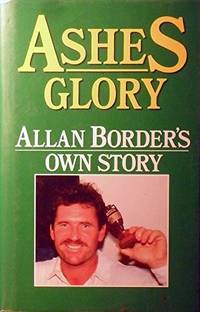
94595Swan Publishing Perth. 1993. No. 1909 of edition of 10123. Signed by Allan Border. Large 8vo 272pp with black and white and colour illustrations. A very good hardback copy bound in green faux leather illustrated in gold gilt. . Swan Publishing, Perth. 1993. No. 1909 of edition of 10,123. Signed by Allan Border hardcover
20091-0762435623Running Pr Book Pub 2009. Hardcover. New. 144 pages. 9.10x7.10x0.70 inches. Running Pr Book Pub hardcover
2011251218445Running Press 2011-10-04. hardcover. New. 7x0x7. Running Press hardcover
2009Q-0762435623Running Press Adult 2009-10-06. Hardcover. New. In shrink wrap. Looks like an interesting title! Running Press Adult hardcover
2009DADAX0762435623Running Press Adult 2009-10-06. First Edition. hardcover. New. 7.38x0.75x9.50. Buy with confidence. Excellent Customer Service & Return policy. Running Press Adult hardcover
217 p. Illustrated with photographs. Uncut and partially unopened. 8vo. Original cloth spine over yellow paper covered boards. Lightly rubbed at extremities. Original priced dust jacket, lightly rubbed at extremities. Insert card with compliments of the publisher. Ben Thompson (1843-1884) was a gunman, gambler, and sometime lawman of the Old West. He was a contemporary of Wyatt Earp, Buffalo Bill Cody, Doc Holliday, John Wesley Hardin and James Butler "Wild Bill" Hickock. Thompson had a colorful career, fighting with the Confederates during the Civil War, and in Mexico under the Emperor, before being imprisoned at the age of 25 for severely injuring his brother-in-law, who had physically abused Thompson's wife. After his release, Thompson made his name as a gunman and a gambler in Texas and Kansas. After he was hired in 1881 as Marshal in Austin, Texas, the crime rate dropped sharply during his term. He was murdered at the age of 40 in San Antonio on March 11, 1884 during the Vaudeville Theater Ambush. Adams. Six Guns #2154. Hardbound. Very good. Scarce original edition. W8RtFront
197227841New York: The Metropolitan Museum of Art New York 1972. Softcover. VG- May have slight soiling or pen writing on upper wrap corner with clear text and illus. White B&W illustrated stapled wraps 20 pp. 7 bw illustrations. Issued in conjunction with a 1972 exhibition that features the Baltimore-made Federal furniture in the collection of The Metropolitan Museum of Art. The exhibition catalogue lists 20 pieces including desks sideboards tables and chairs. 7 items are pictured here. The Metropolitan Museum of Art, New York unknown books
19391000421939 Causse, Graille & Castelnau, Montpellier, 1939, 278 p., broché, début de fente sur un mors, des pliures sur les plats et sur les 3 dernières pages, bon état pour le reste.
108263Lyon (Rhône), Desvigne, Editeur, 1931, 1 chemise à rabats de format oblong, contenant le premier fascicule in-folio 320x500 mm environ, 5euillets de texte dont 2 tableaux, pour l'assemblage des planches verticales et l'assemblage des planches panoramiques suivis de 54 planches avec suppléments soit 80 planches, impressions photographiques sépias en héliogravure sous serpentes légendées. La chemise est déchirée mais les planches sont en bon état.
ill., ril. Esistono 323 frontiere terrestri su circa 250.000 km. Aggiungendo le frontiere marittime, delimitate o meno, si arriva a un totale di circa 750 frontiere tra Stati. Alcune si attraversano facilmente, altre sono invalicabili, alcune sono visibili, altre invisibili (aeree, astronomiche). Ma esistono anche frontiere immaginarie o arbitrarie: politiche, economiche, culturali (lingua, religione, civiltà) che quasi mai coincidono con le frontiere internazionali. Quali sono le frontiere esterne dell'Europa: quelle dello spazio Schengen, quelle dell'Unione Europea o quelle dell'Europa in quanto idea o concetto? Le tre non si sovrappongono. Si possono tracciare linee di separazione tra grandi aree culturali? Dove comincia l'Asia? Qual è la frontiera più militarizzata? Qual è il muro di difesa più lungo? E il reticolato più alto? Come si determinano le frontiere aeree? Ci sono ancora "zone bianche", le terrae nullius che non appartengono a nessuno? Il cambiamento climatico può modificare certe frontiere esistenti? Le frontiere favoriscono la pace o sono foriere di guerre? Questo Atlante dedicato alle frontiere ci aiuta a capire le sfide che si nascondono dietro queste linee che dividono o uniscono i popoli. Con più di 40 cartine e infografiche originali, gli autori raccontano il mondo attraverso il prisma delle frontiere.

0958784159.Ghardcover. Good. Access codes and supplements are not guaranteed with used items. May be an ex-library book. hardcover
1989029862New South Wales: Swan Publishing 1989. Book. Very Good . Hard Cover with Dust Jacket. Signed by Authors. 1st Edition. VG Shelfwear small corner bump/VG Mild edgewear indentations. "A chronicle of his team's deeds which produced one of Australian sport's greatest achievements". Signed on the front endpaper by Allan Border Carl Rackemann and Gary Gilmour plus three other indecipherable to us signatures. Expanded condition report/digital photo on request. Swan Publishing Hardcover
19812082702114607705The Asahi Shimbun Company 1981. Soft Cover. Fine. Number of books: 1 The Asahi Shimbun Company paperback
19302082702114604462Chuobijutsu-sha 1930. Soft Cover. Fine. Number of books: 1 Chuobijutsu-sha paperback
19932082702114606953Libroport 1993. Soft Cover. Fine. Number of books: 1 Libroport paperback
19672082702114607454Fixed 6000 Yen Hara Shobo 1967. Soft Cover. Fine. Number of books: 1 Fixed 6,000 Yen Hara Shobo paperback
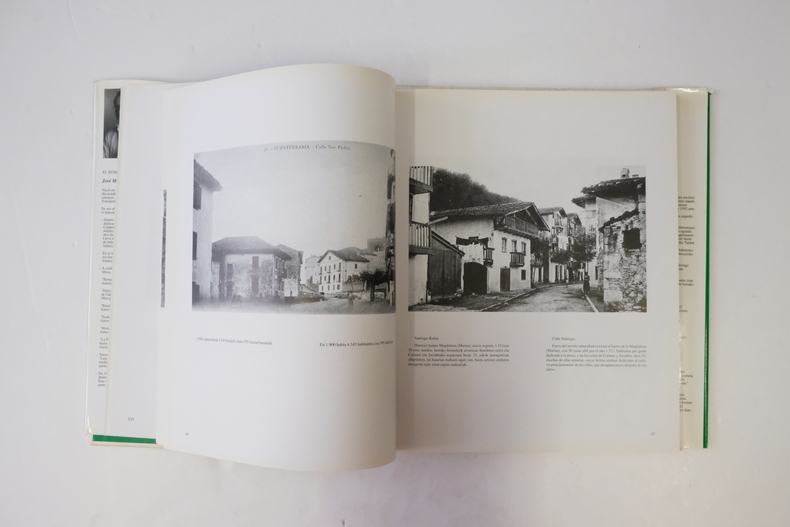
1994reg2mEdición Kutxa, 1994, San Sebastián. Edición bilingüe castellano y euskera. Encuadernación editorial con sobrecubierta (tapa dura). 249 páginas. Edition Kutxa, 1994, Saint Sébastien. Edition bilingue espagnol et basque/euskara. Reliure éditoriale avec jaquette (couverture rigide). 249 pages. Kutxa argitaletxea, 1994, Donostia. Gaztelania eta Euskara edizio elebiduna. Koadernaketa editoriala hauts-jantziarekin (azalera gogorra). 249 orrialde.
47618Various publishers & dates. Extensive photographic archive documenting events on both sides of the U.S.-Mexico Border during the Mexican Revolution focused primarily on the Border Wars in Texas and the Veracruz Incident of 1914 comprised entirely of contemporary images all but a few of which are original vintage prints. The collection includes: <br /> <br /> • Sixty-one commercially-produced real-photo postcards ca. 14cm x 9cm or the reverse; <br /> • Six commercially-printed postcards using non-photographic processes same dimensions;<br /> • Three carte-de-visite portraits ca 9cm x 6cm mounted to cards;<br /> • Eight small-format photographs ranging from 14cm x 8cm to 11cm x 16cm of which three appear to be commercial images; <br /> • Three 8x10 20cm x 25cm photographic prints printed at some later date from original plates but apparently not contemporary; <br /> • One vintage 4x6 10cm x 16cm photograph mounted on board. <br /> <br /> All but a dozen or so images are captioned in the negative and most are additionally captioned in pencil in a later hand on verso. Approximately half the images include no photo credit; of those that do we have identified the following photographers: W.H. Horne D.W. Hoffman Walter P. Hadsell Van Zile & Chalk and L.O. She. <br /> <br /> Condition is generally Very Good. Two of the photo postcards are damaged with abrasions to significant portions of image area; the remainder show various degrees of edge wear aging and creasing but by and large image quality remains excellent. None of the postcards are postally used though a few include brief contemporary notes on verso. The refusal of Mexican President Porfirio Dîaz to cede power to his rival Francisco Madero in the elections of 1910 resulted in a violent large-scale revolt by campesinos and leftists setting off the thirty-year long Mexican Revolution. American involvement in the conflict began in 1911 when President William H. Taft under the guise of heightening border security moved to back Díaz against the rebels. The resulting mobilization - Taft sent more than 20000 American troops nearly a quarter of all American forces to the Mexican border with especially heavy concentrations in Texas and New Mexico - was to that date the largest mobilization of American military forces in peacetime. At the same time many Americans whose sympathies were not aligned with the Díaz dictatorship including anarchists wobblies Native Americans and more than a few soldiers of fortune went south to fight on the side of the rebels. The resulting border conflict which took place over nearly a decade occasionally pitting American insurrectos against American Federal troops resulted in thousands of Mexican and hundreds of American deaths. <br /> <br /> The Border Wars reached their climax around the period 1912-1914 which happened to coincide with a near-hysterical vogue for postcards among the American public. The result is that the Mexican Revolution is perhaps the first major armed conflict to have been extensively photo-documented in real time and certainly the first to have had a significant mass audience for that documentation. At least three hundred commercial photographers have been identified in association with the Mexican Revolution and they produced tens of thousands of images ranging from the relatively innocuous e.g. peaceful street and harbor scenes in Veracruz to the horrific lynchings and sidewalk cremations. <br /> <br /> This entire range of content is represented in the current collection along with portraits of most of the key players on the Mexican side including El Presidente Porfirio Díaz; his primary rival and successor Francisco Madero; Madero's successor by coup Victoriano Huerta; and various military figures including General Juan Navarro Felipe Angeles Ramírez and numerous others. Many of these semi-professional images though produced with commercial intent "professional" remains a guarded term in the context of what was essentially battlefield exploitation photography are valuable for their almost off-hand depictions of violent day-to-day life on the contested border including the casual destruction and acceptance of death from both sides that seemed to define this conflict. Of particular note are numerous of photographs of African-American troops the so-called "Buffalo Soldiers" as well as at least one image depicting Native American soldiers in uniform. Locales represented include Camp Grossmont in California; El Paso and Laredo in Texas and their cross-border sister cities Juarez and Nuevo Laredo; Veracruz site of the American incursion of 1914 known as the "Veracruz Incident"; and various unidentified encampments and battle sites in both Texas and Mexico. <br /> <br /> A wide-ranging and compelling photographic collection documenting not only a key period in U.S. military diplomacy - one which for better or worse set the tone for American-Mexican relations for the succeeding century - but also a tangible manifestation of the first widespread public incarnation in America of the picture-postcard as a vehicle for both propaganda and photojournalism. unknown
19682082702114603931Yoshikawa Kobunkan Regular price: 1700 yen 1968. Soft Cover. Fine. Number of books: 1 Yoshikawa Kobunkan Regular price: 1,700 yen paperback
19772082702114603127Kitakuni shubbansha 1977. Soft Cover. Fine. Number of books: 1 Kitakuni shubbansha paperback
191612895Des Moines IA: Hebard-Showers Company September 1916. Panoramic photograph 8 x 37.5 inches with numerous captions in the negative. Rolled tightly. A few soft creases minor wear at bottom right corner. Very good. An unusually informative panorama of Brownsville and Matamoros taken from the American side of the Rio Grande during the heat of the Mexican Revolution. The photograph was produced by the form of Hebard-Showers here spelled Hedard-Showers likely scratched backwards in the negative of Des Moines Iowa. The image captures the scene along the Red River from a portion of Fort Brown in the east west to Brownsville's Union Station with the International Bridge visible downriver. Directly across the river from Brownsville is labeled "Santa Cruz Mexico" with Matamoros a bit further south. Other landmarks identified on the Brownsville side include the aforementioned Union Station and the International Bridge as well as Fort Brown a river landing the customs house and various locations for American state guard units. Near the landing is the Brownsville Transfer Company's building.<br /> <br /> More pertinent to the Mexican Revolution are some of the captions identifying locations on the Mexican side. These include "Casa Mata Fort or place of execution" "Blanco's Battlefield June 3rd 1913" and "Villa's Battlefield March 27 - Apr. 13 1915. 100 Killed." Also identified on the Mexican side are a Mexican bull ring the "Bone yard" and a river landing. Interestingly a small rowboat containing a few people can be seen approaching the Mexican side on the Rio Grande.<br /> <br /> Naturally Hebard-Showers Company mainly documented Des Moines and its surrounding areas but they shot a handful of Brownsville border views over several years at least between the present example and about 1921. SMU holds an example of the later panorama; comparisons between the present example and SMU's does reveal some changes in the area over the course of those five years and the present example includes many more detailed captions in the negative. Hebard-Showers Company, September unknown
Libro rilegato come nuovo; Copertina rigida
Roy. 8vo., First Edition, with numerous photographs in the text, page edges browning slightly; original pictorial wrappers, a very good, clean copy. One of the few accounts from a private infantryman: the author served with 1 Border. He was captured at the Hartenstein and held in Stalag IVB Muhlberg until repatriation. Includes 1 Border War Diary, roll call, ROH and list of POWs.
4764MEXICAN BORDER WAR. A series of battles and skirmishes that took place on the United States-Mexico border during the Mexican Revolution from 1910 to 1919. The Pancho Villa Expedition was part of the Mexican Border War. PANCHO VILLA EXPEDITION aka MEXICAN EXPEDITION. The 1916-1917 American expedition into Mexico to capture Mexican revolutionary leader Pancho Villa 1878-1923 after his 1916 attack on the town of Columbus New Mexico. General John J. Pershing led the unsuccessful expedition which was part of the Mexican Border War. Archive. Approx. 88 pieces. 1914 to 1917. Primarily Texas. An archive related to the Mexican Border War and the Pancho Villa Expedition. It contains the papers of Lieutenant Maurice B. Welty who served as an Aide-de-Camp at Fort Sam Houston in San Antonio Texas during the Mexican Border War. Most of the documents are routine military paperwork sent to and from Welty such as typed reports copies of orders letters relating to supplies and more. There are also a few pieces of personal correspondence including letters receipts and checks drawn on the Army Bank of Fort Sam Houston. Documents are mainly in good condition with rust and indentations from paperclips. The majority of the documents date from 1916 and 1917 when Welty was stationed in Texas though there are also some of his earlier service records. The star of the archive is a pair of TDsS signed by Julius A. Penn 1865-1934 during the Pancho Villa Expedition. Penn commanded the 3rd Infantry during the expedition; he also served in World War One and later become a Brigadier General. There are two relatively similar TDsS dated April 10 1916 from the Madison Barracks. Each is signed by Julius Penn around the time of the Pancho Villa Expedition. “Certificate of Suitability of Mount. I have this day examined one mare purchased by 2nd Lieut. R. S. Lytle B.Q.M. from 2nd Lieut. W. H. Moss and find the animal suitable under the provisions of G.O. No. 9 c.s. W.D. as a mount for 2nd Lieut. R. S. Lytle B.Q.M. 3d Infantry. Julius A Penn Lieut. Colonel 3d Infantry.†Below each copy of the document is a later addition. “I certify that I have this date sold and transferred to 1st Lieutenant M. D. Welty Infantry Aide-de-camp the mare referred to in the above Certificate of Suitability. R.S. Lytleâ€. Lytle’s signature only appears on one of the two copies. In good condition with rust and indentations from a paper clip. unknown books
19742082702114603257Shinseisha fixed price 4500 yen 1974. Soft Cover. Fine. Number of books: 1 Shinseisha fixed price 4,500 yen paperback