JamaicaABAA

13 résultats
1787WRCAM13337Kingston Jamaica: Printed by Alexander Aikman 1787. Two volumes bound in one. 231262221582pp. bound with: AN ABRIDGEMENT OF THE LAWS OF JAMAICA IN MANNER OF AN INDEX. Kingston: Aikman 1787. 429pp. bound with: APPENDIX: CONTAINING LAWS RESPECTING SLAVES. Kingston: Aikman 1787. 4325pp. Large folio. Old calf rebacked. Internally near fine. with: ACTS OF ASSEMBLY PASSED IN THE ISLAND OF JAMAICA; FROM 1770 TO 1783 INCLUSIVE. Kingston: Printed for James Johnes Esq. by Lewis and Eberall 1786. v313-424pp. bound with: AN ABRIDGEMENT OF THE LAWS OF JAMAICA. Kingston: Lewis and Eberall 1786. 440pp. Quarto. Old calf rebacked. Fine. with: ACTS OF ASSEMBLY PASSED IN THE ISLAND OF JAMAICA FROM THE YEAR 1784 TO THE YEAR 1788 INCLUSIVE. Kingston: Printed by Alexander Aikman 1789. xvi300iv423pp. Quarto. Old calf rebacked. Near fine. All together an extraordinary collection of 18th-century Jamaican printing combining six separate imprints one of them consisting of two volumes in three bound volumes all printed between 1786 and 1789 by two different printers in Kingston Jamaica. The texts retrospectively cover the Acts of the Assembly from its beginning in 1681 up to date with the last printing in 1788. Also included are two separate publications containing abridgements of the various acts and a further separate publication combining all of the slave statutes in one place. <br> <br> As anyone who has sought them knows well all 18th-century Caribbean imprints are rare most extremely so and these laws are no exception. Furthermore most Caribbean printing is fairly slight not substantial volumes such as these. Printing began in Jamaica in 1718. It was the first British colony south of Maryland to have a printing press and except for several items printed in Havana by a press briefly established there this was the first press in the Caribbean; however only a handful of fugitive pieces survive from the 1770s. In that period the economic importance of Jamaica was supplemented by an influx of Loyalists including printer Alexander Aikman who seems to have invigorated the cultural and publishing life of the colony while the British government liberalized its colonial policy to avoid a repetition of the problems of the American Revolution. In that climate these retrospective and current laws of the local colonial government were printed. Of all early Caribbean printing that of Jamaica is best documented through the early and thorough work of Frank Cundall. His bibliographies illustrate both the rich variety of material printed on Jamaica and its rarity. <br> <br> Following are the NUC locations and citations of the laws offered herein: <br> <br> 1 ACTS OF ASSEMBLY 1681-1769. Kingston 1787. Not in the NUC. CUNDALL p.52. <br> <br> 2 ABRIDGEMENT OF LAWS. Kingston 1787. Not in the NUC or Cundall. <br> <br> 3 LAWS RESPECTING SLAVES. Kingston 1787. Not in the NUC or Cundall. <br> <br> 4 ACTS OF ASSEMBLY 1770-83. Kingston 1786. The NUC locates DLC MH RPJCB MChB NN. CUNDALL p.52. SABIN 35617. <br> <br> 5 ABRIDGEMENT OF LAWS. Kingston 1786. The NUC locates NN. Not in Cundall. SABIN 35617. <br> <br> 6 ACTS OF ASSEMBLY 1784-88. Kingston 1789. The NUC locates DLC RPJCB. CUNDALL p.53. <br> <br> In all a remarkable assemblage of Caribbean printing. Printed by Alexander Aikman unknown books
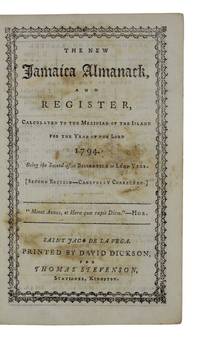
1794AQ30515Saint Jago de la Vega: Printed by David Dickson for Thomas Stevenson Stationer Kingston 1794. 146pp 14. With two hand-coloured engraved leaves of plates depicting 'Signals for distinguishing the Several Packets on the Falmouth Station' bound in before title. Variously interleaved at front with numerous blanks at end inserted some of which removed. Contemporary perhaps original gilt-tooled wallet-format calf over card boards the fold-over flap missing but with an open fore-edge to upper board with marbled paper-lined pocket. Rubbed and marked with some occasional staining sometimes rather unsightly to text childish pen and pencil trials to endpapers engraved signals largely erased and some blank- interleaving or areas of text. Occasional manuscript correction to text. Bifolium G3-4 detached from the binding. A rare Jamaican-printed almanac - with the original engraved signals leaves apparently issued only in this edition - featuring an early example of West-Indian Hebrew printing. Almanacs were apparently first issued in Jamaica during the 1760s printed by Weatherby & McCann Walker & Strupar Douglass and Aikman and later Alexander Aikman alone at Kingston. The rival New Jamaica Almanack and Register first appeared in the same city in 1788 printed by Bennett and Dickson for the stationer Thomas Stevenson of King Street. From 1791 this same title was printed by David Dickson alone at Spanish Town Saint Jago de la Vega. This is definitely not the second appearance of a Dickson printed almanac either printed at Kingston or Spanish Town editions for 1791 1792 and 1793 are known for example with the Saint Jago de la Vega imprint despite the title designation. In addition to providing a calendar specifically for use in the colony noting for example the dates of various Jamaican assizes these eighteenth-century almanacks are perhaps best known for their inclusion of some of the earliest examples of printing with Hebrew type - specifically produced for the use of the largest Jewish community in the Atlantic outside of London - in the Western hemisphere significantly predating any American-printed Hebrew calendar. This is displayed in this edition as a final calendar leaf headed 'Of Months Sabbaths and Holidays which the Hebrews or Jews observe and keep for the Years 5554 an 5555 of the Creation'. Whilst much of the remainder of the first half of the volume relates to British government and administration the first 30pp of the second half includes a description of the geography and history of Jamaica and excerpts various commercial treaties applicable including the 'Act for regulating the Commerce with America' and notes the duties due to the Receiver-General for landing traded goods. Rather disturbingly this includes the government duty of £2 'per head' imposed upon the importers of enslaved Africans. Fully 44 further pages headed 'Jamaica Lists' relate to the civil administration and military establishments of the colony including lists of officials and appointees headed by the then Lt.-Governor Major General Adam Williamson. Included in this section are extensive details on the economic output of the plantations of the island grouped by parish within different counties often revealing the extent of enslavement. Thus St. George is noted as housing '19 Sugar Works and 5 more settling 90 other Settlements 7000 Slaves and 4500 Cattle' whilst Trewlawny housed '86 Sugar Works 126 other Settlements 27000 Slaves and 15000 Cattle'. Copies of the Dickson-printed almanacks printed during the final decade of the eighteenth- century are known with and without maps. There is none present here but equally there is no obvious absence of such. However the only reference we can find to any edition of an almanac with engravings of signals flags as here is in the 1794 edition; indeed the foot of the first of the two engraved leaves notes that it was 'Engraved for the New Jamaica Almanac 1794'. Given the increasingly visible presence of Royal Naval ships in the West Indies due to action taken against French colonies in the War of the First Coalition it is entirely possible that the signals were placed in some copies of the 1794 New Jamaican Almanack instead of the map. OCLC locates three copies worldwide Temple with a map and two at Yale one without a map or signals wanting pp81-102 and possibly pp.145-6; and another without map but with the signals. ESTC N67930. 12mo in 6s. Printed by David Dickson, for Thomas Stevenson, Stationer, Kingston hardcover
1789227355London: Sold by B. White and Son 1789. Third edition first edition was 1756. 49 copper-engraved plates by George Dionysius Ehret. viii 503 646 Index pp. 1 vols. Folio. Bound in contemporary diced calf rebacked. Bookplate of Clarence Dillon Dunwalke Library and with a note that it comes from the Library of Owen D. Young Esq. Third edition first edition was 1756. 49 copper-engraved plates by George Dionysius Ehret. viii 503 646 Index pp. 1 vols. Folio. Browne was an Irish physician who lived for several years in the West Indies and settled in Jamaica in 1746. This is his major work particularly valuable for its contribution to botany. Sabin 8671; Nissen BBl 255; Cundal Bibliographia Jamaicensis 416 Sold by B. White and Son unknown
1789227355London: Sold by B. White and Son 1789. Third edition first edition was 1756. 49 copper-engraved plates by George Dionysius Ehret. viii 503 646 Index pp. 1 vols. Folio. Bound in contemporary diced calf rebacked. Bookplate of Clarence Dillon Dunwalke Library and with a note that it comes from the Library of Owen D. Young Esq. Third edition first edition was 1756. 49 copper-engraved plates by George Dionysius Ehret. viii 503 646 Index pp. 1 vols. Folio. Browne was an Irish physician who lived for several years in the West Indies and settled in Jamaica in 1746. This is his major work particularly valuable for its contribution to botany. Sabin 8671; Nissen BBl 255; Cundal Bibliographia Jamaicensis 416 Sold by B. White and Son unknown books
1786WRCAM36081Kingston Jamaica: Printed for James Jones Esq. by Lewis and Eberall 1786. v3114-424; 440pp. Quarto. Modern polished calf gilt leather label. Contemporary ownership inscription on titlepage of ACTS.: "George Harrison Lincolns Inn 1791." Titlepage worn and soiled repairs in top and bottom margin with no loss of text. Occasional minor foxing last two leaves dampstained. Small hole in leaf F with loss of a few letters. First four leaves and last four leaves of AN ABRIDGMENT. dampstained leaf aa repaired no loss of text final leaf supplied in facsimile. These exceptions noted very clean internally. A very good copy. First editions of two rare 18th-century Jamaican legal imprints. The volume was previously owned by legal author Sir George Harrison the son of Thomas Harrison who served as attorney-general and advocate- general of Jamaica. The elder Harrison's name is included in the list of subscribers for the ACTS. and father or son have made minor manuscript additions on a half dozen pages in the text. <br> <br> The volume records both public and private acts organized chronologically for 1770 through 1783. The ABRIDGMENT. published as a separate work with separate titlepage clearly supplements the ACTS. by listing the acts by subject and providing an index. There are numerous acts regarding slaves which provide much insight into that institution on the island including legislation regarding runaways "Free- Negroes" "Negro towns" and maroons firearms holidays and even drumming. Other acts cover a wide range of laws and activities including those related to land roads cattle gaming hawkers and pedlars the militia settlers ships and smuggling. <br> <br> All 18th-century Caribbean imprints are rare most are extremely so and these laws are no exception. Furthermore the majority of Caribbean printing is often ephemeral and fairly slight rather than a substantial volume such as this one. The first British colony south of Maryland to have a press printing began in Jamaica in 1718. Except for several items printed in Havana by a press briefly established there this was the first press in the Caribbean; however only a handful of fugitive pieces survive from the 1770s. In that period the economic importance of Jamaica was supplemented by an influx of Loyalists who seems to have invigorated the cultural and publishing life of the colony while the British government liberalized its colonial policy to avoid a repetition of the problems of the American Revolution. In this social and political climate these retrospective laws of the local colonial government were printed. <br> <br> A very good copy of two rare 18th-century Jamaican imprints with provenance related to the island and British legal history. SABIN 35617 ACTS. and ABRIDGMENT. CUNDALL SUPPLEMENT 446 447. GOLDSMITHS 13208. ESTC T140415. OCLC 28209638 30304147 31220784. DNB IX p.32. Printed for James Jones, Esq. by Lewis and Eberall hardcover books
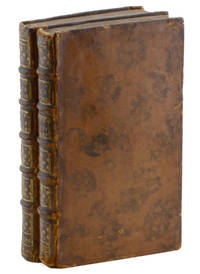
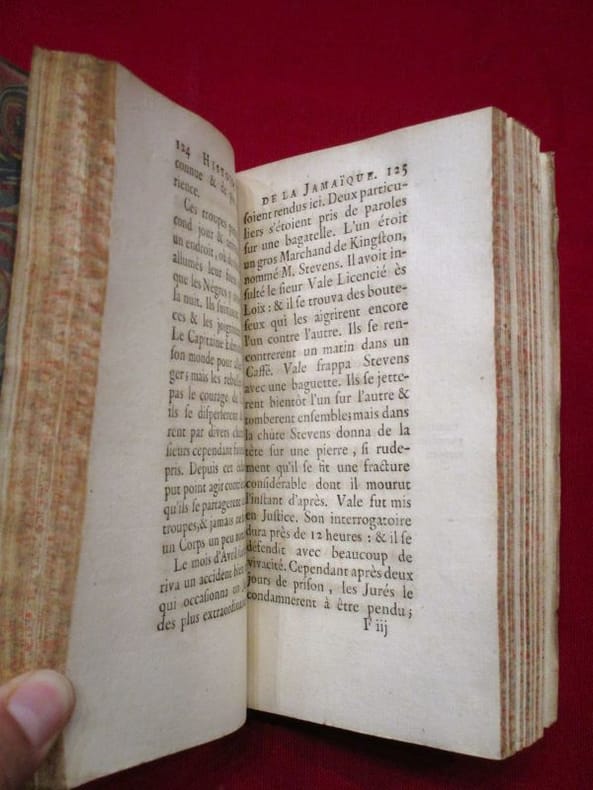
175119420Londres i.e. Paris: Chez Nourse 1751. First edition in French. Joints rather rubbed but sound; some light wear and foxing; a very good copy. 2 vols 12mo contemporary calf leather labels gilt spines 4 285 1; 2 248 pages. 6 folding plates signed N. B. de Poilly. Dans ce tems l‡ le fameux Edouard Teach communÈment appellÈ Barbe noire infestoit les Mers de l'Amerique. On ne vit guËres d'homme plus sanguinaire. Sa cruautÈ alloit jusqu'‡ barbarie. Son nom devint la terreur gÈnÈrale & quelques Gouverneurs ayant nÈgligÈ de le pousuivre il suspendit presque entierement le commerce de certaines Colonies du Nord. It Ètoit nÈ ‡ la Jamaique de fort honnÃtes parens. Sa mere y vit encoutre. . . . Il fut tuÈ & sa tÃte portÈe ‡ la Virginie o˘ elle fut attachÈe au bout d'une perche." Often called a translation of an abridgement of Hans Sloane but quite clearly on comparison of texts a translation of Charles Leslie's New and Exact Account of Jamaica Edinburgh 1739 this translation attributed supposedly to Joseph Raulin. Whether Leslie drew on Sloane is unclear though Leslie appears in fact to have been a Jamaica resident who had met family members of that notorious local figure Blackbeard. Chez Nourse, unknown books
17511177351751 A Londres, Chez Nourse, 1751, 2 volumes in-12 de 95x165 mm environ, (2) ff., 285 pages - (1) f., 248 pages, complet des 6 planches dépliantes. Pleines reliures marbrées d'époque, dos longs portant titres et tomaisons dorées, fers dorés, filet d'encadrement à froid sur les plats, filet doré sur les coupes, tranches mouchetées, gardes de papier marbré à la coquille. Coins légèrement émoussés, quelques griffures et épidermures sur le cuir, rares rousseurs sinon bon état.
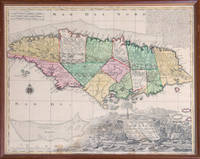
173034040Augsburg 1730. Contemporary coloring. 1 vols. 22 1/4 x 19 1/4 inches. Framed and glazed. Contemporary coloring. 1 vols. 22 1/4 x 19 1/4 inches. Kapp no. 56 The Printed Maps of Jamaica to 1825 unknown
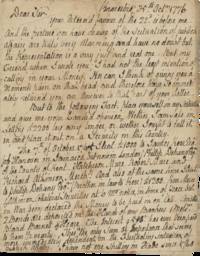
1776List3149Knaresborough England 1776. Single three page letter measuring 6 ¼ x 7 ¾ inches. Normal wear; Near Fine. A letter from Nathaniel Sharpe in Knaresborough to Edmund Green a merchant in London addressed to Green at the Jamaica Coffee House. This café the first of its kind in London was established in the mid-17th century; in 17th and 18th century Britain coffee houses were popular meeting places particularly for conducting business. Sharpe writes to Green:<br /> <br /> “Your Esteem’d favour of the 22d is before me and the picture you have drawn of the situation of publick affairs are truly very alarming and have no doubt but the Representation is a very just and real one. . But to the following Fact place yourself in my situation and give me your Candid opinion Wether I am safe in letting £2200 lay any longer or whether I ought to call it in and place it out on a Security in this Country.â€<br /> <br /> He describes his investments and states that:<br /> <br /> “I have not one shilling in Trade since 1760 and in Decemr. 1762 Retir’d to this place and found myself in possession of a Happiness that I could ill brook to part with. And which I would wish to preserve. Should this sum be in no danger I can live as usual.â€<br /> <br /> The American Revolutionary War had a significant impact on the British economy; at the time Sharpe was writing although the conflict had been ongoing for some time the war itself was in its early days and uncertainty was high.<br /> <br /> Other than asking for financial advice Sharpe tells Green that Green’s “Brother Tommy had . taken a Cup of Liquor rather too freely and had been drawn into Cards†alarming their mother who had requested that Sharpe inform Green about the event; asks Green to visit her; and sends his good wishes to a mutual friend. unknown
173034040Augsburg 1730. Contemporary coloring. 1 vols. 22 1/4 x 19 1/4 inches. Framed and glazed. Contemporary coloring. 1 vols. 22 1/4 x 19 1/4 inches. Early Map of Jamaica. Kapp no. 56 The Printed Maps of Jamaica to 1825 unknown books
1751111861751 Londres, Nourse, 1751; 2 parties en 2 volumes in-12°, plein veau, dos lisse, filets dorés, titre doré sur étiquette citron, tomaison sur étiquette verte; (2)ff. - 285pp.; (1)f.- 248pp. 6 planches dépliantes au Tome 1.Attribué à Hans Sloane et traduit par Raulin, d'après Barbier. Plus vraisemblablement attribué à Charles Leslie, de la Jamaïque, par le catalogue de la British library et Conlon. Traduit de : "A new and exact account of Jamaica".
1773217477Spanish Town Jamaica 1773. 2 pp with integral address leaf. 1 vols. 12 x 7 1/2 inches. Usual folds a few separations at folds losses to address leaf. 2 pp with integral address leaf. 1 vols. 12 x 7 1/2 inches. An unusual 18th century letter by a widow in Jamaica seeking assistance for her son from her dead husband's brother. Written in somewhat halting English she writes in part: "I beg Leave to acquant sic you. I was the Widdow of your Bother Mr. Chas. Amos who died the 7 of September 1763 and left me with two children a Daughter named Jane Born December the 3 1758 and a Son Born April 18 1762. The girl I have since had the misfortune to loose. The boy named George is still liveing and was yesterday 11 years of age and is I thank God in good health . The reason of my troubling you now is about 18 months agoe my sister myself not being in town had an applycation made to her by Mr. William Bullock in consequence of a letter he had just recd from on Mr. Campble who to to Mr. Bullock by the desire of the Reverend Mr. Spicer to enquire after me and my children and to acquaint me that he had some Hundred pounds in his possession which belongd to my child in rite of his grandfather . I had some thoughts of carrying him to England myself for his education which cannot be well done in this part of the world where we are badly off for proper schools . Since Mr. Amos death I again married Mr. Jacobi who likewise I have been unhappy enough to loose and am at this time under some embarresment with his affairs . unknown books
178018801genève pellet 1780 -in-4 une carte ancienne gravée sur cuivre (Copper etching) en noir par André, gravée par Arrivet. Format : 31 x 20,5 cm, pour illustrer l'uvre de l'Abbé Guillaume-Thomas Raynal intitulée "l'Histoire philosophique et Politique des Etablissemens et du Commerce des Européens dans les Deux Indes", pli central horizontal normal venant d'un atlas( horizontal centerfold), 1780 Genève Pellet Editeur,