CubaBiblio.com
469 résultats
0366072935.Ghardcover. Good. Access codes and supplements are not guaranteed with used items. May be an ex-library book. hardcover
0366021583.Gpaperback. Good. Access codes and supplements are not guaranteed with used items. May be an ex-library book. paperback
1391481992.Ghardcover. Good. Access codes and supplements are not guaranteed with used items. May be an ex-library book. hardcover
0266356443.Ghardcover. Good. Access codes and supplements are not guaranteed with used items. May be an ex-library book. hardcover
0332588130.Ghardcover. Good. Access codes and supplements are not guaranteed with used items. May be an ex-library book. hardcover
1332699154.Gpaperback. Good. Access codes and supplements are not guaranteed with used items. May be an ex-library book. paperback
0331607115.Ghardcover. Good. Access codes and supplements are not guaranteed with used items. May be an ex-library book. hardcover
0483717878.Ghardcover. Good. Access codes and supplements are not guaranteed with used items. May be an ex-library book. hardcover
1391031873.Gpaperback. Good. Access codes and supplements are not guaranteed with used items. May be an ex-library book. paperback
1391100913.Ghardcover. Good. Access codes and supplements are not guaranteed with used items. May be an ex-library book. hardcover
0483717843.Ghardcover. Good. Access codes and supplements are not guaranteed with used items. May be an ex-library book. hardcover
0366087649.Ghardcover. Good. Access codes and supplements are not guaranteed with used items. May be an ex-library book. hardcover
2010SONG1145385893Nabu Press 2010-02-23. paperback. Used: Good. 7.44x0.96x9.69. Buy with confidence. Excellent Customer Service & Return policy. Nabu Press paperback
0366030493.Gpaperback. Good. Access codes and supplements are not guaranteed with used items. May be an ex-library book. paperback
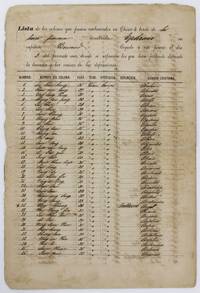
18673977Havana: August 3 1867. Good. 7pp. on pre-printed folio forms completed in manuscript. Later staple. Moderate tanning and edge wear short separations along some folds. A manuscript manifest listing of 285 Chinese field hands who undoubtedly signed up as indentured laborers in their quest to escape the hardships of China in the vain hope of a better life in Cuba. The document begins "Lista de los colones que fueron embarcados en China." with the name of the French ship on which they were transported "barca francesa nombrada Ephrem" filled in and the captain noted as Boucand. The Chinese name of each "colono" settler is given and also their adopted Christian name as well as age ranging from 18 to 35 sex all men and profession all field laborers "campo". Seven of the listings have an "X" next to them along with "Falleco" passed away written in the column headed "Defuncion." Among those who died on the voyage is a 26-year-old man named Ping Chiong given the Christian name of "Angel."<br /> <br /> Formal slavery persisted in Cuba until 1886 but from the mid-19th century it was accompanied by a significant population working in indentured servitude. Cuba's massive sugar industry had consumed huge imports of African slaves in the 18th century. The abolition of the slave trade in 1808 vigorously enforced by the British Navy meant that a new source of labor was necessary. Indentured servitude became the predominant source for labor in the region. Unlike the earlier waves of European immigrants who travelled to the New World as indentured servants Asia was now the primary source. Between 1848 and 1874 125000 Chinese indentured servants arrived in Cuba alone - a figure outstripped only by the number who indentured themselves in California. A high percentage of these laborers were kidnapped from their homeland with many unable to survive the long passage from China to Cuba as the present document illustrates in sad detail. If these Chinese indentured laborers were fortunate enough to survive the voyage to Cuba these men quickly found out that their working life in the coffee and sugar fields was tantamount to slavery. August 3 unknown
0483754536.Gpaperback. Good. Access codes and supplements are not guaranteed with used items. May be an ex-library book. paperback
0483755001.Ghardcover. Good. Access codes and supplements are not guaranteed with used items. May be an ex-library book. hardcover
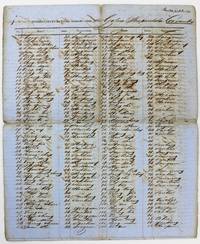
18673978Macau: April 6 1867. Very good. 6pp. on large folio partially-printed forms printed in two columns completed in manuscript. Old folds with minor losses at a few spots along the horizontal fold. Five hundred and fifty Chinese laborers bound for Cuba aboard the Spanish galley "Cervantes" are listed by name with their age and town or city of origin given. The laborers hail from several different cities in China and their ages range from 18 to 36 with the majority of the men in their 20s. The end of the document is signed and dated on the final page by José de Aguilar the Spanish consul at Macau. The left side of the final page contains two separate lists one with five numbers and the other with four numbers keyed to the manifest. The list of five names has an "x" next to each number perhaps noting that these men did not in fact make the trip to Cuba; each "x" could also signal that these men died during the voyage from Macau to Cuba which was a common-enough occurrence that it is often noted on manifests of this kind.<br /> <br /> Chinese indentured servitude in 19th-century Cuba was an insidious practice tantamount to slavery which flourished in Cuba even after the abolition of the peculiar institution in the British West Indies. With their free source of labor no longer available plantation owners in Cuba looked elsewhere; and they looked east. From around 1848 to the mid-1870s over 100000 Chinese indentured servants made their way to Cuba often sailing to Cuba in large groups. Once they arrived Chinese laborers indentured themselves to Cuban masters for terms of at least five years. The treatment of Asian indentured servants in Cuba varied widely with reports of some particularly ill-treated laborers ending their lives by suicide. "Some contemporaries and later historians.have condemned the servitude of the Asians as a thinly disguised revival of slavery. These critics have pointed to a variety of abuses to which the Asians were subjected both legally - with severe laws governing absenteeism vagrancy and insufficient work - and illegally in the form of harassment by vicious masters. Yet other observers have defended the system as a boon to the Asian workers. Voluntary reindenture at the end of their terms was common among the migrants suggesting that many Asians judged the system to be beneficial to them" - Drescher.<br /> Seymour Drescher & Stanley L. Engerman editors A Historical Guide to World Slavery New York 1998 pp.239-42. April 6 unknown
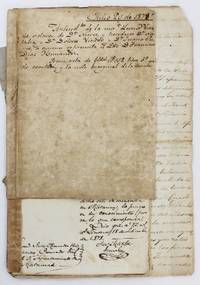
18784011Various places in Cuba 1878. Overall good. 29 leaves varying sizes. In contemporary ad hoc selfwrappers loosely stitched. Rear wrap tattered. Varying degrees of toning and wear. Scattered offsetting throughout. Fascinating gathering of documents and letters that present several cases of Cuban slaves applying for their own freedom in 1878. The gradual abolition of slavery on the island was enacted by Spain in 1880 but prior to this there were several bureaucratic mechanisms by which enslaved people could apply for or purchase their own manumission. The most interesting case amongst the present manuscript documents is the claim of a male slave that states he was born free in Puerto Rico but was somehow included in an inheritance as a young boy transported to Cuba and sold into slavery:<br /> <br /> "Un individuo que hoy se encuentran en la Cárcel del Alacranes y que dice nombrase Juhan ó José Julian Quintana y ser esclavo actualmente de Dn. Serapio Hernandez dueño de los ingenios Escorial ubicado en Colon y Sta. Rosa en Limonar y vecino de esa Ciudad calle del Rio ha solicitado se le restituyan un derechos de libertad por haber nacídolibre en Puerto Rico de donde á la edad de 5 ó 6 años le trajeron à esta Ysla y vencieron como esclavo."<br /> <br /> Interesting for the study of manumission in late-colonial Cuba and certainly worthy of further research. unknown
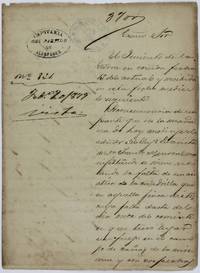
18792090Cuba 1879. About very good. 3pp. on a small bifolium. Contemporary ink stamps; accomplished in a fairly legible hand. Minor wear. A few small wormholes. Light tanning and dust soiling. Brief but very interesting manuscript report on the case of a missing Chinese indentured servant in the district of Alagranes near Matanzas. On February 18 1879 the owner of the plantation Juanita reports the missing person stating that there was a fire in his sugar cane field and it is thought that the laborer might have been burned. It seems that the present document serves to register the case with regional authorities in Matanzas and is a good record of the bureaucracy controlling indentured servitude in Cuba at this time. unknown
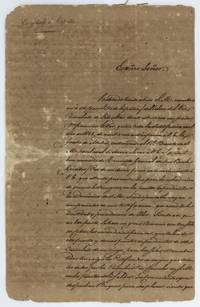
18282401Gibraltar 1828. Good. 3pp. on a bifolium. Previously folded with separations. Tanned somewhat brittle. An interesting example of official communications concerning trade between colonial Cuba and the Spanish mainland. In this manuscript letter date March 14 1828 the new Spanish Vice Consul in Gibraltar writes to the Governor General of Cuba concerning several topics. These include the regulation of shipping to Cuba and by implication the rest of the Caribbean through Gibraltar particularly of French ships leaving Mediterranean ports. Also discussed is keeping track of individuals particularly merchants going to Cuba by means of identification papers and other documents. The consul also reminds the colonial government of the importance of documenting duties and tariffs paid for shipping cargo and goods. unknown
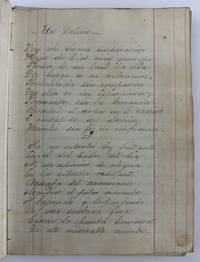
18894403Havana Cuba 1889. Good. 69pp. of manuscript text plus 77pp. of newspaper extracts. Contemporary quarter calf and marbled paper-covered boards. Moderate scuffing and wear to boards and edges spine scuffed. Hinges broken with text block only nominally attached by threads with many leaves detached. Ownership ink stamp on front free endpaper "Manuel F. Barranco" with a gilt insignia affixed below reading "MB." A unique and personal manuscript journal and scrapbook composed and maintained by an important but obscure Cuban-American poet and author Manuel Francisco Barranco y Miranda 1843-1894. Barranco was born in Puerto Principe and lived about half of his life in Cuba before emigrating to Florida in 1875. He married Mercedes Fernández y Fernández-Mora and the couple raised a family in Cuba Florida and New York. Mentions of Barranco are rare in available records but he seems to have been a colleague of famed Cuban revolutionary figure Jose Marti. Barranco and Marti were involved with a Cuban revolutionary emigrant colony in Key West as well as Cuban literary and political societies in Havana and New York such as La Liga. Regarding the latter one of Barranco's poems in the present work composed in eleven parts is titled "Versos recitados en la sesion ordinaria de la Sociedad Literaria Hispano-Americana la noche del 17 de Maya de 1889." The Sociedad Literaria Hispano-Americana or Spanish American Literary Society provides a further connection to Jose Marti as Marti was one of the most prominent members of the club in the 1880s and '90s. Barranco presumably spent the remainder of his life between Cuba and the eastern coast of the United States where he passed away in Tampa Florida in 1894.<br /> <br /> The present material was written and compiled by Barranco over about a thirty year period in the mid-19th century before and after he emigrated to the United States. The chief feature of the present work is contained in almost seventy pages of manuscript poetry by Barranco. The poems which number around a couple dozen compositions include "Un Delirio" written in six parts "Versas improvisados en el Bautiro de mi hija Ana Maria el dia 1 de Enero de 1875" "Versos improvisados en comemora cion del Bautiro de mi hija Ana Maria el dio 1 de Enero del 1876" "Al congreso de la Paz" and various sonnets and other poems dated between 1875 and 1889. Barranco authored a few poems here about his wife Mercedes with titles such as "A Mercedes" "Improvisados a la orrilla del mon - A Mercedes" and "Al contemplar tu retrato." He also composed poems about his mother Ana Maria Sebastiana de Miranda. Several of the later poems from 1888-89 are datelined Havana next to the date of composition indicating Barranco moved back and forth between Cuba and America.<br /> <br /> The manuscript text is supplemented by almost eighty pages of newspaper extracts featuring various articles letters and printed poetry by Barranco published under his own name and a pen name "Leunam." The subject matter of these pieces include education women literature and various family members and other subjects in his own poetry. An example of the latter is a memorial poem for his granddaughter Margarita Barranco who died in Puerto Principe in 1866. Following the manuscript poems themselves is a single handwritten page of contents relating to these newspaper extracts. The extracts very likely come from Cuban newspapers and periodicals since they predate his move to Florida in 1875. A printed note laid into the book reads: "A Bound Journal Containing Published and Unpublished Handwritten Letters and Poems by My Grandfather Manuel Francisco Barranco y Miranda in Habana in the mid-19th Century Probably During the Period 1859-1869." Not much else is easily discovered about Barranco providing an excellent chance for original research into the work of this obscure but important 19th-century Cuban-American poet and writer. unknown
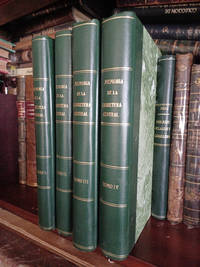
19302416<p>Memoria administrativa y descriptiva de las obras de la carretera nacional de cuba 4 vols primera edicion habana cuba 1930 nueva encuadernacion 4 tomos con algunas paginas restauradas y algo gastadas publicado por la Republica de cuba secretaria de obras publicas negociado de caminos y puentes bajo la administracion del honorable presidente de la republica de cuba general gerardo machado y morales siendo secretario de obras publicas el dr carlos miguel de cespedes.</p><p>La <strong>Carretera Central de Cuba</strong> es la principal vía de transporte automotor de la isla. Fue construida entre 1927 y 1931 bajo el gobierno del presidente Gerardo Machado. Con una longitud total de 1139 km en 1931 la carretera está dividida en dos ramas a partir de La Habana: una hacia oriente y otra a occidente. El kilómetro 0 se encuentra en el Capitolio de La Habana. En el momento de su construcción enlazaba las 6 capitales provinciales: >Pinar del Río La Habana Matanzas Santa Clara >Camagüey y Santiago de Cuba actualmente enlaza 14 de las 15 provincias del país con la sola excepción de Cienfuegos.</p><p><strong>Gerardo Machado y Morales</strong> Camajuaní Las Villas 28 de septiembre de 1869-Miami Beach Florida 29 de marzo de 1939 fue un militar y >político cubano que fungió como general a favor de su país en la guerra de independencia contra España y fue el quinto presidente de la >República de Cuba 1925-1933.</p><p>Machado ingresó a la presidencia con una amplia popularidad y apoyo de los principales partidos políticos. Cabe destacar que durante su administración se realizaron obras que perduran hasta el día de hoy: el Capitolio de La Habana y la Carretera Central. Aquellas obras públicas y otras "menores" caracterizaron su gestión dado que puso énfasis en la impulsión de ellas para absorber el desempleo que entonces azotaba a la isla tras el hundimiento de los precios del azúcar en 1921. Sin embargo su apoyo disminuyó con el tiempo puesto que reformó la Constitución de 1901 para perpetuarse en el poder. A medida que las protestas y rebeliones se volvían más estridentes debido al impacto del crac del 29 en Cuba su administración redujo la libertad de expresión y recrudeció la represión cosa que significó por parte de su mandato la lenta transición a una dictadura. Finalmente en 1933 fue obligado a dimitir a favor de un Gobierno provisional encabezado por Carlos Manuel de Céspedes y Quesada hijo de su homónimo padre a quien se considera padre de la patria y mediado por el embajador estadounidense Sumner Welles</p> secretaria de obras publicas hardcover
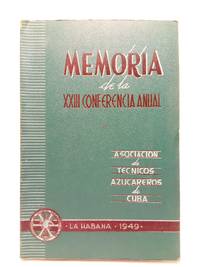
194924117La Habana: Asociación de Técnicos Azucareros de Cuba 1949.- XIX405 p. 6 h.: Ilustraciones estados y tablas una grande plegada; 4º mayor 258 x 173 cm; Cartulina Ed.- RARO. Cubierta posterior algo manchada. Por lo demás en perfecto estado. ECONOMÃA IBEROAMERICANA Y DERECHO FISCAL MERCANTIL FINANCIERO Y DEL TRABAJO Libro en español Asociación de Técnicos Azucareros de Cuba paperback
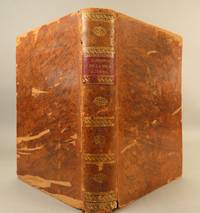
18308598<p>Two volumes in one with continuous pagination. No further volumes were published. Spanish text. Full mottled calf with red morroco label to spine and gilt particulars. Marbled endpapers. Loss to foot of spine see image and to corners. No previous owners' names or other defacements. Very scarce.</p><p>6 x 8.25 in</p> Imprenta de las Viudas de Arazoza y Soler hardcover