Hedrick, Harry (editor)Biblio.com
2 001 résultats
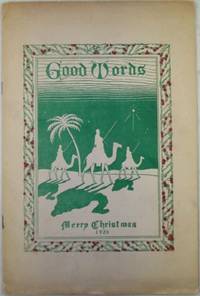
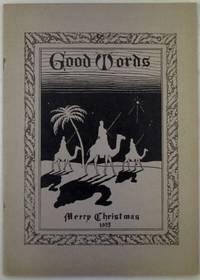
1925022119Atlanta GA: Good Words Publisher 1925. Wraps. Very Good. Wraps. Approximately 9 ¾ by 7 1/8 inches. 28 pp. A little magazine published at the United States Penitentiary in Atlanta Georgia. It began publishing in 1913 soon after the prison opened. Julian Hawthorne wrote for the magazine when he was incarcerated there. The magazine for the most part had a "preachy moralistic" tone and often ignored news from within the prison such as the release of Eugene Debs see Jailhouse Journalism: the Fourth Estate Behind Bars p. 88. The journal was published until 1938 when it was replaced with The Atlantian. This issue does discuss some intramural sports interspersed with moralizing etc. With news on prison happenings pieces on Jewish tidings and Christian Science etc. VERY GOOD condition. Minor toning and a hint of soiling. Good Words, Publisher unknown
1926022182Atlanta GA: VGood Words Publisher 1926. Wraps. Good. Wraps. Approximately 9 ¾ by 7 1/8 inches. 16 pp. A little magazine published at the United States Penitentiary in Atlanta Georgia. It began publishing in 1913 soon after the prison opened. Julian Hawthorne wrote for the magazine when he was incarcerated there. The magazine for the most part had a "preachy moralistic" tone and often ignored news from within the prison such as the release of Eugene Debs see Jailhouse Journalism: the Fourth Estate Behind Bars p. 88. The journal was published until 1938 when it was replaced with The Atlantian. This issue does discuss some intramural sports interspersed with moralizing etc. With news on prison happenings events etc. GOOD condition. Moderate toning mostly along the extremities. Minor soiling. Some creasing and curling along the upper and lower edge. Minor rusting to the staples. VGood Words, Publisher unknown
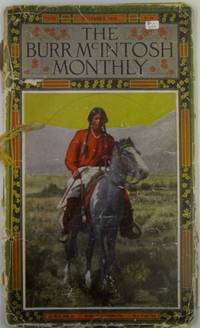
1909018815New York: Burr Publishing Co 1909. Wraps. Fair. Color illustrated wraps with a string tied binding. Unpaginated. Black and white photos throughout as well as one apparent painted photo by Karl Moon. Single issue of this monthly magazine this one relying heavily on photographs. Of note are a series of 14 Photographs by Carl moon an American photographer perhaps best known for his photographs of Native Americans. These photos depict Native Americans living in the Taos New Mexico area and are reminiscent of the work by Edward Curtis. While some critics have acclaimed his work for its documentation of Native American life the work seems to mythologize the false concept of the disappearance of Native Americans in the US. The article concludes "we are loath to confess that in the final count it is best that man's progress in the cultivation of land should be unchecked and our reluctance lies in the fact that this change must toll the knell of the Redman's sic day." Among the other photos in the book are photos of celebrities and of the Hudson-Fulton celebration in New York. Included in these photos is one depicting Wilbur Wright flying over Governor's Island in New York. His flight that day included the first over water and the canoe that he mounted underneath the airplane as a precaution against a water landing can be seen in the photo. FAIR condition. Frontispiece illustration haphazardly cut out of the magazine. Very heavy scuffing chipping creasing tearing and loss to the covers along the extremities with most of the spine missing. Some creasing soiling and staining to the covers with superficial paper loss to the rear cover. Large faint pencil circle present to the front cover. A very small old price sticker at the upper right corner of the front cover. Very light scattered foxing in the interior. Burr Publishing Co unknown
014221No Place: No Publisher. Unbound. Good. Advertising poster style paper for the 1927 Silent Film Wings. Single sheet printed on both sides. 20 by 15 ½ inches. Printed on very thin paper. Dark sepia toned images. One side with large illustrations of planes in dogfights with several smaller inset images of the cast. Reverse with a half page image of planes and Clara Bow with the other half page bearing two smaller images. An advertisement for the silent film Wings a 1927 movie starring Clara Bow Charles "Buddy" Rogers and Richard Arlen as well as a small role for Gary Cooper that according to Wikipedia "helped launch his career in Hollywood." The film was set during World War I and was noted for its aviation cinematography. GOOD condition. Many horizontal and vertical fold creases present with moderate wrinkling. Minor general toning. A few small spots of staining to the piece. Movie theater stamps on the rear side. Several tears along the folds with a small area torn at the center where the folds intersect. No Publisher unknown
001648Newtonville Massachusetts U.S.A.: Everett M. Brooks Company civil Engineers. Hard Cover. Good/No Jacket. circa 1958. Perhaps printed by the Everett M. Brooks Company civil engineers. Approximately 75 maps/plans of the town of Wayland including an index map and a zoning map as well as close up maps of the various parcels and land areas in Wayland. The parcels all have the names of their respective owner's at that time. In GOOD condition. Large oblong book approximately 24 by 16 inches. General scuffing fading and minor soiling to the covers. Extremities bumped and scuffed with the cloth worn through at the corners. The title page and place index page are DETACHED and laid in. General darkening to the maps especially along the extremities. A few with some creasing to the edges. Solid copy of these maps/plans of Wayland Massachusetts. Oversized. International shipping will be extra. Please contact for rates. Everett M. Brooks Company, civil Engineers unknown
001593Concord NH: Rufus Merrill. Original Wraps. Very Good. No date but believed circa mid 1840's to early 1850's. 16 pages with 8 illustrations as well as an illustrated front cover of a Native American using a bow and arrow. Paper wrappers with a sewn binding. Rear cover has a list of the various series of books Rufus Merrill publishes. A description of Native Americans in a somewhat flattering light mentioning their noted hospitality and kindness humoruous anecdotes regarding their interactions with American leaders during the Revolutionary War a brief description of their life in wigwams mention of the chief Red Jacket and a picture of the Oregon Native Americans. VERY GOOD condition with some darkening to the covers. Small number 2 in pencil near the title on the front cover. Light edgewear. The first letters of the last two lines of text on the rear cover missing apparently part of the printing process. Inner text is clean and solid with a miniscule tear to the top corner of page 11 some darkening and some pages with text/illustration printed crooked on the pages. Previous owner's signature David Crockett on the inside front cover. Nice copy of this juvenile work with attractive covers and interior and very little wear associated with use by children. In VERY GOOD condition. Rufus Merrill unknown
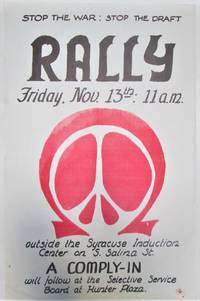
1970016475No Place: No publisher 1970. Unbound. Good. No publisher place or date. Presumed Syracuse New York: 1970. Medium paper stock single sheet 11 by 17 inches. Printed on a single side only. Poster for a Friday November 13 1970 rally protesting the Vietnam War that was held at the Syracuse Induction Center. A comply-in followed the rally at the Selective Service Board. With a large peace symbol slightly resembling a skull and outlined in a red omega symbol used by resisters to the Vietnam War. GOOD condition. Minor toning. Some wrinkling and faint creasing to the paper. Minor soiling. Small spot near the lower left corner. One or two tiny tears to the extremities. No publisher unknown
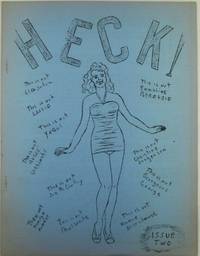
020868Aransas Pass TX: Published By the Author. Wraps. Good. no date perhaps 1955. Side stapled wraps 8 ½ by 11 inches. 12 pp. including covers. Second and perhaps final issue of this zine created by Maril Shrewsbury. Although listed as a member of FAPA Fantasy Amateur Press Association this zine appears to have little to nothing to do with fantasy in the sense meant. Shrewsbury was a carnival worker who was tasked with painting 12 by 26 inch pictures in under 6 minutes see Fancyclopedia 3 website. Her first issue of Heck drew heavily on carnival life and culture while this issue only offers two pages of insight into the culture. The rest is devoted to snippets of letters subtle sexual innuendo etc. All said this zine feels well ahead of its time. GOOD condition. Uneven toning and fading along the extremities. Heavy toning to the interior. Published By the Author unknown
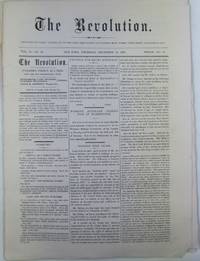
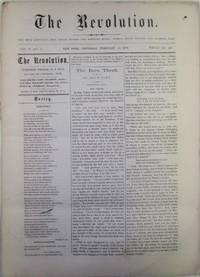
1868020422New York: Susan B. Anthony Proprietor; R.J. Johnson Publisher 1868. Wraps. Fair. Side sewn journal. Approximately 12 ¼ by 9 inches. 16 pp. Early issue of the Revolution a groundbreaking and influential newspaper produced by Elizabeth Cady Stanton Susan B. Anthony and Parker Pillsbury. The paper was established to provide a voice to activists and suffragists such as Stanton and Anthony whose voices were marginalized by the mainstream press as well as many abolitionist publications with whom they had been previously allied. Anthony and Stanton advocated for an amendment giving suffrage to women along with the amendment sponsored by abolitionists that would give Black men the right to vote. Many abolitionists actively discouraged Stanton and Anthony from pursuing their amendment until the amendment enfranchising Black men passed creating a rift in the abolitionist movement as well as the women's suffrage movement. Feeling betrayed by abolitionists and Republicans who initially supported them they established the Revolution with financial help from George Francis Train a Democrat who supported women's rights but was openly racist. As the name indicates The Revolution adopted a combative radical tone with Stanton and others unafraid to take on critics. The paper openly discussed sexual and physical abuse in marriage and advocated better divorce laws that would offer women a way to escape abusive marriages. In 1869 the paper broke with Train who had supplied very little of the funding he initially offered. It published until 1872 struggling to make expenses along the way. This with a lengthy editorial by Elizabeth Cady Stanton on a proposed amendment for manhood suffrage harshly criticizing the amendment. FAIR condition. Front and rear leaf very tenuously attached with the binding a bit fragile. Front leaf being held on by a torn small section of margin. Several fold creases present with other general wrinkling. Minor toning and scattered soiling in the interior. Susan B. Anthony, Proprietor; R.J. Johnson, Publisher unknown
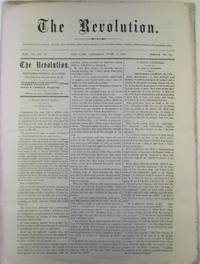
1869020900New York: Susan B. Anthony Proprietor; R.J. Johnson Publisher 1869. Wraps. Good. Side sewn journal. Approximately 12 ¼ by 9 inches. 16 pp. Early issue of the Revolution a groundbreaking and influential newspaper produced by Elizabeth Cady Stanton Susan B. Anthony and Parker Pillsbury. The paper was established to provide a voice to activists and suffragists such as Stanton and Anthony whose voices were marginalized by the mainstream press as well as many abolitionist publications with whom they had been previously allied. Anthony and Stanton advocated for an amendment giving suffrage to women along with the amendment sponsored by abolitionists that would give Black men the right to vote. Many abolitionists actively discouraged Stanton and Anthony from pursuing their amendment until the amendment enfranchising Black men passed creating a rift in the abolitionist movement as well as the women's suffrage movement. Feeling betrayed by abolitionists and Republicans who initially supported them they established the Revolution with financial help from George Francis Train a Democrat who supported women's rights but was openly racist. As the name indicates The Revolution adopted a combative radical tone with Stanton and others unafraid to take on critics. The paper openly discussed sexual and physical abuse in marriage and advocated better divorce laws that would offer women a way to escape abusive marriages. In 1869 the paper broke with Train who had supplied very little of the funding he initially offered. It published until 1872 struggling to make expenses along the way. This issue with three pieces by Elizabeth Cady Stanton "I have all the Rights I want" "Hearth and Home" "Commencement of the Medical College for Women" etc. GOOD condition. Several fold creases present with other general wrinkling. Minor toning and scattered soiling in the interior. Susan B. Anthony, Proprietor; R.J. Johnson, Publisher unknown
1869020906New York: Susan B. Anthony Proprietor; R.J. Johnson Publisher 1869. Wraps. Good. Side sewn journal. Approximately 12 ¼ by 9 inches. 16 pp. Early issue of the Revolution a groundbreaking and influential newspaper produced by Elizabeth Cady Stanton Susan B. Anthony and Parker Pillsbury. The paper was established to provide a voice to activists and suffragists such as Stanton and Anthony whose voices were marginalized by the mainstream press as well as many abolitionist publications with whom they had been previously allied. Anthony and Stanton advocated for an amendment giving suffrage to women along with the amendment sponsored by abolitionists that would give Black men the right to vote. Many abolitionists actively discouraged Stanton and Anthony from pursuing their amendment until the amendment enfranchising Black men passed creating a rift in the abolitionist movement as well as the women's suffrage movement. Feeling betrayed by abolitionists and Republicans who initially supported them they established the Revolution with financial help from George Francis Train a Democrat who supported women's rights but was openly racist. As the name indicates The Revolution adopted a combative radical tone with Stanton and others unafraid to take on critics. The paper openly discussed sexual and physical abuse in marriage and advocated better divorce laws that would offer women a way to escape abusive marriages. In 1869 the paper broke with Train who had supplied very little of the funding he initially offered. It published until 1872 struggling to make expenses along the way. This issue with a several page printing of an address by Elizabeth Cady Stanton at the Anniversary of the American Equal Rights Association; a letter from John Stuart Mill etc. GOOD condition. Several fold creases present with other general wrinkling. Minor toning and scattered soiling in the interior. Susan B. Anthony, Proprietor; R.J. Johnson, Publisher unknown
1869020908New York: Susan B. Anthony Proprietor; R.J. Johnson Publisher 1869. Wraps. Good. Side sewn journal. Approximately 12 ¼ by 9 inches. 16 pp. Early issue of the Revolution a groundbreaking and influential newspaper produced by Elizabeth Cady Stanton Susan B. Anthony and Parker Pillsbury. The paper was established to provide a voice to activists and suffragists such as Stanton and Anthony whose voices were marginalized by the mainstream press as well as many abolitionist publications with whom they had been previously allied. Anthony and Stanton advocated for an amendment giving suffrage to women along with the amendment sponsored by abolitionists that would give Black men the right to vote. Many abolitionists actively discouraged Stanton and Anthony from pursuing their amendment until the amendment enfranchising Black men passed creating a rift in the abolitionist movement as well as the women's suffrage movement. Feeling betrayed by abolitionists and Republicans who initially supported them they established the Revolution with financial help from George Francis Train a Democrat who supported women's rights but was openly racist. As the name indicates The Revolution adopted a combative radical tone with Stanton and others unafraid to take on critics. The paper openly discussed sexual and physical abuse in marriage and advocated better divorce laws that would offer women a way to escape abusive marriages. In 1869 the paper broke with Train who had supplied very little of the funding he initially offered. It published until 1872 struggling to make expenses along the way. This issue with six pieces by Elizabeth Cady Stanton "What Rev. Theodore Cuyler Says" "The Fifteenth Amendment" "The Convention" "The Tribune in Hysterics" "Anna E. Dickinson" and "Where is Mr. Greeley" Also present is news on the American Equal Rights Association etc. GOOD condition. Front cover almost detached from the rest of the piece. Several fold creases present with other general wrinkling. Minor toning and scattered soiling in the interior. Susan B. Anthony, Proprietor; R.J. Johnson, Publisher unknown
1869020901New York: Susan B. Anthony Proprietor; R.J. Johnson Publisher 1869. Wraps. Good. Side sewn journal. Approximately 12 ¼ by 9 inches. 16 pp. Early issue of the Revolution a groundbreaking and influential newspaper produced by Elizabeth Cady Stanton Susan B. Anthony and Parker Pillsbury. The paper was established to provide a voice to activists and suffragists such as Stanton and Anthony whose voices were marginalized by the mainstream press as well as many abolitionist publications with whom they had been previously allied. Anthony and Stanton advocated for an amendment giving suffrage to women along with the amendment sponsored by abolitionists that would give Black men the right to vote. Many abolitionists actively discouraged Stanton and Anthony from pursuing their amendment until the amendment enfranchising Black men passed creating a rift in the abolitionist movement as well as the women's suffrage movement. Feeling betrayed by abolitionists and Republicans who initially supported them they established the Revolution with financial help from George Francis Train a Democrat who supported women's rights but was openly racist. As the name indicates The Revolution adopted a combative radical tone with Stanton and others unafraid to take on critics. The paper openly discussed sexual and physical abuse in marriage and advocated better divorce laws that would offer women a way to escape abusive marriages. In 1869 the paper broke with Train who had supplied very little of the funding he initially offered. It published until 1872 struggling to make expenses along the way. This issue with four pieces by Elizabeth Cady Stanton "Editorial Correspondence" "The Man Marriage" "What Possible Value Would Suffrage be to Woman" "Women's Medical College" along with news on Kansas suffrage anniversary of the American Equal Rights Association. GOOD condition. Several fold creases present with other general wrinkling. Minor toning and scattered soiling in the interior. Susan B. Anthony, Proprietor; R.J. Johnson, Publisher unknown
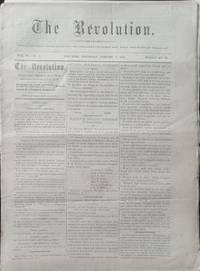
1869020890New York: Susan B. Anthony Proprietor; R.J. Johnson Publisher 1869. Wraps. Good. Side sewn journal. Approximately 12 ¼ by 9 inches. 16 pp. Early issue of the Revolution a groundbreaking and influential newspaper produced by Elizabeth Cady Stanton Susan B. Anthony and Parker Pillsbury. The paper was established to provide a voice to activists and suffragists such as Stanton and Anthony whose voices were marginalized by the mainstream press as well as many abolitionist publications with whom they had been previously allied. Anthony and Stanton advocated for an amendment giving suffrage to women along with the amendment sponsored by abolitionists that would give Black men the right to vote. Many abolitionists actively discouraged Stanton and Anthony from pursuing their amendment until the amendment enfranchising Black men passed creating a rift in the abolitionist movement as well as the women's suffrage movement. Feeling betrayed by abolitionists and Republicans who initially supported them they established the Revolution with financial help from George Francis Train a Democrat who supported women's rights but was openly racist. As the name indicates The Revolution adopted a combative radical tone with Stanton and others unafraid to take on critics. The paper openly discussed sexual and physical abuse in marriage and advocated better divorce laws that would offer women a way to escape abusive marriages. In 1869 the paper broke with Train who had supplied very little of the funding he initially offered. It published until 1872 struggling to make expenses along the way. This issue with four pieces written by Elizabeth Cady Stanton: "The New Year" "Hons. Julian Wilson Pomeroy" "Prisons and Punishment" and "Providence Journal." Also present are pieces on rag pickers Suffrage in the Dakotas the "Ingratitude of Colored Men" a piece on the Universal Franchise Association etc. GOOD condition. Several fold creases present with other general wrinkling. Minor toning and scattered soiling in the interior. Some interior leaves essentially loose. Susan B. Anthony, Proprietor; R.J. Johnson, Publisher unknown
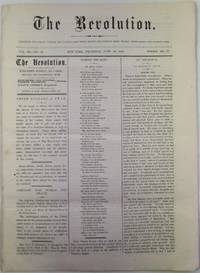
1869021006New York: Susan B. Anthony Proprietor; R.J. Johnson Publisher 1869. Wraps. Good. Side sewn journal. Approximately 12 ¼ by 9 inches. 16 pp. Early issue of the Revolution a groundbreaking and influential newspaper produced by Elizabeth Cady Stanton Susan B. Anthony and Parker Pillsbury. The paper was established to provide a voice to activists and suffragists such as Stanton and Anthony whose voices were marginalized by the mainstream press as well as many abolitionist publications with whom they had been previously allied. Anthony and Stanton advocated for an amendment giving suffrage to women along with the amendment sponsored by abolitionists that would give Black men the right to vote. Many abolitionists actively discouraged Stanton and Anthony from pursuing their amendment until the amendment enfranchising Black men passed creating a rift in the abolitionist movement as well as the women's suffrage movement. Feeling betrayed by abolitionists and Republicans who initially supported them they established the Revolution with financial help from George Francis Train a Democrat who supported women's rights but was openly racist. As the name indicates The Revolution adopted a combative radical tone with Stanton and others unafraid to take on critics. The paper openly discussed sexual and physical abuse in marriage and advocated better divorce laws that would offer women a way to escape abusive marriages. In 1869 the paper broke with Train who had supplied very little of the funding he initially offered. It published until 1872 struggling to make expenses along the way. This issue with two pieces by Elizabeth Cady Stanton "Too Many People Vote Now" and "Don't Unsex Yourself." Also present is news on the National Woman's Suffrage Association etc. GOOD condition. Several fold creases present with other general wrinkling. Minor toning and scattered soiling in the interior. Pages tearing along the lower hinge. Susan B. Anthony, Proprietor; R.J. Johnson, Publisher unknown
1870022282New York: Susan B. Anthony Proprietor; R.J. Johnson Publisher 1870. Tabloid. Good. Side sewn journal. Approximately 12 ¼ by 9 inches. 16 pp. Early issue of the Revolution a groundbreaking and influential newspaper produced by Elizabeth Cady Stanton Susan B. Anthony and Parker Pillsbury. The paper was established to provide a voice to activists and suffragists such as Stanton and Anthony whose voices were marginalized by the mainstream press as well as many abolitionist publications with whom they had been previously allied. Anthony and Stanton advocated for an amendment giving suffrage to women along with the amendment sponsored by abolitionists that would give Black men the right to vote. Many abolitionists actively discouraged Stanton and Anthony from pursuing their amendment until the amendment enfranchising Black men passed creating a rift in the abolitionist movement as well as the women's suffrage movement. Feeling betrayed by abolitionists and Republicans who initially supported them they established the Revolution with financial help from George Francis Train a Democrat who supported women's rights but was openly racist. As the name indicates The Revolution adopted a combative radical tone with Stanton and others unafraid to take on critics. The paper openly discussed sexual and physical abuse in marriage and advocated better divorce laws that would offer women a way to escape abusive marriages. In 1869 the paper broke with Train who had supplied very little of the funding he initially offered. It published until 1872 struggling to make expenses along the way. This issue with a piece by Elizabeth Cady Stanton being a letter to John Hooker in which she addresses her thoughts on the rights of women with regard to divorce mentioning that divorce laws were written by men thus benefitting them. This issue was published around Susan B. Anthony's 50th birthday and contains a short piece by Anthony on her birthday. Also present is a piece on women's suffrage in Utah; a piece on the anniversary of the National Woman's Suffrage Association; the convention in California; the printing of many letters written to Susan B. Anthony on the occasion of her birthday etc. GOOD condition. Several faint fold creases present with other general wrinkling and creasing. Chipping and tearing along the edges. Minor toning and scattered foxing and soiling. Susan B. Anthony, Proprietor; R.J. Johnson, Publisher unknown
1927019673Atlanta GA: Good Words Publisher 1927. Wraps. Good. Wraps. Approximately 9 ¾ by 7 1/8 inches. 12 pp. A little magazine published at the United States Penitentiary in Atlanta Georgia. It began publishing in 1913 soon after the prison opened. Julian Hawthorne wrote for the magazine when he was incarcerated there. The magazine for the most part had a "preachy moralistic" tone and often ignored news from within the prison such as the release of Eugene Debs see Jailhouse Journalism: the Fourth Estate Behind Bars p. 88. The journal was published until 1938 when it was replaced with The Atlantian. This with news of big work farm production some reprinted articles on reform prison football news etc. GOOD condition. Minor toning creasing and wrinkling. Minor soiling. Good Words, Publisher unknown
1882016377Chicago: Victor F. Lawson and Co 1882. Tabloid. Good. Large format tabloid newspaper. Single sheet four pages. Single issue of this Chicago newspaper published three days after the killing of Jesse James. This includes a lengthy account of the day of the killing including quotes from Robert Bob Ford the wife of Jesse James and some background into the plot of the killing. Also in this issue is a short paragraph on Dick Liddle a member of the James Gang and his testimony as to robberies committed by the gang; and a lengthy account of the Blue Cut Train Robbery by John Land recalling the actions of the James Gang. Various items of news and commentary present including the suicide of Cornelius Vanderbilt and the hanging of an African-American in Virginia Doc Wright who apparently murdered Coleman Arthur and who was suspected of being part of a secret society called "The True Friends." GOOD condition. Horizontal and vertical fold creases present. Minor loss along the left edge presumably nibbled away. General toning some foxing soiling and minor staining. A few chips and tears along the extremities. Victor F. Lawson and Co unknown
1843006271New York: American Anti-Slavery Society Publisher 1843. Cloth. Fair/No Jacket. Stated second edition for the first part with the second part published in Albany in 1843. Dark brown ribbed cloth. Unpaginated. With many illustrations throughout. Sabin states that pagination varies among copies seen. This appears complete based on a counting of signatures 1-18 with 6 leaves 19 with 1 leaf and 20-32 with 6 leaves Signature 19 constitutes the title page to the Remonstrance section. Effectively two works in one. An anti-slavery work containing quotes and accounts of many important and minor anti-slavery figures and abolitionists. This also includes accounts of slavery mostly 3rd person reflections. The second section regards the Texas revolution containing quotes of political and other figures on the annexation of Texas by the United States taking a decidedly anti-Texas annexation stance. FAIR condition. The fold out map in the beginning is MISSING its right half being torn in two along the fold. Cloth backstrip MISSING from the spine. Moderate to heavy uneven fading to the covers with minor to moderate scuffing. Minor soiling and staining with a semicircular ring stain to the rear. Cloth very worn and bumped along the extremities. Binding shaken and text block weakened but holding. First signature almost detached. Scattered moderate to heavy foxing throughout with some staining and soiling. Previous owner's signature present. Howes L235 L236. Sabin 95097. American Anti-Slavery Society, Publisher unknown
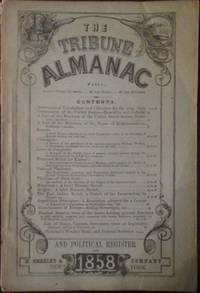
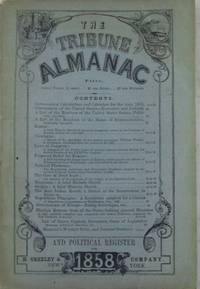
1858020712New York: H. Greeley and Company 1858. Wraps. Good. no date circa 1858. Light blue printed wraps. 68 pp. An almanac published by Horace Greeley that besides the usual monthly almanac information focuses on political subjects. This includes a look at the executive and judicial parts of the US government lists of the Senate and House of Representatives etc. Of note is a seven page look at the Case of Dred Scott mostly abstracts of court opinions; along with brief historic sketches of Minnesota and Oregon etc. GOOD condition. General toning and minor soiling to the covers. Minor curling and creasing at the corners. Paper toned in the interior. Small stain on the lower fore edge. H. Greeley and Company unknown
1858021511New York: H. Greeley and Company 1858. Wraps. Good. no date circa 1858. Light blue printed wraps. 68 pp. An almanac published by Horace Greeley that besides the usual monthly almanac information focuses on political subjects. This includes a look at the executive and judicial parts of the US government lists of the Senate and House of Representatives etc. Of note is a seven page look at the Case of Dred Scott mostly abstracts of court opinions; along with brief historic sketches of Minnesota and Oregon etc. GOOD condition. General toning and minor soiling to the covers. Minor curling and creasing at the corners. Paper toned in the interior. Small stain on the lower fore edge. H. Greeley and Company unknown
178018804genève pellet 1780 -in-4 une carte ancienne gravée sur cuivre (Copper etching) en noir par André, gravée par Arrivet. Format : 31 x 20,5 cm, pour illustrer l'uvre de l'Abbé Guillaume-Thomas Raynal intitulée "l'Histoire philosophique et Politique des Etablissemens et du Commerce des Européens dans les Deux Indes", pli central horizontal normal venant d'un atlas( horizontal centerfold), 1780 Genève Pellet Editeur,
In-8, broché, couverture de papier moderne, 15 p. Edition originale. Le député de la Guadeloupe soumet son projet de création d'un Comité colonial composé de députés des colonies, de colons et de négociants blancs, afin d'élaborer une constitution coloniale spécifique. Par la suite, Curt émigra en Angleterre. Il y négocia le traité de Whitehall (1793) entre les Anglais et les grands planteurs français des Antilles pour permettre à ces derniers de combattre les troupes révolutionnaires et de s'opposer à l'émancipation des Noirs. (cf. Pluchon, "Histoire de la colonisation française", p. 813). (Martin & Walter, 911. Sabin, 18017). Bon exemplaire, très frais.
15147In-8, broché, couverture de papier moderne, 15 p. Paris, Baudouin, 1789.
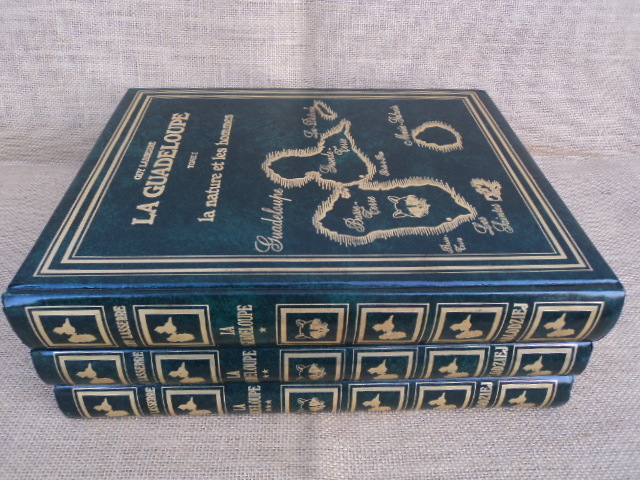
7303Fort-de-France (Martinique), E. Kolodziej - E.D.C.A., 1978, reliure d'éditeur, décor doré , 23x28,5 cm, 1132 pages (pagination continue), illustrations en noir et blanc, cartes, plans. (poids : 5 kg 500 )