178 résultats
17934369Bordeaux Imprimerie de Simon Lacourt 1793 in-4 de 3 pp., la quatrième blanche dérel
1707WRCAM17560London 1707. 8pp. Modern half morocco and marbled boards. Tanned. Very good. The author sets out the five most important advantages which he associates with trading with the Spanish West Indies and then proceeds to respond to the potential objections of others. He concludes by listing the conditions set out by the Spanish which he considers very reasonable as "This Trade is a Jewel." EUROPEAN AMERICANA 707/95. hardcover books
1703WRCAM1650London: Printed for John Gellibrand; and are to be sold by A. Baldwin 1703. Title-leaf 10pp. Folio. Modern half morocco and marbled boards. Text lightly age-toned. Very good. Kirkby and the other naval officers were court-martialed at Port Royal in Jamaica for their disgraceful behavior in Benbow's encounter with the French in August 1702. The whole action is detailed especially regarding the officers who refused to fight deserted the line of battle etc. A well- known mutiny cited as a precedent in other British naval cases. SABIN 37982. EUROPEAN AMERICANA 703/84. CUNDALL 94. JCB 1III:29. DNB XI pp.207-8. Printed for John Gellibrand; and are to be sold by A. Baldwin hardcover books
1791WRCAM34281Stockholm: Tryckeriet 1791. 7pp. Self-wrappers. Minute toning to edges. Contemporary library markings in lower margin and upper outer corner of titlepage. Bright and clean. Near fine. Untrimmed. Recent trade laws concerning the Swedish colony on St. Barthelemy. Signed in type by Gustavus III. Rare. OCLC locates only one copy at the University of Minnesota. BELL S998. OCLC 29100654. Tryckeriet unknown books
1786WRCAM34280Stockholm: Tryckeriet 1786. 8pp. Self-wrappers. Contemporary manuscript page numbers in upper outer corners. Bright and clean. Near fine. Untrimmed. "Nine provisions concerning the government and commerce of the Swedish colony on St. Barthelemy" - Bell. Signed in type by Gustavus III. Rare. OCLC locates only two copies at the University of Delaware and the University of Minnesota. BELL S993. OCLC 14283661 29084873. Tryckeriet unknown books
1786WRCAM34282Stockholm: Tryckeriet 1786. 4pp. Vignette on titlepage. Self-wrappers. Bright and clean. Near fine untrimmed. "Because of meager resources of the island of St. Barthelemy in the West Indies efforts should be made to discourage Swedes from settling there" - Bell. Signed in type by Gustavus III. Rare. OCLC locates only one copy at the University of Minnesota. BELL S994. OCLC 29084888. Tryckeriet unknown books
1727WRCAM20832London: Printed by Sam. Buckley 1727. 48pp. Title vignette. Later plain stiff paper wrappers. Very good. This work includes many references to Spanish plundering of ships in the West Indies specifically involving Admiral Hosier's squadron. Prints the text of letters between the Marquis de la Paz to the Marquis de Pozobueno and the Duke of Newcastle as well as other diplomatic communications regarding naval actions involving especially Spain and England. EUROPEAN AMERICANA 727/146. SABIN 40576. Printed by Sam. Buckley unknown books
1791WRCAM31348Grenoble: M. Cuchet 1791. 10pp. Quarto. Modern marbled boards red gilt morocco label. Internally clean. Very good. A French law relating to the armaments permitted on merchant vessels trading with French possessions in the West Indies. Rare. Not on OCLC. M. Cuchet hardcover books
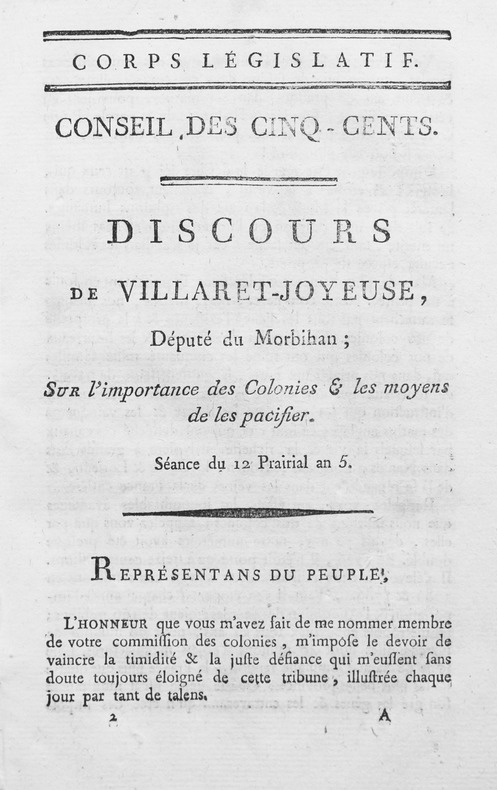
1797LBW-6367Paris, Imprimerie Nationale, An 5 (1797). In-8 de 11 pp.; cartonnage de papier marbré à la bradel, pièce de titre de maroquin brun en long (reliure moderne).
1795LBW-5592Paris, Laurens, 1795/1796. In-8 de 15 pp.; cartonnage de papier marbré à la bradel, pièce de titre de maroquin rouge en long (reliure moderne).
1794LBW-5576Paris, Lefortier, 1794. In-8 de 20 pp.; cartonnage de papier marbré à la bradel, pièce de titre de maroquin brun en long (reliure moderne).
17788670Paris, de l'Imprimerie Royale, 1778. 2 volumes in-4 de [4]-389-[1]-XIX-[3]; [8]-500-XXXII pages, plein veau marbré brun, dos à nerfs ornés de filets et fleurons dorés, pièces de titre en maroquin rouge, tranches mouchetées, petits accrocs aux coiffes supérieures, épidermures, coupes et coins frottés, tampon sur les pages de titre, quelques pâles rousseurs.
1760005903London: Printed for R. Baldwin at the Rose in Pater noster Row 1760. Pamphlet. Good. Pamphlet apparently disbound from a larger work. Pagination runs from 330-384 plus a title page with an illustration of London from the Thames at the head. With a fold-out map of the County of Montgomery as well as a fold-out view of the city and harbor of Fonchall capital of Madeira. A single issue of this British magazine with this issue featuring articles on the then present war between England and France-the Seven Years' War or French and Indian War-including a history and origin of the war a letter from a French officer providing and account of the Siege of Louisburg and a journal of a winter campaign in Canada and the siege of Quebec. Also included is an account of a 'Rebellion of the Negroes in Jamaica' describing Tacky's War or Rebellion in which African enslaved people led by Tacky rebelled against their owners being ultimately defeated. Topics relating to history and religion a mathematical question Dutch designs defeated in the East Indies ships taken by the French etc. are also featured. GOOD condition. Faint creasing to the outer pages with some browning along the extremities. Minor wear along the extremities. Remains of binding along the spine. Very minor scattered foxing. Printed for R. Baldwin, at the Rose, in Pater noster Row unknown
1797LBW-5279Paris, Imprimerie Nationale, prairial an V [1797]. In-8 de 18 pp.; cartonnage de papier marbré, pièce de titre de maroquin rouge (reliure moderne).
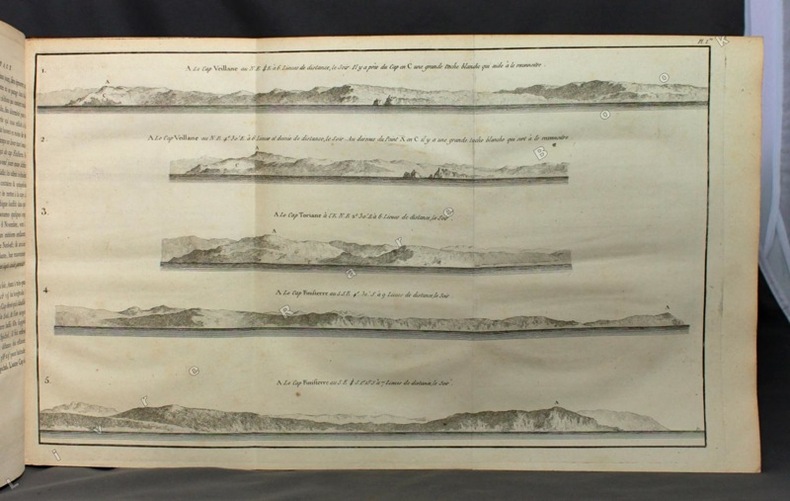
1791LBW-7497S.l., 1791. In-8 de 10-(1) pp.; cartonnage de papier marbré fauve, pièce de titre marron (reliure moderne).
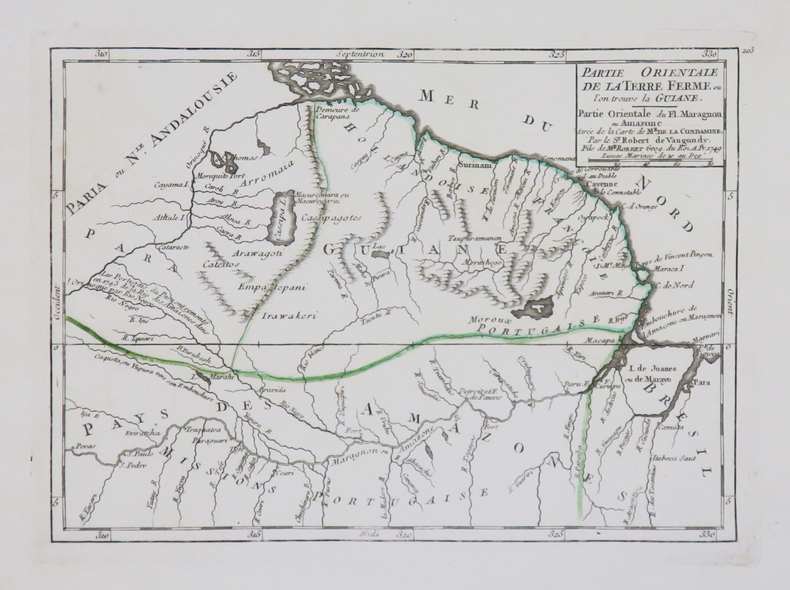
1749LBW-47961749. 160 x 224 mm.
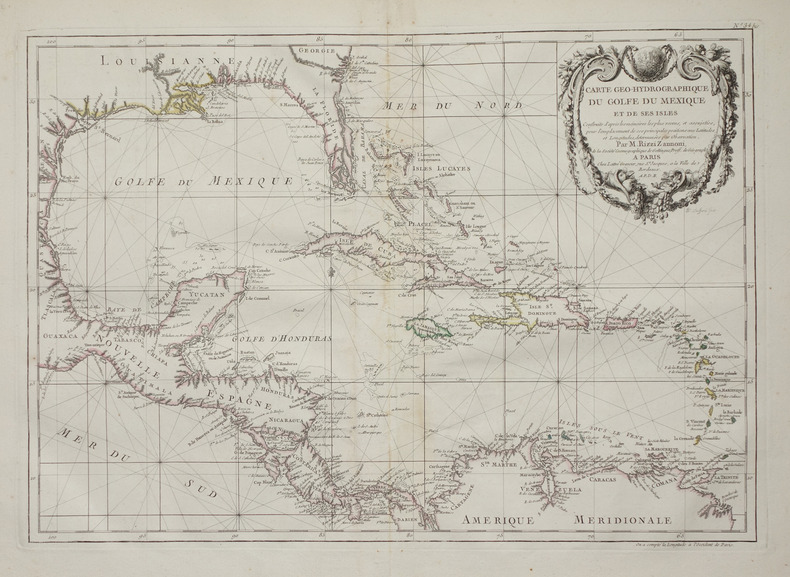
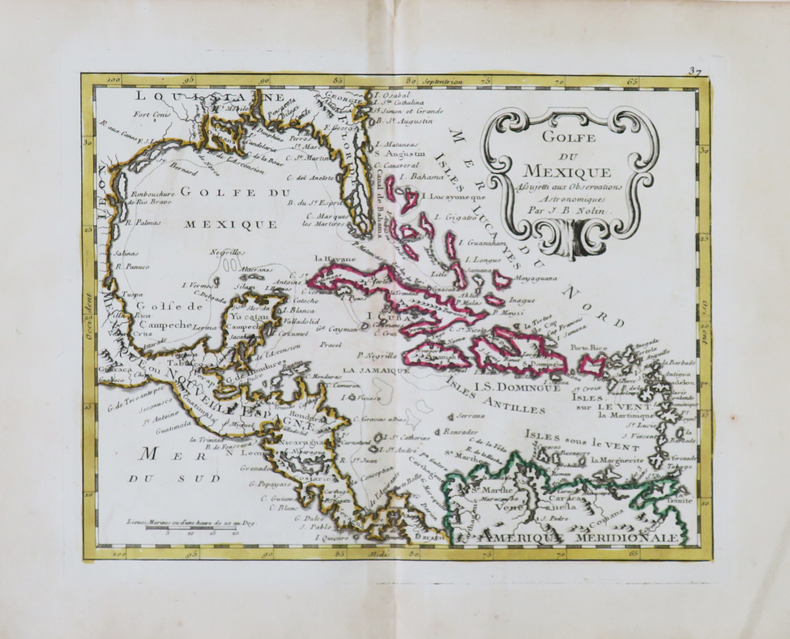
1783LBW-2653Paris, Lattré, 1783. 312 x 448 mm.
1796133528c.1796-97. Where gain is the object bring into harbour all the loaded merchantmen you can An outstanding and unusually comprehensive archive documenting the British-built armed brig Swallow a Liverpool privateer operating in the Caribbean under the experienced prize-master John McIver. The papers trace in exceptional detail the purchase fitting out commissioning and deployment of a late 18th-century privateering vessel anchored by impressive original Letters of Marque. Privateering was in essence a form of licensed warfare. As the Oxford Companion to Ships and the Sea defines it a privateer was "a privately owned vessel armed with guns commissioned by letters of marque which licensed them to take prizes in time of war" 1979 p. 670. This archive shows the process in action. The owners' letters to McIver convey both urgency and anxiety as they navigate the risks of long-distance operations during wartime revealing the network of merchants agents and seamen supporting the Swallow. Early letters make clear that McIver was the driving force: his kinsmen purchased the vessel "solely with the View to make a profitt by a Resale" yet were "well pleased you have taken the Command." The brig was refitted with 10 new iron cannon and furnished with Letters of Marque against French Dutch and later Spanish vessels. In late 1796 the Liverpool partners press McIver to sail immediately for Caribbean waters "in search of Spanish Prizes" while repeatedly stressing the need for constant intelligence. Their concerns deepen over slow remittances from their agent in Jamaica and uncertainty over whether to continue privateering or sell the ship. Built at East Cowes and bought on the stocks by the Royal Navy in 1781 the Swallow was sold in 1795 to a Liverpool consortium including Samuel McDowall the Twemlow family and the McIvers with McIver himself later taking a one-third share. At his urging the vessel was strengthened rearmed and commissioned. Her first Letter of Marque 12 July 1796 authorized cruising against the French and Dutch; a second January 1797 targeted Spanish shipping prompting an increase to 20 guns and a crew of 80. As Gomer Williams notes the Swallow "was not an ordinary privateer but an armed vessel specially hired by Government." McIver enjoyed some success: off Léogâne he sent into Port-au-Prince a large brig and schooner with French property aboard took other vessels and saved the Fame of Liverpool from capture. The letters also record his ancillary government work transporting governors and army officers. By 1797 however the quasi-peace following Leoben and Campo Formio curtailed her privateering activities. The archive also preserves McIver's account of capturing a small American merchantman in 1793 - a case serious enough to draw the attention of Thomas Jefferson and the British envoy George Hammond. The later history of the McIver/MacIver family forms a notable coda: their descendants became central figures in the creation of the Cunard Line partnering with Samuel Cunard and Robert Napier in the 1830s and 1840s to establish what became the British and North American Royal Steam Packet Company. This archive offers a superlative and unusually granular record of British privateering at a moment when European conflict fuelled an upsurge of activity in the Caribbean - a milieu in which as N. A. M. Rodger observes "the letter of marque was often a slender cover for piracy." A full listing with commentary is available on request. Overall in remarkably good condition. N. A. M. Rodgers The Wooden World 1986; Gomer Williams History of the Liverpool Privateers and Letters of Marque with an Account of the Liverpool Slave Trade 1897; Rif Winfield British Warships in the Age of Sail 1714-1792: Design Construction Careers and Fates 2007 p. 314. unknown
173427273Paris veuve Saugrain 1734 in-4 dérelié
1794LBW-5579Paris, Laurens, 1794. In-8 de 16 pp.; cartonnage de papier marbré à la bradel, pièce de titre de maroquin rouge en long (reliure moderne).
1791LBW0248d1791 180 x 321 mm.
1782CA0094lii315 pages. Octavo 8" x 5 3/4" bound in full leather with gilt lettering to spine. Translated with notes by Pedro Varela y Ulloa. Palau 196692. First Spanish edition.<br /><br />A text that engaged the well-studied debates about the natural history of the Americas and Spain's colonial history. In 1780 in Venice Juan Nuix published Riflessioni imparziali supra l'umanita degli spagnuoli nell' Indie contro i pretersi filosofi e politici. Nuix a Catalan living in Italy since the expulsion of the Jesuits wrote the book to defend Spanish colonialism and historiography against the attacks of Robertson and Raynal. It sailed by the censors in the Council of the Indies and two separate translations appeared in succession one in 1782 edited by a member of the Royal Council Pedro Varela y Ulloa and another in 1783 by Joseph Nuix Juan's brother. The Spanish edition sponsored by the crown opened with an essay by Varela y Ulloa in which he first offered a searing Critique of traditional forms of colonialism not unlike that put forth by Raynal. After describing military campaigns in foreign lands from Alexander the Great to Genghis Kahn as butcheries Varela y Ulloa went on to claim that the Spanish colonialism was unique. The crimes attributed to Spain in the Indies had been committed by private individuals who did not represent the nation as a whole and who had acted as they did while surrounded by hungry cannibals. Moreover compared with the atrocities committed by other European colonial powers the actions of the Spaniards looked like misdemeanors. Varela y Ulloa's effort to portray Spanish colonialism as unique benign captured the essence of Nuix's thesis well. Nuix's defense of the record of Spanish colonialism opened with passages that sought to bolster his credibility by stressing that he was a Catalan and that Catalans had not really participated in the Spanish colonization of the Indies so that he could not be accused of being partisan. He then articulated a five-pronged defense of Castilian colonial behavior in America seeking to demonstrate the unreliability of the sources used by Robertson and Raynal and of their interpretations. Nuix First set out to prove that charges of Spanish cruelty to Amerindians were exaggerations originally put into circulation by writers such as Las Casas whose reports on the destruction of the Indies were at the root of most foreign criticisms of Spain. According to Nuix Las Casas was of Flemish origin which explained why he had sought to undermine Spain. Las Casas also often contradicted himself Nuix argued no impartial jury could trust such "an inept" witness. Foreign historians who had echoed Las Casas's allegations were not credible either not Robertson whose moderation had prompted him to dismiss Las Casas. Robertson had selected and reinterpreted the testimony of Spanish witnesses when recounting various colonial massacres. Instead of quoting them moreover Robertson had manipulated the testimony of witnesses to depict the Amerindians as passive victims of Spanish cruelty. History was not a matter of interpretation however but of faithfully presenting the testimony of witnesses and in that respect Robertson lacked credibility. In order to prove that Spaniards in America had not behaved like greedy barbarians Nuix argued that the alleged depopulation caused by the Conquest was the product of factors outside human control. The infantile susceptibility of the natives to disease for example was why epidemics had wiped them out. The barrenness of the Americas and the idleness of the originally small number of natives had moved the conquerors to create economies based on mining and large estates. Such economies along with the foreign monopoly on colonial trade not Spanish cruelty and greed Nuix contended were responsible for having slowed both markets and population growth.<br /><br />Condition:<br /><br />Provenance: Book plate of Alberto Parreño formerly president of the Cuban Chamber of Commerce in New York to front paste down. Spine head chipped rubbing to edges and corners very crisp internally else about a very good copy. Joachin Ibarra hardcover books
1782CA0094lii315 pages. Octavo 8" x 5 3/4" bound in full leather with gilt lettering to spine. Translated with notes by Pedro Varela y Ulloa. Palau 196692. First Spanish edition.<br /><br />A text that engaged the well-studied debates about the natural history of the Americas and Spain's colonial history. In 1780 in Venice Juan Nuix published Riflessioni imparziali supra l'umanita degli spagnuoli nell' Indie contro i pretersi filosofi e politici. Nuix a Catalan living in Italy since the expulsion of the Jesuits wrote the book to defend Spanish colonialism and historiography against the attacks of Robertson and Raynal. It sailed by the censors in the Council of the Indies and two separate translations appeared in succession one in 1782 edited by a member of the Royal Council Pedro Varela y Ulloa and another in 1783 by Joseph Nuix Juan's brother. The Spanish edition sponsored by the crown opened with an essay by Varela y Ulloa in which he first offered a searing Critique of traditional forms of colonialism not unlike that put forth by Raynal. After describing military campaigns in foreign lands from Alexander the Great to Genghis Kahn as butcheries Varela y Ulloa went on to claim that the Spanish colonialism was unique. The crimes attributed to Spain in the Indies had been committed by private individuals who did not represent the nation as a whole and who had acted as they did while surrounded by hungry cannibals. Moreover compared with the atrocities committed by other European colonial powers the actions of the Spaniards looked like misdemeanors. Varela y Ulloa's effort to portray Spanish colonialism as unique benign captured the essence of Nuix's thesis well. Nuix's defense of the record of Spanish colonialism opened with passages that sought to bolster his credibility by stressing that he was a Catalan and that Catalans had not really participated in the Spanish colonization of the Indies so that he could not be accused of being partisan. He then articulated a five-pronged defense of Castilian colonial behavior in America seeking to demonstrate the unreliability of the sources used by Robertson and Raynal and of their interpretations. Nuix First set out to prove that charges of Spanish cruelty to Amerindians were exaggerations originally put into circulation by writers such as Las Casas whose reports on the destruction of the Indies were at the root of most foreign criticisms of Spain. According to Nuix Las Casas was of Flemish origin which explained why he had sought to undermine Spain. Las Casas also often contradicted himself Nuix argued no impartial jury could trust such "an inept" witness. Foreign historians who had echoed Las Casas's allegations were not credible either not Robertson whose moderation had prompted him to dismiss Las Casas. Robertson had selected and reinterpreted the testimony of Spanish witnesses when recounting various colonial massacres. Instead of quoting them moreover Robertson had manipulated the testimony of witnesses to depict the Amerindians as passive victims of Spanish cruelty. History was not a matter of interpretation however but of faithfully presenting the testimony of witnesses and in that respect Robertson lacked credibility. In order to prove that Spaniards in America had not behaved like greedy barbarians Nuix argued that the alleged depopulation caused by the Conquest was the product of factors outside human control. The infantile susceptibility of the natives to disease for example was why epidemics had wiped them out. The barrenness of the Americas and the idleness of the originally small number of natives had moved the conquerors to create economies based on mining and large estates. Such economies along with the foreign monopoly on colonial trade not Spanish cruelty and greed Nuix contended were responsible for having slowed both markets and population growth.<br /><br />Condition:<br /><br />Provenance: Book plate of Alberto Parreño formerly president of the Cuban Chamber of Commerce in New York to front paste down. Spine head chipped rubbing to edges and corners very crisp internally else about a very good copy. Joachin Ibarra hardcover
1791LBW-4853[Paris, Mondhare, 1791]. 203 x 262 mm.
1777000205No Publisher Given 1777. Hard Cover. Very Good/No Jacket. A Parliamentary Chronicle: or accounts of the proceedings and debates of the House of Commons upon the opening of the present sessions. This spans from October 30 1776 to February 25 1777. No author. These proceedings open with an address by King George to parliament regarding the American Revolution. It begins "Nothing could have afforded me so much satisfaction as to have been able to inform you at the opening of this session that the troubles which have so long distracted my colonies in North America were at an end; and that my unhappy people recovered from their delusion had delivered themselves from the oppression of their leaders and returned to their duty .". After this address various members of parliament respond some with support for the war and others advocating granting America its independence. Some of these speeches go into detail in regard to troops morale conduct propaganda in the US press especially propaganda by General Gage. Also discussed within are Britainn's defenses against Spain and France Jamaica and many other interesting topics. The debates over the war with America are amazing historical references serving to frame the Revolutionary War through the eyes of the British. This book has been re-bound in blue cloth with the title in gilt in a small strip of leather on the spine. VERY GOOD condition with light soiling light fading and moderate scuffing mostly noticeable to the top and bottom of the spine. Light bumping and edgewear. Pages clean and solid but browning. Still very readable. The last page of the text seems to end mid sentence as if this was excerpted from a larger text. A very scarce historical record of the beginnings of the Revolutionary War in VERY GOOD condition. No Publisher Given unknown