TARDIEU (Ambroise).Livre Rare Book
1 999 résultats
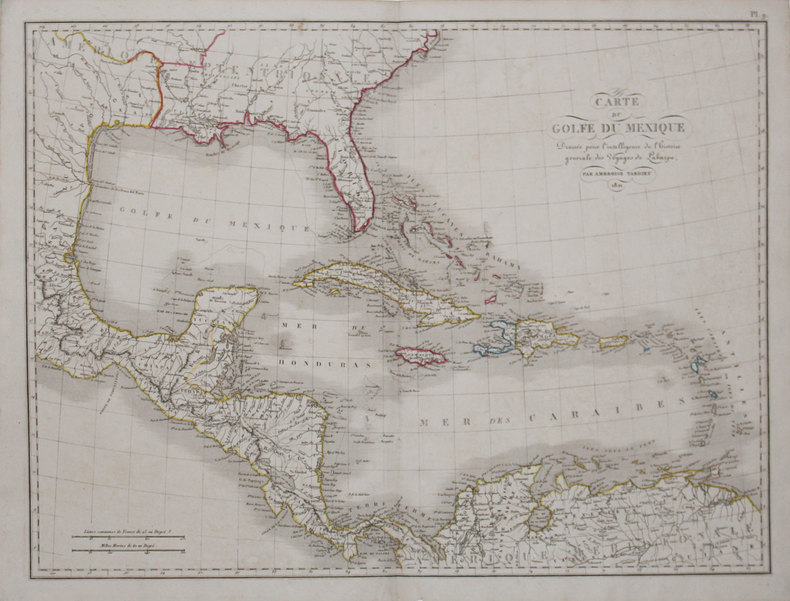
1825LBW-32271821 [1825]. 406 x 542 mm.
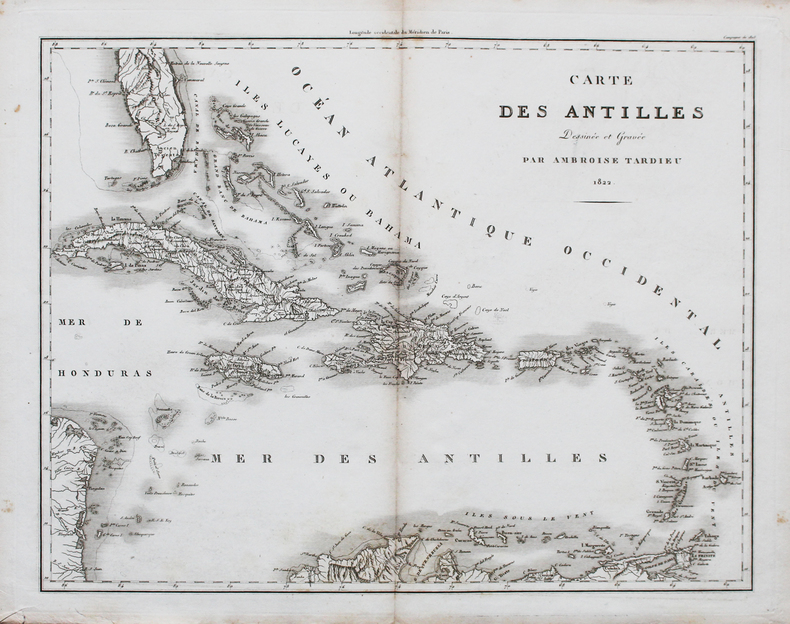
1822LBW-44761822. 370 x 468 mm.
1797LBW-5279Paris, Imprimerie Nationale, prairial an V [1797]. In-8 de 18 pp.; cartonnage de papier marbré, pièce de titre de maroquin rouge (reliure moderne).
QWA-4476Fort-de-France, Desormeaux, 1977, XII-301 p., in-8 rel. plein skiv., coll. "Les grands récits antillais", préface de Jack Corzani, bon état
Un volume broché-collé de format In 8° de 92 pp.; très nombreux schémas, graphiques... Parfait état. Voir photos. XVI tableaux révélateurs du fléau que constitue cette addiction; consommation annuelle de rhum par dates; pyramide des âges d'hospitalisation etc... Peu fréquent.
561605P., Karthala, 1995. In-8 br., couv. ill., 321 pp, 12 photographies, 20 cartes et 10 tableaux en n. et bl. in-texte, bibliographie. Envoi manuscrit.
Reli?. 255 pages.
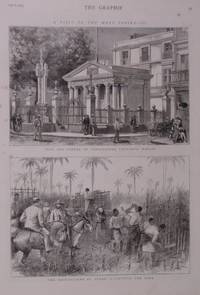
#[30979]London 1876. 9 woodengravings on 3 leaves each ca. 31 x 225 cm. From: The Graphic. An illustrated weekly Newspaper. - Depicting: Tree and chapel of Christopher Columbus Havana. The manufacture of sugar: Cutting the cane Carting home the cane Water cart and plantation well Putting cane on conductor Grinding the cane Boiling and testing the juice Night patrol going round the plantations In the purging house-cutting and crushing the sugar In the boiler room - feeding the fires with 'bagazo'. unknown
19981182751998 Editions Ibis rouge - 1998 - In-8, broché, couverture à rabats - 400 pages - Quelques reproductions photographiques en N&B in-texte
1900019549Houghton Mifflin: 1900. 1010 pages total illustrated with maps and illustrations. "For many years I have felt impelled to write this Life not only in justice to General Steven's memory but also as an act of duty to the young men of the country that the example of his noble and patriotic career might not be lost to posterity." "Hazard Stevens received the Medal of Honor for his actions in the Civil War. His father the General was killed in that war." FINE- HARDCOVERS blue cloth covers lettering is bright on the spines. Previous owner inscriptions from 1900 and 1912 scarce. Hard Cover. Fine-/No Dust Jackets Present. 8vo - over 7¾" - 9¾" tall. Houghton Mifflin: Hardcover
1902007627Washington: Government Printing Office 1902. Cloth. Good/No Jacket. Blue cloth. Folio. 439 pp. With a few photo plates. A detailed government report on street and electric railways in the United States in the early 1900s. This includes a look at the traffic using the railways the urban street railways and their effect on population and businesses in cities capitalization and financial operations interurban railways and their features European railways etc. Also included are chapters on the history and development of electric traction the construction of rail beds and electrical aspects the various styles in railways cars and passenger cars passenger stations and car houses etc. This includes many photos of various railroad cars and facilities. GOOD condition. Moderate fading and some spots of discoloration to the covers. Mostly minor soiling. Some scuffing. White streak/stain perhaps from paint to the lower rear cover. Extremities rather bumped and scuffed. Minor soiling to the endpapers. Interior solid with minor scattered soiling. Government Printing Office unknown
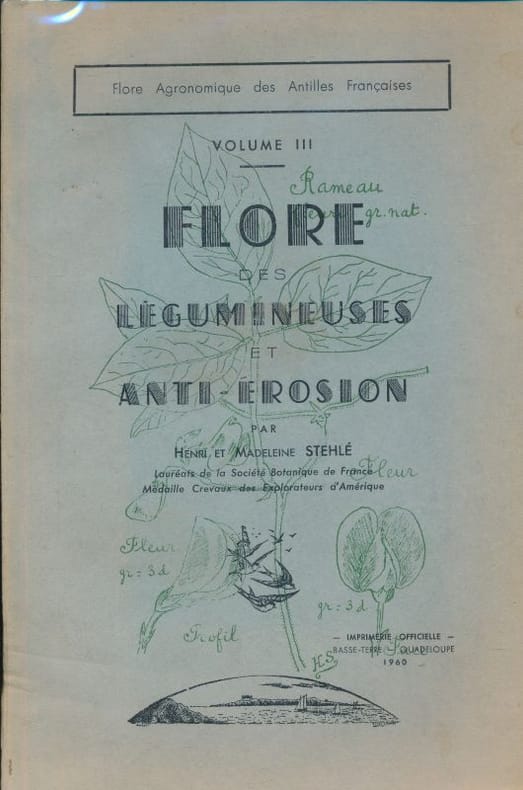
Guadeloupe, Basse Terre, 1960. In-8 broché. 190 pages. Nombreux dessins. Bon état. Broché
Two Volumes. Illustrated with folding map and numerous plates. Title page printed in red and black. Introduction and notes by Rudolf van Lier. Limited Edition. Number 1700 of only 1950 copies. Signed by Rudolf van Lier. Printed from type by Joh. Enschede en Zonen and Designed by Richard Hendel. 4to. Original blue linen spines over French marbled boards. Original paper spine labels. Original marbled slip case. Hardbound. Nice set THAT WOULD MAKE A FINE GIFT. John Gabriel Stedman (1744-1797) was a distinguished BritishDutch soldier and noted author. He was born in the Netherlands in 1744 to Robert Stedman, a Scot and an officer in Holland's Scots Brigade, and his wife of Dutch noble lineage, Antoinetta Christina van Ceulen. He lived most of his childhood in Holland with his parents but spent time with his uncle in Scotland. His years in Surinam, on the northern coast of South America, were characterized by encounters with African slaves and colonial planters, as well as the exotic local flora and fauna. He recorded his experiences in this Narrative of a Five Years Expedition against the Revolted Negroes of Surinam (1796) which, with its firsthand depictions of slavery and other aspects of colonization, became an important tool in the early abolitionist cause. **PRICE JUST REDUCED! W96
1960109870Guadeloupe Basse Terre 1960 Broché Guadeloupe, Basse Terre, 1960. In-8 broché de 190 pages. Nombreux dessins. Bon état.
1924021545Boston: C.E. Goodspeed and Co 1924. Cloth. Good. Blue cloth. 871 pp. Two fold out maps and several photographs throughout. As the title sums up neatly this is an exhaustive history of the island of Nantucket off the coast of Massachusetts focusing on white settlers and ignoring any contributions to its settlement by indigenous people. It does assert that Vikings probably surveyed the island and the coast of Massachusetts well before Columbus. With a genealogy of early white settlers. GOOD condition ex-library. Spine label interior pockets pastedowns and markings present. Minor scuffing fading soiling and edgewear to the covers. Both interior hinges cracked and separating from the text block tenuously holding on. Minor toning to the text block. C.E. Goodspeed and Co unknown
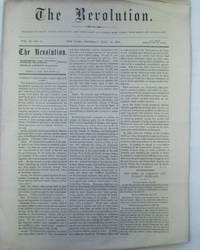
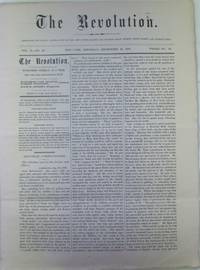
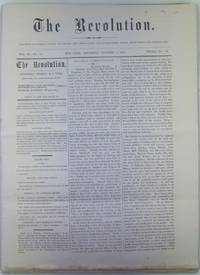
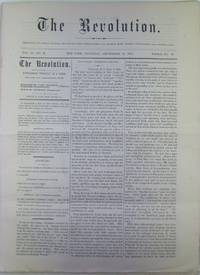
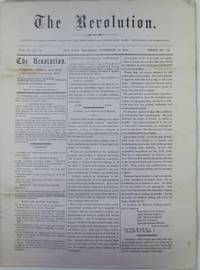
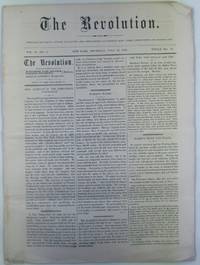
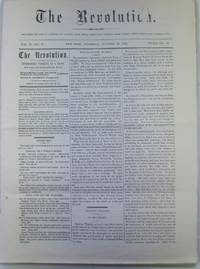
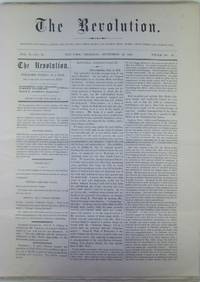
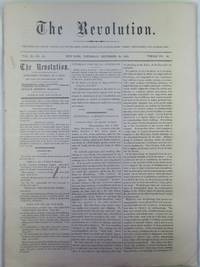
1868020098New York: Susan B. Anthony Proprietor; R.J. Johnson Publisher 1868. Wraps. Good. Side sewn journal. Approximately 12 ¼ by 9 inches. 16 pp. Early issue of the Revolution a groundbreaking and influential newspaper produced by Elizabeth Cady Stanton Susan B. Anthony and Parker Pillsbury. The paper was established to provide a voice to activists and suffragists such as Stanton and Anthony whose voices were marginalized by the mainstream press as well as many abolitionist publications with whom they had been previously allied. Anthony and Stanton advocated for an amendment giving suffrage to women along with the amendment sponsored by abolitionists that would give Black men the right to vote. Many abolitionists actively discouraged Stanton and Anthony from pursuing their amendment until the amendment enfranchising Black men passed creating a rift in the abolitionist movement as well as the women's suffrage movement. Feeling betrayed by abolitionists and Republicans who initially supported them they established the Revolution with financial help from George Francis Train a Democrat who supported women's rights but was openly racist. As the name indicates The Revolution adopted a combative radical tone with Stanton and others unafraid to take on critics. The paper openly discussed sexual and physical abuse in marriage and advocated better divorce laws that would offer women a way to escape abusive marriages. In 1869 the paper broke with Train who had supplied very little of the funding he initially offered. It published until 1872 struggling to make expenses along the way. This issue with several articles written by Elizabeth Cady Stanton including a lambasting of the Democratic Party with another piece not treating Republicans kindly either. She also discusses the Peoples Party etc. A short piece by Susan B. Anthony present addressing the beginning of volume 2 of the Revolution. GOOD condition. Several fold creases present with other general wrinkling. Minor toning and scattered soiling in the interior. Front and rear leaf separating from the rest of the piece but still intact. Susan B. Anthony, Proprietor; R.J. Johnson, Publisher unknown
1868020102New York: Susan B. Anthony Proprietor; R.J. Johnson Publisher 1868. Wraps. Good. Side sewn journal. Approximately 12 ¼ by 9 inches. 16 pp. Single issue of the Revolution a groundbreaking and influential newspaper produced by Elizabeth Cady Stanton Susan B. Anthony and Parker Pillsbury. The paper was established to provide a voice to activists and suffragists such as Stanton and Anthony whose voices were marginalized by the mainstream press as well as many abolitionist publications with whom they had been previously allied. Anthony and Stanton advocated for an amendment giving suffrage to women along with the amendment sponsored by abolitionists that would give Black men the right to vote. Many abolitionists actively discouraged Stanton and Anthony from pursuing their amendment until the amendment enfranchising Black men passed creating a rift in the abolitionist movement as well as the women's suffrage movement. Feeling betrayed by abolitionists and Republicans who initially supported them they established the Revolution with financial help from George Francis Train a Democrat who supported women's rights but was openly racist. As the name indicates The Revolution adopted a combative radical tone with Stanton and others unafraid to take on critics. The paper openly discussed sexual and physical abuse in marriage and advocated better divorce laws that would offer women a way to escape abusive marriages. In 1869 the paper broke with Train who had supplied very little of the funding he initially offered. It published until 1872 struggling to make expenses along the way. This issue with a lengthy column written by Elizabeth Cady Stanton on her travels in the US spanning almost two pages. Very small paragraph by Susan B. Anthony present soliciting 6 to 8 women for potential employment. A few pieces discuss voting rights for Black men. GOOD condition. Several fold creases present with other general wrinkling. Minor toning and scattered soiling in the interior. Small hole in the upper front page. Susan B. Anthony, Proprietor; R.J. Johnson, Publisher unknown
1868020147New York: Susan B. Anthony Proprietor; R.J. Johnson Publisher 1868. Wraps. Good. Side sewn journal. Approximately 12 ¼ by 9 inches. 16 pp. Early issue of the Revolution a groundbreaking and influential newspaper produced by Elizabeth Cady Stanton Susan B. Anthony and Parker Pillsbury. The paper was established to provide a voice to activists and suffragists such as Stanton and Anthony whose voices were marginalized by the mainstream press as well as many abolitionist publications with whom they had been previously allied. Anthony and Stanton advocated for an amendment giving suffrage to women along with the amendment sponsored by abolitionists that would give Black men the right to vote. Many abolitionists actively discouraged Stanton and Anthony from pursuing their amendment until the amendment enfranchising Black men passed creating a rift in the abolitionist movement as well as the women's suffrage movement. Feeling betrayed by abolitionists and Republicans who initially supported them they established the Revolution with financial help from George Francis Train a Democrat who supported women's rights but was openly racist. As the name indicates The Revolution adopted a combative radical tone with Stanton and others unafraid to take on critics. The paper openly discussed sexual and physical abuse in marriage and advocated better divorce laws that would offer women a way to escape abusive marriages. In 1869 the paper broke with Train who had supplied very little of the funding he initially offered. It published until 1872 struggling to make expenses along the way. This issue with a lengthy column editorial correspondence written by Elizabeth Cady Stanton on her travels in the US spanning almost two pages. Other pieces by Stanton discuss "National Labor Congress;" "Frank Blair on Woman's Suffrage;" and "Adah Isaacs Menken." Two lengthy pieces print quotes speaking from two meetings of the Workingwoman's Workingwomen's Association printing the discussion between Susan B. Anthony and others. GOOD condition. Several fold creases present with other general wrinkling. Minor toning and scattered soiling in the interior. Susan B. Anthony, Proprietor; R.J. Johnson, Publisher unknown
1868020196New York: Susan B. Anthony Proprietor; R.J. Johnson Publisher 1868. Wraps. Good. Side sewn journal. Approximately 12 ¼ by 9 inches. 16 pp. Early issue of the Revolution a groundbreaking and influential newspaper produced by Elizabeth Cady Stanton Susan B. Anthony and Parker Pillsbury. The paper was established to provide a voice to activists and suffragists such as Stanton and Anthony whose voices were marginalized by the mainstream press as well as many abolitionist publications with whom they had been previously allied. Anthony and Stanton advocated for an amendment giving suffrage to women along with the amendment sponsored by abolitionists that would give Black men the right to vote. Many abolitionists actively discouraged Stanton and Anthony from pursuing their amendment until the amendment enfranchising Black men passed creating a rift in the abolitionist movement as well as the women's suffrage movement. Feeling betrayed by abolitionists and Republicans who initially supported them they established the Revolution with financial help from George Francis Train a Democrat who supported women's rights but was openly racist. As the name indicates The Revolution adopted a combative radical tone with Stanton and others unafraid to take on critics. The paper openly discussed sexual and physical abuse in marriage and advocated better divorce laws that would offer women a way to escape abusive marriages. In 1869 the paper broke with Train who had supplied very little of the funding he initially offered. It published until 1872 struggling to make expenses along the way. This issue with a lengthy column written by Elizabeth Cady Stanton on her travels in the US spanning almost two pages. Another piece by Stanton discusses the upcoming presidential election and the potential affiliation of the Revolution with the Democrats. Three small paragraphs by Susan B. Anthony one on the National Unitarian Convention the National Workingmen's Congress and one soliciting more subscribers. A few pieces discuss voting rights for Black men. GOOD condition. Small piece torn from the upper edge of one leaf and another from the bottom corner of the last leaf. Several fold creases present with other general wrinkling. Minor toning and scattered soiling in the interior. Susan B. Anthony, Proprietor; R.J. Johnson, Publisher unknown
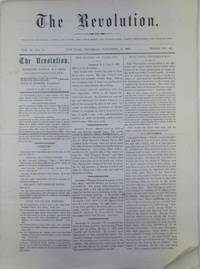
1868020221New York: Susan B. Anthony Proprietor; R.J. Johnson Publisher 1868. Wraps. Good. Side sewn journal. Approximately 12 ¼ by 9 inches. 16 pp. This issue with a front page "Appeal for Equal Suffrage" undersigned by Elizabeth Cady Stanton Abby Hopper Gibbons Mrs. Horace Greeley Susan B. Anthony and Elizabeth Smith Miller. With two pieces "Hester Vaughan" and "Our Children at School" both written by Elizabeth Cady Stanton. GOOD condition. Front page separating from the spine somewhat tenuously attached. Several fold creases present with other general wrinkling. Minor toning and scattered soiling in the interior. Minor staining to the front cover. Susan B. Anthony, Proprietor; R.J. Johnson, Publisher unknown
1868020242New York: Susan B. Anthony Proprietor; R.J. Johnson Publisher 1868. Wraps. Good. Side sewn journal. Approximately 12 ¼ by 9 inches. 16 pp. Early issue of the Revolution a groundbreaking and influential newspaper produced by Elizabeth Cady Stanton Susan B. Anthony and Parker Pillsbury. The paper was established to provide a voice to activists and suffragists such as Stanton and Anthony whose voices were marginalized by the mainstream press as well as many abolitionist publications with whom they had been previously allied. Anthony and Stanton advocated for an amendment giving suffrage to women along with the amendment sponsored by abolitionists that would give Black men the right to vote. Many abolitionists actively discouraged Stanton and Anthony from pursuing their amendment until the amendment enfranchising Black men passed creating a rift in the abolitionist movement as well as the women's suffrage movement. Feeling betrayed by abolitionists and Republicans who initially supported them they established the Revolution with financial help from George Francis Train a Democrat who supported women's rights but was openly racist. As the name indicates The Revolution adopted a combative radical tone with Stanton and others unafraid to take on critics. The paper openly discussed sexual and physical abuse in marriage and advocated better divorce laws that would offer women a way to escape abusive marriages. In 1869 the paper broke with Train who had supplied very little of the funding he initially offered. It published until 1872 struggling to make expenses along the way. This issue with a lengthy article written by Elizabeth Cady Stanton on US prisons and prison reform. Many shorter anonymous articles on suffrage labor and other topics present as well as a brilliant and scathing retort against the Warrick Indiana Herald which while reviewing the Revolution calls "women's suffrage an absurdity and an evil." GOOD condition. Several fold creases present with other general wrinkling. Minor toning and scattered soiling in the interior. Susan B. Anthony, Proprietor; R.J. Johnson, Publisher unknown
1868020291New York: Susan B. Anthony Proprietor; R.J. Johnson Publisher 1868. Wraps. Good. Side sewn journal. Approximately 12 ¼ by 9 inches. 16 pp. arly issue of the Revolution a groundbreaking and influential newspaper produced by Elizabeth Cady Stanton Susan B. Anthony and Parker Pillsbury. The paper was established to provide a voice to activists and suffragists such as Stanton and Anthony whose voices were marginalized by the mainstream press as well as many abolitionist publications with whom they had been previously allied. Anthony and Stanton advocated for an amendment giving suffrage to women along with the amendment sponsored by abolitionists that would give Black men the right to vote. Many abolitionists actively discouraged Stanton and Anthony from pursuing their amendment until the amendment enfranchising Black men passed creating a rift in the abolitionist movement as well as the women's suffrage movement. Feeling betrayed by abolitionists and Republicans who initially supported them they established the Revolution with financial help from George Francis Train a Democrat who supported women's rights but was openly racist. As the name indicates The Revolution adopted a combative radical tone with Stanton and others unafraid to take on critics. The paper openly discussed sexual and physical abuse in marriage and advocated better divorce laws that would offer women a way to escape abusive marriages. In 1869 the paper broke with Train who had supplied very little of the funding he initially offered. It published until 1872 struggling to make expenses along the way. This issue with a lengthy profile of Anna Elizabeth Dickinson written by Elizabeth Cady Stanton as well as an essay on marriage and mistresses that questions legal rulings favoring men in marriage over women. Also present is an essay by actor and writer Olive Logan titled "U.S". GOOD condition. Several fold creases present with other general wrinkling. Minor toning and scattered soiling in the interior. Small tear affecting the title at the top of the first page appearing to have happened during the printing. Susan B. Anthony, Proprietor; R.J. Johnson, Publisher unknown
1868020317New York: Susan B. Anthony Proprietor; R.J. Johnson Publisher 1868. Wraps. Good. Side sewn journal. Approximately 12 ¼ by 9 inches. 16 pp. Early issue of the Revolution a groundbreaking and influential newspaper produced by Elizabeth Cady Stanton Susan B. Anthony and Parker Pillsbury. The paper was established to provide a voice to activists and suffragists such as Stanton and Anthony whose voices were marginalized by the mainstream press as well as many abolitionist publications with whom they had been previously allied. Anthony and Stanton advocated for an amendment giving suffrage to women along with the amendment sponsored by abolitionists that would give Black men the right to vote. Many abolitionists actively discouraged Stanton and Anthony from pursuing their amendment until the amendment enfranchising Black men passed creating a rift in the abolitionist movement as well as the women's suffrage movement. Feeling betrayed by abolitionists and Republicans who initially supported them they established the Revolution with financial help from George Francis Train a Democrat who supported women's rights but was openly racist. As the name indicates The Revolution adopted a combative radical tone with Stanton and others unafraid to take on critics. The paper openly discussed sexual and physical abuse in marriage and advocated better divorce laws that would offer women a way to escape abusive marriages. In 1869 the paper broke with Train who had supplied very little of the funding he initially offered. It published until 1872 struggling to make expenses along the way. This issue with a lengthy column editorial correspondence written by Elizabeth Cady Stanton on her travels in the US spanning almost two pages. Another piece by Stanton discusses on "Miss Becker and the Difference of the Sexes." A lengthy piece prints a meeting/public event by the Women's Council in Mount Vernon New York that brought together women taxpayers. This prints the discussion between Susan B. Anthony and others. GOOD condition. Small piece torn from the upper edge of one leaf and another from the bottom corner of the last leaf. Several fold creases present with other general wrinkling. Minor toning and scattered soiling in the interior. Susan B. Anthony, Proprietor; R.J. Johnson, Publisher unknown
1868020339New York: Susan B. Anthony Proprietor; R.J. Johnson Publisher 1868. Wraps. Fair. Side sewn journal. Approximately 12 ¼ by 9 inches. 16 pp. Early issue of the Revolution a groundbreaking and influential newspaper produced by Elizabeth Cady Stanton Susan B. Anthony and Parker Pillsbury. The paper was established to provide a voice to activists and suffragists such as Stanton and Anthony whose voices were marginalized by the mainstream press as well as many abolitionist publications with whom they had been previously allied. Anthony and Stanton advocated for an amendment giving suffrage to women along with the amendment sponsored by abolitionists that would give Black men the right to vote. Many abolitionists actively discouraged Stanton and Anthony from pursuing their amendment until the amendment enfranchising Black men passed creating a rift in the abolitionist movement as well as the women's suffrage movement. Feeling betrayed by abolitionists and Republicans who initially supported them they established the Revolution with financial help from George Francis Train a Democrat who supported women's rights but was openly racist. As the name indicates The Revolution adopted a combative radical tone with Stanton and others unafraid to take on critics. The paper openly discussed sexual and physical abuse in marriage and advocated better divorce laws that would offer women a way to escape abusive marriages. In 1869 the paper broke with Train who had supplied very little of the funding he initially offered. It published until 1872 struggling to make expenses along the way. This issue with a lengthy column editorial correspondence written by Elizabeth Cady Stanton wherein she discusses her time in Philadelphia and Pennsylvania as well as the case of Hester Vaughn. There are two other lengthy articles on Hester Vaughn one written by Elizabeth Cady Stanton. Vaughan was tried and convicted of murdering her newborn baby to which she gave birth alone. The circumstances around the birth and death the child were murky and she was sentenced to death by an all male jury. The Revolution took up her case seeking her pardon and inferred she was raped. Stanton and Anthony attracted a lot of publicity to the case. Vaughn was eventually pardoned by the governor of Pennsylvania and sent back to England. The cause proved a bit divisive for Stanton and Anthony and the Revolution with modern historians asserting it helped to set back their work for women's suffrage. FAIR condition. Front leaf DETACHED with the binding a bit fragile. Several fold creases present with other general wrinkling. Minor toning and scattered soiling in the interior. Susan B. Anthony, Proprietor; R.J. Johnson, Publisher unknown
1868020366New York: Susan B. Anthony Proprietor; R.J. Johnson Publisher 1868. Wraps. Good. Side sewn journal. Approximately 12 ¼ by 9 inches. 16 pp. Early issue of the Revolution a groundbreaking and influential newspaper produced by Elizabeth Cady Stanton Susan B. Anthony and Parker Pillsbury. The paper was established to provide a voice to activists and suffragists such as Stanton and Anthony whose voices were marginalized by the mainstream press as well as many abolitionist publications with whom they had been previously allied. Anthony and Stanton advocated for an amendment giving suffrage to women along with the amendment sponsored by abolitionists that would give Black men the right to vote. Many abolitionists actively discouraged Stanton and Anthony from pursuing their amendment until the amendment enfranchising Black men passed creating a rift in the abolitionist movement as well as the women's suffrage movement. Feeling betrayed by abolitionists and Republicans who initially supported them they established the Revolution with financial help from George Francis Train a Democrat who supported women's rights but was openly racist. As the name indicates The Revolution adopted a combative radical tone with Stanton and others unafraid to take on critics. The paper openly discussed sexual and physical abuse in marriage and advocated better divorce laws that would offer women a way to escape abusive marriages. In 1869 the paper broke with Train who had supplied very little of the funding he initially offered. It published until 1872 struggling to make expenses along the way. This issue with a piece "The Dignity of the Ballot" and an account of the Boston Woman's Suffrage Convention both written by Elizabeth Cady Stanton. GOOD condition. Several fold creases present with other general wrinkling. Minor toning and scattered soiling in the interior. Small crease to the lower front page corner. Susan B. Anthony, Proprietor; R.J. Johnson, Publisher unknown