29 645 résultats
194911058London: Cambridge University Press 1949. First Edition. Hardcover. Very Good. First Edition. Hardcover. Entire volume in library binding with spine labels reading "High-Speed Computing Machine" and "Maurice Wilkes." Subject article at pp. 265-287.<br /> The first published conference on electronic digital computers in England 1948 OOC 650 The conference was held on March 4 1948. The Proceedings published the six papers: <br /> 1. Hartree "A Historical Survey of Digital Computing Machines" OOC 651 <br /> 2. Newman "General Principles of All-Purpose Computing Machines" OOC 818<br /> 3. Wilkes "The Design of a Practical High-Speed Computing Machine the EDSAC" OOC 1018<br /> 4 Williams "A Cathode-Ray Tube Digital Store" OOC 1065 <br /> 5. Wilkerson Turing "The Automatic Computing Engine at the National Physical Laboratory" OOC 933<br /> 6. Booth "Recent Computer Projects" OOC 490. Minor shelf/edge wear minor toning at spine ownership stamp at front/rear pastedown else tight bright and unmarred. Blue cloth boards black leather labels at spine gilt lettering. 8vo. 556pp. Illus. b/w plates. Cambridge University Press hardcover
57605Paris Louis Rouart o. J. 71 x 50 cm Textblatt und Inhaltsblatt 25 faksimilierten Blättern auf Bütten aufmontiert HLwd.-Mappe mit losen Blättern mit acht Schliesskordeln Mappe etwas fleckig und gebräunt am Rücken minim eingerissen. Text- und Impressumsblatt einseitig durchgehend gebräunt wegen dem Kontakt mit dem nicht säurefreien Kartonumschlag. Blätter sauber. Exemplar LXX. Einführung franz. von André Pératé.Maurice Denis 1870 - 1943 französischer Maler des Symbolismus und Mitbegründer der Künstlergruppe «Les Nabis»zusammen mit Pierre Bonnard Paul Sérusier und Édouard Vuillard. Auf seinen Italien-Reisen zwischen 1890 bis 1895 studierte er die Werke der Renaissance und im besonderen die Arbeiten von Piero della Francesca. Ab 1919 bemühte sich vor allem um eine Wiederbelebung der religiösen Kunst und gründete mit Georges Desvallières 1861–1950 die Werkstätten für Kirchenkunst. 1920 schuf er das Altarmosaik in der Basilika der Abtei Saint-Maurice im schweizerischen Kanton Wallis. 010 Paris, Louis Rouart, o. J. unknown
192648337Paris.: Galerie des Peintres Graveurs / E. Frapier. 1926. Loose as issued in original thick green waxed paper portfolio with flap printed titles to front cover in black. Folio. 518 x 344 mm. With 4 original lithographs each signed in pencil by the artist. One print in 2 states. From the edition limited to 225 copies with this one 25 lettered copies from the edition de tete but this set does not have the extra suite called for by the justification except from one plate in 2 states.Published in Frapier's series "Maitres et Petits Maitres d'Aujourd'hui"Plates are titled Saint François d'Assise" "Solitude" "Maternité à la fenêtre ouverte" in 2 states "Maternité au jardin". Galerie des Peintres Graveurs / E. Frapier. unknown
196784578U. of California Press. As New. 1967. Hardcover. FREE UPGRADE to Courier/Priority Shipping Upon Request - IN STOCK AND IMMEDIATELY AVAILABLE FOR SHIPMENT - AS NEW THE TEXT BLOCK IS PRISTINE CLEAN UNMARKED AND IN EXCELLENT CONDITION - - - Corresponds to ASIN: B000V5R9LM. TWO 2 VOLUME SET. Volume 1: The Evolution of an Artist - xxiv 339 pages197 illustrations hors texte. Volume 2: A Catalogue Raisonne - x 238 pages California Studies in the History of Art 7 4to. U. of California Press hardcover
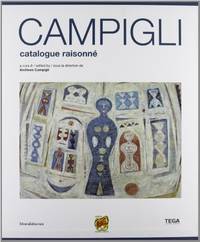
2012122653Silvana. New. 2012. Hardcover. 8836624936 . FREE UPGRADE to Courier/Priority Shipping Upon Request - IN STOCK AND IMMEDIATELY AVAILABLE FOR SHIPMENT - VOLUMES 1 & 2 One I Two II. Flawless copy brand new pristine never opened Text in English French and Italian. with a bonus offer-- . Silvana hardcover
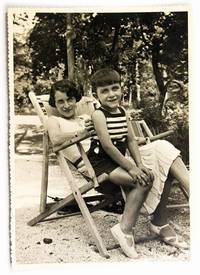
1927653701927. Fine. s. d. après 1927 12.20 x 17.20 cm trois photographies et une carte Three original childhood photographs of Maurice Béjart and his birth announcement after 1927 12.2 x 17.2 cm three photographs and a card Three original photographs of Maurice Béjart as a child beside his mother taken in Mougins. We attach the birth announcement dated 1 January 1927 printed with his name Maurice Jean Berger. Provenance: Maurice Béjart's personal archives. unknown
194344662Paris: Gallimard 1943. Fine. Gallimard Paris 1943 14 x 21 cm relié First edition a Service de Presse advance copy. Half red morocco binding spine with five raised bands date gilt at foot marbled paper boards marbled endpapers and pastedowns original wrappers preserved a very pale stain on the first cover top edge gilt elegant binding signed by P. Goy & C. Vilaine. Precious and moving autograph inscription signed by Maurice Blanchot to his mother and sister: ""Pour sa chère maman et sa vieille Marg avec l'amitié sans Faux Pas de Maurice."" ""For his dear mama and his old Marg with friendship without False Steps from Maurice."" Marguerite Blanchot renowned organist at Chalon cathedral remained all her life in the family home with her mother and aunt. ""She would gradually become for the family like the memory of origins."" Very close to Maurice she corresponded regularly with the writer who showed her great gratitude for her devotion to their bedridden mother. While Blanchot's intense affection for his mother and sister shows through in his dedications almost nothing is known of their relationships. In the only biographical essay on Blanchot Christophe Bident reveals however: ""Marguerite Blanchot venerated her brother Maurice. Very proud of him . she attached great importance to his political ideas . She read a great deal . They telephoned each other corresponded. At a distance they shared the same natural authority the same concern for discretion."" Blanchot indeed sent her numerous works from his library maintaining with her a continuous intellectual bond. As for Blanchot's passion for his mother it is in the course of his work that we discover the most beautiful testimonies: ""Perhaps the power of the maternal figure borrows its brilliance from the very power of fascination and one could say that if the Mother exercises this fascinating attraction it is because appearing when the child lives entirely under the gaze of fascination she concentrates in herself all the powers of enchantment."" Cultivating absolute discretion Blanchot pushed the art of self-effacement even into his manuscript dedications generally succinct and written almost systematically on cards attached to the rare works he gave to his close friends. In contrast in these precious inscriptions to his mother and sister Blanchot offers himself in all his fragility and reveals an intimacy hitherto unknown. Handsome copy with full margins perfectly established. Gallimard hardcover
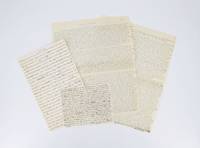
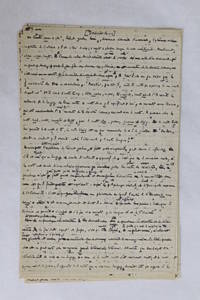
194482298s. l. Paris: S. n. Journal des débats 1944. Fine. S. n. Journal des débats s. l. Paris s. d. 1944 13.50 x 21.50 cm 2 1/2 pages in-8 Autograph manuscript by the author 2½ pages octavo published in the April 13 1944 issue of the Journal des Débats. Complete recto-verso manuscript in very dense handwriting with numerous deletions corrections and additions. Together with the complete signed typescript. Chronicle published on the occasion of the publication of Jarry's posthumous novel La Dragonne. In this chronicle devoted to Alfred Jarry and Père Ubu Maurice Blanchot was interested in the confusion between one and the other and its consequences: « . on peut penser que Jarry en s'entêtant à être le Père Ubu a pendant sa vie gaspillé une partie de ses ressources d'écrivain et après sa mort égaré le jugement littéraire sur sa véritable valeur. » "". one can think that Jarry by persisting in being Père Ubu wasted during his lifetime part of his resources as a writer and after his death misled literary judgment about his true value."" Yet this confusion testifies to the author's coherence: « Chez Jarry le choix d'un masque aussi peu flatteur a un sens fort clair. Il y a d'abord une volonté de mettre à mal tout sérieux et particulièrement cette volonté même ; il n'est pas question de tracer des frontières au ridicule ; on rit d'abord de soi on en rit parce que ce rire n'est qu'un écho du vide. Et puis ce double grotesque que l'auteur revendique comme une représentation dont il est fier affirme sa complicité pleine de défi avec les travers qu'il caricature. » ""In Jarry the choice of such an unflattering mask has a very clear meaning. There is first a will to undermine all seriousness and particularly this very will; there is no question of drawing boundaries to the ridiculous; one first laughs at oneself one laughs at it because this laughter is only an echo of the void. And then this grotesque double that the author claims as a representation of which he is proud affirms his complicity full of defiance with the flaws he caricatures."" La Dragonne the last work by Ubu's father that Gallimard was then publishing would therefore surprise Blanchot for « le sérieux avec lequel Jarry a accepté son métier de romancier » ""the seriousness with which Jarry accepted his profession as novelist"" who would also praise « les soudains mouvements d'imagination poétique qui dérangent le plan » ""the sudden movements of poetic imagination that disrupt the plan"". The only monographic text devoted by Blanchot to Jarry. Between April 1941 and August 1944 Maurice Blanchot published 173 articles on recently published books in the ""Chronique de la vie intellectuelle"" of the Journal des Débats. In half a page of newspaper about seven octavo pages the young author of ""Thomas l'obscur"" took his first steps in the field of literary criticism and thus inaugurated a theoretical work that he would later develop in his numerous essays from ""La Part du feu"" to ""L'Entretien infini"" and ""L'Écriture du désastre"". From the first articles Blanchot demonstrated an acuity of analysis far exceeding the literary current events that motivated their writing. Oscillating between classics and moderns first-rate writers and minor novelists he established in his chronicles the foundations of a critical thought that would mark the second half of the 20th century. Transformed by writing and by war Blanchot broke through thought exercised ""in the name of the other"" with the violent Maurrassian certainties of his youth. Not without paradox he then transformed literary criticism into a philosophical act of intellectual resistance to barbarism at the very heart of an ""openly Maréchaliste"" newspaper: ""Brûler un livre en écrire sont les deux actes entre lesquels la culture inscrit ses oscillations contraires"" ""To burn a book to write one are the two acts between which culture inscribes its contrary oscillations"" Le Livre In Journal des Débats January 20 1943. S. n.[ Journal des débats] unknown
194444930s. l. Paris: S. n. Journal des débats 1944. Fine. S. n. Journal des débats s. l. Paris s. d. 1944 13.50 x 21.50 cm 2 1/2 pages in-8 Autograph manuscript by the author two and a half pages in octavo published in the issue of April 13 1944 of the Journal des Débats. Complete recto-verso manuscript in a very dense hand with numerous deletions corrections and additions. Accompanied by the complete signed typescript. A review published on the occasion of the posthumous release of Jarrys novel La Dragonne. In this review devoted to Alfred Jarry and Père Ubu Maurice Blanchot examines the confusion between the two and its consequences: « . on peut penser que Jarry en s'entêtant à être le Père Ubu a pendant sa vie gaspillé une partie de ses ressources d'écrivain et après sa mort égaré le jugement littéraire sur sa véritable valeur. » Yet this confusion testifies to the coherence of the author: « Chez Jarry le choix d'un masque aussi peu flatteur a un sens fort clair. Il y a d'abord une volonté de mettre à mal tout sérieux et particulièrement cette volonté même ; il n'est pas question de tracer des frontières au ridicule ; on rit d'abord de soi on en rit parce que ce rire n'est qu'un écho du vide. Et puis ce double grotesque que l'auteur revendique comme une représentation dont il est fier affirme sa complicité pleine de défi avec les travers qu'il caricature. » La Dragonne Jarrys final work then issued by Gallimard would therefore strike Blanchot for « le sérieux avec lequel Jarry a accepté son métier de romancier » while he also praised « les soudains mouvements d'imagination poétique qui dérangent le plan ». The only monographic text Blanchot devoted to Jarry. Between April 1941 and August 1944 Maurice Blanchot published in the ""Chronique de la vie intellectuelle"" of the Journal des Débats 173 articles on newly released books. In a half page of newspaper around seven octavo pages the young author of Thomas l'obscur made his first steps in literary criticism thereby inaugurating the theoretical work he would later develop in numerous essays from La Part du feu to L'Entretien infini and L'Écriture du désastre. From the very first articles Blanchot displayed an acuity of analysis far surpassing the literary news that occasioned his writing. Oscillating between classics and moderns major writers and minor novelists his reviews laid the foundations of a critical thought that would shape the second half of the 20th century. Transformed by writing and by the war Blanchot gradually broke through a thinking exercised ""in the name of the other"" with the violent Maurrassian certainties of his youth. Not without paradox he turned literary criticism into a philosophical act of intellectual resistance to barbarism at the very heart of a newspaper ""ouvertement maréchaliste"": ""Brûler un livre en écrire sont les deux actes entre lesquels la culture inscrit ses oscillations contraires"" Le Livre in Journal des Débats January 20 1943. In 2007 the Cahiers de la NRF gathered under the direction of Christophe Bident all the literary reviews not yet collected in volume form along with this perceptive analysis of Blanchots critical work: ""romans poèmes essais donnent lieu à une réflexion singulière toujours plus sûre de sa propre rhétorique livrée davantage à l'écho de l'impossible ou aux sirènes de la disparition. . Non sans contradictions ni pas de côté et dans la certitude fiévreuse d'une uvre qui commence . ces articles révèlent la généalogie d'un critique qui a transformé l'occasion de la chronique en nécessité de la pensée."" C. Bident. Autograph manuscripts by Maurice Blanchot are of the utmost rarity. S. n.[ Journal des débats] unknown
188671943Paris: H. Launette & Cie 1886. Fine. H. Launette & Cie Paris 1886 18.50 x 28.50 cm relié Illustrated edition with 10 etchings as well as about a hundred vignettes by Maurice Leloir one of 50 numbered copies on Japan paper. Full navy blue morocco binding spine with five raised bands set with gilt fillets decorated with triple gilt compartments embellished with floral motifs stamped in blind gilt roulettes on headcaps frames of quintuple gilt fillets on marbled paper boards boards also decorated with a floral frieze stamped in blind marbled endpapers and pastedowns frame of gilt dentelle on pastedowns double gilt fillets on leading edges covers and spine preserved all edges gilt superb binding signed Chambolle-Duru. Our copy contains a triple state of the etchings a separate suite of in-text vignettes on Japan paper having been bound at the end as well as an original wash drawing signed by Maurice Leloir as stipulated in the justification page. Very handsome copy expanded with an original drawing and perfectly executed by Chambolle-Duru. H. Launette & Cie hardcover
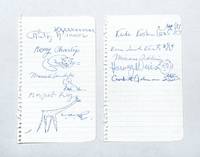
1970146040c.1970. A collection of signatures from 10 esteemed children's authors and illustrators with additional doodles by the signees presumably signed at the same gathering as the signatures are in the same pen. Ruth Krauss was the author of many children's books including The Carrot Seed one of many collaborations with her husband illustrator Crockett Johnson; eight of her books were also illustrated by Maurice Sendak. Remy Charlip was a dancer choreographer and founding member of the Merce Cunningham Dance Company before finding an even larger audience writing and illustrating children's books including Dress Up and Let's Have a Party. Maurice Sendak wrote and illustrated many books his most popular being Where the Wild Things Are. Margaret and H. A. Rey were a married couple and were best known for their Curious George series. Karla Kuskin wrote or illustrated over 50 titles also writing under the pseudonym Nicholas J. Charles. She also reviewed children's literature for The New York Times Book Review. Ezra Jack Keats is most famous for The Snowy Day which he wrote and illustrated in 1962 winning the next years Caldecott Medal. Miriam Schlein wrote nearly 100 books that helped teach children about various subjects including animals and space and time. Harvey Weiss wrote The Big Clean Up together with many "How to" and factual books for children and young adults. Crockett Johnson is best known for the comic strip Barnaby with Mr O'Malley. Ten autographs on 2 leaves of ruled paper removed from a spiral bound notebook. Remy Charlip has added a drawing of a cat Maurice Sendak a drawing of a sitting dog H. A. Rey a drawing of a giraffe Karla Kushkin a drawing of two dogs Ezra Jack Keats a drawing of a stick man Harvey Weiss a drawing of a worried face and Crockett Johnson a drawing of Mr O'Malley flying. All in excellent condition. Presented in black wooden frame with museum acrylic glazing. unknown
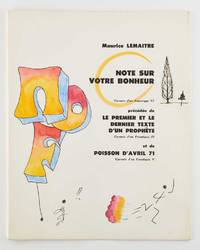
21235501971. Paris: Centre de Creativite. 1971. Folio. Pages loosely bound in illustrated soft cream covers printed on Arches paper throughout are objects photographs illustrations and annotations; pp. 38 unpaginated; Slight toning to cream cover a little toning to some margins of pages; near fine.Signed by the author and noted ""H.C. 4/4"" to the limitation page"".A masterpiece artist book by Lemaitre enriched by objects and annotations. There is a page filled with a crumpled photograph a self-portrait of Lemaitre an infinitesimal photograph of Lemaitre's desk and many other objects glued in such as matches film strips and collages. This copy is noted as ""H.C. 4/4"" to the limitation page making it the final numbered copy not for resale. This copy has also been signed by Lemaitre to the limitation page. unknown
174617London: The Bodley Head 1971. Inscribed by the artist to a fellow illustrator First UK edition presentation copy inscribed by the author on the front free endpaper "For Raymond Briggs So good to meet you! Maurice Sendak Dec. 75" with an illustration of Mickey the hero of this book. This title was originally published in the US in the previous year. In a fitting tribute to Raymond Briggs who developed the use of speech bubbles in his comic book illustration style Sendak has enclosed part of the inscription "So good to meet you!" within a speech bubble to Mickey. Provenance: From the library of Raymond Briggs 1934-2022 the illustrator graphic novelist cartoonist and author with a posthumous book label. Winner of numerous awards including the Kate Greenaway Medal twice the Hans Christian Andersen Award the Boston Globe-Horn Book Award and the Kurt Maschler Award Briggs noted that "the whole point of illustration is that it is literary. If it is not it remains a drawing only. Something must be 'going on' in the illustration" Horne p. 124. He is chiefly remembered for Father Christmas 1973 Fungus the Bogeyman 1978 When the Wind Blows 1982 and the perennial classic The Snowman 1978. Tall quarto. Illustrated throughout by the author. Original pictorial boards spine lettered in black front cover lettered in brown. With dust jacket. Extremities a little rubbed some browning and foxing; extremities of unclipped jacket worn with some foxing and toning short tear to front flap: a very good copy in a good jacket. Alan Horne The Dictionary of 20th Century British Book Illustrators 1994. hardcover
1951378401Philadelphia / Boston: The Poet-lore Co. / Richard G. Badger / Bruce Humphries 1951. Softcover. Good. Magazine. 52 bound volumes most with the original wrappers bound in and 16 individual issues in wrappers. Octavos. A near-complete run from 1889-1951 of Poet Lore an influential American literary magazine that first introduced to the English speaking world many important European dramatists and writers. Founded in 1889 as a magazine devoted to Shakespeare and Browning it soon became indispensable to readers on the lookout for new writers from Europe Russia and Asia by publishing their works in often the first English translations.<br /> <br /> These include Henrik Ibsen August Strindberg and the lyric poet Frédéric Mistral. Also included in this run are the first English translations of dramatic works by Maurice Maeterlinck Gerhart Hauptmann and Arthur Schnitzler; and the first authorized English translations of works by Maxim Gorky Anton Chekhov Gabriele D'Annunzio and Georges Duhamel. Even the American science fiction writer Frederick J. Pohl made a first appearance in 1927 with Varnishing Day. The set consists of a consecutive run of the first twelve monthly issues from 1889 fifteen loose issues in wraps from 1890-1893 and a complete run of monthly and quarterly issues from 1894-1951 bound in half linen and full cloth boards with one unbound single issue in wraps from 1918. An ex-library set with bookplates and ink stamps a few intermittent early volumes also have a small embossed or perforated stamp on the title pages else overall a good or better set of bound volumes. The single issues in wrappers are unmarked a few with detached wraps else very good. A very nice assemblage of notable European dramatic literature poetry and literary criticism. Further details are available. (The Poet-lore Co. / Richard G. Badger / Bruce Humphries) unknown
1796284291796. Small quarto. 4pp. Single folded sheet. Contemporary manuscript notations. Light soiling and wear. Early and unrecorded imprint from the colonial press at the French colony of Mauritius also known as the Ile de France. The text contains the deliberations and acts of the colonial assembly of the island at a time when it was operating virtually independent from France. The acts all concern measures to be taken for the defense of the island at a time when British invasion was feared. The Dutch were the first Europeans to become interested in the island taking possession in 1598. After exploiting the island's dense forests for a century and introducing the cultivation of sugar cane and cotton the Dutch abandoned the colony in 1710. The French soon claimed it as "Ile de France" and the island remained under the control of the French East India Company until 1767. During the long war between France and England at the beginning of the 19th century Mauritius proved to be an important strategic naval base and as a result the British took charge of the island in 1810 and the Treaty of Paris confirmed official British possession in 1814. It remained an important sugar producing colony and in the 20th century agricultural production was expanded to include tea rice and other produce. Printing began on Mauritius in 1768. During the French period until 1810 only about 400 imprints were produced mostly in the form of official documents and newspapers though there are also almanacs and a few other items. All are quite rare. No copies located in OCLC and not recorded by Toussaint in his bibliography of Mauritius imprints. unknown
B269121-1Paris H. Floury 1926-1927. 2 vols. as follows: I: Peintre. 307 3pp. 3 original drypoint etchings each present in two states 55 plates mostly present in two states 8 tipped-in color. 138 illus. One of 175 numbered copies on japon with the extra states of the prints. The etchings are Lexplorateur L.-J. vicomte de Brettes Charles Maurin and Francis Jourdain. II: Dessins estampes affiches. 2 281 3pp. 3 original drypoint etchings each present in two states 48 plates present in two states 16 color 1 facsimile Elles. Femme au tub. One of 200 numbered copies on japon. The etchings are W.H.B. Sands éditeur à Edimbourg Henri Somm Portrait de M. X. Lrg. 4to. Orig. illus. wraps. head of spine of vol. I torn. The two companion volumes in the preferred edition printed on japon with 6 original etchings each present in two states. Without the portfolio of four original lithographs as always. Paris (H. Floury), 1926-1927. paperback
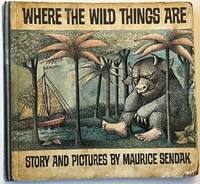
19851237961985. Signed. SENDAK Maurice. Poster inscribed ""Where The Wild Things Are and Concert Scenes from Higglety Pigglety Pop!"". Minnesota: Ordway Music Theatre 1985. Color poster measuring 24 by 18 inches inches; handsomely framed entire piece measures 25 by 19 inches. $4000.Lovely poster illustrated by Maurice Sendak advertising the American premiere of the Sendak and Knussen opera ""Where the Wild Things Are"" inscribed below the main illustration for presentation to a neighbor and close friend: ""For Elizabethhappy Wild Things!Maurice Dec. '85.""This poster advertises the American premiere of Oliver Knussen & Maurice Sendak's ""Where The Wild Things Are and Concert Scenes from Higglety Pigglety Pop!"" by the Minnesota Opera and the Saint Paul Chamber Orchestra at the Ordway Music Theatre. Sendak was passionate about both opera and classical music throughout his life and for many years dreamt of starting a national children's theater. Though the first attempt with Robert Redford fell through Sendak did eventually found the Night Kitchen which succeeded and launched many of its actors into stardom. The former owner of this inscribed poster was Maurice Sendak's neighbor Andrew from Ridgefield Connecticut. Sendak bought a home and studio in Ridgefield in 1972 with his longtime partner Eugene Glynn and lived there until his death. Andrew first encountered Sendak in 1975 during one of his daily dog walks. Sendak owned many dogs throughout his life and they often starred in his books. Andrew was immediately taken with Sendak who reminded him of his recently deceased father. One day Andrew called Sendak at home and asked if he could join him on his walks. Andrew and Sendak thus embarked on a 37-year friendship that also included the Andrew's mother Betty as well as Andrew's brother. Sendak went on long walks and hikes with Andrew and his family regularly discussing general life events opera and books. He also invited them into his studio to show off works in progress. Andrew's mother Betty was an avid reader and collector and she and Sendak would talk late into the night about books. Sendak offered Betty advice about how to find and authenticate rare children's books which she used to build her collection. Additionally he frequently bartered for autographs i.e. a cake for an inscribed drawing featuring the cake. Sendak often referred to Betty as ""Elizabeth"" in inscriptions as he felt that ""Betty"" was too common a name. The many inscribed drawings along with first editions signed books and other valuable items grew into one of the country's premier Sendak collections.About-fine condition. unknown
1963010179New York: Harper & Row 1963. Book. Good. Pictorial Paper Covered Boards. SIGNED AND INSCRIBED BY AUTHOR. First Edition. Oblong 4to. First Printing with Library of Congress catalog card number: 63-21253 and 1963 copyright printed on the title page. SIGNED AND INSCRIBED BY AUTHOR at half-title page -"April '65 For Myra - Maurice Sendak". Good lacking the dust jacket and the decorative front end paper boards soiled and worn at edges rear hinge cracked. Uncommon as an unsophisticated copy of this enduring Sendak classic SIGNED AND INSCRIBED directly in the book to a child who obviously adored the book and read it countless times much like a well-worn blanket or stuffed animal. Basis for the 2009 film directed by Spike Jonze a 1984 TV movie and several short films. Harper & Row Hardcover
1963COLLECTI014667INEW YORK NY: HARPER & ROW PUBLISHERS. VERY GOOD IN A VERY GOOD D.J. PUB 1963. FIRST EDITION. HARDCOVER. WINNER OF THE 1964 CALDICOTT AWARD FOR BEST CHILDREN'S BOOK FOR AUTHOR AND ILLUSTRATOR . PUBLISHER'S ORIGINAL QUARTER-BOUNT PICTORIAL PAPER-COVERED BOARDS WITH GREY CLOTH SPINE MULTI-COLOR FLORAL ENDPAPERS. THE BOOK IS ABOUT FINE WITH CLEAN ILLUSTRATIONS ON EXTERIOR BOARDS. THE SECOND ISSUE D.J. IS LIGHT SOILED ON THE FRONT PANEL WITH A 2" CLOSED TEAR AT THE TOP. THE REAR PANEL OF D.J. IS A BIT MORE SOILED WITH THE SPINE EDGES RUBBED. A VERY NICE COPY. . HARPER & ROW, PUBLISHERS hardcover
1963462205New York: Harper 1963. Hardcover. Near Fine/Very Good. First edition in first issue dust jacket. Near fine with some light wear and toning to the outer edges of the boards in about very good dust jacket with toning sticker shadow on the front flap and moderate edgewear including small chips and tears. A relatively nice copy of one of most popular and influential children's book of the 20th Century. Hanrahan. Works of Maurice Sendak 1947-1994 A58. Harper hardcover
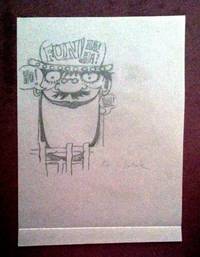
1963123No Place: Sendak 1963. Original drawing by the Author-Illustrator. Very Good . SELF-CARICATURE SIGNED by MAURICE SENDAK the famous illustrator-&-author of children's books. <br/>8vo 6.5" x 9" humorous pencil sketch & self-caricature by MAURICE SENDAK with Lewis Carrollean-aspects on translucent drawing paper. EXCEEDINGLY RARE SIGNED humorous SELF PORTRAIT--head & hat to feet--of Maurice Sendak drawn lightly in pencil on tracing paper presumably a "rough" or "prelim"inary sketch that has been Signed lightly but fully. One horizontal fold at bottom of self portrait.<br/><br/>The artist depicts himself looking and smiling at the viewer in his "Where the Wild Things Are" inimitable style. <br/><br/>The artist-illustrator's hat recalls Tenniel's sketch of the Mad Hatter in Lewis Carroll's Alice in Wonderland. An exhuberant Sendak has written "Fun! Ha! Ha!" and "Ho! He!" <br/><br/>Based upon other pieces by Sendak his use of "Ha! Ha!" may echo his elation after the enormous success of "Where the Wild Things Are."<br/><br/>This piece is Much Rarer than Sendak's famous and highly regarded book illustrations!<br/><br/>Maurice Bernard Sendak 1928 - 2012 was an American illustrator and writer of children's books. He became widely known for his book Where the Wild Things Are first published in 1963. Born to Jewish-Polish parents his childhood was affected by the death of many of his family members during the Holocaust. Sendak also wrote works such as In the Night Kitchen Outside Over There and illustrated many works by other authors including the Little Bear books by Else Holmelund Minarik.<br/><br/>He won practically every award for illustrating children's books; most notably: the Caldecott Medal from the ALA as illustrator of "the most distinguished American picture book for children" Where the Wild Things Are 1964 Sendak was also one of the Caldecott runners-up seven times from 1954 to 1982 more than any other illustrator. Also the National Book Award in category Picture Books for Outside Over There 1982. Sendak unknown
194244674Paris: Gallimard 1942. Fine. Gallimard Paris 1942 14 x 20.50 cm relié First edition an advance service de presse copy. Elegant half dark red morocco over marbled paper boards by P. Goy & C. Vilaine spine in six compartments gilt date to foot marbled endpapers and pastedowns covers and spine sunned preserved top edge gilt. Fine and handsome autograph inscription signed from Maurice Blanchot to his brother René and his wife Inge : Un bonze demanda un jour au bonze Sozan Daishi : Qu'est-ce quiest le plus précieux au monde / N'importe quoi une charogne latête d'un chat mort répondit Sosan Daishi. / Pourquoi Parcequ'on ne peut l'évaluer. Zenso Mondo. / Pour René et Inge en toute affection. Maurice. A bonze asked bonze Sozan Daishi one day: What is the most precious thing in the world/ Whatever a rotting carcass the head of a dead cat replied Sosan Daishi./ Why Because it's priceless. Zenso Mondo./ For René and Inge with all love. Maurice. A very good copy perfectly bound with a moving provenance. Gallimard hardcover
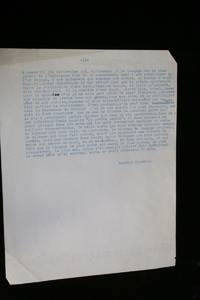
194947141s. l.: S. n. 1949. Fine. S. n. s. l. 1949 13.50 x 21.50 cm Autograph manuscript by the author of 16 pages in-8 published in number 9 June 1946 of Les Temps modernes and reprinted slightly revised in La Part du Feu 1949. Complete recto-verso manuscript very densely written with numerous deletions corrections and additions. Accompanied by the complete typescript with autograph corrections in black ink. ""Le Paradoxe d'Aytré"" ""Aytré's Paradox"" is the first text by Maurice Blanchot that Jean-Paul Sartre published in the pages of Les Temps modernes the spearhead of committed literature. Three others would follow until 1952 ""Le roman uvre de mauvaise foi"" ""The Novel a Work of Bad Faith"" ""A la rencontre de Sade"" ""Meeting Sade"" and ""L'art la littérature et l'expérience originelle"" ""Art Literature and Original Experience"" all of great importance. Continuing his reflection begun several years earlier on the writer's struggle with language and his relationship to silence notably in his article ""Le Mythe d'Oreste"" ""The Myth of Orestes"" Blanchot bases his demonstration here on Aytré qui perd l'habitude ""Aytré Who Loses the Habit"" by Jean Paulhan - a major influence - who notably provides him with the title of his article: ""De ce petit récit il ne résulte pas que la littérature ne doive logiquement commencer qu'avec le crime ou à défaut avec le vol. Mais qu'elle suppose un écroulement une sorte de catastrophe initiale et le vide même que mesurent l'anxiété et le souci c'est ce qu'on peut être tenté de voir. Or remarquons-le cette catastrophe ne s'exerce pas seulement sur le monde les objets qu'on manie . ; elle s'étend aussi et en même temps au langage à la possibilité des mots. C'est là le paradoxe d'Aytré."" ""From this little story it does not follow that literature should logically begin only with crime or failing that with theft. But that it presupposes a collapse a sort of initial catastrophe and the very void that anxiety and worry measure this is what one might be tempted to see. Now let us note this catastrophe is not exercised only on the world the objects we handle .; it extends also and at the same time to language to the possibility of words. This is Aytré's paradox."" And he adds: ""L'écrivain ne débute pas toujours avec le sang d'un fait divers ou l'horreur d'un crime qui lui ferait sentir l'instabilité et le vide du monde mais il ne peut guère songer à commencer autrement que par une certaine incapacité de parler et d'écrire par une perte de mots par l'absence même des moyens dont il surabonde. Ainsi lui est-il indispensable de sentir d'abord qu'il n'a rien à dire."" ""The writer does not always begin with the blood of a news item or the horror of a crime that would make him feel the instability and emptiness of the world but he can hardly think of beginning otherwise than with a certain inability to speak and write with a loss of words with the very absence of the means of which he has abundance. Thus it is essential for him to feel first that he has nothing to say."" Jean Paulhan therefore but also Franz Kafka Herman Melville or Stéphane Mallarmé so many writers admired by Blanchot confronted Aytré's paradox silence the collapse of language. And the critic concludes: "". le silence du langage créateur ce silence qui nous fait parler n'est pas seulement une absence de parle mais une absence tout court cette distance que nous mettons entre les choses et nous et en nous-mêmes et dans les mots et qui fait que le langage le plus plein est aussi le plus poreux le plus transparent le plus nul car il laisse infiniment fuir le creux même qu'il enferme sorte de petit alcarazas du vide."" "". the silence of creative language this silence that makes us speak is not only an absence of speech but an absence pure and simple this distance that we put between things and ourselves and within ourselves and in words and which makes the fullest language also the most S. n. unknown
195144768Paris: Les Editions de Minuit 1951. Fine. Les Editions de Minuit Paris 1951 11.50 x 18.50 cm relié First edition one of 990 copies on Ghaldwill the only deluxe copies after 10 on pur fil. Half blue morocco binding smooth spine gilt date at foot covers with marbled paper blue paper endpapers and pastedowns original wrappers and spine preserved spine slightly sunned with small filled losses top edge gilt binding signed by Goy & Vilaine. Exceptional and moving signed autograph inscription from Maurice Blanchot to his mother and sister: ""Pour vous mes très chères ces pages hélas bien anciennes en toute affection. Maurice. / Mais avant le commencement il y a le recommencement qui fait de la lumière une fascination de toute chose une image et de nous le coeur vide du ressassement éternel"" ""For you my very dear ones these pages alas quite old with all my affection. Maurice. / But before the beginning there is the re-beginning which makes light a fascination everything an image and us the empty heart of eternal rehearsal"". Half-title page bearing the inscription very slightly and marginally shaded. Marguerite Blanchot renowned organist at Chalon cathedral remained all her life in the family home with her mother and aunt. ""She gradually became for the family like the memory of origins."" Very close to Maurice she corresponded regularly with the writer who showed her great gratitude for her devotion to their disabled mother. While Blanchot's intense affection for his mother and sister shows through in his dedications we know almost nothing of their relationships. In the only biographical essay on Blanchot Christophe Bident reveals however: ""Marguerite Blanchot venerated her brother Maurice. Very proud of him . she attached great importance to his political ideas . She read extensively . They telephoned each other corresponded. From a distance they shared the same natural authority the same concern for discretion."" Blanchot indeed sent her numerous works from his library maintaining with her a continuous intellectual bond. As for Blanchot's passion for his mother it is in the course of his work that we discover the most beautiful testimonies: ""Perhaps the power of the maternal figure borrows its brilliance from the very power of fascination and one could say that if the Mother exercises this fascinating attraction it is because appearing when the child lives entirely under the gaze of fascination she concentrates in herself all the powers of enchantment"". Cultivating absolute discretion Blanchot pushed the art of effacement even into his manuscript dedications generally succinct and written almost systematically on cards attached to the rare works he offered to his close friends. In contrast in these precious inscriptions to his mother and sister Blanchot offers himself in all his fragility and reveals a hitherto unknown intimacy. Fine copy perfectly established. Les Editions de Minuit unknown
1946483461946. Fine. 1946 13.50 x 21 cm en feuilles HEMINGWAY BLANCHOT Maurice. Autograph manuscript on Hemingway 1946 16 pages 1/2 in-8 135 x 21 cm loose leaves Author's autograph manuscript 16 and a half 8vo pages published in number 17 of L'Arche July 1946 and reprinted with slight modifications in La Part du Feu 1949. Complete manuscript written recto-verso very densely spaced with numerous deletions corrections and additions. In order to examine the problems related to the translation of a literary text into another language Maurice Blanchot looks at the contemporary American novel and its perception in Europe. Many good critics complain about American literature: they find it less than original and of middling interest for a culture that moved over fifty years ago beyond naturalism. They make fun of young writers who think they're being modern by imitating Faulkner Dos Passos or Steinbeck while for Americans themselves these writers are more of yesterday than tomorrow. Thus the critic for whom the oddities of language particular to any literary work survive translation takes the example of a novel by Ernest Hemingway. In For Whom the Bell Tolls Robert Jordan discovering the importance of the moment he is living repeats the word now' in several languages. Maintenant ahora now heute. But he is somewhat disappointed by the mediocrity of this vocabulary and looks for other words. . He tries to find in language links between these words and what they mean for him his meeting with Maria who is also his meeting with his final hour his meeting with death. The word Todt seems to him the most dead of all the word Krieg the one that resembles war most closely. Or is it just that he knew German less well than the other languages This reflection fascinates Blanchot: This impression of Robert Jordan's can give us food for thought. If it's true that a language seems more expressive and more real to us when we know it less if words need a certain ignorance to keep their virtue from being revealed this paradox should hardly surprise us since translators come across it all the time and it represents both one of the principal challenges and one of the foremost riches of all translation. An inspired look at the work of Ernest Hemingway and the problem of translation. unknown