Maurice REALIER-DUMASBiblio.com
664 résultats
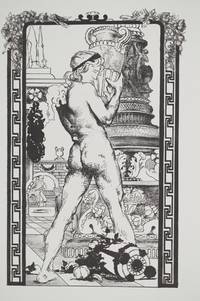
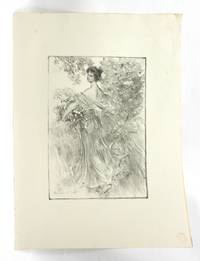
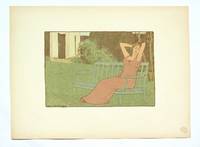
189773908Paris: Imprimerie Champenoispour CH. MassonH. Piazza 1897. Fine. Imprimerie Champenois pour CH. Masson H. Piazza Paris Mai 1897 33 x 23 cm une feuille Rare original color lithograph executed by Maurice Réalier-Dumas for L'Estampe Moderne series number 1 published in May 1897. One of 50 deluxe proofs printed on Japan paper with wide margins artist's signature and date in the plate publisher's dry stamp representing a child's profile in the lower margin numbered stamp of the deluxe printing on the verso. Magnificent French monthly publication edited between May 1897 and April 1899 L'Estampe moderne consists of previously unpublished chromolithographs which unlike other magazines such as Les Maîtres de l'Affiche and as stipulated on the tissue guards were created specially by each artist for the magazine. Thus 100 prints appeared in total covering the major artistic movements of the late 19th century: Symbolism Art Nouveau Pre-Raphaelites Orientalists and Belle Epoque. Each delivery of four prints was issued in 2000 copies sold for 3.50F and 100 on Japan paper offered at 10F. Henri Piazza also planned a confidential deluxe printing: 50 copies on Japan paper with wide margins and 50 in black on China paper at the considerable price of 30F. This print of handsome format is superbly printed in colors on the most prestigious of papers: Japan paper. Thick silky satined and pearlescent it contributes to making each page a complete work in itself. Its quality of ink absorption and its affinity with colors also make it the ideal support for these very beautiful lithographs. The interest of French collectors in artistic posters grew at the beginning of the 1890s. Octave Uzanne to qualify this fever invented the term ""affichomanie."" The poster originally popular and pasted on the streets of the capital then became an art object and its ephemeral medium became precious and destined for preservation. Piazza decided to remove the poster from its advertising vocation and elevate it to the rank of a complete work of art on the same level as the deluxe illustrated book. He thus composed a prestigious collection of entirely original works by the most prominent European artists of the moment: Georges de Feure Eugène Grasset Henri Detouche Emile Berchmans Louis Rhead Gaston de Latenay Lucien Lévy-Dhurmer Gustave-Max Stevens Charles Doudelet Hans Christiansen Henri Fantin-Latour Steinlen Ibels Engels Willette Henri Meunier Evenepoël Bellery-Desfontaines Charles Léandre etc. Handsome copy in the artist's Art Nouveau style. Imprimerie Champenoispour CH. MassonH. Piazza unknown
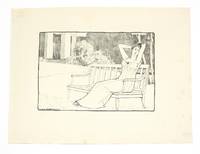
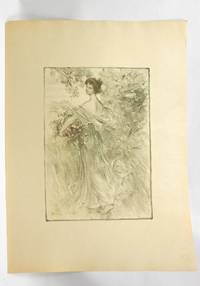
189773909Paris: Imprimerie Champenoispour CH. MassonH. Piazza 1897. Fine. Imprimerie Champenois pour CH. Masson H. Piazza Paris Mai 1897 33 x 23 cm une feuille Rare original lithograph executed by Maurice Réalier-Dumas for L'Estampe Moderne series number 1 published in May 1897. One of 50 deluxe proofs printed on China paper with wide margins artist's signature in the plate publisher's dry stamp representing a child's profile in the lower margin mounted on a sheet of laid paper with the numbered stamp of the deluxe printing on the verso some foxing. Magnificent French monthly publication edited between May 1897 and April 1899 L'Estampe moderne consists of previously unpublished chromolithographs which unlike other magazines such as Les Maîtres de l'Affiche and as stipulated on the tissue guards were created specially by each artist for the magazine. Thus 100 prints appeared in total covering the major artistic movements of the late 19th century: Symbolism Art Nouveau Pre-Raphaelites Orientalists and Belle Epoque. Each delivery of four prints was issued in 2000 copies sold for 3.50F and 100 on Japan paper offered at 10F. Henri Piazza also planned a confidential deluxe printing: 50 copies on Japan paper with wide margins and 50 in black on China paper at the considerable price of 30F. This print of handsome format is superbly printed on one of the most prestigious papers: China paper. ""Despite all its qualities China paper too insubstantial owes its reputation not to its own beauty but rather to its particular affinities with printing ink. Its texture smooth and soft together is more apt than any other to receive a beautiful printing. This property makes China paper sought after for printing engravings."" Anatole France. The interest of French collectors in artistic posters grew at the beginning of the 1890s. Octave Uzanne to qualify this fever invented the term ""affichomanie."" The poster originally popular and pasted on the streets of the capital then became an art object and its ephemeral medium became precious and destined for preservation. Piazza decided to remove the poster from its advertising vocation and elevate it to the rank of a complete work of art on the same level as the deluxe illustrated book. He thus composed a prestigious collection of entirely original works by the most prominent European artists of the moment: Georges de Feure Eugène Grasset Henri Detouche Emile Berchmans Louis Rhead Gaston de Latenay Lucien Lévy-Dhurmer Gustave-Max Stevens Charles Doudelet Hans Christiansen Henri Fantin-Latour Steinlen Ibels Engels Willette Henri Meunier Evenepoël Bellery-Desfontaines Charles Léandre etc. Handsome copy in the artist's Art Nouveau style. Imprimerie Champenoispour CH. MassonH. Piazza unknown
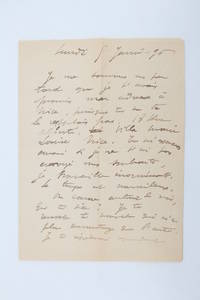
189180763s. l. 1891. Fine. s. l. 5 janvier 1891 14.20 x 19.20 cm 3 pages sur un double feuillet Autograph letter signed by Maurice Leblanc to an unknown recipient; three pages written in black ink on a double leaf. Transverse folds inherent to posting. At the beginning of this year Maurice Leblanc left the Norman coast to spend the winter in Nice: ""Je me souviens un peu tard que je t'avais promis mon adresse à Nice puisque tu ne te la rappelais pas. 18 rue Alberti villa Marie-Louise Nice. Tu m'excuseras aussi si je ne t'ai pas envoyé mes souhaits je travaille énormément le temps est merveilleux on cause autour de moi que te dire "" ""I remember rather late that I had promised you my address in Nice since you couldn't recall it. 18 rue Alberti villa Marie-Louise Nice. You'll also excuse me if I haven't sent you my wishes I'm working enormously the weather is wonderful people are chatting around me what can I tell you"" Though he had then published only one work he gives his opinion to his correspondent on a text the latter had sent him: ""Je te répèterai répondant ce que je t'ai dit pour ton style : il n'est pas assez travaillé tu écris un peu au hasard de ta plume on ne sent pas de nerfs là-dessous d'os de solide c'est du style de journal de lettre mais pas de style littéraire. Pourquoi n'essayes-tu pas de réfléchir sur chaque phrase avant de l'écrire."" ""I'll repeat in response what I told you about your style: it's not worked enough you write somewhat at random with your pen one doesn't feel any sinew underneath bone solidity it's newspaper style letter style but not literary style. Why don't you try to reflect on each sentence before writing it."" unknown
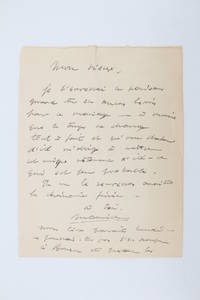
190080760s. l. 1900. Fine. s. l. s. d. ca 1900 14.70 x 18.90 cm Une page et 1/2 sur un feuillet Autograph letter signed by Maurice Leblanc to an unknown recipient whom he addresses as ""Mon vieux""; one and a half pages written in black ink on a sheet. Transverse folds inherent to mailing. The letter concerns the loan of a garment: ""Je t'enverrai ce pardessus quand tu en auras besoin pour ce mariage - à moins que le temps ne change tout à fait et qu'une chaleur d'été m'oblige à mettre cet unique vêtement d'été - ce qui est peu probable. Tu me le renverras aussitôt la cérémonie finie."" ""I'll send you this overcoat when you need it for this wedding - unless the weather changes completely and summer heat forces me to wear this only summer garment - which is unlikely. You'll send it back to me as soon as the ceremony is over."" Maurice Leblanc also mentions the release of one of his works ""Mon livre paraît lundi - ne pourrais-tu pas t'en occuper à Rouen et presser les libraires de faire leurs commandes et de t'arranger pour n'en point manquer "" ""My book comes out Monday - couldn't you take care of it in Rouen and press the booksellers to place their orders and arrange not to run out"" before concluding his letter: ""Tout le monde va bien. Chez Geo c'est affolant. On s'en va à Bordeaux du 21 avril au 4 mai."" ""Everyone is well. At Geo's it's frantic. We're going to Bordeaux from April 21 to May 4."" unknown
189874595Paris: Imprimerie Champenoispour CH. MassonH. Piazza 1898. Fine. Imprimerie Champenois pour CH. Masson H. Piazza Paris Octobre 1898 23 x 37.50 cm une feuille Rare original lithograph executed by Maurice Desvallières for L'Estampe Moderne series number 18 published in October 1898. One of 50 deluxe proofs printed on China paper with wide margins publisher's dry stamp depicting a child's profile in lower margin mounted on a sheet of laid paper with the numbered luxury edition stamp on the verso pale marginal foxing. Lithograph inspired by an extract from Agonie by Jean Lombard. Magnificent French monthly publication edited between May 1897 and April 1899 L'Estampe moderne consists of original chromolithographs which unlike other magazines such as Les Maîtres de l'Affiche and as stipulated on the tissue guards were created specifically by each artist for the magazine. Thus 100 prints appeared in total covering the major artistic movements of the late 19th century: Symbolism Art Nouveau Pre-Raphaelites Orientalists and Belle Époque. Each delivery of four prints was issued in 2000 copies sold for 3.50F and 100 on Japan paper offered at 10F. Henri Piazza also planned a confidential luxury printing: 50 copies on Japan paper with wide margins and 50 in black on China paper at the considerable price of 30F. This print of handsome format is superbly printed on one of the most prestigious papers: China paper. ""Despite all its qualities China paper too inconsistent owes its reputation not to its own beauty but rather to its particular affinities with printing ink. Its texture smooth and soft together is more apt than any other to receive a fine printing. This property makes China paper sought after for printing engravings."" Anatole France. The interest of French collectors in artistic posters intensified at the beginning of the 1890s. Octave Uzanne to qualify this fever invented the term ""affichomanie"". The poster originally popular and plastered in the streets of the capital then became an art object and its ephemeral medium became precious and destined for preservation. Piazza decided to remove the poster from its advertising vocation and elevate it to the rank of a complete work of art on the same level as the luxury illustrated book. He thus composed a prestigious collection of entirely original works by the most prominent European artists of the moment: Georges de Feure Eugène Grasset Henri Detouche Emile Berchmans Louis Rhead Gaston de Latenay Lucien Lévy-Dhurmer Gustave-Max Stevens Charles Doudelet Hans Christiansen Henri Fantin-Latour Steinlen Ibels Engels Willette Henri Meunier Evenepoël Bellery-Desfontaines Charles Léandre etc. Handsome copy in the Art Nouveau style. Imprimerie Champenoispour CH. MassonH. Piazza unknown
189773963Paris: Imprimerie Champenoispour CH. MassonH. Piazza 1897. Fine. Imprimerie Champenois pour CH. Masson H. Piazza Paris Septembre 1897 24 x 33 cm une feuille Rare original lithograph executed by Maurice Eliot for L'Estampe Moderne series number 5 published in September 1897. One of 50 deluxe proofs printed on China paper with wide margins artist's signature and date in the plate publisher's dry stamp representing a child's profile in the lower margin mounted on a sheet of laid paper with the numbered stamp of the deluxe printing on the verso pale marginal foxing. Magnificent French monthly publication edited between May 1897 and April 1899 L'Estampe moderne consists of original chromolithographs which unlike other magazines such as Les Maîtres de l'Affiche and as stipulated on the tissue guards were created specially by each artist for the magazine. Thus 100 prints appeared in total covering the major artistic movements of the late 19th century: Symbolism Art Nouveau Pre-Raphaelites Orientalists and Belle Epoque. Each delivery of four prints was printed in 2000 copies sold for 3.50F and 100 on Japan paper offered at 10F. Henri Piazza also planned a confidential deluxe printing: 50 copies on Japan paper with wide margins and 50 in black on China paper at the considerable price of 30F. This print of handsome format is superbly printed on one of the most prestigious papers: China paper. ""Despite all its qualities China paper too inconsistent owes its reputation not to its own beauty but to its particular affinities with printing ink. Its texture smooth and soft together is more apt than any other to receive a beautiful printing. This property makes China paper sought after for printing engravings."" Anatole France. French collectors' interest in artistic posters intensified at the beginning of the 1890s. Octave Uzanne to qualify this fever invented the term ""affichomanie"" poster mania. The poster originally popular and posted in the streets of the capital then became an art object and its ephemeral medium became precious and devoted to preservation. Piazza decided to remove the poster from its advertising purpose and elevate it to the rank of a complete work of art on the same level as the deluxe illustrated book. He thus composed a prestigious collection of entirely original works by the most prominent European artists of the moment: Georges de Feure Eugène Grasset Henri Detouche Emile Berchmans Louis Rhead Gaston de Latenay Lucien Lévy-Dhurmer Gustave-Max Stevens Charles Doudelet Hans Christiansen Henri Fantin-Latour Steinlen Ibels Engels Willette Henri Meunier Evenepoël Bellery-Desfontaines Charles Léandre etc. Handsome copy in the Belle époque style. Imprimerie Champenoispour CH. MassonH. Piazza unknown
189773962Paris: Imprimerie Champenoispour CH. MassonH. Piazza 1897. Fine. Imprimerie Champenois pour CH. Masson H. Piazza Paris Septembre 1897 24 x 33 cm une feuille et une serpente Rare original color lithograph executed by Maurice Eliot for L'Estampe Moderne series number 5 published in September 1897. One of 50 deluxe proofs printed on Japan paper with wide margins artist's signature and date in the plate publisher's dry stamp representing a child's profile in the lower margin numbered stamp of the deluxe printing on verso; engraving preceded by a tissue guard inscribed with the artist's name title a poem by Armand Sylvestre and a presentation text; and another blank tissue guard. Magnificent French monthly publication edited between May 1897 and April 1899 L'Estampe moderne consists of original chromolithographs which unlike other magazines such as Les Maîtres de l'Affiche and as stipulated on the tissue guards were created specially by each artist for the magazine. Thus 100 prints appeared in total covering the major artistic movements of the late 19th century: Symbolism Art Nouveau Pre-Raphaelites Orientalists and Belle Epoque. Each delivery of four prints was printed in 2000 copies sold for 3.50F and 100 on Japan paper offered at 10F. Henri Piazza also planned a confidential deluxe printing: 50 copies on Japan paper with wide margins and 50 in black on China paper at the considerable price of 30F. This print of handsome format is superbly printed in color on the most prestigious of papers: Japan paper. Thick silky satin and pearlescent it contributes to making each page a work in its own right. Its quality of ink absorption and its affinity with colors also make it the ideal support for these very beautiful lithographs. French collectors' interest in artistic posters intensified at the beginning of the 1890s. Octave Uzanne to qualify this fever invented the term ""affichomanie"" poster mania. The poster originally popular and posted in the streets of the capital then became an art object and its ephemeral medium became precious and devoted to preservation. Piazza decided to remove the poster from its advertising purpose and elevate it to the rank of a complete work of art on the same level as the deluxe illustrated book. He thus composed a prestigious collection of entirely original works by the most prominent European artists of the moment: Georges de Feure Eugène Grasset Henri Detouche Emile Berchmans Louis Rhead Gaston de Latenay Lucien Lévy-Dhurmer Gustave-Max Stevens Charles Doudelet Hans Christiansen Henri Fantin-Latour Steinlen Ibels Engels Willette Henri Meunier Evenepoël Bellery-Desfontaines Charles Léandre etc. Handsome copy in the Belle époque style. Imprimerie Champenoispour CH. MassonH. Piazza unknown
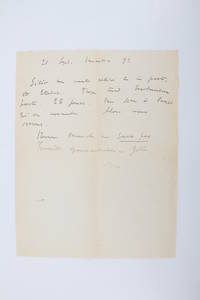
189380761Vaucottes Vattetot-sur-mer 1893. Fine. Vaucottes Vattetot-sur-mer 21 septembre 1893 15.60 x 20.10 cm quelques lignes sur un feuillet Autograph letter signed by Maurice Leblanc to an unknown recipient; a few lines written in black ink on a sheet. Transverse folds inherent to mailing. ""Sitôt ton mot retiré de la poste été Etretat. Trop tard. Natanson parti. 28 jours. Ne sera à Paris qu'en novembre. Alors nous verrons. Revue Blanche ne paie pas. Tempête épouvantable - grêle."" ""As soon as your note was collected from the post office went to Etretat. Too late. Natanson left. 28 days. Won't be in Paris until November. Then we'll see. Revue Blanche doesn't pay. Terrible storm - hail."" unknown
186223685New York: G. Savage 1862. Fine. Civil War era addenda to the Municipalist a New York magazine published following the "Separation of the United States". The first sentence reads "Since the preceding Letters have been published the United States of America have been dissevered and a new federation under the name of Confederate States of America formed". The Municipalist was first published in 1858; the second edition in 1859. <br /> <br /> Contents include secession enforced union convention of the states Abolitionists Shay's Rebellion the United States a great people no nation; and more.<br /> <br /> Plain paper wrappers. 16mo 303-348pp 1pp "Some Private Opinions". Stitched. Sabin 51330. OCLC: 950932219 one copy at the American Antiquarian Society. G. Savage unknown
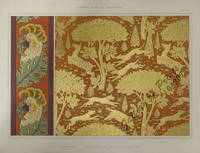
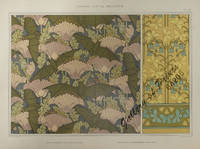
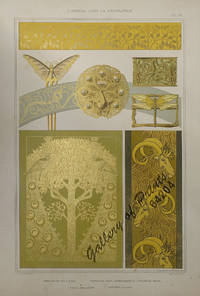
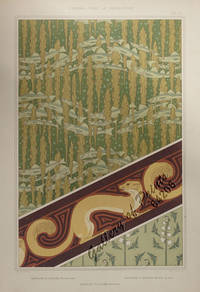
189764207<p>original colour chromolithograph.</p><p>zoology print from 'L'animal dans la décoration' by Maurice Pillard Verneuil and Eugène Grasset; pl. 36 published by Imprimerie Lemercier et cie Paris.<br />Verneuil 1869-1942 was a French artist and interior decorator. He studied with Eugène Grasset a Swiss illustrator noted for his theatrical posters. While sharing Grasset's use of bold outlines and solid color forms Verneuil's own style shows a love of expressive sinuous curvilinear forms reflecting the emergence of Art Nouveau.<br />In this 1897 portfolio Verneuil celebrates a rich variety of designs based on plant and animal forms: birds fish and other sea creatures seashells and insects flowers and trees. Reducing living creatures into playful decorative devices and geometric patterns he provides dozens of striking examples to serve as models for adaptation by interior designers in creating wallpaper textiles decorative ironwork or painted borders and friezes.</p> Imprimerie Lemercier et cie, Paris.
189764205<p>original colour chromolithograph.</p><p>zoology print from 'L'animal dans la décoration' by Maurice Pillard Verneuil and Eugène Grasset; pl. 33 published by Imprimerie Lemercier et cie Paris.<br />Verneuil 1869-1942 was a French artist and interior decorator. He studied with Eugène Grasset a Swiss illustrator noted for his theatrical posters. While sharing Grasset's use of bold outlines and solid color forms Verneuil's own style shows a love of expressive sinuous curvilinear forms reflecting the emergence of Art Nouveau.<br />In this 1897 portfolio Verneuil celebrates a rich variety of designs based on plant and animal forms: birds fish and other sea creatures seashells and insects flowers and trees. Reducing living creatures into playful decorative devices and geometric patterns he provides dozens of striking examples to serve as models for adaptation by interior designers in creating wallpaper textiles decorative ironwork or painted borders and friezes. Condition: with stains on left margin not affecting plate paper toning very good condition.</p> Imprimerie Lemercier et cie, Paris.
189764204<p>original colour chromolithograph.</p><p>Zoology print from 'L'animal dans la décoration' by Maurice Pillard Verneuil and Eugène Grasset; pl. 18 published by Imprimerie Lemercier et cie Paris.<br />Verneuil 1869-1942 was a French artist and interior decorator. He studied with Eugène Grasset a Swiss illustrator noted for his theatrical posters. While sharing Grasset's use of bold outlines and solid color forms Verneuil's own style shows a love of expressive sinuous curvilinear forms reflecting the emergence of Art Nouveau.<br />In this 1897 portfolio Verneuil celebrates a rich variety of designs based on plant and animal forms: birds fish and other sea creatures seashells and insects flowers and trees. Reducing living creatures into playful decorative devices and geometric patterns he provides dozens of striking examples to serve as models for adaptation by interior designers in creating wallpaper textiles decorative ironwork or painted borders and friezes. Condition: with stains on top margin not affecting plate paper toning. Very good condition.</p> Imprimerie Lemercier et cie, Paris.
189764206<p>original colour chromolithograph.</p><p>zoology print from 'L'animal dans la décoration' by Maurice Pillard Verneuil and Eugène Grasset; pl. 34 published by Imprimerie Lemercier et cie Paris.<br />Verneuil 1869-1942 was a French artist and interior decorator. He studied with Eugène Grasset a Swiss illustrator noted for his theatrical posters. While sharing Grasset's use of bold outlines and solid color forms Verneuil's own style shows a love of expressive sinuous curvilinear forms reflecting the emergence of Art Nouveau.<br />In this 1897 portfolio Verneuil celebrates a rich variety of designs based on plant and animal forms: birds fish and other sea creatures seashells and insects flowers and trees. Reducing living creatures into playful decorative devices and geometric patterns he provides dozens of striking examples to serve as models for adaptation by interior designers in creating wallpaper textiles decorative ironwork or painted borders and friezes. Condition: paper toning very good condition.</p> Imprimerie Lemercier et cie, Paris.
1876030005Cambridge: Hurd & Houighton 1876. 1st Edition 1st Printing. Hardcover. Very Good . 226 Pp Index At Rear. Original Brown Cloth Gilt And Stamped In Blind 9 1/8" Tall Dark Slate Endpapers. First American Edition In French. Light Wear At Corners Slight Wear At Edges A Few Small Discolorations To Covers All Gilt Brilliant Hinges Tight No Names Or Marks. <br/> <br/> Hurd & Houighton hardcover
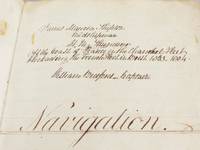
18030002561Good. 1803. On offer is a superb original 1803 - 1805 manuscript cypher and navigation book handwritten by a young midshipman James Maurice Shipton aboard the noted HMS Thunderer a ship forever in the history books as the ship that spotted the emerging Spanish fleet and thusly began the Battle of Trafalgar and the demise of Britain's enemies and sadly the hero of the day Lord Horatio Nelson. Notably Thunderer also took part in the Glorious 1st of June Battle against the French in 1794. James Maurice Shipton who would one day captain his own ship and reap accolades created this book while theThunderer worked blockade duty along the French coast. Mere months later the ship would engage in the Battle of Trafalgar and the decisive engagement by the British would end the rule of the French despot and dictator Napoleon Bonaparte. Included are a number of letters from archivists and historians providing background info on Shipton. The book is in wonderful condition the vellum save for some soiling is better than good and the interior as well. Overall G.; Manuscript; Folio - over 12" - 15" tall; KEYWORDS: HISTORY OF JAMES MAURICE SHIPTON HMS THUNDERER TRAFALGAR MIDSHIPMAN GEORGE III NAVIGATION CYPHER SAILING AGE OF SAIL CHANNEL SQUADRON BLOCKADE DUTY LORD HORATIO NELSON MARITIME MARINE NAUTICAL NAVAL OCEAN TRAVEL BARGE SCHOONER NAVAL ACTIONS THE ROYAL NAVY NAVAL MARINE NAUTICAL NAUTICAL LOGBOOK SPANISH FLEET CYPHERING CIPHER COMPLEX MATHEMATICS BRITISH ROYAL NAVY BRITANNICA EARLY 19TH CENTURY HANDWRITTEN MANUSCRIPT DOCUMENT LETTER AUTOGRAPH WRITER HAND WRITTEN DOCUMENTS SIGNED LETTERS MANUSCRIPTS HISTORICAL HOLOGRAPH WRITERS AUTOGRAPHS PERSONAL MEMOIR MEMORIAL AMERICANA ANTIQUITÉ CONTRAT VÉLIN DOCUMENT MANUSCRIT PAPIER ANTIKE BRIEF PERGAMENT DOKUMENT MANUSKRIPT PAPIER OGGETTO D'ANTIQUARIATO ATTO VELINA DOCUMENTO MANOSCRITTO CARTA ANTIGÜEDAD HECHO VITELA DOCUMENTO MANUSCRITO PAPEL . hardcover
1816BTETM0002692London: Printed for the Author and sold by John Murray Albemarle Street 1816. 1st Edition. Hardcover. Good/No Jacket. quarto 4to 9 12 × 12 in 241 × 305 mm . Please email for Photographs or further information. Good - Original boards rebacked in pale cloth with printed paper spine label. Boards rubbed marked and edge-worn with bumping to corners and visible wear to extremities; nevertheless an appealing and authentic survival in its original format rather than a later dressed-up binding. Textblock sound and complete. Pages remain untrimmed / roughly cut. Small closed tear to the front free endpaper; minor repair and old inscription to the leaf following the title; occasional foxing and edge discoloration chiefly concentrated in one localized area as noted in the original sellers description; a few pencil annotations. Plates all present and generally attractive. A solid complete and increasingly uncommon copy of this curious Babylonian antiquarian work. Collation: 4 viii 164 5 pp. Complete: engraved title-vignette 4 engraved plates list of subscribers advertisement leaf at end. With engraved title-vignette and 4 engraved plates; the Tanjore plate in this copy is signed Barlow sculp. and acknowledged as copied from the designs of William Hodges. Please see Photos as part of condition report. References: NSTC 2M20921 WorldCat / OCLC 311710905 1816 1st Edition London RUINS OF BABYLON Observations Connected with Astronomy and Ancient History Sacred and Profane on the Ruins of Babylon As Recently Visited and Described by Claudius James Rich Esq. A substantial and uncommon early nineteenth-century antiquarian study of Babylon in which the Rev. Thomas Maurice uses the recent observations of Claudius James Rich to range across Biblical history ancient astronomy comparative religion and the monumental traditions of the ancient world. Complete with engraved title-vignette and four engraved plates including the supposed ruins of the Tower of Babel Persepolitan characters the Great Pagoda of Tanjore and a Mexican temple to the Sun and Moon. A characterful unsophisticated first edition in original boards rebacked and still very much the sort of copy collectors like: complete untrimmed and honest. By The Rev. Thomas Maurice A.M. Author Bio: Thomas Maurice 17541824 was a British cleric orientalist and antiquarian scholar best known for his Indian Antiquities and for his work at the British Museum where he served as assistant keeper / assistant librarian in the manuscripts department. His writings belong to the great age of late-Georgian comparative antiquarianism when Biblical chronology classical learning Asian studies and early archaeology were often brought into a single speculative framework. Synopsis: Work / historical context: Maurices Ruins of Babylon was published in response to the investigations of Claudius James Rich the East India Companys Resident at Baghdad whose examination of the site of Babylon is now widely regarded as a foundational moment in the modern study of Mesopotamian antiquity. Maurice takes Richs observations as the starting point for a broader inquiry into astronomy sacred and profane history ancient empire mythic memory and the architectural symbolism of stepped or pyramidal temple forms. The result is a distinctly early nineteenth-century synthesis: scholarly ambitious and often speculative but rich in historical curiosity and highly evocative of the periods encounter with the ancient Near East. Format: Hardcover quarto 4to 9 12 × 12 in 241 × 305 mm Note: Binding/size selection follows standard bibliographic conventions and is approximate; exact measurements may vary. Language: English Published By: Printed for the Author and sold by John Murray Albemarle Street London Condition Report: Dust Jacket: No Jacket Dust Jacket Condition: No Jacket Good - Original boards rebacked in pale cloth with printed paper spine label. Boards rubbed marked and edge-worn with bumping to corners and visible wear to extremities; nevertheless an appealing and authentic survival in its original format rather than a later dressed-up binding. Textblock sound and complete. Pages remain untrimmed / roughly cut. Small closed tear to the front free endpaper; minor repair and old inscription to the leaf following the title; occasional foxing and edge discoloration chiefly concentrated in one localized area as noted in the original sellers description; a few pencil annotations. Plates all present and generally attractive. A solid complete and increasingly uncommon copy of this curious Babylonian antiquarian work. Collation: 4 viii 164 5 pp. Complete: engraved title-vignette 4 engraved plates list of subscribers advertisement leaf at end. With engraved title-vignette and 4 engraved plates; the Tanjore plate in this copy is signed Barlow sculp. and acknowledged as copied from the designs of William Hodges. Please see Photos as part of condition report. References: NSTC 2M20921 WorldCat / OCLC 311710905 SKU: BTETM0002692 Shipping Info: Approximate Package Dimensions H: 12.5 L: 30 W: 25 Units: cm W: 2Kg Tracked Shipping Insurance Coverage as per Customer Request Printed for the Author, and sold by John Murray, Albemarle Street hardcover
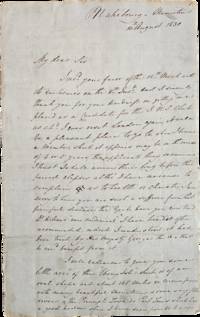
1830List2931Mahébourg Mauritius 1830. Single unsigned fourteen-page letter measuring 8 x 12 ¾ inches. Folded with some stains and pencil marks. Overall near fine. In 1830 Mauritius was a British colony captured from the French in 1810 during the Napoleonic Wars. It was originally a Dutch colony and the Dutch had introduced enslaved labor to the islands. Enslaved people were imported from Madagascar India and Southeast Asia to harvest the valuable ebony trees and later to farm sugarcane. It became a French colony in 1715 and among other provisions the French government awarded upper-class colonists large land grants each with twenty enslaved people to work them. Slavery was abolished in 1835 under British rule after which the planters still farming sugarcane turned to indentured servant labor from India and China alongside illegal slavery.1<br /> <br /> Offered here is a lengthy single letter written by an unknown author to an unknown recipient from Mahébourg in 1830 shortly before this radical change. The letter describes the lives and economic circumstances of the planters and merchants and of the non-white population particularly Malabar people and free and enslaved Black people.<br /> <br /> Noting that “every inch of ground that will produce sugar cane is planted with it†including “the former fine gardens to some of the Habitations†the author reports on the situation for sugar planters:<br /> <br /> “The price of sugar here is not more than 20/per Cwt. for the best quality which does not now remunerate the Planter as his expenses are becoming every day more heavy in consequence of their slaves diminishing . The want of Slaves induced many of the Planters to send for Chinese Labourers and several hundreds were imported at a great expense but unfortunately they did not answer and were obliged to be reshipped for their native Country again at the charge of those who sent for them.â€<br /> <br /> The author later notes that “nearly everyone of the Planters have heavy mortgages on their Estates and are obliged to pay this immense Interest which keeps them poor and will I fear ultimately ruin themâ€. In fact the planters in British Mauritius had extra duties on their sugar exports compared with their Caribbean counterparts. The shopkeepers on the other hand “calculate on retiring with a fortune in five years– therefore you will fancy what must be their prices also their profits.â€<br /> <br /> Though writing from Mahébourg the author describes the capital city of Port Louis at length especially its Malabar Indian and free Black residents—the lives of the latter particularly the free Black women seem especially grim. They write:<br /> <br /> “The Centre of Port Louis is inhabited by all the respectable people and many most excellent houses buildings– the Catholic Chapel the English Church amongst the number. The Suburbs to the West is the part occupied by about 3000 Malabars called ‘Malabar Town.’ – They are dressed mostly in white with Turbans ear rings c c and the females with ornaments in their noses and on their Toes as they generally go bare foot. – Once a year they have what is called a ‘Yamsee’ or a festival in honor of Mehomet which lasts for about a fortnight during which time they seem to get no sleep a continual beating of tom toms – jingling of bells – carrying pagodas which are made of various coloured paper and most richly ornamented followed by all the population of their Caste with their faces daubed with red white c and which has a most ludicrous appearance. The Suburbs to the South is called ‘black Camp’ – the Houses being very small and poor and inhabited by all the free blacks as well as many Mulattoes. – Also a certain class of females of the population of colour – who are visited immediately on the Arrival of a Ship the Crews soon enquiring the way to the ‘Camp.’â€<br /> <br /> As regards relations between the races the author recounts an incident that followed the 1828 abolition of the color bar which would ostensibly give the free non-white population the same rights as the whites:<br /> <br /> “The Theatre is a very good one but has been closed for several months past the Actors Actresses gone to Bourbon in consequence of the promulgation of the act ‘causing all free people of the population of Colour’ to have the same laws – the same privileges as the Whites’ fearing they ought come to the Theatre which they had hitherto been forbidden thereby cause disturbances as the French Whites detest them wd. not sit in the same box it was considered best to shut the Theatre which is a great loss to the Place it being the chief public amusement and indeed the only one we have here.â€<br /> <br /> Overall a detailed letter giving insight into life in a slave colony at a time when significant changes were on the horizon. Of interest to scholars of the colonial history of Mauritius and the second wave of British colonialism.<br /> <br /> 1 Truth and Justice Commission Report of the Truth and Justice Commission Vol. 1 Mauritius: Government Printing 2011. unknown
189765451[Berlin, F. Fontane & Co., 1897]. Im Stein monogrammiert. Darstellung 24,6 x 17,4 cm (Blattgröße 36,9 x 27,7 cm).
189865456[Berlin, F. Fontane & Co., 1898]. Darstellung ca. 25,5 x 19,5 cm, Blattgröße 35,9 x 27,5 cm.
19004508New York: Street & Smith 1900 . First edition. Fair. 12mo 323 pages green cloth first signature loose <br/><br/> Street & Smith hardcover
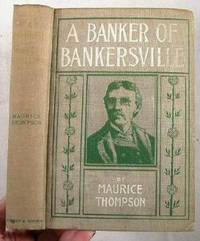
1900009063New York: Street & Smith 1900. Later edition 1900 first published in 1886. Hard-to-find novel by this Indiana author a semi-autobiographical novel written before what later became his most famous work Alice of Old Vincennes. Grayish tan cloth lettered and with a pictorial design in green and white 323 pages. A sturdy copy with some edgewear mainly bumping to the corners some wear to the lettering on the spine and front cover good hinges sound text block very clean pages free from names or other markings. Hard Cover. Very Good/None. 12mo - over 6¾" - 7¾" tall. Street & Smith Hardcover
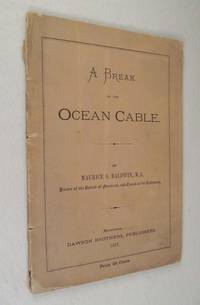
187715547Montreal: Dawson Brothers Publishers 1877. Book. Very Good. Sewn Wraps. Inscribed by Authors. Presumed First Edition. Very good with a little soiling to covers and some bumps and wear to extremities. Inscribed bu author on the title page. but not signed . Scarce thus. Dawson Brothers, Publishers Paperback
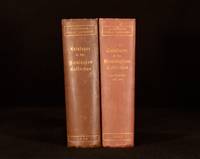
1819GEN34-A-3Birmingham: Cornish Brothers LTD. 1918-1931. Cloth. Very Good. 10" by 8.5". None. The catalogue of the Public Reference Library of Birmingham from 1918-1931. Containing over 300000 seperate items these volumes are the product of a library's attempt to compile a catalogue that is both exhaustive and relatively compact; the introduction states that a full catalogue maay not be "manageable or practically useful". Contains bookstamp and institutional bookplate to pastedowns. In cloth binding with gilt detailing. Externally sound with some wear and markings to boards extremities and backstrip. Internally the pages are firmly bound and are bright and clean throughout. Very Good Cornish Brothers LTD. hardcover
1898961T13Maine: Thomas B. Mosher 1898. Vellum. Very Good. 5.5" by 4". None. A collection of limited edition titles of classical tales translated by English designed and poet William Morris. A collection of four classical tales bound into one volume. Each individual volume is limited to four hundred and twenty-five copies printed on Japan vellum being the fourth edition. This collection contains: The Story of Amis and Amile 1898. Translated from the original Ancient French. The Tale of the King Florus and the Fair Jehane 1898. The Tale of King Coustans The Emperor 1900. Quattrocentisteria: How Sandro Betticelli Saw Simonetta in the Spring 1898. With the first three volumes being translated by William Morris an English textile designer poet artist writer and socialist activist associated with the British Arts and Crafts movement. His literary contributions helped to establish the modern fantasy genre while he campaigned for socialism in fin de siècle Great Britain. The fourth volume by Maurice Hewlett an English historical novelist poet and essayist. Bound in full vellum. Externally sound with light wear and minor bumping to the extremities. Light discolouration as is typical with ageing with marks to the boards. Internally firmly bound. Pages are very bright with light age toning to the extremities. The odd small handling mark to the endpapers with a contemporary ink inscription to the front endpaper. Previous owner's bookplate to the front pastedown. Very Good Thomas B. Mosher hardcover
1900441398New York: Hodder & Stoughton 1900. Softcover. Fine/Fine. 12mo. Publisher's flexible leatherette. Fine in original fine unprinted glassine dustwrapper and worn cardboard box with printed label. Hodder & Stoughton unknown