242 résultats
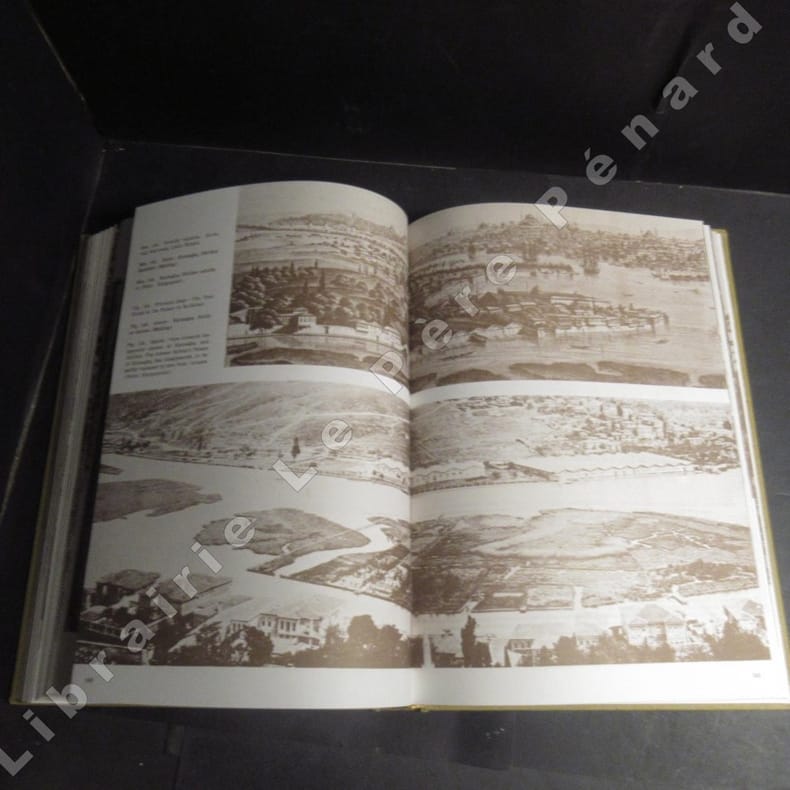
New New English Original bdg. Dust wrapper. Oblong folio. (23 x 33 cm). In English and Turkish. 207 p., B / w and color ills. The Bosphorus steamers of the Sirket-i Hayriye. = Sirket-i Hayriye'nin Bogaziçi vapurlari. The Bosphorus has always been a subject that occupied an extraordinary place both in the Turkish and in the World literatures. With its natural...
New English Original bdg. HC. 4to. (33 x 24 cm). In Turkish. 2 volumes set (255 p.; 165 p.), color ills. Bogazin incileri: Yalilar. 2 volumes set. Vol. 1: Asya yakasi Bogaz yalilari. Vol. 2: Avrupa yakasi Bogaz yalilari.
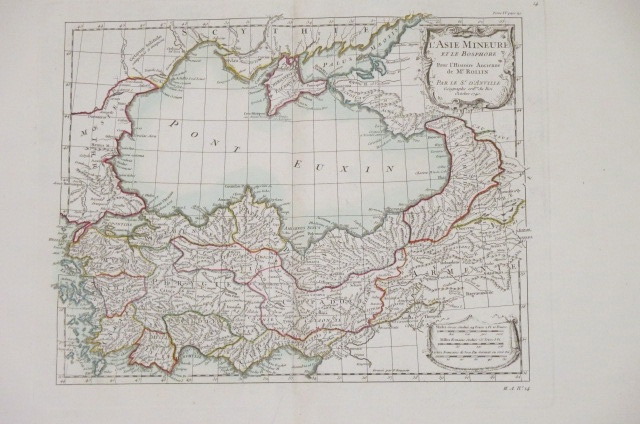
CART011MGravée par P. Bourgoin sur Papier à la Cuve. Octobre 1740.
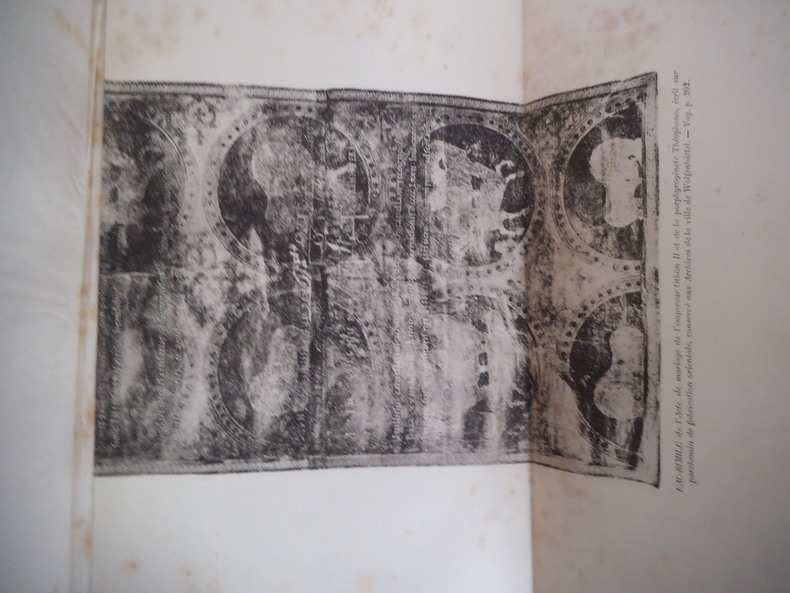
193563788Wald, Buchdruckerei W. Hess, 1935, Auflage: 1. Leinen, gebunden; grau melierter, schwarz geprägter Einband, Farbkopfschnitt, Frakturschrift / Anz. Seiten: 238 / 16 x 22 cm / mit zahlreichen Schwarzweisstafeln und Karten / Zustand: gut, geringe bis leichte Gebrauchsspuren; Einband und Papier leicht gebräunt, Schnitt gering fleckig
New Turkish Paperback. 4to. (30 x 21 cm). In Turkish. 113, [7] p., color and b/w ills. Beykoz bibliyografyasi. Beicos bibliography.
Bologna, Marsigli e Rocchi, 1854. In 8vo (cm. 22); brossura originale stampata, pp. 42. ... Costantinopoli e il Bosforo. L’antica Bisanzio. La città di Costantino... Tened, Basika, Lemnos, Ingresso dei Dardanelli... La Crimea, Sebastopoli... Axs
171713493Nürnberg, Johann Leonhard Buggel, 1717. Pergamenteinband, 8°, [9], 574 [18] S.; -Deckel berieben, Bindung etwas lose, Titelblatt gestempelt, gutes Exemplar, ohne Kupfer.
New English Paperback. Pbo. 4to. (29 x 24 cm). In English. 331 p., b/w and color ills. Constantinople and the orientalists. Since the publication of our earlier study; 'Orientalism and Turkey', we have been exploring the ramifications of Orientalism in the Ottoman capital of Istanbul itself, or as it was generally known in the nineteenth and early twentieth century: Constantinople. The present study, documented by both visual and written records, including memories, reveals not only the ways in which Istanbul was perceived and portrayed by European artists in the nineteenth century, but it also tries to represent the contemporary city as it truly lived and breathed. In the present work, the reader will discover the identity of Western artists whose works pictorially limned the Ottoman capital, their favorite subjects ¿the harem, the bath, the coffeehouse, and the slave market- and the nature of their interpretation of these subjects.
Very Good English Paperback. Pbo. 4to. (29 x 24 cm). In English. 331 p., b/w and color ills. Constantinople and the orientalists. Since the publication of our earlier study; 'Orientalism and Turkey', we have been exploring the ramifications of Orientalism in the Ottoman capital of Istanbul itself, or as it was generally known in the nineteenth and early twentieth century: Constantinople. The present study, documented by both visual and written records, including memories, reveals not only the ways in which Istanbul was perceived and portrayed by European artists in the nineteenth century, but it also tries to represent the contemporary city as it truly lived and breathed. In the present work, the reader will discover the identity of Western artists whose works pictorially limned the Ottoman capital, their favorite subjects ¿the harem, the bath, the coffeehouse, and the slave market- and the nature of their interpretation of these subjects.
New New English Original bdg. Dust wrapper. 4to. (29 x 24 cm). In English. 331 p., b/w and color ills. Constantinople and the orientalists. Since the publication of our earlier study; 'Orientalism and Turkey', we have been exploring the ramifications of Orientalism in the Ottoman capital of Istanbul itself, or as it was generally known in the nineteenth and early twentieth century: Constantinople. The present study, documented by both visual and written records, including memories, reveals not only the ways in which Istanbul was perceived and portrayed by European artists in the nineteenth century, but it also tries to represent the contemporary city as it truly lived and breathed. In the present work, the reader will discover the identity of Western artists whose works pictorially limned the Ottoman capital, their favorite subjects ¿the harem, the bath, the coffeehouse, and the slave market- and the nature of their interpretation of these subjects.
New Turkish Paperback. Pbo. Cr. 8vo. (20 x 14 cm). In Turkish. 134 p., 77 color and b/w plates, 2 maps. The Bosphorus in the period of Byzantine Empire. Bizans devrinde Bogaziçi.
Very Good Turkish Paperback. Pbo. Cr. 8vo. (20 x 14 cm). In Turkish. 184 p., b/w plts. 1350 copies were printed. First Edition. Bizans devrinde Bogaziçi. The Bosphorus in the period of Byzantium.
Very Good French Paperback. 4to. (27 x 19 cm). In French. 257-273 pp., 11 numerous b/w plates. Le baptistere de Sainte Sophie d'Istanbul. (Estratto da Atti del IX Congresso Internazionale di Archeologia Cristiana. Roma, 21-27 Settembre 1975).
Fine Turkish Paperback. Oblong large 8vo. (14 x 20 cm). In Turkish. 31 p., b/w ills. Ortaköy. Tarih - sosyal ve mimari doku.
Very Good Turkish Paperback. 4to. (26 x 19 cm). In Turkish. 27 p., b/w ills. Galatada Arab camii. Extremely rare separatum on Arab Mosque in Galata.
New English Paperback. Roy. 8vo. (23 x 16,5 cm). In English and Turkish. 344 p., ills. Waterfront residences and mansions of Istanbul.= Istanbul'un yalilari ve köskleri. What makes Istanbul a favorite city is its magnificent waterfront residences along the Bosphorus and the sumptuous mansions spreaded into the different points of the city. The stories of these buildings that shine like jewels with their design, colors, outbuildings, gardens and peripheral arrangements have become legendary. "Waterfront Residences and Mansions of Istanbul" harks back to the past by conveying knowledge about these mysterious and enchanting structures.
Fine Turkish In modern clothes. 4to. (33 x 24 cm). In English and Turkish. 2 volumes set: (xvii, [3], 357 p.; [8], 447 p.), b/w and color plates. Sedad Hakki Eldem was a Turkish Architect. One of the pioneers of nationalized modern architecture in Turkey. He was born in Constantinople (1908). He graduated from the Academy of Fine Arts (department of Architecture). Between 1931 and 1932 he travelled to France, England and Germany with a scholarship of the academy. In 1932 he opened his own office, also started teaching at the Academy of Fine Arts and continued until retirement in 1978. In 1934 he worked for the National Architecture Seminar in Turkey which was a complete disaster for him because of the discussions between modern architecture and traditional architecture. In 1938 he designed the Turkish Pavilion in New York Exhibition. Sedad Hakki Eldem represented Turkish Republic at International Union of Architects in Lausanne (1948) after Second World War. Also in the same year Sedad Hakki worked with his colleague Emin Onat on the project of Istanbul Palace of Justice. He worked on proportions and architectural organizations of Ottoman domestic houses, 18th and 19th century palaces and mansions. He was known as a role model and pioneer to reinterpret the Classical Ottoman Patterns in modern architecture. He was a part of Former Artifacts Maintain Council (Eski Eserleri Muhafaza Encümeni) between 1941 and 1945 and also a part of Supreme Council of Antiquities and Monument Real Estate (Gayrimenkul Eski Eserler ve Anitlar Yüksek Kurulu) between 1962 and 1978. His thought was about nationalizing the Modern Architecture. He basically thought that International Style in architecture should not applied everywhere. Some things should be changed in the design by considering the national and domestic texture. He has won the international Aga Khan Award for Architecture in 1986 with the project of Zeyrek Social Security Facilities. Sedad Hakki Eldem's architecture has basically 4 main periods. The first of them, between 1928 and 1934, is known by the instability of his work. After that, the second period is popular with modern trials on Ottoman architectural organization. The time frame of this period spans from 1934 until 1952. The third period of his architecture has lost its Ottoman influence, it looks more modernized between 1952 and 1962. The last part of Eldem's Architecture known for his double approach on projects.This final period started in 1962, and lasted until his death in 1988. (Source: Wikipedia). Extremely rare.
Very Good Turkish Paperback. Folio. (34 x 24 cm). In Turkish. 2 volumes set: (70 p.; 64 p.). Eldem was a Turkish architect and one of the pioneers of nationalized modern architecture in Turkey. He was born in Istanbul (1908). He graduated from the Academy of Fine Arts (Department of Architecture). Between 1931 and 1932 he traveled to France, England, and Germany with a scholarship from the academy. In 1932 he opened his own office, also started teaching at the Academy of Fine Arts, and continued until retirement in 1978. In 1934 he worked for the National Architecture Seminar in Turkey which was a complete disaster for him because of the discussions between modern architecture and traditional architecture. In 1938 he designed the Turkish Pavilion in New York Exhibition. Sedad Hakki Eldem represented the Turkish Republic at the International Union of Architects in Lozan (1948) after Second World War. Also in the same year, Sedad Hakki worked with his colleague Emin Onat on the project of Istanbul Palace of Justice. He worked on proportions and architectural organizations of Ottoman domestic houses, 18th and 19th-century palaces, and mansions. He was known as a role model and pioneer to reinterpret the Classical Ottoman Patterns in modern architecture. He was a part of the Former Artifacts Maintain Council (Eski Eserleri Muhafaza Encümeni) between 1941 and 1945 and also a part of the Supreme Council of Antiquities and Monument Real Estate (Gayrimenkul Eski Eserler ve Anitlar Yüksek Kurulu) between 1962 and 1978. His thought was about nationalizing Modern Architecture. He basically thought that International Style in architecture should not be applied everywhere. Some things should be changed in the design by considering the national and domestic texture. He has won the international Aga Khan Award for Architecture in 1986 with the project of Zeyrek Social Security Facilities. Sedad Hakki Eldem's architecture has basically 4 main periods. The first of them, between 1928 and 1934, is known for the instability of his work. After that, the second period is popular with modern trials on Ottoman architectural organization. The time frame of this period spans from 1934 until 1952. The third period of his architecture has lost its Ottoman influence, it looks more modernized between 1952 and 1962. The last part of Eldem's Architecture known for his double approach to projects. This final period started in 1962 and lasted until his death in 1988. (Wikipedia).
Very Good French Paperback. 4to. (34 x 24 cm). In French and Turkish. 112, [1] p., b/w plts. Le Yali de Köçeoglu à Bebek sur le Bosphore.= Köçeoglu Yalisi, Bebek, Bogaziçi.
19791130631979 Alarko Egitim Tesisleri - 1979 - 2 volumes in-4, cartonnage avec titre et nom de l'auteur en doré sur le 1er plat et le dos - 343 p. + 398 p. - Très riche iconographie hors texte et pleine page en N&B - Ouvrage bilingue turc / anglais
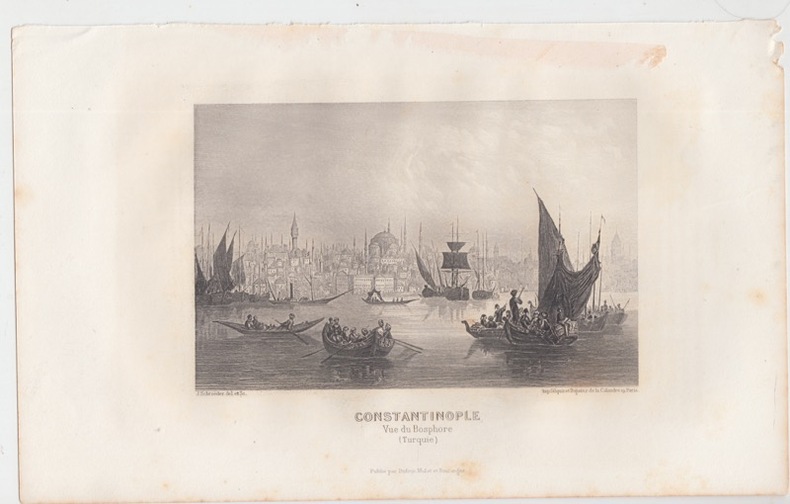
26217Paris . Dufour , Mulat et Boulanger éditeur / Imprimerie Gilquin et Dupain . Vers 1858 - Eau forte 27,5 x 18 cm [ 15,5 x 10,5 cm de Gravure ] - Vers 1858 - SCHROEDER J. [ DESSIN et GRAVURE ]
Magnifico panorama con vista generale del Bosforo, da Roumeli-Hissari al Mar Nero, disegnato e litografato da Schranz, con fine coloritura d’epoca. E’ composto da 4 sezioni in sequenza a formare un prezioso pannello di cm. 25,1 x 170,3 (con il bordo a stampa è di cm. 33x179,5), con grande vista sulle flotte francesi e inglesi; al margine inferiore sono indicate le località illustrate: Beikos - Kandili - Mer de Marmara - Roumeli Hissari - Yeni Keui - Calender - Thérapia - Palais de France - Palais d’Engleterre - Kiretch Bournou - Prairie de Buyuk-Déré - Yeni-Mahallé - Roumeli-Kavak - Fanaraki d’Europe - Iles Cyannées - Chateau des Génois - Mer Noir. Lo splendido panorama porta in primo piano una lussureggiante vegetazione, scene di gente del luogo che socializza, animali che pascolano, viaggiatori a cavallo, e numerose sono le navi che solcano le acque del Bosforo. Cfr. Benezit,XII, p. 524: “Jean ou Johann Schranz, allemand, né en 1794 à Minorque, mort en 1882 à Malte, peintre, aquarelliste, dessinateur. Il s’est avec son père Anton spécialisé dans la peinture de paysages et de marines”. Due macchie al marg. super. bianco e restauri su due angoli di una sezione; al marg. infer. strappi restaurati, ma complessivam. buon esemplare. Estremamente raro.
11364Guerres contre les russes, les arabes, les allemands, les bulgares, luttes civiles contre les deux Bardas, Jean Tzimiscès, les jeunes années de BasileII le tueur de bulgares. Fort in 4 demi chagrin rouge à nerfs et à coins, titre doré, filets à froid sur les plats ; Carte de l’Empire Byzantin, en couleurs, sous serpente, faux-titre, titre,, 799 pages, non rogné, tête dorée, illustrations dans et hors-texte (un dépliant) Hachette & Cie 1896. Rousseurs plus ou moins fortes, éparses, plus concentrées en début et fin de volume,
Very Good English Paperback. Oblong large 8vo. (22 x 23 cm). In English, Turkish, and Armenian. [36] p., b/w photos. Eyewitness.= Görgü tanigi. Getronagan Lisesi 100. kurulus yildonumu anisina.= In memoriam Getronagan Lycee, 1866-1986.
Very Good English Paperback. Pbo. Cr. 8vo. (19 x 11 cm). In Turkish. [4], 352 p., full page b/w plates. Sergüzest-i Nono Bey ve elmas Bogaziçi.