nazle cOrinaldi Maria.MareMagnum

242 résultats
Milano, Edizioni Librarie Italiane, (1957), in-8, brossura editoriale con sovraccoperta, pp. 278. Invio autografo dell'autrice. Prima edizione.
27456un feuillet ancien XVIIIe s.,2p.- 30x22 cm,- dessins PROFILS de la cote
Very Good English Paperback. Pbo. 4to. (32 x 22 cm). In Turkish. [ix], 166 p., b/w ills. Old and contemporary piers of Marmara Region. Marmara iskeleleri dokümani.
20141-3841732003Éditions universitaires européennes 2014. Paperback. New. 172 pages. French language. 8.66x5.91x0.39 inches. Éditions universitaires européennes paperback
2014__3841732003Éditions universitaires européennes 2014. Paperback. New. 172 pages. French language. 8.66x5.91x0.39 inches. Éditions universitaires européennes paperback
3841732003.Gpaperback. Good. Access codes and supplements are not guaranteed with used items. May be an ex-library book. paperback
1784PHO-1112Amsterdam, s.n., 1784, 3 tomes, in-8, lvj, 274 ; 301 ; 252-208pp. ,relié plein cuir moucheté , dos lisse orné avec pièces de titre et tomaison , frise dorée sur les plats , tranches marbrées, coins usés , frottements ,petites rousseurs , Joli cachet de l'École d'artillerie de la garde impériale »
1784PHO-1205Amsterdam, s.n., 1784, 4 parties en 2 volumes , in-8, xl, 203 ; 220 ; 180-152pp. ,relié plein cuir marbré , dos à nerfs orné avec pièces de titre et tomaison , tranches marbrées, coins et coiffes usés , frottements ,ex-libris manuscrit barré aux titres (1 et 3)
1784PHO-1774Amsterdam, s.n., 1784, 3 tomes en 2 volumes, in-8, lvj, 274 ; 301; 252-208pp., relié plein veau , dos lisse orné avec pièces de titre et tomaison (reliure moderne).
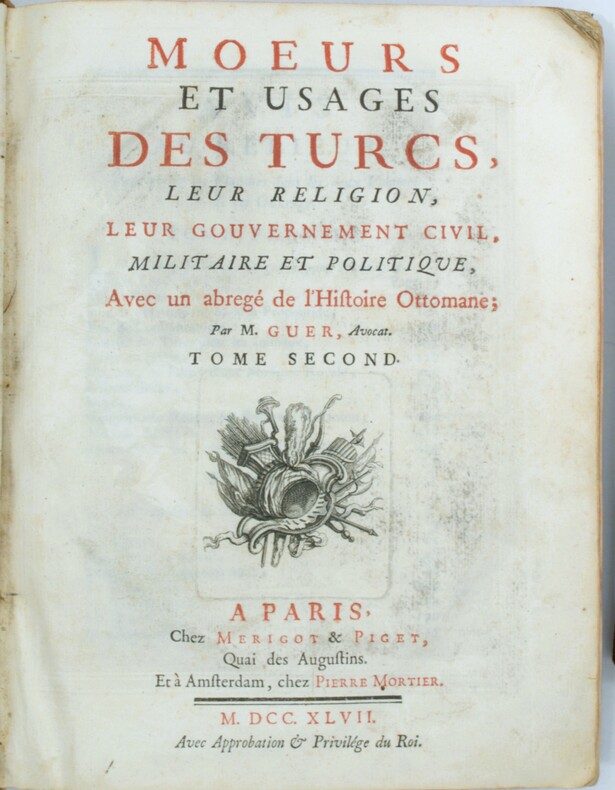
1747PHO-1539Paris, Mortier et Merigot & Piget, 1747. 2 volumes in-4, relié plein veau époque, dos à nerf orné avec pièce de titre et tomaison, tranches rouges, illustré de 16 planches dont 3 vues dépliantes, tome 1 ; manque la pièce de tomaison, coiffes et coins usés, début de fente, ressaut de feuillets, adhésif sur la page de garde, Tome 2 ; manque aux coins, coiffes usées, début de fente, traces de réparation aux cartes, déchirure sans manque, ressaut de feuillets.
New English Paperback. 4to. (29 x 24 cm). In English and Turkish. 57, [4] p., color ills. Naile Akinci. Bebek variations, 1961-2007.= Bebek çesitlemeleri, 1961-2007. [Exhibition catalogue]. Text by Hasim Nur Gürel. 1500 copies were printed.
New New English Original bdg. Dust wrapper. Folio. (32 x 24 cm). In Turkish. 232 p., ills. Naks-i Istanbul: Ortaköy Büyük Mecidiye Camii. "He was only 17 when he ascended the throne. However, Sultan Abdülmecid I, who is recalled as the pioneer of modernization trends, father of education reforms, as a matter of fact one of the architects of the Imperial Edict of Reorganization, by his education and rearing, has gone down in history as the individual who has taken the first step to abolish slavery. Istanbul had acquired its most beautiful silhouette by the palaces, manors and mosques that were built during the reign of Sultan Abdülmecid. And among these building, there is one mosque that is the pearl of the Bosphorus, which is ascribed as Naks-i Istanbul (Imprint of Istanbul). The Ortaköy Büyük Mecidiye Mosque, built on an embankment towards the sea, is a waterfront mosque that is as beautiful as a princess, and poses as the most favorite Ottoman heritage of the past and the present. The "Naks-i Istanbul Ortaköy Büyük Mecidiye Camii", where the comprehensive repair and restoration works conducted by Gürsoy Restoration during 2011-2014 are told, has been published by Gürsoy Group Publications under the editorship of Dr. Ahmet Uçar. This work, where the detailed information is provided also on the life, personality and reign of Sultan Abdülmecid I by names who are specialized in their fields, has assumed a very important place in literature.".
171713493Nürnberg, Johann Leonhard Buggel, 1717. Pergamenteinband, 8°, [9], 574 [18] S.; -Deckel berieben, Bindung etwas lose, Titelblatt gestempelt, gutes Exemplar, ohne Kupfer.
2338Gütersloh: Bertelsmann, o. A. 350 Seiten , 22 cm, Leinen
Very Good French Original sepia-toned photograph printed in a period photograph paper. 19x25 cm. Descriptive text in French. Chipped and tear on margins. Iranian was born in 1890 in Constantinople, Istanbul. It is known that he established his studio in 1891 in Pera district of Constantinople - the center of Armenian cultural and political life. In 1895 he enters into partnership with another photographer by the name of Gugasyan. By 1900s the business seems to have wound down as the images marked with his studio signature don't exhibit any over elements of the new century. Of all the major Armenian studios from Istanbul, Iranian's photographs are the rarest, and less than 300 are known to have survived. Iranian's primary subject was the city of Constantinople, its picturesque landscape, architectural heritage, and the many types of artisans and workers that populated its streets. Using the latest photography techniques, which allowed for very rapid exposures, Iranian captured the bustle of the city streets with remarkable clarity. Teeming with life and movement these images have a remarkable immediacy and documentary veracity quite unlike similar views produced by other photographers of the period. The typical approach for many of Iranian's contemporaries such as Sebah & Joalier or Guillame Berggren was to achieve as clear a picture as possible with perfectly balanced compositions and highly visible details - the hallmark of a 'good' commercial photographer. In contrast, Iranian's street views are full of photographic 'ruptures' - blurred figures in movement, surprised glances of people caught unawares - which give his works the viscerality of snapshots. But above all, Iranian was a master at capturing the mood of a place. Catching the Ottoman capital on the brink of rapid transformation, the photographer aimed to record many of its ancient streets and quarters disappear or change the appearance. Thus, like the Parisian street photography of Atget, Iranian's images are 'nostalgic for the present' that is irrevocably slipping into the past. In his studio, the clientele had the choice of a large range of costumes and props through which the modern urbanite could slip into the role of some long-gone ethnic or street type and become a part of history. It is this sense of melancholy that gives Iranian's photographs their subtle emotional power. This is also perhaps the reason why he was ultimately not as successful as a commercial photographer. Modernity had captured the imagination of the people and the wistful romanticism of Iranian's markedly less spectacular images was fast going out of fashion. The small legacy he has left behind is nevertheless of significance in the history of Near-Easter photography. He was one of the rare Ottoman photographers with an individual and subjective approach, which deserves a proper evaluation.
Fine Turkish Paperback. Oblong large 8vo. (14 x 20 cm). In Turkish. 31 p., b/w ills. Ortaköy. Tarih - sosyal ve mimari doku.
New New English Original bdg. Dust wrapper. 4to. (30 x 25 cm). In Turkish. 528 p., b/w ills. Osmanli belgelerinde Beykoz. Beykoz (Beicos) based on the Ottoman archival documents. A very heavy volume.
Fine English Paperback. Pbo. Roy. 8vo. (23 x 16 cm). In Turkish. [xiii], 354 p. With Ottoman documents. Osmanli döneminde Istanbul deniz ulasimi ve kayikçilar.
Very Good French Paperback. 4to. (28 x 20 cm). In French. 35, [1] p., color ills. Parc de Yildiz et Pavillion de Malta.
192913091Molinier 1929 approx.
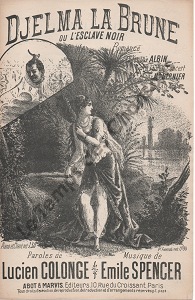
189017949Partitions sur la Turquie Abot et Marvis 1890 approx.
Fine English Paperback. Pbo. 4to. (30 x 21 cm). In English and Turkish. 155 p., b/w ills. Photographer Ali Sami, 1866-1936.= Fotografçi Ali Sami, 1866-1936. "Ali Sami (Aközer) is born in Rusçuk in 1866, and moves to Istanbul. Because his family is registered in the Beylerbeyi quarter of Üsküdar, Ali Sami is also called Üsküdarli Ali Sami. He graduates from the Mühendishane-i Berri-i Hümayun in 1866 and becomes a teacher of painting and photography at the school. He is employed in the Ottoman army, and he is also a teacher of phography at the palace and for many years gives lessons to Prince Burhaneddin Efendi. In 1889 he becomes an aide to Abdülhamid II. As a military photographer, he is assigned by Abdülhamid II to accompany German Emperor Wilhelm II during his visit to the Ottoman Empire when he travels from Istanbul to Jerusalem in 1898, and presents an album of this journey to the sultan. After the constitutional monarchy is proclaimed, he becomes a painting teacher at Trabzon High School, and passes away in 1936 in Istanbul". (Source: From Konstantiniyye to Istanbul: Photographs of the Anatolian shore of the Bosphorus from the mid XIXth century to XXth century). Contents: - The World Discovers Photography - Turkish Art and the Effect of the Industrial Revolution on the Ottoman Empire - Photography in the Ottoman Empire - The Imperial School of Engineers - Ali Sami Bey - Album - Captions to Photographs.
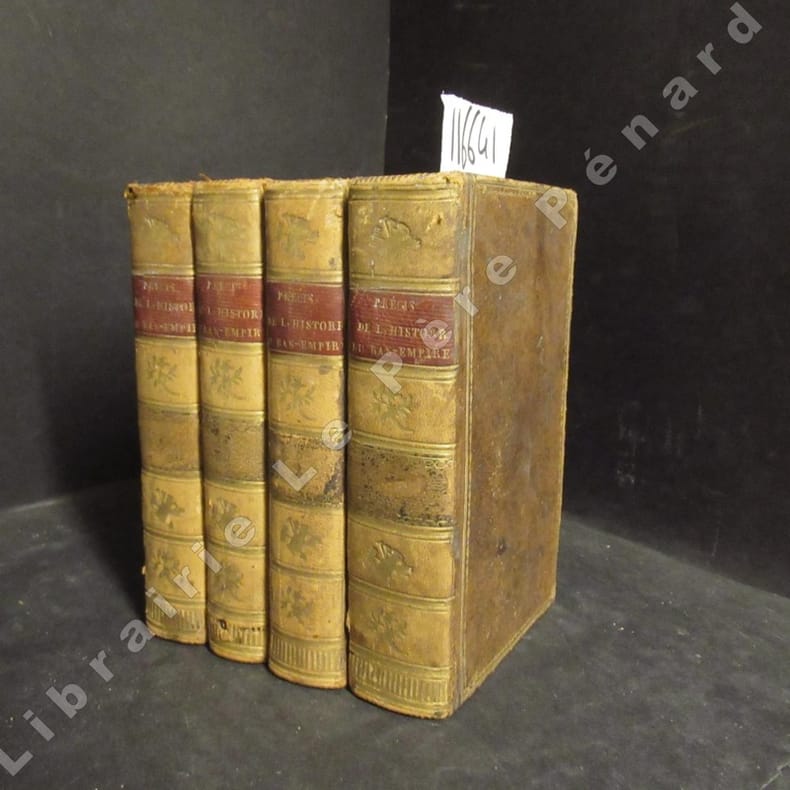
18061166411806 A Paris, chez Delance, Imprimeur-Libraire, rue des Mathurins - 1806 - 4 volumes in-12 plein veau marbré; dos lisse à faux nerfs dorés avec fleurons, filets et caissons, pièce de titre rouge; filets dorés d'encadrement sur les plats; tranches mouchetées; signets bleus - 477 pp. + 471 pp. + 470 pp. + 518 pp.
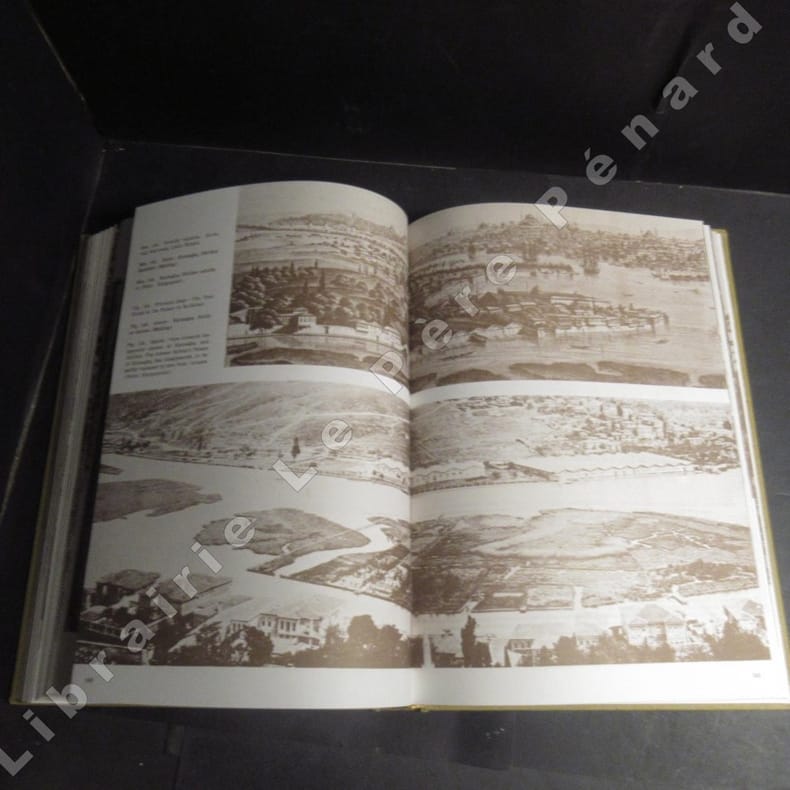
19791130631979 Alarko Egitim Tesisleri - 1979 - 2 volumes in-4, cartonnage avec titre et nom de l'auteur en doré sur le 1er plat et le dos - 343 p. + 398 p. - Très riche iconographie hors texte et pleine page en N&B - Ouvrage bilingue turc / anglais
185623464Paris Bureau de la Revue des Deux Mondes 1856 -in-8 demi-Maroquin un fort volume, reliure demi-maroquin cerise grand in-octavo à coins (binding half morocco with corners), reliure d'époque signée "PETIT" successeur de "SIMIER", dos 4 nerfs (spine with raised bands) décoré "or" et à froid (gilt and blind stamping decoration), titre et tomaison frappés "or" (gilt title and volume numbering) dans un encadrement d'un double filet fin "or", triple filets fins "or" en place des nerfs avec un filet à froid de part et d'autre des nerfs, plats décorés or (gilt decoration on the cover) avec 3 filets fins "or" aux mors et aux coins (joints and corners with three gilt line), papier marbré aux plats (cover with marbled paper), toutes tranches lisses (all edges smoothes) peignées (painting edges) rouge et bleu, sans illustrations (no illustration), (952 + Tables des Travaux de la Revue 1831-1854) pages, 1856 Paris Bureau de la Revue des Deux Mondes Editeur,