289 résultats
185545031Paris Victor Masson 1855. 8vo. Without wrappers. In 'Annales de Chimie et de Physique' Series 3 tome 30 December-issue. With halftitle to vol. 30. Pp. 385-508 a. 1 plate. Entire issue offered. Wurtz's paper: pp. 443-506. <br/><br/><em>First appearance of the entire memoir in which Wurtz describes his outstanding discovery of Liebig’s prediction that there might be organic compounds analogous to ammonia and derivable from it by the replacement of hydrogen - the amines. The discovery was announced in 1849 and a small extract was printed in "Comptes rendu" 4 pp. The offered paper is the memoir in full.Wurtz is most noted for his investigation of glycols and for his discovery of the amines. The latter discovery in 1849 the paper offered was very significant at the time for ot suggested the possibility of a new type the ammonia type which helped to explain the behaviour of nitrogenous compounds. Leicester & Klickstein "A Source Book." pp. 362-63. - Parkinson "Breakthroughs" 1849 C.Charles Adolphe Wurtz was born at Strasbourg 1817. For many years he was Professor of Chemistry at the Ecole de Médicine and at Sorbonne in Paris. He was known not only for his researches in organic chemistry but also for his many literary works. He was editor of a Dictionnaire de Chemie Pure et Appliquée and after 1868 one of the editors of the Annalen der Chemie et de Physique. He died in Paris in 1884. </em> unknown
184947031Paris Bachelier 1849. 4to. No wrappers. In: "Comptes Rendus Hebdomadaires des Séances de L'Academie des Sciences" Tome 28 No 7. Pp. 189-240 entire issue offered. Wurtz's paper: pp. 223-226. <br/><br/><em>First appearance of the announcement of Wurtz's outstanding discovery of Liebig’s prediction that there might be organic compounds analogous to ammonia and derivable from it by the replacement of hydrogen - the amines. The entire memoir was not published in full until 1855 in 'Annales de Chimie et de Physique'.Wurtz is most noted for his investigation of glycols and for his discovery of the amines. The latter discovery in 1849 the paper offered was very significant at the time for ot suggested the possibility of a new type the ammonia type which helped to explain the behaviour of nitrogenous compounds. Leicester & Klickstein "A Source Book." pp. 362-63. - Parkinson "Breakthroughs" 1849 C. </em> unknown
180442469London Bulwer and Co. 1804. 4to. Without wrappers as extracted from "Philosophical Transactions of the Royal Society of London." Year 1804-Part II. Pp. 419-430. Clean and fine. <br/><br/><em>First appearance of the paper in which Wollaston announced his discovery of the metallic element Rhodium."Dr. Wollaston dissolved a portion of crude platinum in qgua regia and neutralized the excess acid with caustic soda. He then added salammoniac to precipitate the platinum as ammonium chloroplatinate and mercurous cyanide to precipitate the palladium as palladium cyanide. After filteringoff the precipitate he decomposed the excess mercurous cyanide inthe filtarate by adding hydrochloric acid and evaporating to dryness. When he washed the residue with alcohol everything dissolved except a beautiful dark red powder which proved to be a double chloride of sodium and a new metal which because of the rose color of its salts Dr. Wollaston named 'Rhodium'. He found that the sodium rhodium chloride could be easely reduced by heating it in a current of hydrogen and that after the sodium chloride had been washed out the rhodium remained as a metallic powder. he also succeeded in obtaining a rhodium button."Weeks: Discovery of the Elements. p. 104-05. </em> unknown
183748086Paris Crochard et Comp. 1837. Orig. printed wrappers. No backstrip. In: "Annales de Chimie et de Physique Par MM. Gay-Lussac et Arago." tome 64 Cahier 2 Fevrier 1837. Pp. 113-224. Entire issue offered with printed wrappers. Wöhler a. Liebig's papers: pp. 185-209 a. pp. 209-217. <br/><br/><em>First appearance of this classic paper in organic chemistry in which Wöhler and Liebig showed how Amygdalin could be decomposed by a vegetable emulsion the first example of a glycoside. The papers were issued at the same time in "Annalen der Physik und Chemie"."The conclusions which you have drawn from the investigation of bitter-almond oil" wrote Berzelius to Liebig and Wöhler "are certainly the most importent which have so far been reached in the domain of vegetable chemistry and give promise of shedding an unexpected light over this part of the science.The facts which you have set forth inspire such reflections that they may be regarded as the dawn of a new day in vegetable chemistry."Berzelius-Wöhler Briefwechsel."During the years that Liebig was preoccupied with the ether theory and with organic acids he also carried out two importent investigations with Wöhler. In october 1836 Wöhler wrote that he had discovered a way to transform amygdalin to oil of bitter almonds and hydrocyanid acis by distilling it with manganese and sulfuric acid and he invited Liebig to join in pursuing the topic. Two days later he made a more remarkable discovery. It had occurred to him that perhaps thetransformation of amygdalin could be effected by the albumin in the almonds in a manner similar to the action of yeast in sugar.Wöhler suspected that the decomposition was an example of what Berzelius had recently defined as catalysis. Liebig and Wöhler then divided up the detailed examination of the properties and composition of amygdalin. They precipitated from the emulsion of almonds a substance which when dissolved retain its action. They named the active substance "emulsion". Its effectiveness in very small quantities confirmed that it acted like yeast."DSB VIII p. 342. </em> unknown
183743739Leipzig Johann Ambrosius Barth 1837. Without wrappers as issued in "Annalen der Physik und Chemie. Hrsg.von Poggendorff" Bd. 41 Zweites Stück. Entire issue No 6 offered. Titlepage to vol. 41. Pp. 225-448 a. 2 folded engraved plates. Wöhler & Liebig's papers: pp. 345-366 pp. 366-374 a. pp. 393-397. Clean and fine. <br/><br/><em>First appearance of this classic paper in organic chemistry in which Wöhler and Liebig showed how Amygdalin could be decomposed by a vegetable emulsion the first example of a glycoside."The conclusions which you have drawn from the investigation of bitter-almond oil" wrote Berzelius to Liebig and Wöhler "are certainly the most importent which have so far been reached in the domain of vegetable chemistry and give promise of shedding an unexpected light over this part of the science.The facts which you have set forth inspire such reflections that they may be regarded as the dawn of a new day in vegetable chemistry."Berzelius-Wöhler Briefwechsel."During the years that Liebig was preoccupied with the ether theory and with organic acids he also carried out two importent investigations with Wöhler. In october 1836 Wöhler wrote that he had discovered a way to transform amygdalin to oil of bitter almonds and hydrocyanid acis by distilling it with manganese and sulfuric acid and he invited Liebig to join in pursuing the topic. Two days later he made a more remarkable discovery. It had occurred to him that perhaps thetransformation of amygdalin could be effected by the albumin in the almonds in a manner similar to the action of yeast in sugar.Wöhler suspected that the decomposition was an example of what Berzelius had recently defined as catalysis. Liebig and Wöhler then divided up the detailed examination of the properties and composition of amygdalin. They precipitated from the emulsion of almonds a substance which when dissolved retain its action. They named the active substance "emulsion". Its effectiveness in very small quantities confirmed that it acted like yeast."DSB VIII p. 342. </em> unknown
19973486Alexandria VA : Time-Life Books; Tehabi Books 1997. 1997. Hardcover. Very Good/Very Good. 205 pp. : illustrated some in color color maps ; 26 cm. ; ISBN: 0783552610 LCCN: 97-16404 ; OCLC: 36727998 ; LC: G530.T6; Dewey: 910/.91634 ; "Unlike any other book ever published on the Titanic these pages magnificently present the combined efforts of hundreds of individuals through years of historical and scientific research study exploration and preservation."--dustjacket ; color photographic boards in printed glassine dustjacket ; a few tiny spots on dustjacket wear points on bottom of boards else VG/VG <br/> <br/> [Alexandria, VA] : Time-Life Books; Tehabi Books, 1997. hardcover
185649036Paris Mallet-Bachelier 1856. 4to. No wrappers. In: "Comptes Rendus Hebdomadaires des Séances de L'Academie des Sciences" Tome 43 No 13. Pp. 637- 672. Entire issue offered. Vulpian's paper: pp. 663-665. <br/><br/><em>First appearance of the paper in which Vulpian described his discovery of adrenaline in the adrenal medulla. Vulpian established that the medulla synthesised a substance that was liberated into the blood circulation. This substance was later identified as adrenaline.Garrison & Morton No. 1141. </em> unknown
20192-0359658784lulu.com 2019. Paperback. New. 68 pages. 6.00x0.16x9.00 inches. lulu.com paperback
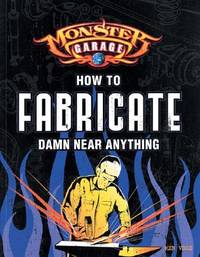
2005Q-0760321949Motorbooks 2005-12-02. Paperback. New. In shrink wrap. Looks like an interesting title! Motorbooks paperback
2003157790Discovery Communications 2003. DVD. Very Good. Includes 6 clean DVDs and artwork in the 6 original plastic cases and slipcase. In Vietnamese with English subtitles Discovery Communications unknown
190051313Paris Gauthier-Villars 1900. 4to. No wrappers. In: "Comptes Rendus Hebdomadaires des Séances de L'Academie des Sciences" Tome 130 No 15 a. No 18. Pp. 962- 1044 a. pp. 1145- 1220. Entire issues offered. Villard's papers: pp. 1010-1012 a. 1178-1182 textillustrations. Clean and fine. <br/><br/><em>First apperance of Villard's two papers in which he announced and described the discovery of a new type of radiation more powerfull and penetrating than alpha-and beta rays. The new type of rays was named by Rutherford as gammarays. </em> unknown
190048207Paris Gauthier-Villars 1900. 4to. No wrappers. In: "Comptes Rendus Hebdomadaires des Séances de L'Academie des Sciences" Tome 130 No 15 a. No 18. Pp. 962- 1044 a. pp. 1145- 1220. Entire issues offered. Stamp on first pages. A few tears to margins. Poor paperquality fragile. Villard's papers: pp. 1010-1012 a. 1178-1182 textillustrations. <br/><br/><em>First apperance of Villard's two papers in which he announced and described the discovery of a new type of radiation more powerfull and penetrating than alpha-and beta rays. The new type of rays was named by Rutherford as gammarays."His Villardexperiments in radioactivity led to the unexpected discovery of gamma rays in 1900. Villard recognized them as being different from x rays because the gamma rays had a much greater penetrating depth. He had discovered they were emitted from radioactive substances and were not affected by electric or magnetic fields. These came to be called gamma rays by another scientist Ernest Rutherford. It wasn't until 1914 that Rutherford showed that they were a form of electromagnetic EM like light only with a much shorter wavelength than x rays. Now we know that gamma rays are a form of EM radiation similar to x rays. Gamma rays tend to have a higher energy and a shorter wavelength than x rays do. However the dividing line between these two forms of radiation is not clearly defined. Scientists typically apply the term gamma ray to EM radiation with energies above several hundred thousand electron volts." Hps - Healt Physics Society. - See Sigmund Brandt "The Harevst of a Century" Episode 6 p. 24 ff.The issues contains other importent papers HENRI BECQUEREL "Note sur la transmission du rayonnement du radium au travers des corps" pp. 979-984 and "Sur la transparance de l'aluminium pour le rayonnement du radium" pp. 1154-57. P. CURIE et G. SAGNAC "Électrisation négative des rayons secondaires produits au moyen des rayons de Röntgen" pp. 1013-1016. </em> unknown
Chartrand, R. Durham, K.In Pristine Condition. unknown
Yates, AnnaIn Pristine Condition. unknown
179843088Paris Fuchs et Guillaume An VIe. 1798. Contemp. hcalf. Spine gilt. Very slightly rubbed. Small stamps on verso of titlepage. In: "Annales de Chimie ou Recueil de Mémoires concernant la Chemie" Tome 26. - 340 pp. a. 1 engraved plate.the entire volume offered. Vauquelin's papers: pp. 155-169 pp. 170-177 a. pp. 259-265. Some brownspots to the first and last leaves otherwise fine and clean. <br/><br/><em>First printing of the papers in which Vauquelin describes and announces his discovery of Beryllium."The discovery of beryllium resulted from the Abbé Haüy's observation of the close similarity and probable identity of beryl and the emerald. At his suggestion Vauquelin made some very careful chemical analyses of these two minerals and found in 1798 that they are indeed identical and that they contain a new earth which he named glucina but which is now known as beryllia. The metal was isolated thirty years later by Wöhler and Bussy independently.At the suggestion of the editors of the "Annales de Chemie." he called the new earth 'glucina' meaning sweet." Weeks in "Discovery of the Elements" p. 153-54. - Parkinson "Breakthrough" 1798 C.The volume contains other importent papers in the history of chemistry Hassenfratz "De l'Areométrie" "Suite." 2 Paprs. Berthollet Chaptal Guyton Fourcroy Priestly first app. in French etc. </em> unknown
179843089Paris Fuchs et Guillaume An VIe. 1798. Contemp. hcalf. Spine gilt. Very slightly rubbed. Small stamps on verso of titlepage. In: "Annales de Chimie ou Recueil de Mémoires concernant la Chemie" Tome 25. - 3353 pp. 2 engraved folded plates and 1 folded table.the entire volume offered. Vauquelin's papers: pp. 21-32 a. pp. 194-204. Some brownspots to the first and last leaves otherwise fine and clean. <br/><br/><em>First printing of the papers in which Vauquelin describes and announces his discovery of Chromium. The first paper was simultaneously printed in Mem.de l'Institut. Because of its many coloured compounds Fourcroy and Haüy suggested the name 'chromium' for the new metal. Greek chroma-colour.In 1797 Vauquelin began his own studies of Siberian red lead. He was convinced that the mineral contained a new element. None of the elements then known could account for his results. He reported "a new metal possessing properties entirely unlike those of any other metal." A year later Vauquelin was able to isolate a small sample of the metal itself. He heated charcoal nearly pure carbon with a compound of chromium chromium trioxide Cr 2 O 3 . When the reaction was complete he found tiny metallic needles of chromium metal. DSB XIII p. 597 - Parkinson "Breakthrough" 1798 C.The volume contains other importent papers in the history of chemistry Guyton "Examen de quelques propriétés du Platine" a. "Examen de quelques critiques de la nomenclature de chimistes francais" Chaptal "Observations sur la fabrication de l'acétite de cuivre verd-de-gris etc. </em> unknown
182646031Leipzig Johann Ambrosius Barth 1826. Contemp. hcalf. Gilt spine. A few scratches to spine. In "Annalen der Physik und Chemie. Hrsg.von Poggendorff" Bd. 8. 10526 pp. and 3 folded engraved plates. Small stamps onverso of titlepage. Entire volume offered. Unverdorben's paper: pp. 253-265 397-410 477-487. Clean and fine. <br/><br/><em>First appearance of the paper in which Unverdorben describes the method by which he discovered Aniline which became so importent in the manufacture of dyes plastics and pharmaceuticals. "Aniline from the Portugese anil applied to indigo and derived from the Arabic an-nil the blue substance was first obtained by Unverdorben by heating indigo and was given the name 'crystalline'. In 1841 Carl Julius von Fritzsche 1807-71 an assistant to Mitscherlich and later a member of the Academy of Sciences in St. petersburg obtained the same compound from anthranilic acid which was produced by the action of caustioc alkalis on indigo and called it 'aniline'. in 1843 Hofmann showed that the three substances crystalline aniline and benzidam were identical with the base isolated from coal tar."Findlay "A Hundred years of Chemistry" p. 134.Parkinson "Breakthroughs" 1826 C.The volume contains other importent papers Antoine Jerome Balard "Ueber eine besondere Substanz im Meereswasser" in which he describes his discovery of the element BROMINE first German edition pp. 114-124 a. pp. 319-336. Parkinson "Breakthroughs" 1826 C. And Eilhard Mitscherlich "Ueber eine neue Klasse von Krystallformen" pp. 427-442. </em> unknown
2000Q-0939979489Nada 2000-01-01. Hardcover. New. In shrink wrap. Looks like an interesting title! Nada hardcover
1145542Basic Books Inc 1959. 1st American edition. Hard cover. Very good/Very good. Jacket is worn and tanned on top edge but text and images are clear and bright. Cover is in great condition. Binding is tight. Inside is clean and unmarked. Basic Books, Inc unknown
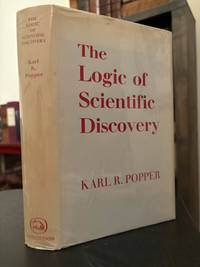
1959508<p><strong>Large Octavo. Publisher's cloth & dustwrapper. First edition first printing of one of the most significant works on the philosophy of science. The Logic of Scientific Discovery was originally published in Germany in 1934 and Popper rewrote and republished it in English in 1959 with the New York edition preceding this much rarer UK edition. A fine copy in an unclipped slightly worn and faded very good dust wrapper. Small inscription on the front pastedown of David Keyt 1930-2025 Professor Emeritus of Philosophy at Washington University Seattle. The book is mostly unopened and looks mostly unread. A very nice copy. Popper argues that science should adopt a methodology based on falsifiability because no number of experiments can ever prove a theory but a reproducible experiment or observation can refute one. According to Popper: "non-reproducible single occurrences are of no significance to science. Thus a few stray basic statements contradicting a theory will hardly induce us to reject it as falsified. We shall take it as falsified only if we discover a reproducible effect which refutes the theory". Popper argues that science should adopt a methodology based on "an asymmetry verifiability and falsifiability; an asymmetry which results from the logical form of universal statements. For these are never derivable from singular statements but can be contradicted by singular statements".</strong></p> Hutchinson hardcover
1856mon0000018903George Virtue and Co c. 1856. HardcoverLeatherSpineCorners. Like New. in x in x in. No DJ. Volume II only. Few pages with light foxing. No other marks in lightly read book. 36 b/w plates no foxing. Binding intact. Three-quarter leather over marbled boards with wear of leather. No publication date. George Virtue and Co hardcover
19722110502150403194Kodansha 1972. Soft Cover. Fine. Volume: 1 Kodansha paperback
0260105244.Gpaperback. Good. Access codes and supplements are not guaranteed with used items. May be an ex-library book. paperback
1331313716.Gpaperback. Good. Access codes and supplements are not guaranteed with used items. May be an ex-library book. paperback
1563319780.Gpaperback. Good. Access codes and supplements are not guaranteed with used items. May be an ex-library book. paperback