Marcolini C.MareMagnum
Norman H MarchBiblio.com
Electron Correlation in Molecules and Condensed Phases
6320285Springer pp. 416 . Hardback. New. Springer hardcover

Cold Books · États-Unis336,13 $US≈ 284,40 €
11 042 résultats
Folio pagine 445 (su 472) con molte illustrazioni xilografiche nel testo. Mezza pelle coeva. Titoli e fregi oro al dorso. Bellissimo esemplare. Seconda edizione molto ampliata ( la prima 1868 in 8°) Rarissima opera uscita a dispense (manca l'ultima dispensa contenente l'indice pp. 446-472 e le 11 tavole fuori testo)
61584Printed and Published by J. March 12 Webber Street Blackfriars Road. c.1854. 12mo. pp. xii with text on the inside of both front and rear wrappers and included in the pagination. The verso of the front wrapper carries a wood-engraved image of a wood-turner partly colour-printed with some hand-colouring plus 7 wood-engraved figures without colouring. Stitched into the original blue paper wrappers the front with an elaborate title engraving a couple of trifling chips to the edges of the wraps crease in the lower rear corner of the final text leaf and the rear cover else a good copy. COPAC locates copies at the V&A who date it in the 1840s and the Bodleian who date it 1854. The trades described - WOOD TURNER - BLACKSMITH - BASKET-MAKER - COOPER - BAKER - ENGINEER - MASON - BRICKLAYER - CARPENTER - PAINTER. Printed and Published by J. March, 12 Webber Street, Blackfriars R[o]ad. [c.1854]. 12mo. paperback
1933230727k039xbvkParis, Édition de la Girafe, 1933. 74 unnumbered pages, 15 woodcuts on singleside printed plates. - Publisher's beige softcover with transparent dustjacket; Folio (ca. 30 x 24 cm).
6320285Springer pp. 416 . Hardback. New. Springer hardcover
6126791905Springer pp. 412 . Papeback. New. Springer unknown
Pregevole insieme composto manifesti-fogli volanti, di varie dimensioni, in occasione delle Nozze tra Giulia de' Conti Merenda di Forl? e il Conte Francesco Antolini di Macerata. I manifesti contengono sonetti, odi anacreontiche e carmi, omaggiati ai novelli sposi da parenti, amici, nobili famiglie, sacerdoti, prelati, medici. Stampati a Forl?, Luigi Bordanini; Forl?, Tip. Casali; Rimini, Tip. Marsoner e Grandi; Macerata, Tip. Alessandro Mancini e Luigi Viarchi; Imola, Tip. Galeati e Stamp. Casali; Osimo, Tip. Quercetti; Fabriano Tip. Crocetti. -13 manifesti di cm. 55x40; -12 manifesti cm. 42x32; 18 fogli volanti (alcuni a doppia pagina e stampati su carta azzurra) cm. 29x22 circa. Interessante e corposo insieme
in-4, pp. 28, leg. mod. eseguita con carta dec. antica. Fregio xilogr. al front. e iniziale. Lozzi 3528: "Raro". Bell'esempl. su carta forte. [113]
in-4, pp. L, leg. m. p. con c. dec. ai piatti. Front. con gr. vignetta in rame raff. l'iscrizione qui studiata. Lozzi 3512. [453]
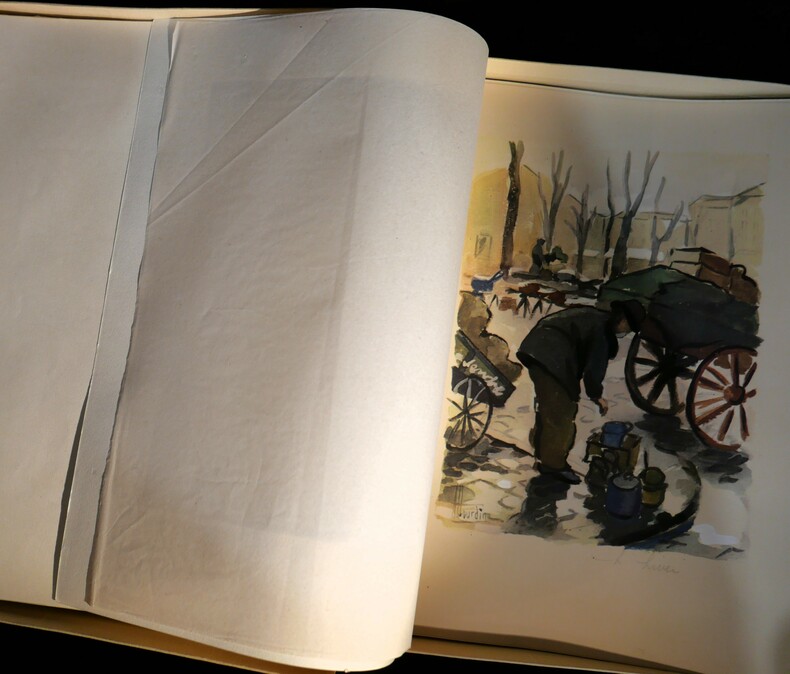
19464cb3Un des 270 sur pur fil Lafuma, celui-ci étant le n°127, signé de Dourdin, en feuillets dans 2 étuis.
Opera per la prima volta pubblicata nel Theatrum Civitatum et admirandorum Italiae, stampato da Johannes Blaeu ad Amsterdam nel 1663. Esemplare tratto dal Nouveau Theatre de l'Italie pubblicato ad Amsterdam nel 1704/5 da Pierre Mortier e ristampato da R. Alberts nel 1724. Johannes Blaeu, durante la sua lunga attività editoriale pubblica tre volumi sulle città italiane. Nel 1663 i primi tre, suddivisi in Stato della Chiesa, Roma e Regno di Napoli e Sicilia. Alla sua morte i suoi eredi danno alla luce altri due volumi datati 1682 incentrati sulle città del Piemonte e della Savoia, poi ristampati da altri editori nel 1693 e 1697. Il francese Pierre Mortier pubblica una ristampa nel 1704/5, intitolata Nouveau Theatre de l’Italie. L’opera è in quattro volumi e comprende le lastre del Blaeu, ritoccate e modificate in piccola parte, integrate dall’aggiunta di numerose nuove mappe di proprio disegno, raffiguranti le città della parte settentrionale della penisola, racchiuse nel primo volume dell’opera. L’atlante del Mortier venne pubblicato con testo latino, francese ed olandese. La particolarità che differenzia le due edizioni di Blaeu e Mortier è rappresentata dal fatto che il testo non è al verso della singola mappa (che quindi è bianca nel retro), ma si trova all’inizio di ogni singolo volume. Il grande successo dell’opera diede origine ad un’ulteriore ristampa, praticamente identica, curata da R. Alberts ed edita nel 1724/5. Le opere tratte dalla prima edizione del Blaeu, 1663, sono caratterizzate dalla presenza del testo al verso, qui assente. Incisione in rame, in buono stato di conservazione. Bibliografia Koeman pp. 332/338, Cremonini pp. 83-90. Work first included in Theatrum Civitatum et Admirandorum Italiae ad aevi veteris & praesentis temporis faciem expressum à Ioanne Blaeu G. F., printed by Johannes Blaeu, Amsterdam, 1663. Example taken from Nouveau Theatre de l'Italie - Amsterdam nel 1704/5 - by Pierre Mortier or from the da R. Alberts issue (1724). Without descriptive text on the back. The Theatrum Civitatum et Admirandorum Italiae is the first monumental town book entirely covering Italy, preceded by the "pocket-size" Italia Hodierna by Jodocus Hondius jr. (1627) and realized in likely competition with Johannes Janssonius who, in 1657, published the Theatrum praecipuarum urbium, containing a volume dedicated to Italy. Johannes Blaeu, during his long editorial activity published three volumes on Italian cities. In 1663 the first three, divided into the State of the Church, Rome and the Kingdom of Naples and Sicily. At his death his heirs gave birth to two more volumes dated 1682 focused on the cities of Piedmont and Savoy, then reprinted by other publishers in 1693 and 1697. Pierre Mortier publishes a reprint in 1704/5, entitled Nouveau Theatre de l'Italie. The work is in four volumes and includes the plates of Blaeu, retouched and modified in small part, supplemented by the addition of several new maps of his own design, depicting the cities of the northern part of the peninsula, enclosed in the first volume of the work. Mortier's atlas was published with Latin, French and Dutch texts. The great success of the work gave rise to a further reprint, virtually identical, edited by R. Alberts and published in 1724/5. Literature Koeman, Atlas Neerlandici, pp. 332/338; Cremonini pp. 49-52, 39.
Opera per la prima volta pubblicata nel Theatrum Civitatum et admirandorum Italiae, stampato da Johannes Blaeu ad Amsterdam nel 1663. Esemplare tratto dal Nouveau Theatre de l'Italie pubblicato ad Amsterdam nel 1704/5 da Pierre Mortier e ristampato da R. Alberts nel 1724. Johannes Blaeu, durante la sua lunga attività editoriale pubblica tre volumi sulle città italiane. Nel 1663 i primi tre, suddivisi in Stato della Chiesa, Roma e Regno di Napoli e Sicilia. Alla sua morte i suoi eredi danno alla luce altri due volumi datati 1682 incentrati sulle città del Piemonte e della Savoia, poi ristampati da altri editori nel 1693 e 1697. Il francese Pierre Mortier pubblica una ristampa nel 1704/5, intitolata Nouveau Theatre de l’Italie. L’opera è in quattro volumi e comprende le lastre del Blaeu, ritoccate e modificate in piccola parte, integrate dall’aggiunta di numerose nuove mappe di proprio disegno, raffiguranti le città della parte settentrionale della penisola, racchiuse nel primo volume dell’opera. L’atlante del Mortier venne pubblicato con testo latino, francese ed olandese. La particolarità che differenzia le due edizioni di Blaeu e Mortier è rappresentata dal fatto che il testo non è al verso della singola mappa (che quindi è bianca nel retro), ma si trova all’inizio di ogni singolo volume. Il grande successo dell’opera diede origine ad un’ulteriore ristampa, praticamente identica, curata da R. Alberts ed edita nel 1724/5. Le opere tratte dalla prima edizione del Blaeu, 1663, sono caratterizzate dalla presenza del testo al verso, qui assente. Incisione in rame, in buono stato di conservazione. Bibliografia Koeman pp. 332/338, Cremonini pp. 83-90. Work first included in Theatrum Civitatum et Admirandorum Italiae ad aevi veteris & praesentis temporis faciem expressum à Ioanne Blaeu G. F., printed by Johannes Blaeu, Amsterdam, 1663. Example taken from Nouveau Theatre de l'Italie - Amsterdam nel 1704/5 - by Pierre Mortier or from the da R. Alberts issue (1724). Without descriptive text on the back. The Theatrum Civitatum et Admirandorum Italiae is the first monumental town book entirely covering Italy, preceded by the "pocket-size" Italia Hodierna by Jodocus Hondius jr. (1627) and realized in likely competition with Johannes Janssonius who, in 1657, published the Theatrum praecipuarum urbium, containing a volume dedicated to Italy. Johannes Blaeu, during his long editorial activity published three volumes on Italian cities. In 1663 the first three, divided into the State of the Church, Rome and the Kingdom of Naples and Sicily. At his death his heirs gave birth to two more volumes dated 1682 focused on the cities of Piedmont and Savoy, then reprinted by other publishers in 1693 and 1697. Pierre Mortier publishes a reprint in 1704/5, entitled Nouveau Theatre de l'Italie. The work is in four volumes and includes the plates of Blaeu, retouched and modified in small part, supplemented by the addition of several new maps of his own design, depicting the cities of the northern part of the peninsula, enclosed in the first volume of the work. Mortier's atlas was published with Latin, French and Dutch texts. The great success of the work gave rise to a further reprint, virtually identical, edited by R. Alberts and published in 1724/5. Literature Koeman, Atlas Neerlandici, pp. 332/338; Cremonini pp. 49-52, 39.
Opera per la prima volta pubblicata nel Theatrum Civitatum et admirandorum Italiae, stampato da Johannes Blaeu ad Amsterdam nel 1663. Esemplare tratto dal Nouveau Theatre de l'Italie pubblicato ad Amsterdam nel 1704/5 da Pierre Mortier e ristampato da R. Alberts nel 1724. Johannes Blaeu, durante la sua lunga attività editoriale pubblica tre volumi sulle città italiane. Nel 1663 i primi tre, suddivisi in Stato della Chiesa, Roma e Regno di Napoli e Sicilia. Alla sua morte i suoi eredi danno alla luce altri due volumi datati 1682 incentrati sulle città del Piemonte e della Savoia, poi ristampati da altri editori nel 1693 e 1697. Il francese Pierre Mortier pubblica una ristampa nel 1704/5, intitolata Nouveau Theatre de l’Italie. L’opera è in quattro volumi e comprende le lastre del Blaeu, ritoccate e modificate in piccola parte, integrate dall’aggiunta di numerose nuove mappe di proprio disegno, raffiguranti le città della parte settentrionale della penisola, racchiuse nel primo volume dell’opera. L’atlante del Mortier venne pubblicato con testo latino, francese ed olandese. La particolarità che differenzia le due edizioni di Blaeu e Mortier è rappresentata dal fatto che il testo non è al verso della singola mappa (che quindi è bianca nel retro), ma si trova all’inizio di ogni singolo volume. Il grande successo dell’opera diede origine ad un’ulteriore ristampa, praticamente identica, curata da R. Alberts ed edita nel 1724/5. Le opere tratte dalla prima edizione del Blaeu, 1663, sono caratterizzate dalla presenza del testo al verso, qui assente. Incisione in rame, in buono stato di conservazione. Bibliografia Koeman pp. 332/338, Cremonini pp. 83-90. Work first included in Theatrum Civitatum et Admirandorum Italiae ad aevi veteris & praesentis temporis faciem expressum à Ioanne Blaeu G. F., printed by Johannes Blaeu, Amsterdam, 1663. Example taken from Nouveau Theatre de l'Italie - Amsterdam nel 1704/5 - by Pierre Mortier or from the da R. Alberts issue (1724). Without descriptive text on the back. The Theatrum Civitatum et Admirandorum Italiae is the first monumental town book entirely covering Italy, preceded by the "pocket-size" Italia Hodierna by Jodocus Hondius jr. (1627) and realized in likely competition with Johannes Janssonius who, in 1657, published the Theatrum praecipuarum urbium, containing a volume dedicated to Italy. Johannes Blaeu, during his long editorial activity published three volumes on Italian cities. In 1663 the first three, divided into the State of the Church, Rome and the Kingdom of Naples and Sicily. At his death his heirs gave birth to two more volumes dated 1682 focused on the cities of Piedmont and Savoy, then reprinted by other publishers in 1693 and 1697. Pierre Mortier publishes a reprint in 1704/5, entitled Nouveau Theatre de l'Italie. The work is in four volumes and includes the plates of Blaeu, retouched and modified in small part, supplemented by the addition of several new maps of his own design, depicting the cities of the northern part of the peninsula, enclosed in the first volume of the work. Mortier's atlas was published with Latin, French and Dutch texts. The great success of the work gave rise to a further reprint, virtually identical, edited by R. Alberts and published in 1724/5. Literature Koeman, Atlas Neerlandici, pp. 332/338; Cremonini pp. 49-52, 39.
4°, mz. pelle coeva, tit. e fregi in oro al dorso, pp. VIII - 304. Edizione originale. Es. molto ben conservato.
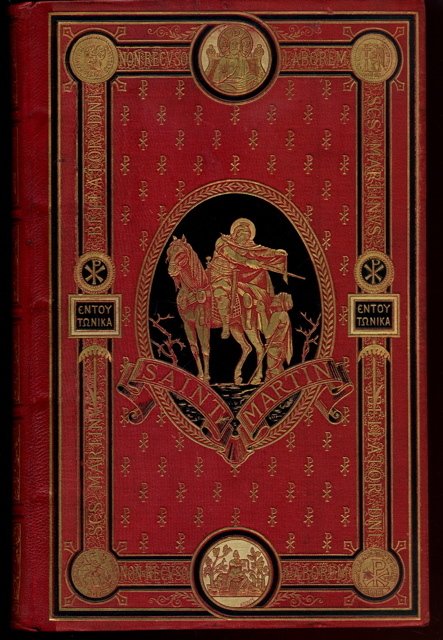
18816146Magnifique ouvrage, à la reliure impeccable.Nombreuses gravures hors texte en noir et en couleurs(6 chromolithographies).Les tranches or sont un vrai lingot. 1/2 chagrin rouge, plats percaline de soie; Important décor doré et noir sur les plats et au dos. Plaque de Souze. Tranches dorées. Très bon Tours Mame 1881 1 volume in-4°.
43944Privas : F. Agard, 1811 - Un volume in-8 demi vélin avec pièce de titre (reliure moderne), 449 pages : les 18 dernières pages (jusqu'à l'avis de l'imprimeur) sont manquantes mais ont été soigneusement recopiées d'une écriture bien lisible et reliées à la suite. Rare édition originale de cet ouvrage de référence.
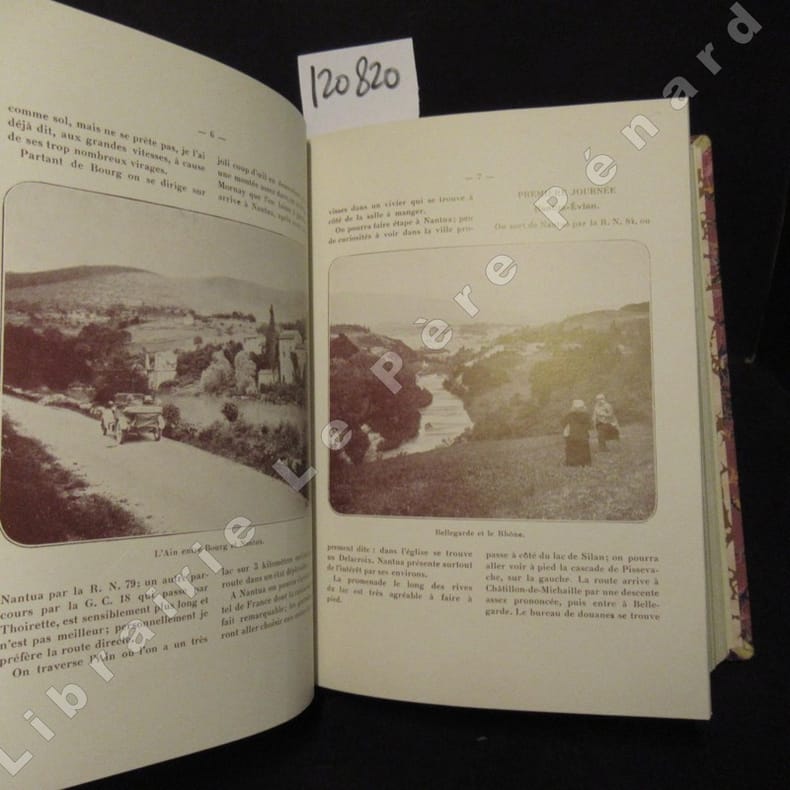
19131208201913-1926 Dunod éditeurs, In-8 relié - Demi basane bordeaux, 4 nerfs sautés, pièces de titre doré sur fond vert et décor en doré sur le dos, couvertures d'origines conservées - 34 Numéros reliés. Supplément à "La vie automobile" - N° 1 (supplément au n° 588 du 4.01.1913), Supplément au N° 630, N° 5 (suppl. au N° 639), N° 6 (suppl. au N° 641), N° 8 (suppl. au N° 649), N° 9 (suppl. au N° 654), N° 10 (suppl. au N) 659), N° 12 (suppl. au N° 676), N° 13 (suppl. au N° 686), N° 14 (suppl. au N° 710), N° 15 (suppl. au N° 712), N° 16 (supl. au N° 728), N° 17 (suppl. au N° 738), N° 18 (suppl. au N° 751), N° 19 (suppl. au N° 754), N° 20 (suppl. au N° 758), N° 21 (suppl. au N° 764), N° 22 (suppl. au N° 772), N° 23 (suppl. au N° 778), N° 24 (suppl. au N° 781), N° 25 (suppl. au N° 787), N° 26 (suppl. au N° 797), N° 27 (suppl. au N° 800), N° 28 (suppl. au N° 807), N° 29 (suppl. au N° 811), N° 30 (suppl. au N° 823), N° 31 (suppl. au N° 827), N° 32 (suppl. au N° 830), N° 33 (suppl. au N° 836), N° 34 (suppl. au n° 845), N° 35 (suppl. au N° 850), N° 36 (suppl. au N° 854), N° 37 (suppl. au N° 860 du 25 oct. 1926), et suppl. au N° 722 du 25 janv. 1921 consacré à La 10 HP de Dion-Bouton (Soit 34 Numéros) - Chaque Numéros comporte 16 pages - 34 x 16 pages - Nombreuses illustrations, cartes et reproductions photographiques - Pièce de titre indiquant Promenade 1913-1924 (au lieu de 1926 comme c'est le cas)
in-8 gr., pp. 368, rileg. primo Novecento in cart. dec. con tass. in pelle e tit. oro al d. Bell'esempl. di non comune storia locale marchigiana. [048]
72 pages. Features: Two-colour black and white photo ad inside front cover for International Harvestor's Industrial Power Products; Out of the Indian Night, by William J. Makin - a tale of the Northwest frontier and teh courage that drives frail flesh to heroism; Britain's Unemployment Insurance , by Brian Meredith; Can War Cross the Pacific?, by Charles Lugrin Shaw who argues that adequate defenses are needed to protect Canada's west coast from attack; You Roll Your Own, by Kalman Phillips - she fell in love with a man who kep finding an octopus in a trout pool; The Bay Street Boys, by Frederick Edwards - life is just one up and down after another to the Dominion's 4,000 stock salesmen - with nice black and white photo of Bay Street, Toronto; The Exile, by Beryl Gray - it took them a long time to realize that love does not feed on selfishness; Beverley Baxter's London Letter - an address to the United States; Sable Island, by C.F. Blackadar - "While men sail in ships there will be wrecks on Sable's greedy sands" - with photos; The 7th (Seventh) Day, by Max Brand (part); Checks Please, by Lotta Dempsey - checks are very much in fashion; Mexico and Manana, by Madge Macbeth - Growing trade with Mexico opens new opportunities to Canadian business; Nice full-page black and white DeSoto ad on page 31; Two-colour Oldsmobile full-page ad on page 33; Black and white photo two-page centrefold ad for the Hudson 112 car; Black and white full-page 1938 Plymouth ad on page 45; Black and white photo full-page Dodge truck ad on page 49; William G. Gibson of Ladner, BC - world's champion wheat grower; Cougar Pets, by Francis Dickie - Marion, Pearl and Pansy Schnarr of Sonora, BC have brought up from babyhood two cougars - includes two photos; Page 65 missing; Small piece removed from page 67; Nice Kodak ad on back cover shows baby covering his mouth. Address label atop front cover. Covers loose but present. A worthy copy. Book
Cm. 26, pp. vii (1) 144. Con numerose decorazioni xilografiche nel testo. Legatura coeva in mezza pergamena con titoli ms. al dorso. Frontespizio controfondato e con mancanze marginali reintegrate, peraltro esemplare genuino e ben conservato. Non comune.
1954017928New York Toronto: Rinehart & Company 1954. Book. Very Good. Hardcover. 1st Edition. First American Edition First printing. With Rinehart colophon on copyright page. A very good copy in a very good jacket which is not price clipped. $3.00 Heavy toning tightly bound small name to front end page else clean. Knock to top rear board with indent to immediate pages beside the knock. Rinehart & Company Hardcover
Veduta tratta dall'edizione del 1678 della celebre Sciagraphia Cosmica nota anche con il titolo Das ist Newes Emblematisches Buechlei, dainen in acht Centurijs die vornembste Stat, Vestung, Schlosser der ganzen Welt... stampata a Norinberga. La Sciagraphia Cosmica, venne ampliata sotto la supervisione di Kieser dopo la morte di Meisner nel 1625, arrivando quindi ad una composizione di 800 magnifiche incisioni. Ogni opera è caratterizzata da un motto sopra l'immagine, e da versi emblematici (in latino o tedesco). L'opera è la combinazione di due generi allora popolari, il libro degli stemmi e il "Teatro delle città". Tra i maestri incisori e miniatori che contribuirono a questa serie ci sono Matthäus Merian, Sebastian Furck, Christian Stimmer e forse anche Meisner stesso, che concepì l'opera e contribuì a buona parte della prosa. Incisione in rame, con margini, in perfetto stato di conservazione. View taken from the 1678 edition of the famous Sciagraphia Cosmica also known with the full title Sciagraphia Cosmica: Das ist Newes Emblematisches Buechlei, dainen in acht Centurijs die vornembste Stat, Vestung, Schlosser der ganzen Welt... printed in Nuremberg. The Sciagraphia Cosmica, was expanded under the supervision of Kieser after the death of Meisner in 1625, thus arriving at a composition of 800 magnificent engravings. Each engraving is characterized by a motto above the image, and by emblematic verses (in Latin or German). The work is a combination of two then-popular genres, the book of coats of arms and the "Town Book". Among the master engravers and illuminators who contributed to this series are Matthäus Merian, Sebastian Furck, Christian Stimmer, and perhaps Meisner himself, who conceived the work and contributed much of the prose. Copperplate engraving, with margins, in perfect condition.
1908063878London: Privately Printed Grove Park Press 1908. First Edition. Hardcover. Very Good /No Jacket as Issued. First Limited and Numbered Edition. #67 out of 150 copies printed. Half-vellum binding with turquois cloth boards. Brown leather slip and gilt lettering on spine. Top edge gilt. Fore and bottom edges uncut. Laid paper. Red and black print. A few small illustrations scattered throughout text body. 373pp. Covers and spine mildly soiled with a few small stains. Leather slip is moderately rubbed. Endpapers and fore-borders of pages have some age-toning. Back pastedown endpaper has writing on it. Pages are white and crisp. Text body is free from underlining highlighting or notes. Full refund if not satisfied. Privately Printed [Grove Park Press] hardcover
1942140921N.p.: Rene Clair Productions 1942. Vintage French film program from the 1942 film. <br/><br/>On the heels of his success as the screenwriter for the Marx Brothers' "A Day at the Races" and "A Night at the Opera" Robert Pirosh and Pulitzer Prize-winning dramatist Marc Connelly collaborated on this adaptation of Thorne Smith's posthumously published 1942 novel "The Passionate Witch" for French director Rene Clair a classic of the screwball style starring Veronica Lake and Fredric March. <br/><br/>Shot on location in California. <br/><br/>Bi-fold on card stock. 12 x 9.25 inches. Near Fine. <br/><br/>Criterion Collection 676. Rene Clair Productions unknown books
10257137like new. unknown
ria9780415370097_inpHardcover. New. New Book; Fast Shipping from UK; Not signed; Not First Edition; With a user-friendly style and a wealth of practical anecdotal evidence Chris March introduces students to business organisation. This is one of a set of three textbooks covering key aspects of construction process management. hardcover