9 052 résultats
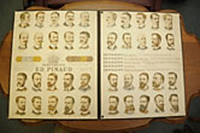
190033443N.P.: ca. 1900. ca. 1900. A fabulous advertising piece for Ed. Pinaud and his Parfumerie in Paris. It is a folded stiff card showing the 40 possibilities of moustache beard and sideburn possibilities and assures the consumer that it "imparts to the hair and moustache softness and brilliancy. No gentleman's dressing table complete without it." Mr. Ed Pinaud placed above competition at the Paris Exposition of 1900. On one side are the 40 beard mustache and sideburn profiles. When opened it measures 22 1/2" x 28 1/2" This side is near mint with only the slightest of stain. The obverse side is advertising Pinaud's other products those being Eau De Quinine Hair Tonic - The best Hair Restorer. A Positive Dandruff Cure; Ed Pinaud - Unsurpassed Extract Vegetal to use after shaving and Ed. Pinaud's Brillantine - Unequaled for imparting to the Hair and Moustache brilliancy and softness. Several stains to this side but overall in very good condition. The advertising piece was published by Palmer and Oliver of New York. ca. 1900. unknown
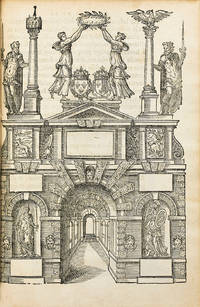
BIBLIO-LIVE-4-12Paris Denis du Pré 1572.<p>4to 235 x 157 mm of 53 ll. 1 9 full-page engravings in the text and one folding engraving out of pagination ; 10 ll. 26 2 ll. including 1 bl. 9 2 bl.ll. 6 full-page engravings in the text. Handwritten manuscript on the title. </p><p>Bound in full granite-like calf blind-stamped fillet on the covers spine ribbed and decorated mottled edges. Old restorations on the spine. <i>Early 18th century binding.</i></p><p>First edition of one of the most beautiful entries of the French Renaissance containing several plays by <i>Ronsard Antoine de Baïf Amadis Jamyn Jean Dorat Du Faur de Pibrac Pasquier</i>. in first edition.</p><p>Mortimer <i>French</i> 205-206; Rahir <i>Dutuit</i> 676; Picot <i>Rothschild</i> 3117; Brunet II 1001; Pichon 4897; Fairfax Murray <i>French</i> 152.</p><p><b>One of the beautiful French celebration books of the 16th century recounting the coronation of Queen Elisabeth of Austria wife of Charles ix and daughter of the Emperor Maximilian ii</b> which took place in the Abbey of Saint Denis as well as the entry of the sovereigns in the capital.</p><p>The work was written by the Parisian municipal magistrate<i> Simine Bouquet</i> who was charged by his colleagues at the city hall to organize the celebration and to coordinate the order of the decors; he had entrusted <i>Ronsard</i> and <i>Dorat</i> with the direction they decided the theme: the happy meeting between France and Germany. These two poets called in <i>Germain Pilon</i> for the sculptures in <i>Le Conte</i>for the carpentry's works and for the perspectives and the paintings in <i>Pierre d'Angers</i> andin<i> Nicolo dell'Abbate</i> the famous emulator of Fontainebleau's<i>Primaticcio.</i></p><p><b>The edition encloses 16 full-page woodcuts including 1 folding plate</b> made by the <i>precious stones cutter and engraver Olivier Codoré </i>abbreviated name according to Mariette of the valet and semi-precious stones engraver of the future Henry IV nicknamed <i>Coldoré</i> because of the abundance of necklaces he exhibited with pleasure.</p><p><b>The illustration depicts the ephemeral architectures triumphal arcs ivy and leaves cradles fountains…put on the royal cortege's way. </b>It is interesting as it is itself "<i>transformable</i>".</p><p>These ceremonies had been delayed for about ten years Charles IX being able to make his solemn entry in the capital only thanks to the recent Saint Germain peace conclusion on August 11th 1570 which put a temporary end to ten years of religious wars.</p><p><i>"The king's entry is illustrated with 10 figures including 9 that measure 200 x 140; the tenth bigger 208 x 212 depicts the perspective of the painting put place du Chatelet. These woodcuts offer similarities with those of the Entry of Henry II. The Entry of the Queen is illustrated with 6 woodcuts made each of two parts: the lower part is the exact reproduction of the corresponding figure of the King's entry; the upper part alone was re-engraved with different characters. The Queen having arrived 23 days after the king we had to keep the same decors and replace the allegories and inscriptions with other ones more suitable. All this decoration would be by Codoré as it is hinted in the privilege. According to Mariette Codoré would be the nickname of Fontenay Henry IV's semi-precious stones engraver."</i> Brun <i>Le Livre français illustré de la Renaissance</i> p. 181.</p><p>The volume encloses a mention of first state: the word<i>"vouloir"</i> l.34 v° wasn't added to line 7.</p><p>Brunet II 1001 mentions "<i>On some copies the page 'Simon Bouquet' is followed by a play in verse signed E. Pasquier Parisien entitled 'Au Roy Congratulation de la paix faicte par sa Majesté entre ses sujets l'onzieme jour d'Aoust 1570' 9 leaves</i>".</p><p>Our copy is one of the very few to include this play in verse by Pasquier.</p><p>The Queen being ill another celebration was held for her three weeks later. The same temporary architectures were used<i> but they were decorated with new allegorical figures.</i></p><p><b>A precious wide-margined and unwashed copy preserved in its 18th century binding. </b>Copies in ancient binding are rare most of them having been rebound –and washed at the same time– at the end of the 19th century.</p><p><br /></p><p><u>FR</u><br /></p><p>Paris Denis du Pré 1572.</p><p>In-4 de 53 ff. 1 9 gravures à pleine page dans le texte et une gravure dépliante hors texte ; 10 ff. 26 2 ff. dont 1 bl. 9 2 ff.bl. 6 gravures à pleine page dans le texte. Ex libris manuscrit sur le titre. Relié en plein veau brun granité filet à froid encadrant les plats dos à nerfs orné coupes décorées tranches mouchetées. Restaurations anciennes au dos. <i>Reliure du début du XVIIIe siècle</i>.</p><p>235 x 157 mm.</p><p><b>Edition originale de l'une des plus belles entrées de la Renaissance française contenant plusieurs dizaines de pièces de</b><i>Ronsard Antoine de Baïf Amadis Jamyn Jean Dorat Du Faur de Pibrac Pasquier</i>. <b>en édition originale.</b></p><p>Mortimer<i>French</i> 205-206 ; Rahir <i>Dutuit</i> 676 ; Picot <i>Rothschild</i> 3117 ; Brunet II 1001; Pichon 4897; Fairfax Murray <i>French</i> 152.</p><p><b>Un des beaux livres de fêtes français du XVIe siècle relatant le couronnement de la reine Elisabeth d'Autriche épouse de Charles IX et fille de l'Empereur Maximilien II </b>qui avait eu lieu à l'abbaye de Saint-Denis ainsi que l'entrée des souverains dans la capitale.</p><p>L'ouvrage est dû à l'échevin parisien <i>Simon Bouquet</i>que ses collègues de l'Hôtel de Ville avaient chargé d'ordonner la fête et de diriger l'agencement des décors ; celui-ci en avait confié la mise en scène à <i>Ronsard</i> et à <i>Dorat</i> qui en fixèrent le thème : l'heureuse rencontre de la France et de la Germanie. Ce sont ces deux poètes qui firent appel à <i>Germain Pilon</i> pour les sculptures à <i>Le Conte</i> pour les travaux de charpenterie et pour les perspectives et les peintures à <i>Pierre d'Angers</i> et à <i>Nicolo dell'Abbate</i> le célèbre émule du <i>Primatice</i> à Fontainebleau.</p><p><b>L'édition comporte 16 planches sur bois à pleine page dont une dépliante</b><b> </b>dues au <i>tailleur et graveur en pierres précieuses</i> <i>Olivier Codoré</i> nom abrégé selon Mariette du valet de chambre et graveur en pierres fines du futur Henri IV surnommé <i>Coldoré</i> à cause de l'abondance de colliers qu'il exhibait volontiers.</p><p><b>L'illustration figure les architectures éphémères arcs triomphaux berceaux de lierre et de feuillage fontaines. dressés sur le chemin du cortège royal.</b><b>Elle présente l'intérêt d'être elle-même " </b><i>à transformations</i> ".</p><p>Ces cérémonies avaient été retardées pendant une dizaine d'années Charles IX ne pouvant faire son entrée solennelle dans la capitale que grâce à la récente conclusion de la paix de Saint-Germain le 11 août 1570 qui mettait un terme provisoire à une décennie de guerres de religion.</p><p>" <i>L'entrée du roi est ornée de 10 figures dont 9 mesurent 200 x 140 ; la dizième plus grande 208 x 212 représente la perspective de la peinture dressée place du Chatelet. Ces bois offrent des similitudes avec ceux de l'Entrée de Henri II. L'Entrée de la reine est ornée de 6 bois formés chacun de deux parties : la partie inférieure est la reproduction exacte de la figure correspondantes de l'entrée du roi ; la partie supérieure seule a été regravée avec des sujets différents. La reine ayant fait son entrée 23 jours après celle du roi on avait dû conserver les mêmes décors et remplacer les allégories et inscriptions par d'autres mieux appropriées. Toute cette décoration serait de Codoré ainsi que le laisse entendre le privilège. Selon Mariette Codoré serait le surnom de Fontenay graveur en pierres fines de Henri IV.</i> " Brun <i>Le Livre français illustré de la Renaissance</i> p. 181.</p><p>Le volume comporte une remarque de premier tirage : le mot " <i>vouloir</i> " au f.34 v° n'a pas été ajouté à la ligne 7.</p><p>Brunet II 1001 mentionne " <i>A quelques exemplaires la page 'Simon Bouquet' est suivie d'une pièce en vers signée E. Pasquier Parisien intitulée 'Au Roy Congratulation de la paix faicte par sa Majesté entre ses sujets l'onzieme jour d'Aoust 1570' 9 feuillets</i> "</p><p><b>Notre exemplaire est l'un des très rares à posséder cette pièce en vers de Pasquier.</b></p><p>La reine étant souffrante une autre fête fut organisée en son honneur trois semaines plus tard. Les mêmes architectures éphémères furent employées <i>mais on les décora de nouvelles figures allégoriques</i>.</p><p><b>Précieux exemplaire grand de marges et non lavé conservé dans sa reliure du XVIIIe siècle. </b>Les exemplaires en reliure ancienne sont rares la plupart ayant été reliés à nouveau - et lavés par la même occasion – à la fin du XIXe siècle.</p> hardcover
199628372<p>Washington D.C.:: Counterpoint 1996. First Printing of the First Paperback Edition. A Fine tight copy in a Fine illustrated paperback binding "Americans in Paris" documents the work and influence of these four notable artists of the avant-garde who flowered during the 1920s in Paris. Turner follows the development of four Americans who came to Paris during the Twenties and returned to the US with renewed enthusiasm for their art. The book features the photography of Man Ray who brought Dadism to New York. Gerald Murphy who honed his minimalist post cubist cityscapes here and Stuart Davis who produced some of his best tightly constructed surrealist cubism-influenced paintings. Alexander Calder developed the new medium of bent and twisted wire as art and the never imagined mobile. Included with all this is Guy Davenport's trenchant essay explicating this art and of Paris as the eternal attraction for artists of the nineteenth and twentieth centuries. Richly illustrated with 39 color and 103 b&w images.</p> Counterpoint, paperback
199625976<p>Washington D.C.:: Counterpoint 1996. First Printing of the First Edition. A Fine tight copy in a Fine bright unclipped dust jacket. "Americans in Paris" documents the work and influence of these four notable artists of the avant-garde who flowered during the 1920s in Paris. Turner follows the development of four Americans who came to Paris during the Twenties and returned to the US with renewed enthusiasm for their art. The book features the photography of Man Ray who brought Dadism to New York. Gerald Murphy who honed his minimalist post cubist cityscapes here and Stuart Davis who produced some of his best tightly constructed surrealist cubism-influenced paintings. Alexander Calder developed the new medium of bent and twisted wire as art and the never imagined mobile. Included with all this is Guy Davenport's trenchant essay explicating this art and of Paris as the eternal attraction for artists of the nineteenth and twentieth centuries. Richly illustrated with 39 color and 103 b&w images.</p> Counterpoint, hardcover
198423341Ann Arbor: :: The Olivia & Hill Press 1984. First Printing of the First Edition. A Fine copy in a Near Fine dj with touch of wear to jacket corners. This street guide chronicles where Americans from John Paul Jones to Martin Luther King Jr. lived worked played and were seen. Maps and anecdotal histories. Contains much material on the expatriate community in Paris in the 1920s. Each entry is enhanced with quotes anecdotes and excerpts from letters. Illustrated with photos and maps. The Olivia & Hill Press, unknown
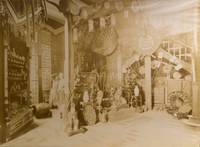
2789Photograph on printing out paper 280 x 380 mm unmounted in good condition with loss of contrast at upper right small tear lower right corner. An official photograph most likely taken for the 1900 Exposition Universelle in Paris showing the Buddhist temple display. unknown
2010PMV607503AParis: Paris musées 2010. Hardcover. Very good/Not issued. 247 x 289 x 27 cm. Hardcover • Nombreuses illustrations en noir et en couleurs couverture illustrée en couleurs • <b><i>French text original</i></b> • Printed 2010 • No inscriptions. Paris musées hardcover
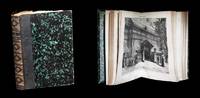
1878310241878. Paris Librairie. illustrÂŽe / Librairie M. Dreyfous s.d. 1878. Un fort vol. au format in-4 287 x 193 mm de 1 ff. 2 pp. n.fol. 1 grande planche dÂŽpliante 796 pp. et 1 f. bl. Reliure de l'ÂŽpoque de demi-chagrin maroquinÂŽ vert-bronze dos ˆ nerfs ornÂŽ de filets gras ˆ froid filet en pointillÂŽs dorÂŽs sur les nerfs doubles caissons d'encadrement dorÂŽs larges fleurons dorÂŽs titre dorÂŽ filet et filet en pointillÂŽs dorÂŽs en tÂte et queue tranches mouchetÂŽes. Edition originale de cette exhaustive ÂŽtude consacrÂŽe ˆ l'Exposition de 1878 ; agrÂŽmentÂŽe d'une abondante iconographie. Exemplaire - agrÂŽablement reliÂŽ - complet de sa grande planche dÂŽpliante. Le palais du TrocadÂŽro aussi appelÂŽ Palais de pierre est construit pour l'occasion par l' architecte Gabriel Davioud et l'ingÂŽnieur Jules Bourdais. Les statues des Continents qui ornent alors la faÂade du palais du Trocadero ont ÂŽtÂŽ depuis lors rÂŽinstallÂŽes devant le musÂŽe d'Orsay. Au rang des principales attractions : la tÂte de la statue de la libertÂŽ est exposÂŽe au Champ-de-Mars l'aquarium est amÂŽnagÂŽ sur le site abandonnÂŽ d'anciennes carriÂres de pierre ˆ b‰tir situÂŽ ˆ flanc de la colline de Chaillot l'inventeur Henri Giffard construit un ballon captif de 25 000 m3 capable dÕemporter 40 ˆ 50 passagers. On dit alors que ce ballon situÂŽ aux Tuileries fit voler en deux mois autant de personnes que depuis le dÂŽbut de lÕaÂŽrostation. ParallÂlement au ballon captif la machine servant ˆ produire le gaz permet de gonfler de nombreux ballons libres permettant des ascensions variÂŽes parfois par groupes jusquՈ trois ballons simultanÂŽment. C'est d'ailleurs l'une des attractions phare de l'exposition o 35 000 personnes volÂrent ainsi dans la nacelle. Enfin et pour l'anecdote la maison de Champagne Mercier expose un foudre de vin de Champagne d'une contenance de soixante-quinze mille bouteilles. Ce tonneau est pourtant battu en gigantisme par celui de la dÂŽlÂŽgation de l'Autriche-Hongrie. Lequel contient cent-mille litres ! Angles et coupes ÂŽlimÂŽs. Quelques claires rousseurs dans le corps d'ouvrage. DÂŽchirure en marge gauche de la planche dÂŽpliante. Du reste belle condition. b42961 unknown
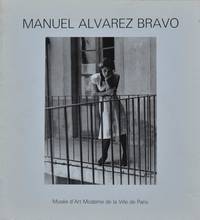
1986PM334203MParis: Musée d'art moderne de la Ville de Paris 1986. Trade paperback. Good/Not issued. Paperback • Illustrations couverture illustrée • <b><i>French text original</i></b>. Musée d'art moderne de la Ville de Paris paperback
1900149851Helsingfors : Impr. Centrale 1900. First Edition. Hardback. Fine copy in the original gilt-blocked cloth over bevelled boards. Slightest suggestion only of dust-dulling to the panel edges. Remains particularly well-preserved overall; tight bright clean and strong. ; 527 pages; Physical desc. : 527 p. In various paginations: ill. plates maps ; 23 cm. Other names: Mechelin Leo 1839-1914. Finland. Teollisuushallitus. Exposition universelle internationale de 1900 Paris France. Contents: Pays et population. --Organisation politique et administrative. --Culture intellectuelle. --Culture materielle. --Etat social. Language: French. Helsingfors : Impr. Centrale hardcover
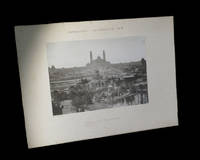
1878302171878. Paris Moniteur universel 1878. Dimensions : 293 x 198 mm marges. Belle preuve en phototypie maroufle sur carton fort. Elle figure une vue d'ensemble du Trocadro avec au premier plan le lac du Champ-de-Mars et le pavillon de Monaco. Piqres sur le montage. Petite abrasion affectant l'preuve. Du reste belle condition. b42961 unknown
1878260921878. Paris Moniteur universel s.d. 1878. Dimensions : 293 x 203 mm. Grande et belle ÂŽpreuve contrecollÂŽe sur carton fort figurant une vue d'ensemble de la place du TrocadÂŽro lors de l'Exposition Universelle de Paris 1878. Petite abrasion affectant la composition. Rousseurs marginales. Du reste trÂs belle condition. b42961 unknown
193656297Vienna Austria & Paris: Les Editions Leon Claude 4 Rue mayran 1936. Folio. 10.75 x 14.6 in. 4 pp. With 25 colour fashion plates text printed in French English & German. Textured beige softcovers raised & embossed gilt lettering front cover black lettering for Leon Claude minor chipping head & foot of spine edgewear some scuffing still a VG copy w/ the fashion plates in bright condition. First edition of this very scarce and beautifully printed fashion design magazine from the mid 1930s produced by the publishing house which also published fashion publications such as Paris Chic La Coquette and Le Gout Parisien. These designs show the dominant influence of Elsa Schiaparelli’s fashions in the 1930s as she continued Chanel’s idea of comfortable jackets but with the emphasis on beautiful tailoring. The designs here include most in 3/4 length with some sporting shapes and belted jackets as well as fancy wraps made from leopard panther kid-astrakhan Buenos broadtail lamb beaver otter Persian lamb musk mink fox and others. The collars are voluminous and flaring all the way around and the linings are often chosen to complement and match the dresses worn by the models. These 1930s fashions show a dramatic drop in hem lengths the new French beret style hats worn at an angle and designs which inspired the Hollywood glamor look of the era popularized by Joan Crawford Carole Lombard and others. The designs are glamorous and chic with many having geometric patterns and reflecting the Art Deco influence. These fashion designs were issued only to subscribing specialty shops boutiques and fashion enthusiasts at the time with eight different issues on assorted subjects appearing annually. No copies of this issue located in Worldcat. Les Editions Leon Claude, 4, Rue mayran, paperback
194056298Vienna Germany & Paris: La Mode Artistique S.A. 4 Rue mayran 1940. Folio. 10.75 x 14.6 in. 4 pp. With 28 colour fashion plates text printed in French English & German. Textured beige softcovers raised & embossed gilt lettering front cover black lettering for La Mode Artistique minor chipping head & foot of spine edgewear some scuffing still a VG copy w/ the fashion plates in bright condition. First edition of this very scarce and beautifully printed fashion design magazine issued in the opening years of World War II following the occupation of Paris in the summer of 1940 originally owned by Leon Claude. The firm had also published fashion publications such as Paris Chic La Coquette and Le Gout Parisien. These fashion designs show the growing restraint and conservatism of Nazi Germany and reflecting the desire by Adolf Hitler to extinguish French influence in European fashion. The designs here include most in 3/4 length with some sporting shapes and belted jackets as well as fancy wraps made from seal kid-astrakhan Buenos broadtail lamb beaver otter nutria ocelot Persian lamb musk mink fox and others. The collars are trimmer and the linings are often chosen to complement and match the dresses worn by the models. These 1940s fashions still show the dramatic drop in hem lengths feathered hats worn by Germans & Austrians and designs which inspired the Hollywood glamor look of the era popularized by Greta Garbo Joan Crawford Carole Lombard and others. These fashion designs were issued only to subscribing specialty shops boutiques and fashion enthusiasts at the time with eight different issues on assorted subjects appearing annually. No copies of this issue located in Worldcat. La Mode Artistique, S.A., 4, Rue mayran, paperback
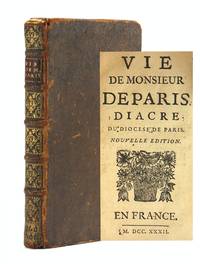
1732508272Not Identified 1732. Second Edition. Leather. VERY GOOD. Second Edition printed the year following the 1731 first edition. Written and printed anonymously. The author has been identified as Barthelmey Doyen; the printer remains unknown. 4 204 p. Small 8vo 3.75x6.5'. Brown calf with ornate gilt stamped spine and burgundy morocco label red speckled edges. Edges rubbed; Heraldic bookplate from the Bibliotheque du Chateau de Wideville. Clean and fresh text binding sound. Biography of the Roman Catholic deacon Francois de Paris 1690-1727: 'Deacon theologian and supporter of Jansenists. His pious life led people to consider him as a saint; miracles were reported to occur at his grave in Saint-Médard's cemetary in Paris with people experiencing convulsions; they were known as 'Convulsionnaires of Saint-Médard'. British Museum. [Not Identified] unknown
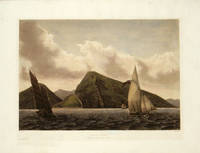
1833199435Paris.: Arthus Betrand. 1833-1835. Aquatint with handcolour 22.1 x 32 cms; 32.2 x 46.4 cms sheet including platemark "La Favorite" blindstamp at the foot light cockling to paper edge-toning the image a fine dark impression in very good condition. A fine view of the Fort of Bocca-Tigris in the Pearl River delta just downstream from Canton Guangzhou; one of the many fortifications protecting this strategic route of the China Trade to Canton. This atmospheric image of the fort with a junk and a yacht sailing in the river in the foreground is from the official account of the Laplace voyage in the Favorite 1830-32 by voyage artist François-Edmond Pâris 1806-1893. The strait is now crossed by the Humen Pearl River Bridge . (Arthus Betrand). unknown
68-4261Paris France: Harcourt ca. 1965. 17.5 x 23.5 cm. B&W glossy photograph. Good with loss to top left corner. Provenance Paul Paulet French actor from the 1930s-1970s [Paris, France: Harcourt, ca. 1965]. unknown
68-4267Paris France: Harcourt ca. 1950. 30 x 24 cm. B&W glossy photograph. Very Good. Provenance Paul Paulet French actor from the 1930s-1970s [Paris, France: Harcourt, ca. 1950?]. unknown
68-4268Paris France: Harcourt ca. 1950. 30 x 24 cm. B&W glossy photograph. Very Good. Provenance Paul Paulet French actor from the 1930s-1970s [Paris, France: Harcourt, ca. 1950?]. unknown
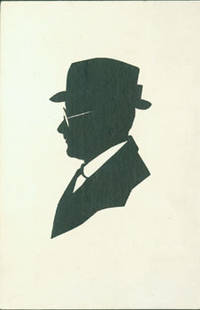
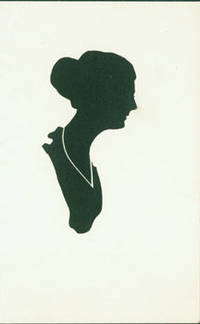
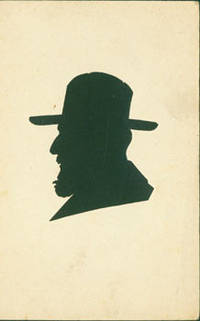
63-3558Paris France: H. Nolden 1906. Silhouette Woodcut. 13.7 x 9.5 cm. Very Good. [Paris, France: H. Nolden, 1906.] unknown
63-3541Paris France: H. Nolden 1906. Post Card. Silhouette Woodcut. 13.7 x 9.5 cm. Very Good with light crease. [Paris, France: H. Nolden, 1906]. unknown
63-3559Paris France: H. Nolden 1906. Silhouette Woodcut. 13.7 x 9.5 cm. Very Good. [Paris, France: H. Nolden, 1906.] unknown
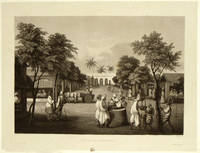
1835196250Paris.: A. Bertrand. 1835. Aquatint 27.1 x 36 cms; 31.6 x 47.2 cms sheet trimmed including platemark margins outside the platemark toned and discoloured edgewear with small chips mark at the foot of the caption split without loss at the lower corner of the platemark the image a fine dark impression in very good condition. Fine view of the market square at Pondicherry showing the well and the prison in the background from the official account of the Laplace voyage in the Favorite 1830-32 by voyage artist François-Edmond Pâris 1806-1893. The important French expedition encompassed India Southeast Asia and the Pacific. . A. Bertrand. unknown
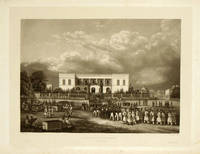
1835196251Paris.: A. Bertrand. 1835. Aquatint 27.1 x 36 cm; 32.3 x 47.2 cm sheet trimmed including platemark margins outside the platemark toned and discoloured with soft crease and small split not affecting the image to an upper corner the image a fine dark impression in very good condition. Beautifully executed view of the Governor's Palace in the Pondicherry showing soldiers and officials trouping out from the official account of the Laplace voyage in the Favorite 1830-32 by voyage artist François-Edmond Pâris 1806-1893. The important French expedition encompassed India Southeast Asia and the Pacific. . A. Bertrand. unknown
199926915<p>Jazz Age Paris Blake Jody. Le Tumulte Noir: Modernist Art and Popular Entertainment in Jazz-Age Paris 1900-1930. University Park: Penn State Press 1999. First Printing of the First Edition. ISBN: 0271017538. A Fine tight copy in a Very Good plus dust jacket with light sunning to the spine that is common wtih this title. In Le Tumulte noir Jody Blake focuses on the impacts of African sculpture and African-American music and dance on Parisian popular entertainment and modernist art literature and performance. Blake discusses the reception of ragtime-era and jazz-age entertainment as well as other African visual and performing art forms to provide new ways of understanding the development of modernist primitivism from Matisse and Picasso to Futurism Dada Surrealism and Purism. But the influence of art nÈgre went well beyond the avant-garde art world. Starting with the cakewalk of the 1900s and culminating with the Charleston of the 1920s the book studies the African-American idioms that were involved in larger cultural social and political developments. As an illustration Blake argues that performers such as Josephine Baker and Sidney Bechet of Revue nÈgre fame were thought to affect the political balance between Africa and Europe during the colonial period. Le Tumulte noir is divided into six chronological chapters each a well-researched well-conceived and well-written synthesis of the histories of art literature music and dance.</p> Penn State Press, hardcover