3 002 résultats
198951327Boston: Dudley A. Weiss 1989. 4to 2 parts in 1; pp 6 ii 183 followed by 250 pages of appendices; printed from typescript; original red cloth lettered in gilt on upper cover and spine; fine. The first half of the book is a personal recollection of the author's time as Executive Director of the Library Binding Institute. The second half is reference material mostly in facsimile on business statistics newsletters and organization records. <br/><br/> Dudley A. Weiss hardcover books
191436936Chicago 1914. 8vo pp. 90-114; reprinted from Papers of the Bibliographical Society of America v. 7 no. 3-4 1912-13; "This separate is limited to fifty copies". Front wrapper detached back wrapper worn with shallow tears interior fine. <br/><br/> unknown books
196923171New York: Burt Franklin 1969. Reprint of the 1916 first edition 8vo pp. 352; illustrated throughout; fine in original blue cloth spine gilt. <br/><br/> Burt Franklin hardcover books
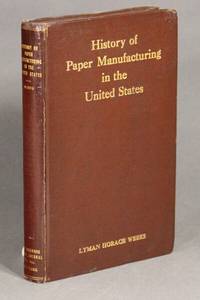
191631590New York: the Lockwood Trade Journal Co 1916. First edition 8vo pp. xv 1 352 black & white illustrations; original maroon cloth gilt; very good. <br/><br/> the Lockwood Trade Journal Co hardcover books
1828102755New York: Published by S. Converse. Printed by Hezekiah Howe 1828. Rare first edition of Webster's monumental American Dictionary one of only 2500 copies with <span class="glossaryQtip qTip">frontispiece</span> portrait of the pioneering lexicographer in full contemporary calf. Quarto two volumes bound in full contemporary calf marbled endpapers illustrated frontispiece tissue guard present. In near fine condition light toning to the text. Most rare and desirable bound in contemporary calf. An exceptional example most rare without any restoration. In 1807 Webster began compiling a fully comprehensive dictionary An American Dictionary of the English Language; it took twenty-eight years to complete. To evaluate the etymology of words Webster learned twenty-six languages including Old English Anglo-Saxon Greek Hebrew and Latin. Webster completed his dictionary during his year abroad in 1825 in Paris France and at the University of Cambridge. His book contained seventy thousand words of which twelve thousand had never appeared in a published dictionary before. As a spelling reformer Webster believed that English spelling rules were unnecessarily complex so his dictionary introduced American English spellings replacing colour with color substituting wagon for waggon and printing center instead of center. He also added American words like skunk and squash that did not appear in British dictionaries. At the age of seventy Webster published his dictionary in 1828 registering the copyright on April 14. Webster did all this in an effort to standardize the American language. "This dictionary which almost at once became and has remained the standard English dictionary in the United States was the end-product of a stream of spelling books grammars readers and dcitionaries which flowed from the pen of the industrious Noah Webster.Webster's great dictionary all the 70000 entries of which he wrote with his own hand has been reprinted and brought up to date innumerable times.the book marked a definite advance in modern lexicography as it included many non-literary terms and paid great attention to the language actually spoken. Moreover his definitions of the meaning of words were accurate and concise.and have for the greater part stood the test of time superbly well" Printing and the Mind of Man. "As a whole Webster's American Dictionary was a scholarly achievement of the first order richly deserving of its great reputation at home and abroad" DAB. With definitions for "some 70000 words--15000 more than any previous English lexicon. Although only 2500 copies of the first edition were printed the work established Webster as a lexicographer of international repute" Lathem 76 United Statesiana 9. Published by S. Converse. Printed by Hezekiah Howe unknown books
192944406Cleveland: Commercial Bookbinding Co. 1929. Miniature book approx. 51 x 38 mm. pp. 799; original grey limp embossed cloth all edges red gilt original silver paper slipcase box; binding a bit loose else very good and sound. On title page: "Employing Bookbinders of America. 10th Annual Convention." Western Reserve and Virginia only in OCLC as of January 2014. <br/><br/> [Commercial Bookbinding Co.] hardcover books
193044407New York: Tiny Book & Novelty Co 1930. Miniature book approx. 44 x 38 mm. pp. 799; original red limp cloth upper cover and spine lettered in black all edges red; a bit edge worn lower cover and last few leaves detached but present else very good and sound. <br/><br/> Tiny Book & Novelty Co hardcover books
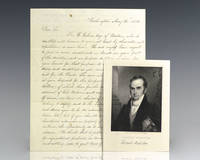
18361243531836. Rare autograph letter signed by one of the most prominent American lawyers of the 19th century Daniel Webster written in anticipation of the opening of the American west. One page folded text in the hand of an amanuensis the letter stipulates which types of land Webster and Perkins wish the recipient Joseph R. Williams of Toledo Ohio to invest in with their $5000 speculative fund. The reads in part "Washington 16 May 1836 Dear Sir Mr. H. Perkins Esq. of Boston who is doubtless well known to you at least by character and reputation is now here. He and myself have argued to join in some investments in lands in your part of the country and we propose to place a sum in your hands for that purpose to be invested on the same terms and conditions as you invest other funds for me and for Mr. Davis. The sum which we propose to place at your disposal for this purpose is five thousand dollars; of which three fourths are to be invested for account of Col. Perkins and one fourth on my account. Of course we leave the choice of places to your discretion looking to safety and to the hopes of profit. We would not devise you to be too adventurous in regard to town lots; but if you should see a good prospect of a handsome advance in property of that kind you will embrace the opportunity so to dispose of part of lands for agricultural purposes in townships already settles and settling near to great lines of communication and taken up at Government prices cannot well fail to produce handsome returns on the capital. Still we should be very glad if you could make a lucky hit at some point where the land should soon be wanted for town purposes or where it would be met by some canal or other improvement which should enhance its value. As to the mode of remittance we have thought of no better way than for you to draw on me. I shall be in this city until the early part of Jun perhaps later and then in Boston. As commercial transactions in your quarter may enter in New York and Philadelphia your Bills on me may be made payable either at Boston or at the Merchants Bank in the city of New York or the Bank of the United States at Philadelphia. You will of course write me on the receipt of this. You will see what day shall be fixed on for the adjustment of Congress and may take it for granted that I shall be here till about that time." Signed at the conclusion by Webster "with regards Yr obedient Serv Daniel Webster'. Additionally signed "Joseph R. Williams Esq Toledo" and "approved & agreed to by me Th. Perkins". The spring and summer of 1936 saw the admission to the Union of Arkansas and Michigan as the 25th and 26th states respectively and the organization of the Wisconsin Territory essentially opening the American West as the next urban frontier. In near fine condition. Accompanied by an etched portrait of Webster. American lawyer and statesman Daniel Webster represented New Hampshire and Massachusetts in the U.S. Congress and served as the U.S. Secretary of State under Presidents William Henry Harrison John Tyler and Millard Fillmore. As one of the most prominent American lawyers of the 19th century he argued over 200 cases before the U.S. Supreme Court between 1814 and his death in 1852. During his life he was a member of the Federalist Party the National Republican Party and the Whig Party. During the Mexican-American War he emerged as a leader of the "Cotton Whigs" a faction of Northern Whigs that emphasized good relations with the South over anti-slavery policies. In 1850 President Fillmore appointed Webster as secretary of state and Webster contributed to the passage of the Compromise of 1850 which settled several territorial issues and enacted a new fugitive slave law. unknown books
196831935Los Angeles: the Ward Ritchie Press 1968. First edition 1 of 500 copies 8vo pp. vii 1 39 1; illus.; fine in original gray cloth stamped in gilt near fine slipcase. Introduction by Doyce B. Nunis Jr. <br/><br/> the Ward Ritchie Press hardcover books
193731775Boston: Hale Cushman & Flint 1937. First edition 8vo pp.8 168; a fine copy in original buckram lettered in red dust jacket chipped at the extremities partially split along the front hinge and with a small piece missing at the top of the front panel no loss of letterpress. <br/><br/> Hale, Cushman & Flint hardcover books
191628295London: Frank Hollings 1916. First edition small 8vo pp. xiii 1 127 2; frontis. port.; original green cloth cover decorated in gilt spine gilt t.e.g.; light wear to binding but overall very good or better. <br/><br/> Frank Hollings hardcover books
190929449New York: American Institute of Electrical Engineers 1909. First edition large 8vo 2 volumes; frontispiece portrait in each and many full-page facsimiles through vol. I; original yellow buckram stamped in green and lettered in gilt on spines; moderately worn and soiled but still good and sound overall. <br/><br/> American Institute of Electrical Engineers hardcover books
189854595London and New York: John Lane; The Bodley Head 1898. First edition small 8vo pp. ix 3 83 1; full maroon crushed levant gilt title on spine gilt board edges and gilt-decorated dentelles t.e.g.; fine in a sun toned paper chemise. Likely a copy owned by Alfred Eddy an associate of Watson's as we have another book of Watson's bound identically to this which includes a letter from Eddy about Watson. <br/><br/> John Lane; The Bodley Head unknown books
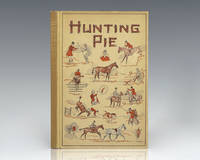
1931116073New York: The Derrydale Press 1931. First edition of the author's standard work on fox hunting. Octavo original illustrated boards illustrated by Paul Brown. Foreword by Mrs. Thomas Hitchcock. One of 750 copies. In near fine condition. Bookplate to the pastedown. Founded in 1927 by Princeton University graduate Eugene V. Connett III The Derrydale Press published several series of outdoor books for North American audiences during the first half of the 20th century. It was the only publishing house in the world devoted exclusively to sporting books. Hunting Pie includes eleven stories of the hunt including: Why Foxhunting Goes On The Hunt Secretary The Hounds The Fox and The Field. The Derrydale Press hardcover books
184558350Boston: T. R. Marvin 1845. First edition 8vo pp. 20; removed from binding upper wrapper perished and lower present note in pencil on verso of title leaf stating that this was a gift of US Senator Charles Sumner Esq. to Harvard with deaccession stamp text sound and clean. <br/><br/> T. R. Marvin unknown books
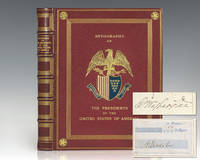
17831253841783-1956. Elaborately bound collection of Presidential autographs containing the autograph of each of the first 34 Presidents of the United States from George Washington to Dwight D. Eisenhower. Quarto bound in full red morocco by Riviere & Son with gilt titles and ruling to the spine in six compartments within raised gilt bands gilt presidential seal to the front panel with white and blue morocco onlays gilt arms and motto of George Washington to the rear panel with white and blue morocco onlays and his gilt signature in facsimile centerpieces within quintuple gilt ruling with star emblems at each corner blue morocco doublures with multiple gilt presidential signatures blue silk endpapers. This complete series of autographs of the first 34 Presidents of the United States contains the signature of each mounted on an album leaf opposite a loosely tissue-guarded engraved portrait of each. The collection includes: the signature of George Washington on an envelope addressed to Major General Knox as Secretary <span class="match">of</span> <span class="match">the</span> Society <span class="match">of</span> <span class="match">the</span> Cincinnati November 3 1783; a clipped signature of John Adams; clipped signature of Thomas Jefferson; the signature of James Madison on an envelope addressed to Reverend Frederick Freeman of Manayunk Pennsylvania; and inscription signed by James Monroe; the signature of John Quincy Adams on an envelope addressed to William Plumer jun. Esq. in Epping New Hampshire; a partially printed land grant signed by Andrew Jackson dated 1831 registering <span class="match">the</span> purchase <span class="match">of</span> 20 acres in Detroit by Peter Aldrich; clipped signature of Martin Van Buren; clipped signature of William Henry Harrison; signed inscription from John Tyler; signed inscription from James Polk; clipped signature of Zachary Taylor dated Baton Rouge March 5 1841; clipped signature of Millard Fillmore; clipped signature of Franklin Pierce; clipped signature of James Buchanan on a document dated July 18 1858; clipped signature of Abraham Lincoln; endorsement signed by Andrew Johnson as President; clipped signature of Ulysses S. Grant; card signed by Ru<span class="match">the</span>rford B. Hayes; inscription signed by James Garfield; large card signed by Chester A. Arthur and dated May 22 1884; autograph noted signed by Grover Cleveland declining an invitation dated November 16 1890; an Executive Mansion card signed by William McKinely; clipped signature of <span class="match">The</span>odore Roosevelt; clipped signature of William Howard Taft; clipped signature of Woodrow Wilson; typed letter signed by Warren G. Harding as President dated June 4 1923 on White House letterhead; card signed by Calvin Coolidge; White House card signed by Herbert Hoover; typed letter signed by Franklin D. Roosevelt as Assistant Secretary <span class="match">of</span> <span class="match">the</span> Navy February 15 1917. Laid in is a typed letter signed by Harry S. Truman as President June 30 1950 on White House stationery and a typed letter signed by Dwight Eisenhower. TLS as President November 13 1956 on White House stationery. In fine condition. Housed in a custom folding chemise and half morocco slipcase. An exceptional collection and presentation. unknown books
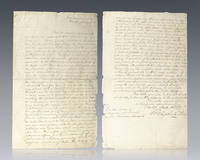
1781125872April 10 1781. Exceptionally rare autograph letter signed by George Washington as Commander-in-Chief of the Continental Army to French ally Jean-Baptiste Donatien de Vimeur comte de Rochambeau whose military assistance in the Siege of Yorktown essentially ended the Revolutionary War. The body of the letter is entirely in the hand of Alexander Hamilton and dated 10 April 1781. In the spring of 1781 officials from Massachusetts approached Rochambeau with a proposal to attack the British post at the mouth of the Penobscot river which had been established in June 1779 to secure timber for shipyards in Halifax and to protect Nova Scotia from any American advance. On April 6 Rochambeau informed Washington that he was willing to send a detachment of troops and that Admiral Destouches would offer naval assistance but observing that he was under Washington's command he would await his approval before approving the action Rochambeau to Washington 6 April 1781 Papers of George Washington Library of Congress. Washington here responds offering his gratitude that Destouches who had only recently lost a naval engagement with the British in an unsuccessful attempt to relieve Lafayette in Virginia would be willing "to undertake the expedition to Penobscot and to you for your readiness to furnish a detachment of troops for the same purpose. The object is certainly worth attention and if it can be effected will be very agreeable to the States particularly to those of the East." He trusts that Destouches "can best judge from the situation of the enemy's fleet how far it may be attempted with prudence and Your Excellency from the information you have recently received what number of troops will be sufficient for the enterprise--I am persuaded it will be calculated how far it is probable the enemy may follow with a part of their fleet--whether the post can be carried by a coup de main or may require so much time as to make it likely the operation will be interrupted before its conclusion--in case of a superior squadron being sent by the enemy what possibility there is of protection or a safe retreat for the ships and even for the land force through an unsettled country in which numbers perished for want of provision in a former attempt--All these are points too important not to have been well weighed and your conversations with the Massachusetts deputies will have been able to enlighten you upon them." Here he is referencing the unsuccessful attempt by Massachusetts in 1779 to destroy the post abandoned when British ships with reinforcements forced an arduous overland retreat by the Americans. Despite his assurances that <span class="match">Rochambeau</span> and Destouches had matters well in hand <span class="match">Washington</span> took the "liberty to remark on two things--one that it appears to me frigates without any ships of the line will answer the purpose as well as with them and less will be risked than by dividing the body of the fleet. Frigates especially the forty fours will afford a safe escort to the troops against any thing now in those Seas and with respect to a detachment from the enemy's fleet it would be always proportioned to the force we should send and if we have two sixty fours they would even be an object for their whole fleet. The other observation I would make is that dispatch being essential to success it will in my opinion be adviseable not to depend on any cooperation of the Militia but to send at once such a force from your army as you deem completely adequate to a speedy reduction of the post. The country in the neighbourhood of Penobscot is too thinly inhabited to afford any resource of Militia there and to assemble and convey them from remote places would announce your design--retard your operations and give leisure to the enemy to counteract you. Indeed I would recommend for the sake of secrecy to conceal your determination from the State itself." On 15 April <span class="match">Rochambeau</span> replied to <span class="match">Washington</span> observing that while he had sufficient troops to spare "your Excellency's observations upon the Separation of our fleet and upon the danger to be interrupted by superior forces during the course of the Expedition which Mr Destouches does not Look on as possible to be undertaken with his frigates only are the motives which cause this project to be Laid aside for the present moment." <span class="match">Rochambeau</span> to <span class="match">Washington</span> 15 April 1781 Papers of George <span class="match">Washington</span> Library of Congress. Soon <span class="match">Washington</span> and <span class="match">Rochambeau</span>'s attention returned again to Virginia and within months their combined forces would be closing in on Yorktown. In near fine condition. Exceptionally rare and desirable being the only communication between the storied commanders of the Yorktown campaign to appear at auction in more than a century. In 1780 French nobleman Jean-Baptiste Donatien de Vimeur comte de Rochambeau was appointed commander of land forces as part of the project code named Expedition Particuliere. He was given the rank of Lieutenant General in command of some 7000 French troops and sent to join the Continental Army under George Washington during the American Revolutionary War. He landed at Newport Rhode Island on 10 July but was held there inactive for a year due to his reluctance to abandon the French fleet blockaded by the British in Narragansett Bay. The College in the Colony of Rhode Island and Providence Plantations now known as Brown University served as an encampment site for some of Rochambeau's troops and the College Edifice was converted into a military hospital now known as University Hall.3 In July 1781 the force left Rhode Island and marched across Connecticut to join Washington on the Hudson River in Mount Kisco New York. Washington and Rochambeau then marched their combined forces to the siege of Yorktown and the Battle of the Chesapeake. On 22 September they combined with the Marquis de Lafayette's troops and forced heavily outnumbered and trapped Lord Cornwallis to surrender on 19 October. The siege of Yorktown was a decisive victory for the American Continental Army and proved to be the last major land battle of the American Revolutionary War in the North American region as the surrender by Cornwallis and the capture of both him and his army prompted the British government to negotiate an end to the conflict and ultimately resulted in the Treaty of Paris of 1783. unknown books
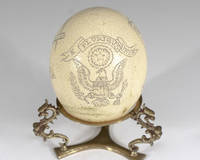
119684Rare ostrich egg engraved with a portrait of George Washington the Washington Coat of Arms the Great Seal of the United States and the Masonic compass and trowel. Mounted on a decorative brass stand. From the collection of former four-term United States Senator Lloyd Millard Bentsen who ran as the Democratic Party nominee for vice president in 1988 on the Michael Dukakis ticket and served as the the 69th United States Secretary of the Treasury under President Bill Clinton. As a primary architect of the Clinton economic plan Bentsen contributed to a $500 billion reduction in the deficit launching the longest period of economic growth since World War II. More than 5 million new jobs were created during his tenure as Secretary. Bentsen was awarded the Presidential Medal of Freedom in 1999. In fine condition. A unique piece of Americana and with noted provenance. The art of decorating trading and gifting ostrich eggs as luxury items and extravagant gifts dates back to over five thousand years ago during the Bronze and Iron Ages. The tradition evolved over centuries into the custom of the Easter egg which itself can be traced to early Christians of Mesopotamia from where it spread into Eastern Europe and Siberia through the Orthodox Churches and later into Europe through the Catholic and Protestant Churches. unknown books
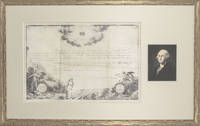
1784101412Philadelphia May 5th 1784. Rare autograph document signed by George Washington as President of the Society of the Cincinnati during the first general meeting of the Society and 5 years prior to his election and inauguration as the first President of the United States of America. One page partially printed on vellum with engraved vignettes by Auguste L. Belle after Jean-Jacques <span class="match">And</span>re LeVeau depicting America in knight's armor trampling upon the British st<span class="match">and</span>ard <span class="match">and</span> the American eagle casting the British lion <span class="match">and</span> Britannia out to sea with thunderbolts engraved seal of the Order of the Cincinnati. The document reads: Be it known that Lieutenant William Andrews is a member of the society of the Cincinnati instituted by the Officers of the American Army at the Period of Dissolution as well to commemorate the great Event which gave Independence to North American as for the laudable Purpose of inculcating the Duty of laying down in Peace Arms assumed for public Defence and of uniting in Acts of brotherly Affection and Bonds of perpetual Friendship the Members constituting the same. In Testimony whereof I the President of the said Society have hereunto set my hand at Philadelphia in Pennsylvania this fifth day of may in the Year of our Lord One Thousand Seven Hundred and Eighty Four and in the Eighth Year of the Independence of the United States. By Order " "H.<span class="match">Knox</span>" Secretary "G. Wahsington" President. William <span class="match">And</span>rews was commissioned a lieutenant on 1 January 1777 with the Third Continental Artillery. His regiment wintered at Valley Forge <span class="match">and</span>the following June <span class="match">And</span>rews was captured <span class="match">and</span> held by the British in New York until he was exchanged in September 1781. In fine condition. Double matted and framed with an engraved portrait of Washington. The entire piece measures 36 inches by 23 inches. An exceptional example. Conceived of by Henry Knox in an effort to establish a fraternal organization for all officers who had served in the American War for Independence The Society of the Cincinnati was founded in early May 1783 at the headquarters of General Friedrich Wilhelm von Steuben at Verplanck House in Fishkill New York. The three guiding principles of the organization were: First "An incessant attention to preserve inviolate those exalted rights and liberties of human nature for which they have fought and bled. ." Second "An unalterable determination to promote and cherish between the respective States that union and national honor so essentially necessary to their happiness and the future dignity of the American empire." And third "To render permanent the cordial affection subsisting among the officers. This spirit will dictate brotherly kindness in all things and particularly extend to the most substantial acts of beneficence according to the ability of the Society towards those officers and their families who unfortunately may be under the necessity of receiving it." The concept of using Cincinnatus as an emblem of the Order was particularly resonant with Americans since the life of this mid-fifth century Roman nobleman and farmer closely paralleled that of many who had served with George Washington in the vanguard. Lucius Quinctius Cincinnatus was called upon to repel two hostile tribes that threatened Rome. He issued his orders which were efficiently carried out and vanquished the enemy. Although elected a dictator for six months and voted a triumph by the Senate Cincinnatus stepped down just after fifteen days and returned to private life on his farm. Similarly at the conclusion of hostilities Washington returned to his plantation at Mount Vernon. hardcover books
184928254New York: Harper & Brothers 1849. First edition 2 vols. 8vo 416; 471; contemporary half brown morocco over marbled boards t.e.g. marbled endpapers; bindings rubbed moderate dampstain to both volumes still a good sound set. Volume II is the Second series special collections; both volumes are complete on their own. <br/><br/> Harper & Brothers hardcover books
197957306Franklin Center Pa: The Franklin Library 1979. Edition limited to an unspecified number; 8vo pp. 16 7-522 2; original full brown gilt-stamped morocco silk moiré endpapers silk ribbon bookmark a.e.g.; fine bright copy. <br/><br/> The Franklin Library unknown books
197432175Washington: Library of Congress 1974. First edition 8vo pp. x 187; illustrated endpapers; spine a bit faded; very good in original red cloth spine and upper cover gilt. Review copy with slips laid in. <br/><br/> Library of Congress hardcover books
197151214London: Society of Archivists 1971. 8vo pp. viii 2 84 2; 8 plates; red cloth gilt title on spine fine. Part of a series of Society of Archivists handbooks. <br/><br/> Society of Archivists hardcover books
192630238Cambridge: Harvard University Press 1926. Second impression 8vo pp. 6 74 3 15 full-p. facsimiles at the back; fine copy in original gray cloth paper label on spine. This monograph appeared originally in the fourth number of The Fleuron and was followed by an edition limited to 210 copies in 1925 with alterations. This is a word for word reprint. Descriptive list of 200 books designed by Rogers for various printers and presses. <br/><br/> Harvard University Press hardcover books
192528736Cambridge: Harvard University Press 1925. Edition limited to 210 copies "with additional illustrations" 8vo pp. 6 77 1 and 20 full-p. facsimiles; original tan paper-covered boards paper label on spine; top half-inch of spine end chipped away the lower third of the back joint cracked; overall still good and sturdy. This monograph appeared originally in the fourth number of The Fleuron and is here reprinted with alterations. Descriptive list of 200 books designed by Rogers for various printers and presses. <br/><br/> Harvard University Press hardcover books