Paine ThomasABAA
73 résultats
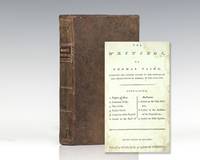
179281112Albany New York: Charles R. & George Webster 1792. Nine of Paine's writings gathered each pagination with a separate title page. Octavo bound in contemporary calf. One of at least four issues with variant title pages for this work this apparently the first without the addition of "Rights of Man Part the Second. In very good condition with some light foxing. Rare and desirable. One of the founding fathers of the United States Thomas Paine authored two of the most influential pamphlets at the start of the American Revolution which ultimately inspired the 1776 Declaration of Independence. Virtually every American rebel read Paine's powerful pamphlet Common Sense which crystallized the American Revolution and demand for independence from Britain. John Adams asserted "without the pen of the author of Common Sense the sword of Washington would have been raised in vain." Charles R. & George Webster unknown books
1799112450London: For R. Phillips by T. Davison 1799. First edition in English of "an original source of the first class for American history at the close of the 18th century" Larned. Quarto bound in full calf gilt titles and tooling to the spine raised bands gilt tooling to the front and rear panels marbled endpapers with three engraved folding maps of North America and six folding tables. In near fine condition. An exceptional example of this landmark work. First editions are rare. "The observations of this distinguished author made during a three years' residence extend to the political constitution of the country the manners etc. of the inhabitants its physical state and natural history. The translator appears to have executed his task faithfully and to be well acquainted with the country described. His notes frequently increase the information and sometimes correct the errors of the original" Sabin. The work became a standard source book for the history of America at the close of the 18th century. An exiled French nobleman the Duke traveled in all the Eastern states in the Great Lakes region and Upper Canada visiting many towns from Maine to Georgia and making the acquaintance of people of all classes. He was especially interested in economics but had much to say about the Indian tribes natural history and social and religious communities Shakers Dunkers etc. For R. Phillips by T. Davison hardcover books
178643279London: printed for G. G. J. and J. Robinson 1786. First edition 4to pp. vii 1 269 1; 4 engraved plates 3 folding woodcut diagrams and tables in the text; the fine Macclesfield copy in contemporary mottled calf elaborate gilt decorated spine red morocco label; edges stained yellow; engraved bookplates of Gen. G. L. Parker and the South Library bookplate Earls of Macclesfield and with 2 small pressure stamps on preliminaries. In a new maroon cloth clamshell box. Volume I is all that was published at this time. These tracts were expanded and reprinted in 1812 in 3 volumes. The ninth tract is entitled "New Experiments in Artillery." Hutton was professor of Mathematics at the Royal Military Academy at Woolwich where his experiments took place. Not such a common book by any means. ESTC locates only a dozen copies and just 3 in the U.S.: American Philosophical Society and the Huntington and Smithsonian. <br/><br/> printed for G. G. J. and J. Robinson hardcover books
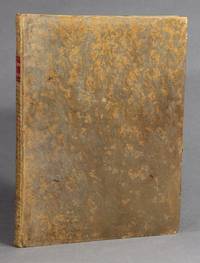
176326567Oxonii: e typographeo Clarendoniano 1763. 8vo pp. 4 676; printed in beautiful Greek types throughout; contemporary full calf rubbed at edges rebacked ca. early 20th century and preserving the old red morocco labels scuffed. Engraved bookplate of Earl Cornwallis. This is the only book printed in the Greek type that Baskerville himself designed and cut which is also the only Baskerville type that survives to this day. Gaskell add.2 noting that 2000 copies of the octavo edition were ordered printed by the Delegates of the University and 500 of the quarto. <br/><br/> e typographeo Clarendoniano unknown books
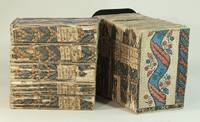
177652665Paris 1776. 10 volumes 8vo 34 finely engraved plates after Gravelot the frontispiece to vol. I signed "Elisabeth Thiebaut sculp." Half-titles in all but volume I half-title defective in vol. 7 and largely torn away in vol. 8; title page in vol. I detached but present; occasional minor dampstains occasional foxing or darkening of the plates; uncut the last few gatherings of vol. 10 unopened and bound in the original woodblock and color stencil-printed wrappers retaining at the bottom of vols. 4 8 and 9 the imprint and paper stock number of the papermaker François Pellé: "A Orléans chez Pelle No. 3." Contemporary manuscript paper labels on spines the liners of most wrappers consisting of printers' waste; scattered chips and tears some fraying of the edges considerable wear to the backstrips with loss a few vols. with sewing loose. A pirated edition of Voltaire's 1764 edition of Corneille in unusual and striking stencil-printed wrappers. The work was first published in Genava in 12 volumes 1764-65. <br/><br/> unknown books
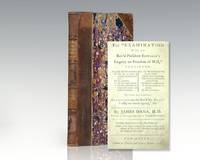
177382405New Haven: Printed for Thomas and Samuel Green 1773. First edition of American Protestant clergyman James Dana's second published response to Jonathan Edwards' Inquiry into the Modern Prevailing Notions of the Freedom of the Will preceded by Dana's prior examination of the same subject published anonymously in 1770. Octavo original three-quarter period calf over marbled boards gilt titles to the spine morocco spine labels raised bands. A rare and desirable example illustrating the tensions that shaped the Evangelical Revival in eighteenth century America. Widely regarded as "one of America's most important and original philosophical theologians" American revivalist preacher Jonathan Edwards' theological work was firmly rooted in Reformed theology. In his major work The Freedom of the Will Edwards argued that although humanity possesses free will they are inherently depraved and bound to sin and therefore require divine guidance and grace. Regarded as inclining to Arminianism fellow Protestant clergyman James Dana first came into conflict with Edwards when he was ordained and and made pastor of Congregational Church in Wallingford Connecticut. Dana published his first Examination of Edwards' The Freedom of the Will anonymously in his continued Examination which revealed him as the author of both works Dana argued against Edwards' "denial of moral rational liberty; his distinction of natural and moral necessity and attributing the origin of evil to the want or withdraw of divine assistance." Printed for Thomas and Samuel Green hardcover books
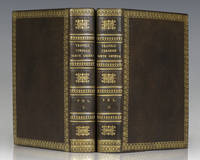
179624282London: T. Longman B. Law et al. 1796. 12 volumes 8vo frontis portrait in vol. 1; slightly later full crimson straight-grain morocco gilt-decorated spines black morocco labels marbled edges and endpapers; spines a little darkened extremities rubbed occasional cracking occasional mild tide-marks to covers; overall a good sound set. "A direct reprint of Murphy's first edition of 1792 without correction or rearrangement" Fleeman. Courtney & Smith p. 164; Fleeman87.3W/4. <br/><br/> T. Longman, B. Law [et al.] unknown books
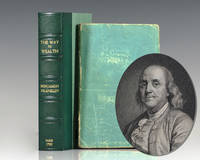
1795125491Paris: Printed for Ant. Aug. Renouard Antoine-Augustin Renouard 1795. Renouard's scarce bi-lingual edition of Franklin's popular collection of aphorisms. Octavo bound in contemporary wrappers frontispiece portrait of Franklin engraved by Alexandre Tardieu after Duplessis' painting. The Way to Wealth was first published as the preface to Poor Richard's Almanack of 1758 the last of the almanacs written by Franklin himself under the title "Father Abraham's Speech." Revered for the elegance of its printing this bi-lingual edition also includes Franklin's private letter to Madame Passy along with "Dialogue entre la goutte et Franklin" the poem "Le Sage et la goutte" and the essays "Quelques mots sur l'Amerique avis a ceux qui voudroient aller s'etablir dans cette contree" and the separately paginated "Observations sur les Sauvages du Nord de l'Amerique" which is noted by Ford to be present in only a few copies. Sabin 25596; Ford 107. In near fine condition. Exceptionally clean internally. Housed in a custom chemise slipcase within a half morocco clamshell box. A beautiful example rare in wrappers. This pithy collection of the most clever sayings garnered from the run of Poor Richard's Almanack was first printed as a separate edition by Franklin's nephew Benjamin Mecom of Boston in March of 1758. By the late 18th century the work had attained great popularity not only in American but in London and Pairs. Renouard's The Way to Wealth was revered not only as the first bi-lingual edition but for the elegance of its printing; emphasizing the tremendous esteem Franklin had earned during the years he dwelt among the French to whom his words of wisdom symbolized the freedom embodied in the newly-founded American republic of no small significance in the wake of their own revolution. Printed for Ant. Aug. Renouard [Antoine-Augustin Renouard] unknown books
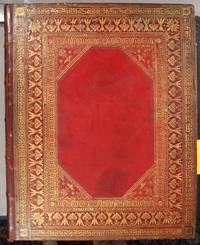
179747940London: printed for P.W. Tomkins . the letter-press by T. Bensley. The types by V. Figgins 1797. Large folio 18½" x 14¾" pp. 12 244; engraved title and dedication pages 21 engravings throughout 6 full-page contemporary full red straight-grain paneled morocco by Kalthoeber with his ticket 4 elaborate gilt borders of varying designs on covers almost imperceptibly rebacked with gilt-lettering direct on gilt-decorated spine a.e.g. inner gilt dentelles blue pastepaper endpapers with printed gilt borders and fleurons in the corners; the covers slightly soiled and bit worn with some minor loss of the leather at the edges the whole but generally a very good sound copy. Engraved armorial bookplate of Chas. Forbes. The subscriber's list contains nearly 300 names. The engravings are dated 1792-98. The German-born Christian Samuel Kalthoeber who operated a bindery in London from 1782-1808 "was an outstanding craftsman and was responsible for the introduction of a number of new binding styles" Glaister's Glossary of the Book p. 265. Abbey Life 252; Lowndes p. 2671; Ebert 22907: "This edition ornamented with very neat vignettes and 4 sic large plates is very fine but it has too small a margin for the largeness of the size. A repitition with the same vignettes appeared Lond. 1807 lg. 4to." An old bookseller's pencil note on the flyleaf states "The finest edition of Thomson's Seasons published / only 10 copies like this at 40 guineas each / cost 20 guineas binding." <br/><br/> printed for P.W. Tomkins ... the letter-press by T. Bensley. The types by V. Figgins hardcover books
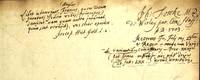
170320165London: printed by M. Bennet for Dan. Brown et al. 1703. First edition in English folio pp. 34 431 1 17; full contemporary paneled calf red morocco label; slight crack at the bottom of the lower joint else a very good sound copy. The Dedication is signed J. G. i.e. James Gatherer. With the early ownership inscription of "Ph: Fowke M.D.A.D. 1703" with a six-line inscription in Latin and Greek beneath it and a number of additional notes in his hand throughout in the margins and on the rear blank flyleaves. Phineas Fowke 1638-1710 was a Yorkshire physician who graduated from Cambridge in 1668. He practiced in London and was admitted as a fellow in the College of Physicians in 1680. See DNB. <br/><br/> printed by M. Bennet, for Dan. Brown [et al.] unknown books
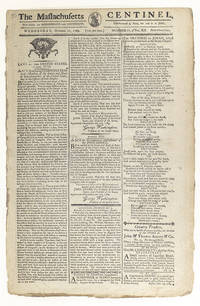
1789116337Boston: Russell Benjamin October 21 1789. Number II of Vol. XII of "the most influential and enterprising paper in Massachusetts after the Revolution" Benjamin Russell's Massachusetts Centinel issued on Wednesday October 21 1789 Hudson 147. Folio one page folded. The issue includes front-page articles on recently enacted acts allowing compensation for Members of the Senate and House of Representatives and the temporary establishment of the Post-Office and appointment of a Post-Master General both approved by Speaker of the House Frederick Augustus Muhlenburg President George Washington and Vice President John Adams on September 22nd 1789. The issue also includes sections on Foreign Intelligence News From France and advertisements for John & Thomas Armory & Co. Mr. Lewis Hayt's Auction-Room the Boston Book Store Joshua Thomas' Books and Stationary lost and found ads listings for ships and houses for rent a daily almanac. In near fine condition. Rare and desirable. The Massachusetts Centinel was published in Boston on Wednesdays and Saturdays by Benjamin Russell between 1761 and 1845. Russell a native of Boston had been apprenticed to Isaiah Thomas one of the most influential late eighteenth-century American printers and founder of the American Antiquarian Society. The paper was "the most influential and enterprising paper in Massachusetts after the Revolution" Hudson 147. In 1828 Russell sold the Centinel to Joseph T. Adams and Thomas Hudson and in 1840 the Centinel merged with a number of other Boston papers to form the Boston Semi-weekly Advertiser which eventually became the Boston Herald. Russell, Benjamin unknown books
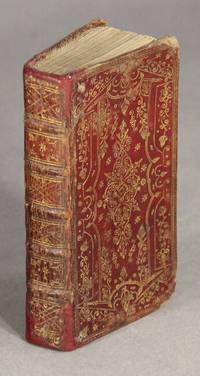
171925279Edinburgh: James Watson 1719. 16mo lacking all before Z2 the text beginning with The Proverbs; separate title page for the New Testament ruled in red throughout; contemporary red goatskin with an all-over gilt design in the "cottage-roof" style rebacked the gilt-decorated spine in 6 compartments neatly laid down a.e.g.; the extremities are worn and rubbed but the binding is sound and attractive. <br/><br/> James Watson unknown books
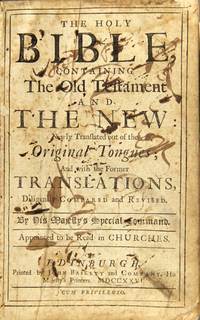
172642734Edinburgh: John Baskett and Company 1726. Thick 8vo unpaged; text in double column; contemporary paneled dark brown goat boards tooled in gilt spine in 6 compartments elaborately gilt-tooled a.e.g. marbled endpapers; boards and extremities scuffed small loss to spine head neat restoration to top of front board and corners; lacking front free endpaper contemporary owner's ink scribbles on title page and verso with blots affecting the following leaf; same contemporary owner's signature "Will Dalrymple" on p. 4 and again on the last page of the Book of Revelations and rear free endpaper. Text followed by 3 pp. of tables and 60 pages of The Psalms of David in Metre. Citing the quarto edition of the same year Darlow & Moule note that this is apparently the earliest Edinburgh Bible to bear the J. Baskett name on title page. Darlow & Moule 760. <br/><br/> John Baskett and Company hardcover books
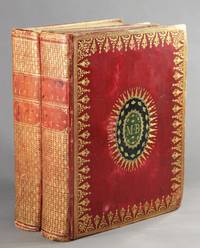
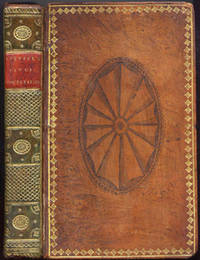
176728878London: Mark Baskett . and by the assigns of Robert Baskett 1767. Large paper copy measuring nearly 5 centimeters larger than that cited in Darlow & Moule large 4to 1 volume expanded to 2 unpaginated; sectional title page for the N.T.; contemporary full red goatskin elaborate borders on covers incorporating a Greek key design enclosing lilies with birds and vases with flowers an with a central monogram "MB" on an oval green morocco onlay surrounded by a black morocco onlay tooled with cherubs the whole surrounded by a flame tool smooth spines richly gilt and gilt-lettered direct a.e.g.; minor overall rubbing slight sunning od the spines but generally a very good sound handsome and sumptuous binding. Facing the first leaf in each volume is the following inscription: This Book was presented to me by my Son in Law Coll. Stephen Delancy and at my decease I bequeath it to my beloved grand daughter Miss Phila Delancy as witness my hand Maria Barclay. New York 15 August 1786." The Delancys were a prominent New York loyalist family. Stephen Delancy remained in New York throughout the Revolution but left for Nova Scotia in 1783. Presumably he commissioned these bindings from England at some prior date cf. his mother-in-law's initials on the central onlays. The binder has not been identified but it is similar to a binding described in Maggs catalogue 966 item 154 the onlay decoration being almost identical. Also included beneath the above inscription is a further one dated 1834 from Phila Delancy to her nephew William de Lancey Lawson. Darlow and Moule mention an engraved title page for those on regular paper but no such mention in the Darlow & Moule citation for the L.P. copy nor for that matter in any of the OCLC records. Darlow & Moule 1181. <br/><br/> Mark Baskett ... and by the assigns of Robert Baskett unknown books
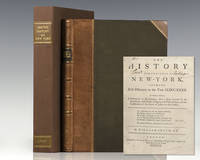
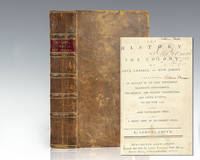
1757102864London: Thomas Wilcox 1757. <span class="match">First</span> edition <span class="match">of</span> <span class="match">the</span> "<span class="match">first</span> and classic <span class="match">history</span> <span class="match">of</span> New York" Streeter illustrated with the folding plate view <span class="match">of</span> Fort Oswego on Lake Oswego. Quarto bound in three-quarters calf over brown cloth-covered boards gilt titles to the spine morocco spine label. In very good condition with some small repairs to the verso of the map signature to the title page late 18th century manuscript poem <span class="match">from</span> <span class="match">the</span> New York Daily Gazetteer <span class="match">of</span> November 16 1790 on p. vi. Housed in a custom clamshell box. Howes S 703; Sabin 84566; Church 1023; ESTC T36514. William Smith a Loyalist who graduated from Yale in 1745 became the justice of the province of New York but left the country after the Revolution for Lower Canada where he became chief justice. Smith's work was based "chiefly on the Provincial Laws the Minutes of the Council the Journals of the General Assembly and other government records. He also acknowledges his indebtedness to Colden's History of the Five Indian nations and to Charlevoix. "Within the period subsequent to the English Revolution Smith is still without a successful rival. This work ranks with Smith's Virginia and Hutchinson's Massachusetts as one of the worthiest examples of historical literature produced in later colonial times" Larned. Thomas Wilcox hardcover books
1765115584Burlington New-Jersey: James Parker 1765. First edition of the first published historical account of the state of New Jersey; one of only 600 copies printed by James Parker on a press owned by Benjamin Franklin. Octavo bound in full contemporary calf with a red morocco spine label lettered in gilt and raised bands to the spine. In very good condition. From the library of George and Rebecca Burr with their ownership names to the title page and front free endpaper and later their grand-nephew Alfred Burr with his bookplate to the pastedown. In very good condition. One of the rarest and most valuable of the Jerseyana group Smith's history was published in 1765 at Burlington by James Parker who had moved his printing press temporarily from Woodbridge for the purpose. David Hall of Philadelphia whose name appears on the title page sold the book at his shop. A century later a second edition was published containing a brief sketch of its author and a map engraved by William Faden London 1777. The original edition had no map. A third edition of the history was printed by the state of New Jersey and distributed to the schools and elsewhere in 1893. Samuel Smith was born of Quaker patronage at Burlington in 1720. He held important official positions in the province and in addition to writing his history of New Jersey he prepared material for a history of Pennsylvania which was never published. James Parker hardcover books
172925494London: A. Bettesworth J. Hazard et al. 1729. Small 8vo pp. 14 450; engraved frontispiece title-p. printed in red and black; bound without the half-title in later full polished tree calf double gilt borders on covers enclosing a central oval made in ink and applied to the bindings by a transfer process; the spine in green gilt-decorated morocco with red morocco label; upper joint slightly cracked else very good. <br/><br/> A. Bettesworth, J. Hazard, [et al.] unknown books
1788125980New York: Printed and Sold by J. and A. McLean 1788. First edition of The Federalist one of the rarest and most significant books in American political history which "exerted a powerful influence in procuring the adoption of the Federal Constitution." 12 mo two volumes bound in one bound in full contemporary calf rebacked preserving most of original gilt-ruled spine with red morocco label. In very good condition. Housed in a custom half morocco clamshell box. An exceptional example of this landmark book. When Alexander Hamilton invited his fellow New Yorker John Jay and James Madison a Virginian to join him in writing the series of essays published as The Federalist it was to meet the immediate need of convincing the reluctant New York State electorate of the necessity of ratifying the newly proposed Constitution of the United States. The 85 essays under the pseudonym 'Publius' were designed as political propaganda not as a treatise of political philosophy. In spite of this The Federalist survives as one of the new nation's most important contributions to the theory of government" PMM 234. The Federalist "exerted a powerful influence in procuring the adoption of the Federal Constitution not only in New York but in the other states. There is probably no work in so small a compass that contains so much valuable political information. The true principles of a republican form of government are here unfolded with great clearness and simplicity" Church 1230. "A generation passed before it was recognized that these essays by the principal author of the Constitution and its brilliant advocate were the most authoritative interpretation of the Constitution as drafted by the Convention of 1787. As a commentary and exposition of the Constitution the influence of the Federalist has been profound" Grolier American 100 56. Of the only 500 copies published Hamilton is said to have sent nearly 50 copies to Virginia for the ratifying convention. The remaining 450 copies sold poorly and "the publishers complained in October 1788 long after New York had ratified the Constitution that they still had several hundred unsold copies" Maggs 815. Printed and Sold by J. and A. McLean unknown books
179545416London: T. Becket.S. J. Neele sculpt. Strand 1795. 8vo pp. 8 95; engraved title page; 19th-century full green gilt-ruled morocco gilt spine in 6 compartments 4 of which adorned with small red lozenges t.e.g. others uncut red glazed endpapers; upper cover and front free endpaper separated textblock fine. A piracy the paper watermark dated 1795. ESTC T220624. <br/><br/> T. Becket...S. J. Neele, sculpt. Strand unknown books
179934138Hartford 1799. Folio newspaper pp. 4; the front page of the newspaper is entirely a catalogue for "books lately received from London Dublin and elsewhere" in 6 columns listing approximately 600 titles under ten headings Law Medicine Language Novels Arts & Sciences etc. "for sale at their store opposite the North Meeting House Hartford." An interesting look at a successful bookseller's stock at the end of the 18th century. Page 2 prints a 2-column speech by President John Adams. Central fold partially split some toning of the paper else very good. See Evans 35346. <br/><br/> unknown books
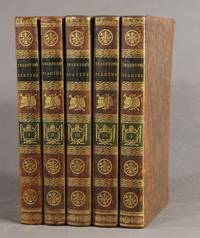
176934124London: T. Becket and P. A. De Hondt 1769. 2 volumes 8vo; pp. xxviii 4 320; 4 386; preliminary blanks preserved engraved title pages; together with: Comedies of Plautus translated in familiar blank verse by the gentleman who translated The Captives. London: T. Becket and P. A. De Hondt 1772-4. 3 volumes 8vo pp. 6 viii 400; 4 399 1 ads; 6 416; preliminary blanks preserved engraved title pages; uniformly bound in handsome contemporary tree calf smooth gilt decorated spines with 6 panels black and green morocco labels in 2 circular tools incorporating a harp a sceptre and a cornucopia in the others; very slightly rubbed else a fine attractive set. Early 19th century oval Stradbroke bookplates. Second edition of the first two volumes and first edition of the last 3. This is the first complete translation into English of the early Roman comedies of Plautus. This project was begun by Thornton near the end of his life an appropriately witty man whom Samuel Johnson found highly diverting. Thornton was inspired by the edition of the plays of Terence prepared by his friend George Coleman the elder. Two volumes appeared in 1767 just before Thornton's death; these contained 5 plays translated by Thornton himself one by Coleman and one by Richard Warner. In the end it was Warner a literary scholar and botanist who undertook to complete the project; his final text as represented here provides one of the most successful English translations from the Latin in the 18th century. "Thornton's versions are held to be the best being highly praised by Southey for their playfulness and ingenuity" DNB. "The language of Plautus is all his own; here his claims to greatnesss are undeniable. No one ever exploited more fully the resources of Latin for expressions of endearment and abuse for animated dialogue and effective repartee" OCD. <br/><br/> T. Becket and P. A. De Hondt unknown books
176248821Cambridge: printed by John Baskerville printer to the university 1762. First duodecimo Baskerville edition 12mo 198 leaves collating as in Gaskell; the title a cancellans as described by Gaskell with the price of "five shillings unbound"; bound with: Sternhold Thomas & John Hopkins. The Whole Book of Psalms Collected into English Metre. Birmingham: printed by John Baskerville 1762. 55 of 61 leaves wanting K2-L6; first Baskerville edition; together in contemporary full red morocco elaborate gilt borders on covers gilt-decorated spine in 6 compartments without letters a.e.g.; extremities lightly rubbed but generally a very good copy in a nice binding. Gaskell 20 "Baskerville agreed with the University to print an edition of 4000 copies" and 21 respectively. <br/><br/> printed by John Baskerville, printer to the university unknown books
175125500Oxford: Thomas Baskett 1751. Thick 8vo pp. 32 the balance uinpaginated; 48 engraved plates one with tear in the corner affecting caption tear in the foremargin of U4 in the Psalter causing loss to a few letters; bound with as issued A Companion to the Altar: Shewing the Nature and Necessity of a Sacramental Preparation. London John Beecroft 1751 engraved frontispiece pp. 56; bound with The Whole Book of Psalms London: printed by C. and J. Ackers for the Company of Stationers 1750 unpaginated; together 3 volumes in contemporary full straight-grain black morocco elaborate gilt and blind-tooled borders on covers with cherubs' heads hourglasses leopards sythes etc. gilt-decorated spine a little dull a.e.g.; good and sound or better. <br/><br/> Thomas Baskett unknown books
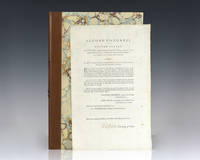
1792125388Philadelphia: Childs & Swaine 1792. Scarce printing of an early United States law providing for the funding of the national debt signed by Thomas Jefferson as Secretary of State. Folio one page. The document which also carries the printed signatures of President George Washington Vice President John Adams and House Speaker Jonathan Trumbull was approved January 23 1792. Individual acts and bills of the first Congresses were routinely printed for public consumption. A provision was made however to print a few copies of each act for dissemination to the states and to have each copy signed by Secretary of State Thomas Jefferson. One of the main priorities of the federal government in the early national period was to pay down the debt of the United States. The national debt was incurred during the Revolution and augmented in 1790 when the Congress passed the Assumption Act in accordance with a plan devised by Alexander Hamilton. Because contacting the numerous and geographically dispersed holders of the debt proved more difficult than expected it became necessary to extend the time allowed by law for making the relevant financial arrangements. The present act accomplished this and made a special extension of five months for Vermont which gave the new state time to calculate the amount of debt. Despite Jefferson's vehement opposition to Hamilton's plan when it was formulated his position as Secretary of State necessitated his signature on the presentation copies of the acts that effected it. In fine condition. Housed in a custom half morocco folding case. Scarce with only one other example signed by Jefferson located. American Founding Father Thomas Jefferson was the principal author of the Declaration of Independence and later served as the third President of the United States from 1801 to 1809. Prior to his presidency he was elected the second Vice President of the United States serving under John Adams from 1797 to 1801. A proponent of democracy republicanism and individual rights motivating American colonists to break from Great Britain and form a new nation he produced formative documents and decisions at both the state and national level. Jefferson was an avid bibliophile and by the end of his life had amassed a large library and wine collection. Childs & Swaine unknown books
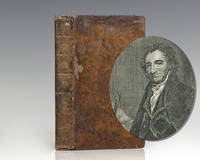
1792122960London: H. D. Symonds J. S. Jordan J. Ridgway et al 1792-1793. Sammelband collection of early printings of the treatises of Thomas Paine. Octavo bound in full contemporary tree calf with gilt tooling to the spine engraved frontispiece portrait of Paine. The collection includes: Rights of Man: Being an Answer to Mr. Burke's Attack on the French Revolution Part I London: Printed for H. D. Symonds 1792; Rights of Man Part the Second. Concerning Principle and Practice London: Printed for J. S. Jordan 1792; Letter Addressed to the Addressers on the Late Proclamation London: Printed for H. D. Symonds 1792; Dissertations on First Principles of Government London: Printed for the Proprietors; Common Sense; Addressed to the Inhabitants of America London: Printed for H. D. Symonds 1793; A Letter Addressed to the Abbe Raynal on the Affairs of North America London: Printed for J. Ridgeway 1712 1792; Miscellaneous Articles of Thomas Paine London: Printed for J. Ridgway 1793. In very good condition. One of the founding fathers of the United States Thomas Paine authored two of the most influential pamphlets at the start of the American Revolution which ultimately inspired the 1776 Declaration of Independence. Virtually every American rebel read Paine's powerful pamphlet Common Sense which crystallized the American Revolution and demand for independence from Britain. John Adams asserted "without the pen of the author of Common Sense the sword of Washington would have been raised in vain." H. D. Symonds, J. S. Jordan, J. Ridgway et al unknown books