2 065 résultats
1718159896Tokyo: Asahi shinbun. Showa 17. January 181942. 4 page broadsheet newspaper folded evenly browned. Maps black and white photographic illustrations very good copy. 54 x 41cm. Main headline: "Closing in on Singapore Vanguard: Rear-guard of Defeated British Army Cut Off; Battle of Annihilation in Johor". Other headlines include: "Occupation of Strategic Territory of Batu Anam; Australian 8th Division Crushed" followed by an account of fighting between Japanese and Australian forces in Malaya; "Main Enemy Position Cut Off: Battle of Annihilation on the Bataan Peninsula Heats Up"; "Steady Advance by Road: Imperial Army's Fierce Attack on West Coast" followed by account of Japanese advances in Malaya with map; "British Cabinet Restructured"; "US Said to Be Sending Troops to Northern Ireland". Front page has photos of Japanese soldiers standing in front of the monument to Jose Rizal in Manila and of a column of Japanese soldiers advancing by bicycle along a road on the Bataan Peninsula. Articles on the inside pages include discussions of plans to increase production of shipping to meet war needs and of a meeting of Latin American countries to discuss the world situation. Several articles on the back page emphasise material and spiritual preparations being made in Japan for a "long war". The back page also includes an interesting article criticizing US and British propaganda and "misreporting" of the war situation. All text in Japanese. . Asahi shinbun. unknown
177659527s. l.: S. n. 1776. Fine. S. n. s. l. Circa 1776 32 x 40.50 cm une feuille encadrée Original drawing in ink and watercolor. Modern frame. Drawing made during the journey with the Marquis de Sade in 1776. Jean-Baptiste Tierce 1737-1794 student at the École des Beaux-arts in Rouen then at the Academy of Painting and Sculpture in Paris quickly distinguished himself as a landscape painter for his views of Southern France and Italy. His paintings are preserved in the Uffizi in Florence and in several French museums. When in December 1775 Sade left Rome for Naples he was welcomed by the son-in-law of his friend Doctor Mesny Jean-Baptiste Tierce who at that time received commissions from Cardinal de Bernis. He found lodging for the Marquis ""who intended to see everything in the region learn about everything judge admire criticize love hate in short to give free rein to that insatiable and passionate curiosity which led him into museums galleries churches palaces and libraries as well as into caves vaults catacombs and even into the bowels of volcanoes. He was not content to contemplate works of art ancient or modern monuments he also observed customs politics religion administration social life. The beauty of women worldly customs the quality of performances ways of eating drinking dressing praying conducting oneself in society: nothing left him indifferent. He wanted to grasp all the present and all the past of this civilization to embrace it entirely in a single and universal vision. A gigantic program matching his exceptional imagination but which he no longer had to fulfill which it was impossible for him to fulfill. Yet such was his first ambition as a writer: grandiose excessive. With this 'great work' in view Sade took hasty notes at roadsides or in inns which he completed with notes from his correspondents Mesny and Iberti. Thus was built this monument he intended for the public but which would not see the light of day until the twentieth century. Jean-Baptiste Tierce collaborated closely: he reread the notes and recorded his observations in small notebooks with numbers referring to the works described. Sade took the greatest account of them. Often the painter accompanied him on his walks his sketch pad in hand drawing the buildings and landscapes they had before their eyes. A hundred of these drawings and gouaches were recently found in the Sade family archives. They give the Voyage en Italie the appearance of a true reportage."" Maurice Levert Sade pp. 283-284. Provenance: Sade family archives. S. n. unknown
178059110s. l.: S. n. 1780. Fine. S. n. s. l. 17 août 1780 10 x 16 cm 2 pages sur un feuillet Handwritten letter to his wife. Sufferance and philosophy: Punish as much as you like but do not kill me: I did not deserve it . Ah! If you could read to the bottom of my heart see everything that happens there I think you would give up using it!August 17 1780 10 x 16 cm loose leaves Handwritten letter from the Marquis de Sade addressed to his wife. One recto-verso leaf written in fine tight writing. It has the partial date at the top ce jeudi 17 this Thursday 17th. Two slight signs of folding. The end of the letter was mutilated at the time probably by the prison administration which destroyed the Marquis' licentious correspondence. So several months later in March 1781 his wife wrote to him: My dear you really must change your style so that your letters can reach me whole. If you give the truth it offends turns against you. If you give any untruths they say: this is an incorrigible man always with the same head that ferments ungrateful false etc. In any case your style can only harm you. So change it. The letter was found as it was when in 1948 the Marquis' trunk that had been sealed by the family since 1814 was open and it was published in this reduced form in the correspondence of the Marquis de Sade. Provenance: family archives. This letter was written on 17 August 1780 during the Marquis' incarceration in Vincennes Prison. Following the umpteenth altercation with the prison guard the right to go for a walk was taken away from him on 27 June and was not reinstated until 9 March the following year. The Marquis' physical and mental health is strongly affected by not being able to go out and he constantly begs Renée-Pélagie for the right to be quickly reinstated: I urge you to let me get some fresh air: I absolutely cannot take it any longer. The suffering caused by these deprivations is a pretext for setting up a mechanism of guilt and blackmail with his wife: There three days that I have felt an awful dizziness with blood rushing to my head so much so that I do not know how I have not fainted. One of these days they will find me dead and you will be responsible after having warned you as I do and having asked you for the help which I need to avoid it. Here the Marquis is intentionally pulling on Renée-Pélagie's heartstrings really putting her Christian values to the test and giving her the role of grand inquisitor: You can grant me what I ask for whilst keeping on your signal the same strength. We note as in Tancrède's letter a new appearance of signal which masks completely different semantics. An essential component of the Marquis' prison mindset this encoded language like the fantasised interpretations of his correspondents' letters feeds the theories of researchers philosophers mathematicians. and poet biographers. As such Gilbert Lely estimates that far from being symptomatic of psychosis the return to signals is his psyche's defence reaction a subconscious struggle against despair where without the help of such a distraction his motivation could have declined. Missing from his correspondence during his eleven years of freedom these enigmatic semantic depths a real challenge to semiological judgement Lever p.637 reappear in his Charenton diary. This letter is also an opportunity for the Marquis to deploy his rhetorical panel confronting the sadistic antonyms in the same sentence. Pleasure is synonymous with abominable revolting cemeteryand garden are superimposed I suffer is conjugated as I enjoy and softness stands alongside darkness. The mastered practice of this eloquence exercise is united with the depths of Sadian thought: sufferance and pleasure are closely mixed simultaneously endured inflicted and desired. Through these associations we glimpse the sensitive Manicheism of the Marquis's philosophical thought which reaches its climax at the S. n. unknown
178159108s. l. Vincennes 1781. Fine. s. l. Vincennes s. d. circa 1781 15.70 x 20.10 cm une feuille SADE Donatien Alphonse François Marquis de Autograph letter to his wife. Hommages à la Présidente: Faire noyer vive l'exécrable coquine qui depuis neuf ans . suce mon sang. N. p. Vincennes Castle n. d. circa 1781 157 x 201 mm 6 3/16 x 7 15/16 single leaf The more I think about it however the more I think you have to have quite a nerve to dare write to a poor suffering unfortunate. Autograph letter unsigned from the Marquis de Sade to his wife. One page closely written in ink on 31 lines. This letter was written during Sade's imprisonment at Vincennes probably in April 1781 if one is to believe the occasional indicators of date referenced by the writer. Sade mentions the end of his exile from Marseilles referring to the decision of the court in Aix-en-Provence to overturn his conviction for debauchery and libertinage on the 14 July 1778 but which nonetheless banned him from living in or visiting Marseilles for three years. Sade also mentions one of the defining episodes of his life his flight to Italy between January and November 1776: they may as well have killed me straight off as left me in that foreign country where I was. Sade also mentions the amazing favor that befell him of moving house which is to say his potential transfer to the fort at Montélimar. In April 1781 Madame de Sade through the good offices of her friend Madame de Sorans got authorization from the King for her husband to be transferred to the prison there. Sade explains in the letter: I think you have to have quite a nerve to dare write to a poor suffering unfortunate who has been beset these nine years.telling him to thank ever so humbly the woman who obtained for him the amazing favor of moving house. Sade is here no doubt referring to the famous Madame de Sorans a lady of Louis XVI's sister's bedchamber and a friend of his wife's who out of a spirit of adventure accepted the task of petitioning the King in his favor. It was to Commissioner Le Noir referenced in this letter that Renée-Pélagie left the task of breaking the news to the prisoner: Ah I see now what this nice little visit by M. Lenoir means I'm used to seeing him in the middle of my incarcerations. Despite the fact that as Pauvert points out in Sade vivant this change of house occupied the Marquis' thoughts to a large extent he was never actually moved preferring to stay in the gaols of the keep at Vincennes. At this point Sade had been imprisoned for several years and this letter full of movement reveals his thirst for freedom. This letter was written when Madame de Sade withdrew to the convent at Sainte-Aure. If she saw this act as a liberation from the yoke of her marriage the Marquis for his part was obsessed by the idea of his own liberation and mentions a potential date: October 1783. His long incarceration which began in 1777 would last till April 1790 when lettres de cachet were abolished. Madame de Sade's visits were not reauthorized by the prison authorities until 13 July 1781 after four years and five months of separation. Several important themes in Sade's correspondence already appear in this letter from his first years in prison. First of all his hatred for his mother-in-law the Présidente de Montreuil an execrable wretch who drinks my blood.disgraces her children who has not yet done scattering her horrific deeds and platitudes and whom he would like to drown alive. The Marquis also complains of his poor physical health: my head spins and in my condition I hardly need any more misery using very Sadean epithets to express his despair. A poor suffering unfortunate who has been beset these nine years; what have I done what have I done dear Lord to suffer for twelve years. Provenance: family archives. unknown
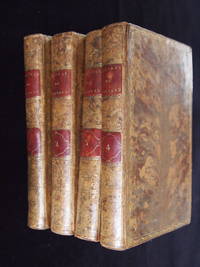
178952032à Paris: la veuve Duchesne et filsDe l' imprimerie de Monsieur 1789. Fine. la veuve Duchesne et fils De l' imprimerie de Monsieur à Paris 1789 13 x 21 cm 4 volumes reliés The finest and most complete edition of Regnard when it contains the fifth and sixth volumes printed in small numbers as indicated by Cohen and which are rarely found bound with the first four. These two volumes have not been added to this copy. It is illustrated with a portrait of the author by Rigaud engraved by Tardieu and 7 fine plates by Moreau and Marillier engraved by Delignon Duponchel etc. The notes and prefaces are by Garnier. Contemporary full sheep bindings in polished mottled leather signed with a Mouillié label probably slightly later. Spine with raised bands decorated with 4 fleurons in dotted lozenges. Morocco title and volume labels in red. Decorative border on covers. Edges gilt. A crack to the upper joint of volume IV. Rubbing to headcaps joints and corners. Very handsome copy. Volume 1 is devoted to travel narratives volumes 2 to 4 to theater. This carefully produced edition with fine printing and quality engravings ranks among the great achievements of editions produced at the printing house of Monsieur Racine Corneille. la veuve Duchesne et filsDe l' imprimerie de Monsieur hardcover
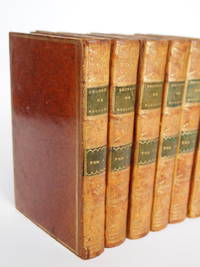
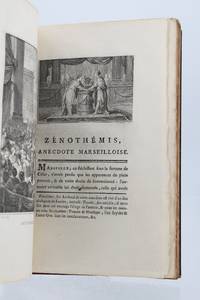
179053843à Paris: chez la veuve Duchesne et filsDe l' imprimerie de Monsieur 1790. Fine. chez la veuve Duchesne et fils De l' imprimerie de Monsieur à Paris 1790 13 x 20.50 cm 6 tomes en 6 volumes reliés The finest and most complete of the editions of Regnard when it contains the fifth and sixth volumes printed in small numbers as Cohen indicates and which are rarely found together with the first four. It is illustrated with a portrait of the author by Rigaud engraved by Tardieu and 11 fine figures by Moreau and Marillier engraved by Delignon Duponchel etc. The remarks and prefaces are by Garnier. Contemporary full blonde porphyry and glazed calf bindings. Smooth decorated spines roll tooling at head and foot. Green morocco title and volume labels. Triple fillet frame on boards. Slight lack to one title label. Rubbing to headcaps and edges. One wormhole at foot of volume II. Spines lightened. Joint at foot of volume VI cracked. Very handsome copy despite minor defects. Interior generally fresh with rare spotting. Volume 1 is dedicated to travel narratives volumes 2 to 4 to theatre and volumes 5 and 6 to Italian theatre. This careful edition with fine printing and quality engravings ranks among the great successes of editions produced by Monsieur's printing house Racine Corneille. IHS Domus Parisian bookplate. ADS Germany. Gift inscription: ""Coll. complet. Lez 23 gbre 1792. DB. J. J. De Bure fils aîné."" chez la veuve Duchesne et filsDe l' imprimerie de Monsieur hardcover
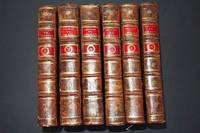
179037927à Paris: chez la veuve Duchesne et filsDe l' imprimerie de Monsieur 1790. Fine. chez la veuve Duchesne et fils De l' imprimerie de Monsieur à Paris 1790 12.50 x 20 cm reliés The finest and most complete edition of Regnard when it properly contains the fifth and sixth volumes printed in small numbers as Cohen indicates and which are rarely found together with the first four. It is illustrated with a portrait of the author by Rigaud engraved by Tardieu and 11 fine figures by Moreau and Marillier engraved by Delignon Duponchel etc. The remarks and prefaces are by Garnier. Contemporary full tree calf binding. Spine with raised bands decorated with 4 stars and fillets. Red morocco title and volume labels. Framing fillet on covers. Lacking at foot of volume 1 and at head of volume 3. Joints of volume 2 cracked. Despite some defects quite a handsome set. Volume 1 is dedicated to travel narratives volumes 2 to 4 to theater and volumes 5 and 6 to Italian theater. This carefully produced edition with fine printing and quality engravings joins the great successes of editions produced by the Imprimerie de Monsieur Racine Corneille. chez la veuve Duchesne et filsDe l' imprimerie de Monsieur hardcover
177382992Paris: Le Jay 1773. Fine. Le Jay Paris 1773 15.50 x 23.50 cm relié First edition illustrated with two out-of-text vignettes and a frontispiece engraving. Half red morocco binding spine very slightly faded with five raised bands gilt date at foot marbled paper boards marbled endpapers and pastedowns. Occasional light foxing light rubbing to corners of boards amusing biographical note concerning the author pasted to head of one pastedown. Le Jay hardcover
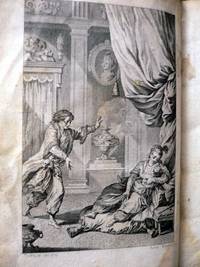
177525202Amsterdam Paris: Chez La veuve Duchesne 1775. Fine. Chez La veuve Duchesne Amsterdam Paris 1775 12 x 19.30 cm relié First edition rare decorated with a frontispiece drawn by Bertaux and engraved by Martinet. Contemporary green full vellum binding. Spine lacking. Corners bumped. Paper lacking to 2 leaves at right margin not touching text. Dampstain at bottom of page on several leaves at beginning of work not touching text. Endpapers absent. Zély is the work of Madame de Fourqueux who published several novels: Amélie de Téville ou Les confessions de madame. She is regularly cited in collections of 18th-century anecdotes. Zély deals with the destiny of a woman in the 18th century. The two works that follow are by abbé Voisenon a man of letters quite famous in the 18th century frequenting salons friend of Voltaire and author of libertine and light works theatrical pieces and even a famous opera: Titon et l'aurore Mondonville. The edition was established by Dantu who gathered these three works with a preface of his own creation around the theme of happiness. NB: This work is available at the bookshop on request within 48 hours. Chez La veuve Duchesne hardcover
178766398A Londres London et se trouve à Paris: Chez BelinDesenne 1787. Fine. Chez Belin Desenne A Londres London et se trouve à Paris 1787 - 1788 12.30 x 20 cm 3 volumes reliés Second edition of the first two volumes of the novel and first edition of the rare sequel published in 1788 exchange of letters between Zélie and her friend. On the 3 title pages: By Madame D. The first edition of the first 2 volumes 1786-1787. Binding in full speckled blonde calf for the first 2 volumes in speckled blonde sheep for the supplement. Red morocco title and volume labels. Rubbing. Scuffing to boards. Good copies. The only work and novel by Marguerite Daubenton wife of the famous naturalist. The novel appears to be inspired by the Aethiopica of Heliodorus of Emesa. The story tells the life of Zélie her arrival in the Sumatra desert following a shipwreck and her life as a castaway her reunion with d'Ermancour the man she loves and whom she knew in Paris and the twenty or so years spent with him his servant and young Ninette daughter of her friend who died shortly after giving birth to her then their final return to Normandy. A book by Marcel Arland bears exactly the same title without knowing whether the latter is an adaptation of the former. Chez BelinDesenne hardcover
171962442à Paris: Par La Compagnie des libraires 1719. Fine. Par La Compagnie des libraires à Paris 1719 9 x 16 cm relié New edition after the first very rare published in 1670. Huet's Treatise on the Origin of Novels in the form of a letter to Segrais appears at the end of the first part of Zaïde. Armorial copy of Charlotte Emilie Le Fèvre de Caumartin de La cour de Balleroy daughter of Louis-François Le Fèvre de Caumartin lord of Boissy and wife of the Marquis de la Cour de Balleroy. Feminine arms are rare and sought after as few women formed libraries with their coat of arms. The Marquise de Balleroy who died in 1749 settled in Normandy and maintained an intense correspondence with the highest nobility from which she descended. Full speckled brown calf bindings. Raised band spines with decorative tooling. Morocco title labels in tan volume labels in speckled brown calf. Headcap of volume II split. A brown stain in corner of first 10 leaves of volume I gradually fading this stain recurring later spreading then disappearing. A browner area at edge of right corner of volume I on upper board. Despite some flaws a handsome copy. It is now considered that Zaïde was a collaborative work by Segrais and Madame de La Fayette whose Princess of Clèves would appear in 1678. Segrais was her secretary and it is thought that he provided the materials and historical research while Madame de La Fayette handled the entire writing. The action takes place in Spain in the 9th century. Consalve son of one of the greatest counts of Castile takes in Zaïde daughter of a Muslim prince following a shipwreck. Very quickly he falls in love with her but the two young people do not speak the same language. Par La Compagnie des libraires unknown
1730N4616aLeipzig: Ioan. Christiani Langenhemii 1730. Private Cloth. Very Good. 8vo . 50pp. Plain Modern full cloth binding. A VERY GOOD COPY. <br/> <br/> Ioan. Christiani Langenhemii hardcover
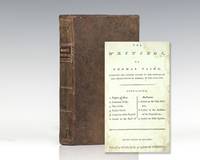
179281112Albany New York: Charles R. & George Webster 1792. Nine of Paine's writings gathered each pagination with a separate title page. Octavo bound in contemporary calf. One of at least four issues with variant title pages for this work this apparently the first without the addition of "Rights of Man Part the Second. In very good condition with some light foxing. Rare and desirable. One of the founding fathers of the United States Thomas Paine authored two of the most influential pamphlets at the start of the American Revolution which ultimately inspired the 1776 Declaration of Independence. Virtually every American rebel read Paine's powerful pamphlet Common Sense which crystallized the American Revolution and demand for independence from Britain. John Adams asserted "without the pen of the author of Common Sense the sword of Washington would have been raised in vain." Charles R. & George Webster unknown books
179281112Albany New York: Charles R. & George Webster 1792. Nine of Paine's writings gathered each pagination with a separate title page. Octavo bound in contemporary calf. One of at least four issues with variant title pages for this work this apparently the first without the addition of "Rights of Man Part the Second. In very good condition with some light foxing. Rare and desirable. One of the founding fathers of the United States Thomas Paine authored two of the most influential pamphlets at the start of the American Revolution which ultimately inspired the 1776 Declaration of Independence. Virtually every American rebel read Paine’s powerful pamphlet Common Sense which crystallized the American Revolution and demand for independence from Britain. John Adams asserted "without the pen of the author of Common Sense the sword of Washington would have been raised in vain." Charles R. & George Webster unknown
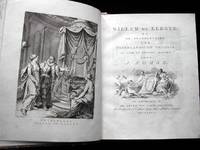
17797800Te Amsterdam Amsterdam: David Klippink 1779. Fine. David Klippink Te Amsterdam Amsterdam 1779 24 x 20 cm relié Rare first edition absent from the catalogues of all major national libraries except the British Library. 25 fine plates by Buys engraved by Koming. Half marbled fawn sheep binding smooth spine with 4 large stamps and multiple roulettes later binding circa 1810. Title label torn upper headcap damaged small lack to tail joints cracked one tear to spine otherwise handsome copy very fresh internally. The work consists of an epic in verse and in 24 cantos of the life and exploits of William I of Nassau Prince of Orange Stadtholder of Holland known as William the Silent. David Klippink unknown
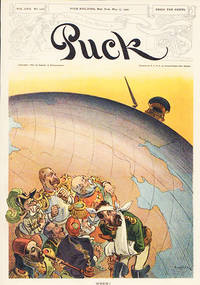
1719206642New York. May 171905. Colour lithograph on a single newspaper leaf 23 x 20.5 cms image; 32.5 x 22.8 cms sheet issued as the front page of "Puck" magazine May 171905 related text on the verso; short repaired marginal tears not affecting the image lower left corner with faint creases in very good condition. A caricature from the American satirical journal "Puck" depicting the fear that struck European powers following the Japanese victory in the Russo-Japanese war of 1904-1905. The head of an armed Japanese soldier emerges as a rising sun over the horizon as a group of European leaders huddles below. Uncle Sam is nowhere to be seen. The tone of the related text on the verso strikes rather a different note: <br> <br>"France has deliberately permitted the enemies of Japan to use her territory as if it were their own and has thus invited trouble of far-reaching possibilities and of a kind highly inimical to the general peace of the world. All of which should make Uncle Sam wary in his dealings with these foreign powers that regard international agreements and ententes cordiales with contempt." <br> <br>The "When" of the caricature equally queried an end to American isolationism as well as the European fear of the rise of Japan. . unknown
1797015894London: I Chamberlaine 1797. Original Antique Engraving . Single Sheet. Near Fine. 16" X 21". One Of A Large Suite Of Engravings By Bertolozzi After The Original Drawings By Holbien In The Collection Of The Crown. A Well Colored Impression With Artist And Engraver Names Immediately Beneath The Portrait And Publishing Information Below. <br/> <br/> I Chamberlaine unknown
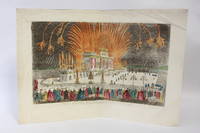
176562178Paris: Chez Mondhare 1734-1799 1765. Fine. Chez Mondhare 1734-1799 Paris circa 1765 32 x 46 cm une feuille Original engraving. Optical view enhanced in watercolor depicting a view of the fireworks display at Green Park London in celebration of peace in 1763 Optical views also called views perspectives or ""mondo nuovo"" are engravings very much in vogue between the end of the 18th and early 19th centuries. They were intended to be observed through a set of several mirrors or by means of a Zygrascope an instrument consisting of a mirror and a lens. Optical views can be considered as the precursors of three-dimensional images and stereoscopes which enjoyed great success from the 19th century onwards. Optical views seem to appear in the 1740s and were salon entertainments. The process was developed first in Paris then London and finally in Germany and sought to represent - in an idealized manner - the most famous panoramas and landscapes of East and West. Proof with very fresh colors one fold mark and minor soiling. Chez Mondhare (1734-1799) unknown
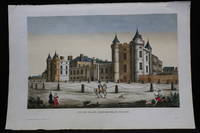
179045608Paris: Chez Hocquart 1790. Fine. Chez Hocquart Paris circa 1790 30.50 x 48.50 cm une feuille Original engraving. Optical view heightened in watercolor depicting a view of Holyrood Palace in Scotland. Optical views also called vues perspectives or ""mondo nuovo"" are engravings that were very fashionable between the late 18th and early 19th centuries. They were intended to be observed through a set of several mirrors or by means of a Zograscope an instrument consisting of a mirror and a lens. Optical views can be considered as the precursors of three-dimensional images and stereoscopes which enjoyed great success from the 19th century onwards. Optical views seem to appear in the 1740s and were salon entertainments. The process was first developed in Paris then London and finally in Germany and aimed to represent - in an idealized manner - the most famous panoramas and landscapes of East and West. A fine impression with very fresh colors. Chez Hocquart unknown
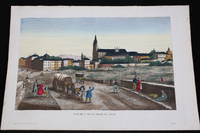
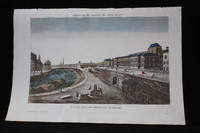
179045626Paris: Chez Basset 1790. Fine. Chez Basset Paris circa 1790 30.50 x 48.50 cm une feuille Original engraving. Optical view heightened in watercolor depicting a view of St Denis taken from the bridge. Optical views also called views perspectives or ""mondo nuovo"" are engravings very much in vogue between the late 18th and early 19th centuries. They were intended to be viewed through a set of multiple mirrors or by means of a Zograscope an instrument consisting of a mirror and a lens. Optical views can be considered precursors to three-dimensional images and stereoscopes which enjoyed great success from the 19th century onwards. Optical views seem to appear in the 1740s and were salon entertainments. The process was first developed in Paris then London and finally in Germany and focused on representing - in an idealized manner - the most famous panoramas and landscapes of East and West. A very slight foxing in the upper part of the plate otherwise a fine proof with very fresh colors. Chez Basset unknown
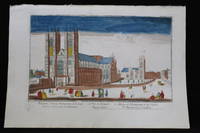
179045613Paris: Chez Lachaussée 1790. Fine. Chez Lachaussée Paris circa 1790 30.50 x 48.50 cm une feuille Original engraving. Optical view heightened in watercolors representing a view of Westminster Abbey and Saint Margaret's Church in London. Optical views also called views perspectives or ""mondo nuovo"" are engravings that were very fashionable between the late 18th and early 19th centuries. They were intended to be observed through a set of several mirrors or by means of a Zograscope an instrument consisting of a mirror and a lens. Optical views can be considered as the forerunners of three-dimensional images and stereoscopes which enjoyed great success from the 19th century onwards. Optical views seem to appear in the 1740s and were parlor entertainments. The process developed first in Paris then London and finally in Germany and focused on representing - in an idealized manner - the most famous panoramas and landscapes of East and West. Some minor foxing otherwise a fine impression with very fresh colors. Chez Lachaussée unknown
179045796Paris: Chez Basset 1790. Fine. Chez Basset Paris circa 1790 30.50 x 48.50 cm une feuille Original engraving. Optical view heightened in watercolor depicting a view of the bridge of Vienna. Optical views also called views perspectives or ""mondo nuovo"" are engravings that were very fashionable between the end of the 18th and beginning of the 19th century. They were intended to be observed through a set of multiple mirrors or by means of a Zygrascope an instrument consisting of a mirror and a lens. Optical views can be considered as the precursors of three-dimensional images and stereoscopes which enjoyed great success from the 19th century onwards. Optical views seem to appear in the 1740s and were drawing room entertainments. The process was first developed in Paris then London and finally in Germany and focused on representing - in an idealized manner - the most famous panoramas and landscapes of East and West. Fine impression with very fresh colors. Chez Basset unknown
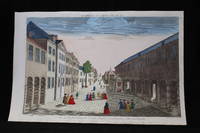
179045793Paris: Chez Jacques Chereau 1790. Fine. Chez Jacques Chereau Paris circa 1790 30.50 x 48.50 cm une feuille Original engraving. Optical view heightened in watercolor depicting a view of the hot springs fountain and the square of Aix-la-Chapelle. Optical views also called views perspectives or ""mondo nuovo"" are engravings that were very fashionable between the late 18th and early 19th centuries. They were intended to be observed through a system of multiple mirrors or by means of a Zograscope an instrument consisting of a mirror and a lens. Optical views can be considered the precursors of three-dimensional images and stereoscopes which enjoyed great success from the 19th century onward. Optical views appear to have emerged in the 1740s and were drawing room entertainments. The process developed first in Paris then London and finally in Germany and aimed to represent - in an idealized manner - the most famous panoramas and landscapes of East and West. A fine impression with very fresh colors. Chez Jacques Chereau unknown
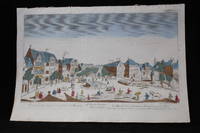
179045795Paris: Chez Daumont et Lachaussée 1790. Fine. Chez Daumont et Lachaussée Paris circa 1790 30.50 x 48.50 cm une feuille Original engraving. Optical view heightened in watercolor depicting a view of the horse market in Frankfurt am Main. Optical views also called views perspectives or ""mondo nuovo"" are engravings that were very fashionable between the end of the 18th and beginning of the 19th century. They were intended to be observed through a set of multiple mirrors or by means of a Zygrascope an instrument consisting of a mirror and a lens. Optical views can be considered as the precursors of three-dimensional images and stereoscopes which enjoyed great success from the 19th century onwards. Optical views seem to appear in the 1740s and were drawing room entertainments. The process was first developed in Paris then London and finally in Germany and focused on representing - in an idealized manner - the most famous panoramas and landscapes of East and West. Some minor dampstaining otherwise a fine impression with very fresh colors. Chez Daumont et Lachaussée unknown
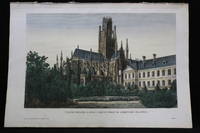
179045610Paris: Chez Basset 1790. Fine. Chez Basset Paris circa 1790 30.50 x 48.50 cm une feuille Original engraving. Optical view heightened in watercolor depicting a view of St. Ouen church in Rouen taken from the botanical garden. Optical views also called vues perspectives or ""mondo nuovo"" are engravings that were very fashionable between the late 18th and early 19th centuries. They were intended to be observed through a set of several mirrors or by means of a Zograscope an instrument consisting of a mirror and a lens. Optical views can be considered as the precursors of three-dimensional images and stereoscopes which enjoyed great success from the 19th century onwards. Optical views seem to appear in the 1740s and were salon entertainments. The process was first developed in Paris then London and finally in Germany and aimed to represent - in an idealized manner - the most famous panoramas and landscapes of East and West. Some minimal foxing otherwise a fine impression with very fresh colors. Chez Basset unknown