Bucher, KarlBiblio.com
8 829 résultats
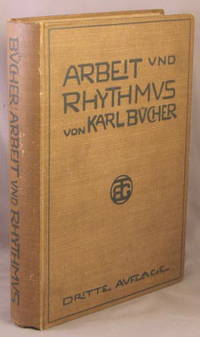
190235167Leipzig Teubner 1902 hardcover. Workers in folk songs.-- Third enlarged edition 1902. Frontispiece is photo of sculpture: breadmakers kneading loaves to accompaniment of a flute player. A philosophical history with examples of the music. Text in GERMAN GOTHIC SCRIPT some lyrics in English. -- Hardcover 455 pages with pretty design decorated edges. Condition: very good light soil to brown cloth covers; owner name; endsheet partly detached. -- Teubner hardcover
19942090502113703837Not Available 1994. Soft Cover. Fine. The book is in fine condition. Not Available paperback
2010f0747New York: Hips Road / Tzadik. VG: in very good condition without dust jacket. Cover rubbed and creased. 2010. First Edition. Black laminated card cover. 250mm x 170mm 10" x 7". vii 459pp. . Hips Road / Tzadik unknown
197000JT65Paris: None 1970. Rare archive lot of 18 typed letters signed dated Paris 17th of March 1970 all identical save for the signatures and in most cases handwritten names that grace these petitions to save the Olympia Music Hall in Paris. Artists names include; Sabrina Guegan Pierre Bacmialoni Michele Sennet Nicole Villano Maurice C'eutat Trebier Jean Pierre Delhomme Berr Marcel Hrasko Icardi Sylvie Vartan Raymond Gimenes Joullie Brigitte Armand Cavallaro Amador Heliose Charles Verstraete and Emile Vilain. Autograph. Manuscript. Very Good. 8vo - over 7¾" - 9¾" tall. None Paperback
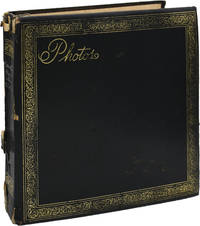
146874N.p.: N.p. 1970. Archive of 288 vernacular color photographs of country music acts from the 1970s housed in a contemporary photo album with the subject of nearly every photograph identified by manuscript ink captions. Occasional additional notations give a date range between 1972-1980 for the photographs with most being dated 1977-1979. <br /> <br /> The photographs primarily consist of performers on stage indicating the photographer was near the stage with a strong sense of composition and timing. Photographs of performers casually posing for the camera indicate the photographer likely had backstage access for some of the performances. <br /> <br /> Based on additional information in some of the handwritten captions the photographs were primarily taken at concerts or events in the Western New York region - Chautauqua Dunkirk Little Valley and Lakewood - all within an hour of each other as well as the nearby Erie County NY Fair and Expo and Pittsfield PA. Other locations include the New York State Fair and Pittsburgh PA. <br /> <br /> Included are images of country music legends Johnny Cash Dolly Parton Loretta Lynn Conway Twitty Hank Snow June Carter Cash The Carter Family Minnie Pearl Tanya Tucker Tammy Wynette and Wanda Jackson. Also included are photographs of singers who while lesser known today were among the biggest stars of the era including Bobby Goldsboro Crystal Gayle Donna Fargo Freddy Fender Jeannie C. Riley Buddy Alan Charlie Walker Peggy Sue Bill Anderson Kenny Price LeRoy Van Dyke Lynn Anderson Jay Lee Webb Jean Shepard and Kitty Wells. Finally the album contains images of smaller and possibly even regional acts some of which appear unknown to us presenting a broad survey of a transitional era in country music as rock soul and pop began to fuse with the more traditional country sound that had begun declining in popularity toward the end of the previous decade. <br /> <br /> For more details please inquire. <br /> <br /> Photographs variously sized primarily 3.5 x 5 inches but up to 7.5 x 9.75 inches. Generally Near Fine. <br /> <br /> Housed in an about Very Good generic photo album with starting and loss to the spine fraying and rubbing. Several internal pages loose or with dried glue leading to occasional slipping of the photographs. N.p. unknown
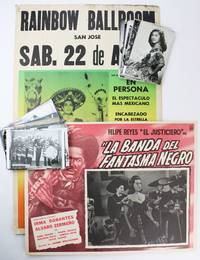
19602410Various places in California New York & Mexico 1960. Very good. Sixty items total including fifty-five photograps and five posters. Generally light wear. An attractive archive of visual materials including posters broadsides original photographs and real photo postcards that promote leading mariachi singers and musicians of the mid-20th century including Salvador López La Prieta Linda José Alfredo Jiménez Lucero Aguilar Miguel Angel Montes Francisco Avitia Ignacio Jaime Jorge de Crespo and Alfredo “El Mayoral†Gonzalez. Notably many of the larger pieces feature singer and actress Irma Dorantes b.1934 one of the last surviving stars from the Golden Age of Mexican cinema. The widow of legendary Mexican ranchero singer and actor Pedro Infante Dorantes enjoyed a string of hit songs in the 1950s and ‘60s including her recording of “Recuerdos de Ipacarai†with El Mariachi Mexico de Pepe Villa.<br /> <br /> “Mariachi music has origins deep in Mexican history. The sound of its string instruments and its oldest rhythms are rooted in Mexico’s colonial times 1519-1810; people from Spain and African slaves and their descendants mingled with hundreds of American Indian cultures to create a new Mexican culture marked by many regions each with its own signature musical tradition. The music that was called ‘mariachi’ as early as the 1850s emerged from the ranches and small towns of western Mexico particularly in the states of Jalisco Michoacán Nayarit Colima and Aguacalientes. When big-city radio stations movies studios and record companies took mariachi music to new audiences throughout and abroad in the 1930s mariachi music was transformed into one of Latin America’s favorite musics. By the 1950s its standard sound of two trumpets three or more violins vihuela small guitar and guitarrón big bass guitar was set. Since then its repertoire of fast-paced songs expressive canciones rancheras ‘country’ songs polkas syncopated huapangos romantic boleros and more has been heard throughout the Americas and around the world†Smithsonian Folkways.<br /> <br /> The present collection includes:<br /> <br /> 1 An original photograph 6 ½†x 7†of José Alfredo Jiménez in performance. Jiménez 1926-73 was by far the most important prolific and popular composer of música ranchero in Mexico during the 20th century. His extraordinary repertoire of more than 1000 songs encapsulated the sentiment ideals and concerns of the common man in a folksy yet poetic way.<br /> <br /> 2 Six black-and-white photographs 7†x 5†of various musicians. Four are identified with holographic annotations on the verso while another is accompanied by a typed press caption indicating that the image captures Las Hermanas Huerta performing “Cantando Bajo el Recuerdoâ€.<br /> <br /> 3 Forty-one black-and-white real photo postcards 3 ½†x 5 3/8†of various musicians all identified in the negative or on the verso. The photographs of Alfredo “El Mayoral†Gonzalez and La Prieta Linda are autographed.<br /> <br /> 4 Six press photographs 8†x 10†of both solo performers and bands including two images of Lorenzo Elisea y Sus Piratas and a shot of singer Amalia “La Tariácuri†Mendoza 1923-2001 on stage.<br /> <br /> 5 Original photograph 13 ¾†x 11†on Irma Dorantes on horseback during a performance in New York. The undated image is signed by photographer F. Camacho on the recto. Dorantes was known for her equestrian shows and in 1964 she and her horses Gatillo de Oro and Justiciero headlined a residency at the Million Dollar Theater in Los Angeles.<br /> <br /> 6 Lobby card 16 3/8†x 12 ½†for “La Banda del Fantasma Negro†1964 the Jaime Salvador film starring Irma Dorantes and Alvaro Zermeño.<br /> <br /> 7 Black-and-white poster 18 ¾†x 13 ¾†of Irma Dorantes reproducing a portrait of the singer by Mexican photographer Carlos Ysunza Nieto.<br /> <br /> 8 Large poster 17 ½†x 22 ½†promoting a benefit performance of “Feria de la Cancion†featuring Irma Dorantes Cuarteto Ruffino and Trio Hermanos Martinez-Gil. Circa 1961 no place noted. Printed in blue on yellow cardstock with a later horizontal crease.<br /> <br /> 9 Large poster 14†x 22†for an August 22 1964 performance by Irma Dorantes at the Rainbow Ballroom in San Jose California with opening acts by comic Rudy Frudy and Mariachi San Miguel. Printed by Woolever Press in Los Angeles on white cardstock with a rainbow gradient.<br /> <br /> 10 Oblong broadside ca. 1958 18 ¾†x 13 ¾†advertising a coronation ball headlined by bandleader Paco Armenta and “el sensacional†Conjunto Tropical Santaneros†at Salon del Cllub de Leones in Calpulalpan a municipality in Tlaxcala in southeastern Mexico. Printed in color on a thin sheet of white stock with some loss to the upper corners.<br /> <br /> Most of the material is unrecorded with no listings in OCLC or elsewhere. In addition to highlighting many leading Mexican musicians of postwar era this archive captures the fashion and aesthetics of mariachi at a formative moment in its evolution. unknown
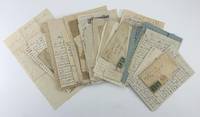
19264528Various locations in Texas and elsewhere 1926. Very good. Approximately 130 manuscript letters totaling 275 pages written on a variety of paper sizes and stationery many with original transmittal envelopes plus a handful of printed ephemera. Letters arranged chronologically in several manila folders and housed in an archival folder. Original mailing folds general wear. A unique collection of manuscript letters mostly sent to Larkin C. Rogers of Mineral Wells Texas. Larkin C. Rogers Charlie or Larkin to his family began studying at the Kidd-Key Conservatory of Music at Sherman Texas in 1915. Friends and family write to him there occasionally sending him notices of musical events and throughout the correspondence are receipts for his orders for musical scores. Larkin’s mother and sister Nancy try to get him musician jobs in the Mineral Wells area but times are hard. His mother’s letters are long chatty and detailed; as such she provides good local color on her particular area in North Texas. In May 1917 Larkin’s mother writes: “How are you all coming in about the War excitement Think you’ll have to go And are you patriotic enough to want to go I see all musicians who can read music well are wanted and will be trained after joining on some instrument - I suppose suitable for the bands. Then when they’re not needed in the one they’re used in the hospitals. I like that better for you - if you do go - than to have to be in the fighting. They say the music is a necessary thing - so they have to have them. You’d better get to learning some band instrument - how do you like a piccolo†<br /> <br /> Larkin’s brother Edwin is already in the Army training near Waco and is overseas by June of 1918. In May 1918 Larkin’s mother again suggests he might like to enlist. By April she is urging him: “For we can never have universal peace till the Huns and all such are conquered. No one part is as essential as another - and where you are best fitted to serve it is your duty to get into - so leave no stone unturned to get into a band either in Waco or Camp Bowie.†By May he has enlisted but is not yet in a band - training at Camp Travis near San Antonio where he asks his mother to come in order to help him find a band. By October 1918 he is overseas. Larkin’s mother continues to provide motherly advice in her letters including lecturing him against smoking. At this point there is a long absence of news from him - and his family fears the worst.<br /> <br /> By May 1919 Larkin is shipped back to the States and admitted to the Army hospital at Oteen North Carolina. His mother writes with home remedies and fears that he is in for an “unmentionable disease.†In a sign of the times however he has influenza and bronchial complications. By this time his parents him they have moved to Dallas mentioning that although they still get mineral water to drink from their hometown of Mineral Wells the Dallas area is flat and at a lower altitude. Larkin’s sisters are friendly and sometimes humorous; they write him about music recitals and tease him about a “cootie garage†under his nose. Larkin informs them that a woman near the hospital is allowing him to practice at her piano. His mother visits him at the hospital and is quite upset that he is sometimes bedded down with a patient with hereditary syphilis. In January 1920 his mother learns that all places of amusement in Ashville have been closed because of flu which worries her as he is still not completely recovered. She knows about the flu as they all have had it in Dallas. His mother reads that there is complete vocational pay for disabled soldiers; she tries to obtain the disability pay for Larkin in order to take a concert pianist course. Larkin’s sister Lois in Williamsburg Virginia wants him to apply to a new music school in Richmond where she gets a teaching job - not to go to the Domrosch School in New York as she complains that it is "full of Jews and has an atmosphere which kills fineness." However she highly recommends New York in general: "Boston is a place. New York is life - a world - an experience which must be in every life before it is complete. You are an atom – but there is no place where life as a tiny atom receives such consideration and such kindness if its good!"<br /> <br /> By January 1921 Larkin is out of hospital and studying again in Sherman. He gives his first post war recital in April. His brother Edwin has a job with the Dallas engineering department. In 1923 Nancy causes a flap and panic when she quarrels with her sister Lois and the music school in Virginia and goes off alone. Lois begs her mother to stop writing her altogether as it is too stressful. Both Nancy and Larkin end up in New York City in the music scene and their parents end up back in Mineral Wells. Their mother writes Larkin a very nasty anti-Semitic letter about the rumor Nancy is going to marry a Jew. She fulminates also about the illicit and dreadful drinking that Americans seem to have slipped into. The last letter from Larkin’s father indicates that the two sisters and Larkin plan to combine households and stay in New York. An interesting collection of one Texas family’s correspondence centering on a young musician who also served in the First World War before returning to his life in music. Worthy of further and deeper research. unknown
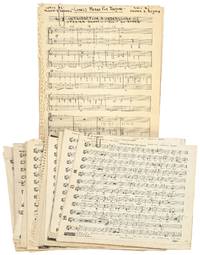
1952612527No place: unpublished 1952. Unbound. Near Fine. An archive of unpublished sheet music by the song writing duo Robert A. Bernstein and Warren B. Meyers. Consisting of 23 pieces most finished and submitted for copyright but none published. All approximately 9" x 12" some a bit larger most hand printed one piece with a negative photostat copy and one with both a negative and positive photostat copy included many of the hand notated sheets have typewritten text some with handwritten corrections and notes and some sheets are printed on both sides. The pieces only feature a vocal melody and lyrics as that’s the part eligible for copyright only one piece features piano the beginning of a draft for a musical titled Lonely Means for Anyone. Most of the pieces have a paperclip mark at the top some bumping to the corners as to be expected but overall a near fine archive.<br /> <br /> Robert A. Bernstein and Warren B. Meyers appear to have primarily worked together during the 1950s putting on revues and one act musicals within New York City and its environs; shows such as No Bed of Roses 1952 A la Carte 1952 La Donna Della Evening 1952 Improper Channels 1957 and 2x4 1959 all of which seem to have slipped so fully into obscurity that only a few miniscule newspaper clippings remain to confirm that they ever existed. While Bernstein never stumbled upon a hit his biggest recorded credit listing him as a writer for the show Almost Crazy 1955 which ended up suffering from middling to poor reviews Meyers produced an unexpected success in 1967 with his first and seemingly only foray into the book world Who Is That: The Late Late Viewers Guide to the Old Old Movie Players. A heavily illustrated guide to what the preface describes as showcasing "the most frequently seen players categorized by their most frequently played roles." The book was a big hit even getting a write-up in The New York Times who flatteringly wrote that readers would find the book "Near the check-out counter— the place of honor—at your paperback store these days."<br /> <br /> Collected here are 21 titles that have been registered with the Copyright Office two have not but are reported by said office to have not been published. Whether they were never published but performed in one of Bernstein’s and Meyers' shows or whether they simply never graced the ears of an audience in any form we do not know. What we do know is that it makes perfect sense that some of these would not have been published in the 1950s if ever – From the vague but nonetheless present socialism of the song "Capital in Labor" "Harken to the teacher love your fellow creature/never bring him ruin or rue/listen honey tell me who wants money/when the sky is sunny big and blue." To the masochistic internalized sexism of "Bane of My Existence" "He beats me and he hurts me/he cheats me and deserts me/oh he treats me like a slave but he’s my man.†To the off-the-wall problematic lyrics of "If You Incest" which begins with a female patient singing "I used to be aggressive but now I'm just depressive/I used to be inspired but now I'm just tired . Oh doctor get rid of this hex! Is it related to sex" To which the male doctor replies "You mustn't have a fit so it's fun to be a schizo! . It makes you cute and coy-a this charming paranoia" and it only gets worse from there.<br /> <br /> While most of the material is rather standard fare for the trade at the time such as "The Kiss Song" "I'm a dunce for being hooked I kissed you once and I was cooked" a handful of the songs standout as rather outrageous in their lyrical content; including one song that says all you need to know and more with its title alone "When Fanny Fans Her Fanny With A Fancy Spanish Fan." Not only do these songs speak about the blatant sexism that was so prevalent in America at the time but they also speak to both the taboos and trends of the 1950s through lyrics that attempt to break them and mock them. The best example of this being "If You Incest" which can be partially read as a reaction to the contemporary popularity around Freudianism and psychoanalysis; yet also however unwittingly highlights the callous manner in which male doctors treated female psychiatric patients.<br /> <br /> Then there are the more subtle but no less interesting aspects such as a lethargic gender swapping edit to the song "The Only Girl for Me" replacing one pronoun for the other but changing practically nothing else; a song featuring a rebellious Mona Lisa who sings “I want to fight with a knight and be quite a bit unpleasant/want to spit in a fit on some pitiful old peasant/want to mumble and rumble and grumble for a while/but I don’t want to smile my smileâ€; and perhaps the most amusing or saddest moment a song of love and longing titled “Dream of Me†filed for copyright in 1951 revised and filed again in 1952 with the same melody but newly titled “Hopelessly†the lyrics now expressing bitter heartbreak and loneliness.<br /> <br /> We were unable to find any published music by Bernstein and Meyers and very little has been written about them. Whether these songs were performed at the time or not there is one thing for certain they have not been heard for a long time. A fascinating archive of unpublished songs by a little known though somewhat successful song writing duo from the 1950s. A list of each title is available upon request. unpublished unknown
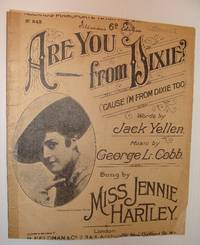
1915108c8599London: B. Feldman & Co. 1915. Sheet music. Good. Paperback. First Edition. Folio - over 12" - 15" tall. 6 pages. Cover photo of vocalist Miss Jennie Hartley. Trimmed along edges - all notes present. Some pencil markings to contents. Average wear. B. Feldman & Co. Paperback
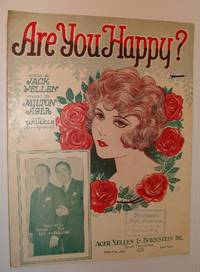
1927108c8583New York: Ager Yellen & Bornstein Inc. 1927. Book. Illus. by Barbelle. Good. Paperback. First Edition. Folio - over 12" - 15" tall. 6 pages. Lovely cover illustration plus photo of Buddy Lee and Roy Bergere. Bit of writing and music store stamp on front cover. Average wear. A quality copy. Ager, Yellen & Bornstein Inc. Paperback
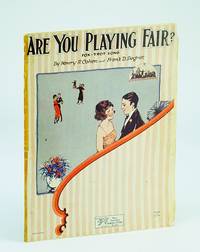
1922812H1341New York: Shapiro Bernstein & Co. Inc. Fair. 1922. First Edition. Paperback. 6 pages. Romantic cover illustration of dance hall scene by Wohlman. Above-average wear. Tape repair to coverfold. Pages loose but present. Small piece missing from bottom corner of back page does not affect the music. A worthy vintage copy.; Sheet music; Folio - over 12" - 15" tall; Are You Playing Fair - Sheet Music for Piano and Voice : Fox-Trot Song . Shapiro, Bernstein & Co. Inc. paperback
0365301930.Gpaperback. Good. Access codes and supplements are not guaranteed with used items. May be an ex-library book. paperback
1390234916.Gpaperback. Good. Access codes and supplements are not guaranteed with used items. May be an ex-library book. paperback
1971008264Berkeley CA: Arhoolie Records Inc. 1971. Newspaper. Very Good. Newsprint. First Printing. Folio - over 12" - 15" tall. SCARCE. Promotional newspaper from Arhoolie Records Inc. founded by Chris Strachwitz and his business partner Tom Diamant in 1960. one of the iconic early publishers of folk music blues and jazz. 20 pp. with numerous articles on recent and upcoming record publications and other company and music industry news. illustrated with numerous black and white photographs Graphic Design: Wayne Pope. Very Good center fold as issued interior pages uniformly age toned tears bottom edge at corner in margin closed small tear rear cover. Arhoolie Records, Inc. unknown
0666912068.Gpaperback. Good. Access codes and supplements are not guaranteed with used items. May be an ex-library book. paperback
1978biblio1945<p>Garland Publishing Inc.; 1 edition 1978. Hardcover Red cloth. Gilt title on the spine. Exlibrary copy. No wear. Clean unmarked. Looks as never used. VERYGOOD. 12.2"x9.1"X1.2". be75311. For International and/or Expedited shipping contact seller.</p> Garland Publishing, Inc.; hardcover
1862000019Boston Massachusetts and London: Oliver Ditson & Co. 1862. Very Good condition. Tiny chip to margin of two leaves text is not affected. Original brown cloth decorated in blind on the front and rear covers. Gilt stamping is still fairly bright and shiny. Subtitle: "With Piano Score Mainly to be Sung without Accompanimemt." Musical notation. Includes lyrics. This copy bears the embossed ownership stamp of the composer William Wolsieffer. Prof. Wolsieffer composed Abraham Lincoln's Funeral March c. 1865 for the piano forte a copy is in the Alfred Whital Stern Collection of Lincolniana. He also composed The United States Polka for the piano forte and respectfully dedicated it to the United States Fire Company of Philadelphia in the Keffer Collection of Sheet Music Penn Library Special Collections. Keywords: Abraham Lincoln. First Edition. Hardcover. Very Good condition. 12mo. 102pp. Oliver Ditson & Co. Hardcover
a526431961 1962. January 2 copies February 3 copies March 2 copies April 2 copies May 2 copies June 3 copies July 2 copies August 1961; June 2 copies July August 2 copies September October 2 copies November December 1962. 4to. about 20pp. per isseu illustrated wraps. VG plus. 27 issues. . paperback
185260922Venice: S. Lazarus. Good; Ex. Library With Markings Minor Cover Wear. 1852. Hardback. 85 pages . S. Lazarus hardcover
0364130008.Gpaperback. Good. Access codes and supplements are not guaranteed with used items. May be an ex-library book. paperback
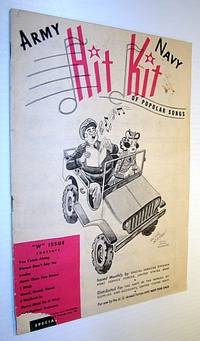
1945812G2242USA: United States Army 1945. Book. Illus. by Herman Vic cover. Good. Paperback. First Edition. 4to - over 9¾" - 12" tall. 20 pages. Features sheet music for piano and voice for these songs: You Came Along; Please Don't Say "No"; Louise; More Than You Know; I Wish; Good Good Good; I Walked In; There Must Be A Way; Bell Bottom Trousers. "Issued monthly by special services division Army Service Forces United States Army. Distributed for the navy by the Bureau of Supplies and Accounts United States Navy. For use by the U.S. Armed Forces only. Not for Sale." - from front cover. 2" x 1" chip from lower corner of front cover and openings along coverfold otherwise unmarked with average wear. A vintage copy of this nice WWII collectible. United States Army Paperback
19249261Wien: Wiener Philharmonischer Verlag 1924. original printed wrappers. front hinge professionally re-inforced with archival quality matched strip of japanese tissue. some shallow puckering to pages small abrasion to front cover partially obscuring the german word for "scores". nicely colored label on cover hiding the printed phrase"E flat major" similar label to same on title page. both late additions by printer. no other flaws clean no writing or markings. universal edition with english/german/french text. 144pp. frontispiece photograph portrait of schoenberg seated. handsomely printed cover and score. No Edition Stated. Soft Cover. Very Good Plus/No Jacket as Issued. 12mo - over 6¾" - 7¾" tall. Musical Score. Wiener Philharmonischer Verlag Paperback
2011__0571571212Music Sales 2011. Paperback. New. 80 pages. 7.87x5.51x1.57 inches. Music Sales paperback
19620151851962 Mimeograph copy on heavy paper of original typscript copy. Revised June 1962. "Around the World in 80 Days as a New Stage Musical in Two Acts. Time: 1872; Place: Around the World". Book by Sig Herzig Lyrics Harold Adamson Music Sammy Fain and Victor Young. Property of the Estate of Michael Todd whose film adaptation won an Academy Award for Best Picture in 1956. Not paginated. Printed on heavy paper. In a two-hold punched binding with stiff covers typed label. Label missing corner. Does not include music. Script is in very good condition with no writing or damage. An unusual piece of entertainment memorabilia. Very good. unknown
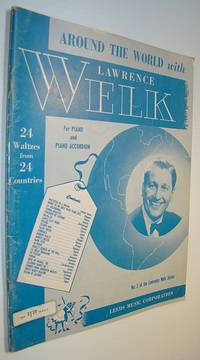
1946848G0022USA: Leeds Music Corp. 1946. Book. Good. Paperback. First Edition. 4to - over 9¾" - 12" tall. 48 pages. Songs include: Waltzing in a Dream; Drink to Me Only with Thine Eyes; La Golondrina; Vienna Beauties; Souvenir De Lucerne; Ma-Ha-Lo; Love's Last Word; Espana; Tesoro Mio; Valse Triste; Storvals; Minute Waltz; Monte Cristo; Dark Eyes; In Pekin; Kroll's Echoes of the Ball; La Belle Roumaine; Ny Fiskar; Poeme; Rose of Arabia the; Slavonic Dance No. 1; Sounds from Aberdeen Medley; Sweet Molly Malone; Vision of Salome. Average wear. Unmarked. A sound vintage copy. Leeds Music Corp. Paperback