118 résultats
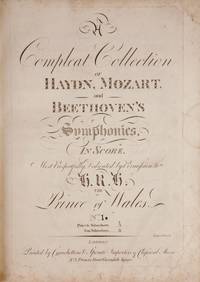
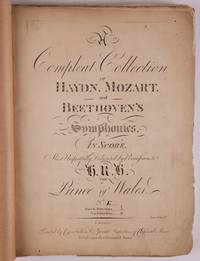
180895829London: Lavenu Cianchettini & Sperati 1808-1810. First editions of the first printings of the full orchestral scores of the complete symphonies of Beethoven Mozart and Hadyn. Quarto two volumes bound in three quarters morocco over marbled boards wit gilt titles and tooling to the spine including A Complete Collection of Haydn Mozart and Beethoven's Symphonies Cianchettini and Sperati and A Complete Collection of <span class="match">Mozart</span> and Beethoven's <span class="match">Symphonies. </span>A Compleat Collection of Haydn Mozart and Beethoven's Symphonies contains the first appearance of the full scores of <span class="match">Mozart</span>'s Overture to the Marriage of Figaro <span class="match">Mozart</span>'s Symphony no. 40 and no. 41. Fuld The Book of World-Famous Music 564-567. A Complete Collection of <span class="match">Mozart</span> and Beethoven's <span class="match">Symphonies Lavenu contains the first appearance of the </span>full scores of <span class="match">Mozart</span>'s Symphony no. 39 no 13 and no. 38. In very good condition with light toning to the text. An exceptional collection of the utmost rarity. 1786 saw the successful premiere of Mozart's The Marriage of Figaro in Vienna. Its reception in Prague later in the year was even warmer and this led to a second collaboration with Da Ponte: the opera Don Giovanni which premiered in October 1787 to acclaim in Prague but less success in Vienna in 1788. The two are among Mozart's most important works and are mainstays of the operatic repertoire today. In 1787 the young Ludwig van Beethoven spent several weeks in Vienna hoping to study with Mozart. No reliable records survive to indicate whether the two composers ever met. Beethoven would go on to become a crucial figure in the transition between the Classical and Romantic eras in classical music he remains one of the most recognized and influential of all composers with his best-known compositions including 9 symphonies; 5 piano concertos; 1 violin concerto; 32 piano sonatas; 16 string quartets; a mass the Missa solemnis; and an opera Fidelio. Lavenu, Cianchettini & Sperati hardcover books
180895829London: Lavenu Cianchettini & Sperati 1808-1810. First editions of the first printings of the full orchestral scores of the complete symphonies of Beethoven Mozart and Hadyn. Quarto two volumes bound in three quarters morocco over marbled boards wit gilt titles and tooling to the spine including A Complete Collection of Haydn Mozart and Beethoven's Symphonies Cianchettini and Sperati and A Complete Collection of Mozart and Beethoven's Symphonies. A Compleat Collection of Haydn Mozart and Beethoven's Symphonies contains the first appearance of the full scores of Mozart's Overture to the Marriage of Figaro Mozart's Symphony no. 40 and no. 41. Fuld The Book of World-Famous Music 564-567. A Complete Collection of Mozart and Beethoven's Symphonies Lavenu contains the first appearance of the full scores of Mozart's Symphony no. 39 no 13 and no. 38. In very good condition with light toning to the text. An exceptional collection of the utmost rarity. 1786 saw the successful premiere of Mozart's The Marriage of Figaro in Vienna. Its reception in Prague later in the year was even warmer and this led to a second collaboration with Da Ponte: the opera Don Giovanni which premiered in October 1787 to acclaim in Prague but less success in Vienna in 1788. The two are among Mozart's most important works and are mainstays of the operatic repertoire today. In 1787 the young Ludwig van Beethoven spent several weeks in Vienna hoping to study with Mozart. No reliable records survive to indicate whether the two composers ever met. Beethoven would go on to become a crucial figure in the transition between the Classical and Romantic eras in classical music he remains one of the most recognized and influential of all composers with his best-known compositions including 9 symphonies; 5 piano concertos; 1 violin concerto; 32 piano sonatas; 16 string quartets; a mass the Missa solemnis; and an opera Fidelio. Lavenu, Cianchettini & Sperati hardcover
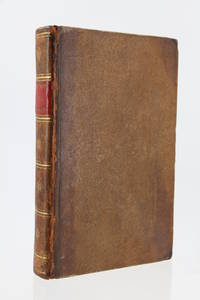
181478167Paris: De l'Imprimerie de P. Didot l'aîné 1814. Fine. De l'Imprimerie de P. Didot l'aîné Paris 1814 12.50 x 20.50 cm relié De l'Imprimerie de P. Didot l'Aîné Paris 1814 125 x 205 cm bound in calf First edition of Stendhal's very first book published under the pseudonym of Louis-Alexandre-César Bombet. Contemporary binding in half brown calf spine decorated with gilt fillets and tooling as well as a red morocco title piece. Very rare according to Clouzot De l'Imprimerie de P. Didot l'aîné unknown
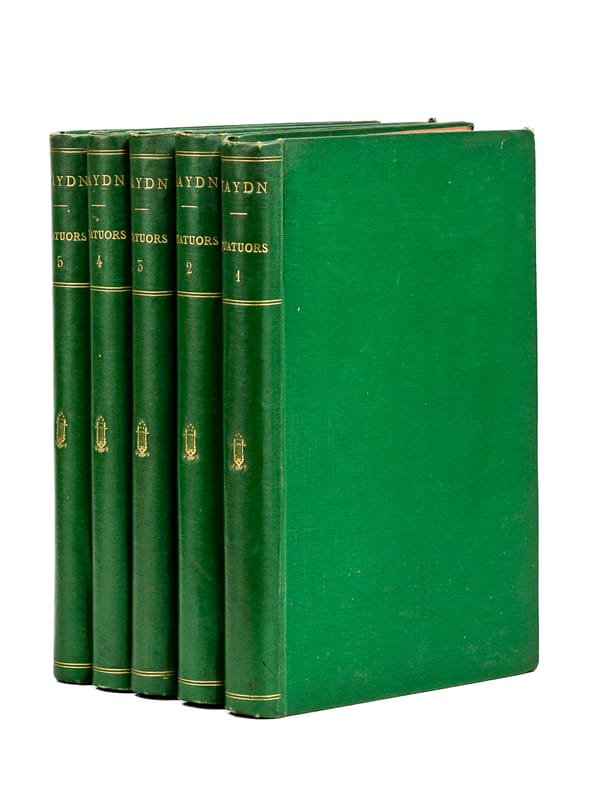
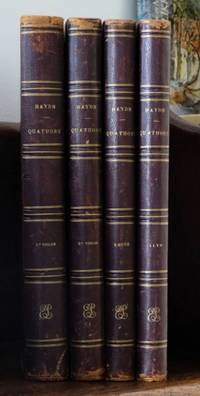
180369076Gravés par Lobry, 5 vol. in-12 cartonage bradel vert postérieur, collection "Bibliothèque Musicale", Chez Pleyel, Auteur et Editeur, Rue Neuve des Petits Champs n° 1286 ou n° 728, Chez Richault, (tome 7), Paris, s.d. [ 1803, vers 1810-1815 pour Richault pour le tome 7 ], Vol. I : portrait en frontispice, 2 ff., 126 pp., 3 ff., 124 pp. (Opus 76, Quatuors 1, 2, 3, 4, 5, 6); Vol. II : 2 ff., 130 pp., 2 ff., 116 pp. (Opus 20, Quatuors 1, 2, 3, 5, 4 et 6) ; Vol. III : 2 ff., 132 pp., 2 ff., 126 pp. (Opus 50, Quatuors 5, 2, 3, 6, 4, 1); Vol. IV : 1 f., 111 pp., 2 ff., 105 pp. (Opus 33, Quatuors 1, 2, 3, 4, 5, 6); Vol. V : 2 ff., 128 pp., 2 ff., 139 pp. (Opus 71, Quatuors 1, 2, 3 et Opus 74, Quatuor 1, 2, 3)
18354044Turin 1835. <p>Manuscript on paper. 4to binding size 264 x 197 mm. 26 pp. Contents: Fol. 1r title verso blank f. 2r-5v text La Creazione incipit: "Raffaele / Creò dapprima Iddio il ciel la terra; / Ma giaceva la terra informe e vuota" f. 6r half-title for Le quattro Stagioni 6v-13v text Le quattro Stagioni incipit: "Coro di Contadini e Contadine. / Vieni deh Flora vieni / Prezioso don del Ciel." Written in brown ink in an elegant Italian cursive on fine wove paper no visible watermarks. Three blank leaves at front and back the outermost being a wrapper of thicker paper second flyleaf at back adhered to the third the text block stitched into a Piedmontese case binding of gold-embroidered ivory silk over thin pasteboards both covers with outer border of a leafy scrolling vine with floral sprigs composed of gilt or silver-gilt appliqués of leaves blossoms and roundels on stems of couched silver-gilt thread a larger flowering branch at each corner at center of upper cover a large gilt monogram CF within a cartouche of repeated leaf appliqués with at top a closed crown at center of lower cover a large flowering plant of gilt appliqués couched thread sequins etc. turn-ins of upper cover unsewn dampstain within upper left quadrant of upper cover. <br /> <br /> A manuscript of excerpts from the librettos for Haydn's late oratorios the Creation Die Schöpfung first performed 1798 and the Seasons Die Jahreszeiten 1801 translated into Italian from the German of his librettist and patron Gottfried van Swieten 1733-1803. Bound in brightly gilt embroidered silk binding the manuscript was probably produced for a court or private musical event.<br /> <br /> Both librettos had an English origin. The Creation text based on Genesis and Milton's Paradise Lost was taken from a manuscript libretto by an unknown author originally intended for Handel given to Haydn by the English impresario Johann Peter Salomon and brought back by him from England in 1795. The Seasons was loosely based on extracts from James Thomson's poem of the same title 1730 but van Swieten had greater leeway in rearranging the text.<br /> <br /> It was still considered a given in the early nineteenth century that vocal compositions in languages other than Latin and Italian would be translated into the language of the audience. The Creation was first performed in Italian in Milan in 1810 using Giuseppe Carpani's verse translation of van Swieten's libretto first published in Vienna in 1801. The manuscript contains an abridged version of Carpani's text with some variants. The Quattro stagione is also abridged and seems to be based on portions of an anonymous translation first published in Dresden in 1802 and used for the oratorio's first performances in Italian in 1811 in Milan and Bologna cf. editions of Milan: Mussi 1811 and Bologna: Ramponi 1811.<br /> <br /> The manuscript was exhibited in Turin in 1998: cf. Francesco Malaguzzi Legature romantiche piemontese: legature del periodo romantico in raccolte private no. 67 and p. 30. Malaguzzi stated that the manuscript contains "watermarks of the Biella papermakers the brothers Avondo datable to the third decade of the 19th century" but this cataloguer failed to see any watermarks.</p> unknown
18354044Turin 1835. <p>Manuscript on paper. 4to binding size 264 x 197 mm. 26 pp. Contents: Fol. 1r title verso blank f. 2r-5v text La Creazione incipit: "Raffaele / Creò dapprima Iddio il ciel la terra; / Ma giaceva la terra informe e vuota" f. 6r half-title for Le quattro Stagioni 6v-13v text Le quattro Stagioni incipit: "Coro di Contadini e Contadine. / Vieni deh Flora vieni / Prezioso don del Ciel." Written in brown ink in an elegant Italian cursive on fine wove paper no visible watermarks. Three blank leaves at front and back the outermost being a wrapper of thicker paper second flyleaf at back adhered to the third the text block stitched into a Piedmontese case binding of gold-embroidered ivory silk over thin pasteboards both covers with outer border of a leafy scrolling vine with floral sprigs composed of gilt or silver-gilt appliqués of leaves blossoms and roundels on stems of couched silver-gilt thread a larger flowering branch at each corner at center of upper cover a large gilt monogram CF within a cartouche of repeated leaf appliqués with at top a closed crown at center of lower cover a large flowering plant of gilt appliqués couched thread sequins etc. turn-ins of upper cover unsewn dampstain within upper left quadrant of upper cover. <br /><br />A manuscript of excerpts from the librettos for Haydn's late oratorios the Creation Die Schöpfung first performed 1798 and the Seasons Die Jahreszeiten 1801 translated into Italian from the German of his librettist and patron Gottfried van Swieten 1733-1803. Bound in brightly gilt embroidered silk binding the manuscript was probably produced for a court or private musical event.<br /><br />Both librettos had an English origin. The Creation text based on Genesis and Milton's Paradise Lost was taken from a manuscript libretto by an unknown author originally intended for Handel given to Haydn by the English impresario Johann Peter Salomon and brought back by him from England in 1795. The Seasons was loosely based on extracts from James Thomson's poem of the same title 1730 but van Swieten had greater leeway in rearranging the text.<br /><br />It was still considered a given in the early nineteenth century that vocal compositions in languages other than Latin and Italian would be translated into the language of the audience. The Creation was first performed in Italian in Milan in 1810 using Giuseppe Carpani's verse translation of van Swieten's libretto first published in Vienna in 1801. The manuscript contains an abridged version of Carpani's text with some variants. The Quattro stagione is also abridged and seems to be based on portions of an anonymous translation first published in Dresden in 1802 and used for the oratorio's first performances in Italian in 1811 in Milan and Bologna cf. editions of Milan: Mussi 1811 and Bologna: Ramponi 1811.<br /><br />The manuscript was exhibited in Turin in 1998: cf. Francesco Malaguzzi Legature romantiche piemontese: legature del periodo romantico in raccolte private no. 67 and p. 30. Malaguzzi stated that the manuscript contains "watermarks of the Biella papermakers the brothers Avondo datable to the third decade of the 19th century" but this cataloguer failed to see any watermarks.</p> unknown books
181041428Dublin Ireland: Hime at his Musical Circulating Library No. 34 College Green No 40 College Green 1810. Folio. ff. 25. Sheets: 12 3/4 x 9 inches. Plates: 10 3/4 x 7 1/2 inches. 25 copper-plated engraved pieces of sheet music printed in black. Most sheets hand-foliated in ink. With the ownership signature in ink on the back of songs 9 and 10 written "Susan Buchanan's." 9 of the pieces of sheet music are loose 16 are loosely bound together.<br/> <br/> Provenance: Family of Founding Father Francis Hopkinson<br/> <br/> 25 pieces of sheet music printed in Ireland by Hime at the end of the 18th century from the family collection of Francis Hopkinson America's first composer.<br/> <br/> "American society from about 1805 on was especially enamored of Irish and Scotch tunes particularly the Irish Melodies of Thomas Moore and other national music." - Richard J. Wolfe Early American Music Engraving and Printing Founding Father Francis Hopkinson 1737-1791 was a signatory for New Jersey to the Declaration of Independence and the first American to compose a song which he attested to himself: "I cannot I believe be refused the Credit of being the first Native of the United States who has produced a Musical Composition." Hopkinson published three of the earliest American song collections: Collection of Plain Tunes with a Few from Anthems and Hymns printed by Carr in 1763; America Independent or Temple of Minerva the first American opera printed by Carr in 1781; and Seven Songs for the Harpsichord or Forte Piano printed by T. Dobson in 1788. All sheets were printed by Hime. Hime was an English and Irish music publishing firm run by two brothers Humphrey and Morris. Hime began in Liverpool but moved to Dublin in 1790. The firm continued printing until the 1870s as Hime & Son. The Himes did the largest provincial trade in Britain at the end of the 18th century because English copyright law did not apply to Irish publishers so Hime could flood the English market with bootleg copies of popular songs. The song titles are: 1. "TEARS THAT EXHALE: An admired SONG in the PRISONER Composed by Mr. Attwood." 2. "I'D THINK on THEE MY LOVE. A Favorite NEW SEA SONG Composed by Mr. HOOK." 3. "HENRY's COTTAGEMAID." 4. "AS WRAPT IN SLEEP I LAY: A favorite Song sung by Mrs CROUCH in the Opera of The PIRATES Composed by STEPN STORACE." 5. "WINDS SOFTLY TELL MY LOVE: As Sung by Mrs MOUNTAIN in the Opera of the FARMER with uncommon Applause." 6. "THE MANSION OF PEACE: A Much Admired SONG Composed by Mr. WEBBE." 7. "THE NEW MANSION OF PEACE: A Favorite NEW SONG Composed by Mr. MOULDS." 8. "DEAR MARY TO THEE: A much Admired NEW Song Composed by Mr. HOOK." 9. "DEAR IMAGE OF THE MAID I LOVE: Composed by SIGr. GIORDANI." 10. "WHILST WITH VILLAGE MAIDS: A favorite Song in the Opera of ROSINA Sung by Mrs BILLINGTON." 11. "COME BLUSHING ROSE: Composed by Pleyel." 12. "EVENING: A Favorite BALLAD Composed by HAYDN: The WORDS by DOCr. JOHNSON." 13. "EDWIN AND ELLA: Composed by MR. HOOK." 14. "GO HAPPYGALES: A favorite SONNETT translated from PETRACH by Mr HOOK." 15. "ENCOMPASSED IN AN ANGELS FRAME: A much Admired Song." 16. "THE SHIPWRECK'D BOY. A Favorite NEW Song Written by Geo. Saville Carey." 17. "THERE THE SILVER'D WATERS ROAM: An admired Song in the PIRATES. Sung by Mr Sedgwick. composed by Sigr. STORACE." 18. "Charming Delia: A Favorite BALLAD Composed by Mr. PLEYEL." 19. "DIRE IS HIS GRIEF: An Admired Song in the new Historical Romance of the CRUSADE sung by Mr Incldeon." 20. "NOW THE WOODLAND CHORISTS SING: A Favorite PASTORAL BALLAD composed by J PLEYEL." 21. "O!EVER IN MY BOSOM LIVE: A favorite Duett in OSCAR and MALVINA sung by Mrs Mountain and Miss Keys." 22. "DEAR IS MY LITTLE NATIVE VALE: A favorite NEW Ballad." 23. "YOUNG JOCKEY TRIPT IT O'ER THE MEAD: An Admired BALLAD Composed by SIGr PLEYEL." 24. "BLOW HIGH BLOW LOW: A favorite SONG." 25. "WHEN FAIR SUSAN I LEFT: A much Admired SEA SONG." These scores were part of a Sammelband acquired at the Francis Hopkinson Family Americana Collection sale in June 2020.<br/> <br/> Wolfe Early American Music Engraving and Printing 1980. Hime at his Musical Circulating Library No. 34 College Green, No 40 College Green unknown
180940074London: Cianchettini & Sperati 1809. 11 works bound in 2 volumes. Large octavo. 19th century half dark tan calf with marbled boards spines in decorative compartments gilt with titling gilt. Engraved throughout. <br /> <br /> Contains: <br /> <br /> 1 Symphony in E-flat major. 1f. recto title No. I verso blank 41 i blank pp. Hob. I:91. Robbins Landon p. 744.<br /> <br /> 2 Symphony in C major "London." 1f. recto title No. II verso blank 39 i blank pp. Hob. I:69. Robbins Landon p. 717.<br /> <br /> 3 Symphony in G major "Oxford." 1f. recto title No. III verso blank 48 pp. Hob. I:92. Robbins Landon p. 745.<br /> <br /> 4 Symphony in G minor "La Poule." 1f. recto title No. IV verso blank 36 pp. Hob. I:83. Robbins Landon p. 734.<br /> <br /> 5 Symphony in C major. 1f. recto title No. V verso blank 23 i blank pp. Hob. I:41. Robbins Landon p. 678.<br /> <br /> 6 Symphony in B-flat major "La Reine." 1f. recto title No. VI verso blank 37 i blank pp. Hob. I:85. Robbins Landon p. 736.<br /> <br /> 7 Symphony in D major. 1f. recto title No. VII verso blank 28 pp. Hob. I:70. Robbins Landon p. 718.<br /> <br /> 8 Symphony in F-sharp minor "Farewell." 1f. recto title . No. VIII verso blank 33 i blank pp. With note to head of first page of music: "NB: This is the Fantastical Symphony in which the Performers retire one after the other." Hob. I:45. Robbins Landon p. 686.<br /> <br /> 9 Symphony in B-flat major. 1f. recto title . No. IX verso blank 38 pp. Hob. I:66. Robbins Landon p. 714<br /> <br /> 10 Symphony in E minor "Trauer-Symphonie." 1f. recto title . No. X verso blank 33 i blank pp. Hob. I:44. Robbins Landon p. 683<br /> <br /> 11 Symphony in D major. 1f. recto title . No. XI verso blank 33 i blank pp. Hob. I:57. Robbins Landon p. 702.<br /> <br /> With early manuscript inscription "Eugene Spinney from Mrs. Huxtable Sutton Waldron Dorset June 1862" in ink to free front endpapers of both volumes.<br /> <br /> Bindings worn rubbed and bumped. Light marginal foxing. In very condition overall. "From about 1775 in some respects 1773 to 1781 Haydn again changed his orientation. Symphonies nos. 53 61-3 66-71 and 73-5 are primarily in a light even popular style only no.70 is an exception perhaps reflecting his resumption of operatic composition in 1773; indeed nos. 53 62 63 and 73 include adaptations of stage-music ." Georg Feder and James Webster in Grove Music Online<br /> <br /> The Symphony in G major Hob I:92 was performed by Haydn in 1791 at Oxford University on the occasion of his receiving an honorary doctorate. <br /> <br /> "No. 45 the Farewell Symphony . had a purpose which explains its extraordinary form. Briefly the story as found the in the authentic biographies is this: the Prince so attracted by Esterháza that splendid palace erected on a wild and remote Hungarian marsh tarried there longer and longer each year. The musicians not being allowed - with the exception of Haydn - to have their families with them were restless after a long season and naturally wished to rejoin their wives and children. Towards the end of the season in 1772 the musicians became desperate and went to their beloved Capellmeister for help. The result was the Farewell symphony in which the regular Presto finale was broken off and a long Adagio began. During the course of this movement one player after another blew out his candle and departed leaving at the end two violins presumably Tomassini and Haydn himself. As these were about to leave the Prince having grasped the idea is supposed to have said 'Well if they all leave we might as well leave too.' And the whole court departed the next day." Robbins Landon: The Symphonies of Joseph Haydn p. 338. Cianchettini & Sperati unknown
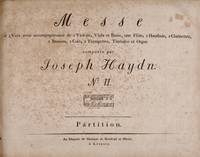
180240095Leipsic: Breitkopf et Härtel 1802. Oblong folio. Nineteenth-century marbled boards rebacked and recornered in dark olive half calf spine in gilt-ruled compartments with dark red title label gilt. i title 2-114 pp. Typeset throughout. <br /> <br /> Dark red leather title label to front pastedown removed but with lettering "W. Russell 1806" visible in impression to free front endpaper.<br /> <br /> "Charles Beevor 41 Upper Harley St." in nineteenth century black into to upper outer corner of free front endpaper; additional bibliographical notes in blue ink. <br /> <br /> Binding worn and rubbed. Intermittent moderate foxing and browning. First Edition of the "Missa in tempore belli" one of six masses written by order of Prince Esterházy between 1796 and 1802. Hoboken Collection Vol. 9 1433. RISM H2498. <br /> <br /> "Vocal music constitutes fully half of Haydn's output. Both his first and last completed compositions were mass settings and he cultivated sacred vocal music extensively throughout his career except during the later 1780s when elaborate church music was inhibited by the Josephinian reforms and the first half of the 1790s in London ." <br /> <br /> "Notwithstanding their semi-private function for the Esterházy court Haydn's six late masses are consummate masterworks that exhibit no trace of provinciality or the 'occasional'. He exploits the complementary functions of soloists and chorus with inexhaustible freedom and telling effect; owing to his London experience the orchestra plays a newly prominent role. Four are in B perhaps because Bb was Haydn's usual highest pitch for choral sopranos he employed the same key for the final choruses of Parts 2-3 of The Creation and Part 1 of The Seasons. The other two are the only ones for which he provided descriptive titles: the Missa in tempore belli 'Mass in Time of War' 1796 in C features the bright trumpet-dominated sound typical of masses in this key; the Missa in angustiis 'Mass in times of Distress' later nicknamed 'Nelson Mass' 1798 in D minor and major is scored for a dark orchestra comprising only trumpets and timpani strings and organ. Both invoke the travails of the Napoleonic wars. The Agnus Dei of the former includes threatening timpani motifs and harsh trumpet fanfares while the Benedictus of the latter culminates in another harsh fanfare passage 'out of context'; both influenced the Agnus Dei in Beethoven's Missa solemnis. On the other hand except for the sombre Kyrie and Benedictus of the 'Nelson Mass' both are otherwise firmly optimistic; the ending of the latter is downright jaunty." James Webster in Grove Music Online. Breitkopf et Härtel unknown
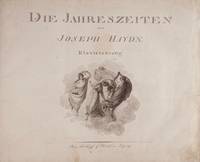
180140448Leipzig: Breitkopf & Hartel 1801. Oblong folio. Orange paper boards with original publisher's printed wrappers with title within decorative borders laid down small early vellum label with "118" to spine. 1f. recto title with engraved vignette by F.W. Nettling after Schubert depicting an allegory of the seasons verso blank 176 pp. with publisher's catalogue to lower portion of p. 174 and pp. 175-176. Text in German and French. Typeset throughout.<br /> <br /> Numbering and occasional markings in pencil.<br /> <br /> Wrappers worn and abraded part of lower lacking; small early manuscript annotations to lower outer corner of upper with portion cancelled. Minor to moderate foxing; minor staining. First Edition. HWV II p. 59. Hoboken Catalogue Vol. 9 1419. RISM H4690.<br /> <br /> One of Haydn's two masterful oratorios this secular work was written shortly after The Creation 1798 to a libretto by Baron Gottfried von Swieten 1733-1803 after the eponymous poem by James Thomson 1700-1748 published in 1730. The work was first performed on 24 April 1801 in a private première at the Schwarzenberg Palace in Vienna; the first public production took place on 29 May 1801. <br /> <br /> "Although the initial reception of The Seasons was favourable - Haydn wrote to Clementi that it had enjoyed 'unanimous approval' and that 'many prefer it to The Creation because of its greater variety' - critical opinion soon became mixed owing in part to its perceived 'lower' subject in part to a growing aesthetic resistance to its many pictorialisms. Haydn himself contributed to both strands of criticism: he supposedly said to Francis II 'In The Creation angels speak and tell of God but in The Seasons only Simon speaks' Dies; and he indiscreetly criticized Swieten's croaking frogs 'Frenchified trash' and the absurdity of a choral hymn to toil Fleiss. Nonetheless he maintained that it would join The Creation in assuring his lasting fame. For the publication he took the path of lesser resistance selling the rights to Breitkopf & Härtel. . <br /> <br /> Notwithstanding its less exalted subject The Seasons is compositionally more virtuoso than The Creation and offers greater variety of tone: Haydn's pastoral is one of the final glories of a tradition that is more than 'high' enough." Georg Feder and James Webster in Grove Music Online <br /> <br /> The music is "of wonderful freshness and unfailing originality." TNG Vol. 8 p. 347. Breitkopf & Hartel unknown
182340446Leipsic: Breitkopf et Härtel PN 3454 1823. Oblong folio. Newly bound in quarter dark blue morocco with marbled boards title label gilt to spine. 1f. recto lithographic title verso blank 96 pp. Typeset throughout.<br /> <br /> Some minor foxing. <br /> <br /> An attractive copy. First Edition of the Mariazeller Messe. Hoboken Collection Vol. 9 1432 plate 9. RISM H2503<br /> <br /> "Vocal music constitutes fully half of Haydn's output. Both his first and last completed compositions were mass settings and he cultivated sacred vocal music extensively throughout his career except during the later 1780s when elaborate church music was inhibited by the Josephinian reforms and the first half of the 1790s in London .<br /> <br /> "The 'Mariazellermesse' in C 1782 resembles the Missa Cellensis in key scoring and purpose although it is more compact and more closely allied with sonata style." James Webster and Georg Feder in Grove Music Online. Breitkopf et Härtel [PN 3454] unknown
1802203560Au Magasin de Musique de Breitkpf et Härtel Leipsic. 1802. Hardcover Großformat Quer. Die Jahresangabe ist ungefähr. Zustand: keine Beschädigungen Namenseintragungen im Vorsatz verstaubt. Außen verschmutzt Ecken und Kanten bestoßen aufgeweicht und oberflächlichen Fehlstellen. Rücken unten mit kleiner Fehlstelle hält aber gut Bindung gut. Au Magasin de Musique de Breitkpf et Härtel, Leipsic., hardcover
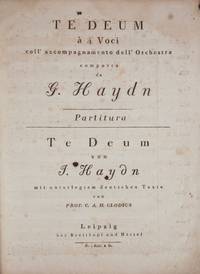
180240447Leipzig: Breitkopf und Härtel 1802. Folio. Modern half mid-brown calf with ivory linen boards with leather title label gilt to upper spine with titling gilt. 1 title 2-42 music ii text pp. Typeset throughout. With text in Latin and German. <br /> <br /> With occasional early accidentals added in early manuscript.<br /> <br /> Some browning and foxing; minor staining. First Edition. Hoboken Collection Vol. 9 1478. RISM H2517. <br /> <br /> "The late Te Deum 'for the empress' . for chorus and very large orchestra is an ABA construction of great power and terseness; it whirls through the very long text in little more than eight minutes while still finding time for a double fugue and an immense climax at the end." Georg Feder and James Webster in Grove Music Online<br /> <br /> The autograph of the present work has been lost. Breitkopf und Härtel unknown
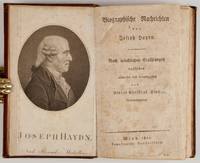
181040444Wien: Camesinaische Buchhandlung 1810. Octavo. Full 19th century dark red calf with gilt rules and blindstamping to boards titling gilt to upper dark red doublure endpapers. Preserved in a modern quarter brown mid-tan leather clamshell box with dark ivory linen boards titling gilt to spine. <br /> <br /> 1f. fine engraved frontispiece portrait of Haydn by D. Weiss after Ihrwack's medallion 1f. recto title verso 3-line verse by D. Tomas de Yriarte 1f. recto dedication verso blank v-x 11-220 pp. 1 folding plate of engraved music. <br /> <br /> Binding slightly worn rubbed and bumped. Minor to moderate foxing throughout; small tear to lower outer corner of pp. 157/158 with no loss of text; frontispiece loose. First Edition. Catalogue of the Printed Books in the British Museum. Accessions Third Series . Books in the Hirsch Library. P. 118. Eitner III p. 197.<br /> <br /> Dies was a German writer composer and painter. "Esterhazy sponsored the publication of his Biographische Nachrichten von Joseph Haydn . for which Dies collected material from 30 conversations with the aged composer. Because of its factual tone and the typically Classical standpoint of its aesthetic judgments this work occupies a significant position in early Haydn literature alongside Griesinger and Carpani. . Many Haydn documents appeared for the first time in the Nachtrichten and it contains a 'list of all the works Haydn composed in London' taken from the lost London notebook." Horst Seeger in Grove Music Online<br /> <br /> An early and important biographical account of Haydn. Camesinaische Buchhandlung unknown
181528731815. Part 1: 2 Blank pages / 2er Violon Title Page / 237 Pages / 2 After blanks Part 2: 2 Blank pages / 1er Violon Title Page / 1 NNP / 297 Pages / 3 NNP / 2 After blanks Part 3: 2 Blank pages / Basse Title Page / 205 Pages / 2 Blank pages Part 4: 2 Blank pages / Alto Title Page / 205 Pages / 2 Blank pages Not dated date is an estimate. Binding: Contemporary Half Leather Folio Height cm: 365 CM Width cm: 285 CM Thickness cm: 145 CM hardcover
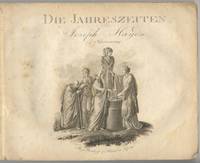
180240481Leipzig: Breitkopf & Hartel 1802. Oblong folio. Original publisher's orange decorative printed wrappers with "Les Saisons par J. Haydn double rule Die Jahreszeiten von J. Haydn" within thick decorative rule to upper. 1f. recto title with engraved vignette by F. W. Nettling after Schubert verso blank 176 pp. with publisher's catalogue to lower portion of p. 174 and pp. 175-176. Text in German and French. Typeset throughout.<br /> <br /> The title-page vignette depicts an allegory of the seasons with two women decorating a statue with flowers and another supporting a hunched old man who carrying a walking stick.<br /> <br /> Contemporary signature to corner of upper wrapper.<br /> <br /> Wrappers somewhat worn and rubbed; small tears to upper and spine with minor loss. Light to moderate foxing; several leaves soiled at edges. First Edition later issue. HWV II p. 59. Hoboken Catalogue Vol. 9 1419 variant. RISM H4690.<br /> <br /> One of Haydn's two masterful oratorios this secular work was written shortly after The Creation 1798 to a libretto by Baron Gottfried von Swieten 1733-1803 after the eponymous poem by James Thomson 1700-1748 published in 1730. The work was first performed on 24 April 1801 in a private première at the Schwarzenberg Palace in Vienna; the first public production took place on 29 May 1801. <br /> <br /> "Although the initial reception of The Seasons was favourable - Haydn wrote to Clementi that it had enjoyed 'unanimous approval' and that 'many prefer it to The Creation because of its greater variety' - critical opinion soon became mixed owing in part to its perceived 'lower' subject in part to a growing aesthetic resistance to its many pictorialisms. Haydn himself contributed to both strands of criticism: he supposedly said to Francis II 'In The Creation angels speak and tell of God but in The Seasons only Simon speaks' Dies; and he indiscreetly criticized Swieten's croaking frogs 'Frenchified trash' and the absurdity of a choral hymn to toil Fleiss. Nonetheless he maintained that it would join The Creation in assuring his lasting fame. For the publication he took the path of lesser resistance selling the rights to Breitkopf & Härtel. . <br /> <br /> Notwithstanding its less exalted subject The Seasons is compositionally more virtuoso than The Creation and offers greater variety of tone: Haydn's pastoral is one of the final glories of a tradition that is more than 'high' enough." Georg Feder and James Webster in Grove Music Online <br /> <br /> The music is "of wonderful freshness and unfailing originality." TNG Vol. 8 p. 347. Breitkopf & Hartel unknown
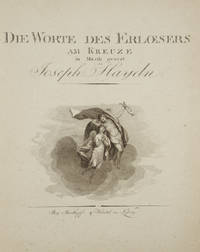
180131424Leipzig: Breitkopf & Härtel 1801. Folio. Half dark green morocco with matching textured paper boards raised bands on spine in decorative compartments gilt titling gilt marbled endpapers original publisher's wrappers bound in. 1f. decorative title with engraved vignette 1f. Haydn's preface dated Vienna March 1801 68 pp. Text in German and Italian. Typeset.<br/><br/>Ex libris the noted English writer on music and collector Julian Marshall 1836-1903 with his decorative bookplate to front pastedown.<br/><br/>Binding lightly worn rubbed and bumped; small loss to tail of spine. Light uniform browning; some minor soiling to corners. A very attractive copy overall. First Edition of the piano-vocal score. Very scarce. Hoboken 9 1377.<br/><br/>Haydn's Seven Last Words was conceived as a purely instrumental work in 1787 and is regarded as one of his finest compositions. Upon hearing an arrangement with vocal lines added by Joseph Friebert 1724-1799 Haydn was inspired to write his own version as an oratorio. This would be his first collaboration with Baron von Swieten who would later pen the librettos for The Creation and The Seasons. The oratorio version premiered on March 26 1796 at the Schwarzenberg Palace in Vienna.<br/><br/>"The Seven Last Words a success during Haydn's lifetime and beyond is less popular today in part because it is not a full-length work in part owing to the succession of eight consecutive adagios which paradoxically seem more monotonous than in the orchestral version. Its most striking movement is the bleak newly composed introduction to the second part scored for wind alone and set in A minor a key Haydn hardly ever used." James Webster in Grove Music Online.<br/><br/>Julian Marshall was one of the principal contributors to the first edition of Grove. His extensive collection of manuscripts is now held in the British Museum. Breitkopf & Härtel unknown books
1810H34424London Dublin etc. 1810. Hardcover. Very good. 12.5 x 9.5 inches old dark red leather and marbled boards very good with general rubbing and wear but tightly bound and contents mainly very good. With ownership leather label on front cover of Marquis of Abercorn probably John James Hamilton 1756-1818 and bookplate of Anne Jane Abercorn 1763-1827 who was the third wife of the Marquess of Abercorn; both the Marquess and his wife had Irish roots and interests -- he was very invested in the politics of County Tyrone and she was the daughter of the 2nd Earl of Arran. There is also an old handwritten index of the song titles on a double-sided sheet loosely inserted. Highlights include a number of compositions that appear to be initialed by the composer Mazzinghi over a dozen songs based on Scott's Lady of the Lake an early appearance by Mozart in English and several Dublin imprints. Contains the following titles: 1. Qual strano evento from Phaedra by Radicati. 2. Nume benefico from the same opera. 3. Il core vi dono bell'Idolo mio from Mozart's Cosi Fan Tutte Dublin Goulding. 4. Contento il nor nel sono from Le Virtuose in Puntiglio by Simone Mayer. 5. Dolce Fiamma di Gloria d'onore by Portogallo arranged by Luigi Gianella. 6. Do puri affetti mici by Tarchi. 6. Chi dice mal D'Amore from Il Fanatico per la Musica by Mayer. 7. A Corri's Serenade L'Incanto. 8. The Day of Love A Ballad; music and words by Thomas Moore. 9. Dunque non senti O barbaro from Gli Orazi e I Curazi by Braham. 10. Egli vide le mie Lagrime by Winter. 11. Mad Margery by Henry R. Bishop. 12. While their Sweet Guittars are Tingling by Thomas Cooke words by Miss Owenson. 13. The celebrated Mocck Bravura from the opera First Attempt words by Miss Owenson music by Thomas Cooke. 14. Roderigh vich Alpine from The Lady of the Lake by Walter Scott by J. Mazzinghi possibly initialed by Mazzinghi in ink at bottom right of the title page: "M". 15. Ave Maria also from Lady of the Lake and also with "M" in ink. Blanche of Devan's Song "They bid me sleep they bid me Pray" by Scott music by Dr. Clarke of Cambridge. 16. John of Brent the Soldiers' Song from Lady of the Lake by Mazzinghi with the "M". 17. The Coronach or Funeral Song from Lady of the Lake.by Dr. John Clarke of Cambridge. 18. Norman's Song from Lady of the Lake by Clarke. 19. Dear! In pity do not speak words by Thomas Moore music by J. A. Stevenson Dublin Rhames' Musical Circulating Library. 20. The Beggar Girl by H. Piercy verso advertises other compositions by Piercy available through him. 21. The Favorite Airs from Lady of the Lake by T. Cooke. 22. Hymn to the Virgin from Lady of the Lake by T. Cooke. 23. The Soldier Bridegroom's Song from Lady of the Lake music by Sir J. Stevenson. 24. See our Oars with Feather'd Spray by Sir John A. Stevenson. 25. Lovely Emma by Stevenson. 26. Will you come to the Bow'r by T. M. Thomas Moore Dublin Hime. 27. Tell Me Where Is Fancy Bred by Shakespeare music by J. Stevenson Dublin Powers Music Ware House. 28. Give Me the Harp a Chorus Glee.sung with great applause at the Irish Harmonic Club Wednesday the 4th of May 1803 Dublin Rhames; 18 pages!. 29. Bragela from Ossian music by R. I. S. Stevens Signed at the bottom right of the first page by Stevens. 30. The Rose and the Lover words by E. Fitzsimons music by Braham and Stevenson. 31. And Will He Not Come Again Shakespeare's Ophela by Mrs. J. Williams Dublin William Power & Co. 32. Laura from The Seige of St. Quintin by Mr. Hook. 33. Awake my Lyre words by Cowley music by Joseph Major. 34. Farewell though lovely calm retreat by J. Willis Dublin Goulding & Co. 35. In vain I strive with aspect gay by M. P. King. 36. Together let us range the fields from the opera The Woodman by H. Bate Dudley. 37. The Farewell by Robert Cooke. 38. The Separation words by M. J. Stehl music by V. Novello. 39. Coronation Anthem by Handel. 40. Hymn for the Emperor translated by Burney by Haydn. 41. Who Would Not Love from the opera First Attempt words by Miss Owenson music by Thomas Cooke. hardcover
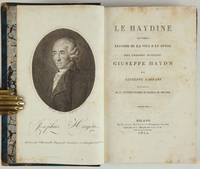
181239523Milano: Candido Buccinelli . contrada di s. Margherita num. 1118 1812. Octavo. Dark blue calf-backed marbled boards spine in decorative compartments gilt titling gilt marbled endpapers. 1f. recto title verso publisher's note v-viii 298 i errata ii "Contorni delle Medaglie" i blank pp. <br /> <br /> First Edition of one of the first biographical accounts of Haydn preceded only by the far less important biographical pieces by Framery and Le Breton. Wolffheim II 523. The present work was translated into English in 1839 as The Life of Haydn in Letters. <br /> <br /> Carpani was an Italian librettist critic and poet. "Among various writings two books are particularly important: Le Haydine . and Le Rossininane ossia lettere musico-teatrali. . The former was plagiarized by Stendhal and this created a lively controversy. These books show that Carpani was very knowledgeable about all contemporary music and an astute judge of the renewal movement in the early 19th century. He was in touch with all the major composers of his period and accompanied Rossini on his celebrated visit to Beethoven in 1822." TNG Vol. 3 p. 818.<br /> <br /> Bound with:<br /> Majer Andrea 1765-1837. Discorse sulla Origine Progressi e Stato Attuale della Musica Italiana. Padova: Minerva 1821. 1f. recto title verso quotation from Quintil 3-173 i "Avvertimento" 1f. recto "Indice" verso colophon "Della Nuova Società Tipografica in Ditta N.Z. Bettoni e Compagni 1821". First Edition. OCLC copies in France and Italy only. With the fine engraved half-length frontispiece portrait of Haydn by J. Neidl after Zitterer often lacking.<br /> <br /> Binding slightly worn rubbed and bumped. Some minor wear and foxing but in very good condition overall. Candido Buccinelli ... contrada di s. Margherita num. 1118 unknown
1845LTH27-F-6London: Edward Moxon 1845. Leather. Very Good. 8.5" by 5". None. An extensive history of many items peoples and countries of the world by Joseph Haydn. Third edition to which is added a copius index of leading names. In a lovely leather binding. Haydn's reputation rests on the Dictionary of Dates. Posterity has upheld his own assessment of it as far more accurate informative and well-organised than any of its rivals. It remains a important resource and is still consulted by historians. ODNB In a diced calf binding. Externally sound though with some rubbing. Internally firmly bound. Armorial bookplate to front pastedown. Pages are bright and quite clean though with the occasional patch of spotting. Very Good Edward Moxon hardcover
180129107Paris: Pleyel PN 359 1801. Folio. Contemporary vellum-backed speckled paper boards paper label to upper with titling in manuscript. 1f. title 311 i blank pp. Engraved. Text in French and Italian. Outer and lower edges uncut.<br/><br/>With publisher's facsimile signature handstamp to title. <br/><br/>Boards somewhat worn and rubbed; label partially lacking at edges. Minor creasing staining and wear; tear to lower margin of pp. 139/140 slightly affecting printed area; small stab holes to pp. 290-311; small binder's hole to upper inner margins throughout. Lower outer corners of first several leaves lacking and filled in with laid paper slightly affecting notation in several instances. Published just a short time after the first French edition by Erard. Hoboken XXI:2 p. 37. Hoboken 9 1395 later issue with price of 48 francs instead of 36. RISM H2525 no copies recorded in the U.S. Pleyel [PN 359] unknown books
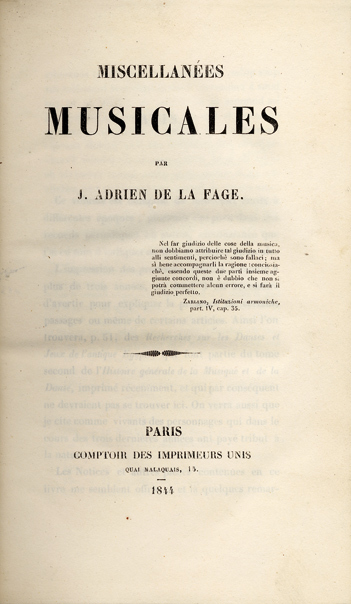
184414501Paris, Comptoir des Imprimeurs Unis, 1844 ; in-8 ; plein maroquin bleu-marine, dos à nerfs, titre doré, double filet doré sur les coupes, dentelle intérieure, toutes tranches dorées sur marbrure (Andrieux) ; (8), 526 pp.
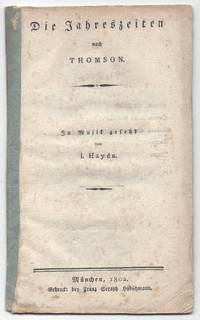
18021148München: Gedruckt bey Franz Seraph Hübschmann 1802. Bond together by a blue paper band as published. Wormhole to the first leaves at the inner margin with no effect on the text. Foxing that effects the first and the last leaves more intensely. Very slightly chipped. Overall in fine condition. Bond together by a blue paper band as published. 31 1 p. <p><br /> A very early edition of the libretto of Haydn’s oratorio Die Jahreszeiten The Seasons which was premiered in Vienna in 1801.<br /> <p><p><br /> The libretto was prepared by Baron Gottfried van Swieten who was also responsible for the text of The Creation and it is based on passages taken from the long English poem under the same title by James Thomson. <br /> The composition had a dual premier both held in Vienna first in April 1801 exclusively for the aristocracy whose members had financed the work and in about a month for the broader public.<br /> <p><p><br /> The libretto was published with no credit for the translator first in Vienna in 1801 while the music score in Leipzig by Breitkopf & Härtel in 1802. This Munich edition of the libretto possibly accompanied the oratorio’s premiere in the city.<br /> <p><p><br /> Scarce we could trace only one copy of this edition in institutional holdings in Austria.<br /> <p>. Gedruckt bey Franz Seraph Hübschmann unknown
180940096London: Cianchettini & Sperati 1809. 4 volumes. Large octavo. Disbound. Engraved throughout. <br /> <br /> Contains 8 works each with identical title excepting work number.<br /> <br /> 1 Symphony in E-flat major. 1f. recto title No. I verso blank 42 pp. Hob. I:91. Robbins Landon p. 744.<br /> <br /> 2 Symphony in C major "Laudon." 1f. recto title No. II." verso blank 39 i blank pp. Hob. I:69. Robbins Landon p. 717.<br /> <br /> 3 Symphony in G minor "La Poule." 1f. recto title No. IV verso blank 36 pp. Hob. I:83. Robbins Landon p. 734.<br /> <br /> 4 Symphony in C major No. 41. 1f. recto title No. V verso blank 23 i blank pp. Hob. I:41. Robbins Landon p. 678.<br /> <br /> 5 Symphony in B-flat major "La Reine. 1f. recto title No. VI verso blank 37 i blank pp. Hob. I:85. Robbins Landon p. 736.<br /> <br /> 6 Symphony in D major "L'Impériale." 1f. recto title No. XXI verso blank 40 pp. First Edition. Hob. I:53. Robbins Landon p. 696.<br /> <br /> 7 Symphony in B-flat major. 1f. recto title No. XXIII verso blank 33 i blank pp. Hob. I:71. Robbins Landon p. 719<br /> <br /> 8 Symphony in D major. 1f. recto title No. XXIV verso blank 27 i blank pp. First Edition. Hob. I:75. Robbins Landon p. 724<br /> <br /> Foxing staining soiling and browning to numerous leaves; some small tears and losses to edges; several leaves detached including titles. "Although Haydn's sobriquet 'father of the symphony' is not literally true in a deeper sense it is apt: there is no other genre in Western music for which the output of a single composer is at once so vast in extent 107 works: hI:1-104 107-8 and one recently identified work K 18 not listed in Hoboken so historically important and of such high artistic quality." James Webster in Grove Music Online. Cianchettini & Sperati unknown
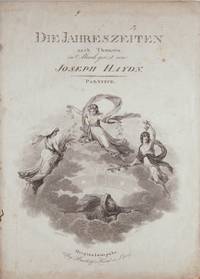
180240133Leipzig: Breitkopf & Haertel 1802. Folio. Contemporary full dark brown suede with tooling in black to outer edges of boards. <br /> <br /> 1f. recto title with elaborate vignette engraved by W. Böhm after G.V. Kiminger incorporating allegories of the seasons floating on a bed of clouds with lyre and six-pointed stars verso blank 1f. recto secondary title "Erste Abtheilung" verso "Personen" 251 i blank. Typeset throughout.<br /> <br /> With occasional indications of instrumentation in pencil.<br /> <br /> R. Cocks & Co. handstamp to foot of secondary title. <br /> <br /> Binding worn rubbed and bumped with minor loss to lower outer corner of upper board and spine; upper partially detached. Some wear soiling staining foxing and browning; occasional minor loss to blank lower margins; worming to blank inner margin of first five leaves. First Edition issue with parallel text in German and English. Hoboken Katalog Vol. 9 1411. Hirsch IV 796. RISM H2542.<br /> <br /> One of Haydn's two masterful oratorios this secular work was written shortly after The Creation 1798 to a libretto by Baron Gottfried von Swieten 1733-1803 after the eponymous poem by James Thomson 1700-1748 published in 1730. The work was first performed on 24 April 1801 in a private première at the Schwarzenberg Palace in Vienna; the first public production took place on 29 May 1801. <br /> <br /> "Although the initial reception of The Seasons was favourable - Haydn wrote to Clementi that it had enjoyed 'unanimous approval' and that 'many prefer it to The Creation because of its greater variety' - critical opinion soon became mixed owing in part to its perceived 'lower' subject in part to a growing aesthetic resistance to its many pictorialisms. Haydn himself contributed to both strands of criticism: he supposedly said to Francis II 'In The Creation angels speak and tell of God but in The Seasons only Simon speaks' Dies; and he indiscreetly criticized Swieten's croaking frogs 'Frenchified trash' and the absurdity of a choral hymn to toil Fleiss. Nonetheless he maintained that it would join The Creation in assuring his lasting fame. For the publication he took the path of lesser resistance selling the rights to Breitkopf & Härtel. . <br /> <br /> Notwithstanding its less exalted subject The Seasons is compositionally more virtuoso than The Creation and offers greater variety of tone: Haydn's pastoral is one of the final glories of a tradition that is more than 'high' enough." Georg Feder and James Webster in Grove Music Online <br /> <br /> The music is "of wonderful freshness and unfailing originality." TNG Vol. 8 p. 347. Breitkopf & Haertel unknown