Livre Rare Book
50 résultats
1849ABE-17752086978 PAGES-SANS COUVERTURE-DIFFERENTS USAGES DU LAURIER CHEZ LES ANCIENS-BOMBARDES A MAIN,2 GRAVURES-L'ARCADE DE SAINT YVES A RENNES,GRAVURE-HISTOIRE DES INSTRUMENTS DE MUSIQUE,LE VIOLON,GRAVURES-(VARIA0913)
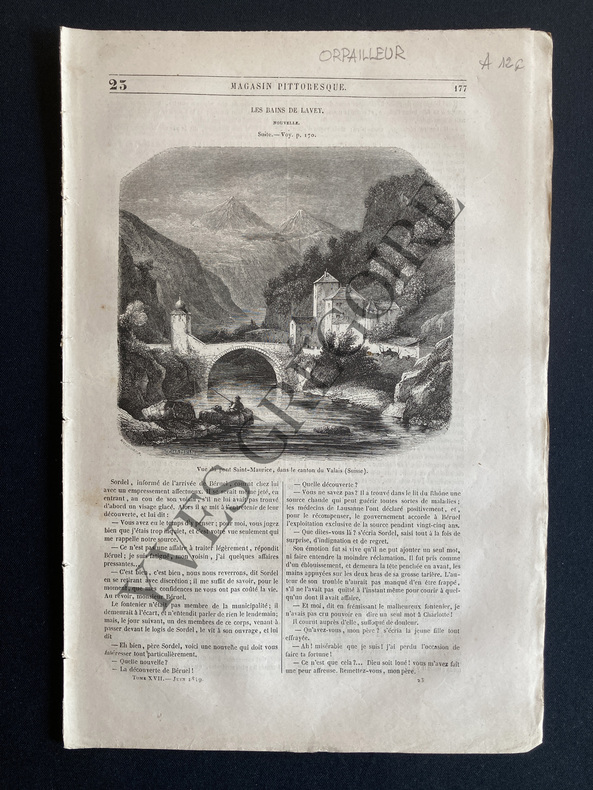
1849ABE-17749241108 PAGES-SANS COUVERTURE-LES BAINS DE LAVEY/GRAVURE-LES ORPAILLEURS/4P/2 GRAVURES-HISTOIRE DES INSTRUMENTS DE MUSIQUE/LE VIOLON/4 GRAVURES
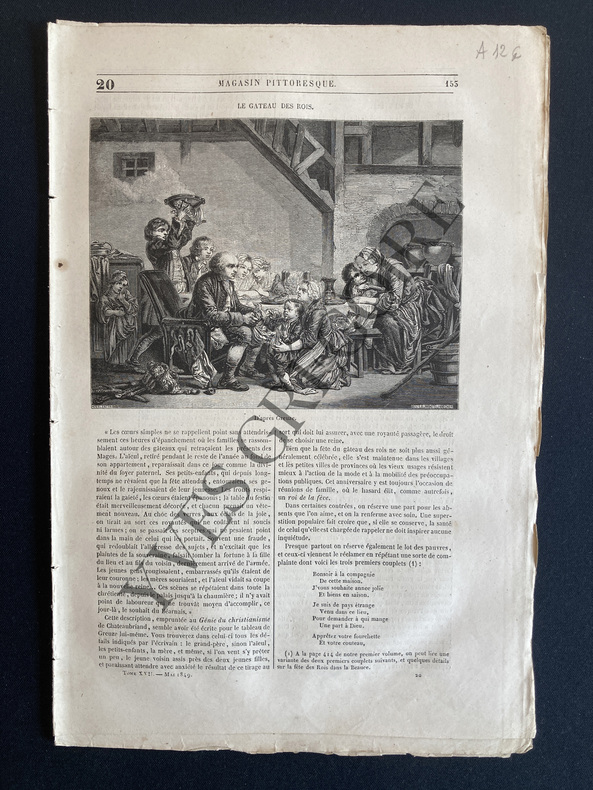
1849ABE-17749238488 PAGES-SANS COUVERTURE-LE GATEAU DES ROIS-/GRAVURE-HISTOIRE DES INSTRUMENTS DE MUSIQUE/LE VIOLON/8 GRAVURES-LA PORTE NOIRE A BESANCON/GRAVURE-HABITATIONS DES PAUVRES EN EGYPTE/GRAVURE
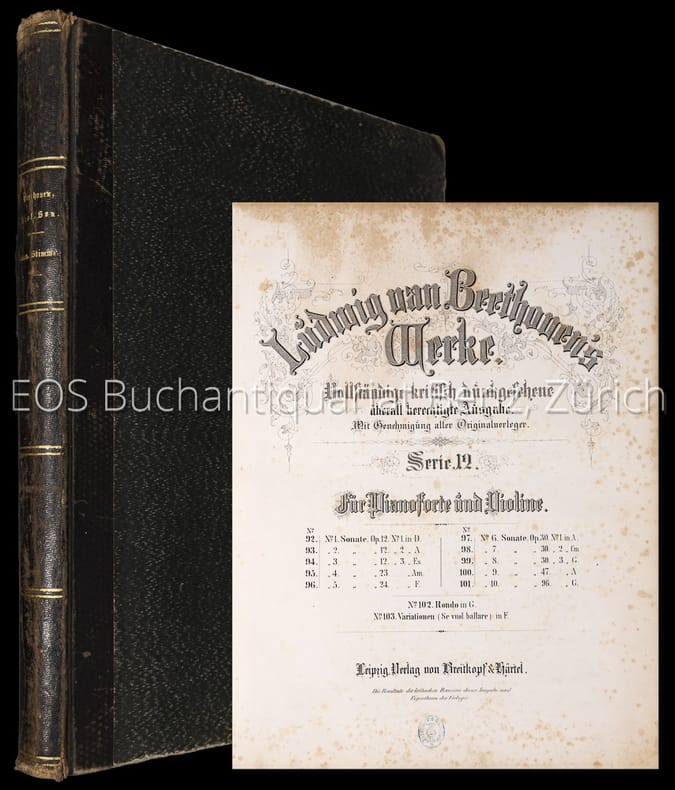
186025909ABLeipzig u. Augsburg u. Bonn u. Frankfurt, Otto Forberg u. Anton Böhm u. Simrock u. L. Massute, (Böhm u. Simrock:) ca. 1860. 4°. Mit meist gestochenen Noten-Seiten. Halbleinenbd. d. Zt. mit mont. Titelschild u. Deckel-Titel von alter Hand + Wichtig: Für unsere Kunden in der EU erfolgt der Versand alle 14 Tage verzollt ab Deutschland / Postbank-Konto in Deutschland vorhanden + (berieben u. bestossen, Schild gebräunt).
186025909ABLeipzig u. Augsburg u. Bonn u. Frankfurt Otto Forberg u. Anton Böhm u. Simrock u. L. Massute (Böhm u. Simrock:) ca. 1860. 4°. Mit meist gestochenen Noten-Seiten. Halbleinenbd. d. Zt. mit mont. Titelschild u. Deckel-Titel von alter Hand (berieben u. bestossen, Schild gebräunt).
182046029(Paris, Crochard, 1820). No wrappers. In ""Annales"". In ""Annales de Chimie et de Physique, Par MM. Gay-Lussac et Arago"" Tome XIV, Juin issue, pp. 113-222. (Entire issue offered with halftitlepage to vol. 14). Savart's paper: pp. 113-172 and 3 folded engraved plates. Plates with some scattered brownspots.
182046032Paris, Crochard, 1820. Uncut with orig. printed wrappers (Juin-issue). In ""Annales de Chimie et de Physique, Par MM. Gay-Lussac et Arago"" Tome XIV, Juin issue, pp. 113-222. (Entire issue in orig. wrappers). Savart's paper: pp. 113-172 and 3 folded engraved plates.
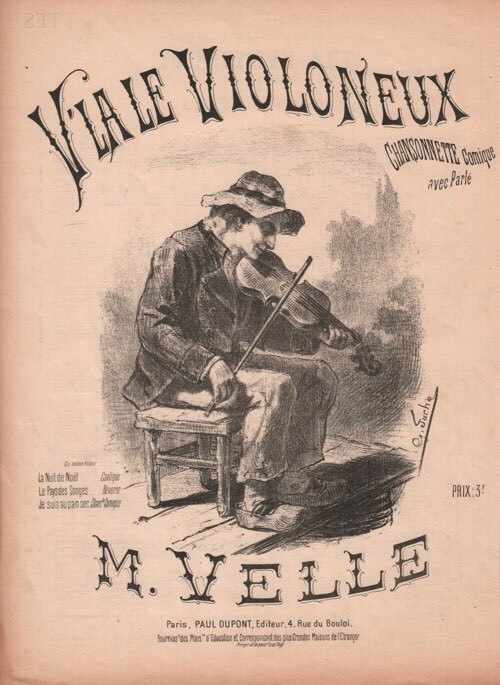
189077843Partitions sur les Instruments de musique Dupont Paul 1890 approx.
184729822Paris: Aubert & Cie 1847. 215 x 220 mm. sheet size 346 x 253 mm. Printed on wove paper. Signed by the artist in the stone.<br /> <br /> Some foxing; remnants of paper mounting tape to verso. Aubert & Cie unknown
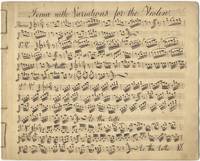
183040871England 1830. Pierre Rode 1774-1830; Sir Henry Rowley Bishop 1786-1855; Adalbert Gyrowetz 1763-1850; Anon. Copyist musical manuscript. Oblong folio 245 x 305 mm. Sewn. Notated in black and brown ink on 14-stave rastrum-ruled paper. 10 pp. <br /> <br /> Contains five variation sets for violin by various composers:<br /> <br /> 1 Tema with Variations for the Violin. 3 pp. <br /> Nine variations on a waltz-like theme in F major. Following each variation the scribe indicates "tutti" or "to the tutti" indicating that these variations may have been performed with an ensemble of musicians. Unlocated.<br /> <br /> 2 Bishop Sir Henry Rowley 1786-1855 and Anon<br /> Variations from Home Sweet Home. 2 pp.<br /> Five variations on Rowley's well-known song. Bishop was an English composer who "in his day he enjoyed a commanding reputation as the guardian of the best traditions of English song and for a time he kept English opera alive almost single-handed. Yet he is now remembered for little but the song Home Sweet Home." Nicholas Temperley and Bruce Carr in Grove Music Online<br /> <br /> 3 Rode Pierre 1774-1830<br /> Theme with Variations for the Violin. 2 pp. <br /> Four variations originally published as a solo for violin accompanied by a second violin viola and cello. "At the height of his career Rode was the most finished representative of the French violin school. Having assimilated Viotti's Classical approach he imbued it with characteristically French verve piquancy and a kind of nervous bravura. His artistic growth took place during the revolutionary decade and it is not surprising that his music is akin to that of Cherubini and Méhul and the operas of the 1790s; there is declamatory pathos martial dash and melting cantilena. His gift for lyrical often melancholy melody which represents a prominent trend in French music of this period made his music particularly attractive to German early Romantic composers. . At the height of his career Rode was the most finished representative of the French violin school. Having assimilated Viotti's Classical approach he imbued it with characteristically French verve piquancy and a kind of nervous bravura. His artistic growth took place during the revolutionary decade and it is not surprising that his music is akin to that of Cherubini and Méhul and the operas of the 1790s; there is declamatory pathos martial dash and melting cantilena. His gift for lyrical often melancholy melody which represents a prominent trend in French music of this period made his music particularly attractive to German early Romantic composers. . His innate gifts as a teacher are demonstrated in his 24 Caprices which balance the musical and technical needs of the student and have become an indispensable part of the violin curriculum." Boris Schwarz revised by Clive Brown in Grove Music Online<br /> <br /> 4 Gyrowetz Adalbert 1763-1850 <br /> Variations. 3 pp.<br /> Eight variations on a Tyrolean folksong popular at the time and the subject of numerous variation sets. Gyrowetz was a noted Bohemian composer and conductor.<br /> <br /> 5 Rossini Gioachino 1792-1868<br /> Variations from the Tanti Palpiti. 2 pp.<br /> Five variations. The composer's Di tanti palpiti was the subject of variation sets by celebrated composers including Paganini Giuliani and Gelinek. Unlocated.<br /> <br /> Several small stains mainly to blank margins; minor soiling to final page mainly affecting its eight blank staves. These variations by the composers represented in the present manuscript are virtuosic incorporating rapid scales and arpeggios passages in double stops and bariolage. unknown
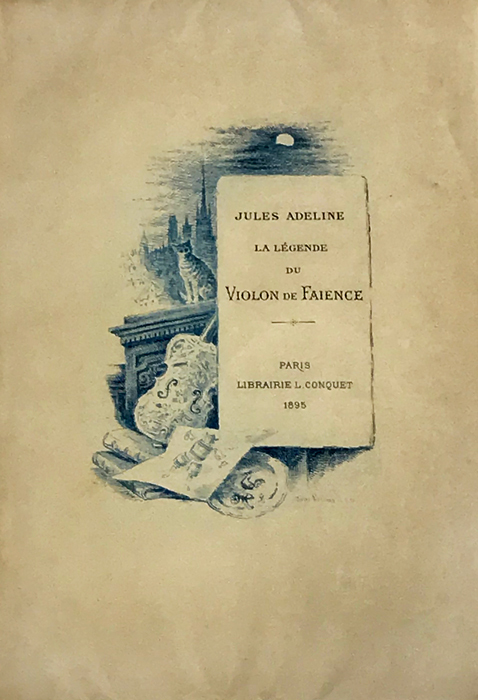
18952423Paris, Librairie L. Conquet, 1895 ; in-8, broché ; (1) f. (bl.), 46 pp., (2) ff. (table, bl.) ; 1 portrait à l'eau-forte en frontispice, 1 eau-forte en couverture, 6 eaux-fortes en noir in-texte (en-têtes et culs-de-lampe) ; couverture blanche à rabats illustrée en couleurs.
1890101239- Partition. 10 pages. Rousseurs. Couverture légèrement défraîchie.
181213KREUTZER membre du conservatoire royal de musique redirigée par BAILLOT adoptée par le conservatoire pour servir à l'étude dans cet établissement Gravée par Le Roy à Paris Au magasin de musique du conservatoire royal, 11 faubourg Poissonnière sans date, circa 1812 format : 26 x 34.5 cm, couverture cartonnée d'époque, 168 pages. Méthode adoptée par les membres du Conservatoire de Musique le 5 ventôse an X (février 1802). La nécessité de l'unité de l'enseignement se faisait sentir dans toutes les branches de l'art. Le comité du Conservatoire comprit la position où il se trouvait à cet égard, et il arrêta, dans une de ses séances, que des ouvrages élémentaires...seraient rédigés par quelques professeurs, après que les bases du travail auraient été posées en assemblée générale. Rode, Kreutzer et Baillot se réunirent donc pour former une méthode de violon; mais, si grand que fût le mérite des deux premiers, les études classiques de Baillot, ses habitudes de méditation et sa facilité à s'exprimer en termes élégants et précis, lui donnaient un avantage reconnu pour la rédaction d'un tel ouvrage.D'un commun accord,il fut convenu que ce travail lui serait départi, et c'est à cette résolution,digne d'aussi grands artistes, qu'est dû le beau monument qui fut alors élevé par le Conservatoire à l'art du violon.
189099911372H. Litolff SD (vers H. Litolff SD (vers 1890), In-4 pleine percaline de l'éditeur, 96 pages. Bon état.
186430646ABLeipzig, Breitkopf & Härtel, (1864). 4°. 256 S. gestochene Noten. Halbleinenband der Zeit. + Wichtig: Für unsere Kunden in der EU erfolgt der Versand alle 14 Tage verzollt ab Deutschland / Postbank-Konto in Deutschland vorhanden +, A Klavierpartitur ohne den Band für Violine.
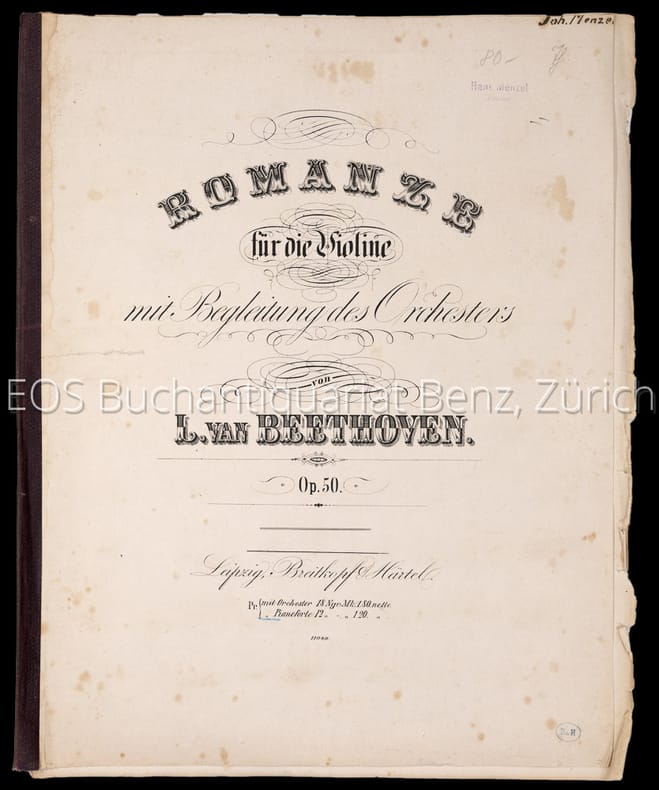
187030642ABLeipzig, Breitkopf & Härtel, o. J., um 1870. 4°. 3, 9 S. gestochene Noten. Orig.-Umschlag. + Wichtig: Für unsere Kunden in der EU erfolgt der Versand alle 14 Tage verzollt ab Deutschland / Postbank-Konto in Deutschland vorhanden +, A
186430646ABKlavierpartitur ohne den Band für Violine. Leipzig, Breitkopf & Härtel, (1864). 4°. 256 S. gestochene Noten. Halbleinenband der Zeit.
187030642ABLeipzig, Breitkopf & Härtel, o. J., um 1870. 4°. 3, 9 S. gestochene Noten. Orig.-Umschlag.
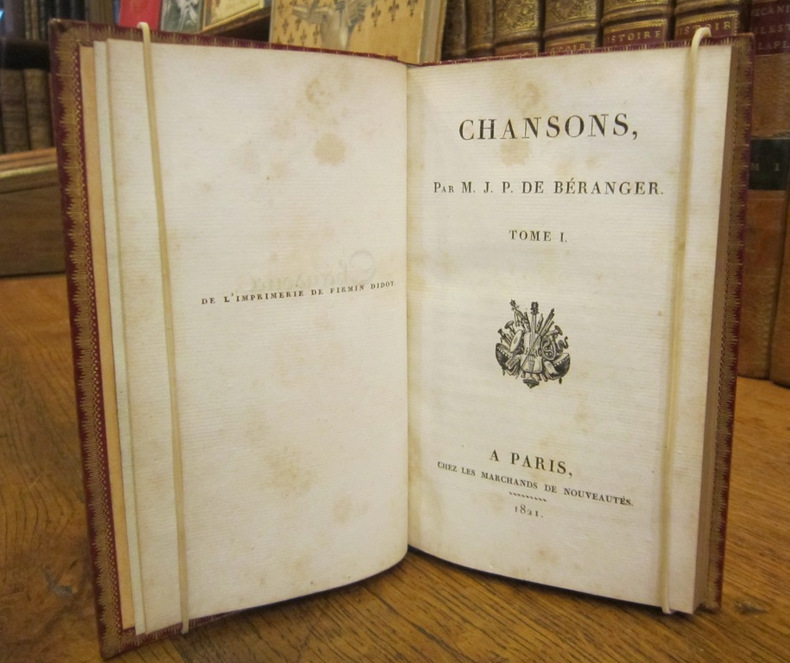
1821000044Paris Chez les Marchands de Nouveautés, Imprimerie de Firmin Didot, et Imprimerie de Plassan 1821
1900101241- Partition. 14 pages. Rousseurs.
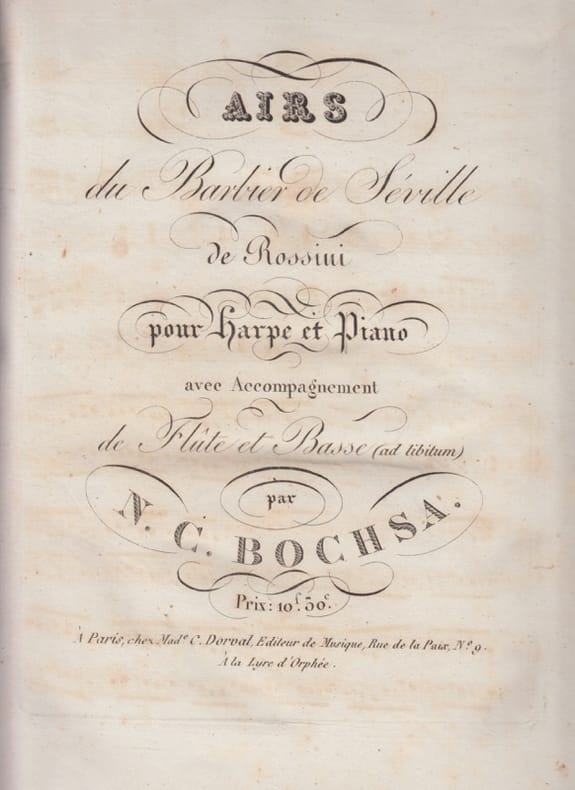
1820270501820 Paris : Mme. C. Dorval, [approximately 1820] 11p -Pl. no. 215.+ 17 p. Pl. no. 213 - in4 broché,texte frais 35 cm. .partitions bien gravées.
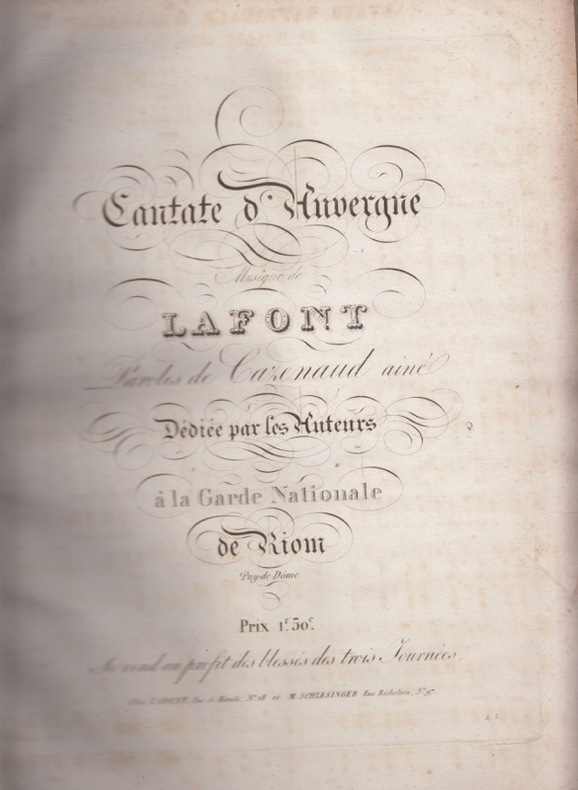
1830267441830 Paris : M. Schlesinger ,1830- [s.d.]In-fol.4p.,titre gravé;ENVOI autographe AUTEUR coupé,trés rare
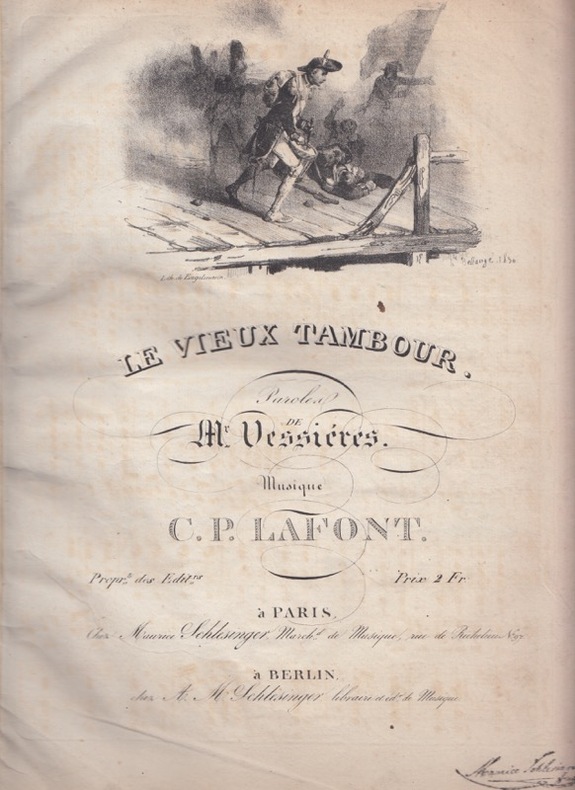
1831267431831 Paris : M. Schlesinger ,1831- [s.d.]In-fol.-3p.- Auteur du texte : M. Vessières- ENVOI autographe AUTEUR coupé
1820150991820 br. (tiré d'un recueil) in-4, titre, 9pp., P. L'auteur Hotel Favart (ca. 1820)
1900205089- Partition. 257 pages. Dos réparé et défraîchi. Signé sur la couverture.