&. Patai GluckBiblio.com

1 340 résultats
6335905Taylor & Francis Group pp. 244 . Papeback. New. Taylor & Francis Group unknown
27445BRUEGHEL GLUCK Gustav. PIETER BRUEGHEL THE ELDER. Paris: Hyperion Press 1937. 4to. Cloth dust jacket. 34 2 pages 63 plat of which 38 colored. First edition. Comprehensive catalog of the works of Pieter Brueghel the Elder the sixteent century Renaissance artist from the Netherlands. Originally written in German it is translated into English by Eveline Byam Shaw. Filled with illustratio and thirty-eight colored plates tipped in the text. Signatures at beginning end of book are loose. unknown
1967521292New York: The New American Library 1967. Hardcover. Near Fine/Near Fine. First edition. Octavo. 288pp. Touch foxing to the top of text block else fine in about near fine dust jacket with a few short tears and touch of interior foxing. Premiere issue of this literary annual featuring contributions from Louise Glück Anne Sexton Philip Roth Richard Eberhart William H. Gass John Ashbery and others. The New American Library hardcover
1966522679New York: The Academy of American Poets 1966. Softcover. Fine. First edition. Introduction by William Meredith. 12mo. 65pp. Stapled gray wrappers printed in blue. Covers are lightly toned at extremities else a near fine copy. Housed in custom cloth clamshell case gilt with Gluck's signature in facsimile in gilt. OCLC lists two holdings. Includes an early contribution by Louise Gluck "The Game" along with many others. The Academy of American Poets unknown
1966522943New York: The Academy of American Poets 1966. Softcover. Very Good. First edition. Foreword by William Meredith. 12mo. 65pp. Stapled wrappers. Very good with the covers lightly tanned small ink owner name and typical wear to the yapped edges. A poetry anthology with an early contribution by Louise Glück "The Game" along others from Ron Loweinsohn Paul Oppenheimer Tim Reynolds Alexander Theroux and others. A complimentary copy with The Academy of American Poets slip laid in. OCLC locates two holdings. The Academy of American Poets unknown
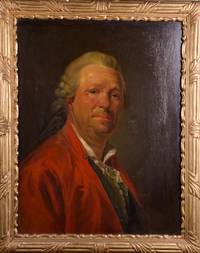
40422Paris 19th century. 61 x 47.3 cms with frame 69.5 x 56 cms.<br /> <br /> The composer is depicted bust-length turned 3/4 left facing forward wearing a red jacket blue waistcoat white collared blouse with lace and wig. For a fine full-page color illustration of the original held at the Louvre see MGG Vol. 5 plate 15.<br /> <br /> "Gluck was recognized as an extraordinary phenomenon in his lifetime as is evident from Burney's deferential treatment of the composer during his visit to Vienna in 1772. Shortly afterwards the controversy stirred in French journals resonated well beyond the capital to other countries. The daily cultural discourse of Paris concerned Gluck's 'musical revolution' a catch-phrase taken up by Gluck's opponents such as Jean-François Marmontel as well as by his defenders; in 1781 the 'revolution worked in music by M. le Chevalier Gluck' later dubbed the 'German Orpheus' was used as the title of a collection of pamphlets for and against Gluck with a heavy editorial bias in favour Lesure c1984. Although operas by Piccinni Salieri and especially Sacchini as well as French contemporaries such as Grétry continued alongside Gluck in the French repertoire beyond the Revolution and Empire revivals of Gluck constituted the principal touchstone of dramatic music into the 1820s when the last routine revivals were acclaimed by Berlioz. Opera composers including Salieri Lemoyne and Vogel in Paris were presented or presented themselves as his legitimate successors; elsewhere Mozart especially in Idomeneo and J.M. Kraus were strongly affected by Gluck's example in constructing scenes applying a dramatically motivated admixture of lyricism and more direct and declamatory vocal expression and sometimes in modelling as when the statue in Don Giovanni adopts the tone of the oracle in Alceste. After his death his direct effect can still be heard in Die Zauberflöte and in several French operas including those of Méhul Cherubini and Spontini.<br /> <br /> Among the Romantics he continued to inspire respect and from Berlioz and Wagner emulation. Berlioz supervised productions of Orphée and Alceste in Paris 1859 and 1866. In Orphée Berlioz created the basis for the version most used over the next century at least by restoring the Italian key-scheme in several scenes to accomodate the tessitura of the title role to a female singer; Pauline Viardot was the first in a line to include Giulia Ravoli Kathleen Ferrier Janet Baker and others although the French version with tenor retained some currency. Musicians close to Berlioz began to realize his ideal of a complete critical edition although only a handful of 'reform' operas were published. Wagner wrote about Gluck in Oper und Drama having learned much from deep study of Iphigénie en Aulide of which he made a modernized performing version Dresden 1847. In 1890 for Weimar Richard Strauss similarly adapted Iphigénie en Tauride. Such orchestrational revision and the melding of recitative and aria to blur Gluck's structure of closed forms represented a style of musical archaeology from which Handel and Mozart also suffered or in terms of public exposure benefited. The later 20th century witnessed not only numerous revivals of the reform operas some in musically authentic form and including the Vienna Orfeo but also a less one-sided critical view of Gluck became possible with the publication of a new critical edition and a revival of interest in works in other genres especially opéra comique and with Don Juan ballet. Winton Dean has observed that Gluck's compromise between the demands of words and music 'was one of the most satisfying and successful of all and has placed his greatest works beyond the reach of time' Grove6. None of Gluck's operas except Orfeo/Orphée is likely to become a staple work in the repertory; however to the extent that every production has the aspect of a revival continued interest in his achievement and consequently revival of an increasing proportion of his output is guaranteed so long as opera continues to occupy a central place in Western musical culture." Julian Rushton in Grove Music Online. unknown
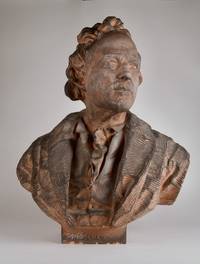
1864404171864. Height 26.75" 68 cms. With the artist's name "Francin" to truncation of left arm; integral base inscribed "Gluck."<br /> <br /> Some wear and soiling; age-toned. In quite good condition overall.<br /> <br /> Provenance<br /> Catalogue of the Collection Musicale André Meyer 1961 Vol. I p. 97 and plate 122. Auction catalogue of Pescheteau-Badin Godeau et Leroy Collection Musicale André Meyer et a divers Paris July 2 1998 Lot 101 including color photograph. Auction catalogue of Bonhams London The Roy Davids Collection London 3 October 2005 Lot 246 illustrated. Houdon: An Exhibition of Sculpture from the Collection of Michael Hall esq. Catalogue by Christine Defazio Karl Fugelso and Philip Mezzatesta. New York: Salander-O'Reilly Galleries 1998 pp. 12-15. Poulet et al.: Jean-Antoine Houdon - Sculptor of the Enlightenment. Exhibition Catalogue. The National Gallery of Art Washington D.C. 2003 pp. 102-108. Exposition du Centenaire de Houdon Paris: Galleries Buvelot 1928 pp. 40-41. Vitry: Une Liste d'oeuvres de J.-A. Houdon p. 9.<br /> <br /> The present sculpture exists in two versions: the present scarcer version with full shoulders and partial torso and a second version with partial shoulders and reduced torso<br /> <br /> "Following Houdon's plaster bust of Gluck shown in the Salon of 1775 . the marble was exhibited in 1777 . and destroyed in the fire at the Paris Opera 28-29 Oct. 1873. A faithful reproduction ordered in 1798 by Alexandre Lenoir for the Musée des monuments français and executed in marble by Guillaume Francin is in the Musée national du chateau de Versailles. The Louvre's plaster cast workshop distributed copies of this reproduction beginning in 1864." Poulet et al.: Jean-Antoine Houdon - Sculptor of the Enlightenment. Exhibition Catalogue. The National Gallery of Art Washington D.C. 2003 p. 107.<br /> <br /> "The present bust is probably one of the Louvre's copies. . It was in his depiction of Gluck that Houdon first showed the ravages of smallpox on a subject - it was a common affliction in eighteenth-century France but artists were expected to flatter their subjects in this respect at least." Bonhams catalogue<br /> <br /> "Gluck was an artist a great musician and therefore must be given the attributes of a genius. His face was deeply pockmarked and the sculptor used this fact to establish his theme. He clothed him in a heavy coat whose texture is an overall pattern of slashed grooves free and direct in their expressive impact. Here there was no attempt to stimulate the appearance of the actual material but rather in a manner almost Rodinesque to bring out the quality of the clay. The open shirt the unbuttoned vest the short disheveled hair and the alert titled pose of the head all emphasize the impact of genius." Arnason: The Sculptures of Houdon p. 34. unknown
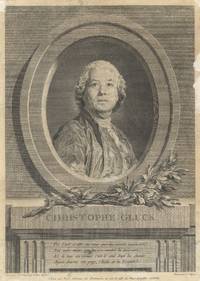
177540412Paris: chés Miger 1775. Sheet size 284 x 204 mm.<br /> <br /> The composer is depicted in a circular frame one-third length turned left with head facing forward and eyes raised. He is dressed in a pleated coat waist-length jacket shirt and cravat. The circular frame sits on a stone shelf and is adorned with a branch of laurel with lettering below as follows: CHRISTOPHE GLUCK // De l'art d'aller au coeur par des accords touchants letzter Buchstabe verdruckt / Nul autre mieux que lui n'a montré la puissance / Et de tous ses rivaux c'est le seul dont les chants / Ayent charmé son pays l'Italie et la France."<br /> <br /> Slight browning; minor abrasions primarily to margins with minor paper loss; some paper repairs. Scarce. chés Miger unknown
177624109Paris: Aux Adresses Ordinaires En Province Chez les Mds. de Musique 1776. Folio. Sewn. 1 title 2-5 music i blank pp. <br /> <br /> Spine reinforced with paper with numerous pinholes to outer margin; several small wormholes; tears to upper outer edges; occasional additional minor tears and stains; upper portion of final leaf lacking with early paper replacement missing music completed in manuscript. Lesure p. 238. RISM G2768 one copy only of the keyboard part at the Bibliothèque nationale. Aux Adresses Ordinaires, En Province Chez les Mds. de Musique unknown
161146Winterthur: Ziegler o.J. Softcover. Papier minim gebräunt und etwas stockfleckig. 8°. ohne Einband Möglicherweise zur Aufführung der Oper 1858 in Zürich gedruckt. Frankreich; 19. Jahrhundert; Ziegler, paperback
200629188<p>New York:: Farrar Straus & Giroux 2006. First Printing of the First US Edition. A Fine tight copy in a Fine bright unclipped dust jacket. Averno is a small crater lake in southern Italy regarded by the ancient Romans as the entrance to the underworld. In a landscape turned irretrievably to winter Averno is a gate or passageway that invites traffic between worlds while at the same time resisting their reconciliation. Averno is an extended lamentation its long restless poems no less spellbinding for being without conventional resoltution or consolation no less ravishing for being savage grief-stricken. What Averno provides is not a map to a point of arrival or departure but a diagram of where we are the harrowing enduring present.</p> Farrar, Straus, & Giroux, hardcover
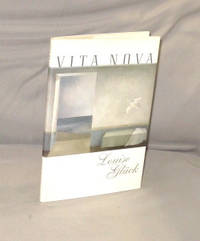
199929440<p>New York:: Ecco Press 1999. First Printing of the First US Edition. A Fine tight hardcover copy in a Fine unclipped dust jacket. In this collection Nobel laureate Louise Glück explores themes of love loss and rebirth through the lens of a difficult divorce and the subsequent "new life" that emerges from it blending personal experience with mythic and classical allusions and juxtaposing childhood memories with adult realities of death and hope. The collection is known for its stark luminous and often brutal honesty combining the ecstatic and the worldly to capture the paradox of finding hope in moments of despair much like Dante's Vita Nova but with a modern personal focus.</p> Ecco Press, hardcover
ria9783748191070_inpPaperback. New. New Book; Fast Shipping from UK; Not signed; Not First Edition; N/A paperback
2020BN307494Königsfurt-Urania Königsfurt-Urania Verlag 2020. 2020. Hardcover. Das große Handbuch vom Räuchern <br/><br/>Das große Handbuch vom Räuchern Alexander Glück Königsfurt-Urania, Königsfurt-Urania Verlag hardcover
ria9783735722027_inpPaperback. New. New Book; Fast Shipping from UK; Not signed; Not First Edition; N/A paperback
ria9783749450169_inpPaperback. New. New Book; Fast Shipping from UK; Not signed; Not First Edition; N/A paperback
ria9783735721969_inpPaperback. New. New Book; Fast Shipping from UK; Not signed; Not First Edition; N/A paperback
ria9783749497522_inpPaperback. New. New Book; Fast Shipping from UK; Not signed; Not First Edition; N/A paperback
2019BN236970BoD - Books on Demand 2019. 2019. Softcover. Grenzgang Fotokunst. Werkportraits zeitgenössischer Fotokünstler. <br/><br/>Grenzgang Fotokunst. Werkportraits zeitgenössischer Fotokünstler. Alexander Glück BoD - Books on Demand paperback
ria9783749449606_inpPaperback. New. New Book; Fast Shipping from UK; Not signed; Not First Edition; N/A paperback
ria9783749450107_inpPaperback. New. New Book; Fast Shipping from UK; Not signed; Not First Edition; N/A paperback
ria9783749407026_inpPaperback. New. New Book; Fast Shipping from UK; Not signed; Not First Edition; N/A paperback
ria9783749449644_inpPaperback. New. New Book; Fast Shipping from UK; Not signed; Not First Edition; N/A paperback
0364769092.Ghardcover. Good. Access codes and supplements are not guaranteed with used items. May be an ex-library book. hardcover
342105455X.Gunknown_binding. Good. Access codes and supplements are not guaranteed with used items. May be an ex-library book. unknown