1 340 résultats
1882345871882. Arch. klin. Chir. 27. - Berlin Verlag von August Hirschwald 1882 8° IV 940 pp. zahlr. Holzschnitten 9 lith. Taf. Halbleinenband der Zeit. unknown
1906346221906. BKW 43/13. - Berlin August Hirschwald 1906 4° pp.377-408 feine Broschur. Erstdruck! Berliner medizinische Gesellschaft. Sitzung vom 14.März 1906. unknown
1881346331881. DMW 7/49. - Berlin August Hirschfeld 1881 4° pp.659-674 Broschur. unknown
1895347491895. Zbl. Chir. 22/27 Bericht über die Verhandlung der Deutschen Gesellschaft für Chrirugie XXIV. Kongress. - Leipzig Verlag von Johann Ambrosius Barth 1895 8° pp.641-656; 154 pp. Halbleinenband. Erstdruck! Es "ist der Gedanke Elfenbeinstücke nicht nur zu vorübergehendem sondern zu dauerndem Einsatz von Knochendefekten und aus Elfenbein hergestellte künstliche Gelenke zum Einsatz zu benutzen von Gluck ausgegangen. Er berichtete darüber 1890 und ausführlicher in einem Vortrag im Jahre 1895 über Osteoplastik und einheilbare Prothesen der aber nicht in den gedruckten Verhandlungen aufgenommen ist. Ein Autoreferat findet sich im Zentralblatt für Chirurgie Bd. 22 pp.30 ff. Er hob darin den praktischen Nutzen von Implantation von Elfenbein und Knochen sowie vernickeltem Stahl Aluminiumbronze und dergleichen in Knochendefekten nochmals hervor. Wenn Elfenbein und Knochen auch allmählich von dem neuen sich bildenden Knochen umwachsen resorbiert substituiert würden so dienten sie doch als innere Schiene und als Reiz für die Knochenneubildung und erzwängen die Regeneration in der zweckmäßigen Bahn. Die anorganischen Fremdkörper auch künstliche Gelenke könnten für lange Zeit vielleicht dauernd einheilen und reizlos funktionieren. Dem Vortrag folgte eine reichhaltige Demonstration von Präparaten und Modellen von Elfenbeinmetallprothesen und Mittheilungen über klinische Beobachtungen. Einem großen Hunde war ein Metallscharnierapparat eingeheilt. Pean implantierte als Ersatz des resezierten Schultergelenkes ein Gelenk aus Platiniridium und Hartgummi das seit 2 1/4 Jahr tadellos funktionierte." Friedrich Trendelenburg Die ersten 25 Jahre der Deutschen Gesellschaft für Chirurgie 1923 p.163 unknown
1910673961910. BKW 47/ 1. - Berlin August Hirschwald 3. Januar 1910 4° 44 pp. feine Broschur. THE FIRST ELECTROLARYNX WAS DEVELOPED BY GLUCK! First Edition! Electromagnetically Driven Devices - "As the disadvantages of pneumatically driven reed-based voice sources could not be adequately remedied these devices were abandoned especially after the appearance of electrolarynx devices which produced electromagnetically driven vibrations. The first electrolarynx was developed by Gluck and was composed of an Edison phonograph connected to a telephone receiver located in the patient's mouth. The Edison cylinder contained a recording of a singer's vowel 98. A subsequent version 99 consisted of a loudspeaker built into an upper denture Figure 12. The most famous electrolarynx is the Servox speech aid Servona Troisdorf Germany; Figure 13. It consists of a cylinder with a vibrating element. The top side contains a membrane that is driven electromagnetically and thus can vibrate. By holding the membrane against the throat the patient transmits vibrations that set the air within the vocal cavities into vibration. He or she can convert these sound waves into understandable speech in a manner comparable to the conversion of the acoustic source generated by vocal fold vibrations. A major disadvantage is that the resulting voice sounds mechanical and has no means for intonation leading to an unnatural monotonous voice. An attempt to modify the device by adding manual pitch control by rotating a knob was unsuccessful because control was again far from intuitive and thus very difficult to learn. Until the introduction of the PE voice the electrolarynx was the first choice for creating an artificial voice. External electrolarynges are still used today but only by a small number of patients." G.J. Verkerke and S.L. Thomson: Sound-Producing Voice Prostheses: 150 Years of Research. Annual Review of Biomedical Engineering 16/1 2014 pp.215-245 Themistocles Gluck 1853-1942 physician and surgeon. He first invented endoprostheses from ivory in 1890 at Berlin when he performed the first documented total wrist Arthroplasty. He received the 1st State Prize of the Berlin University for his work on nerve suturing and nerve regeneration. The French surgeons Louis Léopold Ollier and Jules Péan had already recognized Gluck's importance in the 1890s. With his laryngeal surgery he achieved world renown. Nevertheless it took a long time for him to receive the academic recognition he deserved as a non-university surgeon. It was not until he was 70 years old 1922 that he was made an associate professor and even nominated for the Nobel Prize unsuccessfully because his work was considered too old at the time. unknown
1900347151900. Verh. Dtsch. Ges. Chir. 29. - Berlin Verlag von August Hirschberg 1900 8° LVIII 220 757 1 pp. Abbildungen Holzschnitte und Autotypien und 11 Tafeln Leinenband. Erstdruck! "Um die Konstruktion von Phonationsapparaten die bei vollständigem Abschluß zwischen Trachea und Naspharynx den Luftstrom und den Ton mittelst eines Gummirohrs von vorn ind die Nase oder zwischen den Lippen in die Mundhöhle leiten hat sich später besonders Gluck verdient gemacht 1900 I.178."Friedrich Trendelenburg Die ersten 25 Jahre der Deutschen Gesellschaft für Chirurie 1923 p.231 unknown
1891346041891. BKW 28/25. - Berlin August Hirschwald 22. Juni 1891 4° pp.601-632 feine Broschur. Erstdruck! Freie Vereinigung der Chirurgens Berlin. 348.Sitzung am 12. Januar 1881 im Operationssaale der chirurgischen Klinik der Charité - Herr von Bergmann giebt vor der Tagesordnung folgende ihn zugegangene Erklärung des Herrn Gluck vom 4. Januar 1891 zu Protokoll. unknown
1896148051896. BKW 33/26-29. - Berlin August Hirschwald 1896 4° pp.577-664 feine Broschur. unknown
1892347501892. Verh. Dtsch. Ges. Chir. 21.Congress. - Berlin Verlag von August Hirschwald 1892 8° XXXII 137 544 pp. Abbildungen Leinenband. Erstdruck! "Es handelt sich um den Ersatz von Beugesehenen der Finger. Die vorgestellten Fälle wurden von Bergmann König Riedel nicht als beweisend angesehen." Friedrich Trendelenburg Die ersten 25 Jahre der Deutschen Gesellschaft für Chirurie 1923 p.161 unknown
1917347881917. BKW 54/45. - Berlin August Hirschwald 1917 4° pp.1077-1100 feine Broschur. Verhandlungen ärztlicher Gesellschaften Sitzung vom 25. Juli 1917. unknown
1894346151894. BKW 31/29. - Berlin August Hirschwald 1894 4° pp.663-682 feine Broschur. Erstdruck! unknown
1913347351913. DMW 39/49. - Leipzig & Berlin Georg Thieme Verlag 1913 4° pp.2385-2440 Broschur. unknown
1888346441888. Cbl. med. Wiss. 26/47-48 - Berlin A.Hirschwald 1888 8° pp.881-928 brosch. unknown
1922346251922. MMW 69/ 2. - München Lehmann 1922 4° pp.37-68 feine Broschur. unknown
1886347091886. DMW 12/ 5. - Berlin Georg Reimer 1886 4° pp.69-84 Broschur. unknown
1883345911883. Arch. klin. Chir. 29. - Berlin Verlag von August Hirschwald 1883 8° IV 866 pp. Holzschnitte 25 lith. Taf. Halbledereinband. Erstdruck! unknown
1882345961882. Arch. klin. Chir. 26. - Berlin Verlag von August Hirschwald 1882 8° VI 1011 pp. Holzschnitte 16 lith. Taf. Portrait von B.v.Langenbeck Halbledereinband der Zeit. First Edition! "In 1881 Foulis reported on 27 recorded cases of total laryngectomy. Half of these patients died of pneumonia and other infections within the first week after surgery. Another 25% died of tumor recurrence within ten months. In the same year Gluck recommended that in laryngectomized patients the bottom of the pharynx be completely sewn up in order to obviate the greatest hazard of laryngectomy aspiration pneumonia. By the beginning of the 20th century Gluck reported the mortality of laryngectomy being just 8.5%. This is extremely low considering the major problems that occurred in those days with anesthesia wound infection and shock. For example in 1906 the mortality rate for radical neck dissections was still 13%." "Gluck's modification of the surgical technique of laryngectomy in 1881 - closure of the pharyngostoma in order to decrease the risk of aspiration pneumonia - ruled out internal reed mechanisms. After all the trachea was completely severed from the pharynx in these patients. Accordingly a pneumatic mechanical voice source was devised by Stork in l877 following Czermak's lead. It was based on a similar yet external metal reed connected by an external tube with the patient's tracheal cannula and the sound conveyed into the mouth by another external tube. Between 1892 and 1918 this external pneumatic mechanical voice source was further refined by Hochenegg Gluck Gottstein Tapia Onodi and Stockman. Respectively their modifications consisted of a pair of bellows for a patient that was unable to exhale with sufficient strength a reed concealed in the patient's nose or upper denture an inflatable cuff for the tracheal cannula a reed connected to the tracheal cannula by way of a side butt to make non-phonatory breathing easier and a battery-powered compressor as air supply for the reed. In the 1920s MacKenty together with two scientists of the Western Electric Company Fletcher and Lane developed an external pneumatic mechanical voice source that was soon superseded by the Western Electric No° 2 type larynx. It comprised a soft-rubber tracheal pad to strap over the tracheostoma a flexible tube a slightly curved bronze reed in a silver cylinder and a mouthpiece attachable to this reed box . It was successfully marketed from 1930 to 1959 by the Western Electric Company and the Bell Telephone Laboratories: 5500 No° 2 type larynges were sold." "The first electrolarynx was devised by Gluck in 1910 and comprised an Edison type portable phonograph connected with a telephone receiver in the patient's nose or mouth. On the cylinder of the phonograph a vowel produced by a singer had been recorded. The electric current from the phonograph was converted by the telephone receiver to sound which was propagated in the buccal cavity air. There the representation of the singer's voice was given the timbre belonging to the patient's vocal tract. For demonstration purposes Gluck not only used a recorded vowel but also a phonograph containing a Waltz." Marein van der Torn : A sound-producing voice prosthesis. ACADEMISCH PROEFSCHRIFT Utrecht 2005 See - Gluck T.: Flüstersprache und Phonationsapparate. Berliner klinische Wochenschrift 36 1899 pp.215-216. Gluck T.: Patienten mit Totalextirpation des Pharynx Larynx und Oesophagus denen eine künstliche Stimme durch einen automatisch arbeitenden Apparat geliefert wird. Berliner klinische Wochenschrift 47/1 1910 pp.33-35. Gottstein G.: Pseudo-Stimme nach Totalexstirpation des Larynx. Archiv für die klinische Chirurgie 62 1900 pp.126-46. Tapia A.: Presentacion de un laringuectomizado hablando con un sencillisimo aparato artificial. Revista Espanola de Laringologia 5 1914 pp.48-55. Onodi A.: Ergebnisse der Abteilung für Hör- Sprach- und Stimmstörungen und Tracheotomierte vom Kriegsschauplatz. Monatsschrift für Ohrenheilkunde 52 1918 p. 85. Riesz R.: Description and demonstration of an artificial larynx. Journal of the Acoustical Society of America 1 pp.273-9. unknown
1883345901883. Arch. klin. Chir. 28. - Berlin Verlag von August Hirschwald 1883 8° VI 931 pp. Holzschnitte 10 lith. Taf. Halbledereinband der Zeit. unknown
1882345841882. Arch. klin. Chir. 26. - Berlin Verlag von August Hirschwald 1882 8° VI 1011 pp. Holzschnitte 16 lith. Taf. Portrait von B.v.Langenbeck Halbledereinband der Zeit. Erstdruck! Folgende Arbeiten von Th. Gluck sind in diesem Band enthalten: Ueber Muskel- und Sehnenplastik pp.61-76 Taf. IV. Fig. 1-4. Ueber offene antiseptische Wundbehandlung in Glasapparaten und über Glasschienen pp.785-788 4 Abb. auf lith. Taf. Ueber Transplantation Regeneration und entzündliche Neubildung pp.896-915 8 Abb. auf lith. Taf. Die prophylactische Resection der Trachea pp.427-436. Ueber Exstirpation der Harnblase und Prostata pp.916-924 3 Abb. unknown
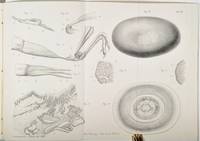
1880212181880. Arch. klin. Chir. 25. - Berlin Verlag von August Hirschwald 1880 8° IV 952 pp. Holzschnitte 14 lith. Taf. Pappband der Zeit. First Edition! "The operation of nerve grafting transplantation was performed by Philipeaux and Vulpian in 1870 and independently by Gluck in 1880." - Walker No.932 unknown
1882345851882. Arch. klin. Chir. 26. - Berlin Verlag von August Hirschwald 1882 8° VI 1011 pp. Holzschnitte 16 lith. Taf. Portrait von B.v.Langenbeck Halbledereinband der Zeit. unknown
1921347081921. Verh. Dtsch. Ges. Chir. 45. - Berlin Verlag von August Hirschwald 1921 8° XCVI 295 365 pp. zahlr. Abbildungen Halbleinenband d.Zt. Erstdruck! "Ich darf um so mehr auf die großen Verdienste der genannten Autoren und ihren Schulen hinweisen als ich selbst beabsichtige meinen Anteil an der Begründung der modernen Osateo- und Arthoplastik kurz vor ihnen zu präzisieren." unknown
0666723443.Ghardcover. Good. Access codes and supplements are not guaranteed with used items. May be an ex-library book. hardcover
1893346831893. Verh. Berl. med. Ges. 23 1892. - Berlin Gedruckt bei L. Schumacher 1893 8° XXXI 288; 302 pp.; mit Abbildungen Halbeinenband d.Zt.; St. verso Tit. Erste Auflage! Verhandlungen der Berliner medicinischen Gesellschaft aus dem Gesellschaftsjahr 1892. Separat-Abdruck aus der Berliner klinischen Wochenschrift. Hrsg. von dem Vorstande der Gesellschaft. Weitere Beiträge von Th. Gluck in diesem Band: Resection des 2. Trigeminusastes und Demonstration einer Knochenschere I: pp.55-56. Ersatz von Sehnendefecten I: pp.83. Hemiatrophia facialis I. p.163. Themistocles Gluck 1853-1942 war ein deutscher Chirurg. unknown
1892346091892. BKW 29/2526. Berlin August Hirschwald 1892 4° pp.601-650 feine Broschur. unknown