SANS (abbé).Livre Rare Book
_7.jpg)
2 803 résultats
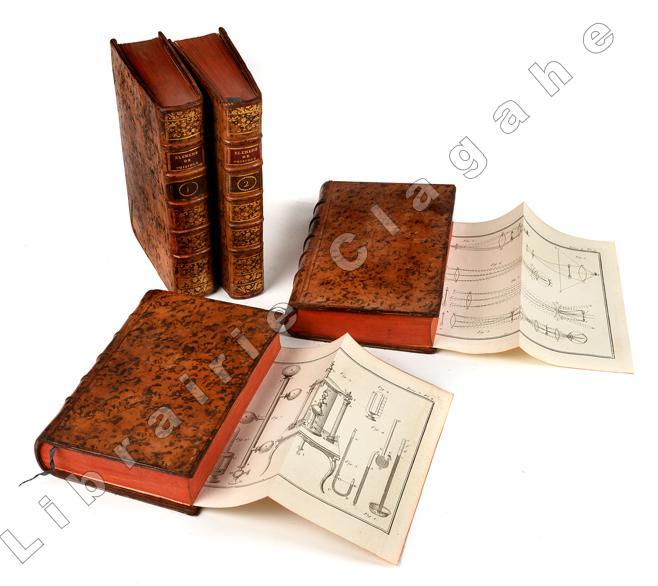
1772(LCPCMED-0001)(Deux rarissimes ouvrages sur l'électrothérapie au XVIIIe siècle, en édition originale, dans une superbe reliure en maroquin armorié du temps) SANS (abbé). "GUERISON DE LA PARALYSIE, PAR L'ELECRICITE, OU CETTE EXPERIENCE PHYSIQUE EMPLOYEE AVEC SUCCES DANS LE TRAITEMENT DE CETTE MALADIE REGARDEE JUSQUES A PRESENT COMME INCURABLE". 1772, Paris, Cailleau. (relié avec:) "GUERISON DE LA PARALYSIE, PAR L'ELECTRICITE; OUVRAGE... DANS LEQUEL ON EXPOSE LA METHODE QU'IL FAUT SUIVRE POUR GUERIR LA PARALYSIE PAR L'ELECTRICITE...". 1778, Paris, Cailleau. 2 ouvrages en 1 volume in-8° (166x101 mm) (dimensions pages 159x94 mm) I: (1) frontispice gravé, (8) ff. (faux-titre, dédicace, préface et table), 150 pp., 2 figures sur 1 planche dépliante. (a8, A-F12, G2) II: (1) frontispice gravé, (1) faux-titre, (1) titre, XXVII pp. (lettre), (1) p. (table), 234 pp., (1) f. (approbation), 4 planches dépliantes. (a12, b2, A-I12, K10) Reliure armoriée de l'époque en maroquin rouge. Encadrement avec triple filet doré sur les plats, petites fleurs aux angles et armoiries au centre. Dos lisse divisé en compartiments avec fleurons et décorations dorés et pièce de titre en maroquin olive. Filet doré sur les coupes et roulette intérieure dorée. Tranches dorées. Gardes de papier bleuté. Editions Originales, rares. Très rare le second ouvrage. Infime usure à un coin. Un petit trou de ver au pied du dos. Très petit manque de cuir à la charnière du premier plat. Très bel exemplaire dans une reliure en maroquin armorié du temps. Provenance: Exemplaire aux armes dorées de Mgr. Joseph-Dominique de Cheylus (Avignon, 1717 - Jersey, 1797), évêque de Bayeux et premier Aumônier de la Comtesse d'Artois. L'abbé de Cheylus, fut évêque de Cahors (1766) et de Bayeux (1777) avec, pour celle-ci, une rente annuelle de 90.000 livres. Premier Aumônier de la Comtesse d'Artois, en 1790 il devient maire de Bayeux; mais il refuse de prêter serment à la constitution civile du clergé. Il émigre à Jersey. Sa riche bibliothèque fut séquestrée et confisquée au profit de la Nation et M. Simien Despréaux, en 1793, fut chargé d'en rédiger l'inventaire (seul l' "Inventaire des livres trouvés dans la bibliothèque de l'émigré Cheylus, Théâtre et Poésies et Romans" subsiste, avec 145 ouvrages en 495 volumes). "L'importance de la bibliothèque de l'évêque est considérable et son inventaire mériterait d'en être dressé. Lorsque ces livres seront réclamés en mai 1803 par ses héritiers, les commissaires feront valoir que les 4082 volumes étiquetés Aa (c'est à dire provenant de la bibliothèque de Mgr. de Cheylus) par M. Simien Despréaux dans le dépôt A constituent une collection d'ouvrages précieux de toutes les parties de l'histoire, de la littérature et des sciences". ("Des chanoines et des livres. Actes du colloque sur la bibliothèque du Chapitre de la cathédrale de Bayeux Basse-Normandie Drac", 2014) (LCPCMED-0001) (4.500,00 €)
In -4°, pp. (10), 159, (1), frontespizio in rosso e nero, legatura in cartonato coevo con titolo manoscritto al dorso. Prima e unica edizione di uno dei primi saggi italiani ed europei di psichiatria moderna; include un cospicuo resoconto sulla “medicina elettrica”, ovvero l’applicazione di fenomeni elettromagnetici alla cura del paziente: anche in questo caso il saggio è da considerarsi fra i primi mai elaborati e pubblicati sulla materia. Pietro Cornacchini, filosofo e medico senese, pubblica questo suo manuale nello stesso anno del “Treatise on Madness”, dell’inglese William Battie, considerato il trattato più importante del primo Settecento sulla cura della follia. Come testimoniato nel suo libro, in quegli anni si cominciava a sviluppare in Europa un approccio non repressivo e non reclusivo al malato e alla malattia mentale. Cornacchini è senz’altro fra i pionieri di questo tipo di studi, e il suo manuale è riconosciuto come il primo approccio fisiologico complesso dell’epoca moderna, in Italia, alla malattia mentale: si veda la “Storia della medicina in Italia”, di Salvatore De Renzi (Napoli, 1848, tomo V, pp. 759 sgg.) in cui l’autore riconosce a Cornacchini un anticipo di 14 anni sull’opera giovanile di un altro medico, Antonio Sementini, e addirittura di 35 sul lavoro che giudica il più importante del secolo, cioè “Della pazzia” di Chiarugi (1793). Il libro di Cornacchini succede solo a un altro trattatello, del ’57, cioè “Della mania, della frenesia e della rabbia” di Antonio Arrigoni, scritto che, in contrasto con il presente, trascurava la fisiologia per concentrarsi sul trattamento di queste patologie. Dopo aver distinto la malattia mentale in “tre specie” (frenesia, mania, malinconia), l’autore si addentra in spiegazioni fisiologiche: “Chi potrà negare - scrive - che la cagine [sic] immediata della Pazzia risieda [negli] organi interni, e che sia tutta materiale?” A osservazioni piuttosto dettagliate sulla circolazione sanguigna e sui fluidi corporali, si accompagnano altre considerazioni sperimentali o ipotetiche fra cui quella che la follia sarebbe connessa a una maggiore “durezza” del cervello o comunque alla consistenza di quest’organo (“Tanti autori confermano che il cervello de’ maniaci è stato ritrovato per lo più arido e friabile”). Al di là di quest’approccio, il volume si configura come un vero e proprio antesignano, in Italia, di un modo di considerare il malato di mente, anche sul piano lessicale: non a caso Cornacchini termina la sua disquisizione respingendo anche in senso terminologico “l’odioso nome di Pazzi”. Non meno intrigante e innovativo è il saggio che prosegue il volume, ovvero i due saggi “sopra la medicina elettrica”. L’argomento è a sua volta recentissimo e pionieristico, come chiarisce l’autore stesso che mette all’origine di questi studi il padovano Giovanni Francesco Pivati, il quale nel ’49 aveva pubblicato il suo “Riflessioni fisiche sopra la medicina elettrica”; l’approccio di Cornacchini alla materia è radicalmente diverso da quello di Pivati, ed è basato esclusivamente sull’applicazione di elettricità: Pivati e altri suoi seguaci erano convinti che, per una cura efficace, si dovessero applicare dei farmaci ai diversi conduttori di elettricità impiegati allora, mentre il parere di Cornacchini è che si dovesse procedere “senza intonacatura di medicamento alcuno”. In questo la posizione di Cornacchini è più aderente a quello che sarebbe stato il proseguimento degli studi a riguardo, e la sua esposizione va considerata più moderna e innovativa anche rispetto all’altra monografia pubblicata precedentemente in merito, quella del bolognese Veratti (“Osservazioni fisico mediche intorno all’elettricità”, Bologna, sempre del’49). Il discorso sull’elettricità di Cornacchini è piuttosto nutrito e addirittura sovrasta per quantità la prima parte del libro, impegnandone più di cento pagine. La prosa è limpida e avvincente: al di là della ricerca strettamente medica e delle descrizioni di casi clinici, non mancano cenni di proto-elettrotecnica (l’elettricità era ancora all’epoca un fenomeno curioso ma con scarse applicazioni pratiche). An early and rare work of psychiatry, in its first and only edition, this is one of earliest Italian and European modern book in this field. It includes a huge writing on “electric medicine”, i.e. the application of electromagnetic issues to illness care. Also this part has to be considered between the first essays ever published on the matter. Pietro Cornacchini, a physician and a philosopher from Siena, publishes this handbook in the same year of William Battie’s “Treatise on Madness”, a writing considered the most important of the early Century about madness’ care. A forerunner of non-reclusive psychiatry, Cornacchini writes the first complex physiological study on madness of modern age (see “Storia della medicina in Italia” by Salvatore De Renzi, Naples, 1848, in which the author assigns to Cornacchini 35 years of advance on the most important Italian work on madness of the Century, “Della Pazzia” by Chiarugi, 1793). Cornacchini’s book is published a year later of another handbook, “Della Mania, della Frenesia e della Rabbia”, by Antonio Arrigoni, that however ruled a non physiological approach to the matter. After giving a classification of different kinds of madness (frenesia, mania, malinconia), the author gives some original physiological explications, as like the madness connected to brain consistency. Beyond this, the volume is a pionering work on the way to consider the mental illness as a pathology to be treated with respect of the patient, starting with an appropriate use of language (at the end of the work the author rejects as obnoxious the word “Pazzi”, mad, for the mentaly ill). No less important can be considered the second part of volume, about “electric medicine”, a rising field, studied in Europe before the development of more important practical implementing of electricity. Cornacchini’s approach is different by most of contemporary works about: many researches required to add a drug to electric devices to be efficient; only later was demonstrated, as like Cornacchini assumes, that the electric application could be a treatment itself, and the pharmaceutical addition as unnecessary.
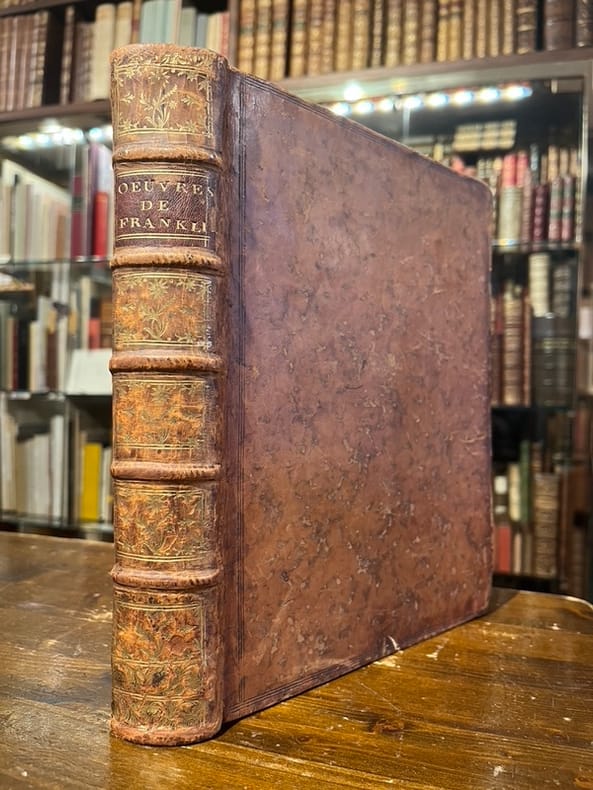
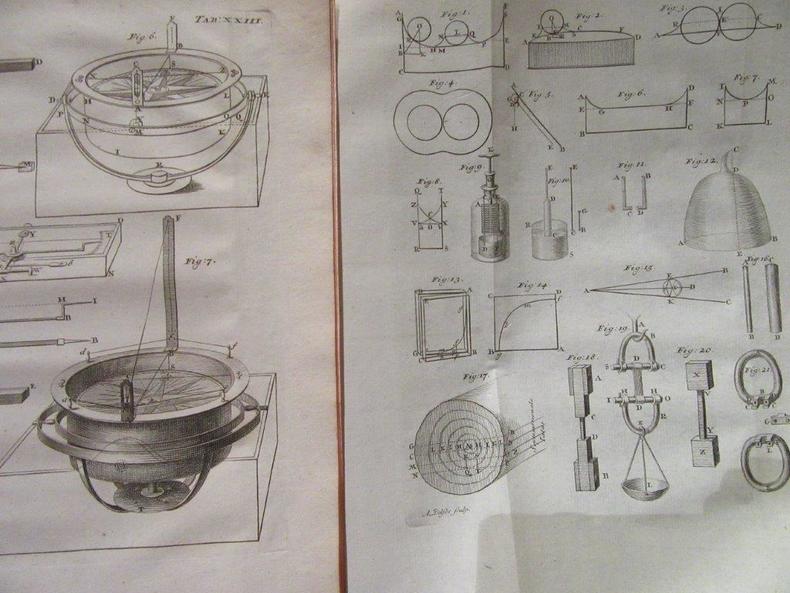
12556Paris, Quillau, Esprit, et l'auteur, 1773. 2 tomes en 1 vol. in-4 de [6]-XXII-[2]-338p.; [4]-XIII-[3]-318-[2]p. plein veau marbré, dos à nerfs orné d'encadrements et fleurons dorés, pièce de titre bordeaux. Reliure légèrement frottée, rares rousseurs.
39031Paris,chez Bauche en 1769. Traduit par M.Sigaud De La Fond. 3 vols in-4 en veau marbré d'époque. Dos à nerfs,ornés,avec pièces de titre et de tomaison.Tome I: 472 pages et 23 planches dépliantes ( XI et XI* ).Tome II: 510 pages et 1 Table dépliante " qui indique les differens dégrés de chaleur..". Tome III: 504 pages (avec Table des Matières) . 63 planches dépliantes numérotées; + 1 planche dépliante qui représente le monde. Tome I: Epître,préface de Jean Lulolfs,discours,table des chapitres,Cours.Bandeaux et culs de lampe.Tranches rouges.Très rares rousseurs.Bel état intérieur.Reliures un peu frottées avec manque de coiffe supérieure au Tome I. Très rare.
2 Vols., 4to (250 x 200 mm), mixed editions with vol. I being second edition corrected and Vol. II the first edition, xii, 466, [10]; xv, [1], 568, [8]pp., 78 folding engraved plates, recently expertly bound to style in full calf, covers with a double fillet gilt border, spine with five raised bands and compartments heavily gilt tooled, one compartment with contrasting red morocco label gilt lettered, a very handsome set. Desaguliers was elected to the Royal Society of London in 1714 as experimental assistant to Isaac Newton and he later popularised Newtonian theories and their practical applications in public lectures as well as his written works. By the time of his death he had given over 140 courses on mechanics, hydrostatics, pneumatics, optics and astronomy. "The two-volume set promotes the Newtonian tradition and quotes experiments that confirmed Newton's queries, especially from the Opticks. Desaguliers also describes a number of electrical experiments and contributes to the popularization of the study of electricity. Each volume contains six lectures, richly illustrated by experiments and annotated. The second volume deals mostly with applied science and engineering."?Norman. Norman, Bibliotheca Mechanica, p. 91; DSB, IV, pp. 43-5; Wellcome II, p. 451 (vol. 2 only); Poggendorff I, pp. 553-5.
6038Paris, Gueffier, 1784. 2 volumes in-8 de [4]-XVI-396p. ; [4]-474-[2]p., plein veau marbré, dos à nerfs ornés de filets et fleurons dorés, pièces de titre en maroquin rouge. Bel exemplaire en très jolie condition.
118844aafLeipzig:: Gottfried Kiesewetter, 1758, in-8vo, Frontispiz Kupfer + 13 n.n. Bl. (inkl. Titelbl. mit gest. Vign.) + 354 S., gebräunt und vereinzelt fleckig und unterstrichen, unten am Titelblatt Stempel Prof. Ernst Mach, Original-Pappband. Rücken erneuert. Gutes Exemplar.
173546590(Paris, L'Imprimerie Royale, 1735). 4to. Without wrappers. Extracted from ""Mémoires de l'Academie des Sciences. Année 1733"". Pp. 23-39, pp. 73-84, pp. 233-254 a. 1 engraved plate, pp. 457-476. With titlepage to the volume (1733/1735). Margins of titlepage with a few brownspots.
173546590Paris L'Imprimerie Royale 1735. 4to. Without wrappers. Extracted from "Mémoires de l'Academie des Sciences. Année 1733". Pp. 23-39 pp. 73-84 pp. 233-254 a. 1 engraved plate pp. 457-476. With titlepage to the volume 1733/1735. Margins of titlepage with a few brownspots. <br/><br/><em>First appearance of these milestone papers in the histroy of electricity in which Dufay explains his discovery of two kinds of electricity and the relation between them attraction and repulsion shocks and sparking and the full recognition of electrostatic repulsion. He formulates the two-fluid theory of electricity. He further showed that "not all bodies can become electrified themselves" by friction and went on to show "that they can all acquire a considerable electrical virtue when the tube of rubbed glass wood metals or liquids are brought near them" provided only that they are insulated by beiing stood on "a support of glass or of sealing-wax".Dufay "TRANSFORMED A COLLECTION OF MISCELLANEOUS WEEDS INTO THE FIRST GARDEN OF EUROPE" Heilbron"Dufay's substantive discoveries - ACR the two electricities shocks and sparking - are but one aspect and perhaps not the most significant of his achievement. His insistence on the impiortence of the subject on the universal character of electricity on the necessity of organizing digesting and regulariizing known facts before grasping new ones all helped to introduce order and professionel standards into the study of electricity at precisely the moment when the accumulation of data began to require them. He foundthe subject a record of often capricious disconnected phenomena the domain of the polymaths textbook writers and prfesional lecturers and left a body of knowledge that invited and rewarded prolonged scrutinity from serious physicists." Heilbron "Electricity in the 17 & 18 Centuries" p. 260.Parkinson "Breakthroughs" 1734 P - Ronalds Library p. 145. - Not in Wheeler Gift Cat. </em> unknown
20779Paris Chez Durand 1756 in 12 (17x10,5) 2 volumes reliures plein veau fauve de l'époque, dos à nerfs ornés, pièces de titre et de tomaison de cuir rouge, [2] 28 pages, 90 pages (XC) [6] 245 pages avec 1 planche gravée dépliante, et 349 pages avec 1 planche gravée dépliante, mors du plat supérieur du tome 2 fendu. Seconde édition française revue, corrigée et augmentée. Bel exemplaire ( Photographies sur demande / We can send pictures of this book on simple request )
229368Paris, H.-L. Guérin & L.-F. Delatour, 1761 in-12, xij pp., 164 pp., [2] ff. n. ch. d'approbation et de privilège, avec 2 planches dépliantes hors texte, veau fauve moucheté, dos lisse cloisonné et fleuronné, pièce de titre cerise, encadrement de simple filet à froid sur les plats, simple filet doré sur les coupes, tranches mouchetées de rouge (reliure de l'époque). Coiffes un peu rognées, coupes frottées.
1834PHO-927 TOMES ET 1 ATLAS EDITION ORIGINALE
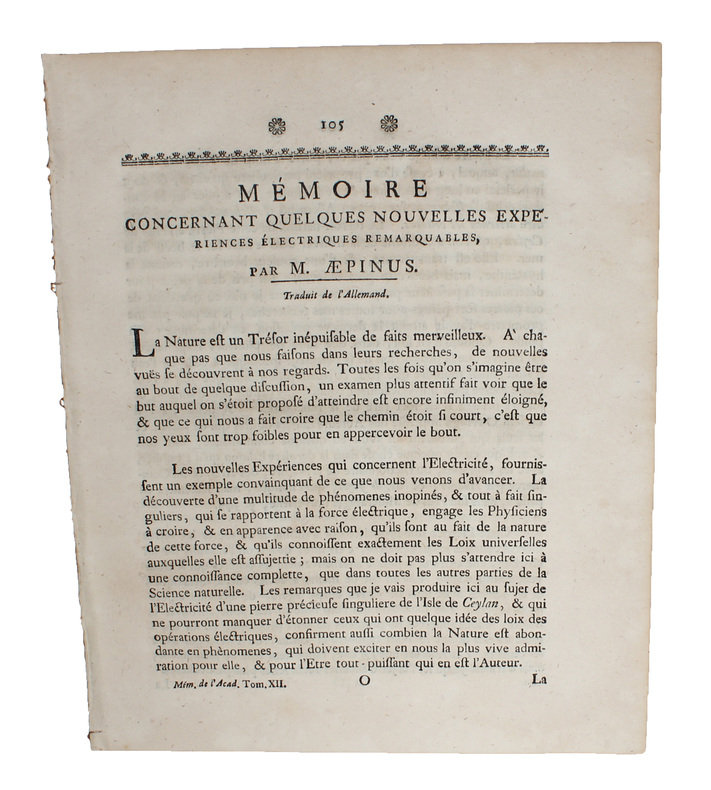
175846557Berlin, Haude et Spener, 1758. 4to. No wrappers, as issued in ""Mémoires de l'Academie Royale des Sciences et Belles-Lettres"", 1756, tome XII. Pp. 105-121. With titlepage to the volume, printed in red/blac and with engraved titlevignette. Also having the parttitlepage. Titlepage with 2 small wormtracts.
175846557Berlin Haude et Spener 1758. 4to. No wrappers as issued in "Mémoires de l'Academie Royale des Sciences et Belles-Lettres" 1756 tome XII. Pp. 105-121. With titlepage to the volume printed in red/blac and with engraved titlevignette. Also having the parttitlepage. Titlepage with 2 small wormtracts. <br/><br/><em>First appearance of a milestone paper in the history of electricity as Aepinus here found that a heated tourmaline attracted and repelled light bodies. He decided that the effect was electrical and that its ends was carrying charges of opposite sign much as soft iron is magnetized by a lodestone. This paper is a forerunner of his "Tentamen Theoriae electricitatis et magnetismi" - published 1759 and one of the most original and important books in the history of electricity. It is the first reasoned fruitful exposition of electrical phenomena based on action-at-a-distance."Aepinus’ first reseraches on the thermoelectric properties of this stone Tourmalin which was then of extreme rarity were fundamental. He recognized the electrical nature of the attractive power of a warmed tourmaline and attempted not altogether successfully to reduce its apparent capriciousness to rule. He was particularly struck by the formal similarity between the tourmaline and the magnet in regard to polarity which inspired him to reconsider the possibility then occasionally discussed that electricity and magnetism were basically analogous. This thought became the This thought became the theme for his masterwork Tentamen theoriae electricitatis et magnetismi 1759."DSB."Aepinus is known in the history of electricity for his attempt to develop the one fluid theory of Franklin. His theory was for a while generally adopted but was gradually displaced by the two fluid theory in consequence chiefly of the necessity of ascribing to uncharged matter repulsions of the same force as those which were ascribed to electrical charges. His theory exhibits interesting similarities to the present theory of the constitution of matter"Magie "A Source Book in Physics" pp.406-8.Ronalds p. 4. </em> unknown
174753510Verona: Giannalberto Tumermani 1747. First edition. Engraved title vignette and headpiece. 8 189 7 pp. 1 vols. 4to. Original boards uncut. Some early but faint dampstaining throughout -- otherwise a fine wide-margined copy. First edition. Engraved title vignette and headpiece. 8 189 7 pp. 1 vols. 4to. Collection of fifteen letters on the origins of lightning by the enlightened polymath Maffei 1675-1755 "said by Grimelli Storia to contain all the anterior letters on Lightning published by him i.e. all before 1746 the date of the censorship." - Ronalds<br /> <br /> The book is rare in institutions -- OCLC gives only one location. Ronalds p. 314; Gartrell p. 334; OCLC: 23628231 one location: U. of Michigan; Mottelay p. 321; Baaken Library p. 83; not in Wheeler; not in RLIN Giannalberto Tumermani unknown
XXIV-420 p., 16 pl. depl Broché, couverture originale imprimée 1849, 1849, in-8, XXIV-420 p, 16 pl. depl, Broché, couverture originale imprimée, Édition originale de l'un des premiers manuels de télégraphie, comprenant une description théorique, pratique et historique. Le mémoire d'Ampère occupe les pages 221 à 238. L'abbé Moigno (1804-1884), éminent mathématicien et physicien, fut le fondateur et le rédacteur en chef de la revue Cosmos jusqu'en 1862. Il était en correspondance avec de nombreux savants de son temps. Il signe ici l'un de ses premiers livres scientifiques, qu'il dédie à Arago, son ami et disciple. L'auteur insiste sur la nécessité d'une pédagogie adaptée pour la transmission des connaissances en télégraphie et, comme tout bon prêtre enseignant de l'époque, il s'intéresse aux incidences sociales de cette nouvelle technologie. Étiquettes anciennes sur la première de couverture et en pied du dos. Couverture fanée. Quelques rousseurs. Wheeler Gift, n° 1161
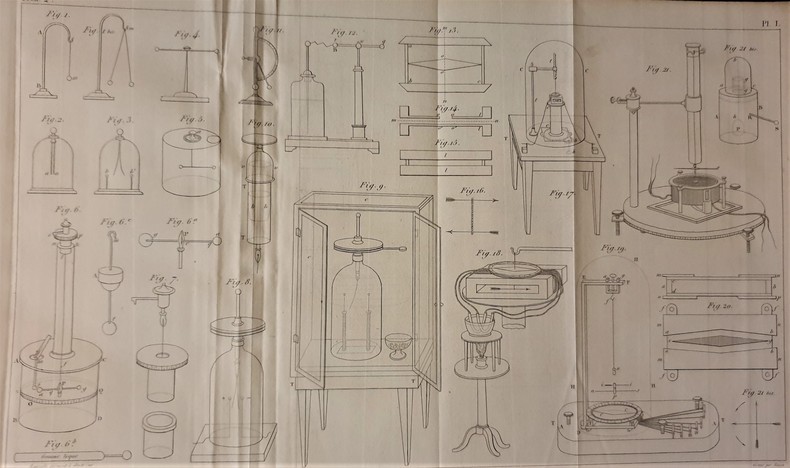
178720311Paris, Griffier, 1787 ; 4 tomes in-8 (195 mm), veau marbré, dos à nerfs décoré et doré, pièce de titre rouge, tranches rouges (reliure de l’époque) ; XXXII, 635, [1 bl.] pp, 7 pl. dépl. ; 565, [1 bl.] pp., 10 pl. dépl. ; 576 pp., 4 pl. dépl. ; 622 pp, 4 pl. dépl. soit en tout 25 planches dépliantes gravées sur cuivre et portrait gravé par Coron d’après Naudin en frontispice.
180235107DBBreslau, bei Wilhelm Gottlieb Korn, 1802. 8°. XXIV, 540 S. Mit 2 gefalteten gestochenen Tafeln. Geflammter Halblederband der Zeit mit rotem goldgeprägtem Rückenschild und wenig Rückenvergoldung. + Wichtig: Für unsere Kunden in der EU erfolgt der Versand alle 14 Tage verzollt ab Deutschland / Postbank-Konto in Deutschland vorhanden +
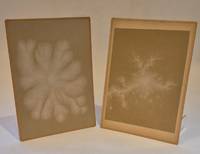
356<p>Set of two photographs of electricity from the same unidentified photographer France circa 1890.</p><p>Silver gelatin prints mounted on card print sizes: 12.7 x 17.5 cm and 12 x 15.3 cm; mount size: 18.3 x 13.3 cm.</p><p>Rare set by a single anonymous photographer of two photographs of electricity or electric sparks. Prints slightly faded but a rare pair.</p><p>See Canguilhem Le merveilleux scientifiques 2044 pages 102-113.</p>
Very Good Turkish, Ottoman (1500-1928) Contemporary (early 19th century) quarter brown cloth with marbled boards, "Yahudi ebrûsu" end-papers. Roy. 8vo. (23 x 16 cm). In Ottoman script (Old Turkish with Arabic letters). 90 p., numbered with Arabic numeric system in pencil, around seven illustrated schemes of magical diagrams. Written on a probably 17th-18th century European paper with "Crescent" watermark, naskh script with "harakât", black and red ink. Early and a rare posthumous manuscript copy of this 18th-century Islamic majmua, containing the treatment methods and drug compositions against physical and spiritual diseases, with material and magical suggestions, copied 32 years after the author's death by a "Hafiz" with an addendum of new drugs and treatments compiled from older annotations of this work. "In the first part of the work on spiritual medicine, verses, prayers, talismans, and magic formulas in the Islamic culture like "wafqs" that are believed to be treated; in the second part, on physical medicine, drug formulas from various material objects for physiological diseases are shown." (Çagrici). Harputî was an 18th-century poet and prose from Harput (Kharberd). In the introduction to the manuscript, he stated that he is not a doctor, but that he writes practices that can heal patients due to his experiences. Despite this, the text was widely used in Ottoman medicine in the 18th and 19th centuries.
180235107DBBreslau, bei Wilhelm Gottlieb Korn, 1802. 8°. XXIV, 540 S. Mit 2 gefalteten gestochenen Tafeln. Geflammter Halblederband der Zeit mit rotem goldgeprägtem Rückenschild und wenig Rückenvergoldung.
186441709(London, Taylor and Francis, 1864). No wrappers, as extracted from""Proceedings of the Royal Society"". From November 19, 1863, to December 22, 1864, inclusive."", Vol. XIII. Pp 531-536.
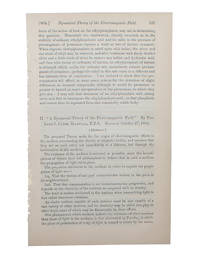
186441709London Taylor and Francis 1864. No wrappers as extracted from"Proceedings of the Royal Society". From November 19 1863 to December 22 1864 inclusive." Vol. XIII. Pp 531-536. <br/><br/><em>First printing of the first announcement of Maxwell unification of light-waves electricity and magnetism the most importent of the papers relating to his electromagnetic theory in which he brought electro-magnetical phenomena on a clear mathematical form. The present paper is an abstract of the larger paper which was read to the Royal Academy in 1864 but only issued the year later 1865 in "Philosophical Transactions of the Royal Society" where it was printed in full and as an abstract in "Philosophical Magazine" 1865."A generation later Einstein's work on relativity was founded directly oupon Maxwell's electromagnetic theory; it was this that led him to equate Faraday with Galileo and Maxwell with Newton." PMM No 355 but only the paper from 1865. - Dibner. Heralds of Science No 68 1865 paper. </em> unknown
6044Leyden, Samuel Luchtmans, 1739. 2 volumes in-4 de XXV-[3]-502-8p. ; [2]-de 503 à 914-[2]p. pour l'explication de la pl. 29 - [28]p. de table - [2]p. d'errata - 63p. pour la description des machines pneumatiques par Jan van Musschenbroek, plein vélin ivoire à (petit) recouvrement, titre doré au dos (reliure du temps).
8992Traduites de l'anglois par M. Barbeu Dubourg. Avec les additions nouvelles et des figures en taille douce. Paris. Quileau, Esprit et chez l'auteur.. 1773. Deux volumes in-quarto (26x20 cms). (4)-21-(2)-338 et (4)-13-(3)-318-(2) pages. Veau marbré de l'époque, dos à nerfs orné, tranches rouges.