Biblio.com

650 résultats
1930037404Pasadena Circa 1920/ 1940: Carnegie Institution Mt Wilson Observatory 1930. Original Astronomical Photographs . No Binding. Near Fine/No Jacket. Original Astronomical Photograph Approximately 15" X 11 3/4". Fine. Two Mount Wilson Observatory Stamps On Reverse One Annotated "Negative B-856 / Date 1940 Aug 1/2 / N.G.C. 7625 / 103E Am Rgz Filter". <br/> <br/> Carnegie Institution, Mt Wilson Observatory unknown
1930037403Pasadena Circa 1920/ 1940: Carnegie Institution Mt Wilson Observatory 1930. Original Astronomical Photographs . No Binding. Near Fine/No Jacket. Original Astronomical Photograph Approximately 19 1/2" X 15 7/8". Near Fine Three Faint 1" Creases In Bottom Half Of Photograph. <br/> <br/> Carnegie Institution, Mt Wilson Observatory unknown
1930037402Pasadena Circa 1920/ 1940: Carnegie Institution Mt Wilson Observatory 1930. Original Astronomical Photographs . No Binding. Near Fine/No Jacket. Original Astronomical Photograph Approximately 12 1/2" X 11 3/8" Mounted On Larger Display Card With Galaxy Name At Bottom. On Verso Is A Large Gold Label Printed In Black "The Royal Photographic Society Of Great Britain / Accepted And Hung At The Annual Exhibition London 1939". Mounting Board With Crack And A Long Crease Just Above Top Edge Of Photograph With Wear At Edges And Some Small Water Spots Right Along The Left Edge. <br/> <br/> Carnegie Institution, Mt Wilson Observatory unknown
1930037405Pasadena Circa 1920/ 1940: Carnegie Institution Mt Wilson Observatory 1930. Original Astronomical Photographs . No Binding. Near Fine/No Jacket. Original Astronomical Photograph Approximately 15" X 11 3/4". Fine. Mount Wilson Observatory Stamp On Reverse Annotated "Negative B-856 / Date 1940 Aug 1/2 / N.G.C. 7625 / 103E Am Rgz Filter". <br/> <br/> Carnegie Institution, Mt Wilson Observatory unknown
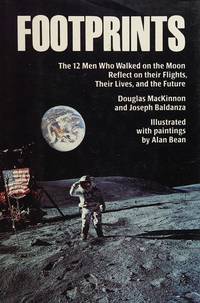
1989021429Acropolis Books Ltd. Near Fine in Fine dust jacket. 1989. 1st Edition; 1st Printing. Hardcover. 0874919215 . Hardcover with dustjacket this copy is signed and dated 10-11-98 by astronaut/artist Alan Bean whose color paintings illustrate this book this signature was obtained personally at Gabriele Art Gallery in Frenchtown New Jersey where Bean was present to sign/promote his and Andrew Chaikin's book "Apollo: An Eyewitness Account" the book has moderate tanning on the title page which is where Bean has signed and on the outer edge of the pages else excellent condition the dustjacket is also in excellent condition with the original price present and a professional removable mylar cover is included a unique item for serious collectors; Signed by Author . Acropolis Books Ltd. hardcover
1984AS-19Tulsa Oklahoma: American Association of Petroleum Geologists 1984. Comprehensive three volume slipcased set contains detailed descriptions of site characteristics and site specific results; commodity reports containing a comparative analysis of results obtained at test sites that contain similar types of mineral deposits; sensor evaluation report containing an assessment of sensor systems employed by the Project and recommendations for future sensor development. Vol.I contains the results from the porphyry copper and uranium studies; Vol.II contains the results from the petroleum studies and the Technical Appendix; Part 3 contains the summary of the entire Joint Nasa/Geosat Test Case Project a key to the bandpasses of the multispectral scanners used in this study and all 13 Plates/Maps. Illustrated. Gilt spine. Slipcase has a very small bump on lower corner otherwise in fine condition. NOTE: Heavy/Oversized Item. First Edition. Hard Cover in Slipcase. Excellent. Folio - over 12" - 15" tall. American Association of Petroleum Geologists hardcover
1925037357Pasadena Circa 1920 / 1927: Carnegie Institution Mt Wilson 1925. Original Astronomical Photographs . No Binding. Near Fine/No Jacket. Black and White Photographs. Original Astronomical Photograph Approximately 10" X 5 7/8" Showing Double Image Due To Gravitational Lensing. See "The New Heavens" George Ellery Hale 1922 P. 32. Mounted On Circa 1920'S Album Card Stock. Note- Gray/White Cloudiness In Part Of Photograph Is Due To Unavoidable Reflectivity Of This Quite "Live" Original Photograph An Artifact Of My Photography Not In The Original Photograph. <br/> <br/> Carnegie Institution, Mt Wilson unknown
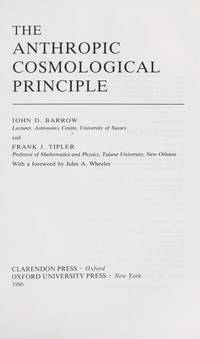
1986060054Oxford / New York: Oxford University Press / Clarendon Press 1986. First American Edition 1st Printing. Hardcover. Near Fine/Near Fine. Xx 706 Pp. Grey Cloth Spine Lettered In White; White Boards. First Printing Indicated. Near Fine In Near Fine Dust Jacket Priced $29.95 No Wear But Slight Yellowing To Edges Of Flaps. Per Wikipedia John David Barrow Frs 1952 - 2020 Was An English Cosmologist Theoretical Physicist And Mathematician. He Served As Gresham Professor Of Geometry At Gresham College From 2008 To 2011. Barrow Was Also A Writer Of Popular Science And An Amateur Playwright. Barrow's Approach To Philosophical Issues Posed By Physical Cosmology Made His Books Accessible To General Readers. For Example Barrow Introduced A Memorable Paradox Which He Called "The Groucho Marx Effect" See Russell-Like Paradoxes. Here He Quotes Groucho Marx: "I Wouldn't Want To Belong To Any Club That Would Accept Me As A Member". Applying This To Problems In Cosmology Barrow Stated: "A Universe Simple Enough To Be Understood Is Too Simple To Produce A Mind Capable Of Understanding It". <br/> <br/> Oxford University Press / Clarendon Press hardcover
1883035730London: Macmillan And Co. 1883. 1st Edition 1st Printing. Hardcover. Near Fine. Plates. Xx 111 Pp. Salmon Cloth Gilt; Black Endpapers. First Printing. Lightly Used No Fraying Gilt Bright Hinges Very Tight Pages Crisp. Presentation Inscription From The Author To The Duke Of Bedford With An Additional Letter Of 23 April 1883 From Siemens To The Duke Francis Charles Hastings Russell 9Th Duke Of Bedford Kg 1819 -1891 The Dedication Is Dated April 4 1883 2 Pp. An Early British Essay On The Dynamics Of Solar Radiation With Reprinting Of Many Scientific Comments Thereupon. Per Wikipedia Charles William Siemens 1823- Received His Education At The Gymnasium Of Lubeck The Art School Of Madgeburg And The University Of Gottingen. In 1843 He Visited England And Again Came To England To Patent An Invention Becoming Naturalized Subject In 1859. In 1851 Mr. Siemens Introduced His Water-Meter. Between The Years 1856 And 1861 Mr. Siemens In Conjunction With His Brother Frederick Worked Out The Regenerative Gas Furnace. Siemens Became Interested In Telegraph Engineering And In 1858 He Established With His Brother Werner Siemens Mr. Halske Of Berlin And His Brother Carl Siemens The Firm Siemens Halske And Co. With Telegraph Works In London Laying Cable Throughout The World. Siemens Presented Many Scientific Papers To British Societies. His First Paper Was Presented To The Institution Of Civil Engineers On The 17Th Of May 1853 And Was Entitled "On The Conversion Of Heat Into Mechanical Effect." It Was The First Paper Published In Great Britain Which Considered The Subject Of Heat Engines From The Point Of View Of The Mechanical Theory Of Heat And Although A Quarter Of A Century Has Nearly Elapsed Since It Was Read It May Be To-Day Taken As A Guide To The Subjects To Which It Has Reference. Between This Period And 186O He Described His Governor Steam Engine And Water-Meters In Papers To The Institution Of Mechanical Engineers. On The 14Th February 1867 Was Read His Paper "On The Conversion Of Dynamical Into Electrical Force Without The Aid Of Permanent Magnetism" Which Is Peculiarly Interesting As Being The First Scientific Enunciation In The Uk Of The Dynamo-Electric Principle Upon Which The Most Powerful Light Producing Machines Depended. Another Scientific Paper Presented By Him To The Same Society In 1871 "On Electrical Resistance" Was Made The Bakerian Lecture For That Year. It Treats Of A Method Of Measuring Variation Of Temperature By Variation Of Electrical Resistance; And The New Instruments Described In This Paper The Electrical Resistance Thermometer And Pyrometer In Connection With The Differential Voltameter Became Appreciated As Valuable Auxiliaries In Thermometry And In Metallurgical Research. The Society Of Arts Presented Him With Its Gold Medal For His Regenerative Condenser In The Year 1850 And The Institution Of Civil Engineers In The Session 1852-53 With Its Telford Medal For The Paper Already Referred To. In 1851 And 1862 Dr. Siemens Received Prize Medals Of The London Exhibition And In 1867 Was Awarded A Grand Prix At The Universal Exhibition Of Paris For His Regenerative Gas Furnace And Steel Process. In 1869 The Degree Of Doctor Of Civil Law Honoris Causd Was Conferred Upon Him By The University Of Oxford And In 1874 He Received The Royal Albert Medal For His Researches On Heat And For His Metallurgical Processes. In 1875 He Received The Bessemer Medal Of The Iron And Steel Institute "In Recognition Of The Valuable Services He Has Rendered To The Iron And Steel Trades By His Important Inventions And Investigations." <br/> <br/> Macmillan And Co. hardcover
1981035633Cambridge University Press 1981. 1st Edition 1st Printing. Hardcover. Fine/Fine. Xii 527 Pp. Maroon Cloth Stamped In Silver. First Printing With Statement "First Published 1981". Highly Technical Collection Of Pedagogical Lectures Given At A Workshop On Supergravity Organized By Hawking Including A Number Of Specialized Articles Which Reflect The Most Recent Research In 1981. Fine In Fine Dj No Marks Or Wear. Per Wikipedia "Supergravity Supergravity Theory; Sugra For Short Is A Modern Field Theory That Combines The Principles Of Supersymmetry And General Relativity; This Is In Contrast To Non-Gravitational Supersymmetric Theories Such As The Minimal Supersymmetric Standard Model. Supergravity Is The Gauge Theory Of Local Supersymmetry. Since The Supersymmetry Susy Generators Form Together With The Poincaré Algebra A Superalgebra Called The Super-Poincaré Algebra Supersymmetry As A Gauge Theory Makes Gravity Arise In A Natural Way. Like Any Field Theory Of Gravity A Supergravity Theory Contains A Spin-2 Field Whose Quantum Is The Graviton. Supersymmetry Requires The Graviton Field To Have A Superpartner. This Field Has Spin 3/2 And Its Quantum Is The Gravitino. The Number Of Gravitino Fields Is Equal To The Number Of Supersymmetries." Supergravity Was Of Interest In The Early 1980'S Lost Favor Due To Inconsitencies But Aspects Were Modified And It Is Again Of Some Active Scientific Interest. <br/> <br/> Cambridge University Press hardcover
1925037394Pasadena Circa 1920 / 1927: Carnegie Institution Mt Wilson Observatory 1925. Original Astronomical Photographs . No Binding. Near Fine/No Jacket. Black and White Photographs. 6 Original Astronomical Photographs Approximately 14 5/8" X 12". High Quality. Same View Of Galaxies But Different Focal Lengths So Slightly Different Galaxies Appear. <br/> <br/> Carnegie Institution, Mt Wilson Observatory unknown
1947041180Toronto: University Of Toronto Press 1947. 1st Edition 1st Printing. Soft cover. Very Good. Pp 383-469 In Blue Wrappers Printed In Black. Very Lightly Used Near Fine Except Some Browning Along Spine. Ownership Signature Of Jpl Astronomer And Halley Watch Manager Ray L. Newburn. Per Wikipedia Helen Battles Sawyer Hogg 1905 -1993 Was An American-Canadian Astronomer Who Pioneered Research Into Globular Clusters And Variable Stars. She Was The First Female President Of Several Astronomical Organizations And A Scientist When Many Universities Would Not Award Scientific Degrees To Women. Her Scientific Advocacy And Journalism Included Astronomy Columns In The Toronto Star "With The Stars" 1951-81 And The Journal Of The Royal Astronomical Society Of Canada "Out Of Old Books" 1946-65. She Was Considered A "Great Scientist And A Gracious Person" Over A Career Of Sixty Years. After Graduating From Mount Holyoke Hogg Received A Fellowship For Graduate Study At Harvard Observatory In The Fall Of 1926 With The Help Of Dr. Cannon.3 Once At Harvard Hogg Worked With Dr. Harlow Shapley The Director Of The Graduate Program In Astronomy. Hogg Received Her Master's Degree In 1928 And Her Doctoral Degree In 1931 Both From Radcliffe College As Harvard Refused To Award Graduate Degrees In Science To Women At The Time. For Her Advances In Astronomy Hogg Received Honorary Doctoral Degrees From Six Canadian And U.S. Universities Including Mount Holyoke College And The University Of Toronto. While Completing Her Doctoral Degree Hogg Taught Astronomy At Mount Holyoke And At Smith College. After Graduation She Moved To Victoria British Columbia Where She Began Research At The Dominion Astrophysical Observatory. Hogg Began Taking Photos Of Variable Stars With The 72-Inch Reflecting Telescope Cataloguing The Cyclical Changes In The Brightness Of The Variable Stars. At The Dominion Astrophysical Observatory Hogg Found 132 New Variable Stars In The Globular Cluster Messier 2. Hogg Published This Groundbreaking Work In Astronomical Catalogues That Are Still Used Today. Notably Hogg Accomplished All Of This As A Volunteer Assistant To Her Husband As The Dominion Astrophysical Observatory Would Not Offer Her A Job. In 1935 Hogg Moved To The University Of Toronto After Her Husband Had Received A Job Offer To Work At The David Dunlap Observatory.6 For Her First Year There Hogg Continued Her Work Photographing Globular Clusters Amassing Thousands Of Photographs Which She Used To Identify Many Thousands Of Variable Stars. She Published Catalogue Of 1116 Variable Stars In Globular Clusters In 1939 The First Of Three Catalogues She Completed With A Fourth In The Works At The Time Of Her Death. In Addition To Her Work On Variable Stars In Globular Clusters Hogg Used The Period-Luminosity Relationship Of Cepheid Variable Stars Discovered By Henrietta Swan Leavitt In 1908 To Enhance The Understanding Of The Milky Way Galaxy's Age Size And Structure. During The Late 1930S Hogg Became One Of The First Astronomers To Travel And Work Around The World To Advance Her Research As The Globular Clusters She Was Observing Were Best Seen From The Southern Hemisphere. From 1939 To 1941 Hogg Returned To America To Serve As The President Of The American Association Of Variable Star Observers 1939-1941 And The Acting Chair Of Mount Holyoke's Astronomy Department 1940-1941. Upon Returning To The David Dunlap Observatory She Took On Teaching Duties At The University Of Toronto Largely As A Result Of Male Staff Being Away Due To World War Ii.35 Retaining Her Position After The Men Returned From War Hogg Advanced To Assistant Professor In 1951 Associate Professor In 1955 Full Professor In 1957 And Professor Emerita In 1976 Upon Her Retirement. Over Her Research Career Hogg Published More Than 200 Papers And Was A Leading Authority In Astronomy. <br/> <br/> University Of Toronto Press paperback
1989AS-50Cambridge U.K.: Cambridge University Press 1989. Comprehensive highly acclaimed text presents an entirely original study of the discovery of dynamics covering the period of antiquity to the publication 300 years ago of Newton's "Principia". It includes a detailed discussion of the development of ancient Greek astronomy the Copernican revolution the discovery of the laws of planetary motion by Kepler Galileo's first great discoveries in the study of terrestrial motions and the important contributions of Descartes and Huygens. The latter part of the book is devoted to Newton and the clarification of the key dynamical concepts that he introduced. 746 pgs. Illustrated. Very minimal shelfwear. Dustjacket in mylar. First Edition. Hard Cover. Fine/Fine. 8vo - over 7¾" - 9¾" tall. Cambridge University Press Hardcover
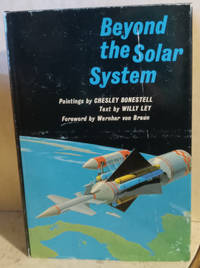
1964049422<p>New York: Viking Press. Fine in Very Good dust jacket. 1964. 1st Edition; 1st Printing. Hardcover. Hardcover first printing with dustjacket this unique copy is signed by author Willy Ley on the title page book has moderate soiling to the outer page-edge and very mild foxing to the blank end-papers the binding is clean and tight and the contents are fine the jacket has some surface-scuffing and a few short edge-tears it is clean and bright the original price 6.50 is present and a professional removable mylar cover is included features full-color paintings by Chesley Bonestell photos and diagrams and a Foreword by Wernher von Braun "In this book the famous collaborators Chesley Bonestell and Willy Ley invite you to accompany them on a voyage to the strange stellar systems in the nearby regions of the galaxy"; Signed by Author .</p> Viking Press hardcover
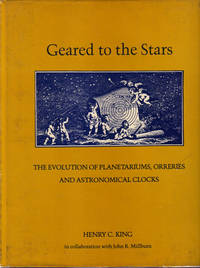
1978010417Toronto: University of Toronto Press 1978. First Edition. Hardcover. Near Fine/Very Good-. 8-1/2 x 11 Cloth in DJ; 442pp; Slight scuffing small mark & a tiny bit of edgewear to DJ DJ protected by mylar sleeve decorated endpapers text unmarked binding is tight Near Fine/VG- condition. Unique comprehensive reference work presents a complete history of geared planetary machines from Archimedes to present-day astronomical clocks based on personal examination of numerous machines instruments and clocks in Europe and North America as well as on study of the scientific literature. Includes bibliography and over 300 illustrations. University of Toronto Press hardcover
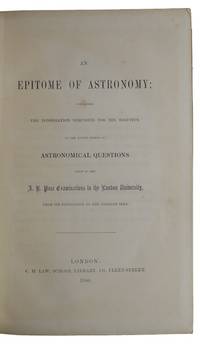
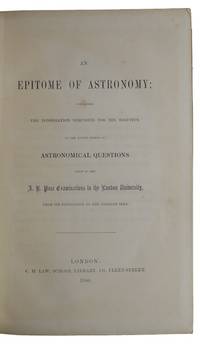
1853TA4<p>8vo. 6 9-58pp complete despite this apparent pagination jump which is found in all copies. With ten lithographed plates lettered A-D and numbered I-VI. Original publisher's blind-stamped blue cloth. Slightly rubbed to extremities offsetting to glassine interleaving else a crisp copy. Inscribed 'To Fred Bone with the donor's best wishes. Percy House Christmas 1864' to FFEP.</p><p>A rare and fabulously illustrated series of answers designed for students of the A.B. Pass examinations in the early years of the London University founded as a secular alternative to Oxford and Cambridge in 1835. The authorship not explicitly stated is inferred from the preface - which is signed Grove School York where the schoolmaster and popular text-book writer John Tabor taught - notes the work is excerpted and extended from 'An Outline of the London University Course of Mathematics containing the Questions Solutions" &c'. Moreover the plates lettered A-D are captioned 'From a Series of Drawings by J. Tabor Grove School York'.</p><p>The thoroughly detailed model answers include significant reference to the planets of our solar system including the then recent discovery of Neptune 'justly considered one of the greatest achievements of mathematical science. Its existence was simultaneously inferred by Adams and Le Verrier from some irregularities which were noticed in the motion of Uranus'.</p><p>COPAC and OCLC together locate copies at just four British institutions BL Cambridge Oxford and NLS and none elsewhere.</p> C.H. Law, School Library. hardcover
1853AQ26197London: C.H. Law School Library 1853. 6 9-58pp complete despite this apparent pagination jump which is found in all copies. With ten lithographed plates lettered A-D and numbered I-VI. Original publisher's blind-stamped blue cloth. Slightly rubbed to extremities offsetting to glassine interleaving else a crisp copy. Inscribed 'To Fred Bone with the donor's best wishes. Percy House Christmas 1864' to FFEP. A rare and fabulously illustrated series of answers designed for students of the A.B. Pass examinations in the early years of the London University founded as a secular alternative to Oxford and Cambridge in 1835. The authorship not explicitly stated is inferred from the preface - which is signed Grove School York where the schoolmaster and popular text-book writer John Tabor taught - notes the work is excerpted and extended from 'An Outline of the London University Course of Mathematics containing the Questions Solutions" &c'. Moreover the plates lettered A-D are captioned 'From a Series of Drawings by J. Tabor Grove School York'. The thoroughly detailed model answers include significant reference to the planets of our solar system including the then recent discovery of Neptune 'justly considered one of the greatest achievements of mathematical science. Its existence was simultaneously inferred by Adams and Le Verrier from some irregularities which were noticed in the motion of Uranus'. COPAC and OCLC together locate copies at just four British institutions BL Cambridge Oxford and NLS and none elsewhere. . First edition. 8vo. C.H. Law, School Library hardcover
2000059948Prometheus 2000. 1st Edition 1st Printing. Hardcover. Fine/Near Fine. 396 Pp. Black Boards. First Printing Indicated. Fine In Fine Dust Jacket. Signed By Stenger On The Title Page. <br/> <br/> Prometheus hardcover
1981AS-41Cambridge England: Cambridge University Press 1981. Classic comprehensive text presents detailed coverage of the various types of meteorites emphasizing their pertology mineralogy and major element chemistry. Topics covered include the chondrites: their classification properties and histories of the three major classes and the relationship of time and process in their chemical and physical evolution; various nonchondritic meteorites and their genetic relationships; nature of asteroidal parent bodies; differentiated meteorites: iron meteorites pallasites and their associates; etc. 368 pgs. Illustrated. Dustjacket has some minor rubbing on the rear cover; in mylar. Minimal shelfwear. First Edition. Hard Cover. Fine/Fine. 8vo - over 7¾" - 9¾" tall. Cambridge University Press Hardcover
1984AS-38Tucson Arizona: University of Arizona Press 1984. Comprehensive classic text presents deatiled topics covering ring systems; dynamical processes; origin and evolution of planetary rings; solar nebula and the planetary disk; unsolved problems in planetary ring dynamics; dust-magnetosphere interactions; rings in astronomy and cosmology 1600-1900; rings of Uranus; Saturn's rings: properties and processes; ethereal rings of Saturn and Jupiter; dynamics of narrow rings; waves in planetary rings; atlas of Saturn's rings; etc. 784 pgs. Illustrated including a color fold-out chart of Saturn's rings. Minimal shelfwear. First Edition. Hard Cover. Fine. 8vo - over 7¾" - 9¾" tall. University of Arizona Press Hardcover
180542389London W. Bulmer and Co. 1805. 4to. No wrappers as extracted from "Philosophical Transactions" 1805 - Part I. Pp. 31-64 and 1 engraved plate. Clean and fine. <br/><br/><em>First appearance of an importent paper founding the metric of interstellar space.It was the contemporous discoveries of the first minor planets ceres in 1801 Pallas in 1802 and Juno in 1803 that prompted Herschel to investigate the origin of the spurious diameters of stars. "Were their apparent diameters as real as those of planets or spurious as for stars To address this question Herschel conducted an extensive series of experiments in his garden in Slough examining through his telescope small globules of differing sizes and materials placed in a tree some 800 ft ca. 244 m away Herschel 1805. His observations showed that for the smallest globules the diameters were all spurious and all of the same size. Furthermore he found that if just the inner part of the aperture of the telescope were used the spurious diameters whether of globules or of stars were larger. If the whole aperture was employed the diameters were smaller and if only an outer annular aperture was used the diameters were smaller still. This experimental discovery that unfilled apertures can be used to obtain high angular resolution remains today the essential basis for interferometric imaging in astronomy in particular Aperture Masking Interferometry. The theoretical justification of this result came with Airy's analysis of the diffraction pattern of a circular aperture 30 years later Airy 1835 and it took a further 30 years before the idea of using multiple apertures was developed. In an early study the Reverend W. R. Dawes noted that he had `frequently found great advantage from the use of a perforated whole aperture' and that when observing Venus this produced `a central image of the planet perfectly colourless and very sharply dened' Dawes 1866. But it was left to Fizeau in his submission to the Commission for the Prix Bordin the following year to remark on `une relation remarquable et n´ecessaire entre la dimension des franges et celle de la source lumineuse' and suggest that by using an interferometric combination of light from two separated slits `il deviendra possible d'obtenir quelques donn´ees nouvelles sur les diametres angulaires de ces astres' Fizeau 1868." </em> unknown
180545883London W. Bulmer and Co. 1805. 4to. No wrappers as extracted from "Philosophical Transactions" 1805 - Part I. Pp. 31-64 and 1 engraved plate. Clean and fine. <br/><br/><em>First appearance of an importent paper founding the metric of interstellar space.It was the contemporous discoveries of the first minor planets ceres in 1801 Pallas in 1802 and Juno in 1803 that prompted Herschel to investigate the origin of the spurious diameters of stars. "Were their apparent diameters as real as those of planets or spurious as for stars To address this question Herschel conducted an extensive series of experiments in his garden in Slough examining through his telescope small globules of differing sizes and materials placed in a tree some 800 ft ca. 244 m away Herschel 1805. His observations showed that for the smallest globules the diameters were all spurious and all of the same size. Furthermore he found that if just the inner part of the aperture of the telescope were used the spurious diameters whether of globules or of stars were larger. If the whole aperture was employed the diameters were smaller and if only an outer annular aperture was used the diameters were smaller still. This experimental discovery that unfilled apertures can be used to obtain high angular resolution remains today the essential basis for interferometric imaging in astronomy in particular Aperture Masking Interferometry. The theoretical justification of this result came with Airy's analysis of the diffraction pattern of a circular aperture 30 years later Airy 1835 and it took a further 30 years before the idea of using multiple apertures was developed. In an early study the Reverend W. R. Dawes noted that he had `frequently found great advantage from the use of a perforated whole aperture' and that when observing Venus this produced `a central image of the planet perfectly colourless and very sharply dened' Dawes 1866. But it was left to Fizeau in his submission to the Commission for the Prix Bordin the following year to remark on `une relation remarquable et n´ecessaire entre la dimension des franges et celle de la source lumineuse' and suggest that by using an interferometric combination of light from two separated slits `il deviendra possible d'obtenir quelques donn´ees nouvelles sur les diametres angulaires de ces astres' Fizeau 1868." </em> unknown
2023059248Liveright Pub Corp 2023. 1st Edition 1st Printing. Hardcover. Fine/Fine. 255 Pp. Blue Cloth Large Format Oblong Hardcover. First Printing Indicated. Fine In Fine Dust Jacket Priced $50.00. Signed With Inscriptiojn By Both Thorne And Halloran. <br/> <br/> Liveright Pub Corp hardcover
1986060043Oxford / New York: Oxford University Press / Clarendon Press 1986. First American Edition 1st Printing. Hardcover. Fine/Fine. Xx 706 Pp. Grey Cloth Spine Lettered In White; White Boards. First Printing Indicated. Fine In Fine Dust Jacket Priced $29.95 No Wear But Slight Yellowing To Edges Of Flaps. Per Wikipedia John David Barrow Frs 1952 - 2020 Was An English Cosmologist Theoretical Physicist And Mathematician. He Served As Gresham Professor Of Geometry At Gresham College From 2008 To 2011. Barrow Was Also A Writer Of Popular Science And An Amateur Playwright. Barrow's Approach To Philosophical Issues Posed By Physical Cosmology Made His Books Accessible To General Readers. For Example Barrow Introduced A Memorable Paradox Which He Called "The Groucho Marx Effect" See Russell-Like Paradoxes. Here He Quotes Groucho Marx: "I Wouldn't Want To Belong To Any Club That Would Accept Me As A Member". Applying This To Problems In Cosmology Barrow Stated: "A Universe Simple Enough To Be Understood Is Too Simple To Produce A Mind Capable Of Understanding It". <br/> <br/> Oxford University Press / Clarendon Press hardcover
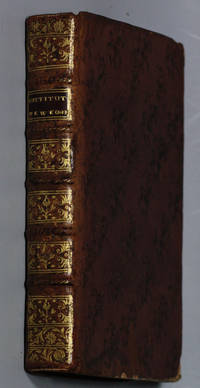
176935028Paris: Guillyn. Very Good with no dust jacket. 1769. Second Edition. Hardcover. B&W Illustrations; 7 folding engraved plates on 6 leaves the often errant plate 4 is present Lvi xlix 3 393 3 pages. 8vo 198x122 mm contemporary sheep gilt with morocco lettering piece spine ends with shallow wear cover corners worn through 19th-century Ricasoli-Firidolfi armorial bookplate on title verso slightly wrinkling the paper. NOTES: Second edition of an introduction to Newtonian mathematics and physics originally published in 1747. Pages 327-59 contain a summary of the author's 1748 prize essay on the effects of attraction on capillary phenomena "the most successful of Sigorgne's efforts to apply the concept of universal gravitation" DSB. Babson 112; DSB XII 430; Wallis 150.001. . Guillyn hardcover