Manilius, Marcus; Fayus, MichaelBiblio.com
650 résultats
1679r5086Paris: Fredericum Leonard. G : in good condition without dust jacket. Cover rubbed and marked. Some pages darkened. 1679. Reprint. Cream hardback vellum cover. 250mm x 190mm 10" x 7". xxiv 448pp lxviii. B/w frontis engraving and 44 diagram figures within. . Fredericum Leonard hardcover
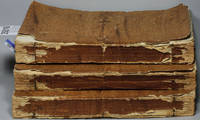
175735010Venice: Bartolomeo Baronchelli. Good with no dust jacket. 1757. Paperback. B&W Illustration; c1700 pages; xlviii 568 8; xii 536; viii 220 viii 364 pages including engraved frontispiece portrait of the author. 4 parts in 3 volumes. Folio 395x260 mm contemporary paste-paper wrappers quite worn and most likely original with portions missing from spines and some chipping along cover edges Volume 2 front cover detached with title adhered other front covers partly detached; scattered foxing; uncut. Vác Piarist ownership inscription dated 1805 on titles later Hungarian stamp on versos. NOTES; The first 2 volumes reprint Petau's 1627 treatise on chronology De doctrina temporum the third his 1630 Uranologion. Houzeau & Lancaster 12840. Uranologion brings together works by famous ancient astronomers such as Hipparchus c. 190 BC c. 120 BC Geminus 1st century BC and Ptolemy 90 168 AD. Latin language text. PROVENANCE-Astronomy and Science Books from the Collection of Martin C. Gutzwiller. . Bartolomeo Baronchelli, paperback
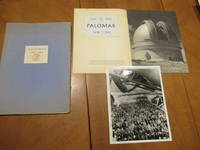
1948024946Pasadena / San Francisco: California Institute of Technology / Grabhorn Press 1948. First Edition with Original Photograph . Soft cover. Very Good . 13" Tall. 35 Page Keepsake Hand Printed At The Grabhorn Press On Handmade Paper Plain Blue Wrappers With Cover Label Printed In Black And Red "Palomar June 3 1948" And The Caltech Emblem. This Publication Includes The Full Text Of The Speeches At The Event. Lightly Used Slight Fading. Wear At Ends Of Spine With Minute Losses Text Block Separated From Wrappers As Is Usually Found. With The Program For The Event "Dedication Of The Palomar Observatory" With Background Information But Not Including The Speeches This Copy With The Original Car Pass For The Event A Plasticized Card "Card Pass / Palomar / June 3 1948 With The Caltech Logo All Printed In Blue On Glossy Card Stock. With An Original Photograph 10 1/8" X 8" Showing The Hundreds In The Audience Some Quite Distinguished Seated On Folding Chairs Beneath The Great Telescope. <br/> <br/> California Institute of Technology / Grabhorn Press paperback
1903028837Boston And New York: Houghton Mifflin And Company 1903. 1st Edition 1st Printing. Hardcover. Near Fine/No Jacket. Frontispiece. X 424 Pp. Blue Cloth Gilt. Detailed Autobiography With Succinct Explanations Of His Own Work And That Of Others He Worked With. This Example Inscribed "From The Author" To R C Archibald Who Wrote The Official Biography And Bibliography Of Newcomb Published In The Memoirs Of The National Academy Of Sciences In 1924 And Also With The 1956 Signature Of A Prominent Jpl Astronomer Who Managed The U.S. Halley Watch Group. This Example Very Good / Near Fine Light Wear Gilt Brilliant Hinges Tight. Simon Newcomb 1835 -1909 Was A Canadian-American Astronomer Applied Mathematician And Autodidactic Polymath. Newcomb Visited Paris France In 1870 Already Aware That The Table Of Lunar Positions Calculated By Peter Andreas Hansen Was In Error. While In Paris He Realized That In Addition To The Data From 1750 To 1838 That Hansen Had Used There Was Further Data Stretching As Far Back As 1672 And Newcomb Used The "New" Data To Revise Hansen's Tables. In 1878 Newcomb Started Planning For A New And Precise Measurement Of The Speed Of Light Starting Development A Refinement Of The Method Of Léon Foucault. A Letter From Albert Abraham Michelson Began A Long Collaboration And Friendship. In 1880 Michelson Assisted At Newcomb's Initial Measurement But Michelson Left To Start His Own Project. Miichelson Published His First Measurement In 1880 But Newcomb's Measurement Was Substantially Different And In 1883 Michelson Revised His Measurement To A Value Closer To Newcomb's. In 1881 Newcomb Discovered The Statistical Principle Now Known As Benford's Law Formulating The Principle That In Any List Of Numbers Taken From An Arbitrary Set Of Data More Numbers Will Tend To Begin With "1" Than With Any Other Digit.I N 1891 Within Months Of Seth Carlo Chandler's Discovery Of The 14-Month Variation Of Latitude Now Referred To As The Chandler Wobble Newcomb Explained The Apparent Conflict Between The Observed Motion And Predicted Period Of The Wobble As Due To Elasticiity; He Used The Variation Of Latitude Observations To Estimate The Elasticity Of Earth Finding It To Be Slightly More Rigid Than Steel. He Wrote On Economics And His Principles Of Political Economy 1885 Was Described By John Maynard Keynes As "One Of Those Original Works Which A Fresh Scientific Mind Not Perverted By Having Read Too Much Of The Orthodox Stuff Is Able To Produce From Time To Time In A Half-Formed Subject Like Economics." He Was Credited By Irving Fisher With The First-Known Enunciation Of The Equation Of Exchange Between Money And Goods Used In The Quantity Theory Of Money. His Reputation Suffers From His Personal Hostility To C. S. Pierce Son Of Newcomb's First Great Mathematics Instructor And Also From Newcomb's Disbelief In The Possibility Of Manned Flight. <br/> <br/> Houghton, Mifflin And Company hardcover
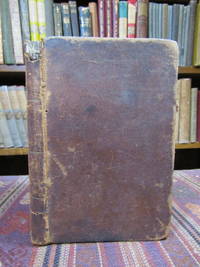
1803046362Philadelphia: Published by Jacob Johnson 1803. First American Edition . Hardcover. Good. 16mo - over 5¾ - 6¾" tall. 16mo. 137 3 pages. Hardcover bound in original full brown leather. The binding shows wear and bumping but is sound with rubbed but secure hinges. Headcap of the spine is chipped. Small wormhole near the foot of the spine. Complete with endpapers and illustrated with 5 full-page copperplate engravings collates complete as well as several smaller text woodcuts. Early owner's signature on the recto of the frontis reads "Solomon Mordecai / Warrenton North Carolina Jan.y. 1st 1804." Another early signature for "Jos. Mordecai" is at the top of the title page. The Mordecai family was an important Jewish family in eastern North Carolina in the late 18th and early 19th centuries. Jacob Mordecai founded the Warrenton Female Academy in 1809 and was assisted by his son Solomon and several daughters. This title was first published in 1761 by John Newbery in England thought to have actually be written by Oliver Goldsmith under the pseudonym of Tom Telescope. It was a science book written for youth. This is the First American edition. The Second American edition of 1808 is much more common. The "Teacher of Philadelphia" referred to on the title page is believed to have been Robert Patterson Professor of Mathematics at the University of Pennsylvania. This is a decent sturdy copy of a rare and important edition. <br/> <br/> Published by Jacob Johnson hardcover
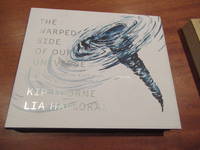
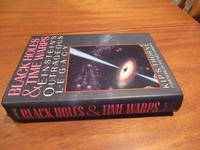
2023060015Liveright Pub Corp 2023. 1st Edition 1st Printing. Hardcover. Fine/Fine. 255 Pp. Blue Cloth Large Format Oblong Hardcover. First Printing Indicated. Fine In Fine Dust Jacket Priced $50.00. Signed Without Inscriptiojn By Both Thorne And Halloran. <br/> <br/> Liveright Pub Corp hardcover
187197507New Haven: Printed by Tuttle Morehouse & Taylor 1871. 1871. Good. THE FIRST APPEARANCE OF THE ESSAY "ON JUPITER AND ITS SATELLITES" BY THE FIRST FEMALE ASTRONOMER IN THE U.S.A. - Octavo 8-1/2 inches high by 5-3/8 inches wide. The contemporary brown calf and marbled boards are detached but present and the spine has perished and is thus lacking. The text block is intact and tight. 978 pages in all with the pagination as follows: Volume I: pages i-viii & 1-484; and Volume II: pages i-viii & 1-480. Pages 327/328 are skipped in numbering as published which collates with the copy at the Peter H. Raven Library at the Missouri Botanical Garden. The volume is illustrated with 3 plates including one folding as well as several textual illustrations. Although the title page to the second volume indicates the presence of a map intended to illustrate E.W. Hilgard's article "On the Geological History of the Gulf of Mexico" page 391 the map is not here present if it ever was included. The endpapers are foxed and there is some light soiling to the title page of the first volume. The edges of the first few leaves are lightly darkened with a tiny spot of dampstaining to the top edge of those leaves. A very good tight copy which would be well worth rebinding. <p>Most noteworthy is the first publication of Maria Mitchell's essay "On Jupiter and its Satellites" illustrated with a plate volume I pages 393-395.<p>The first American scientist to discover a comet Maria Mitchell 1818-1889 was the first female astronomer in the United States. Working as the librarian of the Nantuckett Atheneum Maria Mitchell read through the day and spent her nights with her father at the observatory he built atop the Pacific Bank. Her discovery in 1847 of the comet which came to be named "Miss Mitchell's Comet" brought her international acclaim. She was awarded a gold medal by King Frederick of Denmark and elected as the first woman to join the American Academy of Arts and Sciences the following year. Mitchell traveled throughout Europe after leaving the Atheneum in 1856 meeting with astronomers the world over. She became involved and active in the anti-slavery movement and the suffrage movement and was subsequently instrumental in the formation of the American Association for the Advancement of Women. After the Civil War Mitchell was recruited to join the faculty at Vassar College where with a 12 inch telescope then the third largest in the US she specialized in studying the surfaces of Jupiter and Saturn. She made waves by encouraging her female students to come out at night for classes and celestial observations and brought in noted feminists including Julia Ward Howe to speak on political issues. Continuously championing the advancement of women she gave an important speech entitled "The Need for Women in Science" during the 1876 centennial. Mitchell was one of only 3 women to be elected to the Hall of Fame of Great Americans in 1905. She was also inducted into the National Woman's Hall of Fame in Seneca Falls New York. A lunar crater on the moon was named in her honor.<p>Also worth noting is Professor L. Respighi's essay "On the Solar Protuberances" illustrated with a folding plate volume I pages 283-287.<p>The Italian astronomer Lorenzo Respighi 1824-1889 was appointed appointed professor of mechanics and hydraulics at the University of Bologna. In that context his first works were mathematical and included a well-known memoir on the principles of differential calculus. Captivated by astronomy he succeeded Calandrelli as director of the astronomical observatory at the University of Bologna in 1855. After making observations on comets Respighi became director of the Campidoglio observatory in Rome where he devoted his attention to studying solar phenomena. His studies of the spectra of sunspots were particularly important as he observed the splitting of the absorption lines later described by Hale as the result of the Zeeman effect.<p>Henry James Clark's essay "The American Spongilla a Craspedote Flagellate Infusorian" illustrated with a plate is here published on pages 426 through 436 of volume II.<p>The American naturalist Henry James Clark 1826-1873 was a pupil of Asa Gray at the Cambridge botanical garden. He became an assistant to Louis Agassiz after graduating from Harvard and was professor of Zoology and of Natural History at numerous colleges and universities. From 1872 until his death in 1873 Clark was Professor of Veterinary Science at the Massachusetts Agricultural College in Amherst Massachusetts. He contributed to a number of periodicals and authored "Mind in Nature" 1863 and "Mode of Development of Animals" 1865. New Haven: Printed by Tuttle, Morehouse & Taylor, 1871. hardcover
a88534Coimbra 1936-1945. Seven matching volumes large 4tos pale pink printed wraps with circular photo picture of observatory on covers. Many mounted circular photo illustrations - mostly on solar phenomena -and foldout charts and diagrams. About 200 pages per issue. Text in Portuguese. Very Scarce. Internally VG to Near Fine; covers are Good worn and frayed with some light chipping on spines. Set of seven volumes: . paperback
173435013Paris: Clouzier Bordelet Gissey. Very Good with no dust jacket. 1734. Fourth Edition. Hardcover. B&W Illustrations; 19 engraved plates. 40 398 8; 8 382 24 pages including half-titles. 2 volumes. 12mo 165x94 mm contemporary mottled calf gilt; some plates toned dampstaining in lower outer corners of Volume 2 opening leaves. Paris: Gissey et al. 1734 Fourth edition of a work originally published in 1709 based on the author's lectures at the University of Paris containing detailed descriptions of 116 experiments. An account of various electrical experiments with magnets. Pierre Poliniere was one of the earliest in France to present public lectures on experimental natural philosophy and one of the first on the continent to advocate Newton's theory of colour. His Experiences de physique of 1709 contains a hundred experiments to do with the weight and elasticity of air chemistry hydrostatics sound magnetism light and colour. DSB XI 67-68. PROVENANCE-Astronomy and Science Books from the Collection of Martin C. Gutzwiller. . Clouzier, Bordelet, Gissey hardcover
186835004N Y: Lippincott. Very Good with no dust jacket. 1868. First Edition. Hardcover. 662 pages. 8vo 255x165 mm original cloth spine faded and stained peripheral discoloration on covers; scattered minor spotting. Small loss tocloth covering towards bottom of front hinge. Hinges binding and text block quite solid. First edition of the author's major work. 'It established Watson as one of the leading American experts in celestial mechanics and orbital theory' ANB. BEA pages 1198-99; Houzeau & Lancaster 11822. PROVENANCE-Astronomy and Science Books from the Collection of Martin C. Gutzwiller. . Lippincott hardcover
1934029712Oxford: The Clarendon Press 1934. First Edition First Printing 1st Printing. Blue Cloth. Fine/Very Good DJ. Xv 502 Pp. Blue Cloth Gilt. Scarce First Printing Of A Classic Work. This Book Was Reviewed By Einstein In The Journal "Science" In 1934. Fine Gilt Very Bright Although Edges Of Page Block Are Browned; Small Owner's Name Frank J. Steinebrey Jr. On Front Pastedown; He Was A Cal Tech Trained Physicist Active In The Pacific Rocket Society Circa 1945-1946. Also With A Clipped Signature Of Richard C Tolman Laid In Loosely. In The Scarce Dj Slightly Taller Than The Book Browned Light Wear No Loss Of Lettering Except That Price Has Been Clipped At Bottom Of Front Flap Small Losses At Corners With 1/4" Chips At Two Upper Corners Of Spine. <br/> <br/> The Clarendon Press hardcover
1915053856Washington: Carnegie Institution 1915. First Edition . Printed Grey Wrappers. Near Fine. Photographs. 99 Pp. Printed On Glossy Paper High Quality Plates. First Printing The Scarce Hardcover Issue 1915. Near Fine Gilt Brilliant No Stains Inscribed By Author To The Friday Morning Club. <br/> <br/> Carnegie Institution unknown
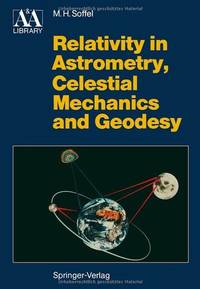
1989PH-379Berlin-Heidelberg: Springer-Verlag 1989. Classic comprehensive monograph presents a detailed outline of general relativity as an integral part of ordinary classical physics and applied to practically oriented problems such as clock synchronization laser ranging to satellites or reflectors on the Moon or very long baseline interferometry. Includes coverage of measuring techniques and accuracies in the fields of astrometry celestial mechanics and geodesy; relativity's role in the theoretical analysis of experimental data; etc. Also includes the "Note Added in Proof". 208 pgs. Illustrated with 32 figures. Minor rubbing to corners and lower edge. . First Edition. Hard Cover. Very Good. 8vo - over 7¾" - 9¾" tall. Springer-Verlag Hardcover
1967AS-54London U.K.: Chapman & Hall 1967. Classic preeminent text is the first definitive book published on Interstellar Grains. This book discusses the author's theories research and observational data of Interstellar Garins. Topics covered include: Theory of light scattering by spherical grains; Interstellar reddening and polarisation observations; Interstellar condensation theories of grain formation; Condensation of graphite grains; Frequency distribution of ice grain sizes; Physical properties of interstellar grains; Optics of grains; Alignment of non-sherical grains. 154 pp. Illustrated. Minor rubbing to dustjacket edges; in mylar. Minimal shelfwear. . First Edition. Hard Cover. Fine/Fine. 8vo - over 7¾" - 9¾" tall. Chapman & Hall Hardcover
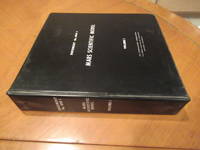
1968028784Pasadena: Jet Propulsion Laboratory 1968. 1st Edition . Hardcover. Fine. Three Ring Binder Looseleaf 1 1/8" Thick Plus The Printed Binder Itself Six Sections Each Paginated Separately. Prepared By Members Of The Lunar And Planetary Science Section Under Nasa Contract Nas 7-100 To "Present An Up-To-Date Scientific Model Of The Planet Mars With Data Values Limitations And Sources And With A Limited Amount Of Interpretation Where Appropriate". The Manual Was Updated Later Notably In 1972 And 1977. A Wealth Of Information In Charts Transparent Overlays Maps Etc. Carefully Organized And Indexed With Two Large Folding Maps In The Pocket At Front. Very Scarce. <br/> <br/> Jet Propulsion Laboratory hardcover
elala2369cFrance: c1800. 2 parts in 1. 8vo. ff. 90. vellum over paste-board worn tears in vellum several gatherings sprung [cFrance: c1800?] hardcover
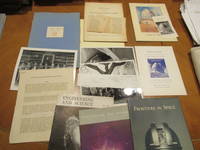
1948026063Pasadena / San Francisco: California Institute of Technology / Grabhorn Press 1948. First Edition with Original Photograph . Wrappers. Very Good . 13" Tall. 35 Page Keepsake Hand Printed At The Grabhorn Press On Handmade Paper Plain Blue Wrappers With Cover Label Printed In Black And Red "Palomar June 3 1948" And The Caltech Emblem. This Publication Includes The Full Text Of The Speeches At The Event. Lightly Used Text Block Separated From Wrappers As Is Usualy Found. With The Program For The Event "Dedication Of The Palomar Observatory" With Background Information But Not Including The Speeches. With An Original Photograph 10 1/8" X 8" Showing The Hundreds In The Audience Some Quite Distinguished Seated On Folding Chairs Beneath The Great Telescope. Also With Three Large Photographs Of Palomar Astronomical Staff: 1. 29 Men Pencil "Astrophysics Shop & Engineers" On Back Fragment Of Paper Identifying Many Of Those In The Photo; 2. Photo Of 7 Men In Front Of The Palomar 48" Schmidt Telescope Including Ira S Bowen Max Mason Rudolph Minkowski Don Henderson Bob Harrington Al Wilson; 3. 16 Men In Caltech Library Ink Notes On Reverse Dated March 1955 Names And Locates "Staff Mount Wilson And Palomar Observatories" Including Guido Munch Allan Sandage G W Pettit Horace Babcock Rudolf Sic Minkowski Seth B Nicholson Robert S Richardson Donald Osterbrock Olin C Wilson William A Baum Fritz Zwicky Milton Humason Ira S Bowen Jesse L Greenstein Walter A Baade Armin Deutsch. With 4. Frontiers In Space An Official Publication Of Palomar Undated Probably 1950'S. Also With 5. Engineering And Science Two Issues May 1949 And April 1959 With Articles On Palomar. Also With 6. 1950 Handout "Facts About Palomar" Mimeo 7 Pp. Also With 7. 4 Pp Booklet "The Palomar Observatory Of The California Institute Of Technology" Undated But Circa 1950. With 8. Program First Day Of Issue Of The Commemorative Stamp" August 30 1948 With An Attached First Day Cover. Also With 9. Giants Of Palomar: Drawings By Dr. R W Porter 1983. <br/> <br/> California Institute of Technology / Grabhorn Press unknown
172735035Paris:: Montalant. Very Good with no dust jacket. 1727. Hardcover. folding plates; Tabulae astronomicae : Ludovici Magni jussu et munificentia exaratae et in lucem editae : in quibus solis lunae reliquorumque planetarum motus ex ipsis observationibus . Traduntur . : adjecta sunt descriptio constructio & usus instrumentorum astronomiae novae practicae inservientium variaque problemata astronomis geographisque perutilia : ad meridianum Observatorii Regii Parisiensis in quo habitae sunt observationes ab ipso autore Philippo de La Hire .4 folding engraved plates. 14 102 2 81 7 pages. 4to 256x197 mm full decoarative modern calf gilt; opening leaves dampstained and foxed occasional limited browning. DSB VII 579; Houzeau & Lancaster 12780. . Montalant hardcover
173455790London: Printed for J. Osborn; and S. Birt 1734. 8vo. vi 2 219 1 pp. including publisher’s ads. With 10 folding copper engraved plates. Contemporary dark polished calf red & gilt morocco spine label very faint tidemark at gutter margin of last couple leaves expertly restored at head & foot of spine still a very good fresh copy from the libraries of John Morris and Robert Harland Waterford w/ ownership markings on title and last page of introduction. Second edition revised & expanded of this excellent posthumous work on spherical projection and applications for astronomy by the former assistant to the astronomer John Flamsteed. The first edition was published posthumously in 1714 and then revised and expanded by Hodgson former assistant to Flamsteed for this edition. Witty 1679-1711/12 was employed by Flamsteed from 1705-1706 in order to oversee the computations necessary to prepare Flamsteed’s notorious Historia Coelestis for the press. Flamsteed after the death of Queen Anne in 1714 retrieved 300 of the 400 copies printed and destroyed them with only 60 surviving copies. After leaving Flamsteed when Newton had withheld payment for the massive work Witty became a chaplain for a gentleman in Hampshire was ordained priest in 1708 and became curate at St. Vedast London until his death. Houzeau & Lancaster 9674 1714 ed. Printed for J. Osborn; and S. Birt, unknown
1975051527Washington D. C.: National Aeronautics and Space Administration. Very Good. 1975. Hardcover. Large format hardcover issued without a dustjacket this copy is inscribed and signed by Apollo 11 astronaut Michael Collins the inscription reads "For Richard Pietroski with all good wishes - Michael Collins - Apollo XI." Moderate scuffing to the illustrated cover is the only remarkable flaw the binding is tight and clean and the contents are fine; Signed by Author . National Aeronautics and Space Administration hardcover
1994060062New York: Norton 1994. 1st Edition . Hardcover. Fine/Near Fine. 9 1/4" Tall. Drawings and Photographs Throughout. 619 Pp. Grey Cloth Spine Lettered In Silver Blue Boards. First Printing. A Fragile Binding For Unknown Reasons Often Found Near New But With Front Hinge Cracked Or Broken This Copy Fine Except Hinmge Cracked 1 1/2" At Bottom Of Front Endpapers And 2 1/2" At Top Before Half Title Page. With Near Fine Dust Jacket Priced $30.00. This Copy Signed By Thorne On The Title Page. <br/> <br/> Norton hardcover
1938038618Pasadena 1938. Original Blueprint . No Binding. Near Fine. 17 5/8" x 16 3/4. Original Pencil Mechanical Drawing On Vellum 14" X 11" Initialed By Ejp. <br/> <br/> unknown
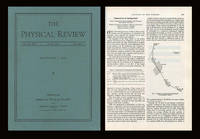
239New York: The American Physical Society. 1st Edition. 1956 FIRST EDITION IN ORIGINAL WRAPS of the two papers that won Chamberlain and Segre the 1959 Nobel Prize for the first experimental confirmation of the antiproton a new subatomic particle identical in every way to the proton except that its electrical charge was negative instead of positive. <br /> <br /> Chamberlain and Segre's discovery was the culmination of a hunt whose origins go back to 1928 when British physicist Paul Dirac formulated a theory to describe the behavior of relativistic electrons in electric and magnetic fields. Dirac's equation was unique for its time because it took into consideration both Einstein's special theory of relativity and the effects of quantum physics as proposed by Erwin Schrödinger and Werner Heisenberg to describe the behavior of slow-moving particles. While the math worked few physicists gave Dirac's equation much serious consideration because it allowed particles of negative energy. From the standpoint of both physics and common sense the energy of a particle could only be positive Yarris "The Golden Anniversary" Science at Berkeley Lab 2005. <br /> <br /> A number of physicists attempted to find the antiproton but Chamberlin and Segre were particularly clever. According to Segre "I decided to attack the problem in two ways. One was based on the determination of the charge and mass of the particle. The other concentrated on the observation of the phenomena attendant on the annihilation of a stopping antiproton. The stopping antiproton and a proton of the target should mutually annihilate each other and the rest mass of the two particles should transform itself in one of many possible ways into other particles such as pions. These would leave tracks in a photographic emulsion and the annihilation would thus become evident. . . <br /> <br /> "We started the run on August 25 1955 and after a few days of tuning up we began observing antiproton signals. We based the identification on measurement of the velocity momentum and charge of a particle. The signals for velocity were oscilloscope traces recording the passage of a particle through a velocity-selecting Cerenkov detector. . . . We detected about one antiproton for every few hundred thousand other particles crossing our apparatus. . . . We decided to write a letter to the Physical Review and an article for Nature. . . . The mass-spectrograph experiment concluded on October 1 1955 having proved the existence of the antiproton and soon thereafter the emulsion work confirmed it" Segrè A Mind Always in Motion pp. 256-57. <br /> <br /> "The antiproton also became a workhorse of experimental particle physics as scientists at CERN Fermilab etc. later spent decades smashing it into protons in racetrack-shaped accelerators and measuring the sprays of weird new particles that emerged producing what seemed to be an endless stream of Nobel Prizes" New York Times Obituary March 2 2006. According to physics Nobelist Stephen Weinberg: "If it had not been discovered the foundations of physics really would have crumbled" Dr. Weinberg said. He added that the antiproton "was something like the South Pole: it's something that you know is there but you just have to get there anyway" ibid. CONDITION & DETAILS: New York: The American Physical Society. "Observation of Antiprotons" in Physical Review 100 Issue 3 pp. 947-950 November 1 1955; WITH "Antiproton Star Observed in Emulsion" Physical Review 101 pp. 909 January 15 1956. Very light scuff to the front wrap of 101. Otherwise both issues are in near fine condition. The American Physical Society paperback
1842SZEPEBKS007872IToledo: J. de Cea 1842. Hardcover. Near Fine. 16mo. - 4782 pp. - Contemporary full leather spine with 3 bands and title in gilt on leather label. - Marbled endpapers. - With "Fe de algunas erratas mas principales" on last page. - With engraved bookplate in red and black of Armando Colarelo Valledor. - Very fine. - The Spanish astronomer and mathematician Jose REGUERO ARGUELLES 1803-1853 of Asturias established his fame with the present work and later he also published a three-volume "Astronomia fisca" 1850-51. - Armando Colarelo Valledor 1879-1850 was a prolific Spanish playwright and literary critic. - Very rare: WorldCat gives only two locations Biblioteca Nacional de Espana Madrid and Red de LecturaPublica de Euskadi. Vitoria -gazteiz <br/> <br/> J. de Cea hardcover
165635032Dijon: Pierre Palliot. Good with no dust jacket. 1656. First Edition. Hardcover. B&W Illustrations; 16 186 2 pages. 4to 224x169 mm 19th-century 1/4 calf rebacked; marginal dampstaining through most of volume scattered foxing upper outer corner of title and next 2 leaves torn and restored affecting two letters. Numerous textual illustrations. NOTES: first edition of a collection of eclipse solar and lunar tables dedicated to Louis XIV. Solar and lunar tables based on the Paris meridian. BEA page 125; DSB II 131; Houzeau & Lancaster 12051. . Pierre Palliot hardcover