ALBERT EINSTEINBiblio.com
1 506 résultats
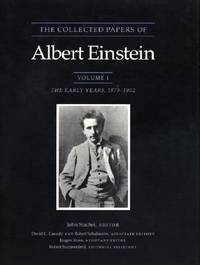
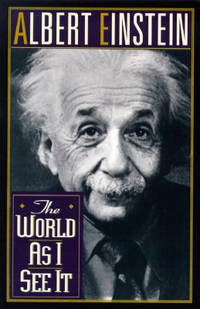
199654784PRINCETON UNIVERSITY PRESS 1996. HARDCOVER. VERY GOOD/VERY GOOD. FIRST PRINTING 1 3 5 7 9 10 8 6 4 2~AN EXTREMELY CLEAN AND BRIGHT UNMARKED COPY OF THIS BOOK PRINCETON UNIVERSITY PRESS hardcover
199354783PRINCETON UNIVERSITY PRESS 1993. HARDCOVER. VERY GOOD/VERY GOOD. FIRST PRINTING 1 3 5 7 9 10 8 6 4 2~AN EXTREMELY CLEAN AND BRIGHT UNMARKED COPY OF THIS BOOK PRINCETON UNIVERSITY PRESS hardcover
198710618Near New condition.<br />No markings in or on. Appears to have not been read.<br /> Princeton University Press hardcover
198910621VNear new condition. Companion to realted German text abd other English volume one. Princeton University Press paperback
193837<p>First British Edition first printing Cambridge University Press hardcover.</p><p>Blue clothbound covers with minimal wear. Gold titles on the spine and a gold figure of a man's head and shoulders in the center of the front cover.</p><p>Binding firm and tight. No writing to the pages.</p> Cambridge University Press hardcover
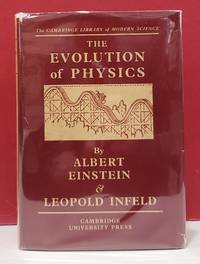
19471155106Cambridge University Press 1947. Hardcover. Very good/Very good. 1947 reprint of 1938 text.<br /> <br /> Excellent condition. Jacket edges are worn. Jacket has Mylar Brodart. Binding is tight. Spine is sunned but legibility is not impacted. Cover edges are worn. Inside is clean and unmarked. Cambridge University Press hardcover
1947004478Cambridge University Press 1947. Book. Good. Hardcover. Blue boards faded spine is tanned. Pages of text are clean lightly age toned and free of markings. Binding is secure. Shipped within 24 hours from the beautiful Baltimore inner harbor area. First class service; accurate descriptions. Most items packed in boxes not envelopes. . Cambridge University Press Hardcover
19382110new york: simon and schuster 1938. thrid printing 1938.<br /> <br /> new york: simon and schuster. 5.75 x 8.25 inches. 319 pages. hardcover. bound in dark blue original cloth-covered boards with gilt lettering to spine. book condition: very light shelf-wear. some fading to spine. a spot of soiling to rear board. very good. simon and schuster unknown
1951007413Simon & Schuster 1951. Hardcover. Very Good/Very Good. Octavo. Fourteenth printing. Orange cloth boards with black lettering/illustration on front and spine pictorial dust jacket. Very slightly cocked outline on end papers where previous owner bookplate was removed light toning on edges and pages edge wear / rubbing on edges of boards and light rubbing on spine text block just starting to come away from casing at head of spine. Jacket has rubbing edge wear and some light chipping. Now in protective mylar. Jacket is not clipped binding sound text clean and unmarked. VG/VG. Simon & Schuster hardcover
1938332712Simon and Schuster 1938. First Thus. Hardcover. Very Good. First edition in English. 8vo in navy cloth spine title in gilt front board device in gilt. Binding tight and square tiny touches of rubbing at the corners spine ends pushed but not rubbed small very light scrape in the cloth on the front board. P.o. bookplate on the ffep signature in ink on the title page partially in the subtitle; the text block is otherwise unmarked. Simon and Schuster hardcover
1979202335New Jersey: Princeton University Press 1979. First Edition; First Printing. Hardcover. Near Fine in a Very Good price clipped dust jacket. Princeton University Press hardcover
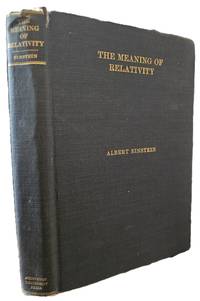
192332639Princeton NJ: Princeton University Press 1923. Very Good. Princeton NJ: Princeton University Press 1923. First U.S. Edition. Octavo 18 cm; publisher's gilt-lettered navy cloth; 123pp. Boards bumped at corners spine ends scuffed. Water staining to spine crown bleeding into upper cover minor separation of head of spine material from book block. Last free endsheet creased. Endsheets toned. Endsheets first few pages last few pages and pages 106-112 show water staining at top margin but bulk of text block is clean and bright. Starting slightly after first free endsheet. A Very Good example overall.<br /> <br /> Collection of four lectures delivered by Einstein at Princeton for the Stafford Little Lectures in 1921. The majority of the lectures are an attempt to reconcile issues with his theory of relativity and defend it as well as give a comprehensive overview of the physics and math involved in the theory in an accessible way. Princeton University Press unknown
19237029<p>The Meaning Of Relativity by Albert Einstein <br />first edition<br />hardcover<br />Publisher:<br />Princeton University Press 1923<br />Condition: <br />Very Good- - some wear to the spine and covers name written on the front end paper<br />no other writings tight binding</p> Princeton University Press hardcover
1922B1001-<p>This is the <strong>true first edition</strong> published by Methuen in May 1922 — it preceded the more familiar Princeton edition by one month.</p><p>It's stamped on the title page as a publisher's presentation copy identifying it as a copy distributed by Methuen at the time of publication.</p><p>The Methuen issue is scarce in any state but in presentation form it is especially uncommon which gives this particular copy a distinctive place among other surviving examples.</p><p>The text is based on Einstein's 1921 Stafford Little Lectures at Princeton his first sustained attempt to explain the theory of relativity to an English-speaking audience.</p><p>Delivered only months before he was awarded the Nobel Prize in Physics the lectures marked a turning point in his career extending his influence beyond European academia and onto the broader international stage.</p> Methuen hardcover
19501757693254LEEMethuen 1950. Hardcover. Good. 1950. Fourth edition. 145 pages. No dust jacket. Red cloth covered boards with gilt. Pages remain bright and clean. Binding remains firm. Minor pencil inscription to front free endpaper. Small bookshop label to front pastedown. Boards have moderate shelf wear with some rubbing fraying and corner bumping. Some moderate sunning and tanning particularly to spine. Gilt lettering to spine is strongly dulled. Methuen hardcover
1946GB000HKFQLQI5N01Princeton University Press 1946. Hardcover. Acceptable. Missing dust jacket; Readable copy. Pages may have considerable notes/highlighting. ~ ThriftBooks: Read More Spend Less.Dust jacket quality is not guaranteed. Princeton University Press hardcover
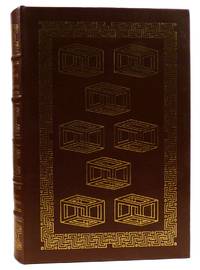
1994333380Easton Press 1994. Hardcover. Fine. Standard Easton-style leather binding although this one is a variant for the title in that it's forest green leather rather than the tan one would expect. A Fine copy with no flaws to the page edge gilt. Easton Press hardcover
1994331851Norwalk Connecticut: Easton Press 1994. First Edition; First Printing. Hardcover. Near Fine Leather Bound. Printed on archival paper with gilded edges. The endsheets are of moire fabric with a silk ribbon page marker. Smyth sewing and concealed muslin joints to ensure the highest quality binding. This book is in full leather with hubbed spines.; Collector's Edition. Easton Press hardcover
1946512A very good copy of the Second Edition with Einstein's added appendix. Very slight rubbing to spine edge lacking the dust jacket. Solid copy. Princeton University Press hardcover
19451141282Princeton University Press 1945. Hard cover. Very good/No jacket. Spine is cocked but secure. Cover is worn especially along edges. Corners are bumped. Front free end paper has previous owner's signature. Inside is tanned but legible and and unmarked. Princeton University Press unknown
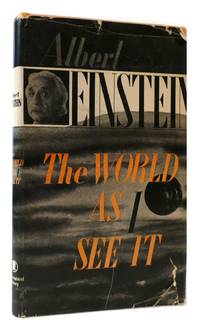
1949176953New York: Philosophical Library 1949. New Abridged Edition; First Printing. Hardcover. Near Fine in a Very Good dust jacket. 1 inch closed tear at bottom of front panel. ; 12mo 7" - 7½" tall g. Philosophical Library hardcover
19931-080650711XCitadel 1993. Paperback. New. reissue edition. 8.25x5.50x0.50 inches. Citadel paperback
1934314973Covici Friede 1934. First Thus. Hardcover. Very Good. First U.S. edition. 8vo in publisher's gray cloth spine title label in silver. Binding tight and square corners and spine ends very lightly rubbed silver on the spine rubbed at a portion but the title and name are entirely legible very light stain along the foredge of the front board small p.o. name on the ffep glue residue offsetting to the pastedowns. Covici Friede hardcover
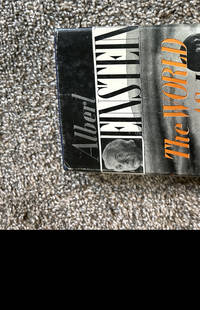
19492<p>The World As I See It by Albert Einstein</p> Philosophical Library hardcover
192625045<p><b>ALBERT EINSTEIN.</b>Autograph Correspondence Card Signed to Michele Besso May 1 1926 Berlin. In German. 1 p. 4¼ x 5⅞ in. </p><b>Complete Translation</b><p><i> 1 May 1926</i></p><p><i>Dear Michele</i></p><p><i> I read that paper</i><i>right away at the time but I don't think that anything more profound lies behind it. There is naturally a rough connection between a decrease in volume and energy and from here one can try to come nearer to the empirical phenomena by introducing further parameters. But this happens in such a way that neither rhyme nor reason can be made of it. It is very reminiscent of Traube. Using such apothecary's methods one cannot reveal any of God's secrets I think. Schrödinger did a couple of wonderful studies on quantum rules Ann d Physik.</i> <i>That has the scent of a deeper truth. Let it be explained to you.</i></p><p><i> I'm coming to Switzerland in July. End of July is LN meeting in Geneva.</i> <i>Then I'm going somewhere in the mountains with Tete. So I'll visit you or else we can meet.</i></p><p><i> Warm regards also to Anna and Vero your</i></p><p><i> Albert</i></p><p><b>Historical Background</b></p><p>Early in 1926 Michele Besso sent Einstein an early draft of a paper by Swiss chemist Gottfried Beck on quantum mechanics. Beck had initially submitted the paper to the Swiss scientific journal <i>Helvetica Chemica Acta</i> which rejected it as too speculative. On April 25 1926 Besso wrote to Einstein about Beck's paper. After discussing the details he writes "This surely is an amusing thing; I was surprised that you didn't write me anything about it. Here too reality is once again simpler than the theoretical conceptions would lead one to expect."</p><p>Three months later Einstein wrote to Besso regarding Beck's paper: "it is obviously particularly painful to use the quantum condition together with the equations of motion here because the validity of the latter appears to be irreconcilable with the validity of the former." Einstein was skeptical that Beck's equation "has any reality left within it in the face of quanta. I vigorously doubt it." However Einstein found the construction of the left side of the equation "surely contains a deeper truth." Einstein declared to Besso "I cannot make myself glue two things together like the left- and right-hand sides of this equation that have nothing to do with each other logico-mathematically."</p><p><b>Michele Besso</b> 1873-1955 was born in Zurich Switzerland into an Italian Jewish family. He was a close friend of Albert Einstein when they worked together at the Federal Polytechnic Institute in Zurich and at the patent office in Bern where Einstein helped Besso get a job. Besso met his future wife Anna Winteler through Einstein in June 1897. In 1898 their son Vero was born in Winterthur Switzerland. Einstein referred to Besso as "the best sounding board in Europe" for scientific ideas. Besso died in Geneva just over one month before Einstein died in Princeton New Jersey.</p><p><b>Johann Gottfried Beck</b> 1900-1992 received his Ph.D. in chemistry from the University of Bern in December 1925. He worked as an assistant to Heinrich Zangger at the Institute for Forensic Medicine at the University of Zurich.</p><p><b>Isidor Traube</b> 1860-1943 was born in Hanover the son of a wealthy German-Jewish merchant. He received his doctorate in organic chemistry in 1882. He founded capillary chemistry and conducted advanced research on liquids helping to define the concepts of surface tension and critical temperature. In 1882 he joined the faculty of Technische Hochshule in Berlin and became a professor of chemistry there in 1900. Unacceptable to National Socialists Traube was barred from his laboratory and he left Germany in 1934. Through the aid of British colleagues he was provided with a laboratory at the University of Edinburgh. During his long career he was a persistent and stubborn controversialist in opposition to various theories.</p><p><b>Erwin Schrödinger</b> 1887-1961 was born in Vienna Austria. He was a commissioned officer in the Austrian fortress artillery during World War I. After the war he advanced through the academic ranks to become a full professor in 1921 in Breslau now Wroclaw Poland. That year he moved to the University of Zurich and in 1927 to the Friedrich Wilhelm University in Berlin. He received the Nobel Prize in Physics in 1933 and left Germany as he opposed the Nazis. After brief positions in a number of places he settled in Dublin Ireland in 1940 where he remained until retiring in 1955. During his career Schrödinger developed a number of fundamentals of quantum theory including the wave equation. He also published many works in various fields of physics. Although Schrödinger was an atheist he believed his scientific work was an approach to the godhead in a metaphorical sense.</p><p><b>Eduard Einstein</b> 1910-1965 was born in Zürich Switzerland to Albert and Mileva Marić Einstein. In 1914 his parents separated and his mother returned to Zürich with Eduard and older brother Hans Albert who were both deeply affected. Eduard was interested in music art and poetry. Unlike his father Eduard was a good student. He had started to study medicine and psychiatry but in 1930 was diagnosed with schizophrenia. He was first institutionalized in 1932; it is not clear if his treatment particularly electroconvulsive therapy did more good than harm. Albert fondly referred to Eduard as "Tete" for <i>petit</i> and they corresponded regularly but never saw each other after a heart-breaking final visit in 1933. Marić and Eduard's Swiss citizenship undoubtedly saved Eduard from Aktion T4 the Nazi euthanasia program and perhaps both of them from the Holocaust. His mother cared for Eduard until her death in 1948 and Eduard thereafter lived mostly at a psychiatric clinic in Zurich where he died from a stroke in 1965.</p> books