1 505 résultats
1956RO20021483Hachette. 1956. In-12. Cartonné. Etat d'usage, Couv. défraîchie, Dos frotté, Intérieur bon état. 295 pages. Quelques illustrations dans le texte.. . . . Classification Dewey : 539-Physique nucléaire
195685714Librairie Hachette , Centre d'Etudes Nucléaires de Saclay Malicorne sur Sarthe, 72, Pays de la Loire, France 1956 Book condition, Etat : Bon broché, sous couverture imprimée éditeur blanche et bleue, illustrée d'une composition bleu et rouge In-8 1 vol. - 296 pages
1963ROD0033009Chez l'auteur. 1963. In-8. Broché. Bon état, Couv. légèrement pliée, Agraffes rouillées, Intérieur bon état. 15 planches.. . . . Classification Dewey : 539-Physique nucléaire
1966R320179910Institut pédagogique national. 1966. In-8. Broché. Bon état, Couv. convenable, Dos satisfaisant, Intérieur frais. 55 pages agrafées - quelques illustrations en noir et blanc dans et hors texte.. . . . Classification Dewey : 539-Physique nucléaire
176p. Text illustrations by John Bradford. Signed and inscribed by Asimov "and nuclear physics for Wendell, Isaac Asimov". Also with the stamped ownership of Dick M. Hoover. 8vo. Original full red cloth binding. Original dust jacket with price, spine faded with small loss and tears, somewhat crudely repaired with archival tape. Hardbound. This history of the early theories and development of atomic energy and the atomic bomb was Asimov's first book on physics, and one of his earliest non-fiction books for the general public. It seems to have caused J. Edgar Hoover and the FBI to begin to investigate him. Nice signed copy. The presentation to Wendell is intriguing, because the hero of Asimov's early science fiction was a Dr. Wendell Urth. **PRICE JUST REDUCED! SPACE/4
383 pages. Index. "This interdisciplinary volume presents electronic knowledge vital to the efficient application of nuclear chemistry theory... Helps the chemist obtain better results, choose appropriate components, and save setup time on experiments." - from dust jacket. Front free endpaper removed. Book clean and unmarked with light wear. Dust jacket heavily worn but now preserved in glossy new archival-grade Brodart cover. Overall a sound copy. Book
2001x-9810246544World Scientific Pub Co Inc 2001. Hardcover. New. 456 pages. 8.50x6.25x1.25 inches. World Scientific Pub Co Inc hardcover
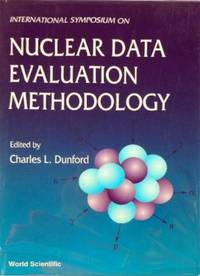
9810212852.Ghardcover. Good. Access codes and supplements are not guaranteed with used items. May be an ex-library book. hardcover
9810246692-9-1World Scientific Publishing Company. 1st. New. The item is brand new never used or read. It's in perfect condition and may include supplements and/or access codes or come shrink-wrapped. World Scientific Publishing Company unknown
2001DADAX9810246692World Scientific Publishing Company 2001-07-20. First Edition. hardcover. New. 6.38x1.60x8.76. Buy with confidence. Excellent Customer Service & Return policy. World Scientific Publishing Company hardcover
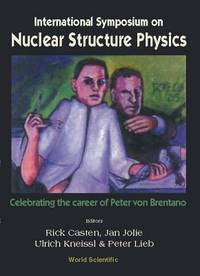
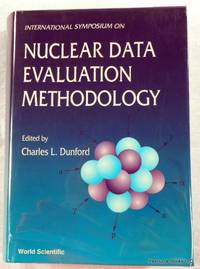
1993032183Hackensack New Jersey U.S.A.: World Scientific Pub Co Inc 1993. First edition 1993. Good in very good dustjacket. Collected scholarly papers from a 1992 symposium. Purple hardcover with dustjacket. Book has edge rubbing and sits slightly crooked when laid flat this disappears when the book is shelved. Firm binding clean pages with a small circle on the group photo indicating the book's previous owner pages clean and otherwise unmarked. The mylar protected dustjacket has light shelf rubbing no chips. First Edition. Hard Cover. Good/Very Good. 8vo - over 7¾" - 9¾" tall. World Scientific Pub Co Inc Hardcover
198354539Los Alamos NM: Los Alamos National Lab 1983. very good. 3-ring binder approximately 2 inches of material. Course met from October 17 to November 4 1983. Sponsored by the U.S. Department of Energy in cooperation with the International Atomic Energy Agency. The course director was Charles R. Hatcher. Los Alamos National Lab unknown
19991317193PN. New. 1999. Soft Cover. Date is original print. This is a reprint edition . PN paperback
19831681<p>Good Softback Volume of the Fifth Edition of this well-established and widely-used textbook. 712pp with index ISBN 0412156709 ~ 36.95 ~ Rutherford Curie Nuclear Atom Radiation X-Rays ~ Physics</p> Chapman & Hall paperback
1985100147274Economica 1985 15 4x1x23 8cm. 1985. unknown_binding.
1946R300280174Longmasn. 1946. In-8. Relié. Etat d'usage, Couv. convenable, Dos satisfaisant, Intérieur acceptable. XI + 351 pages - nombreuses illustrations en noir et blanc dans le texte et quelques planches hors texte. Livre en anglais. Jaquette légèrement déchirée en coiffe de tête.. Avec Jaquette. . . Classification Dewey : 539-Physique nucléaire
1962RO30370069Dunod. 1962. In-8. Relié toilé. Etat passable, Coins frottés, Dos satisfaisant, Papier jauni. 466 pages. Quelques rousseurs. Jaquette correcte. Graphiques et figures en noir et blanc, in texte.. Avec Jaquette. . . Classification Dewey : 539-Physique nucléaire
pp. ix, 286. Inked and yellow underlinings. Inked ownership of Clement B. Elgar, Thayer School. 8vo. Original full blue cloth binding, lettered and decorated in silver. Binding faded at extremities. Hardbound. SPACE/4
a720491981 Office of the Nuclear Regulatory Commisssion. 4to. about 500pp. original printed wraps. A few ink numbers and Depository Library stamps. VG. Text clean binding secure almost no wear. backstrip faded. Scarce. . paperback
197917254Washington:U. S. Nuclean Regulatory Commission 1979. soft cover. Very Good/No jacket. Washington:U.S. Nuclear Regulatory Commission. 1979. Lacks continuous pagination though complete. Softcover. Covers show some light wear to the edges and spine but otherwise only gently soiled and in very good condition. Interior is clean bright and free of stray markings save for a few pages with some pencil underlining. Overall a very good copy. Washington:U. S. Nuclean Regulatory Commission paperback
19792606230018U.S. Nuclear Regulatory Commission 1979. First Edition. Paperback. Good. 0x0x0. Bound in publisher's wraps. Softcover. Good binding and cover. Clean unmarked pages. Minor shelf wear. Approximately 850 pages in various pagings : illustrations ; 28 cm. Investigative report no. 50-320/79-10 U.S. Nuclear Regulatory Commission paperback
50611McGraw-Hill, 1949 15,5 x 23,5, 653 pp., 136 figures, 49 tableaux, cartonné, toilé, Bon état - 1ère édition
2080702109501196Okura Ministry of Printing Bureau N.A. Soft Cover. Fine. Number of pages: 195p Size: 21cm Number of books: 1 Okura Ministry of Printing Bureau paperback
196487717Livermore CA: U.S. Army Engineer Nuclear Cratering Group 1964. Presumed First Edition First printing. Wraps. Good. The format is approximately 8 inches by 10.5 inches. Various paginations approximately 120 pages. Illustrations figures tables tabular data. Ex-library copy with the usual library markings some blacked out. This is part of Plowshare--civil industrial and scientific used for nuclear explosives. The US Army Corps of Engineers Nuclear Cratering Group NCG program activities include: 1 cratering calibration of various geologic media and development of techniques designed to provide a desired crater geometry with chemical high-explosive detonations; 2 joint planning of and technical participation in AEC nuclear-excavation experiments; 3 development of data on the engineering properties of nuclear craters; 4 development of civil works nuclear construction technology; 5 accomplishment of engineering studies of nuclear construction feasibility; and 6execution of joint CE/AEC civil works nuclear-construction experiments. Four conceptual nuclear-construction applications have been identified as having a significant potential for accomplishment: 1 nuclear quarrying to produce rock fill or aggregate; 2 nuclear ejecta dam construction; 3 nuclear harbor construction; and 4 nuclear canal excavation. This inclosure described the design of the nuclear explosions required to excavate the channel for an Isthmian sea-level canal. The Columbian nuclear cue would use 262 devices with a total yield of 2709 megatons fired in 21 separate detonations. Project Plowshare was the overall United States program for the development of techniques to use nuclear explosives for peaceful construction purposes. The program was organized in June 1957 as part of the worldwide Atoms for Peace efforts. As part of the program 35 nuclear warheads were detonated in 27 separate tests. A similar program was carried out in the Soviet Union under the name Nuclear Explosions for the National Economy. Successful demonstrations of non-combat uses for nuclear explosives include rock blasting stimulation of tight gas chemical element manufacture unlocking some of the mysteries of the R-process of stellar nucleosynthesis and probing the composition of the Earth's deep crust creating reflection seismology vibroseis data which has helped geologists and follow-on mining company prospecting. The project's uncharacteristically large and atmospherically vented Sedan nuclear test also led geologists to determine that Barringer crater was formed as a result of a meteor impact and not from a volcanic eruption as had earlier been assumed. This became the first crater on Earth definitely proven to be from an impact event. Negative impacts from Project Plowshare's tests generated significant public opposition which eventually led to the program's termination in 1977. These consequences included tritiated water projected to increase by CER Geonuclear Corporation to a level of 2% of the then-maximum level for drinking water and the deposition of fallout from radioactive material being injected into the atmosphere before underground testing was mandated by treaty. Peaceful nuclear explosions PNEs are nuclear explosions conducted for non-military purposes. Proposed uses include excavation for the building of canals and harbors electrical generation the use of nuclear explosions to drive spacecraft and as a form of wide-area fracking. PNEs were an area of some research from the late 1950s into the 1980s primarily in the United States and Soviet Union. In the U.S. a series of tests were carried out under Project Plowshare. Some of the ideas considered included blasting a new Panama Canal constructing the proposed Nicaragua Canal the use of underground explosions to create electricity Project PACER and a variety of mining geological and radionuclide studies. The largest of the excavation tests was carried out in the Sedan nuclear test in 1962 which released large amounts of radioactive gas into the air. By the late 1960s public opposition to Plowshare was increasing and a 1970s study of the economics of the concepts suggested they had no practical use. Plowshare saw decreasing interest from the 1960s and was officially canceled in 1977. The Soviet program started a few years after the U.S. efforts and explored many of the same concepts under their Nuclear Explosions for the National Economy program. The program was more extensive eventually conducting 239 nuclear explosions. Some of these tests also released radioactivity including a significant release of plutonium into the groundwater and the polluting of an area near the Volga River. A major part of the program in the 1970s and 80s was the use of very small bombs to produce shock waves as a seismic measuring tool and as part of these experiments two bombs were successfully used to seal blown-out oil wells. The program officially ended in 1988. U.S. Army Engineer Nuclear Cratering Group paperback
215 pages. Hand-numbered copy #104 of 300. The recollections of this experienced activist who trained many in the art of non-violent protest and served as one of the famous Raging Grannies. Sure to be valuable reading for others hoping to help keep and make this world a better place. Recounts her activities in Israel.Palestine, Clayoquot Sound, Nicaragua, etc. It appears this copy was originally signed and inscribed by the author but this has been obscured by liquid paper. Average wear. Unmarked. A sound copy. Book