565 résultats
19912090502113717365Not Available 1991. Soft Cover. Fine. The book is in fine condition. Not Available paperback
0126322503.Ghardcover. Good. Access codes and supplements are not guaranteed with used items. May be an ex-library book. hardcover
183442833London Richard Taylor 1834 4to. No wrappers as extracted from "Philosophical Transactions" 1834 - Part I. Pp. 123-126 a. pp. 127-141. <br/><br/><em>First appearance of Lubbock's "Lunar-Theory""John Lubbock 1803-65 was an astronomer and mathematician. He made a special study of tides and of the lunar theory and developed a method for calculating the orbits of comets and planets. In mathematics he applied the theory of probability to life insurance problems." </em> unknown
185350167London Richard Taylor and William Francis 1853 4to. No wrappers as extracted from "Philosophical Transactions" 1853 Vol. 143. Pp. 397-406. <br/><br/><em>First appearance of this importent paper by Adams - famous for his co-discovery with Le Verrier of Neptune in 1846 - in which he introduces new mathematical methods in dealing with the pertubations of the Moon raising a sharp scientific controversy and correcting Laplace's great memoir of 1788."He Adams was elected a fellow of Pembroke College in 1853 and shortly afterward he presented to the Royal Society a remarkable paper on the secular acceleration of the moon’s mean motion. This quantity was thought to have been definitively investigated by Pierre Simon de Laplace in 1788 but Adams showed that Laplace’s solution was incorrect. In particular Laplace had ignored a variation in solar eccentricity that introduces into the differential equations for the moon’s motion a series of additional terms. Adams calculated the second term of the series on which the secular acceleration depends as 3771/64m4 the value computed from Laplace’s work was 2187/128 m4. The effect of the correction was to reduce the figure for the moon’s secular acceleration by about half from 10.58 to 5.70.This paper caused a sharp scientific controversy marked by angry chauvinism on the part of several French astronomers. Their attacks stimulated a number of independent investigations of the subject all of which confirmed Adams’ result. The matter was definitely settled in his favor by 1861 but not without hard feelings."DSB. </em> unknown
185342763London Richard Taylor and William Francis 1853 4to. No wrappers as extracted from "Philosophical Transactions" 1853 Vol. 143 - Part III. Pp. 397-406. Clean and fine. <br/><br/><em>First appearance of this importent paper by Adams - famous for his co-discovery with Le Verrier of Neptune in 1846 - in which he introduces new mathematical methods in dealing with the pertubations of the Moon raising a sharp scientific controversy and correcting Laplace's great memoir of 1788."He Adams was elected fellow of Pembroke College in 1853 and shortly afterwards he presented to the Royal Society a remarkable paper the paper offered on the secular accleration of the moon's mean motion. This quantity was thought to have been definitively investigated by Pierre Simon de Laplace in 1788 but Adams showed that Laplace's solution was incorrect. In particular Laplace had ignored a variation in solar eccentricity that introduces into the diffrential equations for the moon's motion a series of additional terms. Adams calculated the second term of series on which the secular acceleartion depends.This paper caused a sharp scientific controversy marked by angry chauvinism on the part of several French astronomers. Their attack stimulated a number of independent investigations of the subject all of which confirmed Adams' results. The matter was definitely settles in his favor by 1861 but not without hard feelings."DSB I p. 54b. </em> unknown
181646878London Baldwin Cradock and Joy 1816 a. 1821. Bound in 2 uniform contemp. moiré boards. Light wear along edges and a fes smaller scratches. In: "Annals of Philosophy; or Magazine of Chemistry Mineralogy Mechanics Natural History. By Thomas Thomson." Vol. VIII and New series Vol. I. VIII479 pp. a. 9 engraved plates VIII479 pp. a. 7 engraved plates. Entire volumes offered. Herapath's papers: pp. 56-60 1816 a. pp. 273-293 340-351 a. 401-416. <br/><br/><em>First printing of these contoversial papers where Herapath revived the kinetic theory of gases. His theory was more or less neglected by the scientific community at his time. The kinetic theory remained dormant and forgotten after Euler's and Bernouilli's work "until 1816 when Herapath proposed a theory which is essential Bernoulli's. Unfortunately he chose to define temperature as being proportional to the momentum rather than the kinetic energy of molecules. Herapath was the first to show more or less that kinetic theory can provide simple explanations for the changes of state diffusion and the propagation of sound."Trousdell "Essayas in the History of Mechanics" pp. 283 ff.Euler Bernoulli Herapath and Waterston may be considered the principal scientists who prior to 1850 attempted a more or less complete mathematical treatment of gases based on a set of molecular postulates. Jamie Wisniak."Having published a preliminary notice of his theory in the Annals of Philosophy in 1816 Herapath submitted a detailed account to the Royal Society in 1820. Davy who was elected to the presidency of the Society in November of that year was primarily responsible for the fate of the paper. Although Davy was already known as an advocate of the qualitative idea that heat is molecular motion he found Herapath’s quantitative development too speculative and complicated; he rejected the hypothesis of an absolute temperature implying an "absolute zero" of cold. Having been told that his paper would not be accepted for publication in the Philosophical Transactions Herapath withdrew it and published it instead in the Annals of Philosophy in 1821. Five years later he launched an attack on Davy in the Times of London accusing him of circulating unfounded criticisms of his experimental work which prevented its publication. Although Davy ignored a series of letters and challenges published in the Times Herapath later claimed Davy’s resignation from the presidency of the Royal Society 1827 as a victory for himself."DSB. </em> hardcover
188535224Kjøbenhavn Jacob Lund 1885. Orig. bogtrykt omslag. Løs i heftningen og omslaget med rifter og pletter. 491 pp. Indvendig pæn. <br/><br/><em>First edition. The most importent Danish work in psychology. It is a psychophysiological study on vasomotor disturbances and conditioned reflexes during period of emotional stress - known as the James-Lange-theory. </em> unknown
176941682Berlin Haude et Spener 1769. 4to. No wrappers as issued in "Mémoires de l'Academie Royale des Sciences et Belles-Lettres" tome XIX. 2 =halftitle Mémoires.141-220. 1.memoir pp. 141-179 a. 1 enraved plate. - 2. pp. 180-193. - 3. pp. 194-220. - 4. pp. 221-234 a. 1 plate. <br/><br/><em>First printing of these 4 fundamental papers on the perturbations of the moon as Euler was the first to use of the Calculus on the motion of the moon in relation to the attractive powers of the Moon the Earth and the Sun. The theories laid down here is also called Euler's second theory and it is the most interesting. It was of the greatest importtence as a basis for later developments."He applied his mathematics to astronomy working out the nature of some perturbations being in this respect the precursor of Lagrange and Laplace. He began to replace the geometric methods of proof used by Galileo and Newton with the algebraic a tendency carried to its conclusion by Lagrange. In particular he worked on lunar theory that is on the analysis of the exact motion of the moon the complications of which have been the despair of astronomers and mathematicians since the time of Kepler. - Eneström: 398 399 400 a. 401. </em> unknown
19782092902141207635old books in shanghai 1978. Soft Cover. Fine. Volume: 1 old books in shanghai paperback
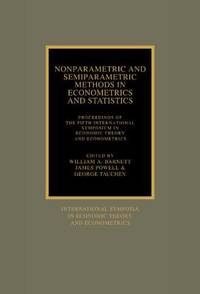
1991x-0521370906Cambridge Univ Pr 1991. Hardcover. New. 493 pages. 9.00x6.25x1.00 inches. Cambridge Univ Pr hardcover
2002x-1402001916Kluwer Academic Pub 2002. Hardcover. New. 1st edition. 445 pages. 9.50x6.50x1.00 inches. Kluwer Academic Pub hardcover
1996382225Cambridge ; New York : Cambridge University Press 1996. First Edition. Hardcover. Fine cloth copy in an equally fine dust-wrapper. Particularly well-preserved overall; tight bright clean and especially sharp-cornered. Physical description: xi 406 pages : illustrations ; 24 cm. Subject: Statics and dynamics Social sciences ; Congresses. Economics Mathematical ; Congresses. Chaotic behavior in systems ; Congresses. Differential equations Nonlinear ; Congresses. Economics Mathematical Congresses. Chaotic behavior in systems Congresses. Differential equations Nonlinear Congresses. Chaotic behavior in systems. Differential equations Nonlinear. Economics Mathematical. Statics and dynamics Social sciences. Cambridge ; New York : Cambridge University Press hardcover
2000x-0521594243Cambridge Univ Pr 2000. Hardcover. New. 227 pages. 9.50x6.50x0.75 inches. Cambridge Univ Pr hardcover
2001x-052166246XCambridge Univ Pr 2001. Hardcover. New. 1st edition. 452 pages. 9.00x6.25x1.25 inches. Cambridge Univ Pr hardcover
198512321<p>Paris: Maeght editeur 1985. First edition / First printing. Oversize illustrated wrappers. Fine. Features beautiful lithographs by 10 artists. A lovely production.</p> Maeght editeur, paperback
19792091202133001858Japan Children's Literature Association Kaiseisha 1979. Soft Cover. Fine. Number of books: 1 Japan Children's Literature Association Kaiseisha paperback
19432111902156001640Seibundo Shinkosha 1943. Soft Cover. Fine. The book is in fine condition. Seibundo Shinkosha paperback
012324255X.Ghardcover. Good. Access codes and supplements are not guaranteed with used items. May be an ex-library book. hardcover
18717782London: Longmans and Co. 1871. First edition. Hardcover. Very Good. 4 X 6 inches high. 135 pages. Full calf binding with black leather label with gilt lettering on spine gilt rules on covers 4 raised bands with gilt decoration on spine endpapers & edges of textblock marbled. Inscribed by author at top of title page "With the author's compliments 20th April 1872". Condition of the book is VERY GOOD; Covers lightly scuffed & soiled otherwise excellent text is very clean binding is tight. Nature Rare RGR London: Longmans and Co. hardcover
19802091502135413838enterprise 1980. Soft Cover. Fine. Number of books: 1 enterprise paperback
176949807Berlin Haude et Spener 1769. 4to. No wrappers as issued in "Mémoires de l'Academie Royale des Sciences et Belles Lettres" Année 1767 tome XXIII pp. 131-164 a. 1 engraved plate. <br/><br/><em>First printing dealing with compound lenses for making telescopes and the mathematical theory.Enestroem: E 383. </em> unknown
176945125Berlin Haude et Spener 1769. 4to. No wrappers as issued in "Mémoires de l'Academie Royale des Sciences et Belles Lettres" Année 1767 tome XXIII pp. 131-164 a. 1 engraved plate. <br/><br/><em>First printing dealing with compound lenses for making telescopes and the mathematical theory.Enestroem: E 383. </em> unknown
184047109Paris Bachelier 1840 4to. No wrappers. In: "Comptes Rendus Hebdomadaires des Séances de L'Academie des Sciences" Tome X No 5 entire issue offered. Pp. 143- 207. Dumas' paper: pp. 149-178. <br/><br/><em>First appearance of this paper which was published the same year in 'Annales de Chimie et de Physique' is the most importent on the theory of structural types and the nomenclature of organic compounds refuting the electrochemical theory of Berzelius. "The development of this idea type organique into what is sometimes called the "Older Type Theory" as distinguished from Gerhardt's Type heory is contained in Dumas' importent memoir on the substitution and the theory of types presented on 3 febriary 1840."Partington IV p. 365. "Jean Baptiste Dumas advances a theory that the chemical properties of an organic compound are determined by its structure and not as seems to be the case with inorganic compounds by its electrical properties. he illustrates the concept with the example that the basic qualitative properties of acetic acid are retained even after replacing three fourths of the hydrogen by chlorine. As a consequence he calls for a revision of chemical nomenclature for organic compounds basing terms on common features not on elemental composition."Parkinson "Breakthroughs" 1840 C. </em> unknown
184051504Paris Bachelier 1840. 4to. No wrappers. In: "Comptes Rendus Hebdomadaires des Séances de L'Academie des Sciences" Tome X No 5 entire issue offered. Pp. 143- 207. Dumas' paper: pp. 149-178. With half-title to Tome X. <br/><br/><em>First appearance of this paper which was published the same year in 'Annales de Chimie et de Physique' is the most importent on the theory of structural types and the nomenclature of organic compounds refuting the electrochemical theory of Berzelius. "The development of this idea type organique into what is sometimes called the "Older Type Theory" as distinguished from Gerhardt's Type heory is contained in Dumas' importent memoir on the substitution and the theory of types presented on 3 February 1840."Partington IV p. 365. "Jean Baptiste Dumas advances a theory that the chemical properties of an organic compound are determined by its structure and not as seems to be the case with inorganic compounds by its electrical properties. he illustrates the concept with the example that the basic qualitative properties of acetic acid are retained even after replacing three fourths of the hydrogen by chlorine. As a consequence he calls for a revision of chemical nomenclature for organic compounds basing terms on common features not on elemental composition."Parkinson "Breakthroughs" 1840 C. </em> unknown
179148147Paris 1791. Contemp. hcalf. Gilt spine. Spine a bit rubbed. Wear to top of spine. A dampstain to lower right corners on the first 15 leaves of the volume. Stamps to verso of titlepage. In: "Annales de Chimie ou Recueil de Mémoires concernant la Chemie" Tome 9. 355 pp. a. 1 engraved plate. Entire volume offered. Hassenfratz's paper: pp. 261-274. <br/><br/><em>First printing of a classic paper in physiology."Hassenfratz a pupil of Lagrange maintained that the oxidation of carbon and hydrogen took place in the blood and not in the lungs as taught by others."Garrison & Morton: 926. </em> unknown