209 résultats
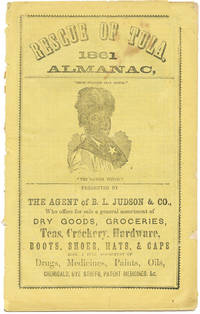
1860WRCAM41779New York: B.L. Judson & Co. 1860. 24pp. Original yellow printed wrappers. Spine mostly perished. Some chipping and tears to wrappers. Very minor soiling. Good. A rare patent-medicine almanac reprinting the story of an herbalist's rescue of Tula the Aztec princess likely fabricated to promote the sale of Judson's various medicaments. Originally printed in 1859 by the same publisher the almanac recounts the story of the "wealthy herbalist Dr. Cunard who with a trapper named Du Bois or Hawk Eye spent seven years trapping and travelling throughout the Far West. The doctor had a number of unusual experiences not the least of which was his single-handed defiance of the Navajo Tribe as they were about to burn Tula the Aztec princess at the stake. This was accomplished by capitalizing on the fortuitous imminence of a total eclipse of which the good doctor knew after consulting his handy little almanac. The Navajo chief was as confounded as Merlin in an earlier day and promptly gave up not only Tula but also his secret mountain-herb recipe. A trapper's testimonial direct from St. Louis concludes this 'True Account'" - Eberstadt. The almanac seems to have been published for only about four years 1860- 63 although the advertisement/story does appear in a few other almanacs as well. OCLC locates only one copy of the 1861 almanac and only one of most of the others as well at the Rochester Museum and Science Center. Rare and interesting. EBERSTADT 127:215 ref. B.L. Judson & Co. unknown books
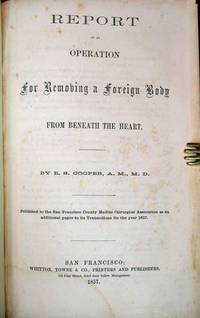
185737456San Francisco: Whitton Towne & Co. Printers and Publishers 1857. 1st printing Cordasco 50-0405; Cowan II p. 143; Greenwood 813. Modern marbled paper wrappers. Light old faded evidence of damping mostly in margins. Foxing. A VG copy. 9 1 blank pp. Old print-out of an ABE book listing laid-in. 8-7/8" x 5-3/4" <br/><br/>Cooper a renowned physician of his day founder of the first medical college on the Pacific Coast at the University of the Pacific. This paper describes a 'daring' procedure wherein Cooper removed a 'slug of iron' from one B. T. Beal of Springfield Tuolumne County. Seems Mr Beal and a few friends "in a frolicksome mood resolved to burst an old gun and accordingly loaded it with about eighteen inches of powder to which they connected a slow match and then endeavored to seek security by flight." He failed. The 'slug of iron' entered Mr Beal below the left armpit and lodged under his heart 'upon the vertical column' where it remained for 74 days until Dr Cooper removed it. The patient recovered said improvement in health to such a degree "as not to be recognized by medical men present at the operation". No copies at auction these last 30 years per ABPC & Am Ex; we know of one copy sold a couple years ago through the trade. A rare item known as one of the earliest published accounts of a California surgical procedure. Whitton Towne & Co., Printers and Publishers unknown books
1830228066Madrid Imprenta Real 1830. 1830. 8vo. Later red wrappers. Very good. Fresh text no foxing. 104 pages. No signatures or bookplates. Soft cover. Very Good. Madrid, Imprenta Real, 1830. paperback books
18837512Buffalo N.Y.: Published by D. Ransom Son & Co.; Press of Baker Jones & Co 1883. Booklet sewn on cords in wrappers 16.5 x 10 cm. 32 pages. Illustrated. Advertisements. A single year from the annual almanac promoting the "Celebrated Family Medicines" of Ransom Son & Co. series 1874 - c. 1923. The booklet consists of a series of alternating pages of recipes culinary household medicinal dyeing etc. with facing pages each advertising an individual patent medicine Trask's Magnetic Ransom's Honey Syrup Ransom's Hive Syrup Universal Magnetic Balm Prof. Anderson's Dermador. Printed orange paper wrappers decorated and with text. Hole with string tie to upper left corner. Very light rippling to wrappers otherwise fine. Published by D. Ransom, Son & Co.; Press of Baker, Jones & Co unknown books
18253010London: John Knight & Henry Lacey 1825. Hardcover. Very Good. Three volume set. Small 8vos. Full contemporary greeen morocco gilt spines rather worn and rubbed. Internally nice and clean. Interesting essays on a wide range of medical topics. <br/><br/> John Knight & Henry Lacey hardcover books
1948129737Washington: Department of State 1948. hardcover. very good. Illustrated in b/w. 2 volumes. Tall thick 8vos red cloth. Washington D.C.: Department of State 1948. A very good pair.<br/><br/> Department of State unknown books
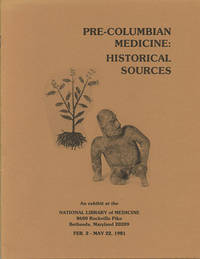
198136776Bethesda: National Library of Medicine 1981. First edition. Stapled paper wrappers. A fine copy. Unpaged 8 pp. Illus. with b/w photos. Sm. 4to. An exhibit at the National Library of Medicine February 2nd - May 22nd 1981. National Library of Medicine unknown books
187147582Rome: Forzani et C. 1871. First Edition. Folio 33cm.; publisher's tan printed card wrappers; 18pp. Wrapper lightly soiled faint vertical creasing a few tiny chips to spine ele Very Good internally fresh and fine save the crease. Polemical attack on the state of the French university system written in March 1871 two months after the end of the disastrous for the French Franco-Prussian War. As Pasteur argues whereas in Germany universities proliferated across the country France "stymied by revolution was always occupied with the sterile search for a better form of government giving only distracted attention to her institutions of higher learning" p. 9 our translation. At the root of all this was the regime of Napoleon I who in the early years of the 19th century neglected the country's twenty-eight extant institutions of higher learning in favor of his Université de France a disastrously centralized state-run institution that he established in 1808. The University suffered greatly during the Restoration and with it the quality of education so that by 1868 only £8000 were being spent for "true academic purposes" across the country cf. W. Chandler Roberts et al "Journal of the Society for Arts Vol. 32 no. 1655 August 8 1884 p. 905 creating a lacuna of learned and innovative thinkers to match Germany's. Perhaps in order to combat this downward trend Pasteur later founded the Pasteur Institute in 1887 serving as its director until his death in 1895. <br/><br/>This appears to be the only separate appearance of Pasteur's tract published abroad and distributed to various foreign leading scientific figures among these "Darwin's Bulldog" Thomas Henry Huxley who makes mention of this work in an address delivered in October of that same year. The essay appeared again in print in 1947 following an even more disastrous encounter with Germany in a collection titled "Pour l'Avenir de la Science Française." This publication quite scarce with four physical copies noted in OCLC as of February 2020. COPAC adds one copy at the LEC Library UK. Forzani et C. unknown books
1973EEG1385London:: Wellcome Institute of the History of Medicine 1973. 1973. Series: Museum Catalogue III Portraits of Doctors & Scientists. 4to. xxiv 459 1 pp. Frontis. port. plates index. Navy gilt-stamped cloth dust jacket. Near fine. Garrison & Morton 6610.1 Wellcome Institute of the History of Medicine, 1973. hardcover books
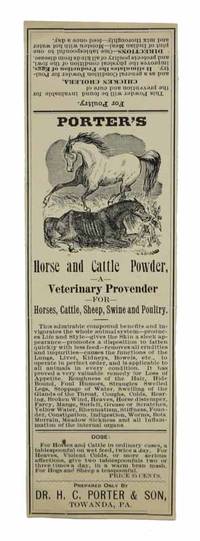
43268Towanda PA: H. C. Porter & Son n. d. Circa 1880s. Thin white paper printed in black. Small fleck of staining no affecting text else crisp and clean. NF. Label printed recto only. B/w reproduction of an engraving by W. N. Dunner. 7-15/16" x 2-3/8" <br/><br/>Label for Porter's Horse and Cattle Powder which purportedly "benefits and invigorates the whole animal system -- produces Life and Style -- gives the Skin a sleep appearance -- promotes a disposition to fatten quickly with less feed -- removes all crudities and impurities -- causes the functions of the Lungs Liver Kidneys Bowels etc. to operate in perfect order and is applicable to all animals in every condition." Additionally the powder is advertised to prevent and cure chicken cholera as well as stimulate egg production. [H. C. Porter & Son] unknown books
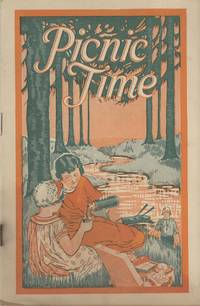
19205160Lynn Mass: Lydia Pinkham Medicine Company 1920. Stapled booklet 18 x 11.75 cm. 32 pages. FIRST EDITION. A promotional cookbook issued by the patent medicine company which issued Lydia Pinkham's Herb Medicine and Lydia Pinkham's Vegetable Compound. Recipes are interspersed with testimonials and a customer survey in the back allows the marketers to keep track of the booklet's distribution. Pages age-toned and some discoloration to title page. Staples a bit rusty otherwise very good with a handsome wrapper image printed in orange and green. OCLC locates ten copies. Lydia Pinkham Medicine Company unknown books
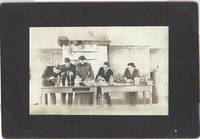
16189Original vintage photograph of a female teacher directing male medical students dissecting a cadaver c. 1890. Black and white 3"x5" with back matting. One woman surrounded by four men lean over a table with a skeleton. Behind them is a chalkboard with anatomical pull down charts. Although women had participated in the informal practice of medicine for hundreds of years the United States and most industrialized nations did not allow women into the formal practice of medicine until the latter half of the 19th century. This female doctor was part of the first generation formally accepted by medical institution. She wears a medal indicating her importance and perhaps former military involvement. Early photographs of women in medicine are very rare photograph of surgery or dissection much rarer. <br/><br/>Women practiced in the medical field for hundreds of years until new licenser rules established in the Victorian era provided a means for their exclusion. The story of how women reclaimed their role in medicine is one of resourcefulness and determination. In 1849 the first American woman graduated medical school. The path was difficult; few medical schools would accepted them and the reception was not always welcoming. Female doctors were called not only to prove their ability to practice medicine but to justify their unique necessity to the field. Of all the specialties the most embattled for women is surgery; early on they faced a challenge obtaining education training and facilities. A perennial argument was that cadaver dissection necessary to training was inappropriate for the delicate female disposition. However this Victorian-era photograph showing a woman capably participating in cadaver dissection proves that in the words of Dr. Mary Putnam Jacobi the best known female doctor in 1891 "It is perfectly evident.that the opposition to women physicians has rarely been based upon any sincere conviction that women could not be instructed in medicine but upon an intense dislike to the idea that they should be. unknown books
16584World War I Photo Album of World War I 1915-1918. Hospital Camp. 9 vintage photographs. 7 x 9 in. Photographs mounted with adhesive; 2 loose. During WWI the flow of casualties from the various theaters of war overwhelmed the existing medical facilities in Great Britain and many ad-hoc war hospitals were created at military camps across the country. Remarkable photograph of surgery performed by nurse and four doctors who wear aprons and have their sleeves rolled up. Photographs of military officers medical staff and exterior of the camp including military barracks medical buildings and images of medical transport automobiles marked with a large Red Cross. Throughout the photos individuals are busy with caring for injured soldiers who are carried on stretchers and shown resting in bed. Includes many images of women working as nurses and medical staff alongside men. 9 blank pages at end of album. Small tears and chips around edges of front and back cover. Photos in very good condition. unknown books
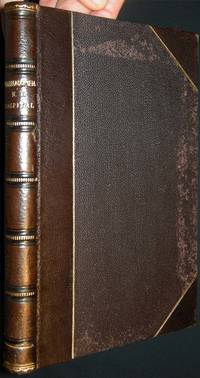
181626868New York NY: Collins & Co. Published Under the Authority of the Physicians and Surgeons of That Institution 1816. x 2 contents 180 2 Table IV Finis pages last page blank. Title page with the ownership signature of James R. Wood at top; and with another name lined-through of William Chambers. Concerning this book ". New York Hospital's pharmacopoeia was published in 1816 four years before the publication of the United States Pharmacopoeia. This caused considerable concern among the attending physicians about the potential abridgement of the physician's right to prescribe." from: New York-Presbyterian Hospital/Weill Cornell site Dr. James Rushmore Wood 1816 -1882 "began the practice of medicine in his native city and in 1847 he became a member of the medical board of Bellevue hospital New York. At that time this institution was a receptacle for lunatics paupers criminals and other victims of a depraved life. The most rudimentary hygienic laws were grossly violated in its management and the nursing was inefficient and untrustworthy. With the assistance of Morris Franklin president of the board of aldermen Dr. Wood set about reforming this state of things and labored so successfully that he soon reduced the annual death-rate by 600. He also made all the post-mortem examinations amounting to many hundreds yearly established Saturday surgical clinics and founded the Wood prize for the best anatomical dissection."Appleton Dr. Wood was also Chair of Operative Surgery and Surg. Path. in Bellevue Hosp. Coll. and Emeritus Prof. of Surgery until 1882.the most famous American surgeon of his day and the pioneer in periosteal surgery. Author of many papers and treatises." Title page also with the previous owner name-stamp of collector George R. Brush M.D. U.S. Navy; a surgeon & medical inspector from 1861-1894; his medical education was accomplished in NY at the Columbia College of Physicians and Surgeons 1858. Printer A. Paul. Approx. 5 1/4" x 8 1/4" size; bound in later 19th century dark brown textured cloth dark brown morocco leather corners & spine gilt spine titles & lines simple gilt rules on the boards block edges lightly sprinkled red. Cloth with loss of color at edges; binding with edge tips wear; contents foxed spotty; in good condition. . First Edition. Hard Cover. Good. Collins & Co. Published Under the Authority of the Physicians and Surgeons of That Institution hardcover books
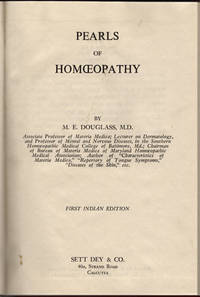
196839507Calcutta: Sett Dey & Co. 1968. 12mo 18 cm 7". 200 pp. <br><br>First Indian edition."<br>Â Â Â Â WorldCat locates three U.S. libraries reporting ownership of this edition. Publisher's purple cloth. Very good. Sett Dey & Co. hardcover books
183511108London: Edward Portwine 1835. 1st Edition in English cf. Garrison & Morton 3221 for the 1st edition of 1825. Original publishers green cloth spine over drab boards with printed paper title label to spine. Contemporary ownership signature of Dr. Edmund Ormond. Professionally rebacked. A Very Good copy. 388 pp 4 pp publisher advert at rear. 8vo approx 5.75" x 9". <br/><br/> Edward Portwine hardcover books
JC12814Buffalo New York: Willis L. Gregory n.d. 19th century. Ephemera. Fine. Pamphlet; single leaf 8.25x6 inches open; folded once printed on all 4 "pages" with dosages of Syrup of Dover's Powder as submitted by local doctors. <br/><br/>Dover's powder was a traditional medicine against cold and fever developed by Thomas Dover. It is no longer in use in modern medicine but may have been in use at least through the 1960s. Named from Doctor Thomas Dover an English physician of the eighteenth century who first prepared it the powder was an old preparation of powder of ipecacuanha opium in powder and potassium sulfate. The powder was largely used in domestic practice to induce sweating to defeat the advance of a cold and at the beginning of any attack of fever. Willis L. Gregory unknown books
189621778Chicago: Fred Klein Co 1896. First edition. Full Calf. Very Good. Full red morrocco binding. All edges in gilt. Satin moire endpapers. 618 pp. Nearly 175 illustrations provided by C. Everett Johnson. This copy labeled "Author's Edition". INSCRIBED by the good Doctor and dated in 1898. A very good copy overall with some spine darkening and light wear to spine tips. Internally clean. Publisher's summary descriptive sheet laid in. Comes in a supplied hard slipcase which is very worn and chipped but has protected this volume quite nicely. <br/><br/> Fred Klein Co unknown books
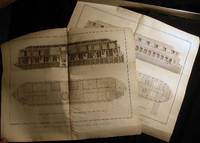
177225506European Origin: Various 1772. These two plates only from the Encyclopedie of Diderot; depicts the public bathing facilities with women's and men's sections. Approx. 15 1/2" x 18 1/2" size overall; double-page plates. Old center-fold lines; light edge tips wear couple of tiny spots; top corner chipped away a little; in very good condition. Art. Not Bound. Very Good. Various paperback books
16672Women in Science Medicine Original Gelatin silver print photograph of a Rustic pharmacological laboratory with female technician c. 1910. Three individuals pose amongst dozens of glass vials containing medical powders and remedies. 3.5 x 5 in. Original black and white photograph. Two figures wear white aprons or smocks indicating their important role in mixing and measuring different medicines. The first university Pharmacology department was established in 1847 and thus began the formalization of this field of scientific research as the 20th century witnessed a steady increase in the number of new drugs that would improve the human condition tremendously. Verso inscription in pencil and pen in European language. Very good condition. unknown books
16875Vaccines Women in Medicine Original silver gelatin print photograph of a Vaccination clinic in rural European village. 1922. size is 3.5 x 5.5 in. Outdoor vaccination clinic administered by women who are cleaning and preparing the equipment. Six figures stand around a table filled with glass vials test tubes and a makeshift hand-powered centrifuge seated woman holds straps which rotate mechanism. Two clean-cut men in dark overcoats stand among the women; they could be medical specialists from a nearby city overseeing the clinic. While women faced discrimination in pursuing formal medical training to become doctors they took part in many informal yet critically important roles in which they could support public health initiatives. Small loss to bottom left corner not affecting any figures. Very good condition. Exceptional early photograph of a rustic vaccination clinic. unknown books
16863Jewish Medical History Nurse with a Star of David on her cap peers into a microscope. 1935. Original silver gelatin print photograph. 7 x 5 in. Date handwritten in ink bottom right corner image verso "Sept. 1935". At the start of the Great Depression having skilled nurses was ever more important as malnutrition overcrowding poor sanitation and other side effects of extreme poverty caused by the sudden economic decline took an enormous toll on human health. Additionally Jewish emigration from Europe to the U.S. increased sharply in the 1930s with the rise of the Nazi Party so having compassionate culturally-sensitive medical care would be important for the growing Jewish population in America. Two light brown stains in lower center quadrant of image and 3 light stains along right edge. Good condition. unknown books
44211<p>Japan and Western Medicine. Oranda jin Geka ryoji no zu Dutch Surgery in Nagasaki. Original pen ink and watercolor drawing on light brown-toned silk with 4 vertical lines of Japanese characters in the upper left corner. Japan: late 18th or early 19th century. 483 x 363 mm. mounted as a scroll at a modern date on light grey silk backed with paper with a half-round hanging rail with braided ribbon attached at the top and a suspension bar at the foot measuring 914 x 443 mm. overall; preserved in a custom-made wooden box. A few tiny pinholes in upper corners of image but fine with the coloring fresh and bright.</p> <p> This striking image showing an amputation carried out by a Dutch surgeon in Japan was most likely painted in the late eighteenth or early nineteenth century during Japan's self-imposed period of national isolation. The hand-painted image is related but by no means identical to a Nagasaki woodblock print titled "Surgery by a Dutch Physician" one of many popular souvenir prints depicting scenes unique to Nagasaki which at the time was the sole point of contact between Japan and the outside world. See our reproduction of the print. It may be that our scroll is the original of the image; however it is also possible that both hand-painted and woodcut versions of the image were produced simultaneously.</p> <p> Western surgery came to Japan in the sixteenth and seventeenth centuries via the Portuguese who in 1543 became the first Europeans to make direct contact with Japan and the Dutch who became the only European nation allowed to trade with Japan after Japan's expulsion of the Portuguese in 1639. Surgeons attached to the Dutch East India Company established practices at the island of Dejima in Nagasaki Bay which led to the formation of several Japanese schools of surgery based on European methods. "This aspect of Western medicine known as K m -ry geka or ‘Surgery of the Red-Haired' has had a profound effect on the development of surgical practice in Japan" Van Gulik p. 37. Van Gulik "Dutch surgery in Japan" in Red-Hair Medicine: Dutch-Japanese Medical Relations ed. Beukers et al. pp. 37-50. </p> <p>. unknown books
1676D6961Lyons: Sumptibus Joannis Antonii Huguetan 1676. Hardcover. Very Good. 6 vols. in 3 folio 350 x 220mm. Vol. 1: 38 306pp. 6 309-808pp. 32; Vol. 2: 16 363pp. 5 363-786pp. 18; Vol. 3: 12 696pp. 12. Titles in red and black. Woodcut printers device of Huguetan showing Ptolemy left and Euclid right either side of an astronomical device known as an armillary sphere. The text is in Latin with the central motto translating as the universality of things is like dust in the hand of God. The IAH monogram at bottom is for the 17th century French printer Jean-Antoine Huguetan. Complete with the portrait and half-title Vol. 1 and numerous woodcut initials head- and tail- pieces. Contemporary vellum rebacked some browning throughout marginal worming lightly worn. Contemporary ownership inscription by doctor above pictorial wood-engraved ex-libris by Leo Wyatt for Lord Norwich on front endpaper in all volumes. Two contemporary Latin manuscripts laid in after p. 408 one two pages signed by joannes cont on hypochondriacs the other concerning a cure. <br/><br/>Sennerts complete works three volumes in six parts printed by Huguetan. Sennert was an influential German professor notable for his contributions to medicine and atomic theory. Daniel Sennert born in Breslau was a student and the professor of medicine at the University of Wittenberg the intellectual center of Lutheranism. He was a renowned physician and an extremely prolific and influential writer whose popularity in his time is clear from the many editions of his works many of which were translated into English. These are Sennerts complete works in six parts each with a separate dated title page printed in red and black. His Opera was first published in Paris in 1641 and this edition expanded . with the omission of Tabulae institutionum and the addition of Vita Danielis Sennerti Judicia virorum clarissimorum Methodus discendi medicinam De curatione infantium De arthritide Tragopodagra Luciani in Greek and Latin Exoterica Epitome librorum de febribus Epistolarum medicinalium una cum responsorii D. Michaelis Doringei centuriae duae. The Epitome is reprinted from the Epitome edited by Claude Bonnet-- Krivatsy. This edition is regarded as the best. Among Sennerts many achievements he was the first to introduce chemistry as a subject of the medical curriculum and to make a serious effort to harmonize the Galenic doctrines of medicine with those of Paracelsus. Besides giving early accounts of scarlatina and rubella Sennert added to the knowledge of scurvy dysentery and alcoholism. He was an able clinician but a believer in witchcraft.-- Garrison-Morton 61. Scarcely found on the market these volumes are a complete set of Sennerts studies and 17th century medicine. Sennert was known to apply astrology to medicine and the supernatural origins of disease. NLM/Krivatsy 109 Sumptibus Joannis Antonii Huguetan hardcover books
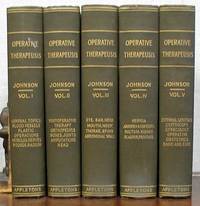
191528513New York: D. Appleton and Company 1915. 1st editions all volumes. Original publisher olive-green vertically-ribbed cloth with gilt spine lettering. Gilt bright. Square & tight. Occasional rub to binding. A VG set. 5 volumes complete. Profusely illustrated. Royal 8vo. <br/><br/>A physician's 'Why & How' from 100 years ago. D. Appleton and Company hardcover books