VUE D'OPTIQUEABAA
178 résultats
176010384Paris: chez Daumont rue St. Martin 1760. Engraving with original colour. Printed on watermarked laid paper. In excellent condition with the exception of some surface soiling in the upper section of the image. Image size: 8 7/8 x 15 13/16 inches. A wonderful "vue d'optique" of St. Mary's Church in London<br/> <br/>During the eighteenth century "vues d'optique" or "perspective views" became extremely popular in England and Europe. Like other optical prints they capitalized on a connoisseur market eager for the latest novelty. English publishers such as John Bowles and Robert Sayer had great success with these optical views which quickly developed into a collecting craze that swept through print shops on both sides of the Channel. "Vues d'optiques" were specifically designed to create the illusion of perspective when viewed with a zograscope or perspective glass. These viewing devices used a series of reflecting mirrors to enhance the illusion of depth in the print creating a veritable "view" for the onlooker. Typically these prints depicted city or landscape views and were horizontal in format. They had roughly the same dimensions and were sold with heavy opaque colouring so as to show the tints when viewed through the lens. In their heyday optical prints were a technical revolution; they could be seen in almost every fashionable drawing room and were enjoyed by the poorer classes in print shops or at traveling fairs. For a small fee the citizens of Europe and England could travel the world without leaving their village. The "vue d'optique" was the first medium to bring the visible appearance of the wider world to a large European public. Ironically the artists and engravers who created these prints rarely had first hand knowledge of the scenes depicted hence the views were often not as accurate as they were advertised to be. As a result of their constant handling optical prints such as these are rare especially in good condition. They are not only beautiful images but a fascinating glimpse into the history of printmaking.<br/> <br/>Clayton The English Print 1688-1802 140-141. chez Daumont rue St. Martin unknown books
172924011(1729). Format (16 x 20 cm), avec vitre et cadre doré moderne (27 x 31 cm).
178124012(vers 1781) Format 15 x 21 cm, avec vitre et cadre doré et passe partout 26 x 32 cm..
17801000389AGAugsburg, Akademie Imperiale d'Empire, (1780). Kupferstich altkoloriert von Balthasar Frederic Leizelt nach J. A. Gmeinder, Ansicht 28 x 40 cm, in Goldleiste unter Glas gerahmt 47 x 58 cm, [Schefold, Württemberg; 6265 mit Abb. 229].- Blatt etwas gebräunt, schönes dekoratives Blatt,
178541977Helmstädt und Leipzig, J.G. Müllerschen Budhhandlung, 1785. Small 8vo. Orig. printed blue wrappers to both issues., no backstrip. In: ""Chemische Annalen...von Lorenz Crell"", 1785:1. Bd., 3. Stück. a. 1785: 1.Bd., Stück 4. ( 2 whole issues = Stück3-4). (2),196-288 a. (2),291-384 a. 1 engraved plate. - Scheele's papers: pp. 229-38 a. pp. 291-299.
178541977Helmstädt und Leipzig J.G. Müllerschen Budhhandlung 1785. Small 8vo. Orig. printed blue wrappers to both issues. no backstrip. In: "Chemische Annalen.von Lorenz Crell" 1785:1. Bd. 3. Stück. a. 1785: 1.Bd. Stück 4. 2 whole issues = Stück3-4. 2196-288 a. 2291-384 a. 1 engraved plate. - Scheele's papers: pp. 229-38 a. pp. 291-299. <br/><br/><em>First appearance of these importent papers by the discoverer of oxygen. "In 1785 Scheele revised his views on the nature of air and fire the papers offered as a result of Lavoisier's observations on the increase in weight on burning phosphorus in air. He says he had also often observed the formation of water on the explosion of a mixture of inflammable air hydrogen and fire air in a bottle but had thought that the moisture was in the gases as Priestly had done in 1781.Parkinson III:p.228. "It is only the exact observation of Lavoisier which had helped me out of the dream."Scheele. </em> unknown
178427526Paris Née François Denis 1784 Une Gravure originale , technique : Eau-forte, en noir sur papier vergé crème, format de la gravure : 35 cm de haut par 52,5 cm de large, PARIS. «VUE DE LA GRANDE COLONNADE DU LOUVRE": [estampe] par MEUNIER Pinxit. - gravé par Née François Denis. Département de Paris N°82, [entre 1781 et 1796] [Paris], Née François Denis Editeur,
1782373418Undated c.1782. Unframed Print. Very Good Condition. Close trimmed without margins. The sheet measures 18 x 23 cms. The paper is in good condition without creases or tears There is a tiny worm hole 4mm wide about 5 cms up from bottom edge 8 cms from right edge. Invisible to the eye once mounted. Category: PRINTS : Antiquarian Interest; PRINTS : Historic Interest; Printed before 1800; Special Features. This item may require more postage than the rates shown for delivery outside the UK. If extra postage is required we will contact you before processing your order and you will be given the details and option to decline the extra cost. unknown
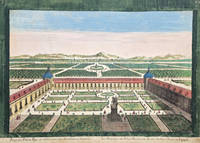
175014000Paris 1750. 315x445mm. 12½x17½". Grabado. Paris 1750. 315 x 445mm. Grabado al cobre. Coloreado a mano de época. Vista óptica del conjunto arquitectónico que mandó construir el Conde Duque de Olivares para retiro de Felipe IV y como un lugar de recreo para la corte. Compuesto por más de 20 pabellones bellos jardines suntuosas fuentes y un gran estanque hoy sólo se conserva el Salón de Baile Casón del Buen Retiro el Salón de Reinos Museo del Ejército y parte de los jardines Parque del Retiro. unknown
1790135543[Cesare Bassano: Giuseppe Remondini], ca. 1790. Format (Bildbereich): 28 x 41 cm. Platte: 31,5 x 42,7 cm. Blattgröße: 38 x 53 cm.
1744est219t8Dimension extérieur 77,5 cm x 59,5, cuvette 69,3 x 52,4. Magnifique gravure de la Cathédrale de Strasbourg, dont les travaux furent commencés en 1176 et terminés totalement en 1439. En très bon état général, on remarque simplement quelques très légères rousseurs et des traces de scotch en bas et en haut de la gravure.
1750139459"Published according to act of Parliament November 12", 1750. Format (Bildbereich): 24,7 x 40,7 cm. Blattgröße: 33 x 49 cm.
17521105871752. In der Platte signiert "Piranesi F." und mit dem gestochenen Titel "Veduta della gran Curia Innocenziana edificata sulk rovine dell` Anfiteatro di StatilinTatiro, cheformano todierno Monte Citorio". Mit der gestochenen Nr. "723" bzw. "39". Ausgezeichneter, gegensatzreicher Druck auf vollrandigem festen Velin. 40,7 x 62,3 cm (Plattengröße). 58,6 x 85 cm (Papier).
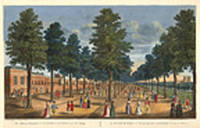
180010694London: Printed for Bowles & Carver No. 69 St. Pauls Church Yard 1800. Engraving with beautiful hand-colour. In excellent condition with the exception of tape on the verso of sheet. Image size: 9 3/8 x 15 3/4 inches. Vue d'Optique of the Royal Palace in St. James' Park in London<br/> <br/> During the eighteenth century "vues d'optique" or "perspective views" became extremely popular in England and Europe. Like other optical prints they capitalized on a connoisseur market eager for the latest novelty. English publishers such as John Bowles and Robert Sayer had great success with these optical views which quickly developed into a collecting craze that swept through print shops on both sides of the Channel. "Vues d'optiques" were specifically designed to create the illusion of perspective when viewed with a zograscope or perspective glass. These viewing devices used a series of reflecting mirrors to enhance the illusion of depth in the print creating a veritable "view" for the onlooker. Typically these prints depicted city or landscape views and were horizontal in format. They had roughly the same dimensions and were sold with heavy opaque colouring so as to show the tints when viewed through the lens. In their heyday optical prints were a technical revolution; they could be seen in almost every fashionable drawing room and were enjoyed by the poorer classes in print shops or at traveling fairs. For a small fee the citizens of Europe and England could travel the world without leaving their village. The "vue d'optique" was the first medium to bring the visible appearance of the wider world to a large European public. Ironically the artists and engravers who created these prints rarely had first hand knowledge of the scenes depicted hence the views were often not as accurate as they were advertised to be. As a result of their constant handling optical prints such as these are rare especially in good condition. They are not only beautiful images but a fascinating glimpse into the history of printmaking.<br/> <br/> Clayton The English Print 1688-1802 140-141. Printed for Bowles & Carver, No. 69 St. Pauls Church Yard unknown
180010694London: Printed for Bowles & Carver No. 69 St. Pauls Church Yard 1800. Engraving with beautiful hand-colour. In excellent condition with the exception of tape on the verso of sheet. Image size: 9 3/8 x 15 3/4 inches. Vue d'Optique of the Royal Palace in St. James' Park in London<br/> <br/>During the eighteenth century "vues d'optique" or "perspective views" became extremely popular in England and Europe. Like other optical prints they capitalized on a connoisseur market eager for the latest novelty. English publishers such as John Bowles and Robert Sayer had great success with these optical views which quickly developed into a collecting craze that swept through print shops on both sides of the Channel. "Vues d'optiques" were specifically designed to create the illusion of perspective when viewed with a zograscope or perspective glass. These viewing devices used a series of reflecting mirrors to enhance the illusion of depth in the print creating a veritable "view" for the onlooker. Typically these prints depicted city or landscape views and were horizontal in format. They had roughly the same dimensions and were sold with heavy opaque colouring so as to show the tints when viewed through the lens. In their heyday optical prints were a technical revolution; they could be seen in almost every fashionable drawing room and were enjoyed by the poorer classes in print shops or at traveling fairs. For a small fee the citizens of Europe and England could travel the world without leaving their village. The "vue d'optique" was the first medium to bring the visible appearance of the wider world to a large European public. Ironically the artists and engravers who created these prints rarely had first hand knowledge of the scenes depicted hence the views were often not as accurate as they were advertised to be. As a result of their constant handling optical prints such as these are rare especially in good condition. They are not only beautiful images but a fascinating glimpse into the history of printmaking.<br/> <br/>Clayton The English Print 1688-1802 140-141. Printed for Bowles & Carver, No. 69 St. Pauls Church Yard unknown books
1760281001760. Print. Very good overall. St. Paul's Cathedral dominates the engraving with tree dotted hills in the distance. River and foreground packed with vessels. Hand colored copper engraving trimmed with fabulous hand color. 16 3/8 x 10" mark in upper left corner otherwise very pleasant. unknown
17621105901762. In der Platte signiert "Piranesi F." und mit dem Titel "Sepolcro di Cecilia Metetla". 45 x 64, 5 cm (Plattengröße).
178621009Paris, l’Auteur, Lottin de S. Germain, 1786 ; 2 tomes in-8, veau marbré, dos à nerfs, décoré et doré, pièce de titre grenat et de tomaison bronze, tranches rouges (reliure de l’époque) ; XXVI, 480 ; VI, 497 pp. et en tout 4 planches hors-texte dont le portrait de l’auteur, pensionaire du Roy, gravé par B.A. Nicollet d’après Le Sueur, et trois planches techniques.
17221219631722 A Paris, rue de la Harpe, Chez Laurent d'Houry - M.DCC.XXII (1722) - In-duodecimo, reliure plein cuir brun, dos à cinq nerfs, caissons et titre en doré, petit signet vert - 668 pages
1800273581800 Un dessin original, lavis d'encre brune sur papier crème, format : 32,7 centimètres de haut par 26 centimètres de large, non signé, sans date (1880 environ)
17893750<p><b>Contemporary Image of the First Capitol of the United States</b></p><p>In September 1788 Congress selected New York City as the temporary site of the new government. "The citizens of New York desirous of testifying their attachment to the new national government and of making their city the place of permanent residence of the Federal Legislature have enlarged and repaired their city Hall and made it a convenient and elegant structure worthy of the respectable body for whose use it is designed." <i>Columbian Magazine</i> p. 473. <br /></p><p> The conversion of City Hall to the "Federal Edifice" or Federal Hall was directed by L'Enfant at a cost of $65000. The Executive offices the Senate and House chambers and the Supreme Court were all housed in this building. It was the nation's first Capitol under the Constitution. Although New York City's tenure as the new nation's capital was brief lasting only until 1790 Federal Hall was the site of several highly significant historic events. Washington's inauguration was held on the balcony of Federal Hall and he gave his inaugural address in the Senate chambers. Also the Hall was the meeting place of the first Congress; it was here that Congress adopted the Bill of Rights. <br /></p><p>There is no engraver noted on the image but several other engravings in <i>The</i><i>Columbian Magazine</i> from this time period have been ascribed to James Trenchard the <i>Magazine's</i> publisher. The image appeared a year before Amos Doolittle's famous and virtually unobtainable engraving which portrays Washington's inauguration on the balcony of Federal Hall. <br /></p><p><b>References:</b> Cresswell <i>The American Revolution in Drawings and Prints</i>: 554 illustrated p. 203. Lewis <i>Guide to Engravings in American Magazines 1741-1810</i>: p. 6. For the Doolittle engraving see Deak <i>Picturing America 1497-1899</i>: 181. <br /></p><b>Condition: </b> A strong clean image with original fold lines present. Lower half of left margin replaced with a portion of the inner and outer neat lines and a tiny portion of the image manually recreated. Otherwise very good. <p>ICN 3112. <br /></p><br /> From the August, 1789 issue of The Columbian Magazine.
17883741<p><strong>Harvard College -- "the earliest engraving of the College</strong><strong> which one may reasonably hope to obtain"</strong></p><p>This engraving entitled "View of the ancient Buildings belonging to Harvard College Cambridge New-England" appeared in the December 1788 issue of <em>The Columbian Magazine.</em> Bail notes that the view is based on the Burgis-Price print of 1743 which in turn was a slight modification of the Burgis view of 1726. The view taken from a point in front of the present Johnston Gate shows three College buildings in 1726 from left to right: the second Harvard College the first Stoughton Hall and the still-standing Massachusetts Hall. Although unsigned the engraving is undoubtedly the work of James Trenchard a co-owner of <em>The Columbian</em> <em>Magazine </em>and the engraver of nearly all the plates which appeared in it. <br /><br />Of the<em> Columbian</em> <em>Magazine</em> view Bail states: "In spite of the fact that the print is solely an adaptation it is important because of its early appearance and relative scarcity. This is the earliest engraving of the College which one may reasonably hope to obtain."</p><p>The engraving is accompanied by a disbound example of the December 1788 <em>Columbian Magazine</em> in which it appeared. It includes a 5-page "An Account of the ancient Colleges of Cambridge in New-England." Most of this is a republication of material from "a very scarce and valuable pamphlet" printed in London in 1642. In addition to a description of the College "The edifice is very fair and comely within and without." the rules and curriculum of the College are provided.</p><p>A very desirable engraving of Harvard with an example of the magazine in which it originally appeared.</p><p><strong>References:</strong> For the engraving: Bail <em>Views of Harvard</em>: 13; Plate XVII illustrated. Fielding <em>American Engravers upon Copper and Steel</em>: 1819. <br /><br /><strong>Condition: </strong>Image is age-toned with some generally light foxing. Darkening to margins outside of platemark where previously matted; remnant of strip of masking tape at upper margin on verso. The <em>Magazine</em> is complete and quite bright and clean although several pages are detached from the balance of the text.<br /><br />ICN 3431. <br /><br /><br /><br /></p> Printed for the Proprietors by W. Spotswood.
179720333Paris, F. Buisson, an VI de la république [1797]. 2 volumes in-8 de [4]-VIII-268 et [4]-260 pages, plein veau raciné brun, dos lisses ornés de filets, roulettes et fleurons dorés, pièces de titre et tomaison havane, filet doré sur les coupes.
1776009Vue d'optique, Estampe « Le cap de bonne esperance » Chez Chereau 1776, Sous verre, l'Encadrement mesure 31 x 44 cm, le dessin mesure 27 x 42 cm et pèse 1 kg (c). Très Bon état général.
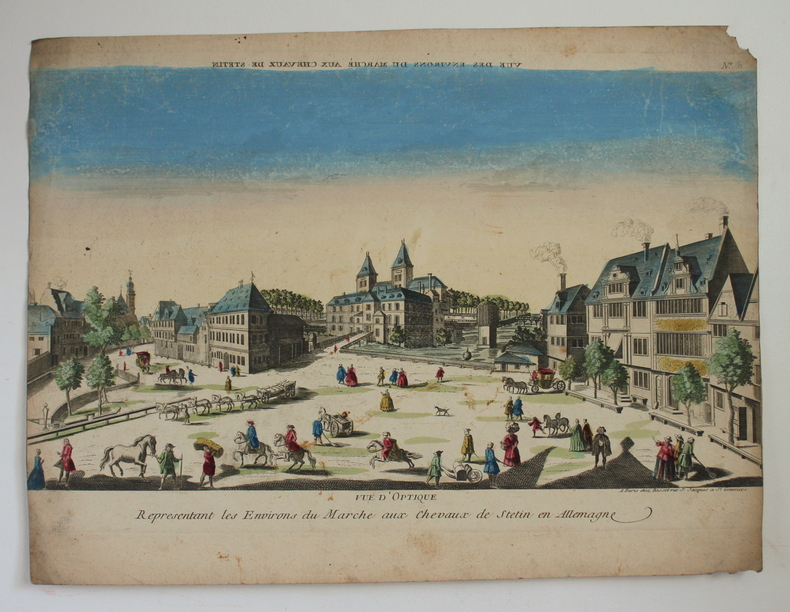
1800038Vue d'optique Estampe « representant les environs du marche aux chevaux de Stetin en Allemagne », 18ème, Chez Basset. La Feuille mesure 33 x 43,5 cm. Le Dessin mesure 29 x 43,5 cm et pèse 0.300 kg. La gravure est en très bon état général, petits trous de punaise sous le cheval du milieu (très peu perceptible).