Antiquariat.de

5 848 résultats
19078602W. Engelmann, Leipzig 1849-1907. durchschnittlich ca. 650 S. je Jahrgang mit sehr zahlreichen zum Teil farbigen lithographischen Tafeln, Groß 8°, anfangs Pappbände, später marmoriertes Halbleinen, dann Ganzleinen mit Rückentitel, Bibliotheksexemplare (entwidmet) mit unscheinbaren kleinen Papier-Rückenschildern, Stempel auf Titel, Einbände nur leicht berieben und bestoßen, Band 1 nachgebunden, Papier teils gering braunfleckig, insgesamt gute und innen saubere Exemplare,
29509o.J. Österreichischer Mediziner, Anatom. 1882 Prof. in Graz, 1888 Direktor des Anatomischen Instituts in Wien, 1888 Mitglied der Leopoldina. 1849 Raab - 1910 Wien. Brustbild. Photogravure um 1910. 300 mm x 205 mm.-
181245169(London, W. Bulmer and Co., 1812). 4to. No wrappers as extracted from ""Philosophical Transactions"" 1812 - Part II. Pp. 206-220 a. 4 engraved plates (1 large and folded showing a fine engravingof Squalus maximus). Faint foxing to plates.
6673Bruxelles Henry fricx 1679 in 12 1 volume reliure plein veau foncé (postérieur), dos à nerfs, coiffes usées, petites épidermures, 345 pages. Bon exemplaire
In 8, pp. (5) + (1). Br. ed. A p. 1 indicazione manoscritta: 'Estratto da pubblicazioni della onorevolissima Gazzetta Piemontese 1899'. Dall'incipit: S.A.R. la principessa Isabella, Duchessa di Genova, in villeggiatura ad Aglie' 'la sera di sabato 26 agosto dinnanzi alla sua Corte si compiacque, Maecenas gentile, di sentire dal cav. dott. Volante Alessandro, da Torino, ospite devoto, la lettura del recente suo scritto sull'anatomia della terra, scritto per la ricorrenza delle sovrane nozze d'argento, lavoro che fu accolto benevolmente anche da altri Principi Sabaudi e da molti scienziati'. Volta aveva infatti pubblicato nel 1893 uno stravagente e curioso testo pseudoscientifico in cui faceva un parallelismo fra la fisiologia dell'uomo e quella del globo terrestre.
10841Paris, Maison d'Editions Bong et Cie, sans date; in-plano étroit (51 x 23 cm), pleine toile bleue , titre et blanc au 1er plat, dos muet, titre avec texte explicatif des planches au verso, et 4 feuillets de papier fort sur lesquelles sont montées les planches démontables à système, en couleurs.
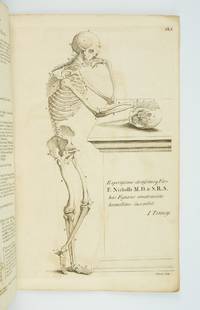
1770ST20219London: Printed for Robert Sayer ca. 1770. 380 x 242 mm. 15 x 9 1/2". 4 leaves of text followed by plates. <br/> Original gray paper wrappers. WITH EIGHT FINE ENGRAVED PLATES of the male body in various poses three depicting the skeleton and five the musculature. Russell 816; Wellcome V p. 273; ESTC N51161. See also Russell "John Tinney's Compendium Anatomicum and its publishers." Wrapper a bit soiled and foxed corners torn with two snags two-inch and half-inch to lower cover most of spine chipped away but the stitching holding the book firmly together; mild offsetting from engravings and a few spots of foxing but a really excellent copy internally the leaves fresh and clean and with very good impressions of the engravings.<br/> <br/> This rare collection of striking anatomical engravings is wonderfully preserved in its original unrestored wrappers. First published in 1743 as "Compendium Anatomicum" the work's plates are adapted from the famous anatomies of Vesalius and Cowper. It was intended as a reference work for artists but as its name suggests it was published with a wider audience in mind. As Tinney humbly tells the reader in the subtitle this is "a work not only very useful but absolutely necessary to painters statuaries and all professors of drawing and design as well as a proper introduction to the study of anatomy for the use of young surgeons" not to mention an "instructive furniture for the studies and libraries of the curious." The work remained in print for a full century though because it was a frequently used book few copies have come down to us in collectible condition. John Tinney ca. 1706-61 was an engraver and print seller who dealt in a wide variety of material being particularly known for maps and satirical prints as well as the present work. Our edition while undated almost certainly dates to the period between 1762-70. The first posthumous edition of "A Compendious Treatise" was released in 1762 by Robert Sayer a map and print seller who was an associate of Tinney's during his lifetime and who likely purchased his stock of plates from his widow following his 1761 death. In 1770 Sayer began a partnership with John Bennett after which the firm was known as "Sayer and Bennett." Since the present edition was published under Sayer's name alone it no doubt comes from the period following the 1762 edition but before the partnership. The present copy has made it through the centuries in remarkably good condition given its flimsy binding and the plates inside with their cheerfully macabre figures remain quite fresh and pleasing. Printed for Robert Sayer unknown
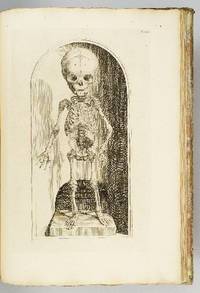
1739ST12883Leyden: Johann Arnold Langerak 1739. First Edition in Latin. 540 x 380 mm. 21 1/4 x 15". 70 leaves of text.Translated by William Dundass. <br/> Original red quarter vellum over marbled boards raised bands UNTRIMMED EDGES. Engraved printer's device on title large decorative initials and tailpieces EXTRA ENGRAVED TITLE AND 114 STRIKING PLATES OF ANATOMICAL FIGURES three folding. Wellcome II 401; Heirs of Hippocrates 468; Choulant-Frank pp. 252-3; Russell 213. ◆Vellum on spine rather worn with three one-and-one-half-inch pieces broken away revealing structure underneath paper boards quite chafed other minor problems externally but an entirely solid unrestored binding. A couple of plates with short closed marginal tears one folding plate with one-inch closed tear into image no loss untrimmed edges a little browned and brittle with isolated small chips occasional minor foxing or insignificant stains three plates lightly browned but still AN UNUSUALLY ATTRACTIVE COPY INTERNALLY with the broadest of margins with especially clean and fresh leaves and with rich impressions of the plates.<br/> <br/> With plates of notable visual impressiveness this was the finest anatomy book in England during the first half of the 18th century; it also was largely a plagiarism borrowing most of its engraved content from a work by the Dutch physician Govert Bidloo published in 1685. Bidloo's work was the first large-scale anatomical atlas to appear after Vesalius' epoch-making "De Humani Corporis Fabrica" and the plates which are highly praised by Norman and Garrison-Morton are characterized by startlingly detailed life-size depictions of the human body both adult and infant with figures flayed to reveal muscles opened to show organs and unfleshed to exhibit bones. According to Choulant-Frank Bidloo's publishers sold 300 impressions of these plates to Cowper probably to recoup some of their money after disappointing sales. Cowper took Bidloo's original 105 plates added nine of his own and produced an English translation of the original Latin text to accompany them. Discussing the original plates produced by Gerard de Lairesse 1641-1711 Norman says that the figures are displayed "in an emotional almost tender manner contrasting the raw dissected parts with the full soft surfaces of uncut flesh placing flayed bound figures in ordinary nightclothes or bedding setting ordinary household objects such as books jars or cabinets in the same scene as cut-up torsos or limbs. His illustrations brought the qualities of Dutch still-life painting into anatomical illustration and gave a new darker spiritual expression to the significance of the act of dissection." When Cowper's version of the atlas first appeared as "The Anatomy of Humane Bodies" in London in 1698 there was also a 1737 Leyden printing in English before our more scholarly Latin edition Bidloo complained to the Royal Society and accused Cowper of plagiarism and fraud resulting in much acrimony and heated pamphleteering between the two physicians. Notwithstanding this scandal Cowper's achievements and discoveries--including the pair of glands that bear his name--were considerable and his text improved significantly upon the original work. Unfortunately as the DNB notes "the notoriety of this case has served to obscure a true appreciation of Cowper and of his many original contributions to anatomical illustration." The atlases of Bidloo and Cowper appear on the market regularly but at 540 x 380 mm. the present copy is distinguished by its size which is significantly larger than what is typically seen with this edition--we have not been able to trace a copy larger than ours from marketplace or institutional records. Johann Arnold Langerak unknown
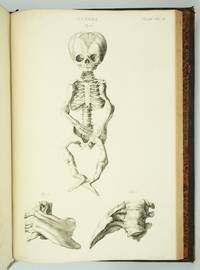
1793ST20586Lugduni Batavorum Leyden: S. & J. Luchtmans 1793 1827 1835. FIRST EDITION A COMPLETE SET. 525 x 350 mm. 20 3/4 x 14". Four volumes. <br/> First two volumes in contemporary cat's paw calf volumes III and IV in contemporary flamed calf raised bands spines gilt in compartments with central fleuron one red and one black morocco label. WITH 206 ENGRAVED ANATOMICAL PLATES all with guards. Front pastedowns with bookplate of Harvard Medical School Library; library shelf markings in white at bottom of spines; bookseller's ticket of Schönhof & Mueller Foreign Books Boston. Bibliotheca Walleriana 8549; Choulant pp. 312-13; Larousse XIX vol. 14 p. 171. Lucas L. Boer Peter L. J. Boek Andries J. van Dam and Roelof-Jan Oostra "History and highlights of the teratological collection in the Museum Anatomicum of Leiden University The Netherlands " American Journal of Medical Genetics Part A Volume 176 no. 3 2018 pp. 618-37.<br /> Shallow chips across the tail of first two volumes covers variably abraded one noticeably so corners somewhat worn partially with boards showing through vague additional signs of wear but the bindings solid and retaining much of their original appeal; plates in first two volumes with faint overall browning either because of paper stock or because of contact with guards a handful of trivial tears but all in all an extremely pleasing set the plates in volume IV very clean and bright and the plates elsewhere and the wide-margined text clean and fresh throughout.<br/> <br/> This is an extremely scarce complete set of a very substantially proportioned anatomical work with more than 200 striking giant folio engravings that emphasize birth defects and that range from clinically cheerless to heartbreaking. A physician and professor of anatomy at Leyden Eduard Sandifort 1742-1814 was commissioned by the University and the city council to publish this account of the school's anatomical collections with a focus on pathological anatomy including especially congenital abnormalities. After the publication of the first two volumes in 1793 the third and fourth were issued following Sandifort's death by his son Gerard 1779-1848 who followed in his father's professorial footsteps in Leyden. The first second and fourth volume are illustrated with copperplate engravings which Larousse tell us make this book "one of the most beautiful works of this genre" though "beautiful" needs to be understood here to mean "convincing" or "compelling" rather than aesthetically appealing. The first volume concludes with nine full-size depictions of skulls; the illustrations in the second and fourth are of a more affecting nature consisting of malformed bodies and body parts damaged or destroyed by disease and birth defects. The engravings of the conjoined twins in these volumes are especially powerful--consisting of poignant even haunting images showing undeserving victims of pronounced congenital defects though some are softened with a touch of the fanciful in their presentation. The thoroughness and accuracy of the work is so great that it remains of scholarly value even today. A recent study by Dutch curators and anatomical scholars Lucas L. Boer Peter L. J. Boek Andries J. van Dam and Roelof-Jan Oostra used "Museum Anatomicum" as a guide to identify and re-diagnose the University's historic teratological collections noting that "many historically made diagnoses could not be improved upon after re-diagnosing the specimens with contemporary dysmorphological knowledge actually confirming that these old collectors were perhaps the first dysmorphologists and can be seen as true pioneers in the field of teratology." Although single volumes and incomplete sets of this work come on the market with some regularity we have been able to trace only five complete sets at auction since 1872. And ours especially fresh and wide-margined in pleasing contemporary calf is a particularly attractive specimen. S. & J. Luchtmans unknown
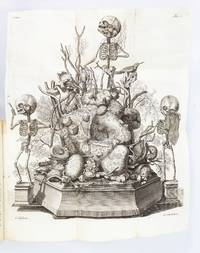
1417ST20185Amsterdam: Joannes Wolters then Jansson-Waesberg 1701-14; 1715-16. FIRST EDITIONS. 224 x 168 mm. 8 3/4 x 6 1/2". 4 p.l. 62 pp. 1 leaf errata; 2 p.l. 98 pp.; 2 p.l. 70 pp.; 1 p.l. 55 pp.; 1 p.l. 54 pp. 2 p.l. 30 pp. 1 leaf 92 pp. 2 leaves 44 pp. 4 leaves 68 pp. 8 leaves 72 pp. 1 leaf errata 12 leaves 78 pp. 10 parts in one volume. <br/> Contemporary stiff vellum smooth spine with ink titling yapp edges. WITH 42 ENGRAVED PLATES as called for by Norman six of these folding. Text in Latin and Dutch. Blake 395; Garrison-Morton 389; Heirs of Hippocrates 627; Jeremy Norman's HistoryofMedicine.com 623; Norman 1875. Vellum lightly soiled front pastedown slightly defective but the original unsophisticated binding in perfect order. Final plate with small hole due to adhesion to facing page minor damage done to image a few other trivial imperfections a couple of negligible marginal tears a faint ink stain across the top inch of text a tiny burn hole but AN UNUSUALLY BRIGHT CLEAN COPY INTERNALLY with all the important plates in exceptionally fine condition.<br/> <br/> Scarce when seen bound from its original 10 parts as here this work describes the memorable "Anatomical Treasure" of Dutch physician and anatomist Frederick Ruysch being illustrated by surrealistic charmingly macabre engravings depicting "fantastic dream-like concoctions constructed of human anatomical parts." History of Medicine Described by Norman as "probably the most original artist in the history of anatomical preparations" Ruysch 1638-1731 "enjoyed making up elaborate three-dimensional emblems of mortality from his specimens" which included fetal skeletons and preserved organs. Heirs to Hippocrates says that "the engraved illustrations deserve special mention for their whimsical almost surrealistic quality: quaintly posed skeletons surrounded by stuffed monsters strange reptiles dried plants and sea creatures." According to Norman "Ruysch's methods allowed him to prepare organs such as the liver and kidneys and keep entire corpses for years. He used a mixture of talc white wax and cinnabar for injecting vessels and an embalming fluid of alcohol made from wine or corn with black pepper added. Using his injection methods Ruysch was the first to demonstrate the occurrence of blood vessels in almost all tissues of the human body thereby destroying the Galenic belief that certain areas of the body had no vascular supply. He was also the first to show that blood vessels display diverse organ-specific patterns." Ruysch's dioramas were displayed in his home museum in Amsterdam which was open to the public; visitors included Tsar Peter the Great of Russia who purchased the collection in 1717 for the foundation of Russia's first public museum the St. Petersburg Kunstkammer. Unfortunately the Russian climate was not kind to the fragile constructions and all deteriorated over time; the dramatic plates here are the best record we have of this unique collection. Joannes Wolters, then Jansson-Waesberg unknown
Bologna, Clueb, 1981, 8vo brossura con bella copertina illustrata a colori, pp. 97 tutto illustrato con tavole fotografiche in nero nel testo.
1989LFA-126727359Un ouvrage de 336 pages, format 215 x 280 mm, illustré, relié cartonnage couleurs, publié en 1989, Sélection du Reader's Digest, bon état
1968LFA-126726674Une revue de 32 pages, format 235 x 165 mm, illustrée
175340169BBBerlin, Christian Friedrich Voss, 1753. Klein-4°. 16 n.n. Bl., 1096 Spalten, 14 n.n. Bl. Register. Halblederband der Zeit mit Rückenvergoldung.
175340169BBBerlin, Christian Friedrich Voss, 1753. Klein-4°. 16 n.n. Bl., 1096 Spalten, 14 n.n. Bl. Register. Halblederband der Zeit mit Rückenvergoldung.
Milano, Ulrico Hoepli Editore, 1942-XX. Opera premiata all’Esposizione Generale Italiana di Torino 1898 con Diploma e Medaglia di bronzo. Ottava edizione rifatta a cura del Dott. G. Alberti. In 16mo (cm. 15,5); cop. originale rigida in tutta tela editoriale illustrata con titoli al piatto e al dorso; pp. VIII, 223, (1). Con 57 incisioni nel testo (due delle quali su pagine ripiegate) e 3 tavole fuori testo. Manca parte del dorso. Axg
USA, CIBA Pharmaceutical Company, 1977, 4to (cm. 32 x 24,5) tutta tela editoriale con titoli dorati al piatto anteriore e al dorso, pp. 168 con 121 disegni anatomici a colori. Sovraccoperta in plastica trasparente applicata con nastro adesivo (tracce alle sguardie).
1725106268BBParis, Jacques Vincent, 1725. Gr.-8°. XXVII, 681, (3) S. mit 29 gefalt. Kupfertafeln. Kalbslederband der Zeit mit goldgepr. Rückenschild u. reicher Rückenvergoldung. 3 Teile in 1 Band. [16 Warenabbildungen]
189030301Eßlingen u. München, J. F. Schreiber, (ca. 1890). Folio. Mit 19 Doppeltaf. in Farbendruck m. über 100 Abb. 24 S. erläuternder Text. OPp. m. mont. farb. Deckelillustr. u. Rückentitel. [2 Warenabbildungen]
Milano, Selezione, 1987, 4° legatura editoriale con sovraccopertina illustrata a colori, pp. 336 con numerose illustrazioni in nero e a colori n.t.
Milano, Selezione, 1987, 4to legatura editoriale con sovraccopertina illustrata a colori, pp. 336 con numerose illustrazioni in nero e a colori n.t.
Milano, s.d. (192?), estratto cop. muta, pp. 1869/1871 con ill. - !! ATTENZIONE !!: Con il termine estratto (o stralcio) intendiamo riferirci ad un fascicolo contenente un articolo di rivista, sia che esso sia stato stampato a parte utilizzando la stessa composizione sia che provenga direttamente da una rivista. Le pagine sono indicate come "da/a", ad esempio: 229/231 significa che il testo è composto da tre pagine. Quando la rivista di provenienza non viene indicata é perchè ci è sconosciuta. - !! ATTENTION !!: : NOT A BOOK : “estratto” or “stralcio” means simply a few pages, original nonetheless, printed in a magazine. Pages are indicated as in "from” “to", for example: 229/231 means the text comprises three pages (229, 230 and 231). If the magazine that contained the pages is not mentioned, it is because it is unknown to us.
Faenza, 1982, 8vo brossura, pp. 125 con num. foto in nero e a col. n.t.
Forlì, 1982, 8vo brossura con copertina illustrata a colori, pp. 125 riccamente illustrato da tavole a colori nel testo.
18161166321816-1817 Paris, Chez Méquignon-Marvis, 1816-1817, deux tomes reliés en 1 volume in-8 de 125x200 mm environ, VI pages, 326 pages-(2) ff. 473 pages. Demi-reliure, dos lisse portant faux-nerfs, titres et tomaisons dorés, plats de papier à la colle rosé, tranches jaspées. Bon état général malgré les menus défauts à signaler : quelques taches d'encre et discrets trous de ver sur le dos, cuir frotté par endroits, second plat partiellement décoloré, mors interne apparent, des mais intérieur frais.