8 223 résultats
London, Printed by Taylor and Francis - Published by the Author, (1862-) 73. Folio. Papersize 54,5x37 cm. Lithographed and fully handcoloured. 2 birds seen, female and male in natural habitat with flowering plants. J. Gould & H.C. Richter, del. et lith. - Walter, Imp. Fine and clean. The plate is accompanied with the original textleaf. (2) pp.
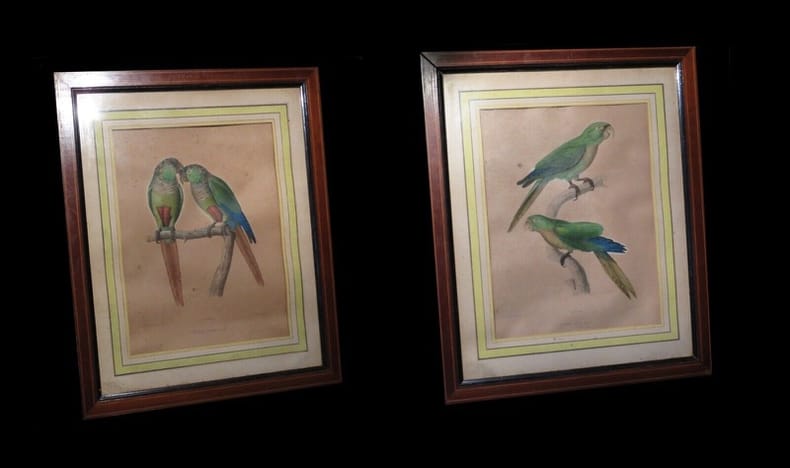
London, Printed by Taylor and Francis - Published by the Author, (1862-) 73. Folio. Papersize 54,5x36,5 cm. Lithographed and fully handcoloured. Both sexes depicted sitting on straws. Other birds in the background. J. Gould & H.C. Richter, del. et lith. - Walter & Cohn, Imp. Fine and clean. The plate is accompanied with the original textleaf. (2) pp.
London, Printed by Taylor and Francis - Published by the Author, (1862-) 73. Folio. Papersize 54,5x36,5 cm. Lithographed and fully handcoloured. Two birds, male and female on a trunk with foliage, feeding 4 baby birds. J. Gould & H.C. Richter, del. et lith. - Walter, Imp. Fine and clean. The plate is accompanied with the original textleaf. (2) pp.
London, Printed by Taylor and Francis - Published by the Author, (1862-) 73. Folio. Papersize 54,5x36,5 cm. Lithographed and fully handcoloured. Showing 2 bird in flight, 3 others beneath. J. Gould & H.C. Richter, del. et lith. - Walter Imp. Fine and clean.The plate is accompanied with the original textleaf. (2) pp.
London, Printed by Taylor and Francis - Published by the Author, (1862-) 73 Folio. Papersize 52,5x36,5 cm. Lithographed and fully handcoloured. 2 adults on a branch with fruits.. J. Gould & H.C. Richter, del. et lith. - Walter, Imp. Fine and clean. Ab. a half cm. of right margin with remains of textpaper, not affecting image in any way..The plate is accompanied with the original textleaf. (2) pp.
London, Printed by Taylor and Francis - Published by the Author, (1862-) 73. Folio. Papersize 54,5x36,5 cm. Lithographed and fully handcoloured. Showing birds flying, foreground with large flowers, natural settings.. J. Gould & H.C. Richter, del. et lith. - Walter & Cohn, Imp. Fine and clean.The plate is accompanied with the original textleaf. (2) pp.
London, Printed by Taylor and Francis - Published by the Author, (1862-) 73. Folio. Papersize 54,5x36,5 cm. Lithographed and fully handcoloured. Two birds, male and female on branches, flowering, foliage and insects.. J. Gould & H.C. Richter, del. et lith. - Walter, Imp. Fine and clean. The plate is accompanied with the original textleaf. (2) pp.
London, Printed by Taylor and Francis - Published by the Author, (1862-) 73. Folio. Papersize 54,5x36,5 cm. Lithographed and fully handcoloured. Two birds, male and female in a flowering plant. J. Gould & H.C. Richter, del. et lith. - Walter & Cohn, Imp. Fine and clean. The plate is accompanied with the original textleaf. (2) pp.
London, Printed by Taylor and Francis - Published by the Author, (1862-) 73. Folio. Papersize 52x36,5 cm. Lithographed and fully handcoloured. 2 adults in a tree. J. Gould & H.C. Richter, del. et lith. - Walter, Imp. Fine and clean. The plate is accompanied with the original textleaf. (2) pp.
London, Printed by Taylor and Francis - Published by the Author, (1862-) 73. Folio. Papersize 54,5x36,5 cm. Lithographed and fully handcoloured. Adult with open wings on a branch. J. Gould & H.C. Richter, del. et lith. - Walter & Cohn, Imp. Fine and clean. The plate is accompanied with the original textleaf. (2) pp.
Wien, Kaiserlich-Königlichen Hof-und Staatsdruckerei, 1865. 4to. Contemporary hcalf. Corners bumped, edges rubbed. Part of upper wrapper from the general title cut and mounted but having the htitle: ""Vögel"". Internally fine. IV,176 pp. and 6 fine chromolithographed plates of birds. (T.F. Zimmermann pinx - Lith. A. Hartinger).
Berlin, 1925-44. Bound in solid hcloth. Most of vol. 1 and 2 in Xerox-copy on good paper.
Berlin=Lichterfelde, (1935-36). In 2 orig. boxes in foliosize, containing 2 books as well as 6 records, recorded on both sides with birdvoices. A part from a few scratches on the boxes in fine condition.
Frankfurt am Main, Akademische Verlagsgesellschaft (u. andere), 1966- 97. Bound in 22 orig. full cloth., textillustrations and maps.
Paris, L'Imprimerie Royale, 1749. Small 8vo. Bound in one cont. marbled boards. Titlelabel gil on back. Covers with small scratches and corners a little bumped. XII,342 "339 pp., 15 large folded engraved plates (9+6) and 10 engraved textillustratuons (as headpieces). A few scattered brownspots.
Kbh., 1925-31. Folio. 3 originale bind i halvshirt. Rygge med lidt pletter, derudover et rent og pænt sæt. Rigt illustrerede med 276 plancher (heraf 173 i farve) og tegninger af Johannes Larsen, H. Scheel og Gerhard Heilmann.
In- folio, 191p. Edition de luxe illustrée de 20 burin originaux de Tavy Notton. Un des 40 exemplaires numérotés sur vélin de Rives accompagnés d'une suite en couleurs et d'une suite en noir des illustrations. Tirage total 450 exemplaires. Exemplaire à l'état de neuf.
185724899Paris, Imprimerie Lemercier / F. Bertrand éditeur, s.d. [1857]. Dimensions (à vue) : 293 x 223 mm + passes-partout + cadres.
18865294Composé et dessiné. Mit lithogr. Titel u. 132 lithogr. Tafeln mit Tonplatte. Liège u. Paris, Ch. Claesen, 1886. 8vo. (18,2 x 13,5 cm). 2 Bl., 1 Bl. Inhalt. Geprägter Orig.-Leinwandband.
Litografia tratta dal famoso The Birds of New Guinea and the Adjacent Papuan Islands, ultimo ed importantissimo lavoro di John Gould. L’opera, tirata a soli 250 esemplari, è molto rara; iniziata nel 1875, fu completata da Richard Bowdler Sharpe nel 1888 a causa della morte di Gould. John Gould (Lyme Regis, 14 settembre 1804 – Londra, 3 febbraio 1881) è stato un ornitologo e naturalista britannico. Destinato fin dalla giovinezza a seguire la carriera paterna di giardiniere presso il Castello di Windsor, grazie alle sue precoci conoscenze in tassidermia ebbe l'occasione di entrare a soli 23 anni (1827) nel Museo della Zoological Society di Londra, come conservatore. Gould affinò le sue conoscenze artistiche e scientifiche in ornitologia, consultando i migliori lavori del tempo, in particolari quelli di John James Audubon, William Swainson e Thomas Bewick. Tra il 1832 e il 1837 comparve The Birds of Europe, opera in 5 volumi e con ben 448 tavole litografate e colorate a mano. Per la gigantesca impresa Gould si valse della collaborazione della moglie e del celebre poeta e pittore inglese Edward Lear. Una prerogativa che salvò sin dall'inizio Gould dal tracollo economico fu quella di affrontare questi dispendiosi lavori facendoli uscire in sottoscrizione e a fascicoli. Dopo un viaggio in Australia e in Tasmania, pubblicò, con l'aiuto di Elizabeth per i primi volumi, The Birds of Australia (1840-1848) in ben 7 volumi e 600 tavole, cui seguì tra il 1851 e il 1869 un Supplement di 81 tavole. Tra il 1862 e il 1873 pubblica The Birds of Great Britain, in 5 volumi e con 367 tavole. Pubblicò ben 41 libri, per un totale di 2999 tavole litografate e dipinte a mano, quasi tutte dedicate agli uccelli, consacrandosi così fra i più noti ornitologi inglesi dell'età vittoriana Litografia, bellissima coloritura coeva, in ottimo stato di conservazione. Litograph taken form the famous The Birds of New Guinea and the Adjacent Papuan Islands, Gould’s last great work. With only about 250 sets made, it is amongst the rarest of all Gould's works and was completed after his death by Richard Bowdler Sharpe. Sharpe then in charge of the of the bird collection at the British Museum, assumed the authorship halfway through the series in 1881, after the twelfth part had been issued. Sharpe was more than forty years junior to Gould, whom he had meet when he was only fifteen, and they both shared a passionate interest in ornithology. In his last years, although an invalid and often in pain, Gould was always pleased when Sharpe visited him to look at his collection of skins and discuss the latest bird discoveries. John Gould (Lyme Regis, 14 September 1804 - London, 3 February 1881) was a British ornithologist and naturalist. Destined from his youth to follow his father's career as a gardener at Windsor Castle, thanks to his early knowledge in taxidermy had the opportunity to enter at only 23 years (1827) in the Museum of the Zoological Society of London, as a conservator. Gould refined his artistic and scientific knowledge in ornithology, consulting the best works of the time, in particular those of John James Audubon, William Swainson and Thomas Bewick. Between 1832 and 1837 appeared The Birds of Europe, a work in 5 volumes and with 448 plates lithographed and colored by hand. For this gigantic undertaking Gould availed himself of the collaboration of his wife and the famous English poet and painter Edward Lear. A prerogative that saved Gould from economic collapse from the very beginning was that of dealing with these expensive works by publishing them in subscriptions and in dossiers. After a trip to Australia and Tasmania, he published, with the help of Elizabeth for the first volumes, The Birds of Australia (1840-1848) in 7 volumes and 600 plates, followed between 1851 and 1869 by a Supplement of 81 plates. Between 1862 and 1873 he published The Birds of Great Britain, in 5 volumes and 367 plates. He published 41 books, for a total of 2999 plates lithographed and hand-painted, almost all dedicated to birds, thus establishing himself among the most famous English ornithologists of the Victorian age. Perfect condition.
Edizione completa del 1883 dell'imponente opera di ornitologia scritta da Henry Seebohm (1832-1895) produttore di acciaio, amante dei viaggi e ornitologo per passione. Seebohm dedicò per una vita il tempo libero allo studio della storia naturale, in particolare degli uccelli. Compì numerosi viaggi nei Paesi Bassi, Grecia, Asia Minore, Scandinavia, Germania e Siberia per raccogliere e studiare gli uccelli nel loro luogo di origine. L'opera è composta da tre volumi di testo impreziositi da numerose incisioni in bianco e nero e un volume di 68 tavole in cromolitografia che mostrano le uova. L'autore descrive la famiglia dei Falconidae, Strigidae, Passeridae, Cypselidae, Caprimulgidae, Meropidae, Upupidae, Alcenidae, Picidae, Cuculidae, Columbidae, Phasianidae, Pelargidae, Rallidae, Gruidae, Otididae, Charadriidae, Laridae, Alcidae, Colymbidae, Procellaridae, Podicipedidae, Anatidae, Pelecanidae. Ex libris al contropiatto anteriore. In ottime condizioni. Copertina in mezza pelle con titolo e decorazioni in oro al dorso in ottime condizioni generali con lievi usure ai margini e dorso. Legatura in buone condizioni. Pagine in ottime condizioni con rare fioriture. Terzo tomo: le pagine dalla 381 alla 388 sono state rilegate male. In 8. cm 26x17,5. Pp. XXIV+614+(1), XXXIV+600+(1), XXIV+684, 724+68 Tav.. Peso Kg. 5,800 Complete edition of 1883 of the imponent work of ornythology written by Henry Seebohm (1832-1895) steel manufacturer, traveller and ornythologist for passion. Seebohm's spare time was devoted to natural history, especially ornithology, and he made a number of journeys to the Netherlands, Greece, Asia Minor, Scandinavia, Germany, and Siberia to collect and study birds in their native haunts. The work is made up of three volumes of text with black and white engravings and a volume of 68 chromolythographies of eggs. The author describes the families of Falconidae, Strigidae, Passeridae, Cypselidae, Caprimulgidae, Meropidae, Upupidae, Alcenidae, Picidae, Cuculidae, Columbidae, Phasianidae, Pelargidae, Rallidae, Gruidae, Otididae, Charadriidae, Laridae, Alcidae, Colymbidae, Procellaridae, Podicipedidae, Anatidae, Pelecanidae. Ex libris in the front counterplate. In very good conditions. Half leather cover with gilted title and decorations in very good conditions lightly worn in the extremities. Binding in good conditions. Pages in very good conditions with occasional foxing. third tome: pages from 381 to 388 have been badly bound. In 8. cm 26x17,5. Pp. XXIV+614+(1), XXXIV+600+(1), XXIV+684, 724+68 Tav.. Weight Kg. 5,800
Venezia, Presso Gianbattista Regozza, 1724, 12° in piena pergamena coeva con unghie, titoli in oro su tassello al dorso, tagli spruzzati, pp. (20)-227-(1) con antiporta incisa in xilografia (compresa nella numerazione), una tavola xilografica e due spartiti musicali ripiegati fuori testo. Alcuni lavori di tarlo al dorso, specie in corrispondenza del tassello; antiche gore alle ultime carte, che non compromettono la leggibilità del testo. Nel complesso, un esemplare molto buono. Ceresoli, p. 303: “Edizione originale, piuttosto rara, della traduzione italiana dell’opera dell’Hervieux”.