Ferro, AugustoBiblio.com
11 843 résultats
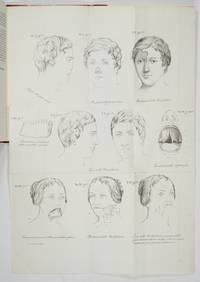
1846680171846. Rome Tipografia Contedini 1846 4° 4 16 pp. mit 1 lith. Folio-Falttafel feiner Halbledereinband. Exceedingly rare first and apparently only edition of "Alcune Operazione di Autoplastica del Dottore Augusto Ferro di Milano / Patrizio della Pergola / Membro corrispondente dell' Accademia Anatómica-Chirurgica di Perugia". With two additions in the author's own hand of several lines each with his own signature: 1 Chapter 'Risecazione parziale della mandibola inferiore' Tavola III figura 1a e 2a - p. 12 : Three lines & signature. 2 Chapter 'Restauratoredal sua lato destro' Tavola IVa figura 2a - p.15 : 6 lines & signature "Augusto Ferro was a prominent 19th-century Italian surgeon. In this rare book Ferro describes his techniques in facial plastic surgery. He describes his technique for nasal reconstruction and mandible jaw reduction. His operations on men and women are beautifully illustrated with detailed drawings." Douglas Monasebian Ferro's is a relatively early contribution to this procedure and at a time when Italian plastic surgery became to rank with the French and German. The History of Plastic Surgery Grolier Club No. 32 unknown
1952mon0000080692Eastern Malleable 1952-01-01. Hardcover. Like New. in x in x in. Eastern Malleable hardcover
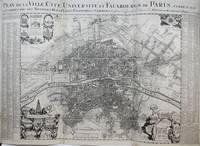
1720M9651Paris: Nicolas de Fer c. 1720. Very Good backed on 19th century paper. Notes: A large-scale and detailed map of the city of Paris and its surroundings during the early 18th century. The map has ornate cartouches in all corners and indexes in the left and right margins. <br>Nicolas de Fer 1646–1720 was a French cartographer and geographer. He also was an engraver and publisher. His work was most often praised for being beautiful and artistic. Size : 637x905 mm 25.08x35.63 Inches Coloring: Hand Colored Category: Maps City Maps; Maps Folding Maps; Maps Europe France Paris; Nicolas de Fer unknown
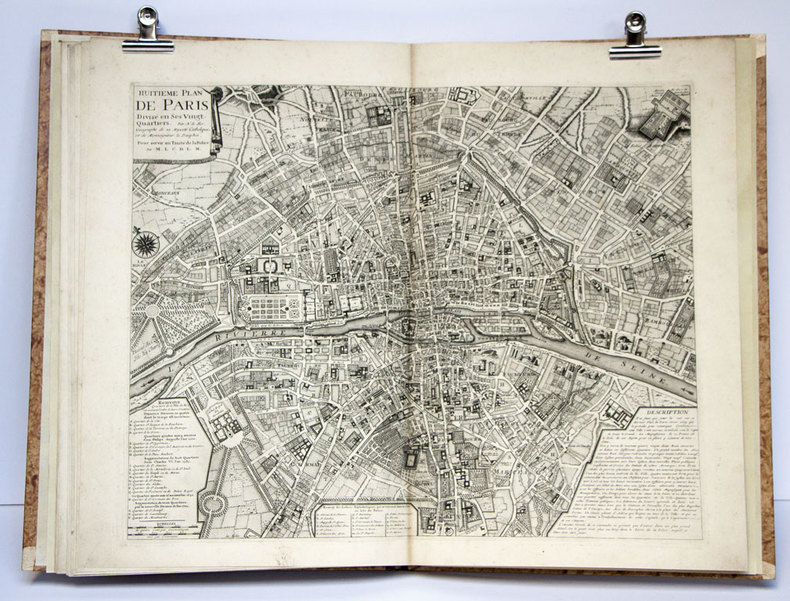
175553444Amsterdam et Leipzig, Arkstée & Merkus 1755 In-folio, atlas demi-veau havane, dos à nerfs richement orné, pièce de titre de maroquin rouge, grande vignette de maroquin rouge avec titre frappé or posé sur le premier plat reliure à l'imitation. Titre et 8 plans gravés à double page et montés sur onglet par Nicolas De Fer. Mouillure au titre, lég. brunissures.
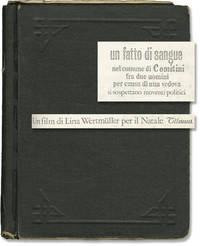
1978148341London: Lord Grade 1978. Draft script for the 1978 film here under the working title "Titoli di Testa." Copy belonging to script supervisor Franca Invernizzi with her extensive holograph annotations on nearly every page and many page versos regarding camera shots takes timing and dialogue. Bound in after the script is an annotated list of scenes and several handwritten pages of Invernizzi's notes. Text in Italian.<br/><br/>In 1920s Sicily a capitalist and a socialist vie for the affections of a grief-stricken woman whose husband was killed by a fascist mafioso. The follow-up to director Lina Wertmuller's Oscar-nominated 1976 film "Seven Beauties" and a lyrical formidable film in its own right. <br/><br/>Set and shot on location in Sicily. <br/><br/>Script:<br/><br/>Black faux-leather untitled wrappers. Title page present with credits for director Lina Wertmuller. 326 leaves with last page of text numbered 301. Xerographic duplication rectos only with white undated revision pages throughout. Pages Very Good with some revision pages lightly worn and toned to the edges wrapper Very Good lightly edgeworn with several tape repairs to the spine with perfect binding.<br/><br/>List of scenes:<br/><br/>10 leaves with last page numbered 10. Xerographic duplication rectos only. Pages Very Good plus with light edgewear. Lord Grade unknown books
280 pages. Signed and inscribed upon front free endpaper by author to Roman Fast in June of 1949. Gouzenko was the Soviet embassy cipher clerk whose defection in 1945 marked the beginning of the Cold War. His revelations resulted in major investigations and dozens of arrests. Above-average wear to red boards. Binding intact. Unmarked. What appears to be a clipping from the dust jacket of a Second Printing copy is neatly affixed at half-title page. Said clipping provides major contemporary media reviews of this work. A treasure for your Espionage or Cold War collection. Book
2016106685Yale University Press. 2016. Hardcover. 0300214898 . FREE UPGRADE to Courier/Priority Shipping Upon Request - IN STOCK AND IMMEDIATELY AVAILABLE FOR SHIPMENT - AS NEW THE TEXT BLOCK IS PRISTINE CLEAN UNMARKED AND IN EXCELLENT CONDITION - - VOLUME 3 ONLY. Text in English. III 3 Catalogue Raisonne Catalog Raisonné Complete Works Life and Work Raisonnee Yale University Press hardcover
181216509Paris, Firmin-Didot, 1812 ; 4 tomes in-4 ; veau raciné, dos lisse à faux nerfs dorés, fleurons et croisillons dorés, pièces de titre et de tomaison vert-empire, roulette d’encadrement des plats, double filet doré sur les coupes, tranches marbrées (reliure de l’époque) ; I : (4), XIX, (1), 304 pp., 23 planches dépliantes (22 + 18bis) ; II : XXIII, (1) errata, 371 pp., pl. 24 à 38 ; III: XXVI, (2) errata, 381 pp., pl. 39 à 58 et 47bis ; IV : XXII, (2) errata, 411 pp., pl. 59 à 65, soit en tout 66 planches gravées dépliantes (la planche 23 n’existe pas et il y a les planches 18bis et 47bis).
1918015759Paris Editions de la Sirène 1918 In-8 carré Reliure
17750051621775 Paris, Delalain, 1775. In-quarto (217 X 263 mm) veau fauve marbré, dos cinq nerfs, caissons ornés de fers et fleurons dorés, palettes dorées en queue, pièce de titre maroquin brun, coupes et coiffes filetées, tranches rouges (reliure de l'époque) ; (2) ff. de faux-titre et titre, XXXVII pages d'épitre et préface, (3) pages de table et avis au relieur, 654 pages [+ pages 473 à 480 bis], 13 planches hors-texte, (1) f. d'errata et privilège. Infime mouillure claire dans la marge supérieure des pages I à VIII, habile restauration à un coin, tache sombre en tête du premier plat.
148341London: Lord Grade 1978. Draft script for the 1978 film here under the working title "Titoli di Testa." Copy belonging to script supervisor Franca Invernizzi with her extensive manuscript annotations on nearly every page and many page versos regarding camera shots takes timing and dialogue. Bound in after the script is an annotated list of scenes and several handwritten pages of Invernizzi's notes. Text in Italian.<br /> <br /> In 1920s Sicily a capitalist and a socialist vie for the affections of a grief-stricken woman whose husband was killed by a fascist mafioso. The follow-up to director Lina Wertmuller's Oscar-nominated 1976 film "Seven Beauties" and a lyrical formidable film in its own right. <br /> <br /> Set and shot on location in Sicily. <br /> <br /> Script:<br /> <br /> Black faux-leather untitled wrappers. Title page present with credits for director Lina Wertmuller. 326 leaves with last page of text numbered 301. Xerographic duplication rectos only with white undated revision pages throughout. Pages Very Good with some revision pages lightly worn and toned to the edges wrapper Very Good lightly edgeworn with several tape repairs to the spine with perfect binding.<br /> <br /> List of scenes:<br /> <br /> 10 leaves with last page numbered 10. Xerographic duplication rectos only. Pages Very Good plus with light edgewear. Lord Grade unknown
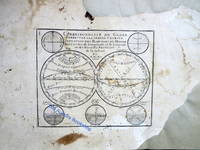
1705180573Paris: Published by the author 1705. First Edition . Hardcover. Very Good/No Jacket. Wide 8vo. An atlas comprising 19 maps 1. Des cercels de Longitude et de Latitude et des Diverses Positions de la Sphere; 2. Carte General du Globe Terrestre et Aquatiques ou Mappemonde en deux Plans-hemisphere 1705; 3. l'Europe Dresee sur diverse Relations; 4. L'Asie Dressee Sur Divers Relations 1705; 5. L'Aftique Dressez sur les dernieres Relations; 6. L'Amerique Meridionale; 7. L'Amerique Septentrionale et les Terres Polaires Arctique; 8. La France Avec Ses Acquisitions Insqu'a l'Annee 1705; 9. Les Environs de Paris 1705; 10. Les XVII Provinces des Pais Bas Divisees 1705; 11. Les Isles Britanniques ou Sont les Royaumes D'Angleterre D'Ecosse et D'Irleland avec les Costes Septentrionales de France et Celles de Pais Bas; 12. Suede Norvegue et Dannemarck 1705; 13. Les Estats de la Couronne de Pologne 1705; 14. L'Allemagne Divisee En Dix Cercles Dressee sur les Derniers memoires; 15. Estats du Grand Duc de Moscovie suivant les derniere relations; 16. Hongrie ou Partie Septent de la Turque en Europe; 17. L'Espagne Divisee en Galice Asturies Biscaye Navarre Leon Vielle et Nouvelle Castille Arragon Andalousie Mursie Valence et Catalogne avec Les Isles Majorque Minorque et Yvica au Roy d'Espagne; Le Portugal et L'Algarve avec Roy de Portugal; 18. L'Italie Divisee en ses Pricipaux Estats; 19. Partie Mediridionale de la Turquie D'Europe ou La Grece. Each map has a written descritpion in French. The first 2 pages are lacking the paper on the right-hand edge and have been repaired. The remainder of the maps and text are in very good original condition. A newer binding in 3/4 brown calf over brown boards with marbled endpapers with the bookplate of Antonio Barrette on the blank ffep. An excellent copy of a very scarce work. <br/> <br/> Published by the author hardcover
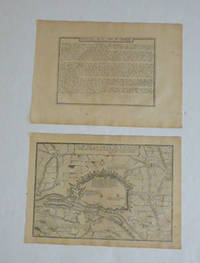
51-6477Paris: chez l'auteur dans l'Isle du Palais sur le quay de l'orloge a la Sphére Royale avec privilége du Roy 1705-1717. Engraved text broadside and map. Each 27.3 x 38cm. Contemporary laid paper uniformly time aged.This detailed map shows the vicinity of Milan and the important network of canals. The Naviglio Canal shown here connecting Lake Maggiore with Milan was the first artificial canal in Europe probably originating as a defensive ditch dug in the 12th century. It was one of the largest post-medieval engineering projects allowing development of commerce transport and agriculture in the region. Prominently depicted within a large area north of Pavia is the Enclos des Chartreux Certosa di Pavia monastery located within a large hunting park that belonged to the Visconti family of Milan.Evora is the capital of the province of Alentejo east of Lisbon It was captured by the Romans in 80 BC and has a Roman aqueduct and temple of Diana the goddess of hunting. There is also a 13th-century Gothic cathedral. From the 14th to the 16th centuries Evora was the residence of the Kings of Portugal.This map was published during the War of the Spanish Succession a conflict in which Portugal and Lisbon featured prominent hence the depiction of the fortifications of the city.Published in "L'atlas curieux ou le monde reÌpreseÌnteÌ dans des cartes geÌneÌrales et particulieres du ciel et de la terre : diviseÌ tant en ses quatre principales parties que par eÌtats et provinces et orneÌ par des plans et descriptions des villes capitales et principales et des plus superbes edifices qui les embelissent comme sont les eglises les palais les maisons de plaisance les iardins les fontaines &c. ". OCLC Number / Unique Identifier:79022119.LThe Atlas Curieux is geographic encyclopedia of images and maps of France with detailed views of the grand waterworks at Marly views of the great palaces and chateaux views and plans of the Paris Observatory and samples of military architecture. Issued in six annual parts from 1700-1705 the maps are based on the new observations of the Académie des Sciences and drawn up with the assistance of Philipe de La Hire.Library of Congress:The French cartographer and engraver Nicolas de Fer was a master at creating maps that were works of art. The maps that he published were printed during the Baroque period when the decorative arts were characterized by ornate detail. De Fer’s detailed maps and atlases were valued more for their decorative content than their geographical accuracy.Nicolas de Fer was born in 1646. His father Antoine de Fer owned a mapmaking firm. At the age of twelve Nicolas was apprenticed to a Parisian engraver named Louis Spirinx. The family business was starting to decline when his father died in 1673. Nicolas de Fer’s mother Genevieve took over the business after the death of her husband. In 1687 the business was passed on to Nicolas and the profits increased after he took over the firm. Nicolas de Fer was a prolific cartographer who produced atlases and hundreds of single maps. He eventually became the official geographer to King Louis XIV of France and King Philip V of Spain.One of de Fer’s major works is an atlas titled L’atlas curieux The curious atlas. Paris: chez l'auteur dans l'Isle du Palais sur le quay de l'orloge a la Sphére Royale avec privilége du Roy, 1705-1717 unknown
2016C106685Yale University Press. As New. 2016. Hardcover. 0300214898 . FREE UPGRADE to Courier/Priority Shipping Upon Request - IN STOCK AND IMMEDIATELY AVAILABLE FOR SHIPMENT - AS NEW THE TEXT BLOCK IS PRISTINE CLEAN UNMARKED AND IN EXCELLENT CONDITION - - VOLUME 3 ONLY. Text in English. III 3 Catalogue Raisonne Catalog Raisonné Complete Works Life and Work Raisonnee -- with a bonus offer-- - May be EITHER: out of print OOP and extremely rare in this pristine condition; signed by author or contributor; or a first or special edition; inquire for details . Yale University Press hardcover
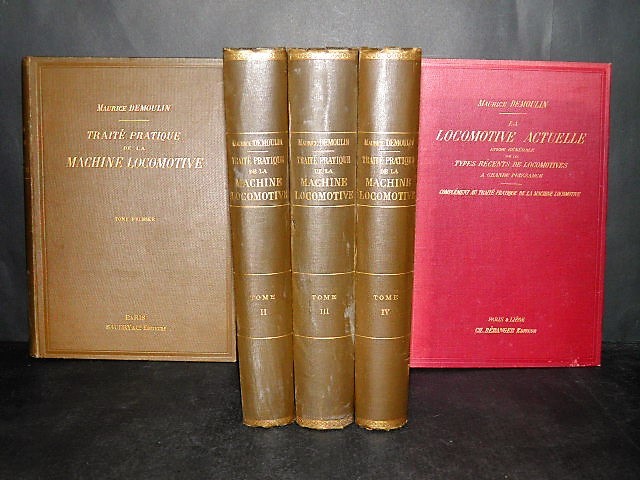
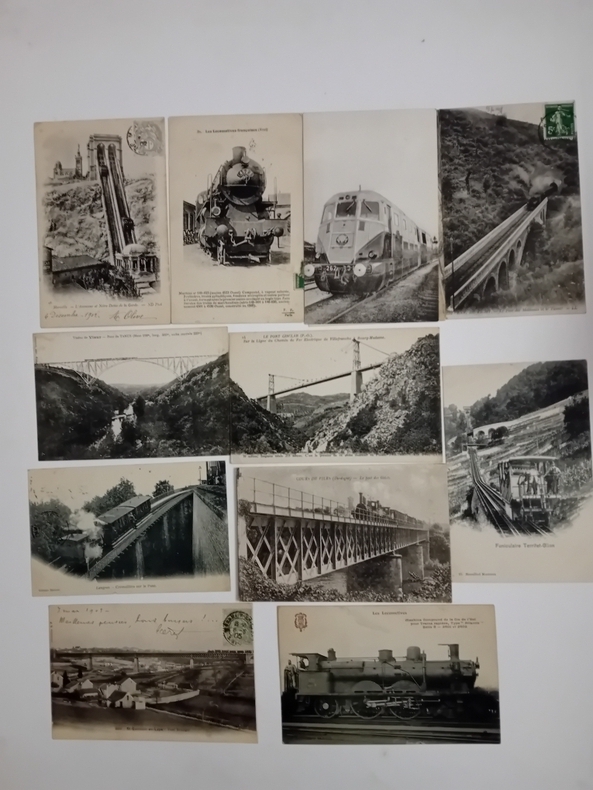
1852Paris (& Liège pour le supplément), Librairie Polytechnique, Baudry & Cie – Béranger pour le supplément, 1898 – 1906 pour le supplément. 4 Tome + Supplément: 5 Volumes, COMPLET. In-4 – 20x28cm. Reliure éditeur en plein percaline marron (bordeaux pour le supplément), dos lisse orné de dentelle et filets dorés, filets à froid en encadrement des plats. 2 ff., XII pp., 1 f., 457 pp. ; 2 ff., 510 pp. ; 2ff., 551 pp. et 5 pl. dépliantes ; 2 ff., 459 pp., 2 ff. avec 6 grandes planches dépliantes. Volume de supplément: III, 334 pp. Edition originale. Envoi de l’auteur sur la page de garde du tome 1 à M. Salomon, Ingénieur en Chef du Matériel et de la Traction des Chemins de fer de l’Est. Ouvrage précédé d'une introduction par Edouard Sauvage, et illustré de 973 figures et planches dans le texte, 6 planches hors texte. Le supplément est orné de 132 figures dans le texte et 40 planches hors texte. Très rare exemplaire de cet important traité, bien complet de son supplément et de ses planches.
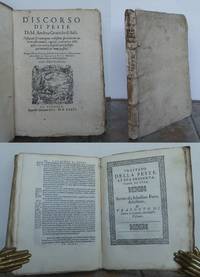
52466<p>Venice Girolamo Polo 1576. TITLE CONTINUED: Et appresso un trattato di peste molto dotto & breue non piu veduto di Saladino Ferro. FIRST EDITION 1576 2 parts in 1 volume Italian text 8vo approximately 230 x 165 mm 9 x 6½ inches woodcut pictorial printer's device Cerberus on first title page second title within woodcut typographical border woodcut headpieces and historiated initials text printed in italic type pages: 20 178 1 - errata leaf signatures: a-b4 c2 A-Y4 Z2. The second part Trattato di Peste by Saladino Ferro pages 133-176 is translated from the Latin by Salustio Viscanti and has a separate title page. The text dated 1448 at the end is followed by 3 anonymous receipts against the plague signed by the translator and dated 1564. Bound in 16th century hand made "carta rustica" paper backed with paper as issued flat spine hand titled in old ink with a paper label below also titled in old ink. Hinges partly cracked but covers still firmly attached very light soiling to covers and very small bumps to corners tiny old inscription on upper cover another on rear endpaper edges untrimmed and slightly dusty a1-a4 carelessly opened with small repaired chip to upper margin of a2 and a3 not touching text small closed margin tear to c2 neatly repaired no loss tiny worm track in text from B1 diminishing to a tiny single hole by E2 which persists to Q2 where the track restarts with another slightly larger in the margin see image loss of a few letters but all still easily legible all larger tracks neatly repaired with document repair tape very pale damp staining to pages 61-125. A good copy housed in modern patterned slipcase image 2. Wellcome Library Volume I 2924; Durling National Library of Medicine 16th Century 2166. MORE IMAGES ATTACHED TO THIS LISTING ALL ZOOMABLE FURTHER IMAGES ON REQUEST. POSTAGE AT COST.</p> Venice, Girolamo Polo, 1576.
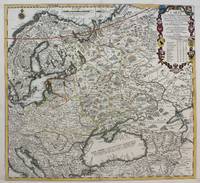
1711M4915Paris 1711. Very Good upper and lower margin have been extended. Laid on acid free paper for long term preservation. Notes: Stolen Size : 520x565 mm 20.5x22.25 Inches Coloring: Original Outline Coloring Category: ; Maps Europe Poland Lithuania; Maps Europe Ukraine unknown
16671606290099Venice: Presso Gio: Giacomo Hertz MDCLXVII 1667-01-01. Hardcover. Acceptable. Folio 33 cm. Handsome modern leather spine over marbled boards. Woodcut head- and tail-pieces initials and plant illustrations throughout.12 476 27 p. : ill. Title page dedication page and final 5 leaves of index supplied in facsimile. Margins of some of the prelims conserved. Custom book plate of Rev. Paul J. Barry on front paste down. Herbario Nuovo first published in 1585 is a description of medicinal plants from Europe and the Indies. It went through 11 editions and was actively used for over 130 years. "This was a popular Italian herbal that was reprinted in Italian and translated and published in several other languages for a number of years. The plant descriptions are written in the form of poems which Arber describes as 'pleasingly unscientific.' The Linnean genus Duranta formerly Castorea is named for the author" - Hunt 229. Nissen 569. NLM. Venice: Presso Gio: Giacomo Hertz, MDCLXVII hardcover
CP12Collection d'environ 700 cartes.
18704120(Kunstwerken. Lijn H. Sectie 1.) Brug over de Lek bij Kuilenburg [heute: Culemborg]. Mit 30 doppelblattgr. lithogr. Tafeln aus der Lith. Druckerei der Brückenbau-Anstalt von Johann Caspar Harkort (22) u. vom Königl. Hof-Lith. Louis Veit, Berlin (8). [Duisburg u. Berlin, 1870]. Groß-Folio (60,0 x 50,0 cm). Halbleinwandband d. Zt. mit montiertem Titelschild auf dem Vorderdeckel. [8 Warenabbildungen]
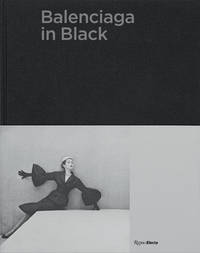
2018128593Rizzoli Electa. New. 2018. Hardcover. 0847866149 . IN STOCK AND IMMEDIATELY AVAILABLE FOR SHIPMENT - Flawless copy brand new pristine never opened -- with a bonus offer-- . Rizzoli Electa hardcover
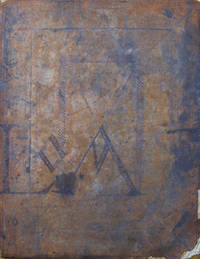
31261<p>Early Pennsylvania Iron Industry – Forge Founded by Maj. Gen Arthur St. Clair.</p><p>The collection contains two ledgers:</p><p>Johnston Alexander <strong>Manuscript Ledger Relating to The Hermitage Furnace Grist Mill and Store in Westmoreland County 1810-1812</strong></p><p>Folio 396 manuscript pages 20-page name index entries written neatly in ink bound in contemporary full sheep tooled in blind spine label binding worn hinges starting text in very good clean and legible condition. Johnstons' partial signature is found on the front board.</p><p>A contemporary manuscript note on the front free endpaper states "Bound for Patterson & Hopkins in Pittsb." This firm was the short-lived Pittsburgh book-selling business conducted by Robert Paterson and John Hopkins which lasted from 1810 until it was dissolved on November 5 1812. The business of this company was continued thenceforth until the end of 1817 under the new firm of Robert & Joseph Patterson. While this firm mostly sold books and stationery and supplied local printshops with paper the two brothers also conducted some small-scale publishing perhaps mostly using the press owned by Silas Engles.</p><p>Another contemporary manuscript note taking up most of the rear free endpaper states: "Ledger a for A. Johnston Esqr by James Nouman 1810 for Hermitage Furnace" – perhaps Nouman was the binder.</p><p>The ledger contains accounts for the Hermitage Furnace as well as a grist mill and general store under the management of Alexander Johnston. St. Clair in addition to the Hermitage Furnace also operated "a mill and other property" including a blacksmith shop these were all likely the properties leased by St. Clair about 1806 to Pittsburgh capitalists. The account book contains entries for various castings produced by the furnace bar iron and tools used in production forge hammers et cetera. There are also accounts for Johnstons' own Kingston Furnace the Washington Furnace another Westmoreland County Furnace and the Youngstown Store as well as numerous individuals many of whom were likely Hermitage Furnace workers. The general store accounts may have been an early "company store" for Hermitage workers and nearby farmers.</p><p><strong>Manuscript Ledger containing Accounts for Alexander Johnston 1805-1850</strong></p><p>Narrow folio 236 pages several inlaid items bound in contemporary sheep binding worn and shaken identified as "Ledger F" on front cover Alexander Johnstons ownership on rear cover a number of pages excised at rear the volume was used as a "herbarium" at one point there are stains from plant specimens however the entries are clean and legible.</p><p>"The iron industry of Pennsylvania took root in the eighteenth century in the southeastern part of the state but as the frontier moved westward ironworks were established not far behind. Furnaces and forges quickly sprang up to supply the agricultural communities with iron products that were badly needed. The spread settlement afforded men of initiative and capital the opportunity of producing iron first for a local market and then in many cases for more distant markets. At the beginning of the nineteenth century frontier conditions still prevailed in many parts of Pennsylvania but the iron industry – at that time a combination of iron manufacture and agriculture – played an important part in the development of the economic life of the state and the nation and in bringing about the change from an agrarian to an industrial civilization.</p><p>During the first part of the nineteenth century all the iron furnaces in the country were cold-blast furnaces. By the time of the Civil War however technological changes were taking place as can be seen in the use of bituminous and anthracite coal or coke as fuel in many furnaces and in the application of a hot blast instead of a coal one …</p><p>The blast furnace with its casting house blast house stock house and wooden blowing cylinders or tubs operated by an overshot water wheel or steam engine was an impressive sight in its agricultural setting when in blast. Not far from the plant were the houses of the workers the "mansion house" of the ironmaster the office the stables and the smith shop. Many of these communities also included a forge where pig iron from the blast furnace was heated and hammered into the bars of commerce. … old iron furnaces were part of a busy community where families lived toiled and died …" – Arthur C. Bining.</p><p>The Hermitage Furnace was the second built in Westmoreland County Pennsylvania. The furnace was built by Major General Arthur St. Clair after he returned from the governorship of Ohio circa 1802-1803. The furnace was built at The Hermitage the onetime home of St. Clair located about two miles northeast of Ligonier on the road leading to Johnstown. St. Clair built the furnace in hopes of restoring his depleted fortune. The furnace was first managed by James Hamilton a prominent Carlisle Pennsylvania lawyer named deputy attorney general of the Western District of Pennsylvania by Thomas Jefferson. Hamilton's name appears several times in the ledger.</p><p>An advertisement in the November 21 1806 issue of the <em>Farmer's Register</em> published in Greensburg by John M. Snowden taken out by Henry Weaver & Son Greensburg merchants it reads:</p><p>"Hermitage Furnace in Blast. The subscribers being appointed Agents by General Arthur St. Clair for the sale of his castings generally and for the delivery of castings and stoves for any number of tons in good terms. Samples of the castings and stoves to be seen at their store in Greensburg at any time after the 10th inst."</p><p>At Hermitage Furnace they were compelled to use a small amount of coal in the blacksmith shop this was packed in sacks and shipped from a mine in Lockport on the Conemaugh River a distance of about 12 miles. This was kept up until about 1807-08 when a great flood which washed away the surface ground near Ligonier exposing the previously unknown Pittsburgh coal seam. Coal banks were opened and they used their own coal instead of Lockport coal. In 1818 when lots were advertised for sale in Ligonier the coal banks a mile or two from the proposed town were used as an inducement to prospective settlers.</p><p>Shortly after 1806 General St. Clair abandoned the management of the furnace himself and leased it with his mill and some other property to some Pittsburgh investors for about $ 3000.00 per year. St. Clair's creditors were closing in on him and in 1810 the furnace was sold by the sheriff and purchased by James O'Hara. Alexander Johnston prominent iron master and sheriff justice of the peace and treasurer of Westmoreland County must have had a financial interest in the furnace.</p><p>Johnston was born in Enniskillen County Fermanagh Northern Ireland July 10 1773 he emigrated to America in 1797. He married Elizabeth Freame. The couple then operated a hotel in Greensburg then removed to Pittsburgh where Johnston trained to be an iron master and after along life spent mostly in western Pennsylvania died in Kingston Westmoreland County in 1872. He began work in the iron industry in the late 18th century beginning with his own Kingston Furnace which wasn't a success. The main ledger offered here was kept beginning at the time when St. Clair sold the furnace in 1810. One of the early pages in the ledger lists the times the Hermitage Furnace "blew" "stopt" or "quit." It appears Johnston and others kept the furnace going until at least May 28 1811 when "William Bailey quit managing."</p><p>The furnace seems to have remained idle following the hard times of the Embargo until 1816 when it was again put into blast by O'Hara and Skully under the management of John Henry Hopkins. Hopkins was not a successful manager and the furnace closed down in 1817 and never operated again.</p><p>Boucher John N. <em>History of Westmoreland County</em> vol. 1 pp. 445-457</p><p>New York: The Lewis Publishing Company 1906</p><p>Harman J. Paul <em>Stone-Stack Smelting Furnaces in Westmoreland County</em></p><p>Pennsylvania History: A Journal of Mid-Atlantic Studies Vol. 19 No. 2 April 1952 pp. 185-193</p><p>https://www.jstor.org/stable/277769302</p>
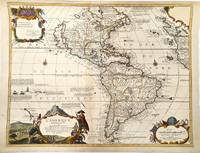
1705M11362Paris c.1705. Very Good. Notes: Detailed French map of the Americas with decorative cartouches.<br>Nicolas de Fer 1646–1720 was a French cartographer and geographer. He also was an engraver and publisher. His work was most often praised for being beautiful and artistic. Size : 464x600 mm 18.27x23.62 Inches Coloring: Hand Colored Category: Maps North America; Maps South America Continent; unknown
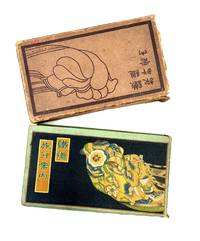
192485112Hakubunkan 1924. Fine. Hakubunkan 1924 19.50 x 11 cm broché Work published by the Japanese Ministry of Railways admirably illustrated with 130 double-page color illustrations by Hatsusaburo Yoshida: 2 decorating the pastedowns traditional Japanese animated scenes 26 views and 104 bird's-eye view landscape maps. Numerous black maps including a large one at the end of the Japanese railways which is detached. Pale green cloth covers. Smooth spine with title. Boards printed in black with a sample of Japanese fabric a cartouche for the title. Cardboard slipcase repeating the board motifs in black. Small lacks to slipcase rubbing and corners bumped. Fine condition of the collection with occasional light foxing. A paper lack to the pastedowns at the end of the volume. Some pages with fine manuscript notes in ink. Celebrated as the Hiroshige of the Taisho era Yoshida 1884-1955 was a painter and cartographer. His bird's-eye view maps and views are enhanced by multiple colors and changes of season and weather. A major retrospective of his works took place in Japan at the Sakai Museum in 1999. Hakubunkan hardcover
CF283Années 1878 à 1912.