29 résultats
1785ah214Gravure 1785 "Gravure en noir (16 x 21 cm sur support 19,5 x 25 cm), tirée du ""Cours complet d'Agriculture"" de l'abbé Rozier (1785) ; planche XXIV : Maladies du mouton ; petite brunissure, par ailleurs très bon état général. Livraison a domicile (La Poste) ou en Mondial Relay sur simple demande."
1800WB15907Dublin: R. E. Mercier 1800. Hardcover. Poor. Boards detached. 234 pp. correction leaf. Stamps of "Old Guard". Uncommon imprint. Sold as is. <br/><br/> R. E. Mercier hardcover
17541231Aus dem Schwedischen übersetzt [von Johann Adolph Scheibe]. O. O. u. Dr. [Stockholm], 1754. 8vo. (20,2 x 13,0 cm). Titel, XXII, 248 S. Einfacher Pappband d. Zt.
178910511Paris, Buisson, 1789 ; 2 tomes. Tome I : broché ; XXIV, 383 pp., 3 planches gravées dépliantes ; Tome II : plein veau havane marbré, dos lisse décoré et doré, pièce de titre rouge ; (4), 475 pp., 2 planches gravées dépliantes (accroc à la coiffe supérieure, mors fendu et usure aux coins).
1723122431723 un feuillet (document authentique) manuscrit à l'encre brune sur papier ligné et filigrané, format : 18,5 centimètres de large x 26 centimètres de haut, cachet fiscal à l'encre noire : "Bretagne un sol 4 deniers", filigrane "Bretagne", attribué à Louis Mouton sieur de Kxgentil (kergentil) avocat à la cour de guérande. en remplacement du sieur Laragon sieur de Launay décédé, date et signature manuscrite du marquis lui-même : GJBF Becdelièvre + signature Controle de Guérande illisible, à Nantes le 26 Janvier 1723,
173412244mesquer 1734 un double feuillet (document authentique) manuscrit à l'encre brune sur papier ligné et filigrané, format : 18,5 centimètres de large x 25 centimètres de haut, cachet fiscal à l'encre noire : "Bretagne un sol 4 deniers", filigrane "De Par Le Roy", Nomination de Juge attribué à Louis Mouton sieur de Kxgentil (kergentil) ancien avocat au parlement de Bretagne, date et signature manuscrite du marquis lui-même : H. F. Becdelièvre, fait à Nantes le 1 Janvier 1734, avec cachet de cire noire et sceau aux Armes du marquis de Becdelièvre (Blasonnement : de sable, à deux croix de calvaire, treflées et fichées d'argent, accompagnées en pointe d'une coquille du même),
170525139Hamburg: Bey Bejamin Schillern 1705. or Die Hoflichkeit der Heutigen Welt. Bilingual French and German. No publisher place date listed. This seems to be the 1705 edition listed in WorldCat. Boards are badly roughened on right and left. Slight wear at extremities. Bumped and worn corners. Spotting inside front cover and on front end paper. Some bubbling on the front cover. Hard Cover. Good Minus/No Dust Jacket. 16mo - over 5¾" - 6¾" tall. Bey Bejamin Schillern Hardcover
179740172London: G. G. and J. Robinsons. Fair. 1797. Second Edition. Hardcover. Contemporary marbled boards. Inscribed by White d. 1822 to the ffep: "Revd Dr. Smith with the author's respects." Spine perished boards worn. Lacking frontis. Binding loose boards detached scattered foxing. ; 12mo 7" - 7½" tall; 123 pages; Signed by Author . G. G. and J. Robinsons hardcover
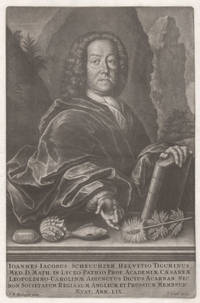
173120561731. Mezzotint. 320mm by 210mm platemark. Johann Jakob Scheuchzer 1672 - 1733 was a Swiss traveller naturalist and geologist. <br /> From his 'Physica Sacra'. His best known scientific works are his paleontological Lithographia Helvetica 1726 and his Physica Sacra a massively scientifically illustrated Biblical History. In both books he states fossils as evidences of the Biblical flood. unknown
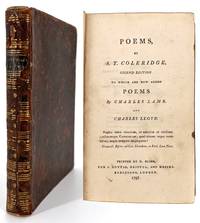
17971071Bristol & London: Cottle & Robinsons 1797. Second Edition. Good . Small 8vo. 6 1/4 x 3 3/4 inches 158 x 94 mm; xx 278 pp. Contemporary brown mottled calf binding gilt decorations on board edges and on spine gilt title on black calf label top edge brown others trimmed. Interior clean re-backed with original title label. Armorial bookplate of John Arthur Panter pasted inside front cover along with a small bookseller ticket pasted in top left corner. <br /> <br /> Wise 11; Wise Ashley Library 199; Tinker 679; ESTC N11843. Second edition of Coleridge's first collection of poetry first edition 1796 our inventory no. 1275 revised and expanded from the first published the previous year as Poems on Various Subjects. This edition added a preface and eleven new poems by Coleridge and four poems by Charles Lamb which are listed in the contents in italic. Our copy is lacking the rare errata slip but has the 4 lines of errata on the last page. Cottle & Robinsons unknown
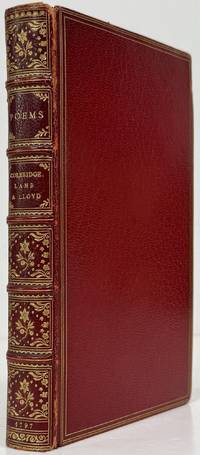
179767279Printed in the UK: J. Cottle and Messrs. Robinsons 1797. Second edition. Leather over boards. Very good. Hardcover leather red morocco over boards. 12mo. xx5-278 pp. Unillustrated. Six compartment spine with five raised ribs. Gilt title and authors in compartments two and three; gilt floral ornaments in the rest. Double line gilt border stamped on the front and back boards. Gilt inner dentelles. Gilt edges. Dark blue endpapers. Bookplate reading "George Clinton Fairchild Williams" on the front pastedown. Text block is very faintly age browned and has the rare fox mark. Predominately it is clean bright unmarked and square with a strong binding. The spine and boards slightly rubbed and shelf worn most notably along the hinges and edges. Mildly bumped corners. A very handsome copy in very good condition. J. Cottle and Messrs. Robinsons unknown
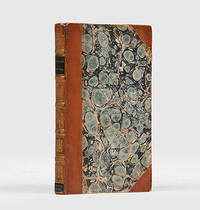
1796130600London: printed for the author; and published by Messrs. G. G. and J. Robinsons; J. Debrett; and Murray and Highley 1796. Shakespeare fan fiction First edition. The author James White 1775-1820 was a friend of Charles Lamb from their schooldays at Christ's Hospital. He so enjoyed Shakespeare's Henry IV to which he was introduced by Lamb that he developed an impersonation of Falstaff good enough to rouse the jealousy of professional actors and for which according to another school fellow John Mathew Gutch he was usually addressed by his friends as "Sir John". Original Letters was published the same year as the production at Drury Lane of William Ireland's Shakespeare forgery Vortigern and the preface to White's book has a dedication in black letter to "Master Samuel Irelaunde" the forger's father which was probably written by Lamb. Lamb puffed the book whenever he could inducing Coleridge to notice it in the Critical Review for June 1797 and writing his own appreciation to the Examiner for 5 Sept. 1819. He is also said to have purchased every available second-hand copy to present to his friends. The book was reissued the following year with a cancel title. Duodecimo pp. 2 v-xxiv 123 1. Engraved frontispiece by W. Leney. Without the blank A1. Early 19th-century half calf spine gilt in compartments black morocco labels marbled sides drab endpapers top edge gilt. Joints cracked at head but holding a few scattered spots a very good copy. ESTC T71574. unknown
1797307972Bristol: Printed by N. Biggs For J. Cottle . and Messrs. Robinson London 1797. Second edition expanded. xx 278 pp. lacking the rare errata slip. 12mo. Blue crushed levant morocco spine gilt t.e.g by Riviere. Mended tear on title touching one letter of imprint. Bookplate. Second edition expanded. xx 278 pp. lacking the rare errata slip. 12mo. After the favorable reception of the first edition of 1796 the publisher Cottle requested a second to which Coleridge contributed several new pieces including "The Ode to the Departing Year" and a new Preface in which he defended himself from charges of obscurity: "I have pruned the double-epithets with no sparing hand; and used my best efforts to tame the swell and glitter both of thought and diction" Preface p. xvii. This edition also includes twelve new poems by Charles Lamb - whose name appears on the title-page for the first time - and a number of poems by Coleridge's student Charles Lloyd. ESTC N11843; Haney 8; Tinker 679; Wise Coleridge 11; Ashley I p. 199; Thomson VI Printed by N. Biggs, For J. Cottle ... and Messrs. Robinson, London unknown books
1797307972Bristol: Printed by N. Biggs For J. Cottle . and Messrs. Robinson London 1797. Second edition expanded. xx 278 pp. lacking the rare errata slip. 12mo. Blue crushed levant morocco spine gilt t.e.g by Riviere. Mended tear on title touching one letter of imprint. Bookplate. Second edition expanded. xx 278 pp. lacking the rare errata slip. 12mo. After the favorable reception of the first edition of 1796 the publisher Cottle requested a second to which Coleridge contributed several new pieces including "The Ode to the Departing Year" and a new Preface in which he defended himself from charges of obscurity: "I have pruned the double-epithets with no sparing hand; and used my best efforts to tame the swell and glitter both of thought and diction" Preface p. xvii. This edition also includes twelve new poems by Charles Lamb - whose name appears on the title-page for the first time - and a number of poems by Coleridge's student Charles Lloyd. ESTC N11843; Haney 8; Tinker 679; Wise Coleridge 11; Ashley I p. 199; Thomson VI Printed by N. Biggs, For J. Cottle ... and Messrs. Robinson, London unknown
1797317524Bristol: Printed by N. Biggs For J. Cottle . and Messrs. Robinson London 1797. Second edition expanded. xx 278 pp. lacking the rare errata slip. 1 vols. 12mo. Original grey boards untrimmed. Finely rebacked to style old wear and soiling to board edges. Red calf drop box with contrasting labels. Second edition expanded. xx 278 pp. lacking the rare errata slip. 1 vols. 12mo. IN BOARDS UNCUT. After the favorable reception of the first edition of 1796 the publisher Cottle requested a second to which Coleridge contributed several new pieces including "The Ode to the Departing Year" and a new Preface in which he defended himself from charges of obscurity. This edition also includes twelve new poems by Charles Lamb - whose name appears on the title-page for the first time - and a number of poems by Charles Lloyd.<br/><br/>Nice copy in boards with a later Coleridge family connection. ESTC N11843; Haney 8; Tinker 679; Wise Coleridge 11; Thomson VI. For binding cf. Bennett p. 117 fig. 4.40. Provenance:Â Robert Porter bookplate with blindstamp: Montpelier Cottage Beeston Notts; The Beeston Club ink inscription on front pastedown: "This book is given by the Beeston Club to Mr. Dominick Daly in exchange for a modern and complete edition of Coleridge's Works . 1891"; Dominick Daly inscription on front free endpaper "To S.D. Coleridge Esq. with compliments of D.D. 24/1/91"; William H. Painter book label on front pastedown Printed by N. Biggs, For J. Cottle ... and Messrs. Robinson, London unknown books
1797301532Bristol: Printed by N. Biggs For J. Cottle . and Messrs. Robinson London 1797. Second edition expanded. xx 278 pp. lacking the rare errata slip. 1 vols. 12mo. Contemporary publisher's binding of full tree calf smooth spine over sewn-in cords black morocco lettering piece with gilt fillet and rope tool border spine divided into six compartments with double gilt fillets. Front joint cracked but firmly attached with neat repairs to both hinges wear to spine ends and corners. Second edition expanded. xx 278 pp. lacking the rare errata slip. 1 vols. 12mo. After the favorable reception of the first edition of 1796 the publisher Cottle requested a second to which Coleridge contributed several new pieces including "The Ode to the Departing Year" and a new Preface in which he defended himself from charges of obscurity. This edition also includes twelve new poems by Charles Lamb - whose name appears on the title-page for the first time - and a number of poems by Charles Lloyd. ESTC N11843; Haney 8; Tinker 679; Wise Coleridge 11; Thomson VI. For binding cf. Bennett p. 117 fig. 4.40. Provenance: Ann Bremridge gift inscription on ffep "Phil Bremridge to Ann Bremridge 1797; H. Nicholls signed "H. Nicholls. 1825" on ffep Printed by N. Biggs, For J. Cottle ... and Messrs. Robinson, London unknown books
1797317524Bristol: Printed by N. Biggs For J. Cottle . and Messrs. Robinson London 1797. Second edition expanded. xx 278 pp. lacking the rare errata slip. 1 vols. 12mo. Original grey boards untrimmed. Finely rebacked to style old wear and soiling to board edges. Red calf drop box with contrasting labels. Second edition expanded. xx 278 pp. lacking the rare errata slip. 1 vols. 12mo. After the favorable reception of the first edition of 1796 the publisher Cottle requested a second to which Coleridge contributed several new pieces including "The Ode to the Departing Year" and a new Preface in which he defended himself from charges of obscurity. This edition also includes twelve new poems by Charles Lamb - whose name appears on the title-page for the first time - and a number of poems by Charles Lloyd.<br /> <br /> Nice copy in boards with a later Coleridge family connection. ESTC N11843; Haney 8; Tinker 679; Wise Coleridge 11; Thomson VI. For binding cf. Bennett p. 117 fig. 4.40. Provenance: Robert Porter bookplate with blindstamp: Montpelier Cottage Beeston Notts; The Beeston Club ink inscription on front pastedown: "This book is given by the Beeston Club to Mr. Dominick Daly in exchange for a modern and complete edition of Coleridge's Works . 1891"; Dominick Daly inscription on front free endpaper "To S.D. Coleridge Esq. with compliments of D.D. 24/1/91"; William H. Painter book label on front pastedown Printed by N. Biggs, For J. Cottle ... and Messrs. Robinson, London unknown
17971896London: Printed by N. Biggs for J. Cottle Bristol and Messrs. Robinsons 1797. Second edition. Rare presentation copy of the 1797 second edition much revised by Coleridge and greatly expanded with new poems by both authors. Small octavo modern quarter red morocco raised bands marbled boards and end-papers top edge gilt. Early presentation note from Charles Lamb bound in before the title page: "To my dear friend William Hone Charles Lamb Oct. 1811." <br/><br/>Hone was a literary man and something of an early entrepreneur. One venture that ultimately ended in failure was his stint as an antiquarian bookseller. His friendship with Charles Lamb is well-documented.<br/><br/>The first edition and Coleridge's first book of poems published the previous year contained Lamb's first published verses. The second edition was published after Coleridge extensively revised his contribution and added a new Preface. Lamb added an additional 10 poems to the second edition including "Childhood" in addition to the four that were published in the first edition. <br/><br/>Two bookplates on the front paste-down front end-paper cracking. Inscription a bit faded but easily legible. A lovely copy with an excellent association. This copy previously sold by Bauman Rare Books. Printed by N. Biggs, for J. Cottle, Bristol, and Messrs. Robinsons unknown books
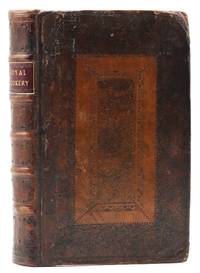
171668226Second Much Expanded Edition With Over 500 New Recipes and Forty Engraved Plates LAMB Patrick. Royal-cookery: or the Compleat Court-Cook. Containing the choicest receipts in all the several branches of cookery viz. for making of soops bisques olioÃs terrines surtouts puptons ragoos forcÃd-meats sauces pattys pies tarts tansies cakes puddings jellies &c. as likewise forty plates curiously engraven on copper of the magnificent entertainments at coronations and instalments; of balls weddings &c. at court; as likewise of city-feasts. To which are added bills of fare for every month in the year. By Patrick Lamb Esq; near fifty years master-cook to their late Majesties King Charles II. King James II. King William and Queen Mary and Queen Anne. The Second Edition with the Addition of several new cuts and above five hundred new receipts all disposed alphabetically. London: Printed for J. Nutt and A. Roper 1716. Second much expanded edition with "several new cuts and above five Hundred new receipts." Octavo 7 5/8 x 4 1/2 inches; 195 x 115 mm 8 302 10 pp. Five of the final leaves comprise ÃA bill of fare for every season in the year.Ã Complete with forty engraved plates thirty-three of which are folding. Plates are not bound in numerical order but all are present. This edition is mentioned in Bitting but not in the collection. Contemporary paneled calf rebacked preserving original spine. Board edges gilt. Newer red morocco spine label lettered in gilt. Some rubbing to boards and corners a bit bumped. Previous owner's armorial bookplate on front pastedown. Inner hinges cracked but firm. A bit of dampstaining and a few very minor marginal wormholes. Small tear to crease of plate "21" a paper flaw to plate " 9" and plate "11' trimmed close mildly affecting engraving. Overall text and plates generally very clean. A very good copy. "In August 1677 Lamb was appointed as master cook to the queen consort held in tandem with the office of sergeant of his majesty's pastry in ordinary to which he was elevated in November 1677. Finally in February 1683 Lamb attained the status of master cook to the monarch. He was reappointed to this post under the successive household regulations of James II William and Mary and Anne and was removed from it only by death. His services as a royal cook encompassed the provision of prepared dishes for daily and extraordinary consumption by the monarch and his guests at table.Lamb's culinary skills were most effectively demonstrated in extraordinary events and his claims for large expenditures on such occasions as the Westminster visit of the Venetian ambassadors in December 1685 testify to the splendour of these.These and other junkets are evoked in the text of Royal Cookery published posthumously in London under Lamb's name by John Morphew and Abel Roper in 1710 and subsequently reprinted in 1716 1726 and 1731. The text incorporated recipes for elaborate dishes alongside engravings of lavish table layouts for occasions such as royal suppers. Such details suggest that the text was drawn from Lamb's papers rather than being speculatively published under his name as some contemporaries contended." Oxford DNB. Bitting Pg.271. ESTC T91553. HBS 68226. $2500 Printed for J. Nutt and A. Roper hardcover books
1798305354London: T. Bensley for John and Arthur Arch 1798. First edition. 95 1 pp. 12mo. Full tan morocco gilt a.e.g. by Riviere. Joints slightly rubbed title-page browned at margins. First edition. 95 1 pp. 12mo. First edition of this early publication of Lamb to that point his most substantial collection. Thirteen of the poems are by Lloyd and seven by Lamb including "The Old Familiar Faces" Ashley III pp. 38-39; Hayward 210; Roff pp 31ff. Provenance: Myrtle A. Crummer bookplate T. Bensley for John and Arthur Arch unknown books
1798305354London: T. Bensley for John and Arthur Arch 1798. First edition. 95 1 pp. 12mo. Full tan morocco gilt a.e.g. by Riviere. Joints slightly rubbed title-page browned at margins. First edition. 95 1 pp. 12mo. First edition of this early publication of Lamb to that point his most substantial collection. Thirteen of the poems are by Lloyd and seven by Lamb including "The Old Familiar Faces" Ashley III pp. 38-39; Hayward 210; Roff pp 31ff. Provenance: Myrtle A. Crummer bookplate T. Bensley for John and Arthur Arch unknown
171668226London: Printed for J. Nutt and A. Roper 1716. Second much expanded edition with "several new cuts and above five Hundred new receipts." Octavo 7 5/8 x 4 1/2 inches; 195 x 115 mm 8 302 10 pp. Five of the final leaves comprise 'A bill of fare for every season in the year.' Complete with forty engraved plates thirty-three of which are folding. Plates are not bound in numerical order but all are present. With the Coronation dinner plate which is often lacking. This edition is mentioned in Bitting but not in the collection.<br> <br> Contemporary paneled calf rebacked to style. Newer red morocco spine label. lettered in gilt. Board edges gilt. Previous owner's armorial bookplate on front pastedown. A bit of minor staining and a few very minor marginal wormholes. A paper flaw to plate " 9" and plate "11' trimmed close mildly affecting engraving. Overall text and plates generally very clean. A very good copy.<br> <br> "In August 1677 Lamb was appointed as master cook to the queen consort held in tandem with the office of sergeant of his majesty's pastry in ordinary to which he was elevated in November 1677. Finally in February 1683 Lamb attained the status of master cook to the monarch. He was reappointed to this post under the successive household regulations of James II William and Mary and Anne and was removed from it only by death. His services as a royal cook encompassed the provision of prepared dishes for daily and extraordinary consumption by the monarch and his guests at table.Lamb's culinary skills were most effectively demonstrated in extraordinary events and his claims for large expenditures on such occasions as the Westminster visit of the Venetian ambassadors in December 1685 testify to the splendour of these.These and other junkets are evoked in the text of Royal Cookery published posthumously in London under Lamb's name by John Morphew and Abel Roper in 1710 and subsequently reprinted in 1716 1726 and 1731. The text incorporated recipes for elaborate dishes alongside engravings of lavish table layouts for occasions such as royal suppers. Such details suggest that the text was drawn from Lamb's papers rather than being speculatively published under his name as some contemporaries contended." Oxford DNB.<br> <br> Bitting Pg.271. ESTC T91553.<br> <br> HBS 68226.<br> <br> $3000. Printed for J. Nutt and A. Roper unknown
171610542London: J Nutt & A Roper 1716. Second-hand hardcover. <p>Lamb Patrick. Royal-Cookery. 2nd Ed J Nutt & A Roper: London 1716. 8vo 200x120mm contemporary panelled speckled calf 830210pp; 40 engraved plates 33 folding. Rebacked owner bookplate to front pastedown</p> <p><br /> LAMB Patrick ca.1650-1709<br /> <br /> Royal-cookery : or the Compleat Court-Cook. Containing the choicest receipts in all the several branches of cookery viz. for making of soops bisques olio's terrines surtouts puptons ragoos forc'd-meats sauces pattys pies tarts tansies cakes puddings jellies &c. as likewise forty plates curiously engraven on copper of the magnificent entertainments at coronations and instalments; of balls weddings &c. at court; as likewise of city-feasts. To which are added bills of fare for every month in the year. By Patrick Lamb Esq; near fifty years master-cook to their late Majesties King Charles II. King James II. King William and Queen Mary and Queen Anne. The Second Edition with the Addition of several new cuts and above five hundred new receipts all disposed alphabetically.<br /> <br /> London : printed for J. Nutt and A.Roper; and to be sold be E.Nutt at the Middle-Temple in Fleet Street 1716. Second Edition first published 1710. <br /> <br /> Octavo 200x125mm professionally rebacked sympathetic spine five raised bands blind tooled compartments red morocco gilt lettered recent spine label; contemporary ornamental blind tooled 'Cambridge style' panelled mottled calf boards gilt decorated edges 8 30210pp : A4. B-U8 X4. Forty out-of-text engraved copper plates showing bills of fare thirty-three folding. Ex-libris bookplate "Robert Carl & Marion Oak Sticht. 1909" to front pastedown. Boards lightly worn corners bruised; endpapers replaced circa 1900; pages agetoned lightly foxed more to the margins; plates all correct but showing some wear edges occasionally soiled creased or small closed tears; G2 offset toned; Tab 16 closed tear; bottom free corner of the text block stained.<br /> <br /> <br /> Patrick Lamb had a fifty year career in British Royal kitchens from the Restoration to the beginnings of the Hanoverian dynasty serving Charles II James II William and Mary and Anne. Despite this career not much is known of Lamb other than can be determined from the menus and books he left behind. In the late seventeenth century Court cookery was heavily influenced by French tastes and trends. The first edition. published posthumously in 1710 begins with elaborate or courtly receipts some taking up 6 pages however it contains only 87 or so detailed recipes for cookery. The second edition was much expanded and contains 'above five hundred new receipts'. There are many echoes of Massialot in Lamb's enlarged and re-organised alphabetically second edition; thus raising in some minds questions as to authorship. Lamb's receipts reflect Court tastes with French-style stewed and braised rather than boiled dishes. There is an emphasis on 'ragoos' and 'cullis' coulis or sauces¹. His recipes use French seasonings and call for the use of a butter and flour liaison roux base for sauces. Table settings whether for dinners or feasts were elaborate as illustrated by the plates and ceremonial. Dishes and menus are included for each of Lamb's Royal employers with many of the plates showing the tables set for the Stuart Court Dutch recipes for William and Mary and menus for dinners for Queen Anne. <br /> <br /> Royal-Cookery represents the zenith of Courtly cuisine and the endpoint of the influence of the nobility on the fashion social and dining trends of Britain. Post Lamb Royal Cookery was published again in 1726 and 1731 the increasingly wealthy emerging middle-classes sought a simpler less grand more domestic table and economy. Perhaps in keeping with this the authorship of popular cookery books in the eighteenth century changes from professional male chefs of which Lamb was one of the last to female domestic servants and cooks such as Ann Cook Hannah Glasse and Elizabeth Raffald.<br /> <br /> Sticht 1856-1922 was an American born metallurgist who ran the remote Mount Lyell copper mine in Queenstown North West Tasmania from 1895 until his death. A man of many interests between 1900 and 1913. Sticht assembled an exceptionally fine private library and art collection which included incunabula manuscripts Caxton Bibles Reformation tracts early editions of Shakespeare and Australiana. His art collection included Dürer woodcuts and Rembrandt etchings. After Sticht's death the collection was disposed of. Some of the collection books and art is housed in the National Gallery of Victoria and other public institutions acquired through the Felton Bequest. A large portion of the remaining library was then placed with A H Spencer of the Hill of Content for sale. Sticht had three bookplates produced for his collection. Two were designed by Sticht from woodcut engravings in his collection and produced by the Melbourne firm Osboldstone and Atkins; this is the second of those plates. ²<br /> <br /> An excellent copy of one of the definitive British cookery books of the early Eighteenth century complete with the provenance of a significant Australian collector. Scarce.<br /> <br /> § OCLC records 21 holdings almost all in the USA none in Australasia<br /> § Cagle 810; Maclean p.88; Oxford p.53 see note; Schraemli 1 262; Vicairie 490; Simon BG 939 other editions; Bitting p.271 earlier edition.<br /> <br /> ¹ Willan Anne The Cookbook Library: four centuries of the cooks writers & recipes that made the modern cookbook. Berkeley : University of California Press 2012 p.197.<br /> ² Lowe Heather. The Robert Carl Sticht Collection: a forgotten legacy. Melbourne : Art Journal 381997.</p> J Nutt & A Roper unknown
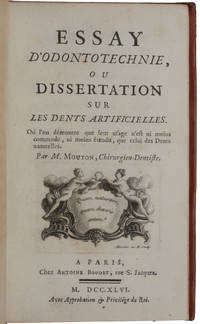
17465166Paris: Antoine Boudet 1746. First edition. <p>First edition rare on the market of "the first specialized book on dental prosthetics" G & M and perhaps the first contribution to what would later be called "cosmetic dentistry." Mouton introduced the use of gold crowns which he enamelled to give them the same appearance as natural teeth. He was the first to speak of artificial teeth fixed to the natural teeth adjoining them by means of springs or clasps. He was also the first to describe successful transplants procedures which gave him great renown not only in France but also in England.</p>. THE FIRST SPECIALIZED BOOK ON DENTAL PROSTHETICS. <p>First edition rare on the market of "the first specialized book on dental prosthetics" G & M and perhaps the first contribution to what would later be called "cosmetic dentistry." "Mouton in 1746 . gave to the light a monograph the first extant on mechanical dentistry. The methods of this author for the most part do not differ from those of Fauchard nevertheless one finds several important innovations in his work. To prevent the further deterioration of teeth already much destroyed and to preserve them some time longer Mouton had recourse to the application of "calottes d'or" that is gold crowns. He used this for the front teeth as well as for the molars but in the former case he had them enamelled to give them the same appearance as natural teeth. Mouton also invented a new method of applying artificial teeth. Up to then the ordinary method had been that of fixing them to the natural teeth by means of threads passed through holes made in the artificial teeth expressly for that purpose. Mouton is the first to speak of artificial teeth fixed to the natural teeth adjoining them by means of springs or clasps. This author relates having carried out several transplantations with perfect success a thing that contributed greatly to his renown not only in France but also in England. He distinguished himself besides by the correction of dental irregularities. Lastly it is to be noted that this author frequently had recourse as a remedy against toothache to the stretching of the dental nerve by means of moving and partially raising the tooth subluxation" Guerini pp. 303-4. Mouton cites only Galen Géraudly and Fauchard and those only rarely. ABPC/RBH lists only two complete copies perhaps the same copy in the last 40 years Ketterer Kunst Doerling May 27 2013 lot 490 €2160; ibid. November 16 2009 lot 267 €2196. </p> <br /> <p>Little is known about the life of Claude Mouton. "It is beyond any doubt that he was a contemporary of Pierre Fauchard and studied closely his book Le chirurgien dentiste ou traité des dents Paris 1728. Hoffmann-Axthelm reproduces a Parisian list in which Mouton is named as 'Dentiste du Roi' domiciled in Rue d'Orléans S. Honoré in which Fauchard himself and some other renowned dentists such as Bourdet Jourdain Laudumiay or the Calais and Hervieux ladies appear all of them in the 'Experts' category while only three people are recorded as 'Maistres en Chirurgie'.</p> <br /> <p>"In 1746 the Essay d'Odontotechnie ou Dissertation sur les dents artificielles was published by Antoine Boudet's press Rue S. Jacques . it is divided into five chapters . This dissertation Mouton confesses was the fruit of several years' experience but the flame that lit the fuse was actually the help requested by a twenty-two-year-old girl who had lost two upper incisors 'that had been irretrievably undermined by cavities as a result of childbirth.' Though reluctant she was persuaded by one of her friends to accept the presence of strange teeth in her mouth. Mouton made her see the disadvantages of the lack of these teeth and the advantages of replacing them by a skillful hand. The success and uniqueness of the case encouraged Mouton to publish an account of the treatment addressed to the public with a double message: to promote the care of natural teeth and to banish prejudices about the use of false teeth.</p> <br /> <p>"The first chapter comprised of 30 pages is entitled: 'Of the inconveniences caused by the lack of teeth .' Mouton points out the inconveniences that arise from the loss of teeth such as alterations in pronunciation especially for public speakers; the contraction of the lips in trying to hide the loss of teeth which can end up becoming a repertoire of grimaces; the escape of saliva through the gap created by the missing teeth; the sinking of the lip at the level of the missing teeth especially the upper ones or of the cheek in the case of lateral loss - a defect for which some try to compensate by carrying a kind of ball in their mouths; and finally the lack of teeth can lead to significant digestive disorders as a result of the inability to grind food properly. Having noted these drawbacks the text now focuses on the explanation of the functions of the teeth mainly masticatory and modulating of the voice not forgetting the aesthetic aspect. Finally Mouton discusses the two plagues of the mouth tartar and cavities dealing at length with the effects of the first on the gingiva and resulting dental mobility.</p> <br /> <p>"The second chapter 16 pages long is entitled: 'Utility of dentistry or the art of replacing natural teeth with false teeth'. Mouton recalls that false teeth were known to the ancients appearing in the epigrams of the satirical Roman poet Martialis. Nevertheless he concludes that false teeth must be regarded 'as a modern invention':<br /> <br /> 'There is nothing that ages like the loss of teeth especially in the anterior part hence it is necessary to exercise the art of returning the teeth to their natural state. For this there is nothing better than to replace the missing teeth with false teeth which experience shows fulfill the same duties as long as they are placed by a good dentist who combining manual skill with the necessary knowledge will avoid the many accidents that ignorance causes every day'.</p> <br /> <p>"This is one of the author's obsessions: he is a Dentist with a capital letter but to carry out this kid of treatment the dentist must have special knowledge no matter how much he knows about how to perform the other tasks of his profession. The architect of the mouth has to measure combine reason prevent and always plan three objectives: the adornment the comfort and the duration. He closes this chapter by recounting the case of a woman in whom he had placed false teeth - although another dentist had advised her against them she had been wearing them for four years without any problem.</p> <br /> <p>"'Answers to all the difficulties that may arise regarding the use of false teeth' is the title of the third chapter comprising 34 pages. In it Mouton refutes each of the assumptions of the common people that sustain the six most frequent prejudices about the use of artificial teeth: that inserting them is a painful operation; that false teeth can harm others; that they must be removed every time you eat; that they become loose; that despite the wearer's cleanliness the mouth exhales an unpleasant smell; and that they don't last long. Later outside of this main group he mentions other inconveniences suggested by the common people such as the different colour of false teeth their reluctance to wear teeth taken from corpses or the shame of appearing with prostheses after losing their own teeth . Mouton uses these concerns to justify the insertion of a post in the root canal taking into account that the nerve has been destroyed by decay - but if there is still some part of what he calls the 'dental chord' nerve vein and artery remaining he says this could be eliminated by adding cinnamon essence or more quickly some caustic with renders the root insensitive.</p> <br /> <p>"The fourth chapter must be considered as the 'central' one in Mouton's book - 'Méchanique des dents artificielles' is its title and it covers all types of dental prostheses as well as their composition. Other issues such as transplantation and reimplantation are also considered. A short introduction again emphasizes that the hand of an expert dentist is necessary - not everyone in the trade is capable.</p> <br /> <p>"'Dents à tenon' is the first type of prosthesis. They are the most solid teeth their solidity resulting from the use of a small gold post inserted into the root canal; a single such post is capable of supporting more than one tooth. Teeth tied with threads can be used when no roots are available their stability depending largely on the state of the teeth adjacent to the gap. </p> <br /> <p>"Single or double spring dentures are complete dentures. Both the upper and lower ones could be joined to the dental remains of the opposing arch to provide them with stability or in when both are used they could be joined together with the same device all before piercing the bone to pass a thread attached to the prosthesis in order to provide it with stability. Although the patient will suffer some discomfort he will become accustomed to it and may learn to eat with it. </p> <br /> <p>"Part natural and part false teeth are another type of prosthesis that repair the lingualization of a tooth by applying an enameled sheet on the buccal aspect. </p> <br /> <p>"Natural teeth can be transformed into false teeth. When due to the effect of tartar they fall out the root is cut and the tooth reinserted when there is room; this helps patients who are uncomfortable with carrying anything strange in their mouth. </p> <br /> <p>"Teeth racks 'Dents à coulisses' are prostheses with a spring on each side to fit them into the ones adjacent to the gap. </p> <br /> <p>"Two very different techniques to repair a dental loss are discussed: transplantation and reimplantation. He notes that the first is often regarded even by the most skilled as impossible even for single-rooted teeth or premolars undoubtedly due to the difficulty in finding an alveolar bed with the same characteristics as the root being transplanted. For success it is necessary that locally the external fibers of the alveolus and the root are found and anastomosed and in general that the 'donor' be in good health. Regarding reimplants performed by his hand he proposes to secure the reimplanted tooth to its neighbours with ligatures although this is not always necessary. And he also proposes as had Fauchard to extract a decayed tooth in order to cut the 'nerve connection' and stop the pain plug it - plunge it - and reimplant it. Finally he talks about the matter of artificial teeth sourced from the animal kingdom although human teeth are often preferable. Among these those of the ox are the most used especially when the nerve is ossified. The hippopotamus and other marine animals and fish are also widely used especially for large pieces. An interesting trick is recommended by the author. It involves covering one of the teeth with a gold cap 'une calotte' so that the other teeth do not contact each other and thus the occlusal wear that occurs due to bruxism would be avoided. </p> <br /> <p>"'Of the care required by false teeth' is the fifth and last of the chapters 21 pages long. The instructions and advice to keep artificial teeth in optimal condition are the same as for natural teeth: the usual cleaning of the tongue and false teeth and the removal of tartar if it has already been deposited on them. However he also mentions some tools such as toothpicks abd toothbrushes and also talks about toothpastes recommending avoiding the repeated use of coral due to its extraordinary abrasiveness" Sanz freely translated.</p> <br /> <p>Crowley Dental Bibliography 774; Garrison & Morton 3672.2; not in Wellcome. Guerini A History of Dentistry 1909. Sanz El primer tratado de prostodoncia: Essay d'Odontotechnie 1746 de Claude Mouton .</p> <br/> <br/> 12mo 156 x 95 mm pp. xi i 162 4 with engraved title vignette. Contemporary calf spine richly gilt with red lettering-piece very minor wear to extremities. A very fine copy. Antoine Boudet unknown